
PREPARED BY:-
Karm Balar
ASST. Prof.
S.S.A.S.I.T.
S.S.A.S.I.T G.T.U
SHREE SWAMI ATMANAND SARASWATI
INSTITUTE OF TECHNOLOGY, SURAT
Project Organization
Construction management
1
Introduction
A construction company
Forms of business organization
Structure of construction organization
Organizing for project management
Management levels
Traits of a project manager
Important traits of a project coordinator
Contents
2
Indian construction industry comprises:
nearly 200 firms in the corporate sector and
about 1,20,000 class ‘A’ contractors,
and numerous small contractors,
including individuals, who execute small jobs including repairing and
maintenance.
Various forms of organization and their structure, different management
levels in a construction organization and other issues are discussed in this
chapter.
Introduction
3
A construction company could be a one-person organization or a larger firm with
several departments,
The primary aim of these companies is to make profit.
The common functions of a construction company are:
General administration,
Estimating,
Managing contracts and personnel,
Design, engineering, purchasing/procurement,
Accounting, and
Managing field construction.
Construction Company
4
5
A project organization is a structure that facilitates the coordination and
implementation of project activities. Its main reason is to create an
environment that fosters interactions among the team members with a
minimum amount of disruptions, overlaps and conflict.
Types of Organization for project
management / project level
 Frequently used organizational forms for project level…
 Classical or functional organization,
 Pure project or product organization, and
 Matrix organization.
• Functional matrix,
• Balanced matrix,
• Project matrix.
6
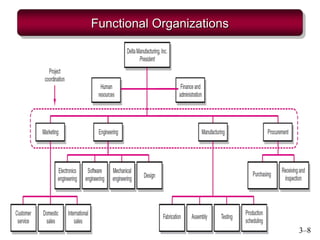
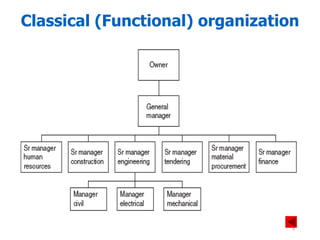
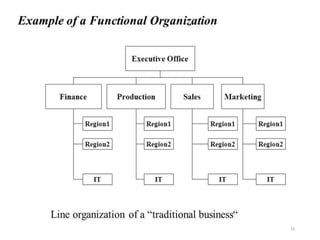
Functional Organization
In a functional structure, the organization is broken into
sections based upon specialty. This organization are
arranged different by function such a marketing,
engineering, production, contract, resources procurement,
HRD, etc., and each headed by a director or specialist
manager .
Its center of power and coordination in concentrated at the
top with chief executive.
7
Functional Organizations
3–8
Classical (Functional) organization
9
10
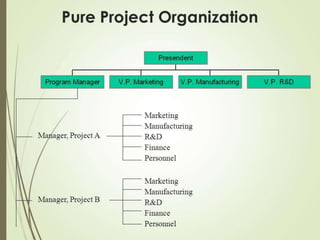
Pure Project Organization
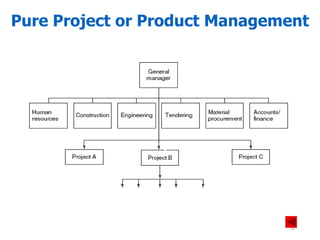
• Project organization is a project focused organizational structure
where project manager has the final authority over the project to
make project decisions, priorities, acquire and assign resources.
• A project organization refers specifically to an organizational
structure that has been set up in a manner in which the project
manager leads the group and in which the project manager has the
ultimate authority to make any and all decisions involving
the organization.
• In a project structure, all the work is looked at as a project. The
project manager has complete control, unlike in the functional
structure, and all team members report directly to the project
manager.
• Sometimes these team members are permanent, and sometimes they
are hired as temporary workers to help with the project until its
completion. If the organization takes on a large project, it will have all
the necessary resources available to sustain the project and will act
as a small, self-contained company.
• The project manager works with complete autonomy (central
authority, power) over the project, team is on the project full time and
report to the project manager.
• As a project manager, you have the responsibility to take authority,
rather than waiting for someone to give you the authority.
© McGraw-Hill/Irwin 2004
Information Systems Project Management—David Olson
3-13
Pure Project or Product Management
14
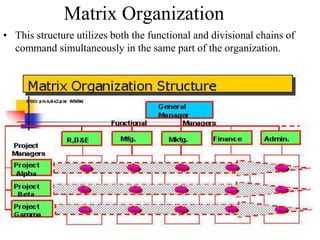
Matrix Organization
- It is used mainly in the management of large projects or product
development processes, drawing employees from different functional
disciplines for assignment to a team without removing them from their respective
positions.
- Matrix management is a type of organizational management in which people with
similar skills are pooled for work assignments.
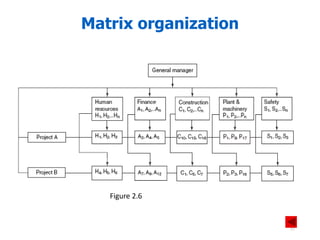
- The matrix structure combines both the functional and project structures. Each team
member has two bosses; they report both to the functional manager and the project
manager.
- If the matrix is strong, the power resides more with the project manager.
- If the matrix is weak, the power resides more with the functional manager.
- The key is to find a balance in which the power is shared equally.
- Because of its complexity, this type of structure can lead to problems if it is not
used carefully and properly. Good communication is essential for success.
Matrix Organization
• This structure utilizes both the functional and divisional chains of
command simultaneously in the same part of the organization.
Figure 2.6
Matrix organization
17
types of structure of Construction Organization /
corporate level
Depending upon the manner in which the authority and
responsibility in an organization , the structure of
construction organization level can be divided in to two
categories…
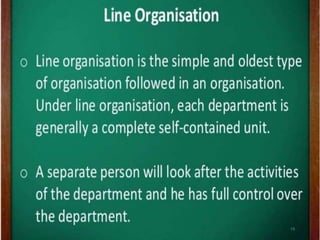
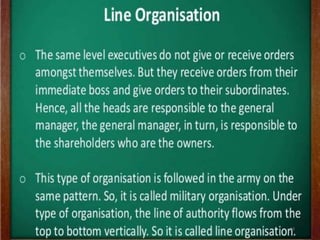
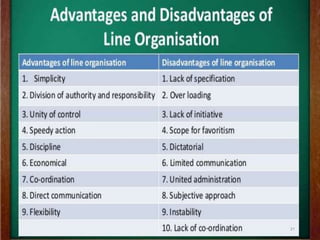
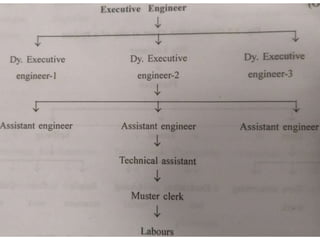
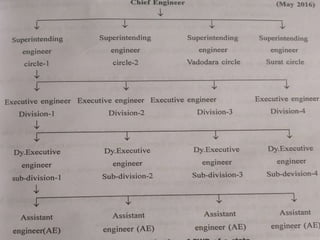
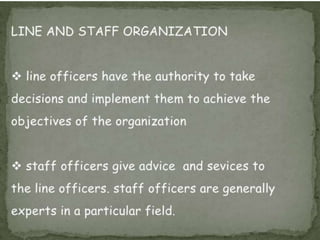
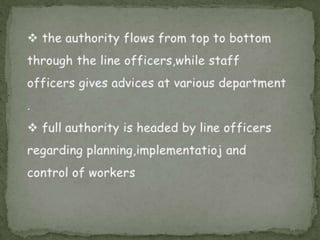
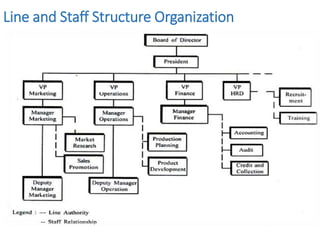
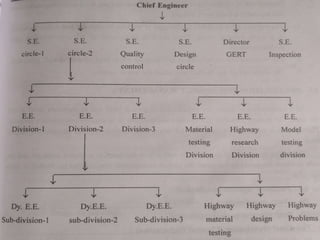
1. Line or military organization
2. Line and staff organization
18
19
20
21
22
23
24
25
Line and Staff Structure Organization
27
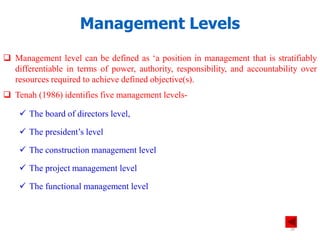
Management Levels
 Management level can be defined as ‘a position in management that is stratifiably
differentiable in terms of power, authority, responsibility, and accountability over
resources required to achieve defined objective(s).
 Tenah (1986) identifies five management levels-
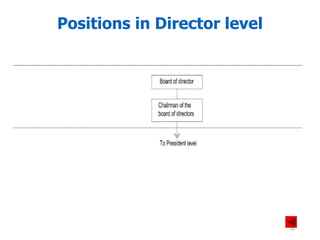
 The board of directors level,
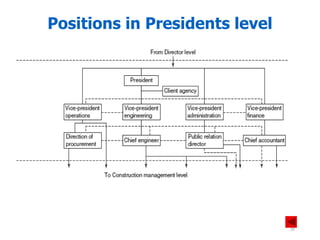
 The president’s level
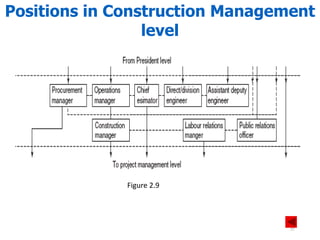
 The construction management level
 The project management level
 The functional management level
28
Positions in Director level
29
Positions in Presidents level
30
Figure 2.9
Positions in Construction Management
level
31
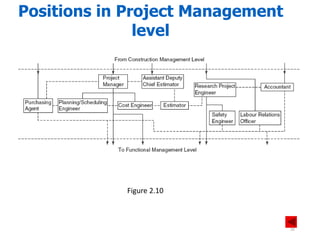
Figure 2.10
Positions in Project Management
level
32
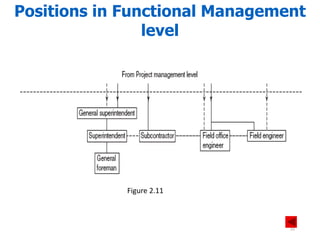
Figure 2.11
Positions in Functional Management
level
33
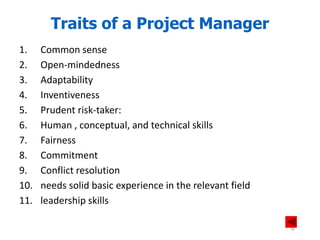
1. Common sense
2. Open-mindedness
3. Adaptability
4. Inventiveness
5. Prudent risk-taker:
6. Human , conceptual, and technical skills
7. Fairness
8. Commitment
9. Conflict resolution
10. needs solid basic experience in the relevant field
11. leadership skills
Traits of a Project Manager
34
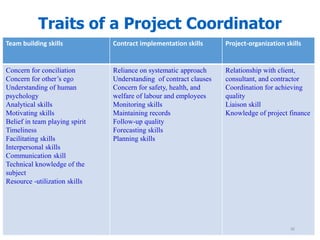
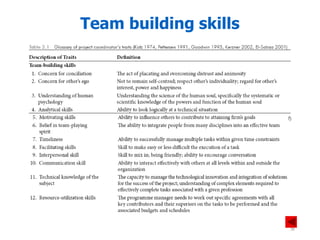
Traits of a Project Coordinator
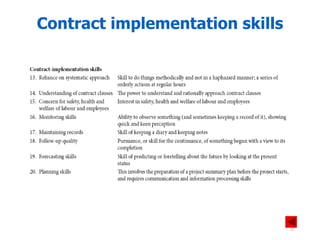
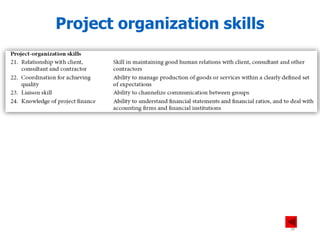
Team building skills Contract implementation skills Project-organization skills
Concern for conciliation
Concern for other’s ego
Understanding of human
psychology
Analytical skills
Motivating skills
Belief in team playing spirit
Timeliness
Facilitating skills
Interpersonal skills
Communication skill
Technical knowledge of the
subject
Resource -utilization skills
Reliance on systematic approach
Understanding of contract clauses
Concern for safety, health, and
welfare of labour and employees
Monitoring skills
Maintaining records
Follow-up quality
Forecasting skills
Planning skills
Relationship with client,
consultant, and contractor
Coordination for achieving
quality
Liaison skill
Knowledge of project finance
35
Team building skills
36
Contract implementation skills
37
Project organization skills
38
39

MODULE 2 project organization

  • 1.
    PREPARED BY:- Karm Balar ASST.Prof. S.S.A.S.I.T. S.S.A.S.I.T G.T.U SHREE SWAMI ATMANAND SARASWATI INSTITUTE OF TECHNOLOGY, SURAT Project Organization Construction management 1
  • 2.
    Introduction A construction company Formsof business organization Structure of construction organization Organizing for project management Management levels Traits of a project manager Important traits of a project coordinator Contents 2
  • 3.
    Indian construction industrycomprises: nearly 200 firms in the corporate sector and about 1,20,000 class ‘A’ contractors, and numerous small contractors, including individuals, who execute small jobs including repairing and maintenance. Various forms of organization and their structure, different management levels in a construction organization and other issues are discussed in this chapter. Introduction 3
  • 4.
    A construction companycould be a one-person organization or a larger firm with several departments, The primary aim of these companies is to make profit. The common functions of a construction company are: General administration, Estimating, Managing contracts and personnel, Design, engineering, purchasing/procurement, Accounting, and Managing field construction. Construction Company 4
  • 5.
    5 A project organizationis a structure that facilitates the coordination and implementation of project activities. Its main reason is to create an environment that fosters interactions among the team members with a minimum amount of disruptions, overlaps and conflict.
  • 6.
    Types of Organizationfor project management / project level  Frequently used organizational forms for project level…  Classical or functional organization,  Pure project or product organization, and  Matrix organization. • Functional matrix, • Balanced matrix, • Project matrix. 6
  • 7.
    Functional Organization In afunctional structure, the organization is broken into sections based upon specialty. This organization are arranged different by function such a marketing, engineering, production, contract, resources procurement, HRD, etc., and each headed by a director or specialist manager . Its center of power and coordination in concentrated at the top with chief executive. 7
  • 8.
  • 9.
  • 10.
  • 11.
    Pure Project Organization •Project organization is a project focused organizational structure where project manager has the final authority over the project to make project decisions, priorities, acquire and assign resources. • A project organization refers specifically to an organizational structure that has been set up in a manner in which the project manager leads the group and in which the project manager has the ultimate authority to make any and all decisions involving the organization. • In a project structure, all the work is looked at as a project. The project manager has complete control, unlike in the functional structure, and all team members report directly to the project manager.
  • 12.
    • Sometimes theseteam members are permanent, and sometimes they are hired as temporary workers to help with the project until its completion. If the organization takes on a large project, it will have all the necessary resources available to sustain the project and will act as a small, self-contained company. • The project manager works with complete autonomy (central authority, power) over the project, team is on the project full time and report to the project manager. • As a project manager, you have the responsibility to take authority, rather than waiting for someone to give you the authority.
  • 13.
    © McGraw-Hill/Irwin 2004 InformationSystems Project Management—David Olson 3-13
  • 14.
    Pure Project orProduct Management 14
  • 15.
    Matrix Organization - Itis used mainly in the management of large projects or product development processes, drawing employees from different functional disciplines for assignment to a team without removing them from their respective positions. - Matrix management is a type of organizational management in which people with similar skills are pooled for work assignments. - The matrix structure combines both the functional and project structures. Each team member has two bosses; they report both to the functional manager and the project manager. - If the matrix is strong, the power resides more with the project manager. - If the matrix is weak, the power resides more with the functional manager. - The key is to find a balance in which the power is shared equally. - Because of its complexity, this type of structure can lead to problems if it is not used carefully and properly. Good communication is essential for success.
  • 16.
    Matrix Organization • Thisstructure utilizes both the functional and divisional chains of command simultaneously in the same part of the organization.
  • 17.
  • 18.
    types of structureof Construction Organization / corporate level Depending upon the manner in which the authority and responsibility in an organization , the structure of construction organization level can be divided in to two categories… 1. Line or military organization 2. Line and staff organization 18
  • 19.
  • 20.
  • 21.
  • 22.
  • 23.
  • 24.
  • 25.
  • 26.
    Line and StaffStructure Organization
  • 27.
  • 28.
    Management Levels  Managementlevel can be defined as ‘a position in management that is stratifiably differentiable in terms of power, authority, responsibility, and accountability over resources required to achieve defined objective(s).  Tenah (1986) identifies five management levels-  The board of directors level,  The president’s level  The construction management level  The project management level  The functional management level 28
  • 29.
  • 30.
  • 31.
    Figure 2.9 Positions inConstruction Management level 31
  • 32.
    Figure 2.10 Positions inProject Management level 32
  • 33.
    Figure 2.11 Positions inFunctional Management level 33
  • 34.
    1. Common sense 2.Open-mindedness 3. Adaptability 4. Inventiveness 5. Prudent risk-taker: 6. Human , conceptual, and technical skills 7. Fairness 8. Commitment 9. Conflict resolution 10. needs solid basic experience in the relevant field 11. leadership skills Traits of a Project Manager 34
  • 35.
    Traits of aProject Coordinator Team building skills Contract implementation skills Project-organization skills Concern for conciliation Concern for other’s ego Understanding of human psychology Analytical skills Motivating skills Belief in team playing spirit Timeliness Facilitating skills Interpersonal skills Communication skill Technical knowledge of the subject Resource -utilization skills Reliance on systematic approach Understanding of contract clauses Concern for safety, health, and welfare of labour and employees Monitoring skills Maintaining records Follow-up quality Forecasting skills Planning skills Relationship with client, consultant, and contractor Coordination for achieving quality Liaison skill Knowledge of project finance 35
  • 36.
  • 37.
  • 38.
  • 39.