Environment and Sustainability
Presented By:
Awais Ahmed
Zainab Saeed
Aliya Adrees
Environmental Problems
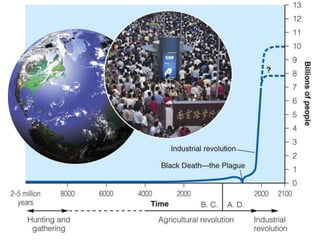
• Population growth
• Wasteful and unsustainable resource use
• Poverty
• Failure to include environmental costs of goods and services in
market prices
• Too little knowledge of how nature works
• People with different environmental worldviews often disagree
about the seriousness of environmental problems and what we
should do about them.
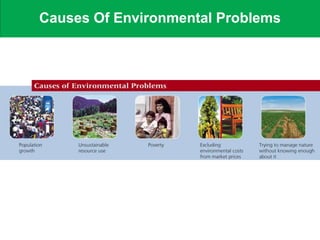
Causes Of Environmental Problems
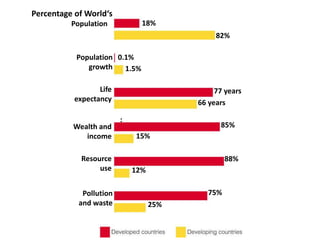
Percentage of World‘s
Population
Population
growth
Wealth and
income
Resource
use
Pollution
and waste
18%
77 years
0.1%
85%
15%
88%
12%
75%
25%
Life
expectancy
82%
1.5%
66 years
:
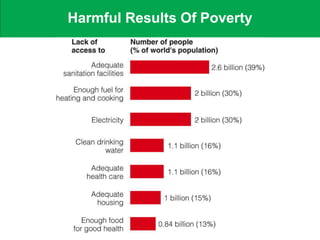
Harmful Results Of Poverty
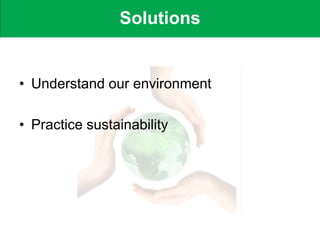
• Understand our environment
• Practice sustainability
Solutions
• Environment is every thing that effects
living organisms.
• Ecology is biological science that studies
relationship between living organisms and
their environment.
What Is Environment?
• In ecology, sustainability is how biological systems
remain diverse and productive. Long-lived and healthy
wetlands and forests are examples of
sustainable biological systems. In more general
terms, sustainability is the endurance of systems and
processes.
What Is Sustainability
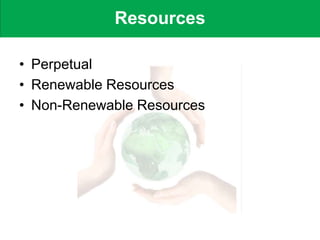
• Perpetual
• Renewable Resources
• Non-Renewable Resources
Resources
• Renewed continuously on human scale.
-Solar energy
-Wind energy
Perpetual Resources
Sustainable Yield: the highest rate at which a renewable
resource can be used without reducing its supply.
Example: over-farming the land leading to soil erosion,
clear-cutting forests.
Environmental Degradation: when we exceed the natural
replacement rate of the resource.
Example: groundwater depletion, water pollution
Renewable Resources
(can be depleted or degraded)
Degradation of renewable free-access
resources.
“If I do not use this resource, someone else
will. The little bit I use or pollute is not
enough to matter, and such resources are
renewable anyway.”
Solutions?
Tragedy of Commons
• Exist only in fixed quantities on earth.
• Metallic resources (iron, copper, aluminum)
• Non-metallic resources (salt, clay, sand)
• Energy Resources (coal, oil , natural gas)
When 80% is gone
It may be too
Costly to get last
20%.
Non-Renewable Resources
Reduce: Use less resource
Reuse: To use the resource more than once
to conserve.
Recycle: collecting resource, processing it
into new products.
Saving non-renewable resources
What is an Environmentally Sustainable
Society
• Our lives and economies depend on energy
from the sun (solar capital) and natural
resources and natural services (natural capital)
provided by the earth.
• Living sustainably means living off earth’s
natural income without depleting or degrading
the natural capital that supplies it.
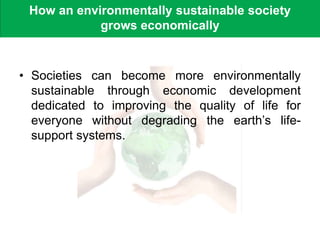
How an environmentally sustainable society
grows economically
• Societies can become more environmentally
sustainable through economic development
dedicated to improving the quality of life for
everyone without degrading the earth’s life-
support systems.
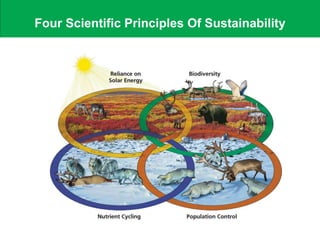
Four Scientific Principles Of Sustainability
• Nature has sustained itself for billions of years
by using solar energy, biodiversity, population
regulation, and nutrient cycling – lessons from
nature that we can apply to our lifestyles and
economies.
Four Scientific Principles Of Sustainability
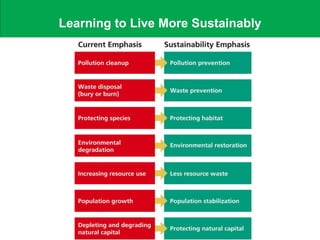
Learning to Live More Sustainably
Examples of Environmental
Sustainability
Sustainable Park System in Oregon
• Oregon Sustainable Parks are designed,
developed and operated to promote a
sustainable future meeting the needs of today
without compromising and by balancing the
economic, social and ecological needs of future
residents.
Sustainable Park System in Oregon
Sustainable Parks will:
• Support a stable and diverse economy
• Protect and enhance the quality of the air, water, land
and other natural resources
• Protect and enhance native vegetation, habitat areas,
fish and wildlife
• Create opportunities for enhanced social benefits
• Build community
• Promote stewardship and educate the public about
sustainability
• Result in more cost-effective park management
practices
• Ensure longevity of parks and recreation facilities
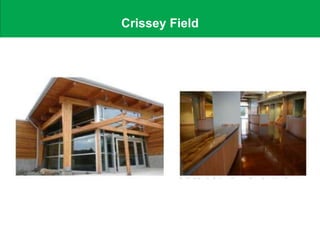
Crissey Field
Cactus Dish Washer
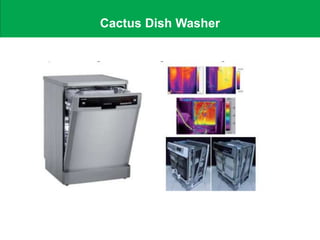
• Providing A class washing performance for dishes with
minimum water and energy consumption in order to
leave a better world for future generations.
Cactus Dish Washer
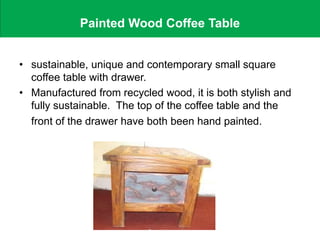
Painted Wood Coffee Table
• sustainable, unique and contemporary small square
coffee table with drawer.
• Manufactured from recycled wood, it is both stylish and
fully sustainable. The top of the coffee table and the
front of the drawer have both been hand painted.
.
The main idea is that we must act responsibly so
that resources on the planet will be able to
support many generations to come.
.
THANK YOU