IMMERSION
LITHOGRAPHY
ANANDHU THAMPI
3RD SEM M.Sc. PHYSICS
CUSAT , COHIN- 682022
PHOTOLITHOGRAPHY
 The root words photo, litho, and graphy all have Greek origins, with the
meanings 'light', 'stone' and 'writing
 Lithography refers to the transfer of an image onto paper using a plate
and ink-soluble grease
 Photolithography is the transfer of an image using photographic
techniques
 Photolithography transfers designer generated information (device
placement and interconnections) to an actual IC structure using masks
which contain the geometrical information
Photolithography - Application of Photo
resist
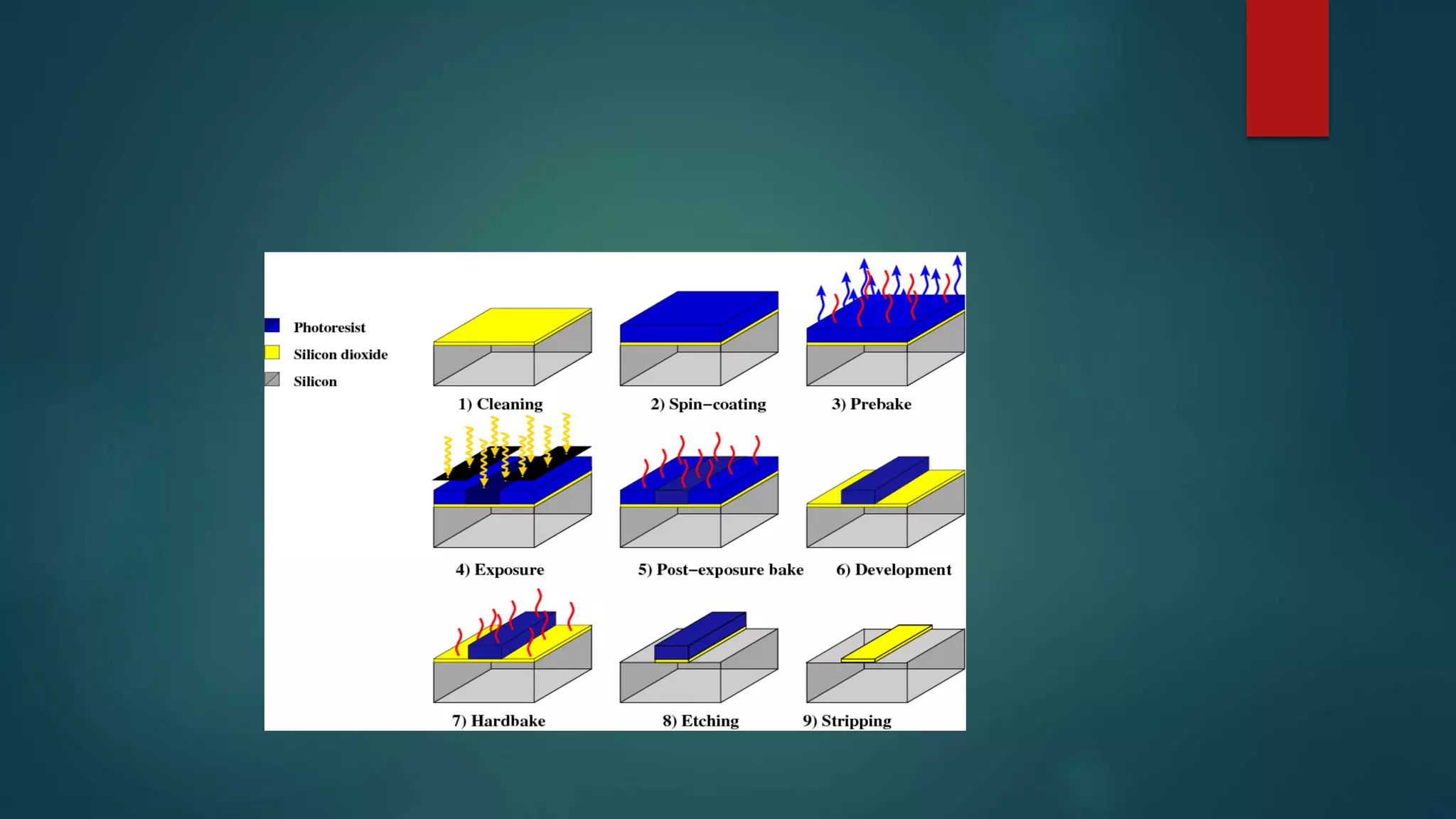
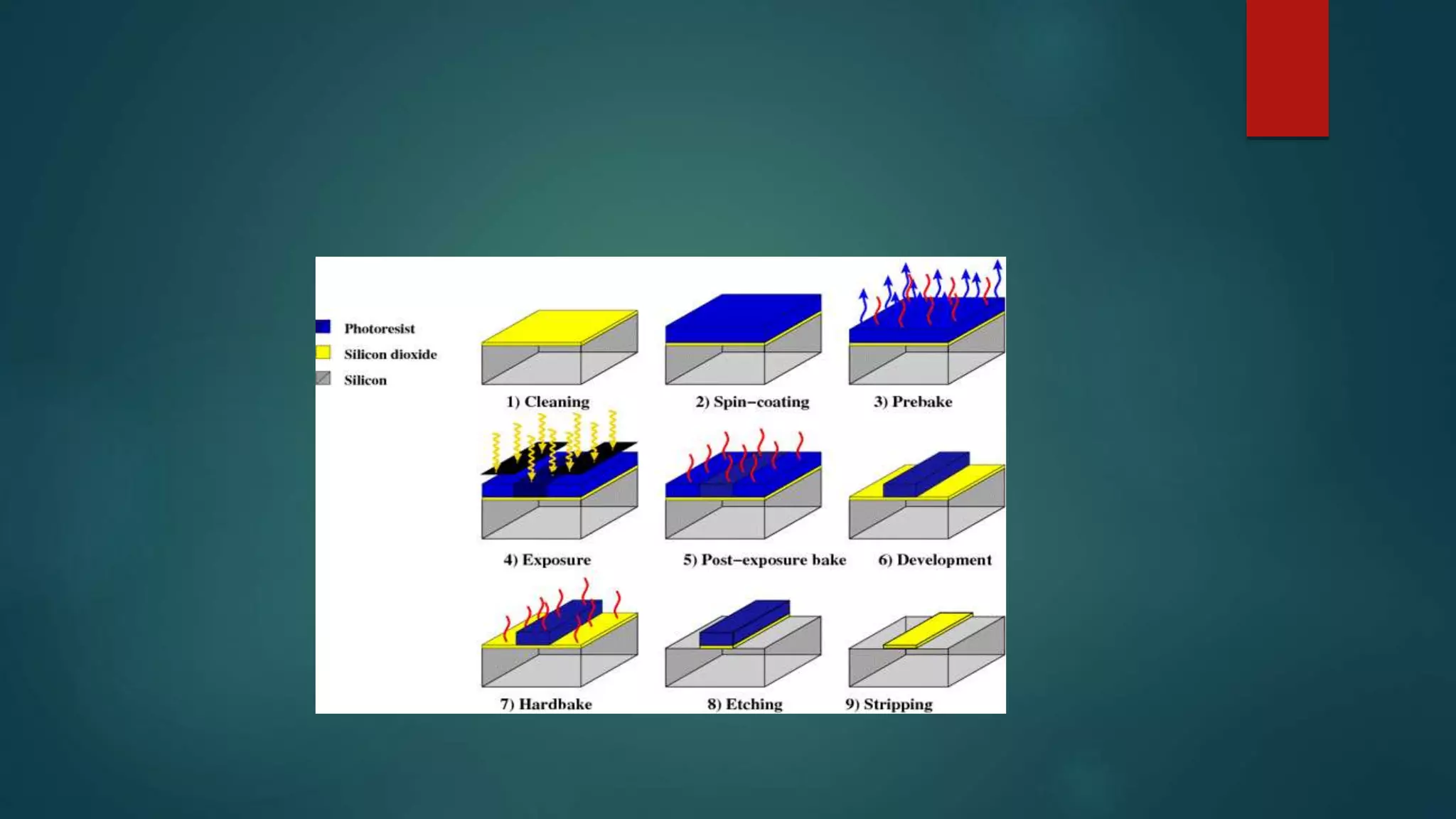
 First step in photolithography is to
coat the surface with approx 1 μm of
photo resist (PR)
 PR will be the medium whereby the
required image is transferred to the
surface
 PR is often applied to the centre of
the wafer, which is then spun to force
the PR over the entire surface
 The spin coating typically runs at
1200 to 4800 rpm for 30 to 60
seconds
Photolithography - Exposure
 The PR is then exposed to UV
(ultraviolet) radiation through a mask
 The masks contains
information about device
placement and connection
 The UV radiation causes a
chemical change in the PR
 The transfer of information from the
mask to the surface occurs through
the UV-induced chemical change -
only occurs where the mask is
transparent
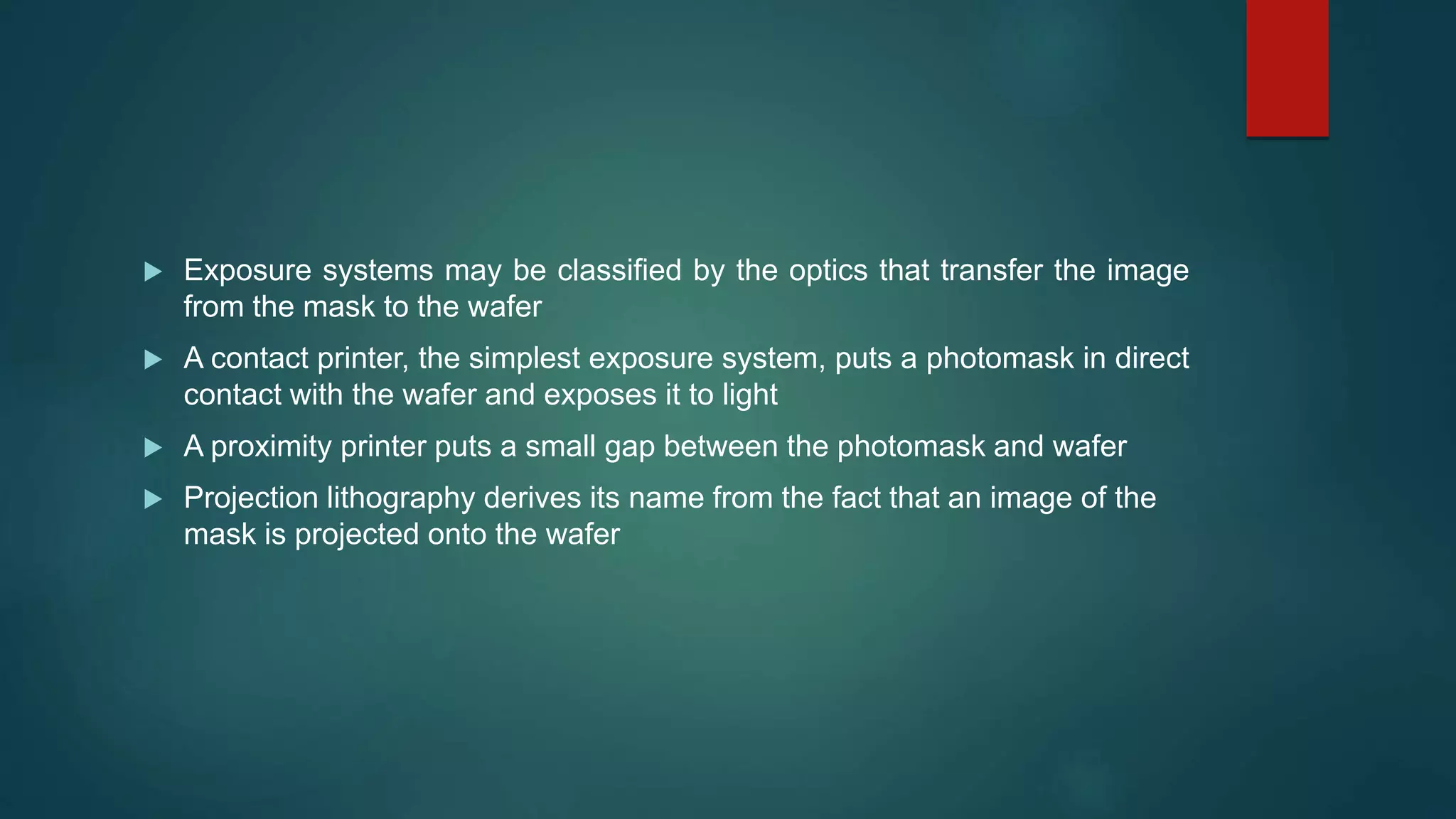
 Exposure systems may be classified by the optics that transfer the image
from the mask to the wafer
 A contact printer, the simplest exposure system, puts a photomask in direct
contact with the wafer and exposes it to light
 A proximity printer puts a small gap between the photomask and wafer
 Projection lithography derives its name from the fact that an image of the
mask is projected onto the wafer
Photolithography - Development
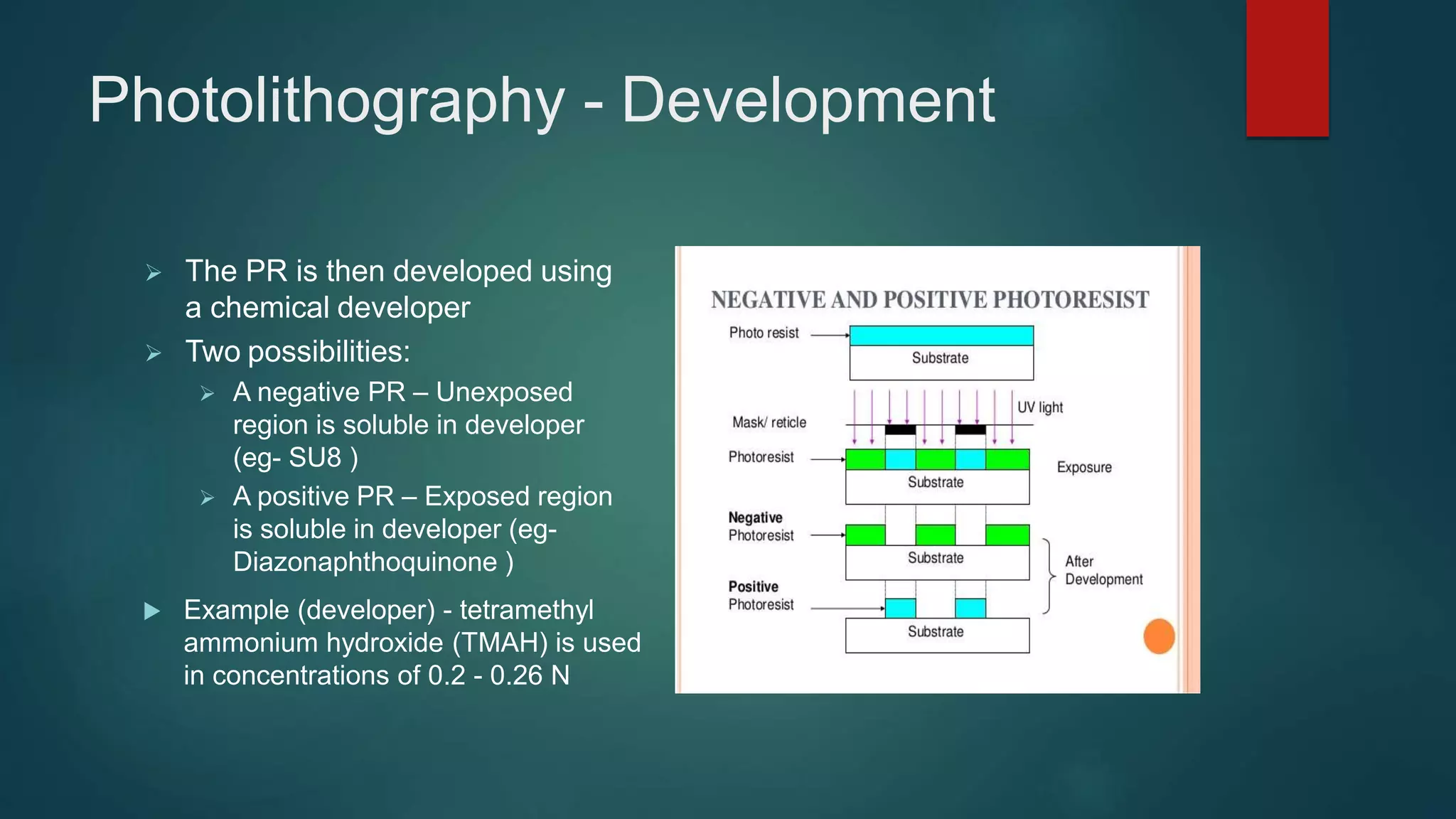
 The PR is then developed using
a chemical developer
 Two possibilities:
 A negative PR – Unexposed
region is soluble in developer
(eg- SU8 )
 A positive PR – Exposed region
is soluble in developer (eg-
Diazonaphthoquinone )
 Example (developer) - tetramethyl
ammonium hydroxide (TMAH) is used
in concentrations of 0.2 - 0.26 N
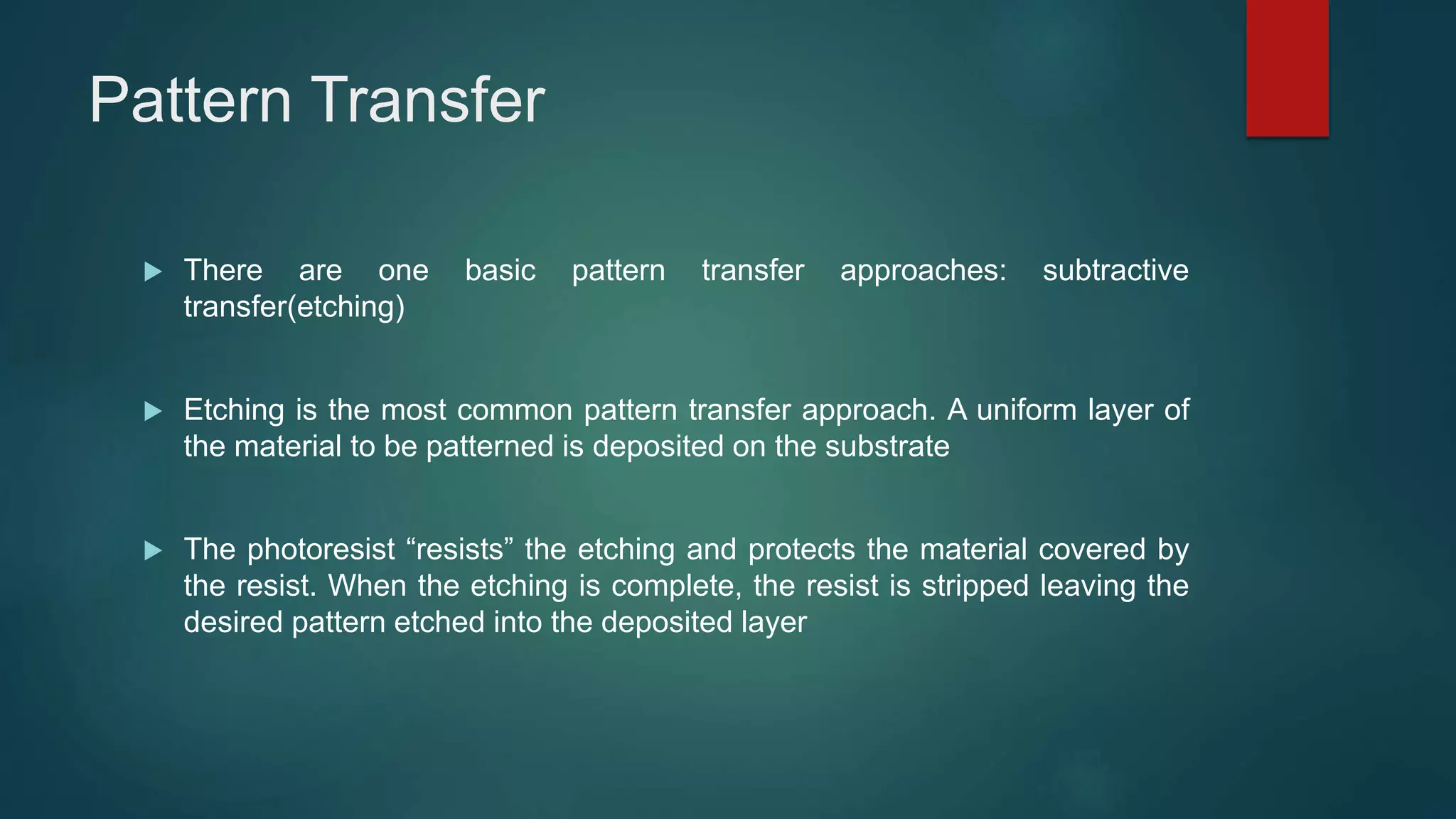
Pattern Transfer
 There are one basic pattern transfer approaches: subtractive
transfer(etching)
 Etching is the most common pattern transfer approach. A uniform layer of
the material to be patterned is deposited on the substrate
 The photoresist “resists” the etching and protects the material covered by
the resist. When the etching is complete, the resist is stripped leaving the
desired pattern etched into the deposited layer
RESOLUTION
 The minimum feature that may be printed with an optical lithography
system is determined by the Rayleigh equation
 The equation is introduced by Lord Rayleigh
 Minimum feature size (C D) that is projected is directly proportional to the
wave length (λ) of light used and inversely proportional to numerical
aperture (NA)
Rayleigh equation
C D – Minimum feature size
𝐾1 – (k1 factor) is a coefficient
λ – Wave length of light
NA – numerical aperture (nsin 𝜃 )
Immersion Lithography
 The immersion technique was first introduced by Carl Zeiss in the 1880s to
increase the resolving power of the optical microscope
 It attracted the IC industry's attention in 2002 when other types of
lithography was delayed by several technical problems
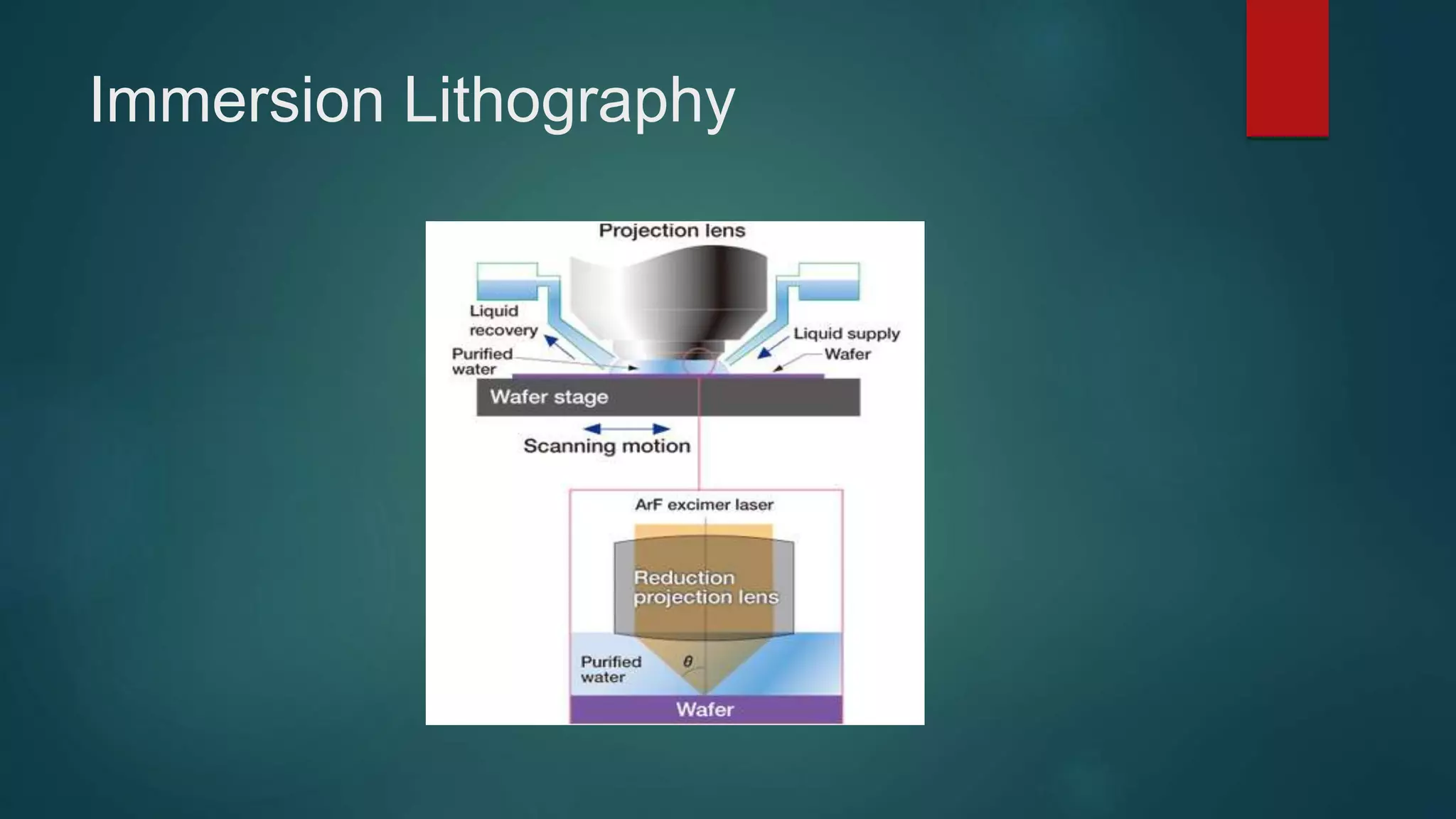
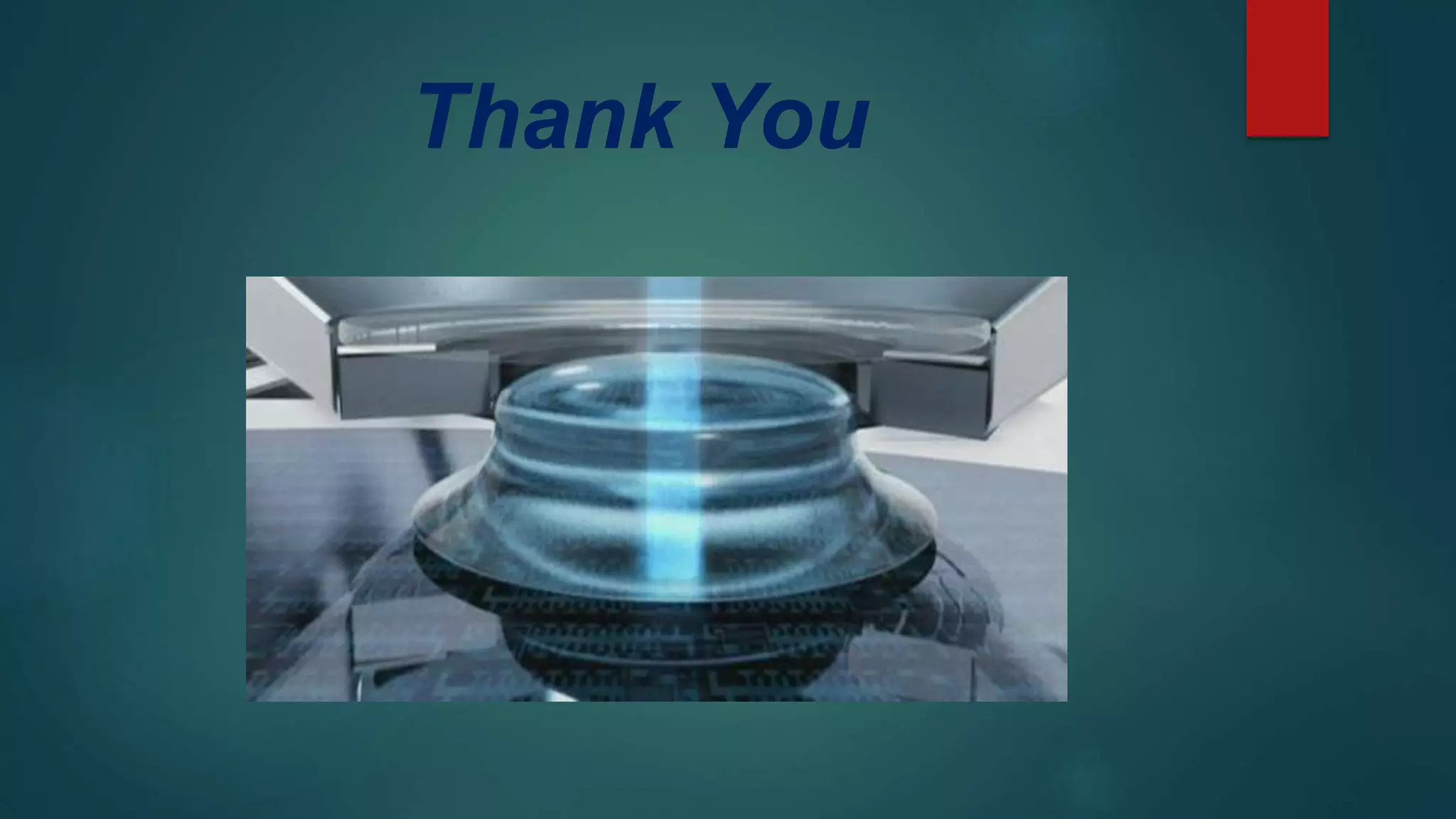
 The introduction of water into the gap between the final lens and wafer
changes the optical paths of exposure light.
 It is a method to increase the resolution of photolithographic method
 Resolution is determined by the wavelength of the imaging light (λ) and the
numerical aperture (NA) of the projection lens according to the Rayleigh
criterion
 The air between the lens and the resist has the lowest index of refraction
and thus is the limiting factor in NA.
 Water is an ideal interface for 193nm light. It transmits over 90% of the
light and has a high index of refraction (n ~ 1.4)
Problems with Immersion lithography
 Bubbles in the water can distort the exposure image
 Various physical and chemical interactions between the water and resist
stack occur, leading to water immersion-related defects
 Water purification
 Placing water on a chip can also create defects in the chip itself merely by
contaminating the backside of the chip, or neighbouring chips on the wafer
Advantages
 The introduction of water into the gap between the final lens and wafer
changes the optical paths of exposure light
 The NA of a "dry" exposure system does not go beyond 1.0 . With water
immersion, the maximum NA approaching nwater=1.44 is possible
 Immersion lithography is a stepping stone to EUV lithography
Production
 In 2007, many companies, including IBM, UMC, Toshiba, and TI are
ramping for the 45 nm node using immersion lithography
 AMD's Fab 36 is already equipped for using immersion lithography for
its 65 nm, 45 nm and 32 nm node technologies
 For the 32 nm node in 2009, Intel will begin using immersion lithography
as well
 IBM has also stated that it will be using immersion lithography for the
22 nm node
 Nikon was the world’s first to develop an ArF immersion scanner for
production — the NSR-S609B — a feat that broke the barrier of NA1.0 and
reached NA1.07
References
1. John Culver:, Immersion; march 12, 2006
2. http://www.microe.rit.edu/research/lithography/research/immersion.htm
3. http://www.eetimes.com/news/semi/showarticle.jhtml?articleid=18020628
0
4. http://spie.org
Thank You

Immersion lithography

  • 1.
    IMMERSION LITHOGRAPHY ANANDHU THAMPI 3RD SEMM.Sc. PHYSICS CUSAT , COHIN- 682022
  • 2.
    PHOTOLITHOGRAPHY  The rootwords photo, litho, and graphy all have Greek origins, with the meanings 'light', 'stone' and 'writing  Lithography refers to the transfer of an image onto paper using a plate and ink-soluble grease  Photolithography is the transfer of an image using photographic techniques  Photolithography transfers designer generated information (device placement and interconnections) to an actual IC structure using masks which contain the geometrical information
  • 4.
    Photolithography - Applicationof Photo resist  First step in photolithography is to coat the surface with approx 1 μm of photo resist (PR)  PR will be the medium whereby the required image is transferred to the surface  PR is often applied to the centre of the wafer, which is then spun to force the PR over the entire surface  The spin coating typically runs at 1200 to 4800 rpm for 30 to 60 seconds
  • 5.
    Photolithography - Exposure The PR is then exposed to UV (ultraviolet) radiation through a mask  The masks contains information about device placement and connection  The UV radiation causes a chemical change in the PR  The transfer of information from the mask to the surface occurs through the UV-induced chemical change - only occurs where the mask is transparent
  • 7.
     Exposure systemsmay be classified by the optics that transfer the image from the mask to the wafer  A contact printer, the simplest exposure system, puts a photomask in direct contact with the wafer and exposes it to light  A proximity printer puts a small gap between the photomask and wafer  Projection lithography derives its name from the fact that an image of the mask is projected onto the wafer
  • 8.
    Photolithography - Development The PR is then developed using a chemical developer  Two possibilities:  A negative PR – Unexposed region is soluble in developer (eg- SU8 )  A positive PR – Exposed region is soluble in developer (eg- Diazonaphthoquinone )  Example (developer) - tetramethyl ammonium hydroxide (TMAH) is used in concentrations of 0.2 - 0.26 N
  • 9.
    Pattern Transfer  Thereare one basic pattern transfer approaches: subtractive transfer(etching)  Etching is the most common pattern transfer approach. A uniform layer of the material to be patterned is deposited on the substrate  The photoresist “resists” the etching and protects the material covered by the resist. When the etching is complete, the resist is stripped leaving the desired pattern etched into the deposited layer
  • 11.
    RESOLUTION  The minimumfeature that may be printed with an optical lithography system is determined by the Rayleigh equation  The equation is introduced by Lord Rayleigh  Minimum feature size (C D) that is projected is directly proportional to the wave length (λ) of light used and inversely proportional to numerical aperture (NA)
  • 12.
    Rayleigh equation C D– Minimum feature size 𝐾1 – (k1 factor) is a coefficient λ – Wave length of light NA – numerical aperture (nsin 𝜃 )
  • 13.
  • 14.
    Immersion Lithography  Theimmersion technique was first introduced by Carl Zeiss in the 1880s to increase the resolving power of the optical microscope  It attracted the IC industry's attention in 2002 when other types of lithography was delayed by several technical problems  The introduction of water into the gap between the final lens and wafer changes the optical paths of exposure light.  It is a method to increase the resolution of photolithographic method
  • 15.
     Resolution isdetermined by the wavelength of the imaging light (λ) and the numerical aperture (NA) of the projection lens according to the Rayleigh criterion  The air between the lens and the resist has the lowest index of refraction and thus is the limiting factor in NA.  Water is an ideal interface for 193nm light. It transmits over 90% of the light and has a high index of refraction (n ~ 1.4)
  • 16.
    Problems with Immersionlithography  Bubbles in the water can distort the exposure image  Various physical and chemical interactions between the water and resist stack occur, leading to water immersion-related defects  Water purification  Placing water on a chip can also create defects in the chip itself merely by contaminating the backside of the chip, or neighbouring chips on the wafer
  • 17.
    Advantages  The introductionof water into the gap between the final lens and wafer changes the optical paths of exposure light  The NA of a "dry" exposure system does not go beyond 1.0 . With water immersion, the maximum NA approaching nwater=1.44 is possible  Immersion lithography is a stepping stone to EUV lithography
  • 18.
    Production  In 2007,many companies, including IBM, UMC, Toshiba, and TI are ramping for the 45 nm node using immersion lithography  AMD's Fab 36 is already equipped for using immersion lithography for its 65 nm, 45 nm and 32 nm node technologies  For the 32 nm node in 2009, Intel will begin using immersion lithography as well  IBM has also stated that it will be using immersion lithography for the 22 nm node  Nikon was the world’s first to develop an ArF immersion scanner for production — the NSR-S609B — a feat that broke the barrier of NA1.0 and reached NA1.07
  • 19.
    References 1. John Culver:,Immersion; march 12, 2006 2. http://www.microe.rit.edu/research/lithography/research/immersion.htm 3. http://www.eetimes.com/news/semi/showarticle.jhtml?articleid=18020628 0 4. http://spie.org
  • 20.