Rashmi MG
Cancer
Rashmi MG
An uncontrolled cell division
• When normal cells have lost the
usual control over their division,
differentiation and apoptosis they
become tumor cells
• Tumor is a result of an abnormal
proliferation of cells without
differentiation and apoptosis
Tumors classification (based on their
origin):
Epithelial – Cancer arises from
protective surface layer = Carcinoma
Mesenchymal- Cancer arises from
embryonic mesoderm germ layer =
Sarcoma (which is a nonepithelial
malignant tumors)
Hematopoietic – Cancer arises from
blood
Neuroectodermal –Cancer arises from
components of the nervous system
Carcinoma has 2 categories:
1. Squamous cell carcinoma- Cancer arise
from epithelial origin that form
protective cell layers
2. Adenocarcinoma- Cancer arise from
secretory epithelia
Rashmi MG
Rashmi MG
Morphology of cancer cells:
• Cell membrane possess many
modified surface receptors,
abnormal antigens which triggers
immune responses
• Cytoplasm is scarce and
undergoes frequent changes
• Organelles are poorly developed
(especially Golgi apparatus),
reduced volume in mitochondria,
presence of simplified granular
endoplasmic reticulum structure
with frequent fragmentation and
degranulation
• Presence of large nucleus with
irregular shape and prominent
nucleoli
• Nuclear membrane pores are
more
• Reduced heterochromatin
• Cancer cells have an increased
number of mitoses with atypical
mitosis forms such as defects in
the mitotic spindle and
dissymmetrical structures
Rashmi MG
Tumor or neoplasm- may be of 2 types (based on the type of cell from which they arise):
1. Benign tumor
2. Malignant tumor
Benign tumor:
• Neoplastic cells remain
clustered together in a single
mass
• It cannot spread to other sites
• Cells closely resembles the
normal cells function like
normal cells
• Ex. Primary tumor arising in
humans (which are harmless)
Malignant tumor:
• Neoplastic cells that do not remain localized and
encapsulated
• They become progressively invasive and malignant
• They spread throughout the body and invade
surrounding normal tissue (invasiveness)
• They spread through circulatory or lymphatic
systems (metastasis)
• The term cancer refer specifically to malignant
tumors
Rashmi MG
Rashmi MG
Cancers mostly originate from single abnormal cell (i.e. monoclonal origin)
It is initiated by,
• Changes in the cell’s DNA sequence (Genetic Changes)
• Change in pattern of gene expression without a change in DNA
sequence (Epigenetic Changes)
• Changes in somatic cells (majority of all cancers)
• Genetic changes in germinal cells (1% of all cancer )
Transformation- Transition of a normal cell into a tumor cell
• It is a multistep process
• It involves epigenetic changes, genetic changes, selection of cells with the
progressively increasing capacity for proliferation, invasion and metastasis
• 3 stages: Initiation, Promotion and Progression
1. Initiation: Normal cells will change to form tumors
2. Promotion: Increased proliferation of initiated cells, increase in the
population of initiated cells
3. Progression: Normal cells acquires additional genetic changes that lead
to malignancy and metastasis
• Additional genetic changes= is a important force to drive
tumorigenesis
• It provides the developing tumor cell with important growth
advantages that allow cell clones to outgrowth their more normal
neighboring cells
Rashmi MG
Rashmi MG
Rashmi MG
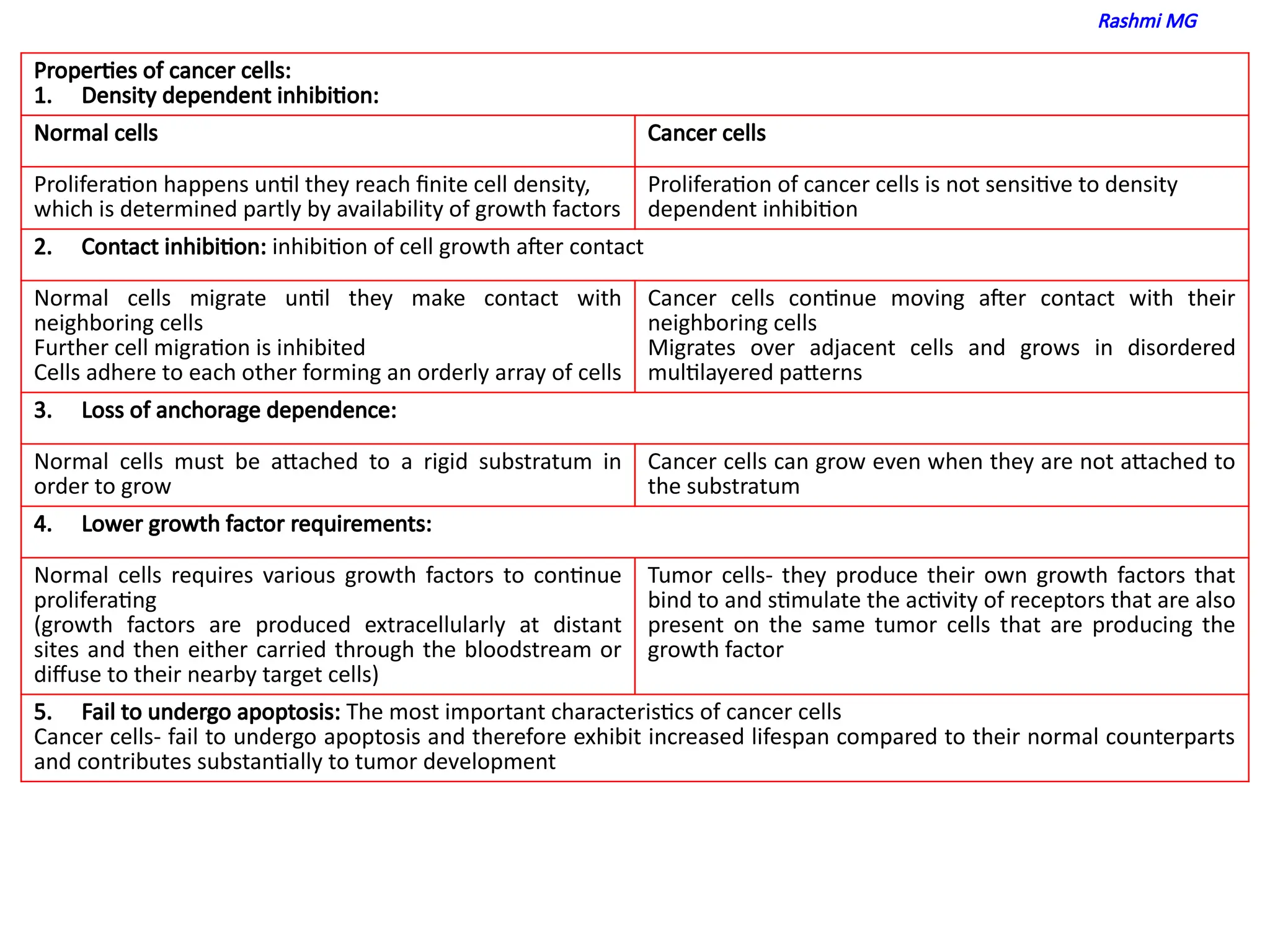
Properties of cancer cells:
1. Density dependent inhibition:
Normal cells Cancer cells
Proliferation happens until they reach finite cell density,
which is determined partly by availability of growth factors
Proliferation of cancer cells is not sensitive to density
dependent inhibition
2. Contact inhibition: inhibition of cell growth after contact
Normal cells migrate until they make contact with
neighboring cells
Further cell migration is inhibited
Cells adhere to each other forming an orderly array of cells
Cancer cells continue moving after contact with their
neighboring cells
Migrates over adjacent cells and grows in disordered
multilayered patterns
3. Loss of anchorage dependence:
Normal cells must be attached to a rigid substratum in
order to grow
Cancer cells can grow even when they are not attached to
the substratum
4. Lower growth factor requirements:
Normal cells requires various growth factors to continue
proliferating
(growth factors are produced extracellularly at distant
sites and then either carried through the bloodstream or
diffuse to their nearby target cells)
Tumor cells- they produce their own growth factors that
bind to and stimulate the activity of receptors that are also
present on the same tumor cells that are producing the
growth factor
5. Fail to undergo apoptosis: The most important characteristics of cancer cells
Cancer cells- fail to undergo apoptosis and therefore exhibit increased lifespan compared to their normal counterparts
and contributes substantially to tumor development
Rashmi MG
• 2 properties of cancer cells that play important
roles in Invasion and Metastasis:
• Cancer cells secrete Proteases that digest
extracellular matrix components
• (This allows cancer cells to invade
adjacent normal tissues)
• Cancer cells secrete Growth Factors
• (promotes the formation of new blood
vessels (angiogenesis) through which the
support to growth of tumor is obtained
by the supply of oxygen and nutrients to
the proliferating tumor cells)
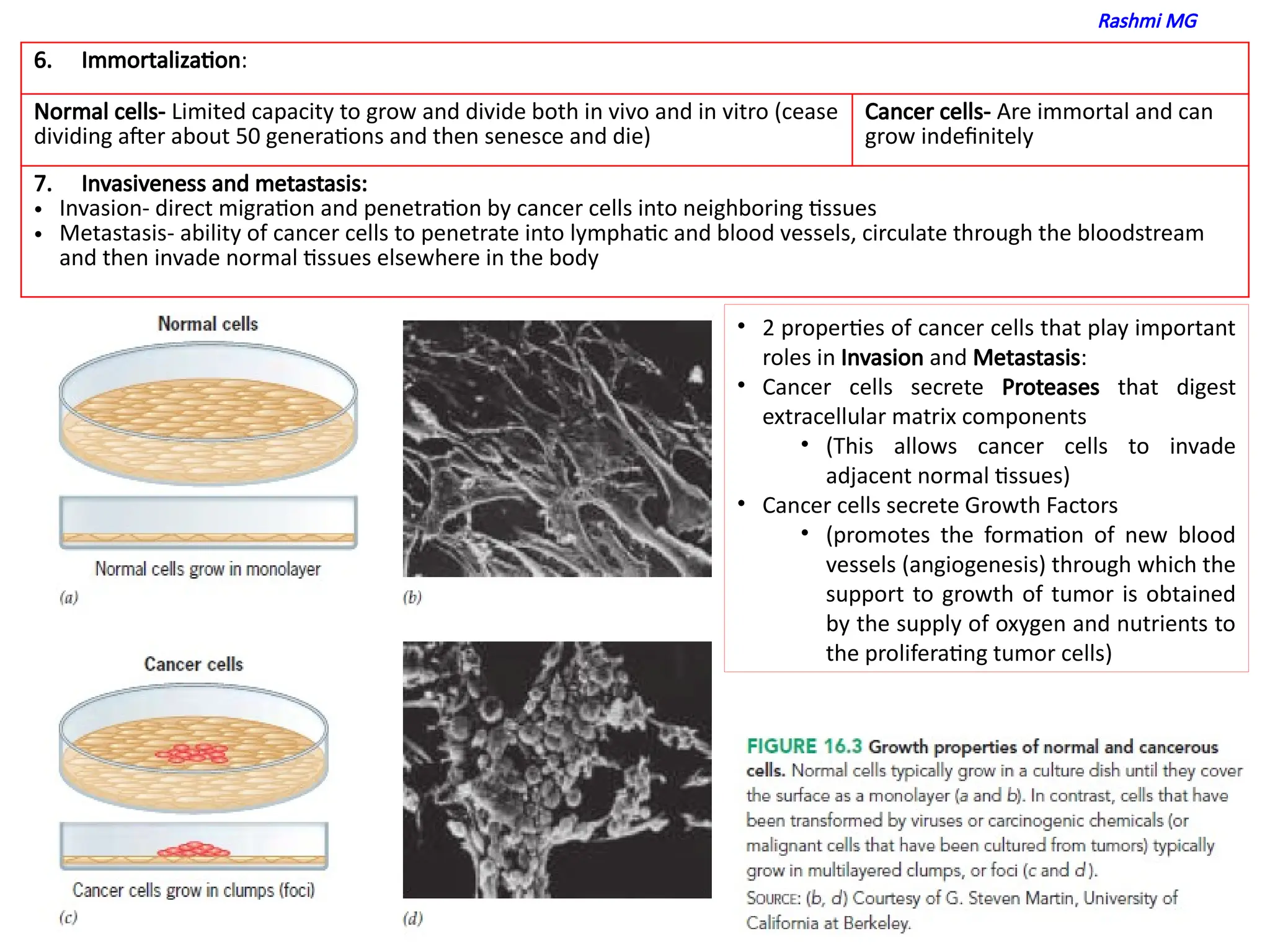
6. Immortalization:
Normal cells- Limited capacity to grow and divide both in vivo and in vitro (cease
dividing after about 50 generations and then senesce and die)
Cancer cells- Are immortal and can
grow indefinitely
7. Invasiveness and metastasis:
• Invasion- direct migration and penetration by cancer cells into neighboring tissues
• Metastasis- ability of cancer cells to penetrate into lymphatic and blood vessels, circulate through the bloodstream
and then invade normal tissues elsewhere in the body
Rashmi MG
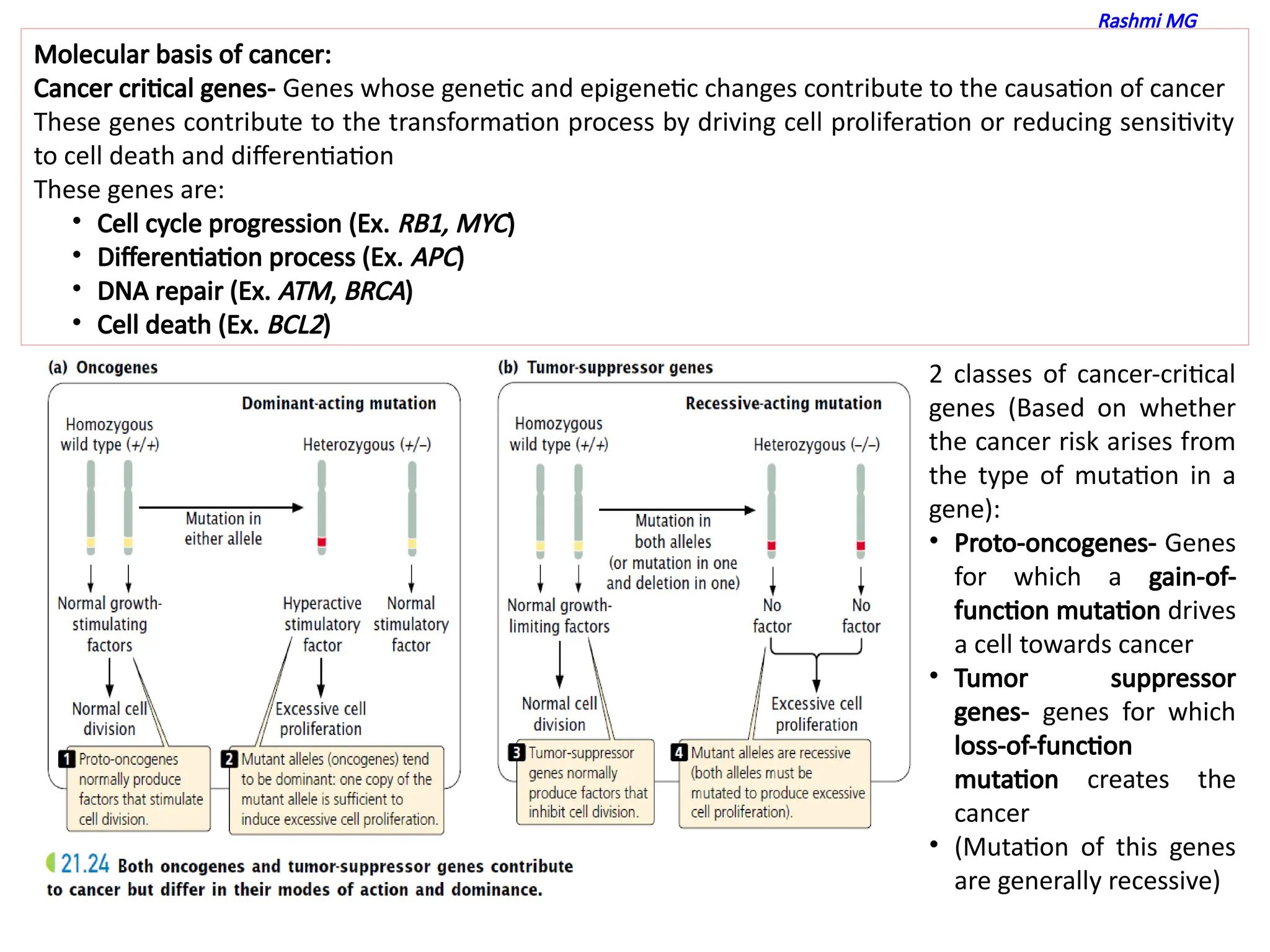
2 classes of cancer-critical
genes (Based on whether
the cancer risk arises from
the type of mutation in a
gene):
• Proto-oncogenes- Genes
for which a gain-of-
function mutation drives
a cell towards cancer
• Tumor suppressor
genes- genes for which
loss-of-function
mutation creates the
cancer
• (Mutation of this genes
are generally recessive)
Molecular basis of cancer:
Cancer critical genes- Genes whose genetic and epigenetic changes contribute to the causation of cancer
These genes contribute to the transformation process by driving cell proliferation or reducing sensitivity
to cell death and differentiation
These genes are:
• Cell cycle progression (Ex. RB1, MYC)
• Differentiation process (Ex. APC)
• DNA repair (Ex. ATM, BRCA)
• Cell death (Ex. BCL2)
Rashmi MG
Rashmi MG
Proto-oncogenes
• They control growth and division of cells
• Protein encoded by these genes= Growth Factors,
Growth Factor Receptors, Transcription Factors and
Signal Transducers
• Contribute to transformation process by driving
cell proliferation or reducing sensitivity to cell
death
• Several types of genetic and epigenetic changes
convert proto-oncogenes into oncogenes
Name Gene product
SIS Synthesis of platelet- derived growth factor
ERBB Synthesis of epidermal growth factor
receptor
SRC Synthesis of tyrosine kinase
ABL Synthesis of tyrosine kinase
KRAS Synthesis of GTPase
JUN Synthesis of transcription factors
FOS Synthesis of transcription factors
MYC Synthesis of transcription factors
Rashmi MG
To activate proto-oncogene underlying
mechanisms occur,
1. Point mutation
2. Chromosomal translocation
3. Gene amplification
4. Insertional activation
1. Point mutation:
• Proto-oncogenes are converted into
oncogenes by single alteration of a
nucleotide
• Alteration may Be- Deletion of a Base,
Insertion of an Extra Base, Substitution of
One Base for another etc.
• Result - Changes in amino acid sequence of
encoded protein which results in alteration
of protein function
• Consequences- Increase in gene function or
it can interrupt gene function
• Ex. RAS proto-oncogenes (HRAS, NRAS and
KRAS) undergoes point mutation to convert
into oncogenes
Rashmi MG
Rashmi MG
2. Chromosomal translocation:
• Proto-oncogenes are converted into
oncogenes by chromosome translocation
• Ex. Burkitt’s lymphoma (It is a childhood
tumor affecting jaw and found mainly in
Africa)
• The MYC containing segment of
chromosome 8 (8q24) is translocated to
chromosome 14 (14q32)
• Consequences- It places MYC genes close
to the Ig heavy chain gene
• Result- Cell becomes cancerous; the
product of MYC gene acts as transcription
factor that affects diverse cellular
processes involved in cell growth,
proliferation, apoptosis and cellular
metabolism
• Expression of MYC gene leads to
degeneration of a large number of target
gene
Rashmi MG
3. Gene amplification:
• Proto-oncogenes are converted into
oncogenes by reduplication and
amplification of their DNA sequences
• Ex. NMYC in neuroblastoma
• It is usually an unstable genetic condition
that can only be maintained under strong
selective pressure
4. Insertional activation:
• Proto-oncogenes are converted into
oncogenes by insertion of mobile genetic
element (such as retrovirus)
• Consequence- Changes the expression of
genes, but leave their coding sequence
unaltered Ex. c- myc
• Avian Leukosis Virus (ALV) is a retrovirus
that does not carry any viral oncogenes,
yet able to transform B cells into
lymphomas
• This particular virus has been shown to
integrate within the MYC proto-oncogene
(containing 3 exons)
• Exon 1 of MYC gene has unknown
function; Exon 2 and 3 encode MYC
protein
• Result- Insertion of ALV between exon2
and3 elevates the transcription of exon 2
and 3 resulting in the increased synthesis
of MYC
Rashmi MG
Tumor suppressor genes:
• These genes can directly or indirectly inhibit cell growth
• Genes which directly inhibit cell growth or promote cell death= Gatekeepers (their activity is rate
limiting for tumor cell proliferation)
• Genes which indirectly suppress the proliferation but function to promote genetic stability = Caretakers
( promotes genetic stability)
• Caretakers function in DNA repair pathways and elimination of caretakers results in increased mutation
rates
• 5 classes of tumor-suppressor genes:
• Genes that regulate or inhibit cell cycle progression (Ex. p16 and RB1)
• Genes that encode receptors or developmental signals that inhibit cell proliferation (Ex. The
hedgehog receptor)
• Genes encoding checkpoint-control proteins that arrest the cell cycle, if DNA is damaged (Ex. p53)
• Genes that promote apoptosis
• Genes that encode enzymes that participate in DNA repair
Examples of tumor suppressor genes and their functions:
Tumor suppressor genes Function
BRCA1 and BRCA2 Transcription factor, DNA repair
hMLH1 DNA mismatch repair
NF1 GTPase
p53 Transcription factor
RB1 Cell cycle checkpoint
Rashmi MG
Rashmi MG
p53
• Well known tumor suppressor gene
• Encodes a polypeptide which acts as a transcription factor
• Mutations in the p53= 50% human cancers
• P53 protein- plays an important role in the maintenance of genomic stability
• Loss of p53= abolish the DNA- damage checkpoint
• Cells with p53- become arrested in G1 when exposed to DNA-damaging irradiation (cells lacking
functional p53 do not)
• This permits the cells to repair DNA damage, prior to stages of its fixation and propagation, which may
lead to tumor formation
• p53 facilitate general genomic repair of DNA damage and to bind proteins involved in DNA repair
• In many cellular systems, p53 promotes apoptosis of cells harboring irreparable damaged DNA
• Active form of p53- tetramer of 4 identical subunits
• Missense mutation in one of the 2 p53 alleles= abrogate all p53 activity (because virtually all the
oligomers will contain at least one defective subunit, and such oligomers have reduced ability to
activate transcription
• Oncogenic p53 mutation= dominant negatives, with mutations in a single allele causing a loss-of
function
Rashmi MG
BRCA1 (BReast-CAncer susceptibility gene
1) and BRCA2:
• These genes contribute to checkpoint
of cell cycle, DNA repair and
transcriptional regulation in response
to DNA damage mutations in these
genes = hereditary breast and ovarian
cancer
Rashmi MG
Alteration of genes involved in the repair of damaged
DNA= responsible for a number of human cancers
It is essential that cells possess efficient repair systems
Absence of repair systems = genome would not be able
to maintain its essential cellular functions for more
than a few hours before key genes became inactivated
by DNA damage
Deficiency in DNA repair = several human diseases
Ex. Xeroderma pigmentosum (results from mutation in
any one of several genes for proteins involved in
nucleotide excision repair)
Apoptotic genes can function as proto-oncogenes or tumor suppressor genes
• Anti-apoptotic genes (Ex. BCL-2) behave as proto-oncogenes- because over production of
their encoded proteins prevent normal apoptosis
• Conversely apoptotic genes whose protein products stimulate apoptosis behave as tumor
suppressors
Rashmi MG
RB1
• When RB1 genes are
inactivated
retinoblastoma arises
• Retinoblastoma is a
childhood tumor of
the retina
• There are 2 forms of
the diseases:
• Hereditary
retinoblastoma
(familial form):
• Individual inherit a
single defective copy
of the RB1 gene
• Tumors occur where
the remaining normal
copy is lost or
inactivated by a
somatic mutation
• There are multiple
foci tumors arising in
both eyes (also called
bilateral
retinoblastoma)
• Non-hereditary retinoblastoma
(Sporadic form):
• Rare and develops late in life and
usually affects only one eye
• Tumor arises because both copies are
lost or inactivated through the
coincidence of two somatic mutations
in one cell
Rashmi MG
Rashmi MG
2 types of chemical carcinogens:
Direct acting carcinogens- acts directly without any metabolic activation
Indirect acting carcinogens- requires metabolic activation for them to act as carcinogens
Ex. Aflatoxin (a mycotoxin which is a potent liver carcinogens) is activated into aflatoxin-2,3,
epoxide by the action of intracellular enzymes which is associated with characteristic mutations of
the p53 gene
Aflatoxins produced by the fungi Aspergillus flavus and Aspergillus parasiticus
Carcinogen:
• Agents that initiate or
promote tumor formation
• 3 classes of carcinogen:
• Radiations (like UV radiation
and gamma-rays)
• Chemicals (like benzopyrene
and benzene)
• Biological agents (oncovirus)
• Chemical carcinogens: has a
very broad range of
structures
• Have little or no obvious
structural or biochemical
similarity to each other
Chemically, aflatoxins consists of difurofuran ring system fused to a substituted coumarin moiety, with a methoxy group
attached at the corresponding benzene ring
After chemical modification by liver enzymes, Aflatoxin becomes linked to G-residues in DNA and induces G-to-T
transversions
Other chemical carcinogens- Benzene (causes leukemia), Arsenic (lung and skin), Cadmium (prostate), Radon (lung),
Asbestos (lung and gastro-intestinal tract) and Vinyl Chloride (angiosarcoma, liver)
Rashmi MG
Oncovirus or tumor virus:
• The transforming activity of a
tumor virus residing in a
particular oncogene or
oncogenes is carried in the viral
genome
• They have the ability to convert
normal cells to an oncogenic
state
• Oncogenic containing viral
oncogene may be:
1. DNA containing oncovirus
2. RNA containing oncovirus
Rashmi MG
1. DNA containing oncovirus- Ex. Hepatitis B, Herpes virus, SV40 virus
• These carry oncogenes without cellular counterparts
• These oncogenes may work by inhibiting the activities of the cellular
tumor suppressor
• Mode of action- They act mainly by interfering with cell cycle controls
• Ex. Papilloma virus (causes human warts and carcinomas of uterine
cervix) uses 2 viral proteins- E6 and E7 to sequester the host cell’s p53
and Rb respectively
• E1A and E2B proteins of adenovirus inactivates the Rb and p53 tumor
suppressor proteins with E1A binding to Rb and E2B binding to p53
• Examples of DNA containing oncovirus that causes human cancer are,
• Hepatitis B (liver cancer)
• Papilloma virus (cervical and other anogenital cancers)
• Epstein-Barr virus (Burkitt's lymphoma and nasopharyngeal
carcinoma)
• Kaposi’s sarcoma-associated herpes virus (Kaposi’s sarcoma)
Rashmi MG
2. RNA containing oncovirus-Ex. Rous sarcoma virus, Human T-cell lymphotropic virus-1, HTLV-1
• Viral oncogenes were first reported in Rous Sarcoma virus by Peyton Rouse which transforms chicken
embryo fibroblasts in culture and induces sarcoma
• The first oncogene (found in Rous Sarcoma virus) was designated as the src oncogene
• Ex. HTLV-1 (adult T-cell leukemia/ lymphoma)
• HTLV-2 (hairy cell leukemia)
• Simian virus40 (Hodgkin’s lymphoma)
Retroviral oncogenes
• American microbiologist H Varmous and M Bishop in 1976 demonstrated that normal chicken cells
contain genes that are closely related to the retroviral src oncogenes (codes for src protein tyrosine
kinase) of Rous Sarcoma virus
• Conclusion- the oncogene in the virus did not represent a true viral gene, but was a normal cellular
gene, which the virus had acquired during replication in the host cell and thereafter carried along
• src related sequences were found in normal DNA of a wide range of other vertebrates (including
human)
• Normal cell genes from which the retroviral oncogenes originate are called proto-oncogenes
• Mutations or genetic rearrangements of proto-oncogenes by carcinogens or viruses might alter the
normally regulated function of these genes, converting them into potent cancer-causing oncogenes
• Viral oncogenes are described by using prefix v
• Cellular counterparts of viral oncogenes are described by using prefix c
• So the oncogene carried by Rous sarcoma virus is called v-src
• Proto-oncogene related to it in cellular genomes is called c-src
Rashmi MG
Rashmi MG
References:
1. https://
www.researchgate.net/figure/Normal-cell-cycle-and-uncontrolled-division-in-cells-l
eading-to-formation-of-tumors_fig2_269098315
2. https://microbenotes.com/cancer-cells/
3. https://www.ncbi.nlm.nih.gov/books/NBK9553/
4. Benjamin A Pierce, Genetics, A conceptual approach
5. Klug cummins, Spencer, Palladino (2012), Concepts of Genetics, Pearson
Publication, 10th Edition
6. Janet Iwasa, Wallace Marshall (2016), Karp's cell and molecular biology, 8th edition
7. Alberts (2015), Molecular Biology of The Cell, Garland Science, Taylor &Francis
Group, LLC, 6th
edition
8. Thomas D pollard, William C Earnshaw, (2008), Cell biology, Saunders Elsevier, 2nd
edition
9. Richard A Goldsby, Thomas J Kindt, Barbara A Osborne, Janis Kuby, Immunology, 5th
edition

Cancer Biology (Introduction, features of cancer cells, properties of tumor cells, molecular basis of cancer, oncogenes, tumor suppressor genes, carcinogens, oncoviruses).pptx

  • 1.
  • 2.
    Rashmi MG An uncontrolledcell division • When normal cells have lost the usual control over their division, differentiation and apoptosis they become tumor cells • Tumor is a result of an abnormal proliferation of cells without differentiation and apoptosis Tumors classification (based on their origin): Epithelial – Cancer arises from protective surface layer = Carcinoma Mesenchymal- Cancer arises from embryonic mesoderm germ layer = Sarcoma (which is a nonepithelial malignant tumors) Hematopoietic – Cancer arises from blood Neuroectodermal –Cancer arises from components of the nervous system Carcinoma has 2 categories: 1. Squamous cell carcinoma- Cancer arise from epithelial origin that form protective cell layers 2. Adenocarcinoma- Cancer arise from secretory epithelia
  • 3.
  • 4.
    Rashmi MG Morphology ofcancer cells: • Cell membrane possess many modified surface receptors, abnormal antigens which triggers immune responses • Cytoplasm is scarce and undergoes frequent changes • Organelles are poorly developed (especially Golgi apparatus), reduced volume in mitochondria, presence of simplified granular endoplasmic reticulum structure with frequent fragmentation and degranulation • Presence of large nucleus with irregular shape and prominent nucleoli • Nuclear membrane pores are more • Reduced heterochromatin • Cancer cells have an increased number of mitoses with atypical mitosis forms such as defects in the mitotic spindle and dissymmetrical structures
  • 5.
    Rashmi MG Tumor orneoplasm- may be of 2 types (based on the type of cell from which they arise): 1. Benign tumor 2. Malignant tumor Benign tumor: • Neoplastic cells remain clustered together in a single mass • It cannot spread to other sites • Cells closely resembles the normal cells function like normal cells • Ex. Primary tumor arising in humans (which are harmless) Malignant tumor: • Neoplastic cells that do not remain localized and encapsulated • They become progressively invasive and malignant • They spread throughout the body and invade surrounding normal tissue (invasiveness) • They spread through circulatory or lymphatic systems (metastasis) • The term cancer refer specifically to malignant tumors
  • 6.
  • 7.
    Rashmi MG Cancers mostlyoriginate from single abnormal cell (i.e. monoclonal origin) It is initiated by, • Changes in the cell’s DNA sequence (Genetic Changes) • Change in pattern of gene expression without a change in DNA sequence (Epigenetic Changes) • Changes in somatic cells (majority of all cancers) • Genetic changes in germinal cells (1% of all cancer ) Transformation- Transition of a normal cell into a tumor cell • It is a multistep process • It involves epigenetic changes, genetic changes, selection of cells with the progressively increasing capacity for proliferation, invasion and metastasis • 3 stages: Initiation, Promotion and Progression 1. Initiation: Normal cells will change to form tumors 2. Promotion: Increased proliferation of initiated cells, increase in the population of initiated cells 3. Progression: Normal cells acquires additional genetic changes that lead to malignancy and metastasis • Additional genetic changes= is a important force to drive tumorigenesis • It provides the developing tumor cell with important growth advantages that allow cell clones to outgrowth their more normal neighboring cells
  • 8.
  • 9.
  • 10.
    Rashmi MG Properties ofcancer cells: 1. Density dependent inhibition: Normal cells Cancer cells Proliferation happens until they reach finite cell density, which is determined partly by availability of growth factors Proliferation of cancer cells is not sensitive to density dependent inhibition 2. Contact inhibition: inhibition of cell growth after contact Normal cells migrate until they make contact with neighboring cells Further cell migration is inhibited Cells adhere to each other forming an orderly array of cells Cancer cells continue moving after contact with their neighboring cells Migrates over adjacent cells and grows in disordered multilayered patterns 3. Loss of anchorage dependence: Normal cells must be attached to a rigid substratum in order to grow Cancer cells can grow even when they are not attached to the substratum 4. Lower growth factor requirements: Normal cells requires various growth factors to continue proliferating (growth factors are produced extracellularly at distant sites and then either carried through the bloodstream or diffuse to their nearby target cells) Tumor cells- they produce their own growth factors that bind to and stimulate the activity of receptors that are also present on the same tumor cells that are producing the growth factor 5. Fail to undergo apoptosis: The most important characteristics of cancer cells Cancer cells- fail to undergo apoptosis and therefore exhibit increased lifespan compared to their normal counterparts and contributes substantially to tumor development
  • 11.
    Rashmi MG • 2properties of cancer cells that play important roles in Invasion and Metastasis: • Cancer cells secrete Proteases that digest extracellular matrix components • (This allows cancer cells to invade adjacent normal tissues) • Cancer cells secrete Growth Factors • (promotes the formation of new blood vessels (angiogenesis) through which the support to growth of tumor is obtained by the supply of oxygen and nutrients to the proliferating tumor cells) 6. Immortalization: Normal cells- Limited capacity to grow and divide both in vivo and in vitro (cease dividing after about 50 generations and then senesce and die) Cancer cells- Are immortal and can grow indefinitely 7. Invasiveness and metastasis: • Invasion- direct migration and penetration by cancer cells into neighboring tissues • Metastasis- ability of cancer cells to penetrate into lymphatic and blood vessels, circulate through the bloodstream and then invade normal tissues elsewhere in the body
  • 12.
    Rashmi MG 2 classesof cancer-critical genes (Based on whether the cancer risk arises from the type of mutation in a gene): • Proto-oncogenes- Genes for which a gain-of- function mutation drives a cell towards cancer • Tumor suppressor genes- genes for which loss-of-function mutation creates the cancer • (Mutation of this genes are generally recessive) Molecular basis of cancer: Cancer critical genes- Genes whose genetic and epigenetic changes contribute to the causation of cancer These genes contribute to the transformation process by driving cell proliferation or reducing sensitivity to cell death and differentiation These genes are: • Cell cycle progression (Ex. RB1, MYC) • Differentiation process (Ex. APC) • DNA repair (Ex. ATM, BRCA) • Cell death (Ex. BCL2)
  • 13.
  • 14.
    Rashmi MG Proto-oncogenes • Theycontrol growth and division of cells • Protein encoded by these genes= Growth Factors, Growth Factor Receptors, Transcription Factors and Signal Transducers • Contribute to transformation process by driving cell proliferation or reducing sensitivity to cell death • Several types of genetic and epigenetic changes convert proto-oncogenes into oncogenes Name Gene product SIS Synthesis of platelet- derived growth factor ERBB Synthesis of epidermal growth factor receptor SRC Synthesis of tyrosine kinase ABL Synthesis of tyrosine kinase KRAS Synthesis of GTPase JUN Synthesis of transcription factors FOS Synthesis of transcription factors MYC Synthesis of transcription factors
  • 15.
    Rashmi MG To activateproto-oncogene underlying mechanisms occur, 1. Point mutation 2. Chromosomal translocation 3. Gene amplification 4. Insertional activation 1. Point mutation: • Proto-oncogenes are converted into oncogenes by single alteration of a nucleotide • Alteration may Be- Deletion of a Base, Insertion of an Extra Base, Substitution of One Base for another etc. • Result - Changes in amino acid sequence of encoded protein which results in alteration of protein function • Consequences- Increase in gene function or it can interrupt gene function • Ex. RAS proto-oncogenes (HRAS, NRAS and KRAS) undergoes point mutation to convert into oncogenes
  • 16.
  • 17.
    Rashmi MG 2. Chromosomaltranslocation: • Proto-oncogenes are converted into oncogenes by chromosome translocation • Ex. Burkitt’s lymphoma (It is a childhood tumor affecting jaw and found mainly in Africa) • The MYC containing segment of chromosome 8 (8q24) is translocated to chromosome 14 (14q32) • Consequences- It places MYC genes close to the Ig heavy chain gene • Result- Cell becomes cancerous; the product of MYC gene acts as transcription factor that affects diverse cellular processes involved in cell growth, proliferation, apoptosis and cellular metabolism • Expression of MYC gene leads to degeneration of a large number of target gene
  • 18.
    Rashmi MG 3. Geneamplification: • Proto-oncogenes are converted into oncogenes by reduplication and amplification of their DNA sequences • Ex. NMYC in neuroblastoma • It is usually an unstable genetic condition that can only be maintained under strong selective pressure 4. Insertional activation: • Proto-oncogenes are converted into oncogenes by insertion of mobile genetic element (such as retrovirus) • Consequence- Changes the expression of genes, but leave their coding sequence unaltered Ex. c- myc • Avian Leukosis Virus (ALV) is a retrovirus that does not carry any viral oncogenes, yet able to transform B cells into lymphomas • This particular virus has been shown to integrate within the MYC proto-oncogene (containing 3 exons) • Exon 1 of MYC gene has unknown function; Exon 2 and 3 encode MYC protein • Result- Insertion of ALV between exon2 and3 elevates the transcription of exon 2 and 3 resulting in the increased synthesis of MYC
  • 19.
    Rashmi MG Tumor suppressorgenes: • These genes can directly or indirectly inhibit cell growth • Genes which directly inhibit cell growth or promote cell death= Gatekeepers (their activity is rate limiting for tumor cell proliferation) • Genes which indirectly suppress the proliferation but function to promote genetic stability = Caretakers ( promotes genetic stability) • Caretakers function in DNA repair pathways and elimination of caretakers results in increased mutation rates • 5 classes of tumor-suppressor genes: • Genes that regulate or inhibit cell cycle progression (Ex. p16 and RB1) • Genes that encode receptors or developmental signals that inhibit cell proliferation (Ex. The hedgehog receptor) • Genes encoding checkpoint-control proteins that arrest the cell cycle, if DNA is damaged (Ex. p53) • Genes that promote apoptosis • Genes that encode enzymes that participate in DNA repair Examples of tumor suppressor genes and their functions: Tumor suppressor genes Function BRCA1 and BRCA2 Transcription factor, DNA repair hMLH1 DNA mismatch repair NF1 GTPase p53 Transcription factor RB1 Cell cycle checkpoint
  • 20.
  • 21.
    Rashmi MG p53 • Wellknown tumor suppressor gene • Encodes a polypeptide which acts as a transcription factor • Mutations in the p53= 50% human cancers • P53 protein- plays an important role in the maintenance of genomic stability • Loss of p53= abolish the DNA- damage checkpoint • Cells with p53- become arrested in G1 when exposed to DNA-damaging irradiation (cells lacking functional p53 do not) • This permits the cells to repair DNA damage, prior to stages of its fixation and propagation, which may lead to tumor formation • p53 facilitate general genomic repair of DNA damage and to bind proteins involved in DNA repair • In many cellular systems, p53 promotes apoptosis of cells harboring irreparable damaged DNA • Active form of p53- tetramer of 4 identical subunits • Missense mutation in one of the 2 p53 alleles= abrogate all p53 activity (because virtually all the oligomers will contain at least one defective subunit, and such oligomers have reduced ability to activate transcription • Oncogenic p53 mutation= dominant negatives, with mutations in a single allele causing a loss-of function
  • 22.
    Rashmi MG BRCA1 (BReast-CAncersusceptibility gene 1) and BRCA2: • These genes contribute to checkpoint of cell cycle, DNA repair and transcriptional regulation in response to DNA damage mutations in these genes = hereditary breast and ovarian cancer
  • 23.
    Rashmi MG Alteration ofgenes involved in the repair of damaged DNA= responsible for a number of human cancers It is essential that cells possess efficient repair systems Absence of repair systems = genome would not be able to maintain its essential cellular functions for more than a few hours before key genes became inactivated by DNA damage Deficiency in DNA repair = several human diseases Ex. Xeroderma pigmentosum (results from mutation in any one of several genes for proteins involved in nucleotide excision repair) Apoptotic genes can function as proto-oncogenes or tumor suppressor genes • Anti-apoptotic genes (Ex. BCL-2) behave as proto-oncogenes- because over production of their encoded proteins prevent normal apoptosis • Conversely apoptotic genes whose protein products stimulate apoptosis behave as tumor suppressors
  • 24.
    Rashmi MG RB1 • WhenRB1 genes are inactivated retinoblastoma arises • Retinoblastoma is a childhood tumor of the retina • There are 2 forms of the diseases: • Hereditary retinoblastoma (familial form): • Individual inherit a single defective copy of the RB1 gene • Tumors occur where the remaining normal copy is lost or inactivated by a somatic mutation • There are multiple foci tumors arising in both eyes (also called bilateral retinoblastoma) • Non-hereditary retinoblastoma (Sporadic form): • Rare and develops late in life and usually affects only one eye • Tumor arises because both copies are lost or inactivated through the coincidence of two somatic mutations in one cell
  • 25.
  • 26.
    Rashmi MG 2 typesof chemical carcinogens: Direct acting carcinogens- acts directly without any metabolic activation Indirect acting carcinogens- requires metabolic activation for them to act as carcinogens Ex. Aflatoxin (a mycotoxin which is a potent liver carcinogens) is activated into aflatoxin-2,3, epoxide by the action of intracellular enzymes which is associated with characteristic mutations of the p53 gene Aflatoxins produced by the fungi Aspergillus flavus and Aspergillus parasiticus Carcinogen: • Agents that initiate or promote tumor formation • 3 classes of carcinogen: • Radiations (like UV radiation and gamma-rays) • Chemicals (like benzopyrene and benzene) • Biological agents (oncovirus) • Chemical carcinogens: has a very broad range of structures • Have little or no obvious structural or biochemical similarity to each other Chemically, aflatoxins consists of difurofuran ring system fused to a substituted coumarin moiety, with a methoxy group attached at the corresponding benzene ring After chemical modification by liver enzymes, Aflatoxin becomes linked to G-residues in DNA and induces G-to-T transversions Other chemical carcinogens- Benzene (causes leukemia), Arsenic (lung and skin), Cadmium (prostate), Radon (lung), Asbestos (lung and gastro-intestinal tract) and Vinyl Chloride (angiosarcoma, liver)
  • 27.
    Rashmi MG Oncovirus ortumor virus: • The transforming activity of a tumor virus residing in a particular oncogene or oncogenes is carried in the viral genome • They have the ability to convert normal cells to an oncogenic state • Oncogenic containing viral oncogene may be: 1. DNA containing oncovirus 2. RNA containing oncovirus
  • 28.
    Rashmi MG 1. DNAcontaining oncovirus- Ex. Hepatitis B, Herpes virus, SV40 virus • These carry oncogenes without cellular counterparts • These oncogenes may work by inhibiting the activities of the cellular tumor suppressor • Mode of action- They act mainly by interfering with cell cycle controls • Ex. Papilloma virus (causes human warts and carcinomas of uterine cervix) uses 2 viral proteins- E6 and E7 to sequester the host cell’s p53 and Rb respectively • E1A and E2B proteins of adenovirus inactivates the Rb and p53 tumor suppressor proteins with E1A binding to Rb and E2B binding to p53 • Examples of DNA containing oncovirus that causes human cancer are, • Hepatitis B (liver cancer) • Papilloma virus (cervical and other anogenital cancers) • Epstein-Barr virus (Burkitt's lymphoma and nasopharyngeal carcinoma) • Kaposi’s sarcoma-associated herpes virus (Kaposi’s sarcoma)
  • 29.
    Rashmi MG 2. RNAcontaining oncovirus-Ex. Rous sarcoma virus, Human T-cell lymphotropic virus-1, HTLV-1 • Viral oncogenes were first reported in Rous Sarcoma virus by Peyton Rouse which transforms chicken embryo fibroblasts in culture and induces sarcoma • The first oncogene (found in Rous Sarcoma virus) was designated as the src oncogene • Ex. HTLV-1 (adult T-cell leukemia/ lymphoma) • HTLV-2 (hairy cell leukemia) • Simian virus40 (Hodgkin’s lymphoma) Retroviral oncogenes • American microbiologist H Varmous and M Bishop in 1976 demonstrated that normal chicken cells contain genes that are closely related to the retroviral src oncogenes (codes for src protein tyrosine kinase) of Rous Sarcoma virus • Conclusion- the oncogene in the virus did not represent a true viral gene, but was a normal cellular gene, which the virus had acquired during replication in the host cell and thereafter carried along • src related sequences were found in normal DNA of a wide range of other vertebrates (including human) • Normal cell genes from which the retroviral oncogenes originate are called proto-oncogenes • Mutations or genetic rearrangements of proto-oncogenes by carcinogens or viruses might alter the normally regulated function of these genes, converting them into potent cancer-causing oncogenes • Viral oncogenes are described by using prefix v • Cellular counterparts of viral oncogenes are described by using prefix c • So the oncogene carried by Rous sarcoma virus is called v-src • Proto-oncogene related to it in cellular genomes is called c-src
  • 30.
  • 31.
    Rashmi MG References: 1. https:// www.researchgate.net/figure/Normal-cell-cycle-and-uncontrolled-division-in-cells-l eading-to-formation-of-tumors_fig2_269098315 2.https://microbenotes.com/cancer-cells/ 3. https://www.ncbi.nlm.nih.gov/books/NBK9553/ 4. Benjamin A Pierce, Genetics, A conceptual approach 5. Klug cummins, Spencer, Palladino (2012), Concepts of Genetics, Pearson Publication, 10th Edition 6. Janet Iwasa, Wallace Marshall (2016), Karp's cell and molecular biology, 8th edition 7. Alberts (2015), Molecular Biology of The Cell, Garland Science, Taylor &Francis Group, LLC, 6th edition 8. Thomas D pollard, William C Earnshaw, (2008), Cell biology, Saunders Elsevier, 2nd edition 9. Richard A Goldsby, Thomas J Kindt, Barbara A Osborne, Janis Kuby, Immunology, 5th edition