JIBIN RAJU
II MSc PHYSICS
CUSAT10/23/2016 1
OUTLINE
10/23/2016 2
 Introduction
 Basic design
 Applications
 Advantages
 Disadvantages
 Conclusions
 References
Introduction
CAPACITORS
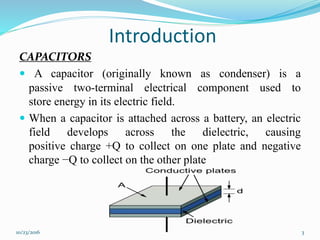
 A capacitor (originally known as condenser) is a
passive two-terminal electrical component used to
store energy in its electric field.
 When a capacitor is attached across a battery, an electric
field develops across the dielectric, causing
positive charge +Q to collect on one plate and negative
charge −Q to collect on the other plate
10/23/2016 3
SUPERCAPACITORS
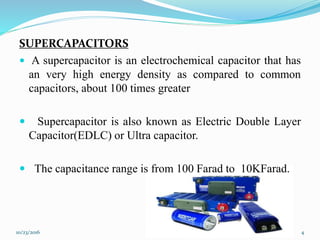
 A supercapacitor is an electrochemical capacitor that has
an very high energy density as compared to common
capacitors, about 100 times greater
 Supercapacitor is also known as Electric Double Layer
Capacitor(EDLC) or Ultra capacitor.
 The capacitance range is from 100 Farad to 10KFarad.
10/23/2016 4
HISTORY OF SUPERCAPACITORS
 In 1950s General Electric Engineers started experimenting
components using porous carbon electrodes for fuel
cells and rechargeable batteries.
 In 1957 H. Becker developed a "Low voltage electrolytic
capacitor with porous carbon electrodes".
 That capacitor came to known as Supercapacitor as it
stored very high amount of energy.
10/23/2016 5
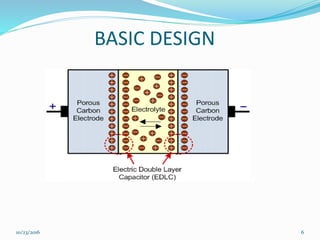
BASIC DESIGN
10/23/2016 6
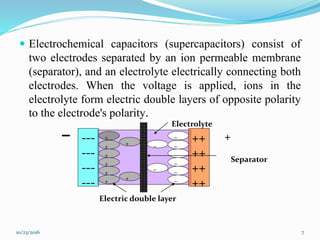
 Electrochemical capacitors (supercapacitors) consist of
two electrodes separated by an ion permeable membrane
(separator), and an electrolyte electrically connecting both
electrodes. When the voltage is applied, ions in the
electrolyte form electric double layers of opposite polarity
to the electrode's polarity.
10/23/2016 7
---
---
---
---
++
++
++
++
+
+








+
+
+
+
+
+
Electrolyte
Separator
Electric double layer
▬ +
TYPES OF SUPERCAPACITORS
Different types of supercapacitors, based on the type of
electrode are as follows.
I. Electrochemical double-layer capacitors (EDLCs):
 Have activated carbon electrodes or derivatives
 No charge-transfer, non Faradaic
Advantages:
Higher energy density than conventional capacitors,
comparable power densities, greater cycle stability
 Disadvantage:
Cannot match energy density of mid-level batteries
10/23/2016 8
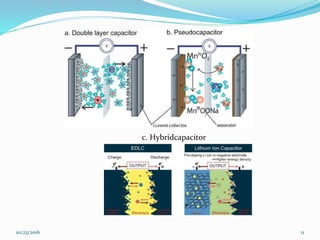
II. Pseudocapacitors:
1. Have metal oxide or conducting polymer electrodes
2. Ions diffuse into pores, undergo fast, reversible surface
reactions(REDOX Reactions)
 Advantage:
 Higher energy density & capacitance than EDLCs
 Disadvantages:
 Lower power density than EDLCs, limited life cycle,
expensive electrode material
10/23/2016 9
III. Hybrid Capacitors:
 Combine the advantages & less disadvantages of the first
2 types
 3 types of electrodes: composite, asymmetric, battery-type
Advantages:
Most flexible performance, high energy and power density
without sacrifices in cycling stability
Disadvantages:
Relatively new and unproven, more research required
10/23/2016 10
10/23/2016 11
c. Hybridcapacitor
Charge storing mechanism
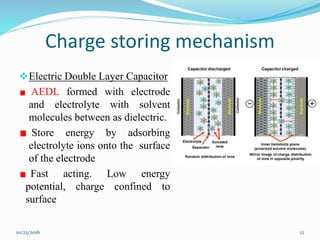
Electric Double Layer Capacitor
AEDL formed with electrode
and electrolyte with solvent
molecules between as dielectric.
Store energy by adsorbing
electrolyte ions onto the surface
of the electrode
Fast acting. Low energy
potential, charge confined to
surface
10/23/2016 12
Pseudocapacitor
10/23/2016 13
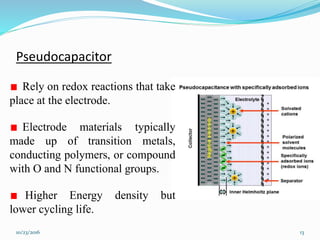
Rely on redox reactions that take
place at the electrode.
Electrode materials typically
made up of transition metals,
conducting polymers, or compound
with O and N functional groups.
Higher Energy density but
lower cycling life.
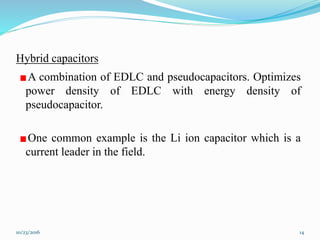
Hybrid capacitors
A combination of EDLC and pseudocapacitors. Optimizes
power density of EDLC with energy density of
pseudocapacitor.
One common example is the Li ion capacitor which is a
current leader in the field.
10/23/2016 14
Application
 In start up mechanism for Automobiles.
 Supercapacitors are suitable temporary energy storage
devices.
 Supercapacitors provide backup or emergency shutdown
power to low-power equipment. e.g., ups.
 They used in industrial lasers, medical equipment.
 Large supercapacitors are used in wind turbines.
10/23/2016 15
Advantages relative to Batteries:
Very high rates of charge and discharge.
Little degradation over hundreds of thousands of cycles.
Wide working temperature
Good reversibility.
Low toxicity of materials used.
High cycle efficiency (95% or more).
10/23/2016 16
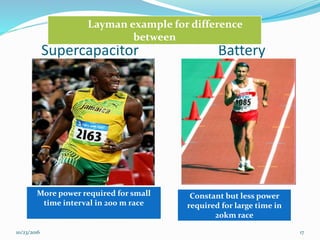
Supercapacitor Battery
10/23/2016 17
Layman example for difference
between
More power required for small
time interval in 200 m race
Constant but less power
required for large time in
20km race
Disadvantages
 Individual cells have low voltages, and so series
connections are needed to obtain higher voltages.
 Having high self – discharge rate.
 Cannot be used in AC and high frequency circuits.
 Cost is high.
10/23/2016 18
Conclusions
Supercapacitors may be used where high power or energy
storage is required that it will replace the batteries for
power storage.
Supercapacitors can be used widely because of their long
life & short charging time.
On the other hand it has limitations due to its high cost,
self discharge, packaging problems etc.
10/23/2016 19
References
 Avinash Balakrishnan, K. R. V. Subramanian, “Nanostructured
Ceramic Oxides for Supercapacitor Applications”, CRC press
2013
 Manisha Vangari,Tonya Pryor, and Li Jiang, “Supercapacitors:
Review of Materials and Fabrication Methods” 2013
 Simon, Patrice, Yury Gogotsi, and Bruce Dunn. “Where Do
Batteries End and Supercapacitors Begin?” Science 343, no.
6176 (March 14, 2014): 1210–11. doi:10.1126/science.1249625
 Wikipedia.org
10/23/2016 20
10/23/2016 21

Introduction to supercapacitors

  • 1.
    JIBIN RAJU II MScPHYSICS CUSAT10/23/2016 1
  • 2.
    OUTLINE 10/23/2016 2  Introduction Basic design  Applications  Advantages  Disadvantages  Conclusions  References
  • 3.
    Introduction CAPACITORS  A capacitor(originally known as condenser) is a passive two-terminal electrical component used to store energy in its electric field.  When a capacitor is attached across a battery, an electric field develops across the dielectric, causing positive charge +Q to collect on one plate and negative charge −Q to collect on the other plate 10/23/2016 3
  • 4.
    SUPERCAPACITORS  A supercapacitoris an electrochemical capacitor that has an very high energy density as compared to common capacitors, about 100 times greater  Supercapacitor is also known as Electric Double Layer Capacitor(EDLC) or Ultra capacitor.  The capacitance range is from 100 Farad to 10KFarad. 10/23/2016 4
  • 5.
    HISTORY OF SUPERCAPACITORS In 1950s General Electric Engineers started experimenting components using porous carbon electrodes for fuel cells and rechargeable batteries.  In 1957 H. Becker developed a "Low voltage electrolytic capacitor with porous carbon electrodes".  That capacitor came to known as Supercapacitor as it stored very high amount of energy. 10/23/2016 5
  • 6.
  • 7.
     Electrochemical capacitors(supercapacitors) consist of two electrodes separated by an ion permeable membrane (separator), and an electrolyte electrically connecting both electrodes. When the voltage is applied, ions in the electrolyte form electric double layers of opposite polarity to the electrode's polarity. 10/23/2016 7 --- --- --- --- ++ ++ ++ ++ + +         + + + + + + Electrolyte Separator Electric double layer ▬ +
  • 8.
    TYPES OF SUPERCAPACITORS Differenttypes of supercapacitors, based on the type of electrode are as follows. I. Electrochemical double-layer capacitors (EDLCs):  Have activated carbon electrodes or derivatives  No charge-transfer, non Faradaic Advantages: Higher energy density than conventional capacitors, comparable power densities, greater cycle stability  Disadvantage: Cannot match energy density of mid-level batteries 10/23/2016 8
  • 9.
    II. Pseudocapacitors: 1. Havemetal oxide or conducting polymer electrodes 2. Ions diffuse into pores, undergo fast, reversible surface reactions(REDOX Reactions)  Advantage:  Higher energy density & capacitance than EDLCs  Disadvantages:  Lower power density than EDLCs, limited life cycle, expensive electrode material 10/23/2016 9
  • 10.
    III. Hybrid Capacitors: Combine the advantages & less disadvantages of the first 2 types  3 types of electrodes: composite, asymmetric, battery-type Advantages: Most flexible performance, high energy and power density without sacrifices in cycling stability Disadvantages: Relatively new and unproven, more research required 10/23/2016 10
  • 11.
  • 12.
    Charge storing mechanism ElectricDouble Layer Capacitor AEDL formed with electrode and electrolyte with solvent molecules between as dielectric. Store energy by adsorbing electrolyte ions onto the surface of the electrode Fast acting. Low energy potential, charge confined to surface 10/23/2016 12
  • 13.
    Pseudocapacitor 10/23/2016 13 Rely onredox reactions that take place at the electrode. Electrode materials typically made up of transition metals, conducting polymers, or compound with O and N functional groups. Higher Energy density but lower cycling life.
  • 14.
    Hybrid capacitors A combinationof EDLC and pseudocapacitors. Optimizes power density of EDLC with energy density of pseudocapacitor. One common example is the Li ion capacitor which is a current leader in the field. 10/23/2016 14
  • 15.
    Application  In startup mechanism for Automobiles.  Supercapacitors are suitable temporary energy storage devices.  Supercapacitors provide backup or emergency shutdown power to low-power equipment. e.g., ups.  They used in industrial lasers, medical equipment.  Large supercapacitors are used in wind turbines. 10/23/2016 15
  • 16.
    Advantages relative toBatteries: Very high rates of charge and discharge. Little degradation over hundreds of thousands of cycles. Wide working temperature Good reversibility. Low toxicity of materials used. High cycle efficiency (95% or more). 10/23/2016 16
  • 17.
    Supercapacitor Battery 10/23/2016 17 Laymanexample for difference between More power required for small time interval in 200 m race Constant but less power required for large time in 20km race
  • 18.
    Disadvantages  Individual cellshave low voltages, and so series connections are needed to obtain higher voltages.  Having high self – discharge rate.  Cannot be used in AC and high frequency circuits.  Cost is high. 10/23/2016 18
  • 19.
    Conclusions Supercapacitors may beused where high power or energy storage is required that it will replace the batteries for power storage. Supercapacitors can be used widely because of their long life & short charging time. On the other hand it has limitations due to its high cost, self discharge, packaging problems etc. 10/23/2016 19
  • 20.
    References  Avinash Balakrishnan,K. R. V. Subramanian, “Nanostructured Ceramic Oxides for Supercapacitor Applications”, CRC press 2013  Manisha Vangari,Tonya Pryor, and Li Jiang, “Supercapacitors: Review of Materials and Fabrication Methods” 2013  Simon, Patrice, Yury Gogotsi, and Bruce Dunn. “Where Do Batteries End and Supercapacitors Begin?” Science 343, no. 6176 (March 14, 2014): 1210–11. doi:10.1126/science.1249625  Wikipedia.org 10/23/2016 20
  • 21.