Hydronephrosis
SUNILKUMAR.P
8/18/2013 Hydronephrosis -Intro 2
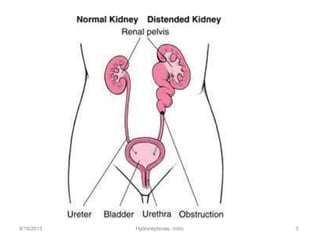
Definition
• Hydronephrosis is the aseptic dilatation ofthe
renal pelvis or calyces.
• It may be associated with obstruction butmay
be present in the absenceofobstruction.
• There is accompanied destruction of kidney
parenchyma.
8/18/2013 Hydronephrosis -Intro 3
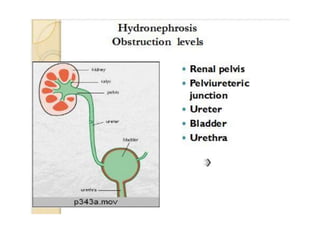
Types of Obstruction
• SUDDEN
• INSIDIOUS,
• PARTIAL or COMPLETE,
• UNILATERAL or BILATERAL;
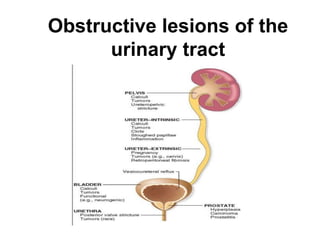
Obstructive lesions of the
urinary tract
8/18/2013 Hydronephrosis -Intro 7
Etiology
• It canbe Unilateral orbilateral.
• Unilateral maybe extramural, intramural or
Intraluminal
• Bilateral causesare either congenital or
acquired
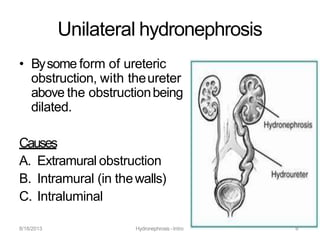
Unilateral hydronephrosis
• Bysome form of ureteric
obstruction, with theureter
above the obstructionbeing
dilated.
Causes
A. Extramural obstruction
B. Intramural (in thewalls)
C. Intraluminal
8/18/2013 Hydronephrosis -Intro 8
8/18/2013 Hydronephrosis -Intro 9
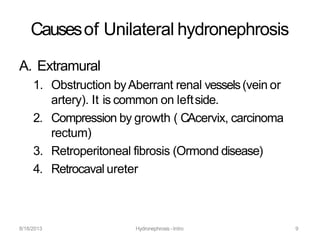
Causesof Unilateral hydronephrosis
A. Extramural
1. Obstruction byAberrant renal vessels(vein or
artery). It is common on leftside.
2. Compression by growth ( CAcervix, carcinoma
rectum)
3. Retroperitoneal fibrosis (Ormond disease)
4. Retrocaval ureter
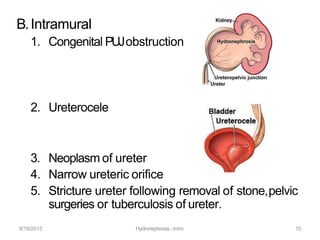
B.Intramural
1. Congenital PUJobstruction
2. Ureterocele
3. Neoplasm of ureter
4. Narrow ureteric orifice
5. Stricture ureter following removal of stone,pelvic
surgeries or tuberculosis of ureter.
8/18/2013 Hydronephrosis -Intro 10
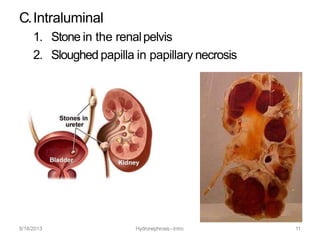
C.Intraluminal
1. Stone in the renalpelvis
2. Sloughed papilla in papillary necrosis
8/18/2013 Hydronephrosis -Intro 11
Bilateral Hydronephrosis
• Result of urethral obstruction ; butmay also
be causedby one of the lesions described
above occurring on both sides
8/18/2013 Hydronephrosis -Intro 12
8/18/2013 Hydronephrosis -Intro 13
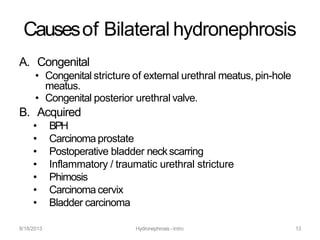
Causesof Bilateral hydronephrosis
A. Congenital
• Congenital stricture of external urethral meatus, pin-hole
meatus.
• Congenital posterior urethral valve.
B. Acquired
• BPH
• Carcinoma prostate
• Postoperative bladder neckscarring
• Inflammatory / traumatic urethral stricture
• Phimosis
• Carcinoma cervix
• Bladder carcinoma
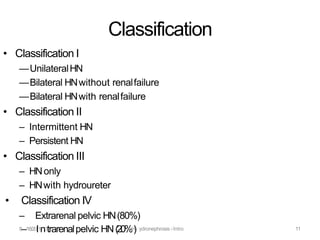
Classification
• Classification I
—UnilateralHN
—Bilateral HNwithout renalfailure
—Bilateral HNwith renalfailure
• Classification II
– Intermittent HN
– Persistent HN
• Classification III
– HNonly
– HNwith hydroureter
• Classification IV
– Extrarenal pelvic HN(80%)
8–/18/20I1n3trarenalpelvic HN(20%H) ydronephrosis -Intro 11
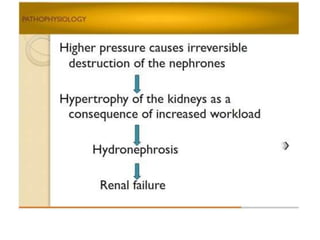
PATHOHYSIOLOGY
MORPHOLOGICAL FEATURES
The pathologic changes vary depending
upon whether the obstruction is sudden and
complete, or incomplete and intermittent.
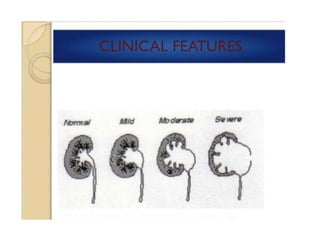
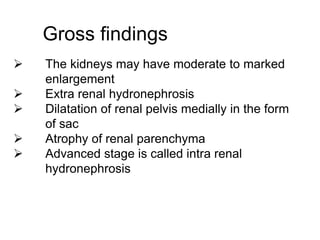
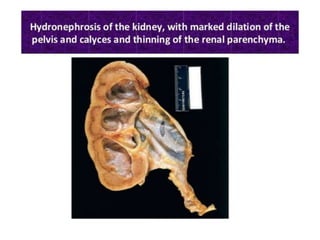
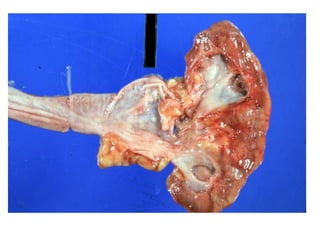
Gross findings
 The kidneys may have moderate to marked
enlargement
 Extra renal hydronephrosis
 Dilatation of renal pelvis medially in the form
of sac
 Atrophy of renal parenchyma
 Advanced stage is called intra renal
hydronephrosis
Microscopic findings
• The wall of hydronephrotic sac is thickened due
to fibrous scarring and chronic inflammation.
•There is progressive atrophy of tubules and
glomeruli along with interstitial fibrosis.
• Pyonephrosis.
Laboratory Studies
Urinalysis----- Hematuria
Pyuria
CBC---- Leukocytosis
Biochemical--- Elevated BUN, creatinine,
hyperkalemia.
Imaging studies
1. USG
2. CT SCAN
3. MRI SCAN
4. diuretic renography
5. radionuclide renal scanning
6. perfusion pressure flow studies
7. A voiding cystourethrography (VCUG) is performed to
detect VUR
8. Gravity-assisted drainage imaging
9. Magnetic resonance urography (MRU)

Hydronephrosis

  • 1.
  • 2.
    8/18/2013 Hydronephrosis -Intro2 Definition • Hydronephrosis is the aseptic dilatation ofthe renal pelvis or calyces. • It may be associated with obstruction butmay be present in the absenceofobstruction. • There is accompanied destruction of kidney parenchyma.
  • 3.
  • 4.
    Types of Obstruction •SUDDEN • INSIDIOUS, • PARTIAL or COMPLETE, • UNILATERAL or BILATERAL;
  • 6.
    Obstructive lesions ofthe urinary tract
  • 7.
    8/18/2013 Hydronephrosis -Intro7 Etiology • It canbe Unilateral orbilateral. • Unilateral maybe extramural, intramural or Intraluminal • Bilateral causesare either congenital or acquired
  • 8.
    Unilateral hydronephrosis • Bysomeform of ureteric obstruction, with theureter above the obstructionbeing dilated. Causes A. Extramural obstruction B. Intramural (in thewalls) C. Intraluminal 8/18/2013 Hydronephrosis -Intro 8
  • 9.
    8/18/2013 Hydronephrosis -Intro9 Causesof Unilateral hydronephrosis A. Extramural 1. Obstruction byAberrant renal vessels(vein or artery). It is common on leftside. 2. Compression by growth ( CAcervix, carcinoma rectum) 3. Retroperitoneal fibrosis (Ormond disease) 4. Retrocaval ureter
  • 10.
    B.Intramural 1. Congenital PUJobstruction 2.Ureterocele 3. Neoplasm of ureter 4. Narrow ureteric orifice 5. Stricture ureter following removal of stone,pelvic surgeries or tuberculosis of ureter. 8/18/2013 Hydronephrosis -Intro 10
  • 11.
    C.Intraluminal 1. Stone inthe renalpelvis 2. Sloughed papilla in papillary necrosis 8/18/2013 Hydronephrosis -Intro 11
  • 12.
    Bilateral Hydronephrosis • Resultof urethral obstruction ; butmay also be causedby one of the lesions described above occurring on both sides 8/18/2013 Hydronephrosis -Intro 12
  • 13.
    8/18/2013 Hydronephrosis -Intro13 Causesof Bilateral hydronephrosis A. Congenital • Congenital stricture of external urethral meatus, pin-hole meatus. • Congenital posterior urethral valve. B. Acquired • BPH • Carcinoma prostate • Postoperative bladder neckscarring • Inflammatory / traumatic urethral stricture • Phimosis • Carcinoma cervix • Bladder carcinoma
  • 14.
    Classification • Classification I —UnilateralHN —BilateralHNwithout renalfailure —Bilateral HNwith renalfailure • Classification II – Intermittent HN – Persistent HN • Classification III – HNonly – HNwith hydroureter • Classification IV – Extrarenal pelvic HN(80%) 8–/18/20I1n3trarenalpelvic HN(20%H) ydronephrosis -Intro 11
  • 15.
  • 20.
    MORPHOLOGICAL FEATURES The pathologicchanges vary depending upon whether the obstruction is sudden and complete, or incomplete and intermittent.
  • 21.
    Gross findings  Thekidneys may have moderate to marked enlargement  Extra renal hydronephrosis  Dilatation of renal pelvis medially in the form of sac  Atrophy of renal parenchyma  Advanced stage is called intra renal hydronephrosis
  • 24.
    Microscopic findings • Thewall of hydronephrotic sac is thickened due to fibrous scarring and chronic inflammation. •There is progressive atrophy of tubules and glomeruli along with interstitial fibrosis. • Pyonephrosis.
  • 25.
    Laboratory Studies Urinalysis----- Hematuria Pyuria CBC----Leukocytosis Biochemical--- Elevated BUN, creatinine, hyperkalemia.
  • 26.
    Imaging studies 1. USG 2.CT SCAN 3. MRI SCAN 4. diuretic renography 5. radionuclide renal scanning 6. perfusion pressure flow studies 7. A voiding cystourethrography (VCUG) is performed to detect VUR 8. Gravity-assisted drainage imaging 9. Magnetic resonance urography (MRU)