
URETHRITIS
Contents ………………..
• - Definition
• -Epidemiology
• -Etiology
• -Pathogenesis
• -Types
• -Clinical manifestations
• -Diagnosis
• -Management / Treatment
Urethritis
• inflammation of urethra which is multifactorial condition and
characterised bydysuria with/without urethral discharge or may
be asymptomatic.
Epidemiology
• Urethritis usually resolves without complication even if untreated, yet it
can result in urethral stricture, stenosis, or abscess formation in rare
cases.
• Recurrent urethritis may occur from reinfection, therapeutic
failure or "venereophobia"
• Urethritis is predominantly a disease of adolescent and adult men. The
prevalence is greatest in men younger than 25 years.
• Worldwide, approximately 62 million new cases of N. gonorrhoeae and 89
million new cases of nongonococcal urethritis are reported each year.
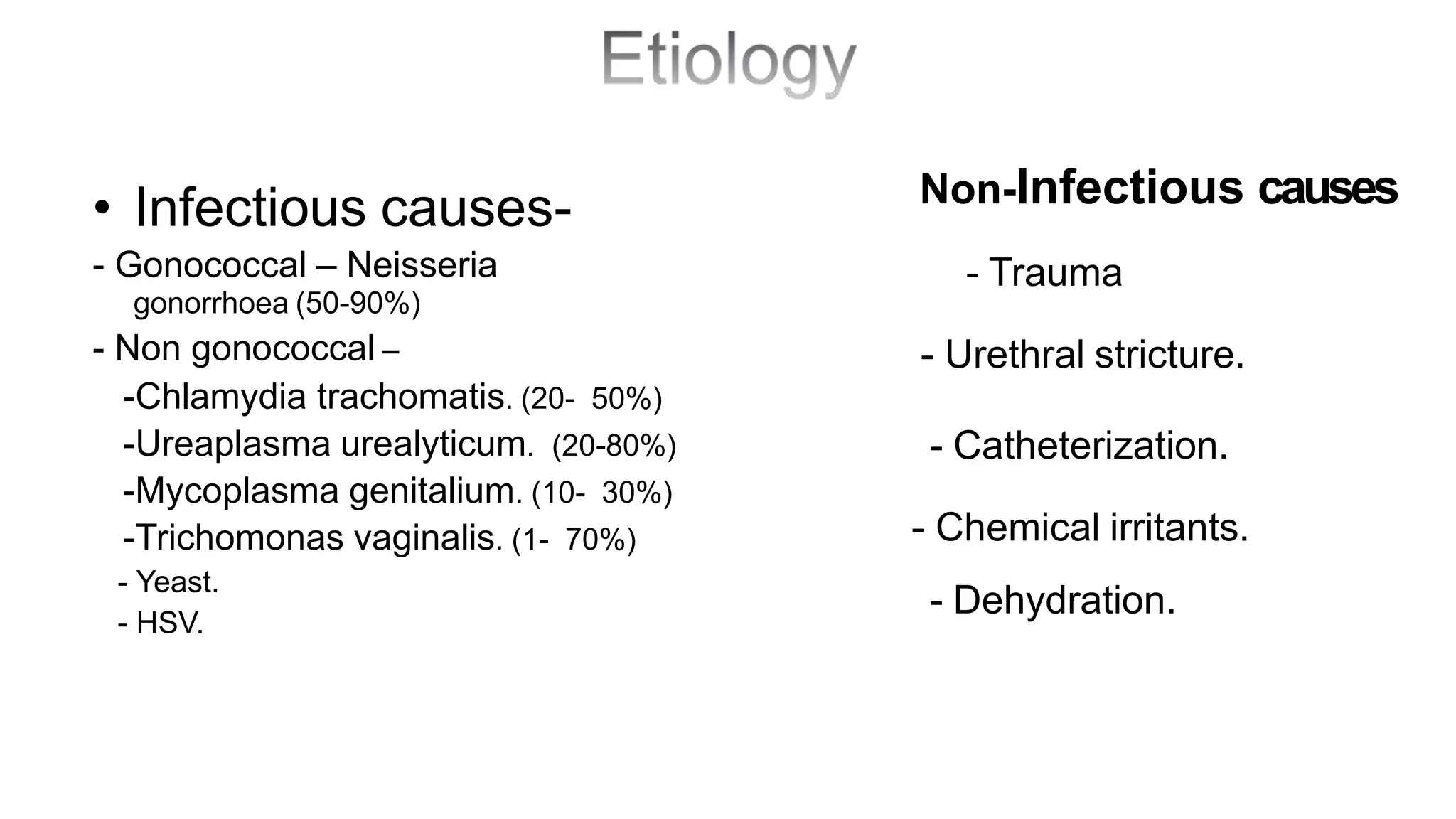
• Infectious causes-
- Gonococcal – Neisseria
gonorrhoea (50-90%)
- Non gonococcal –
-Chlamydia trachomatis. (20- 50%)
-Ureaplasma urealyticum. (20-80%)
-Mycoplasma genitalium. (10- 30%)
-Trichomonas vaginalis. (1- 70%)
- Yeast.
- HSV.
 Non-Infectious causes
- Trauma
- Urethral stricture.
- Catheterization.
- Chemical irritants.
- Dehydration.
Types
• 1.Gonococcal Urethritis - pathogen is gonococci
• 2. Non gonococcal Urethritis –identified pathogen other than
gonococci
• 3.Non specific Urethritis- unidentified pathogen.
• Urethritis is an inflammatory condition that can be infectious or post
traumatic in nature.
• Infectious causes of urethritis are typically sexually transmitted and
categorized as either gonococcal urethritis (ie, due to infections with
Neisseria gonorrhoeae) or
• NGU ………ie, due to infections with …..
• Chlamydia trachomatis,
• Ureaplasma urealyticum,
• Mycoplasma hominis,
• Mycoplasma genitalium, or
• Trichomonas vaginalis).
• Rare infectious causes of Urethritis include ……………..
• lymphogranuloma venereum,
• herpes simplex virus types 1 and 2,
• adenovirus,
• syphilis,
• mycobacterial infection, and bacterial infections that are
typically associated with cystitis (usually gram-negative rods)
in the presence of urethral stricture.
• Other rare but reported causes of urethritis include…………
• viral
• streptococcal
• anaerobic, and
• meningococcal infections
• Post traumatic urethritis can occur in 2%-20% of patients practicing intermittent
catheterization and following instrumentation or foreign body insertion.
• Urethritis is 10 times more likely to occur with latex catheters than with silicone
catheters.
• Urethritis may be associated with other infectious syndromes, such as the
following:
• Epididymitis
• Orchitis
• Prostatitis
• Proctitis
• Reactive arthritis
• Iritis
• Pneumonia
• Otitis media
• Urinary tract infection
• Burning on urination
• Frequent urination with only small
amounts of urine passed on each
occasion
• Anal or oral infections
• Urgent need to urinate
• Bloody discharge from the penis
• Blood in the urine
• Yellowish discharge from the urethra
• Itching or irritation around the
opening of the penis
• Lower abdominal pain
• Painful sexual intercourse in women
• Examination patients with urethritis includes the following:
• Most patients with urethritis do not appear ill and do not present with
signs of sepsis.
• The primary focus of the examination is on the genitalia.
• Penis: Examine for skin lesions that may indicate other STDs (eg,
condyloma acuminatum, herpes simplex, syphilis); in uncircumcised men,
retract the foreskin to assess for lesions and exudate
• Urethra: Examine lumen of the distal urethral meatus for lesions, stricture,
or obvious urethral discharge; palpate along urethra for areas of
fluctuance, tenderness, or warmth suggestive of abscess or for firmness
suggesting foreign body
• Testes: Examine for evidence of mass or inflammation; palpate
the spermatic cord, looking for swelling, tenderness, or warmth
suggestive of orchitis or epididymitis
• Lymphatics: Check for inguinal adenopathy
• Prostate: Palpate for tenderness or bogginess suggestive of
prostatitis
• Rectal: During the digital rectal examination, note any perianal
lesions
• Urethritis can be diagnosed based on the presence of one or more of the
following:
• A mucopurulent or purulent urethral discharge
• Urethral smear that demonstrates at least 5 leukocytes per oil immersion field
on microscopy
• First-voided urine specimen that demonstrates leukocyte esterase on dipstick
test or at least 10 WBCs/hpf on microscopy
• All patients with urethritis should be tested for Neisseria gonorrhoeae and
C trachomatis.
Laboratory studies may include the following:
• Gram stain
• Endourethral and/or endocervical culture for N gonorrhoeae and C trachomatis
• Urinalysis: Not useful test in urethritis, except to help exclude cystitis or
pyelonephritis
• Nucleic acid–based tests: For C trachomatis and N gonorrhoeae (urine
specimens) and other Chlamydia species (endourethral samples)
• Nucleic acid amplification tests (eg, PCR for N gonorrhoeae, Chlamydia species)
• KOH preparation: to evaluate for fungal organisms
• Wet mount preparation: To detect the movement/presence of Trichomonas
• STD testing for syphilis serology (VDRL) and HIV serology
• Nasopharyngeal and/or rectal swabs: For gonorrhea screening in men who have
sexual intercourse with men.
•
• Imaging studies, specifically retrograde urethrography, are unnecessary in
patients with urethritis, except in cases of trauma or possible foreign body
insertion.
• Procedures :
• Patients with urethritis may undergo the following procedures:
• Catherization: In cases of urethral trauma; to avoid urinary retention and
tamponade urethral bleeding
Cystoscopy: In cases when catherization is not possible, for placement of a
catheter; to remove foreign body or stone in the urethra
• Dilation of urethral strictures with filiforms and followers
• Placement of suprapubic tube: In severe cases of urethral trauma that prevent
placement of urethral catheters or in the absence of adequate facilities for
emergent cystoscopy; temporizing measure to divert urine and relieve patient
discomfort
• Symptoms of urethritis spontaneously resolve over time, regardless of treatment. Administer
antibiotics that cover both GU and NGU. Regardless of symptoms, administer antibiotics to
the following individuals:
• Patients with positive Gram stain or culture results :
• All sexual partners of the above patients
• Patients with negative Gram stain results and a history consistent with urethritis who are not
likely to return for follow-up and/or are likely to continue transmitting infection
• Antibiotics used in the treatment of urethritis include the following:
• Azithromycin
• Ceftriaxone
• Cefixime
• Ciprofloxacin
• Ofloxacin
• Doxycycline
• Moxifloxacin
• Complications, such as stricture, stenosis, or abscess formation, are quite rare. Concomitant
epididymitis or prostatitis is not uncommon.
• PID and tubo-ovarian abscess are known complications of urethritis in females that may
predispose to infertility. In addition, increasing evidence shows that genital chlamydial
infection in males may predispose to infertility. In addition, both Chlamydia and U urealyticum
can impair sperm and adversely affect semen parameters.
• All patients with uncomplicated urethritis spontaneously recover with or without treatment.
• Prevention: Educate at-risk patients on how to prevent disease recurrence.
• Educate patients on risks of other sexually-transmitted infections, including HIV.
• Try to find asymptomatic patients and symptomatic patients who are unlikely to seek
treatment.
• Early diagnosis and treatment of infected individuals is essential.
• Evaluate and treat sexual partners of known infected persons.

Urethritis

  • 1.
  • 2.
    Contents ……………….. • -Definition • -Epidemiology • -Etiology • -Pathogenesis • -Types • -Clinical manifestations • -Diagnosis • -Management / Treatment
  • 3.
    Urethritis • inflammation ofurethra which is multifactorial condition and characterised bydysuria with/without urethral discharge or may be asymptomatic.
  • 4.
    Epidemiology • Urethritis usuallyresolves without complication even if untreated, yet it can result in urethral stricture, stenosis, or abscess formation in rare cases. • Recurrent urethritis may occur from reinfection, therapeutic failure or "venereophobia" • Urethritis is predominantly a disease of adolescent and adult men. The prevalence is greatest in men younger than 25 years. • Worldwide, approximately 62 million new cases of N. gonorrhoeae and 89 million new cases of nongonococcal urethritis are reported each year.
  • 5.
    • Infectious causes- -Gonococcal – Neisseria gonorrhoea (50-90%) - Non gonococcal – -Chlamydia trachomatis. (20- 50%) -Ureaplasma urealyticum. (20-80%) -Mycoplasma genitalium. (10- 30%) -Trichomonas vaginalis. (1- 70%) - Yeast. - HSV.  Non-Infectious causes - Trauma - Urethral stricture. - Catheterization. - Chemical irritants. - Dehydration.
  • 6.
    Types • 1.Gonococcal Urethritis- pathogen is gonococci • 2. Non gonococcal Urethritis –identified pathogen other than gonococci • 3.Non specific Urethritis- unidentified pathogen.
  • 7.
    • Urethritis isan inflammatory condition that can be infectious or post traumatic in nature. • Infectious causes of urethritis are typically sexually transmitted and categorized as either gonococcal urethritis (ie, due to infections with Neisseria gonorrhoeae) or • NGU ………ie, due to infections with ….. • Chlamydia trachomatis, • Ureaplasma urealyticum, • Mycoplasma hominis, • Mycoplasma genitalium, or • Trichomonas vaginalis).
  • 8.
    • Rare infectiouscauses of Urethritis include …………….. • lymphogranuloma venereum, • herpes simplex virus types 1 and 2, • adenovirus, • syphilis, • mycobacterial infection, and bacterial infections that are typically associated with cystitis (usually gram-negative rods) in the presence of urethral stricture.
  • 9.
    • Other rarebut reported causes of urethritis include………… • viral • streptococcal • anaerobic, and • meningococcal infections
  • 10.
    • Post traumaticurethritis can occur in 2%-20% of patients practicing intermittent catheterization and following instrumentation or foreign body insertion. • Urethritis is 10 times more likely to occur with latex catheters than with silicone catheters. • Urethritis may be associated with other infectious syndromes, such as the following: • Epididymitis • Orchitis • Prostatitis • Proctitis • Reactive arthritis • Iritis • Pneumonia • Otitis media • Urinary tract infection
  • 12.
    • Burning onurination • Frequent urination with only small amounts of urine passed on each occasion • Anal or oral infections • Urgent need to urinate • Bloody discharge from the penis • Blood in the urine • Yellowish discharge from the urethra • Itching or irritation around the opening of the penis • Lower abdominal pain • Painful sexual intercourse in women
  • 13.
    • Examination patientswith urethritis includes the following: • Most patients with urethritis do not appear ill and do not present with signs of sepsis. • The primary focus of the examination is on the genitalia. • Penis: Examine for skin lesions that may indicate other STDs (eg, condyloma acuminatum, herpes simplex, syphilis); in uncircumcised men, retract the foreskin to assess for lesions and exudate • Urethra: Examine lumen of the distal urethral meatus for lesions, stricture, or obvious urethral discharge; palpate along urethra for areas of fluctuance, tenderness, or warmth suggestive of abscess or for firmness suggesting foreign body
  • 14.
    • Testes: Examinefor evidence of mass or inflammation; palpate the spermatic cord, looking for swelling, tenderness, or warmth suggestive of orchitis or epididymitis • Lymphatics: Check for inguinal adenopathy • Prostate: Palpate for tenderness or bogginess suggestive of prostatitis • Rectal: During the digital rectal examination, note any perianal lesions
  • 15.
    • Urethritis canbe diagnosed based on the presence of one or more of the following: • A mucopurulent or purulent urethral discharge • Urethral smear that demonstrates at least 5 leukocytes per oil immersion field on microscopy • First-voided urine specimen that demonstrates leukocyte esterase on dipstick test or at least 10 WBCs/hpf on microscopy • All patients with urethritis should be tested for Neisseria gonorrhoeae and C trachomatis.
  • 16.
    Laboratory studies mayinclude the following: • Gram stain • Endourethral and/or endocervical culture for N gonorrhoeae and C trachomatis • Urinalysis: Not useful test in urethritis, except to help exclude cystitis or pyelonephritis • Nucleic acid–based tests: For C trachomatis and N gonorrhoeae (urine specimens) and other Chlamydia species (endourethral samples) • Nucleic acid amplification tests (eg, PCR for N gonorrhoeae, Chlamydia species) • KOH preparation: to evaluate for fungal organisms • Wet mount preparation: To detect the movement/presence of Trichomonas • STD testing for syphilis serology (VDRL) and HIV serology • Nasopharyngeal and/or rectal swabs: For gonorrhea screening in men who have sexual intercourse with men.
  • 17.
    • • Imaging studies,specifically retrograde urethrography, are unnecessary in patients with urethritis, except in cases of trauma or possible foreign body insertion. • Procedures : • Patients with urethritis may undergo the following procedures: • Catherization: In cases of urethral trauma; to avoid urinary retention and tamponade urethral bleeding Cystoscopy: In cases when catherization is not possible, for placement of a catheter; to remove foreign body or stone in the urethra • Dilation of urethral strictures with filiforms and followers • Placement of suprapubic tube: In severe cases of urethral trauma that prevent placement of urethral catheters or in the absence of adequate facilities for emergent cystoscopy; temporizing measure to divert urine and relieve patient discomfort
  • 18.
    • Symptoms ofurethritis spontaneously resolve over time, regardless of treatment. Administer antibiotics that cover both GU and NGU. Regardless of symptoms, administer antibiotics to the following individuals: • Patients with positive Gram stain or culture results : • All sexual partners of the above patients • Patients with negative Gram stain results and a history consistent with urethritis who are not likely to return for follow-up and/or are likely to continue transmitting infection • Antibiotics used in the treatment of urethritis include the following: • Azithromycin • Ceftriaxone • Cefixime • Ciprofloxacin • Ofloxacin • Doxycycline • Moxifloxacin
  • 19.
    • Complications, suchas stricture, stenosis, or abscess formation, are quite rare. Concomitant epididymitis or prostatitis is not uncommon. • PID and tubo-ovarian abscess are known complications of urethritis in females that may predispose to infertility. In addition, increasing evidence shows that genital chlamydial infection in males may predispose to infertility. In addition, both Chlamydia and U urealyticum can impair sperm and adversely affect semen parameters. • All patients with uncomplicated urethritis spontaneously recover with or without treatment. • Prevention: Educate at-risk patients on how to prevent disease recurrence. • Educate patients on risks of other sexually-transmitted infections, including HIV. • Try to find asymptomatic patients and symptomatic patients who are unlikely to seek treatment. • Early diagnosis and treatment of infected individuals is essential. • Evaluate and treat sexual partners of known infected persons.