 Hydronephrosis & hydroureter: Common clinical conditions
encountered not only by urologists but also by emergency
medicine specialists and primary care physicians
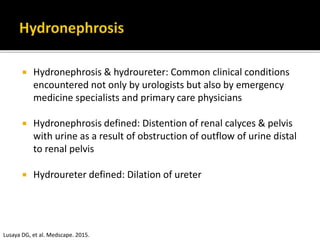
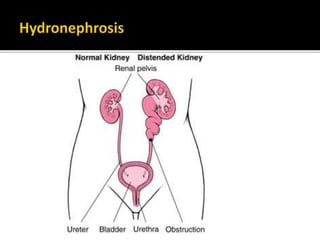
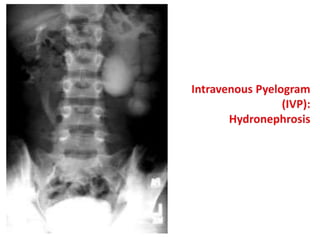
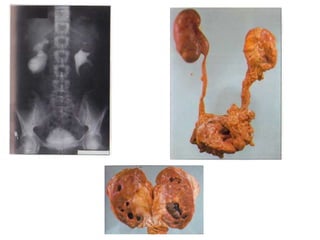
 Hydronephrosis defined: Distention of renal calyces & pelvis
with urine as a result of obstruction of outflow of urine distal
to renal pelvis
 Hydroureter defined: Dilation of ureter
Lusaya DG, et al. Medscape. 2015.
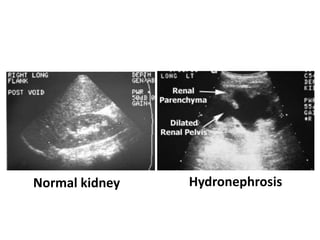
Normal kidney Hydronephrosis
 Presence of hydronephrosis or hydroureter can be physiologic
or pathologic
 May be acute or chronic, unilateral or bilateral
 Can be secondary to obstruction of urinary tract, but it can
also be present even without obstruction
Lusaya DG, et al. Medscape. 2015.
 Obstructive uropathy: Functional or anatomic obstruction of
urinary flow at any level of urinary tract
 Obstructive nephropathy: Obstruction causes functional or
anatomic renal damage
 Thus, the terms hydronephrosis & obstruction should not be
used interchangeably
Lusaya DG, et al. Medscape. 2015.
 Etiology & presentation of hydronephrosis and/or
hydroureter in adults differ from that in neonates & children
 Anatomic abnormalities (including urethral valves or stricture
& stenosis at ureterovesical or ureteropelvic junction)
account for majority of cases in children
 Calculi are most common in young adults
 Prostatic hypertrophy or carcinoma, retroperitoneal or pelvic
neoplasms & calculi are primary causes in older patients
Lusaya DG, et al. Medscape. 2015.
 Hydronephrosis or hydroureter: Normal finding in pregnant women
 Renal pelvises & caliceal systems may be dilated as a result of
progesterone effects & mechanical compression of ureters at pelvic
brim
 Dilatation of ureters & renal pelvis is more prominent on right side
than left side and is seen in up to 80% of pregnant women
 These changes can be visualized on ultrasound examination by 2nd
trimester & they may not resolve until 6-12 weeks post partum
Lusaya DG, et al. Medscape. 2015.
 Hydronephrosis can result from anatomic or functional
processes interrupting flow of urine
 This interruption can occur anywhere along urinary tract from
kidneys to urethral meatus
 Rise in ureteral pressure leads to marked changes in
glomerular filtration, tubular function & renal blood flow
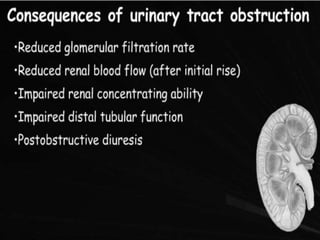
 Glomerular filtration rate (GFR) declines significantly within
hours following acute obstruction. This significant decline of
GFR can persist for weeks after relief of obstruction
Lusaya DG, et al. Medscape. 2015.
 Renal tubular ability to transport sodium, potassium &
protons and concentrate and to dilute the urine is severely
impaired
 Extent & persistence of these functional insults is directly
related to duration and extent of obstruction
 Brief disruptions are limited to reversible functional
disturbance with little associated anatomic changes
 More chronic disruptions lead to profound tubular atrophy
and permanent nephron loss
Lusaya DG, et al. Medscape. 2015.
 Increased ureteral pressure also results in pyelovenous &
pyelolymphatic backflow
 Gross changes within urinary tract similarly depend on
duration, degree & level of obstruction
 Within intrarenal collecting system, degree of dilation is
limited by surrounding renal parenchyma
 However, extra-renal components can dilate to point of
tortuosity
Lusaya DG, et al. Medscape. 2015.
 Acute as hydronephrosis: When corrected, allows full
recovery of renal function
 Chronic hydronephrosis: Loss of function is irreversible even
with correction of obstruction
 Animal experiments: If acute unilateral obstruction is
corrected within 2 weeks, full recovery of renal function is
possible. However, after 6 weeks of obstruction, function is
irreversibly lost
Lusaya DG, et al. Medscape. 2015.
 Grossly, acutely hydronephrotic system can be associated
with little anatomic disturbance to renal parenchyma
 Chronically dilated system may be associated with
compression of papillae, thinning of parenchyma around
calyces & coalescence of septa between calyces
 Cortical atrophy progresses to point at which only a thin rim
of parenchyma is present
Lusaya DG, et al. Medscape. 2015.
 Microscopic changes consist of dilation of tubular lumen &
flattening of tubular epithelium
 Fibrotic changes & increased collagen deposition are
observed in peritubular interstitium
Lusaya DG, et al. Medscape. 2015.
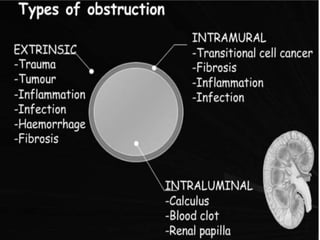
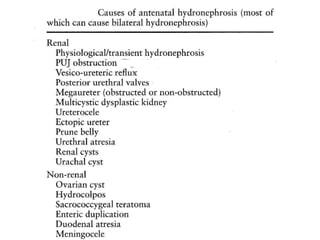
 A multitude of causes exist for hydronephrosis & hydroureter
 Classification can be made according to level within urinary
tract & whether etiology is intrinsic, extrinsic or functional
Lusaya DG, et al. Medscape. 2015.
 Causes can be as follows:
1. Ureteropelvic junction stricture
2. Ureterovesical junction obstruction
3. Papillary necrosis
4. Ureteral folds
5. Ureteral valves
6. Ureterovesical reflux
7. Ureteral stricture (iatrogenic)
8. Blood clot
Lusaya DG, et al. Medscape. 2015.
 Causes can be as follows:
9. Benign fibroepithelial polyps
10. Ureteral tumor
11. Fungus ball
12. Ureteral calculus
13. Ureterocele
14. Endometriosis
15. Tuberculosis
16. Retrocaval ureter
Lusaya DG, et al. Medscape. 2015.
 Causes can be as follows:
1. Gram-negative infection
2. Neurogenic bladder
Lusaya DG, et al. Medscape. 2015.
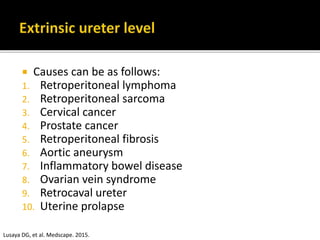
 Causes can be as follows:
1. Retroperitoneal lymphoma
2. Retroperitoneal sarcoma
3. Cervical cancer
4. Prostate cancer
5. Retroperitoneal fibrosis
6. Aortic aneurysm
7. Inflammatory bowel disease
8. Ovarian vein syndrome
9. Retrocaval ureter
10. Uterine prolapse
Lusaya DG, et al. Medscape. 2015.
 Causes can be as follows:
11. Pregnancy
12. Iatrogenic ureteral ligation
13. Ovarian cysts
14. Diverticulitis
15. Tuboovarian abscess
16. Retroperitoneal hemorrhage
17. Lymphocele
18. Pelvic lipomatosis
19. Radiation therapy
20. Urinoma
Lusaya DG, et al. Medscape. 2015.
 Intrinsic bladder level causes can be as follows:
1. Bladder carcinoma
2. Bladder calculi
3. Bladder neck contracture
4. Cystocele
5. Primary bladder neck hypertrophy
6. Bladder diverticula
 Functional bladder level causes can be as follows:
1. Neurogenic bladder
2. Vesicoureteral reflux
 Extrinsic bladder level causes can include pelvic lipomatosis
Lusaya DG, et al. Medscape. 2015.
 Intrinsic urethra level causes can be as follows:
1. Urethral stricture
2. Urethral valves
3. Urethral diverticula
4. Urethral atresia
5. Labial fusion
6. Hypospadias & epispadias
 Extrinsic urethra level causes can be as follows:
1. Benign prostatic hyperplasia
2. Prostate cancer
3. Urethral & penile cancer
4. Phimosis
Lusaya DG, et al. Medscape. 2015.
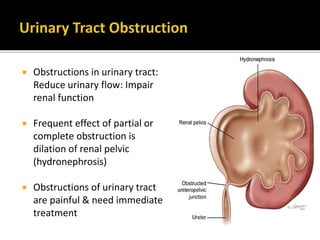
 Obstructions in urinary tract:
Reduce urinary flow: Impair
renal function
 Frequent effect of partial or
complete obstruction is
dilation of renal pelvic
(hydronephrosis)
 Obstructions of urinary tract
are painful & need immediate
treatment
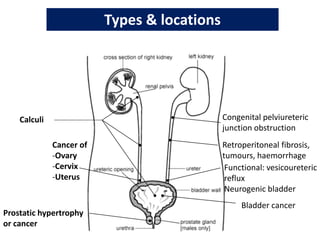
Types & locations
Congenital pelviureteric
junction obstruction
Retroperitoneal fibrosis,
tumours, haemorrhage
Functional: vesicoureteric
reflux
Neurogenic bladder
Cancer of
-Ovary
-Cervix
-Uterus
Bladder cancer
Prostatic hypertrophy
or cancer
Calculi
 Symptoms vary depending on whether hydronephrosis is
acute or chronic
 With acute obstruction, pain is frequently present, due to
distention of bladder, collecting system, or renal capsule
 Pain is typically minimal or absent with partial or slowly
developing obstruction (as with congenital ureteropelvic
junction [UPJ] obstruction or a pelvic tumor). It is not
uncommon, for example, to see an adult who is noted to
have hydronephrosis due to previously unsuspected UPJ
obstruction
Lusaya DG, et al. Medscape. 2015.
 Relatively severe pain (renal or ureteral colic) may be seen with
acute complete obstruction (as with a ureteral calculus) or when
acute dilatation occurs after a fluid load that increases urine output
to level greater than flow rate through area of obstruction
 An example of latter problem occurs after beer drinking in a college
student with previously asymptomatic & unsuspected UPJ
obstruction
 Site of obstruction determines location of pain: Upper ureteral or
renal pelvic lesions lead to flank pain or tenderness, whereas lower
ureteral obstruction causes pain that may radiate to ipsilateral
testicle or labia
Lusaya DG, et al. Medscape. 2015.
 With regard to renal insufficiency, patients with complete or
severe partial bilateral obstruction also may develop acute or
chronic renal failure. In the latter setting, patient is often
asymptomatic & urinalysis results may be relatively normal or
reveal only few white or red blood cells
 Anuria may be a presenting symptom of patient. Although
urine volume could be reduced in any form of renal disease,
anuria is most often seen in 2 conditions: complete bilateral
urinary tract obstruction & shock
Lusaya DG, et al. Medscape. 2015.
 Other less common causes of anuria:
 Hemolyticuremic syndrome
 Renal cortical necrosis
 Bilateral renal arterial obstruction & crescentic or rapidly progressive
glomerulonephritis, particularly anti–glomerular basement membrane
(GBM) antibody disease
Lusaya DG, et al. Medscape. 2015.
 A history of hematuria may herald a stone or malignancy anywhere
in urinary tract
 A history of fever or diabetes adds urgency to evaluation &
treatment
 A history of a solitary kidney is an emergent situation
 Hydronephrosis may develop silently, without symptoms, as result
of advanced pelvic malignancy or severe urinary retention from
bladder outlet obstruction
 Bilateral symmetrical hydronephrosis usually suggests a cause
related to bladder, such as retention, prostatic blockage, or severe
bladder prolapse
Lusaya DG, et al. Medscape. 2015.
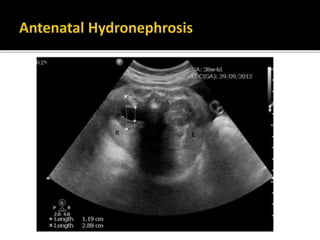
 Fetal hydronephrosis is readily diagnosed finding on antenatal
ultrasound examination & can be detected as early as 12th -
14th week of gestation
 Although renal pelvic dilatation is transient, physiologic state
in most cases, urinary tract obstruction & vesicoureteral
reflux (VUR) are also causal
 Most cases of antenatal hydronephrosis are not clinically
significant & can lead to unnecessary testing of newborn
baby and anxiety for patients and healthcare providers
Lusaya DG, et al. Medscape. 2015.
 With severe hydronephrosis, kidney may be palpable
 With bilateral hydronephrosis, lower extremity edema may
occur
 Costovertebral angle tenderness on affected side is common
 A palpably distended bladder adds evidence of lower urinary
tract obstruction
 A digital rectal examination should be performed to assess
sphincter tone & to look for hypertrophy, nodules, or
induration of prostate
Lusaya DG, et al. Medscape. 2015.
 Physical examination, especially in a newborn, can help detect
abnormalities that suggest genitourinary abnormalities associated
with antenatal hydronephrosis. These include the following:
 Presence of abdominal mass could represent an enlarged kidney
due to obstructive uropathy or multicystic dysplastic kidney
(MCDK)
 A palpable bladder in male infant, especially after voiding, may
suggest posterior urethral valves
 A male infant with prune belly syndrome will have deficient
abdominal wall musculature & undescended testes
 Presence of associated anomalies should be noted
Lusaya DG, et al. Medscape. 2015.
 Presence of outer ear abnormalities is associated with
increased risk of congenital anomalies of kidney & urinary
tract (CAKUT)
 A single umbilical artery is associated with increased risk of
CAKUT, particularly VUR
Lusaya DG, et al. Medscape. 2015.
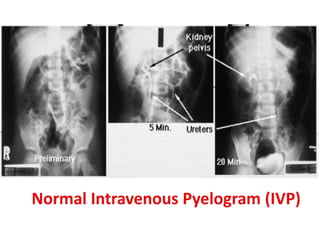
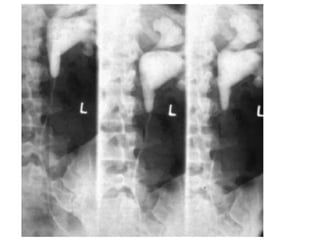
 Straight abdomen of X- ray
 Excretory urography
 Retrograde urography
 Ultrasound
 Role of medical treatment of hydronephrosis & hydroureter
in adults is limited to pain control & treatment or prevention
of infection
 Most conditions require either minimally invasive or open
surgical treatment
 2 notable exceptions are (1) oral alkalinization therapy for
uric acid stones & (2) steroid therapy for retroperitoneal
fibrosis
Lusaya DG, et al. Medscape. 2015.
 Management approach to infants with antenatal
hydronephrosis is based on confirmation of persistent
postnatal hydronephrosis & following 2 predictive factors:
 Bilateral involvement
 Severe hydronephrosis: Fetuses with renal pelvic diameter <
15 mm during 3rd trimester are at greatest risk for significant
renal disease
Lusaya DG, et al. Medscape. 2015.
 Infants with severe bilateral antenatal hydronephrosis and/or
bladder distension are at increased likelihood of having
significant disease
 These infants and those with severe hydronephrotic solitary
kidney should be evaluated initially by ultrasonography on 1st
postnatal day
 Bilateral hydronephrosis suggests obstructive process at level
of or distal to bladder, such as ureterocele or posterior
urethral valves (PUV) in male infant, which can be associated
with impaired renal function & ongoing renal injury
Lusaya DG, et al. Medscape. 2015.
 If postnatal ultrasonography demonstrates persistent
hydronephrosis, voiding cystourethrography (VCUG) should
be performed
 In male infants: Posterior urethra should be fully evaluated to
detect possible PUVs
 Infants with mild or moderate hydronephrosis can be
evaluated after 7 days of life
Lusaya DG, et al. Medscape. 2015.
 In newborns with severe antenatal unilateral hydronephrosis
(renal pelvic diameter >15 mm in 3rd trimester),
ultrasonography should be performed after infant returns to
birth weight (after age 48 h & within 1st 2 wk of life)
Lusaya DG, et al. Medscape. 2015.
 In newborns with less severe antenatal unilateral
hydronephrosis (renal pelvic diameter < 15 mm during 3rd
trimester), ultrasonography can be performed after age 7
days to see whether hydronephrosis has persisted postnatally
Lusaya DG, et al. Medscape. 2015.
 Moderate hydronephrosis resolves by age 18 months in most
cases. This was illustrated by prospective study of 282 infants
(age 2 mo) with renal pelvic diameters between 10 & 15 mm,
which resolved in 94% of patients by age 12-14 months
(resolution was defined as renal pelvic diameter ≤5 mm on 2
consecutive ultrasounds)
 Of 18 patients with persistent hydronephrosis, 14 had
ureteropelvic junction (UPJ) obstruction & 4 had
vesicoureteral reflux (VUR)
Lusaya DG, et al. Medscape. 2015.
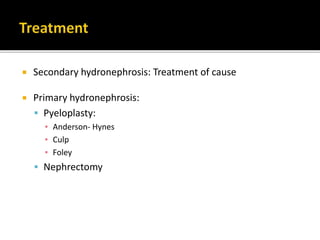
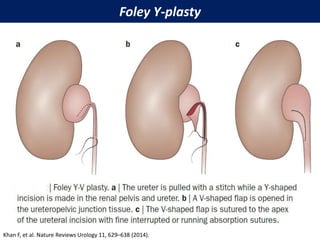
 Secondary hydronephrosis: Treatment of cause
 Primary hydronephrosis:
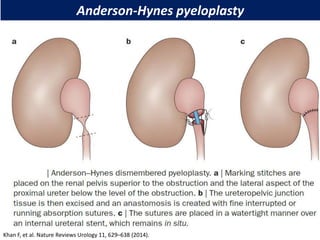
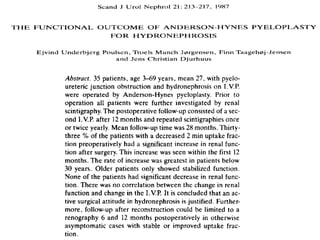
 Pyeloplasty:
▪ Anderson- Hynes
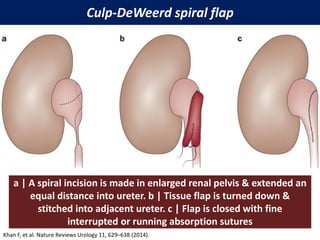
▪ Culp
▪ Foley
 Nephrectomy
Anderson-Hynes pyeloplasty
Khan F, et al. Nature Reviews Urology 11, 629–638 (2014).
Culp-DeWeerd spiral flap
a | A spiral incision is made in enlarged renal pelvis & extended an
equal distance into ureter. b | Tissue flap is turned down &
stitched into adjacent ureter. c | Flap is closed with fine
interrupted or running absorption sutures
Khan F, et al. Nature Reviews Urology 11, 629–638 (2014).
Foley Y-plasty
Khan F, et al. Nature Reviews Urology 11, 629–638 (2014).
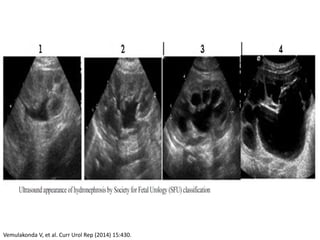
Vemulakonda V, et al. Curr Urol Rep (2014) 15:430.
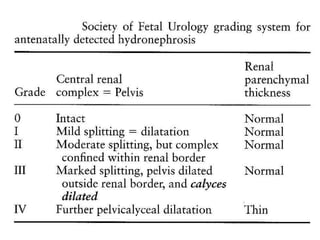
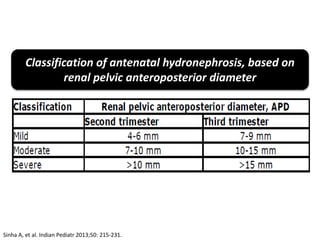
Classification of antenatal hydronephrosis, based on
renal pelvic anteroposterior diameter
Sinha A, et al. Indian Pediatr 2013;50: 215-231.
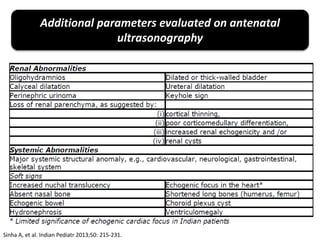
Additional parameters evaluated on antenatal
ultrasonography
Sinha A, et al. Indian Pediatr 2013;50: 215-231.
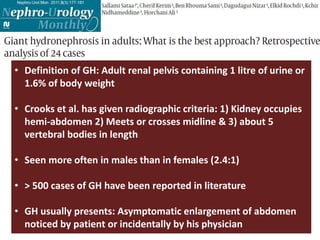
• Definition of GH: Adult renal pelvis containing 1 litre of urine or
1.6% of body weight
• Crooks et al. has given radiographic criteria: 1) Kidney occupies
hemi-abdomen 2) Meets or crosses midline & 3) about 5
vertebral bodies in length
• Seen more often in males than in females (2.4:1)
• > 500 cases of GH have been reported in literature
• GH usually presents: Asymptomatic enlargement of abdomen
noticed by patient or incidentally by his physician
Hydronephrosis.pptxbbbbbbbbbbbbbbbbbbbbbbtb

Hydronephrosis.pptxbbbbbbbbbbbbbbbbbbbbbbtb

  • 2.
     Hydronephrosis &hydroureter: Common clinical conditions encountered not only by urologists but also by emergency medicine specialists and primary care physicians  Hydronephrosis defined: Distention of renal calyces & pelvis with urine as a result of obstruction of outflow of urine distal to renal pelvis  Hydroureter defined: Dilation of ureter Lusaya DG, et al. Medscape. 2015.
  • 4.
  • 9.
     Presence ofhydronephrosis or hydroureter can be physiologic or pathologic  May be acute or chronic, unilateral or bilateral  Can be secondary to obstruction of urinary tract, but it can also be present even without obstruction Lusaya DG, et al. Medscape. 2015.
  • 10.
     Obstructive uropathy:Functional or anatomic obstruction of urinary flow at any level of urinary tract  Obstructive nephropathy: Obstruction causes functional or anatomic renal damage  Thus, the terms hydronephrosis & obstruction should not be used interchangeably Lusaya DG, et al. Medscape. 2015.
  • 11.
     Etiology &presentation of hydronephrosis and/or hydroureter in adults differ from that in neonates & children  Anatomic abnormalities (including urethral valves or stricture & stenosis at ureterovesical or ureteropelvic junction) account for majority of cases in children  Calculi are most common in young adults  Prostatic hypertrophy or carcinoma, retroperitoneal or pelvic neoplasms & calculi are primary causes in older patients Lusaya DG, et al. Medscape. 2015.
  • 12.
     Hydronephrosis orhydroureter: Normal finding in pregnant women  Renal pelvises & caliceal systems may be dilated as a result of progesterone effects & mechanical compression of ureters at pelvic brim  Dilatation of ureters & renal pelvis is more prominent on right side than left side and is seen in up to 80% of pregnant women  These changes can be visualized on ultrasound examination by 2nd trimester & they may not resolve until 6-12 weeks post partum Lusaya DG, et al. Medscape. 2015.
  • 13.
     Hydronephrosis canresult from anatomic or functional processes interrupting flow of urine  This interruption can occur anywhere along urinary tract from kidneys to urethral meatus  Rise in ureteral pressure leads to marked changes in glomerular filtration, tubular function & renal blood flow  Glomerular filtration rate (GFR) declines significantly within hours following acute obstruction. This significant decline of GFR can persist for weeks after relief of obstruction Lusaya DG, et al. Medscape. 2015.
  • 14.
     Renal tubularability to transport sodium, potassium & protons and concentrate and to dilute the urine is severely impaired  Extent & persistence of these functional insults is directly related to duration and extent of obstruction  Brief disruptions are limited to reversible functional disturbance with little associated anatomic changes  More chronic disruptions lead to profound tubular atrophy and permanent nephron loss Lusaya DG, et al. Medscape. 2015.
  • 15.
     Increased ureteralpressure also results in pyelovenous & pyelolymphatic backflow  Gross changes within urinary tract similarly depend on duration, degree & level of obstruction  Within intrarenal collecting system, degree of dilation is limited by surrounding renal parenchyma  However, extra-renal components can dilate to point of tortuosity Lusaya DG, et al. Medscape. 2015.
  • 16.
     Acute ashydronephrosis: When corrected, allows full recovery of renal function  Chronic hydronephrosis: Loss of function is irreversible even with correction of obstruction  Animal experiments: If acute unilateral obstruction is corrected within 2 weeks, full recovery of renal function is possible. However, after 6 weeks of obstruction, function is irreversibly lost Lusaya DG, et al. Medscape. 2015.
  • 17.
     Grossly, acutelyhydronephrotic system can be associated with little anatomic disturbance to renal parenchyma  Chronically dilated system may be associated with compression of papillae, thinning of parenchyma around calyces & coalescence of septa between calyces  Cortical atrophy progresses to point at which only a thin rim of parenchyma is present Lusaya DG, et al. Medscape. 2015.
  • 18.
     Microscopic changesconsist of dilation of tubular lumen & flattening of tubular epithelium  Fibrotic changes & increased collagen deposition are observed in peritubular interstitium Lusaya DG, et al. Medscape. 2015.
  • 19.
     A multitudeof causes exist for hydronephrosis & hydroureter  Classification can be made according to level within urinary tract & whether etiology is intrinsic, extrinsic or functional Lusaya DG, et al. Medscape. 2015.
  • 20.
     Causes canbe as follows: 1. Ureteropelvic junction stricture 2. Ureterovesical junction obstruction 3. Papillary necrosis 4. Ureteral folds 5. Ureteral valves 6. Ureterovesical reflux 7. Ureteral stricture (iatrogenic) 8. Blood clot Lusaya DG, et al. Medscape. 2015.
  • 21.
     Causes canbe as follows: 9. Benign fibroepithelial polyps 10. Ureteral tumor 11. Fungus ball 12. Ureteral calculus 13. Ureterocele 14. Endometriosis 15. Tuberculosis 16. Retrocaval ureter Lusaya DG, et al. Medscape. 2015.
  • 22.
     Causes canbe as follows: 1. Gram-negative infection 2. Neurogenic bladder Lusaya DG, et al. Medscape. 2015.
  • 23.
     Causes canbe as follows: 1. Retroperitoneal lymphoma 2. Retroperitoneal sarcoma 3. Cervical cancer 4. Prostate cancer 5. Retroperitoneal fibrosis 6. Aortic aneurysm 7. Inflammatory bowel disease 8. Ovarian vein syndrome 9. Retrocaval ureter 10. Uterine prolapse Lusaya DG, et al. Medscape. 2015.
  • 24.
     Causes canbe as follows: 11. Pregnancy 12. Iatrogenic ureteral ligation 13. Ovarian cysts 14. Diverticulitis 15. Tuboovarian abscess 16. Retroperitoneal hemorrhage 17. Lymphocele 18. Pelvic lipomatosis 19. Radiation therapy 20. Urinoma Lusaya DG, et al. Medscape. 2015.
  • 25.
     Intrinsic bladderlevel causes can be as follows: 1. Bladder carcinoma 2. Bladder calculi 3. Bladder neck contracture 4. Cystocele 5. Primary bladder neck hypertrophy 6. Bladder diverticula  Functional bladder level causes can be as follows: 1. Neurogenic bladder 2. Vesicoureteral reflux  Extrinsic bladder level causes can include pelvic lipomatosis Lusaya DG, et al. Medscape. 2015.
  • 26.
     Intrinsic urethralevel causes can be as follows: 1. Urethral stricture 2. Urethral valves 3. Urethral diverticula 4. Urethral atresia 5. Labial fusion 6. Hypospadias & epispadias  Extrinsic urethra level causes can be as follows: 1. Benign prostatic hyperplasia 2. Prostate cancer 3. Urethral & penile cancer 4. Phimosis Lusaya DG, et al. Medscape. 2015.
  • 27.
     Obstructions inurinary tract: Reduce urinary flow: Impair renal function  Frequent effect of partial or complete obstruction is dilation of renal pelvic (hydronephrosis)  Obstructions of urinary tract are painful & need immediate treatment
  • 28.
    Types & locations Congenitalpelviureteric junction obstruction Retroperitoneal fibrosis, tumours, haemorrhage Functional: vesicoureteric reflux Neurogenic bladder Cancer of -Ovary -Cervix -Uterus Bladder cancer Prostatic hypertrophy or cancer Calculi
  • 31.
     Symptoms varydepending on whether hydronephrosis is acute or chronic  With acute obstruction, pain is frequently present, due to distention of bladder, collecting system, or renal capsule  Pain is typically minimal or absent with partial or slowly developing obstruction (as with congenital ureteropelvic junction [UPJ] obstruction or a pelvic tumor). It is not uncommon, for example, to see an adult who is noted to have hydronephrosis due to previously unsuspected UPJ obstruction Lusaya DG, et al. Medscape. 2015.
  • 32.
     Relatively severepain (renal or ureteral colic) may be seen with acute complete obstruction (as with a ureteral calculus) or when acute dilatation occurs after a fluid load that increases urine output to level greater than flow rate through area of obstruction  An example of latter problem occurs after beer drinking in a college student with previously asymptomatic & unsuspected UPJ obstruction  Site of obstruction determines location of pain: Upper ureteral or renal pelvic lesions lead to flank pain or tenderness, whereas lower ureteral obstruction causes pain that may radiate to ipsilateral testicle or labia Lusaya DG, et al. Medscape. 2015.
  • 33.
     With regardto renal insufficiency, patients with complete or severe partial bilateral obstruction also may develop acute or chronic renal failure. In the latter setting, patient is often asymptomatic & urinalysis results may be relatively normal or reveal only few white or red blood cells  Anuria may be a presenting symptom of patient. Although urine volume could be reduced in any form of renal disease, anuria is most often seen in 2 conditions: complete bilateral urinary tract obstruction & shock Lusaya DG, et al. Medscape. 2015.
  • 34.
     Other lesscommon causes of anuria:  Hemolyticuremic syndrome  Renal cortical necrosis  Bilateral renal arterial obstruction & crescentic or rapidly progressive glomerulonephritis, particularly anti–glomerular basement membrane (GBM) antibody disease Lusaya DG, et al. Medscape. 2015.
  • 35.
     A historyof hematuria may herald a stone or malignancy anywhere in urinary tract  A history of fever or diabetes adds urgency to evaluation & treatment  A history of a solitary kidney is an emergent situation  Hydronephrosis may develop silently, without symptoms, as result of advanced pelvic malignancy or severe urinary retention from bladder outlet obstruction  Bilateral symmetrical hydronephrosis usually suggests a cause related to bladder, such as retention, prostatic blockage, or severe bladder prolapse Lusaya DG, et al. Medscape. 2015.
  • 36.
     Fetal hydronephrosisis readily diagnosed finding on antenatal ultrasound examination & can be detected as early as 12th - 14th week of gestation  Although renal pelvic dilatation is transient, physiologic state in most cases, urinary tract obstruction & vesicoureteral reflux (VUR) are also causal  Most cases of antenatal hydronephrosis are not clinically significant & can lead to unnecessary testing of newborn baby and anxiety for patients and healthcare providers Lusaya DG, et al. Medscape. 2015.
  • 37.
     With severehydronephrosis, kidney may be palpable  With bilateral hydronephrosis, lower extremity edema may occur  Costovertebral angle tenderness on affected side is common  A palpably distended bladder adds evidence of lower urinary tract obstruction  A digital rectal examination should be performed to assess sphincter tone & to look for hypertrophy, nodules, or induration of prostate Lusaya DG, et al. Medscape. 2015.
  • 38.
     Physical examination,especially in a newborn, can help detect abnormalities that suggest genitourinary abnormalities associated with antenatal hydronephrosis. These include the following:  Presence of abdominal mass could represent an enlarged kidney due to obstructive uropathy or multicystic dysplastic kidney (MCDK)  A palpable bladder in male infant, especially after voiding, may suggest posterior urethral valves  A male infant with prune belly syndrome will have deficient abdominal wall musculature & undescended testes  Presence of associated anomalies should be noted Lusaya DG, et al. Medscape. 2015.

  • 39.
     Presence ofouter ear abnormalities is associated with increased risk of congenital anomalies of kidney & urinary tract (CAKUT)  A single umbilical artery is associated with increased risk of CAKUT, particularly VUR Lusaya DG, et al. Medscape. 2015.
  • 40.
     Straight abdomenof X- ray  Excretory urography  Retrograde urography  Ultrasound
  • 41.
     Role ofmedical treatment of hydronephrosis & hydroureter in adults is limited to pain control & treatment or prevention of infection  Most conditions require either minimally invasive or open surgical treatment  2 notable exceptions are (1) oral alkalinization therapy for uric acid stones & (2) steroid therapy for retroperitoneal fibrosis Lusaya DG, et al. Medscape. 2015.
  • 42.
     Management approachto infants with antenatal hydronephrosis is based on confirmation of persistent postnatal hydronephrosis & following 2 predictive factors:  Bilateral involvement  Severe hydronephrosis: Fetuses with renal pelvic diameter < 15 mm during 3rd trimester are at greatest risk for significant renal disease Lusaya DG, et al. Medscape. 2015.
  • 43.
     Infants withsevere bilateral antenatal hydronephrosis and/or bladder distension are at increased likelihood of having significant disease  These infants and those with severe hydronephrotic solitary kidney should be evaluated initially by ultrasonography on 1st postnatal day  Bilateral hydronephrosis suggests obstructive process at level of or distal to bladder, such as ureterocele or posterior urethral valves (PUV) in male infant, which can be associated with impaired renal function & ongoing renal injury Lusaya DG, et al. Medscape. 2015.
  • 44.
     If postnatalultrasonography demonstrates persistent hydronephrosis, voiding cystourethrography (VCUG) should be performed  In male infants: Posterior urethra should be fully evaluated to detect possible PUVs  Infants with mild or moderate hydronephrosis can be evaluated after 7 days of life Lusaya DG, et al. Medscape. 2015.
  • 45.
     In newbornswith severe antenatal unilateral hydronephrosis (renal pelvic diameter >15 mm in 3rd trimester), ultrasonography should be performed after infant returns to birth weight (after age 48 h & within 1st 2 wk of life) Lusaya DG, et al. Medscape. 2015.
  • 46.
     In newbornswith less severe antenatal unilateral hydronephrosis (renal pelvic diameter < 15 mm during 3rd trimester), ultrasonography can be performed after age 7 days to see whether hydronephrosis has persisted postnatally Lusaya DG, et al. Medscape. 2015.
  • 47.
     Moderate hydronephrosisresolves by age 18 months in most cases. This was illustrated by prospective study of 282 infants (age 2 mo) with renal pelvic diameters between 10 & 15 mm, which resolved in 94% of patients by age 12-14 months (resolution was defined as renal pelvic diameter ≤5 mm on 2 consecutive ultrasounds)  Of 18 patients with persistent hydronephrosis, 14 had ureteropelvic junction (UPJ) obstruction & 4 had vesicoureteral reflux (VUR) Lusaya DG, et al. Medscape. 2015.
  • 48.
     Secondary hydronephrosis:Treatment of cause  Primary hydronephrosis:  Pyeloplasty: ▪ Anderson- Hynes ▪ Culp ▪ Foley  Nephrectomy
  • 49.
    Anderson-Hynes pyeloplasty Khan F,et al. Nature Reviews Urology 11, 629–638 (2014).
  • 51.
    Culp-DeWeerd spiral flap a| A spiral incision is made in enlarged renal pelvis & extended an equal distance into ureter. b | Tissue flap is turned down & stitched into adjacent ureter. c | Flap is closed with fine interrupted or running absorption sutures Khan F, et al. Nature Reviews Urology 11, 629–638 (2014).
  • 52.
    Foley Y-plasty Khan F,et al. Nature Reviews Urology 11, 629–638 (2014).
  • 54.
    Vemulakonda V, etal. Curr Urol Rep (2014) 15:430.
  • 56.
    Classification of antenatalhydronephrosis, based on renal pelvic anteroposterior diameter Sinha A, et al. Indian Pediatr 2013;50: 215-231.
  • 57.
    Additional parameters evaluatedon antenatal ultrasonography Sinha A, et al. Indian Pediatr 2013;50: 215-231.
  • 59.
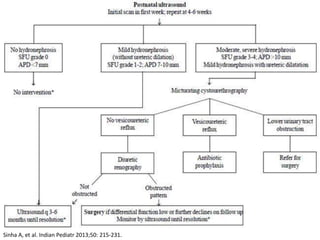
    Sinha A, etal. Indian Pediatr 2013;50: 215-231.
  • 61.
    • Definition ofGH: Adult renal pelvis containing 1 litre of urine or 1.6% of body weight • Crooks et al. has given radiographic criteria: 1) Kidney occupies hemi-abdomen 2) Meets or crosses midline & 3) about 5 vertebral bodies in length • Seen more often in males than in females (2.4:1) • > 500 cases of GH have been reported in literature • GH usually presents: Asymptomatic enlargement of abdomen noticed by patient or incidentally by his physician