Choledochal Cyst
Methas Arunnart MD.
Department of surgery
Songkhla hospital
Introduction
• Cyst dilatation thoughout the billiary tree
• Approximately 1 in 100,000 - 1 in 150,000
• More common in some asian countries(1:1000)
• More common in women (3-4 times)
• Frequently diagnosed in infancy or childhood
• Associated with billary cancer 10-30%[~16%]
(particularly cholangioCA-varies on age and type)
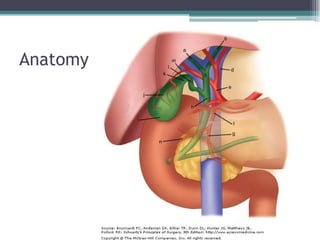
Anatomy
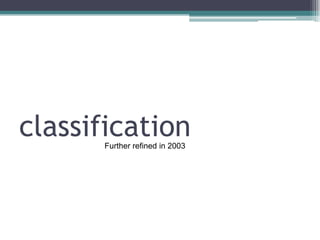
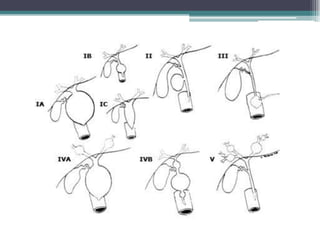
classificationFurther refined in 2003
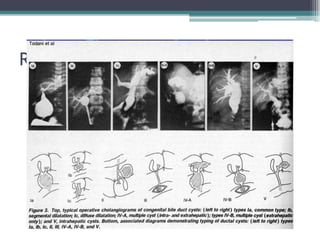
Classification
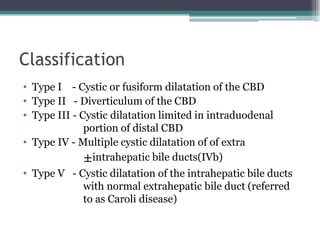
• Type I - Cystic or fusiform dilatation of the CBD
• Type II - Diverticulum of the CBD
• Type III - Cystic dilatation limited in intraduodenal
portion of distal CBD
• Type IV - Multiple cystic dilatation of of extra
±intrahepatic bile ducts(IVb)
• Type V - Cystic dilatation of the intrahepatic bile ducts
with normal extrahepatic bile duct (referred
to as Caroli disease)
PATHOGENESIS may be congenital or acquired
Congenital cysts may result from an unequal
proliferation of embryologic biliary epithelial cells
before bile duct cannulation is complete.
• Fetal viral infection may also have a role
• cyst formation may be the result of ductal
obstruction or distension during the prenatal or
neonatal period.
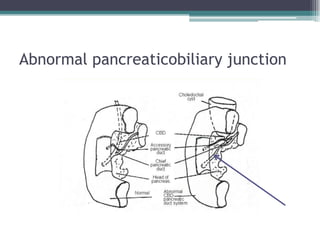
Acquired cysts may be the result of an abnormal
pancreaticobiliary junction (APBJ).
• APBJ is a rare congenital anomaly, with a
prevalence of 0.03%
• It is present in about 70 percent of patients with
biliary cysts and may be a significant risk factor
for malignancy with the cyst.
• In addition, patients with APBJ without biliary
cysts appear to be at a markedly increased risk
for gallbladder cancer
Abnormal pancreaticobiliary junction
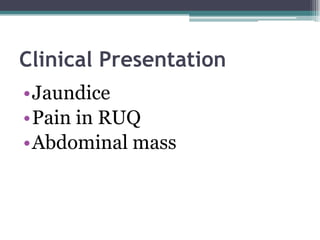
Clinical Presentation
•Jaundice
•Pain in RUQ
•Abdominal mass
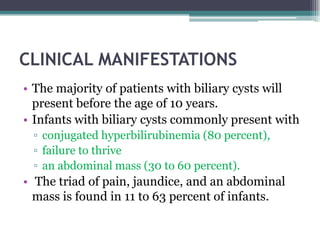
CLINICAL MANIFESTATIONS
• The majority of patients with biliary cysts will
present before the age of 10 years.
• Infants with biliary cysts commonly present with
▫ conjugated hyperbilirubinemia (80 percent),
▫ failure to thrive
▫ an abdominal mass (30 to 60 percent).
• The triad of pain, jaundice, and an abdominal
mass is found in 11 to 63 percent of infants.
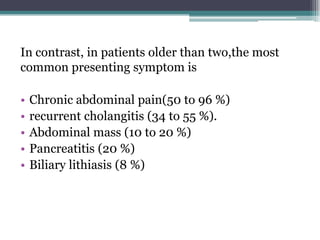
In contrast, in patients older than two,the most
common presenting symptom is
• Chronic abdominal pain(50 to 96 %)
• recurrent cholangitis (34 to 55 %).
• Abdominal mass (10 to 20 %)
• Pancreatitis (20 %)
• Biliary lithiasis (8 %)
Rarely, biliary cysts present with
• intraperitoneal rupture
• bleeding due to erosion into adjacent vessels
• portal hypertension
• secondary biliary cirrhosis due to prolonged
biliary obstruction and recurrent cholangitis.
• In addition, type III cysts can case gastric outlet
obstruction due to the obstruction of the
duodenal lumen or intussusception.
Investigation
• Transabdominal ultrasound
• Computed tomography
• CT cholangiogarphy
• Endoscopic ultrasound
• Intraductal ultrasound
• Endoscopic retrograde cholangiopancreatography
• Magnetic resonance cholangiopancreatography
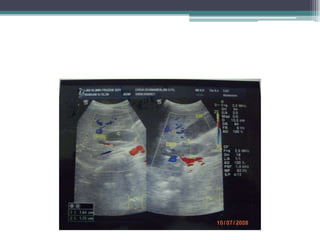
Transabdominal ultrasound
• First imaging modality used for the evaluation
• Not detect type III and type V cysts.
• sensitivity of 71 to 97 %
• Factors that may limit the usefulness of an
ultrasound include the patient's body habitus,
the presence of bowel gas, and limited
visualization due to overlying structures.
Computed tomography
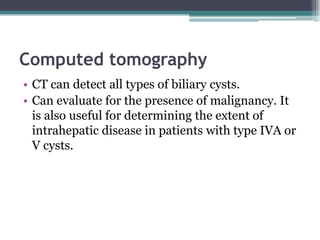
• CT can detect all types of biliary cysts.
• Can evaluate for the presence of malignancy. It
is also useful for determining the extent of
intrahepatic disease in patients with type IVA or
V cysts.
CT cholangiography
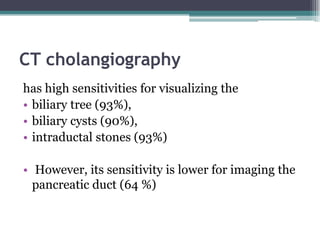
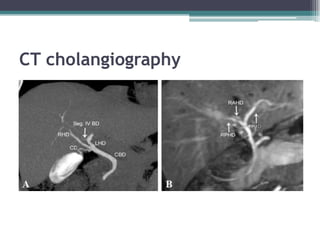
has high sensitivities for visualizing the
• biliary tree (93%),
• biliary cysts (90%),
• intraductal stones (93%)
• However, its sensitivity is lower for imaging the
pancreatic duct (64 %)
CT cholangiography
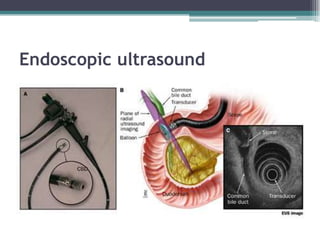
Endoscopic ultrasound(EUS)
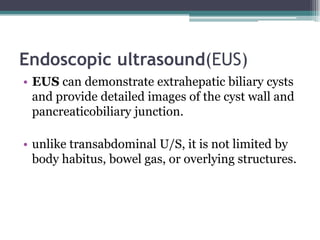
• EUS can demonstrate extrahepatic biliary cysts
and provide detailed images of the cyst wall and
pancreaticobiliary junction.
• unlike transabdominal U/S, it is not limited by
body habitus, bowel gas, or overlying structures.
Endoscopic ultrasound
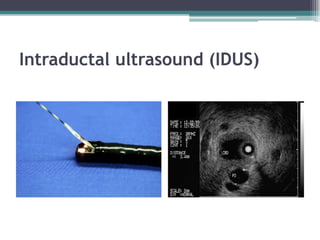
Intraductal ultrasound (IDUS)
• has been used for the diagnosis of early
malignant changes in a biliary cyst .
• This technique is likely to be more
sensitive than direct cholangiography for
detecting early malignancy in the cyst
wall.
Intraductal ultrasound (IDUS)
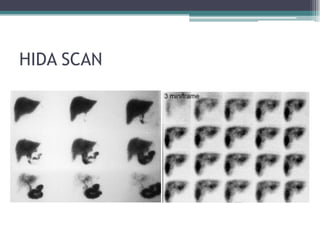
Hepatobiliary scintigraphy
• using radio-labeled dyes : technetium-99m-labeled
hepatic iminodiacetic acid (HIDA), which is selectively
taken-up by hepatocytes and excreted into the bile.
• HIDA scanning is useful for extrahepatic cysts, with a
sensitivity up to 100% for type I cysts. However, it is
inadequate at visualizing the intrahepatic bile ducts
• HIDA scanning may also be useful in cases of cyst
rupture
HIDA SCAN
Cholangiography
• Direct cholangiography (whether intraoperative,
percutaneous, or endoscopic) has a sensitivity of up to
100 percent for diagnosing biliary cysts and previously
was a commonly obtained test.
• can identify abnormal pancreatobiliary junction, and
filling defects due to stones or malignancy.
• Increase risk of cholangitis and pancreatitis. [
Patients with cystic disease are greater risk for these
complications ]
Radiology
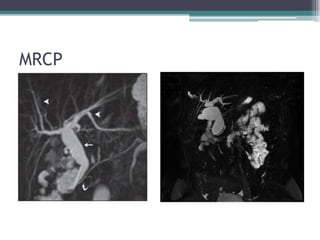
Magnetic resonance
cholangiopancreatography [MRCP]
• Does not have the risks of cholangitis and
pancreatitis as direct cholangiography
• Sensitivity 73 - 100 %.
• less sensitive than direct cholangiography for
excluding obstruction.
• The data are variable with regard to its ability to
diagnose an abnormal pancreatobiliary junction.
[46-75%]
MRCP
Management
• In the past, some patients were treated with
internal drainage via a cystenterostomy
• Because of these complications, patients
requiring treatment now generally undergo
cyst excision with hepaticoenterostomy.
• In patients with ascending cholangitis require
treatment with antibiotics and drainage.
Drainage can often be obtained via ERCP or
percutaneous transhepatic cholangiography.
Treatment
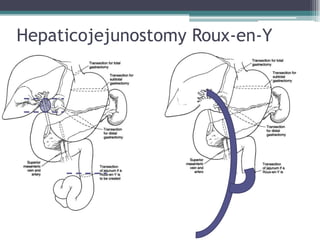
For types I, II, and IV –
• Excision of the extrahepatic biliary tree - including
cholecystectomy, with a Roux-en-Y
hepaticojejunostomy are ideal.
• In some difficult case, some surgeons advocate leaving
posterior cyst wall intact with mucosectomy
• In type IV, additional segmental resection of the liver
may be appropriate
For type III
• can offen be managed with endoscopic
sphincterotomy or endoscopic resection
For type V — As with type IVA cysts,
• some patients with type V cysts will eventually
require liver transplantation.
Alternatives to surgery
• In patients who refuse surgical resection or who are poor
surgical candidates, lesser interventions (such as LC or
ERCP) may treat symptoms caused by gallstones or
sludge.
• No proven effective method of screening biliary cysts for
dysplasia or intramucosal cancer. If screening is
attempted, an intraductal ultrasound is probably the
most sensitive test for detecting early malignancy in the
cyst wall.
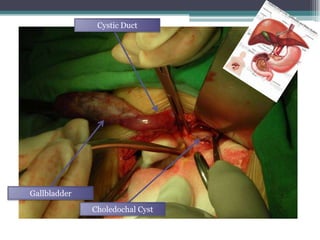
Cystic Duct
Gallbladder
Choledochal Cyst
Hepaticojejunostomy Roux-en-Y
Complications
• Cholangitis
• Biliary stone formation
• Anastomotic stricture
• Residual debris in the intrahepatic bile ducts
• Intrahepatic bile duct dilatation
• Malignancy
Thank you for attention

Choledochal cyst

  • 1.
    Choledochal Cyst Methas ArunnartMD. Department of surgery Songkhla hospital
  • 2.
    Introduction • Cyst dilatationthoughout the billiary tree • Approximately 1 in 100,000 - 1 in 150,000 • More common in some asian countries(1:1000) • More common in women (3-4 times) • Frequently diagnosed in infancy or childhood • Associated with billary cancer 10-30%[~16%] (particularly cholangioCA-varies on age and type)
  • 3.
  • 4.
  • 5.
    Classification • Type I- Cystic or fusiform dilatation of the CBD • Type II - Diverticulum of the CBD • Type III - Cystic dilatation limited in intraduodenal portion of distal CBD • Type IV - Multiple cystic dilatation of of extra ±intrahepatic bile ducts(IVb) • Type V - Cystic dilatation of the intrahepatic bile ducts with normal extrahepatic bile duct (referred to as Caroli disease)
  • 7.
    PATHOGENESIS may becongenital or acquired Congenital cysts may result from an unequal proliferation of embryologic biliary epithelial cells before bile duct cannulation is complete. • Fetal viral infection may also have a role • cyst formation may be the result of ductal obstruction or distension during the prenatal or neonatal period.
  • 8.
    Acquired cysts maybe the result of an abnormal pancreaticobiliary junction (APBJ). • APBJ is a rare congenital anomaly, with a prevalence of 0.03% • It is present in about 70 percent of patients with biliary cysts and may be a significant risk factor for malignancy with the cyst. • In addition, patients with APBJ without biliary cysts appear to be at a markedly increased risk for gallbladder cancer
  • 9.
  • 10.
  • 11.
    CLINICAL MANIFESTATIONS • Themajority of patients with biliary cysts will present before the age of 10 years. • Infants with biliary cysts commonly present with ▫ conjugated hyperbilirubinemia (80 percent), ▫ failure to thrive ▫ an abdominal mass (30 to 60 percent). • The triad of pain, jaundice, and an abdominal mass is found in 11 to 63 percent of infants.
  • 12.
    In contrast, inpatients older than two,the most common presenting symptom is • Chronic abdominal pain(50 to 96 %) • recurrent cholangitis (34 to 55 %). • Abdominal mass (10 to 20 %) • Pancreatitis (20 %) • Biliary lithiasis (8 %)
  • 13.
    Rarely, biliary cystspresent with • intraperitoneal rupture • bleeding due to erosion into adjacent vessels • portal hypertension • secondary biliary cirrhosis due to prolonged biliary obstruction and recurrent cholangitis. • In addition, type III cysts can case gastric outlet obstruction due to the obstruction of the duodenal lumen or intussusception.
  • 14.
    Investigation • Transabdominal ultrasound •Computed tomography • CT cholangiogarphy • Endoscopic ultrasound • Intraductal ultrasound • Endoscopic retrograde cholangiopancreatography • Magnetic resonance cholangiopancreatography
  • 15.
    Transabdominal ultrasound • Firstimaging modality used for the evaluation • Not detect type III and type V cysts. • sensitivity of 71 to 97 % • Factors that may limit the usefulness of an ultrasound include the patient's body habitus, the presence of bowel gas, and limited visualization due to overlying structures.
  • 17.
    Computed tomography • CTcan detect all types of biliary cysts. • Can evaluate for the presence of malignancy. It is also useful for determining the extent of intrahepatic disease in patients with type IVA or V cysts.
  • 18.
    CT cholangiography has highsensitivities for visualizing the • biliary tree (93%), • biliary cysts (90%), • intraductal stones (93%) • However, its sensitivity is lower for imaging the pancreatic duct (64 %)
  • 19.
  • 20.
    Endoscopic ultrasound(EUS) • EUScan demonstrate extrahepatic biliary cysts and provide detailed images of the cyst wall and pancreaticobiliary junction. • unlike transabdominal U/S, it is not limited by body habitus, bowel gas, or overlying structures.
  • 21.
  • 22.
    Intraductal ultrasound (IDUS) •has been used for the diagnosis of early malignant changes in a biliary cyst . • This technique is likely to be more sensitive than direct cholangiography for detecting early malignancy in the cyst wall.
  • 23.
  • 24.
    Hepatobiliary scintigraphy • usingradio-labeled dyes : technetium-99m-labeled hepatic iminodiacetic acid (HIDA), which is selectively taken-up by hepatocytes and excreted into the bile. • HIDA scanning is useful for extrahepatic cysts, with a sensitivity up to 100% for type I cysts. However, it is inadequate at visualizing the intrahepatic bile ducts • HIDA scanning may also be useful in cases of cyst rupture
  • 25.
  • 26.
    Cholangiography • Direct cholangiography(whether intraoperative, percutaneous, or endoscopic) has a sensitivity of up to 100 percent for diagnosing biliary cysts and previously was a commonly obtained test. • can identify abnormal pancreatobiliary junction, and filling defects due to stones or malignancy. • Increase risk of cholangitis and pancreatitis. [ Patients with cystic disease are greater risk for these complications ]
  • 27.
  • 28.
    Magnetic resonance cholangiopancreatography [MRCP] •Does not have the risks of cholangitis and pancreatitis as direct cholangiography • Sensitivity 73 - 100 %. • less sensitive than direct cholangiography for excluding obstruction. • The data are variable with regard to its ability to diagnose an abnormal pancreatobiliary junction. [46-75%]
  • 29.
  • 30.
    Management • In thepast, some patients were treated with internal drainage via a cystenterostomy • Because of these complications, patients requiring treatment now generally undergo cyst excision with hepaticoenterostomy. • In patients with ascending cholangitis require treatment with antibiotics and drainage. Drainage can often be obtained via ERCP or percutaneous transhepatic cholangiography.
  • 31.
    Treatment For types I,II, and IV – • Excision of the extrahepatic biliary tree - including cholecystectomy, with a Roux-en-Y hepaticojejunostomy are ideal. • In some difficult case, some surgeons advocate leaving posterior cyst wall intact with mucosectomy • In type IV, additional segmental resection of the liver may be appropriate
  • 32.
    For type III •can offen be managed with endoscopic sphincterotomy or endoscopic resection For type V — As with type IVA cysts, • some patients with type V cysts will eventually require liver transplantation.
  • 33.
    Alternatives to surgery •In patients who refuse surgical resection or who are poor surgical candidates, lesser interventions (such as LC or ERCP) may treat symptoms caused by gallstones or sludge. • No proven effective method of screening biliary cysts for dysplasia or intramucosal cancer. If screening is attempted, an intraductal ultrasound is probably the most sensitive test for detecting early malignancy in the cyst wall.
  • 34.
  • 35.
  • 36.
    Complications • Cholangitis • Biliarystone formation • Anastomotic stricture • Residual debris in the intrahepatic bile ducts • Intrahepatic bile duct dilatation • Malignancy
  • 37.
    Thank you forattention