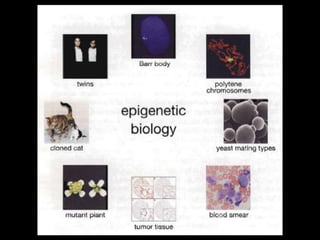
Epigenetics
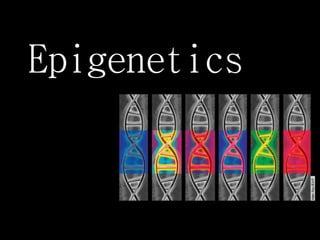
• Epigenetics is the study of 
mechanisms that will switch genes on 
and off. 
• Epigenetics Controls Genes. 
• Epigenetics Is Everywhere 
• Epigenetics Makes Us Unique 
• Epigenetics Is Reversible
Analogy
Epigenome 
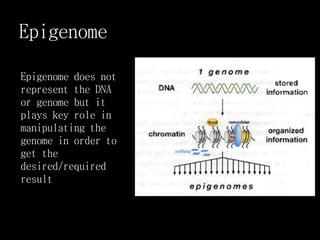
Epigenome does not 
represent the DNA 
or genome but it 
plays key role in 
manipulating the 
genome in order to 
get the 
desired/required 
result
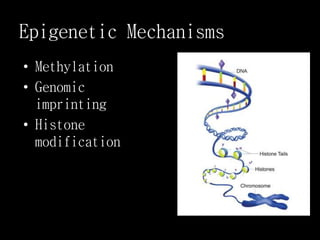
Epigenetic Mechanisms 
• Methylation 
• Genomic 
imprinting 
• Histone 
modification
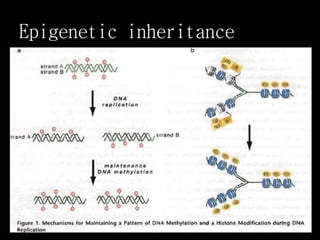
Epigenetic inheritance
Experiments and studies 
• When fruit flies are exposed to certain 
chemicals they get rough growths on their 
eye and 13 generations are born with it too 
(generations 2-13 aren't exposed to these 
chemicals). 
• Smoking and over-eating can cause genes for 
obesity to over-express themselves and the 
genes for longevity under-express 
themselves. 
• Pregnant women with high anxiety are known 
to give birth to kids with asthma. 
• Little kids who are kept very clean are at 
higher risk for eczema.
Sweden study 
• In Norrbotten, Sweden in 19th century 
there were very few people. If they 
had a bad harvest people would 
starve. 
• 1800,1812,1821,1836 an 1856 they had 
bad harvest and people suffered. 
• 1801,1822,1828,1844 and 1863 the 
crops were good and people had 
feasts.
• The study showed that Pregnant women who 
ate poorly, tended to have children with 
a higher risk of Cardiovascular diseases 
when they grew older. 
• Children that went from having a normal 
harvest to a feast next year, were known 
to have children and grandchildren with 
far shorter lives. When certain socio-economic 
variations were controlled it 
came out to be that the future 
generations would die 32 years before 
their peers.
Importance of Epigenetics 
• Study of evolution 
• Epigenetic drugs to treat various 
diseases. 
• Cancer treatment: DNA hypomethylation 
can activate oncogenes and initiate 
chromosome instability, whereas DNA 
hypermethylation initiates silencing of 
tumor suppressor genes. 
• Mental Retardation Disorders 
• Immunity & Related Disorders 
• Neuropsychiatric Disorders
Thank you. 
-Padmagiri G

Epigenetics

  • 1.
  • 2.
    • Epigenetics isthe study of mechanisms that will switch genes on and off. • Epigenetics Controls Genes. • Epigenetics Is Everywhere • Epigenetics Makes Us Unique • Epigenetics Is Reversible
  • 3.
  • 4.
    Epigenome Epigenome doesnot represent the DNA or genome but it plays key role in manipulating the genome in order to get the desired/required result
  • 5.
    Epigenetic Mechanisms •Methylation • Genomic imprinting • Histone modification
  • 7.
  • 9.
    Experiments and studies • When fruit flies are exposed to certain chemicals they get rough growths on their eye and 13 generations are born with it too (generations 2-13 aren't exposed to these chemicals). • Smoking and over-eating can cause genes for obesity to over-express themselves and the genes for longevity under-express themselves. • Pregnant women with high anxiety are known to give birth to kids with asthma. • Little kids who are kept very clean are at higher risk for eczema.
  • 10.
    Sweden study •In Norrbotten, Sweden in 19th century there were very few people. If they had a bad harvest people would starve. • 1800,1812,1821,1836 an 1856 they had bad harvest and people suffered. • 1801,1822,1828,1844 and 1863 the crops were good and people had feasts.
  • 11.
    • The studyshowed that Pregnant women who ate poorly, tended to have children with a higher risk of Cardiovascular diseases when they grew older. • Children that went from having a normal harvest to a feast next year, were known to have children and grandchildren with far shorter lives. When certain socio-economic variations were controlled it came out to be that the future generations would die 32 years before their peers.
  • 12.
    Importance of Epigenetics • Study of evolution • Epigenetic drugs to treat various diseases. • Cancer treatment: DNA hypomethylation can activate oncogenes and initiate chromosome instability, whereas DNA hypermethylation initiates silencing of tumor suppressor genes. • Mental Retardation Disorders • Immunity & Related Disorders • Neuropsychiatric Disorders
  • 13.