• X-ray crystallography
• nuclear magnetic resonance (NMR) spectroscopy
 Motifs are structural characteristics
 domains are functional regions
Helix-turn-helix (HTH)
• turn made up of four amino acids, the
second of which is usually glycine
• second a-helix is therefore the recognition
helix
• lactose repressor
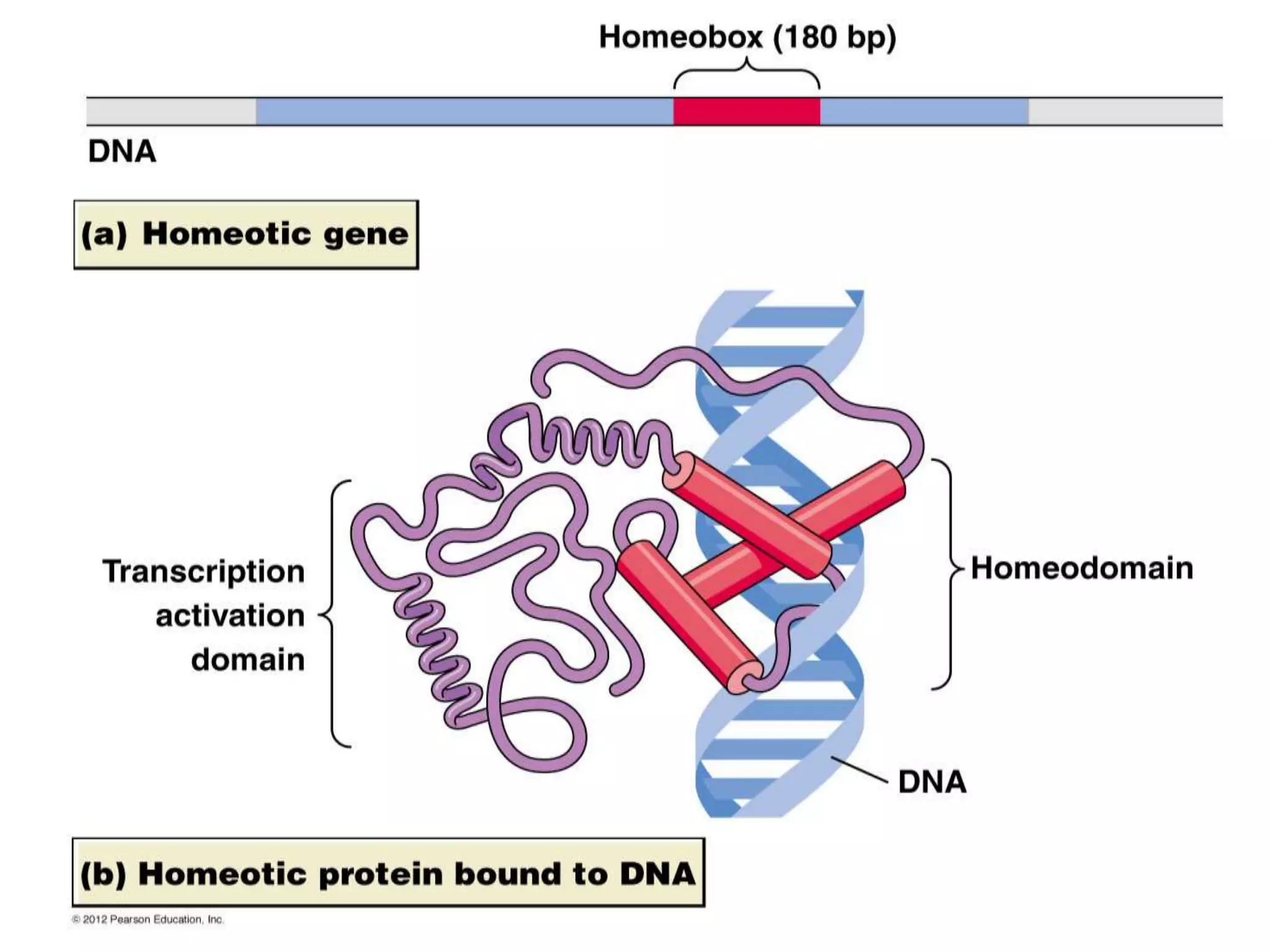
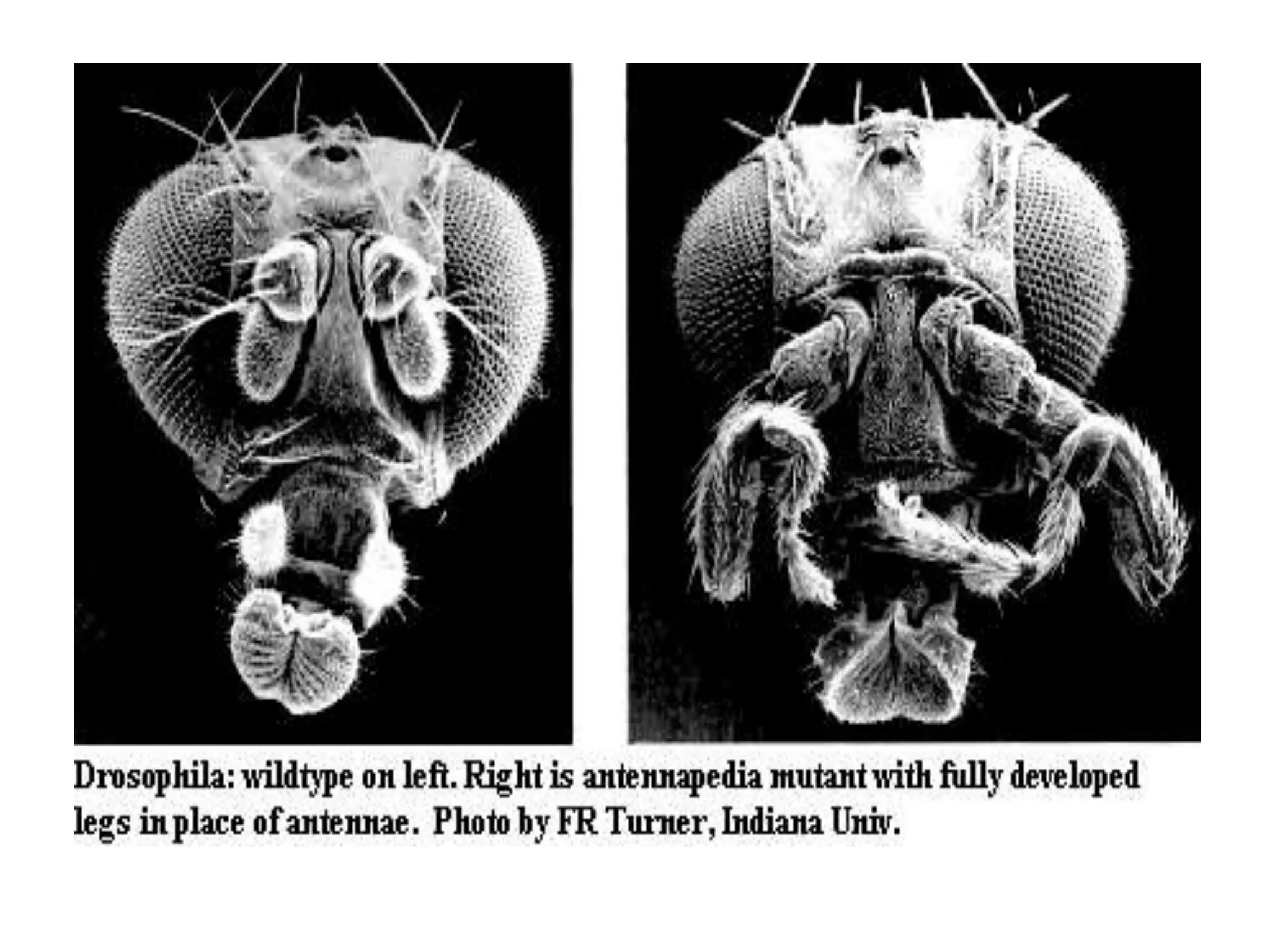
• The Homeodomain is an extended HTH
motif (antennapodia , pax, SRY)
•POU domain which is usually found in
proteins that also have a homeodomain
• winged helix–turn–helix ( GABP )
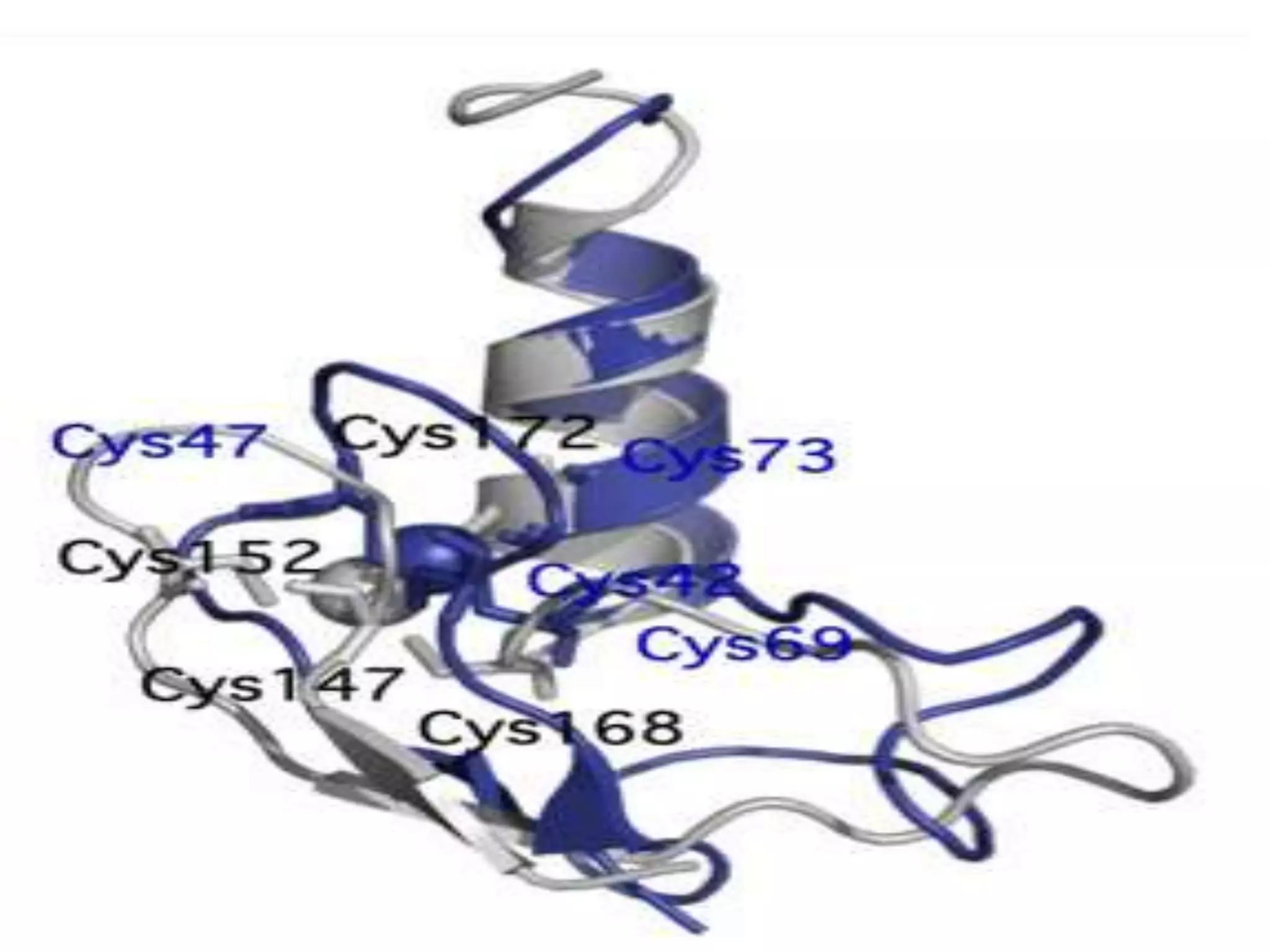
Zinc fingers
• very common in eukaryotes
•There are at least six different versions of
the zinc finger
Cys2His2 finger
-comprises a series of 12 or so amino acids,
including two cysteines and two histidines
- α helix is recognition
-the zinc atom holds the b-sheet and a-helix in
the appropriate positions relative to one another
-TFIIIA , SW15
- multicysteine zinc fingers (steroid receptor)
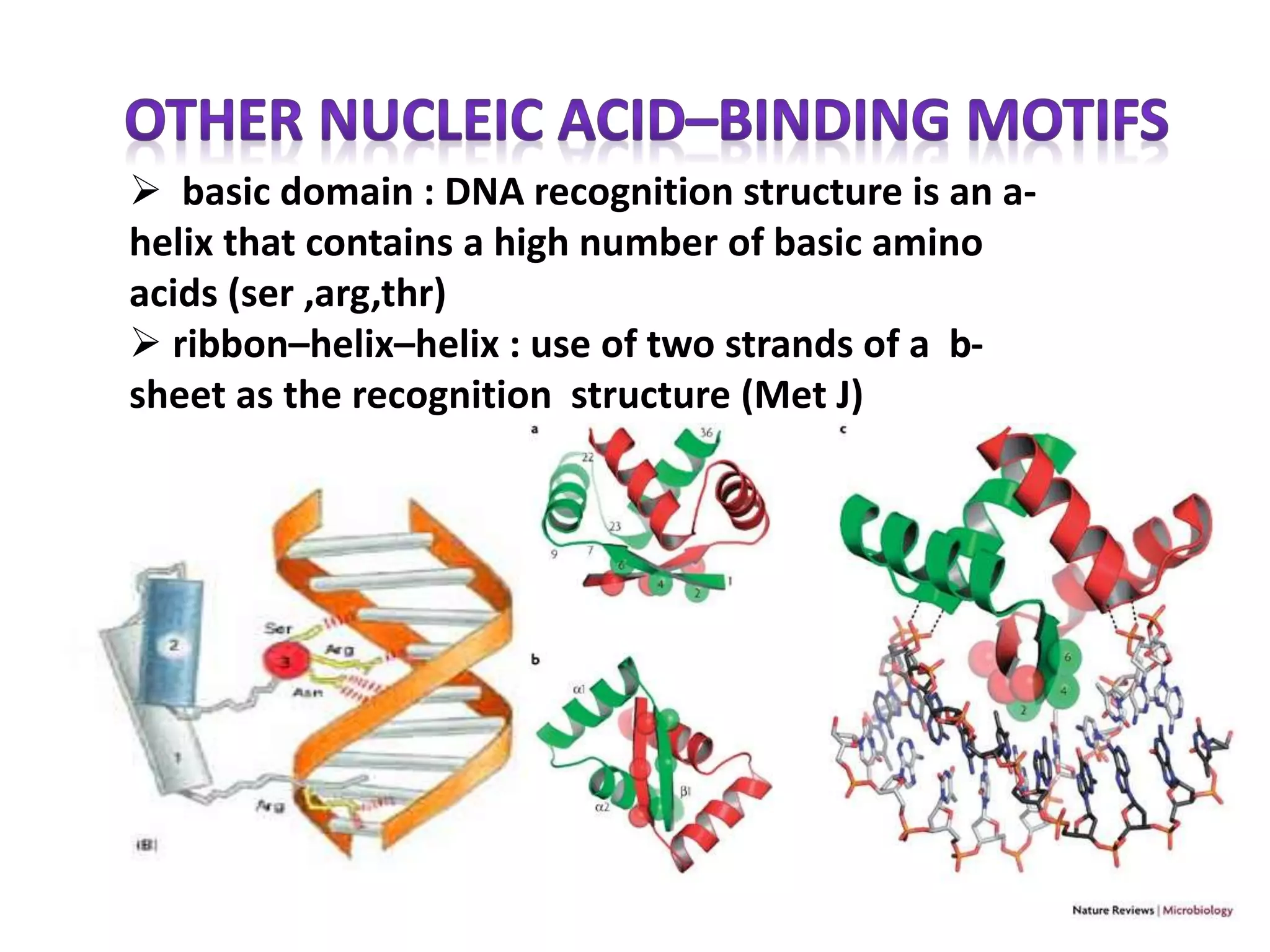
 basic domain : DNA recognition structure is an a-
helix that contains a high number of basic amino
acids (ser ,arg,thr)
 ribbon–helix–helix : use of two strands of a b-
sheet as the recognition structure (Met J)
 TBP domain: the recognition structure is a b-sheet
(the main contacts are with the minor, not major, groove
of the DNA)
leucine zipper : is an a-helix that coils more tightly than
normal and presents a series of leucines on one of its
faces (c-Jun , c-Fos )
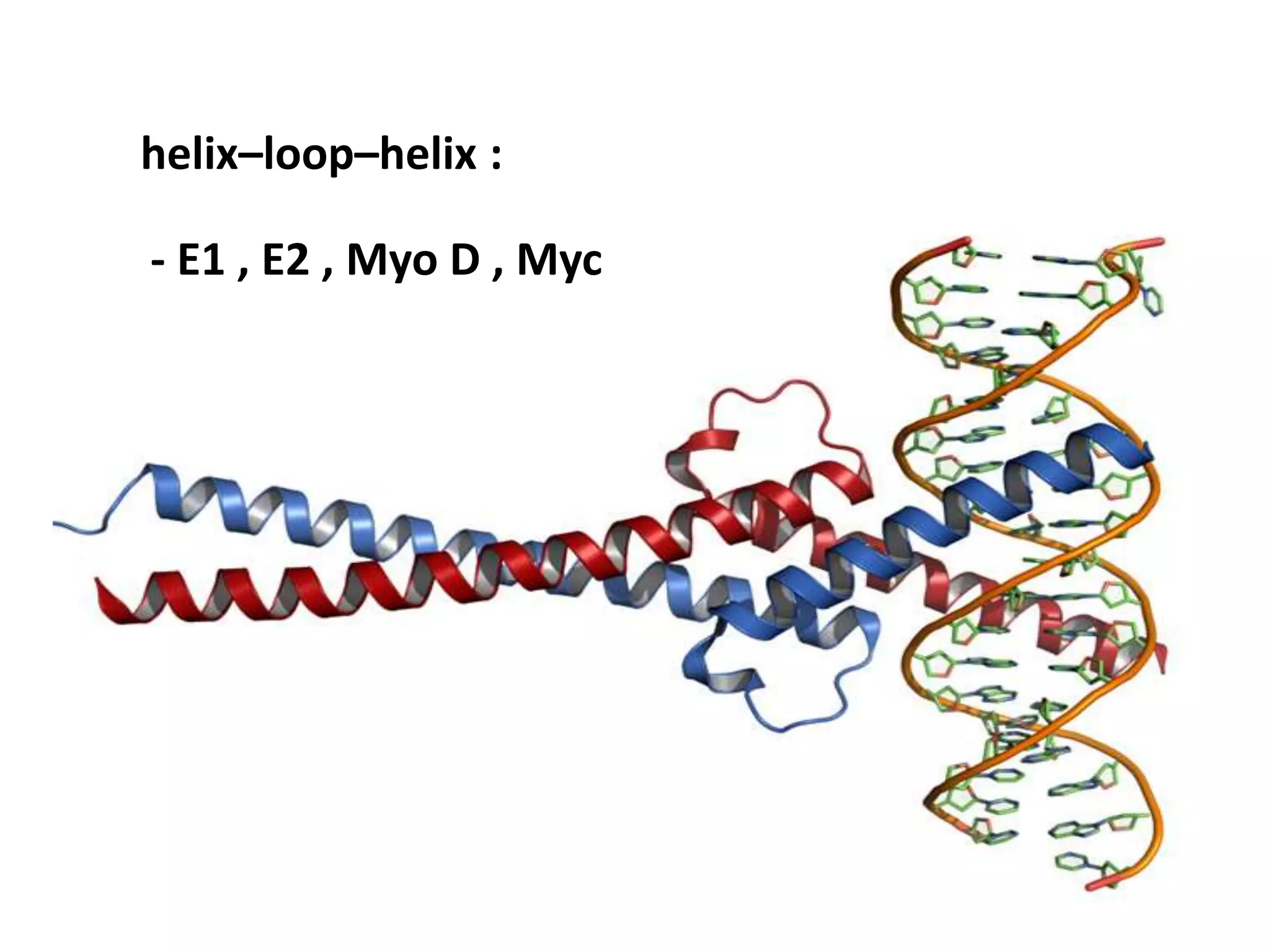
helix–loop–helix :
- E1 , E2 , Myo D , Myc
 Ribonucleoprotein (RNP) domain :
comprises four β-strands and two α-
helices in the order β-α-β-β-α-β
double-stranded RNA binding domain
(dsRBD) : the structure α-β-β-β-α
 κ-homology domain : the structure β-
α-α-β-β-α
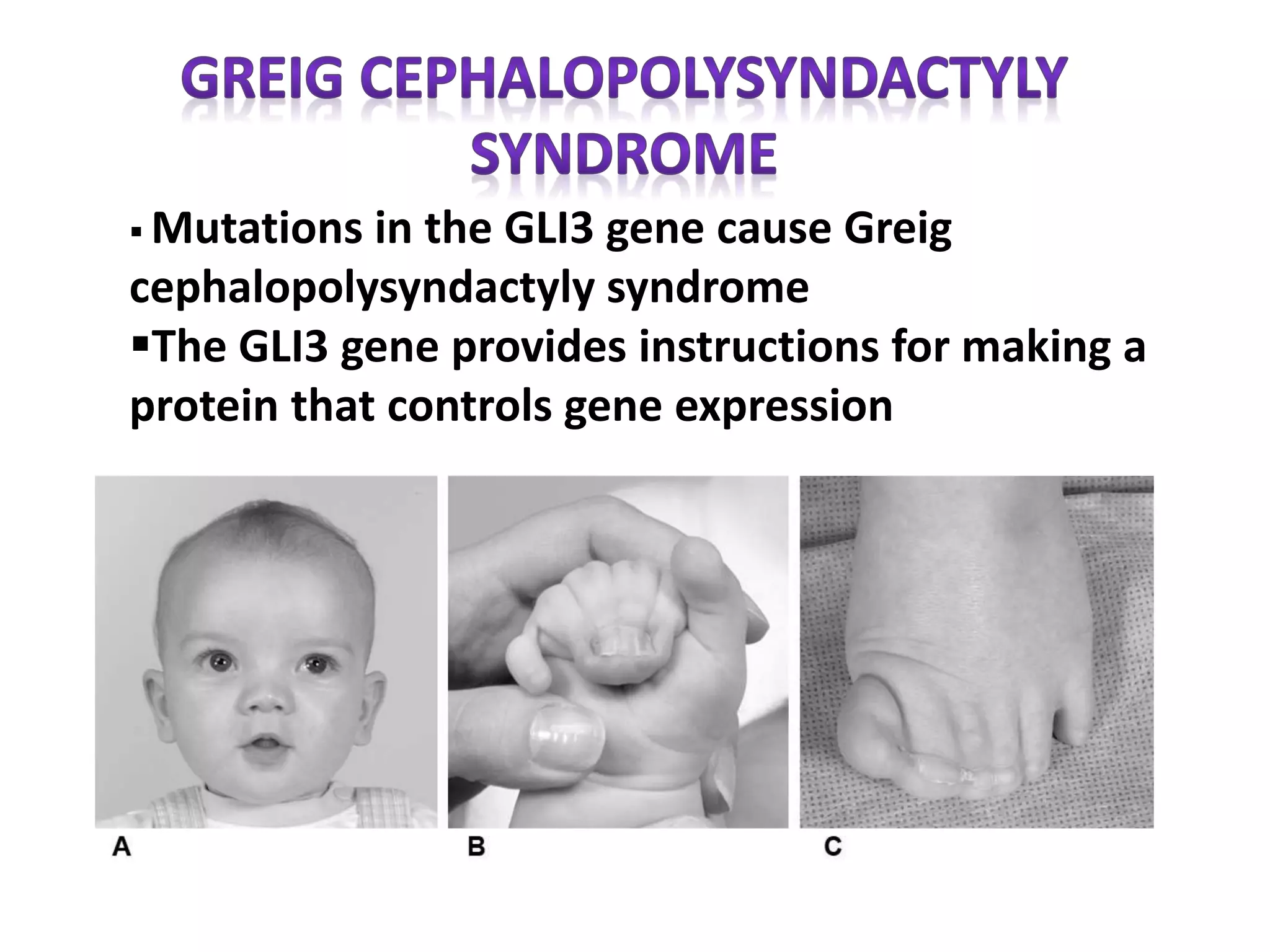
 Mutations in the GLI3 gene cause Greig
cephalopolysyndactyly syndrome
The GLI3 gene provides instructions for making a
protein that controls gene expression
•The WT1 gene provides instructions for making a protein
that is necessary for the development of the kidneys and
gonads .
•The mutations that cause Denys-Drash syndrome lead to
the production of an abnormal WT1 protein that cannot
bind to DNA
• Mutations in 11 genes have been found to
cause nonsyndromic holoprosencephaly.
•The ZIC2 protein regulates genes involved in
both early and late stages of forebrain
development
Dna binding protein(motif)

Dna binding protein(motif)

  • 2.
    • X-ray crystallography •nuclear magnetic resonance (NMR) spectroscopy  Motifs are structural characteristics  domains are functional regions
  • 4.
    Helix-turn-helix (HTH) • turnmade up of four amino acids, the second of which is usually glycine • second a-helix is therefore the recognition helix • lactose repressor • The Homeodomain is an extended HTH motif (antennapodia , pax, SRY) •POU domain which is usually found in proteins that also have a homeodomain • winged helix–turn–helix ( GABP )
  • 9.
    Zinc fingers • verycommon in eukaryotes •There are at least six different versions of the zinc finger Cys2His2 finger -comprises a series of 12 or so amino acids, including two cysteines and two histidines - α helix is recognition -the zinc atom holds the b-sheet and a-helix in the appropriate positions relative to one another -TFIIIA , SW15 - multicysteine zinc fingers (steroid receptor)
  • 12.
     basic domain: DNA recognition structure is an a- helix that contains a high number of basic amino acids (ser ,arg,thr)  ribbon–helix–helix : use of two strands of a b- sheet as the recognition structure (Met J)
  • 13.
     TBP domain:the recognition structure is a b-sheet (the main contacts are with the minor, not major, groove of the DNA) leucine zipper : is an a-helix that coils more tightly than normal and presents a series of leucines on one of its faces (c-Jun , c-Fos )
  • 14.
    helix–loop–helix : - E1, E2 , Myo D , Myc
  • 15.
     Ribonucleoprotein (RNP)domain : comprises four β-strands and two α- helices in the order β-α-β-β-α-β double-stranded RNA binding domain (dsRBD) : the structure α-β-β-β-α  κ-homology domain : the structure β- α-α-β-β-α
  • 19.
     Mutations inthe GLI3 gene cause Greig cephalopolysyndactyly syndrome The GLI3 gene provides instructions for making a protein that controls gene expression
  • 20.
    •The WT1 geneprovides instructions for making a protein that is necessary for the development of the kidneys and gonads . •The mutations that cause Denys-Drash syndrome lead to the production of an abnormal WT1 protein that cannot bind to DNA
  • 21.
    • Mutations in11 genes have been found to cause nonsyndromic holoprosencephaly. •The ZIC2 protein regulates genes involved in both early and late stages of forebrain development