Epigenetics at the Early Stages of
Childhood
Evo Devo: Genetics vs. Epigenetics ,
George P. Chrousos, MD,
University of Athens,
Athens, Greece
(No Disclosures)
Phylogeny vs. Ontogeny
Genetics vs. Epigenetics ,
Evolution and Development=,
The Evo-Devo Field
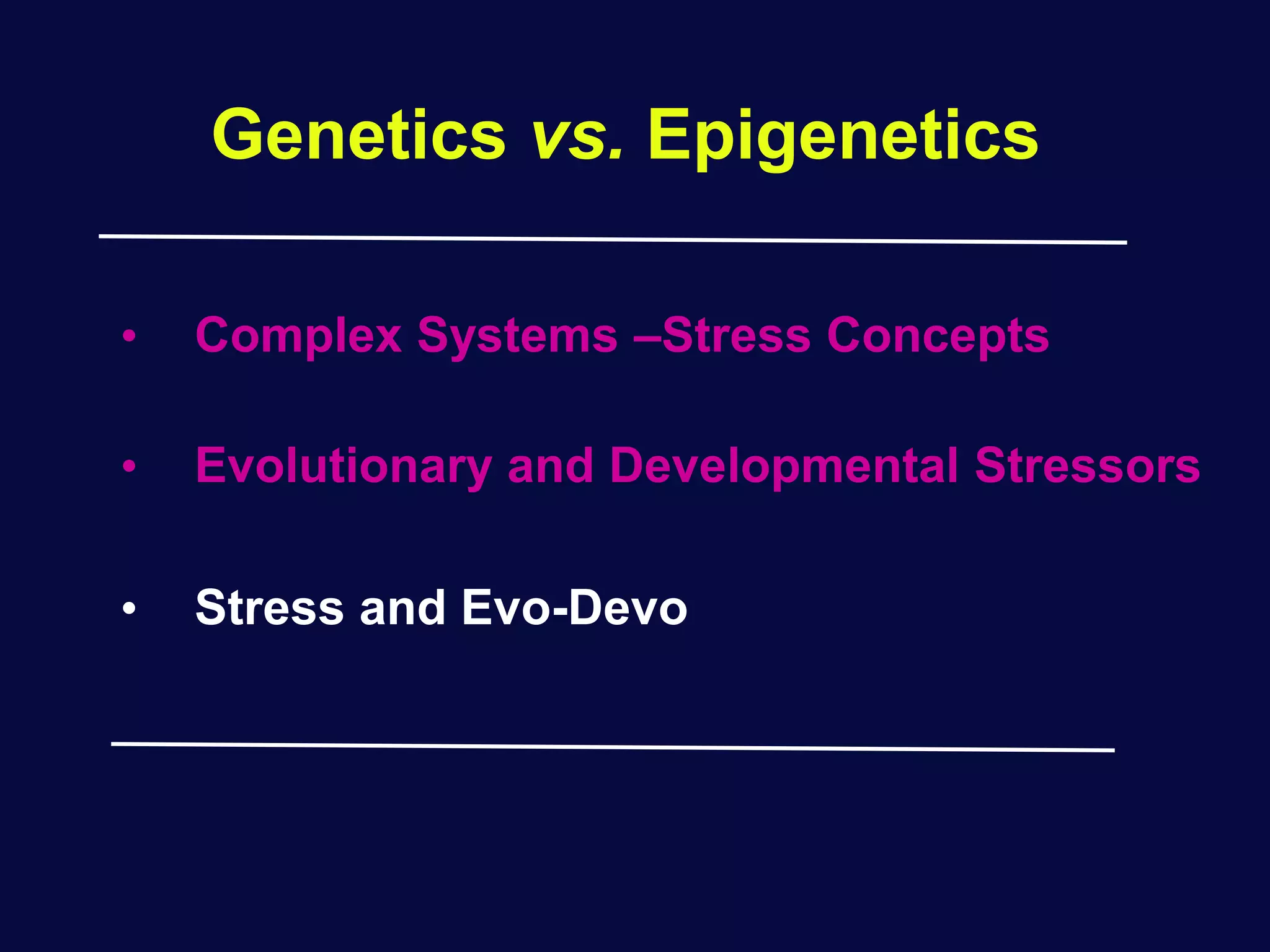
Genetics vs. Epigenetics
• Complex Systems
• Evolutionary and Developmental Stressors
• Stress and Evo-Devo
“Πολλά τα δεινά κ’ουδέν ανθρώπου
δεινότερον πέλλει….”
'There are many wonderful things and
nothing is more wonderful than the
human ...”
Σοφοκλής
Sophocles
496-406 BCE
Genetics vs. Epigenetics
• Complex Systems
• Evolutionary and Developmental Stressors
• Stress and Evo-Devo
Pythagoras 6th century BCE
Disturbing
Forces
Harmony
Equilibrium
Balance
Counteracting
Reestablishing
Forces
IIIIII
Stressors Homeostasis
Adaptive
Response
(Physical,
Emotional)
Pythagoras= Harmony
Alcmaeon=Iso-nomia
Walter Cannon= Homeostasis
Stress is the State of
Threatened (or Perceived
Threatened) Homeostasis
Evolutionary and Developmental
Stressors
 Starvation
 Dehydration/hemorrhage (gastroenteritis, trauma)
 Injurious agents ( infections, toxic substances)
 Adversaries (anticipation, minimization of exposure)
 Tissue injury
Raphael, 16th Century CE
Aristotle by Lysippos 4th Century BCE
The Human Brain
• Plato (Meno)
The innate preformation theory
(Genetic view)
• Aristotle
The blank state theory
(Epigenetic view)
Preformation (Plato)
(unfolding of preformed tissues)
Epigenesis (Aristotle)
(Embryology, Development)
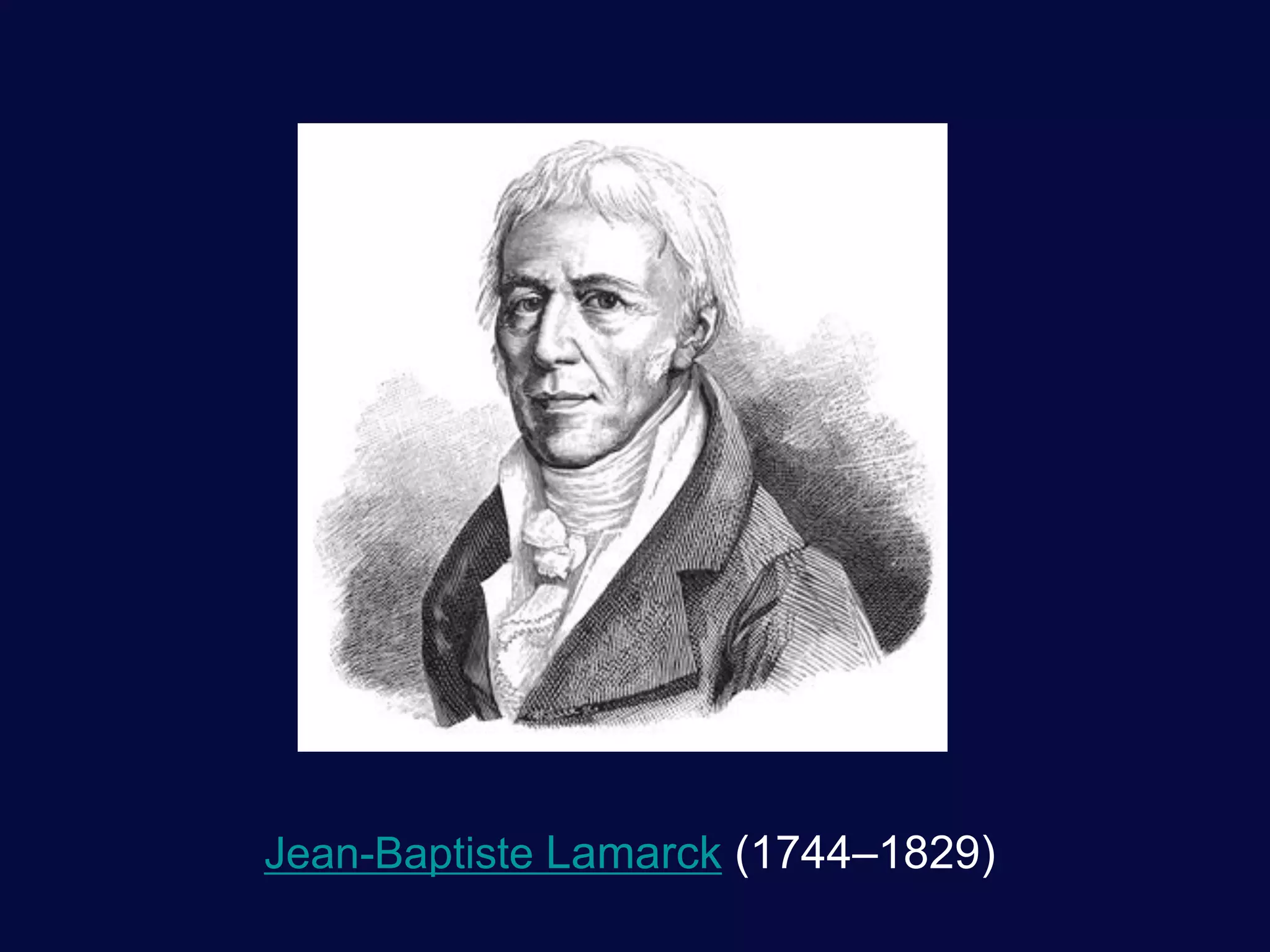
Jean-Baptiste Lamarck (1744–1829)
Charles Robert Darwin (12 February 1809 – 19 April 1882))
Modern definitions
“Epigenetics are the causal
interactions between genes and their
products which bring the phenotype
into being” 1942
Conrad H Waddington 1900-1975
The Strategy of Genes, MacMillan 1957
Modern definitions
“Genetics proposes;
Epigenetics disposes”
Medawar and Medawar 1983
Forms of Inheritance
Genetic (blueprint)
Structural
Steady state
Epigenetic
Behavioral/Symbolic (memes)
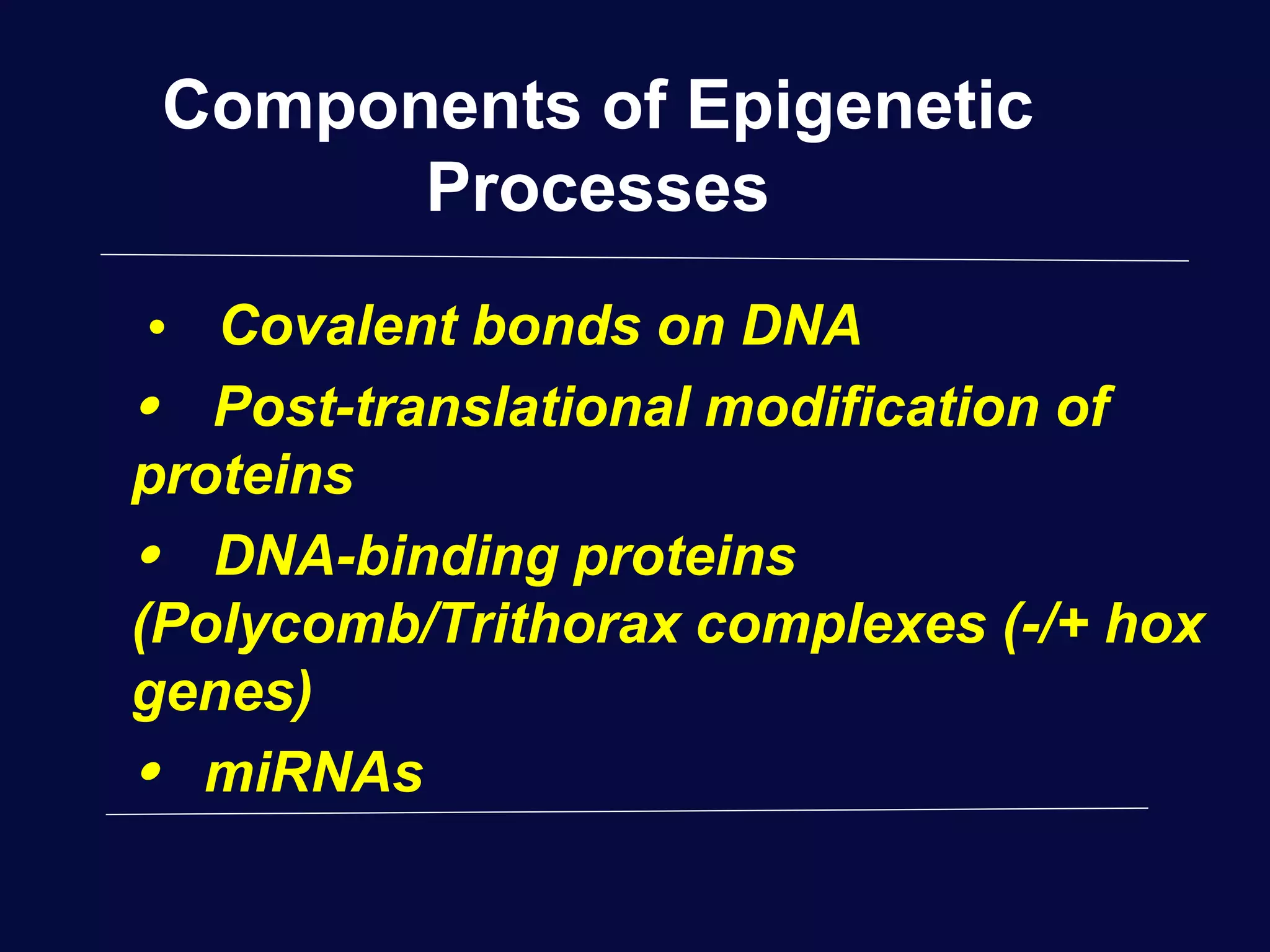
Components of Epigenetic
Processes
 Covalent bonds on DNA
 Post-translational modification of
proteins
 DNA-binding proteins
(Polycomb/Trithorax complexes (-/+ hox
genes)
 miRNAs
Epigenetic Mechanisms
DNA Methylation/demethylation
Covalent histone modifications
(methylation, acetylation, phosphorylation, polyADP-
ribosylation)
Methyl-CpG domain-binding proteins
Chromatin compacting or unwinding
complexes (polycomb, trithorax groups)
Gene Activation
Me
K4
Me
K9
Me
K2
7
Me
K3
6
Me
K2
0
CpG Me
Ac
H4
H2B
H3
Linker H
Gene Silencing
DNMT3A
DNMT3
B
DNMT1
“de novo”
methylation
Replication
“maintenance”
methylation
HATs
HDMTsCoA
HMTs
K4
TF HDACs
CoR
MBDs
HP-1
HMTs
K9
Transcription Silencing
CpG Acetylatio
n
H3-K4me Me-CpG Deacetylation H3-K9me
Epigenetic Functions
 Cell differentiation
 Genomic imprinting
 X-chromosome inactivation
 Retrotransposon repression
 Puberty
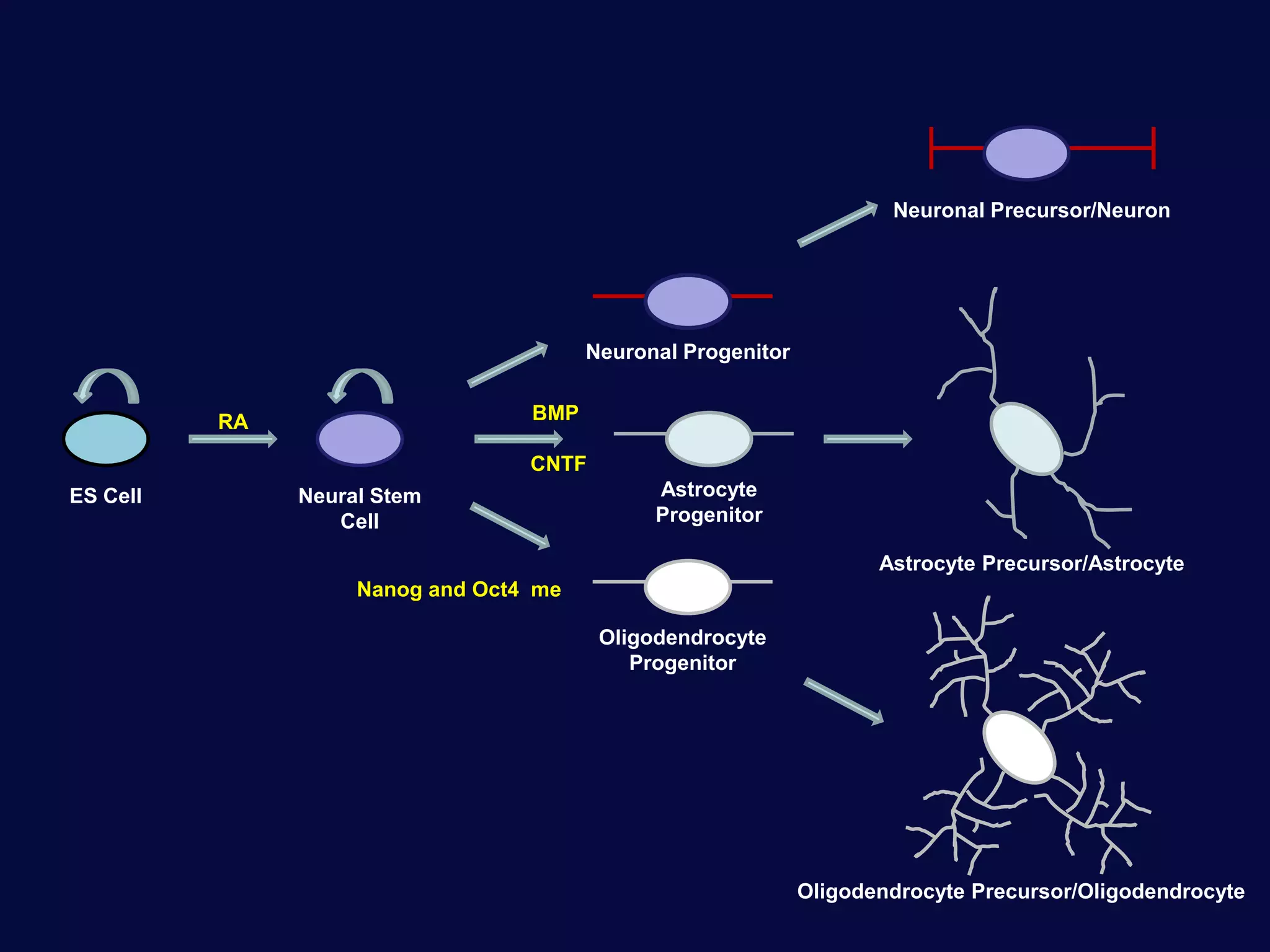
ES Cell Neural Stem
Cell
Neuronal Progenitor
Astrocyte
Progenitor
Oligodendrocyte
Progenitor
Astrocyte Precursor/Astrocyte
Oligodendrocyte Precursor/Oligodendrocyte
Neuronal Precursor/Neuron
RA BMP
CNTF
Nanog and Oct4 me
Epigenetics of Retrotransposons
(piRNAs)
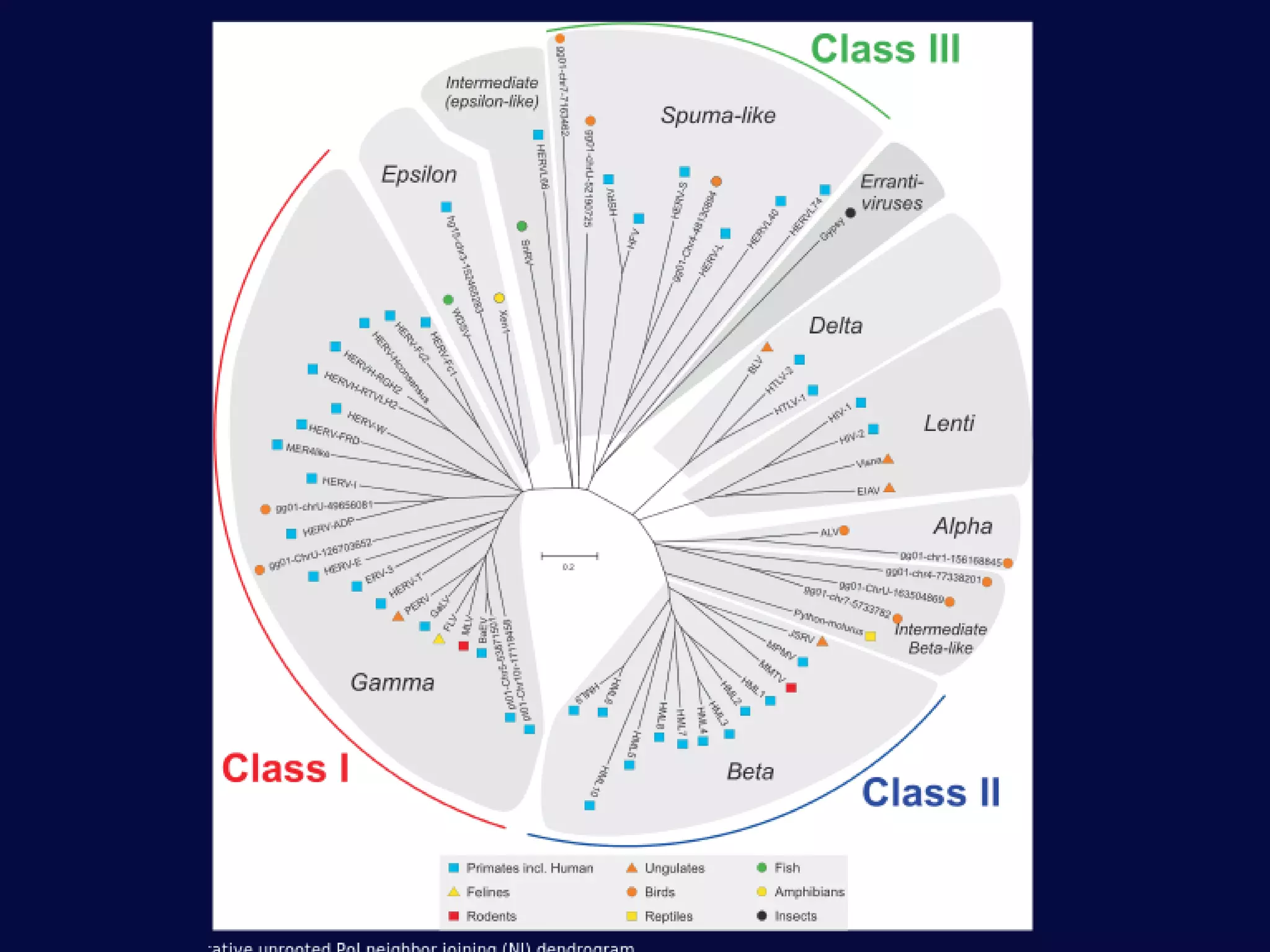
40-60% of genome of retroviral origin
10% of genome Alu repeats
10,000 HERV-K retrotransposons
5,000 SVA retrotransposons
Genetics vs. Epigenetics
• Complex Systems –Stress Concepts
• Evolutionary and Developmental Stressors
• Stress and Evo-Devo
Genotype + Environment =
Phenotype/Disease Phenotype
Epigenetic control mechanisms evolve
There is a Lamarckian dimension in evolution
Imprints and methylation marks are erased
and reestablished de novo stochastically
in each generation
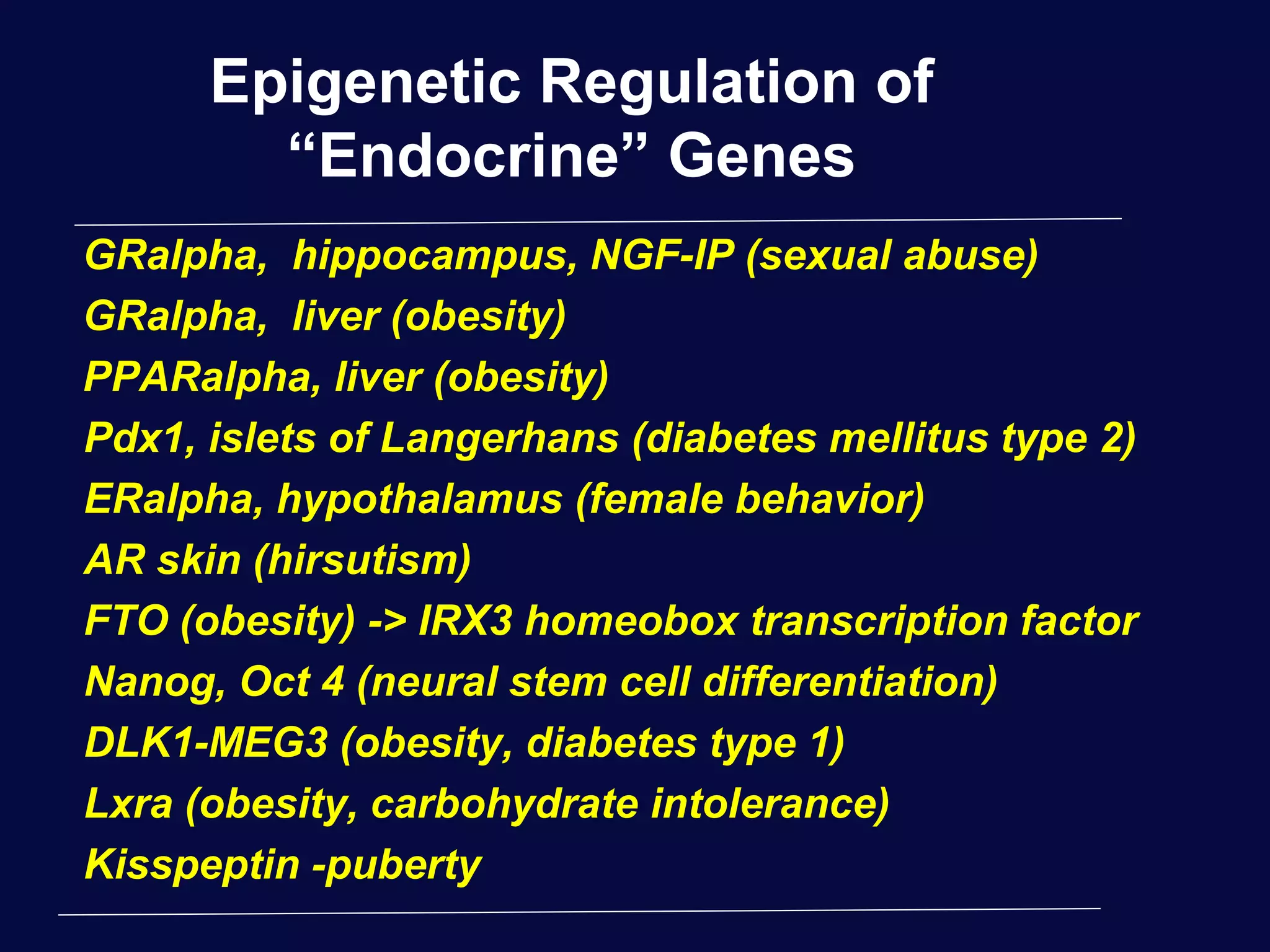
Epigenetic Regulation of
“Endocrine” Genes
GRalpha, hippocampus, NGF-IP (sexual abuse)
GRalpha, liver (obesity)
PPARalpha, liver (obesity)
Pdx1, islets of Langerhans (diabetes mellitus type 2)
ERalpha, hypothalamus (female behavior)
AR skin (hirsutism)
FTO (obesity) -> IRX3 homeobox transcription factor
Nanog, Oct 4 (neural stem cell differentiation)
DLK1-MEG3 (obesity, diabetes type 1)
Lxra (obesity, carbohydrate intolerance)
Kisspeptin -puberty
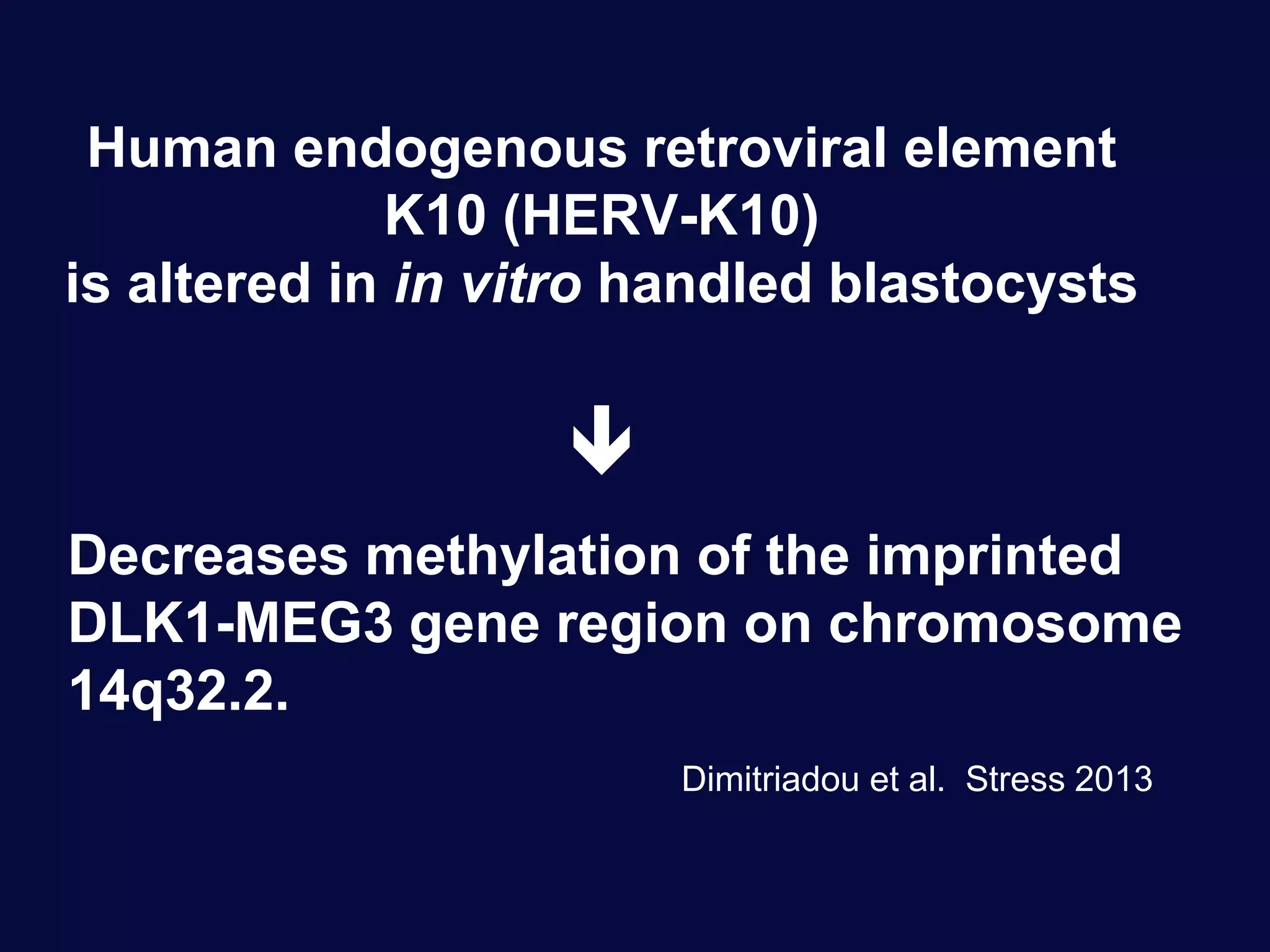
Human endogenous retroviral element
K10 (HERV-K10)
is altered in in vitro handled blastocysts

Decreases methylation of the imprinted
DLK1-MEG3 gene region on chromosome
14q32.2.
Dimitriadou et al. Stress 2013
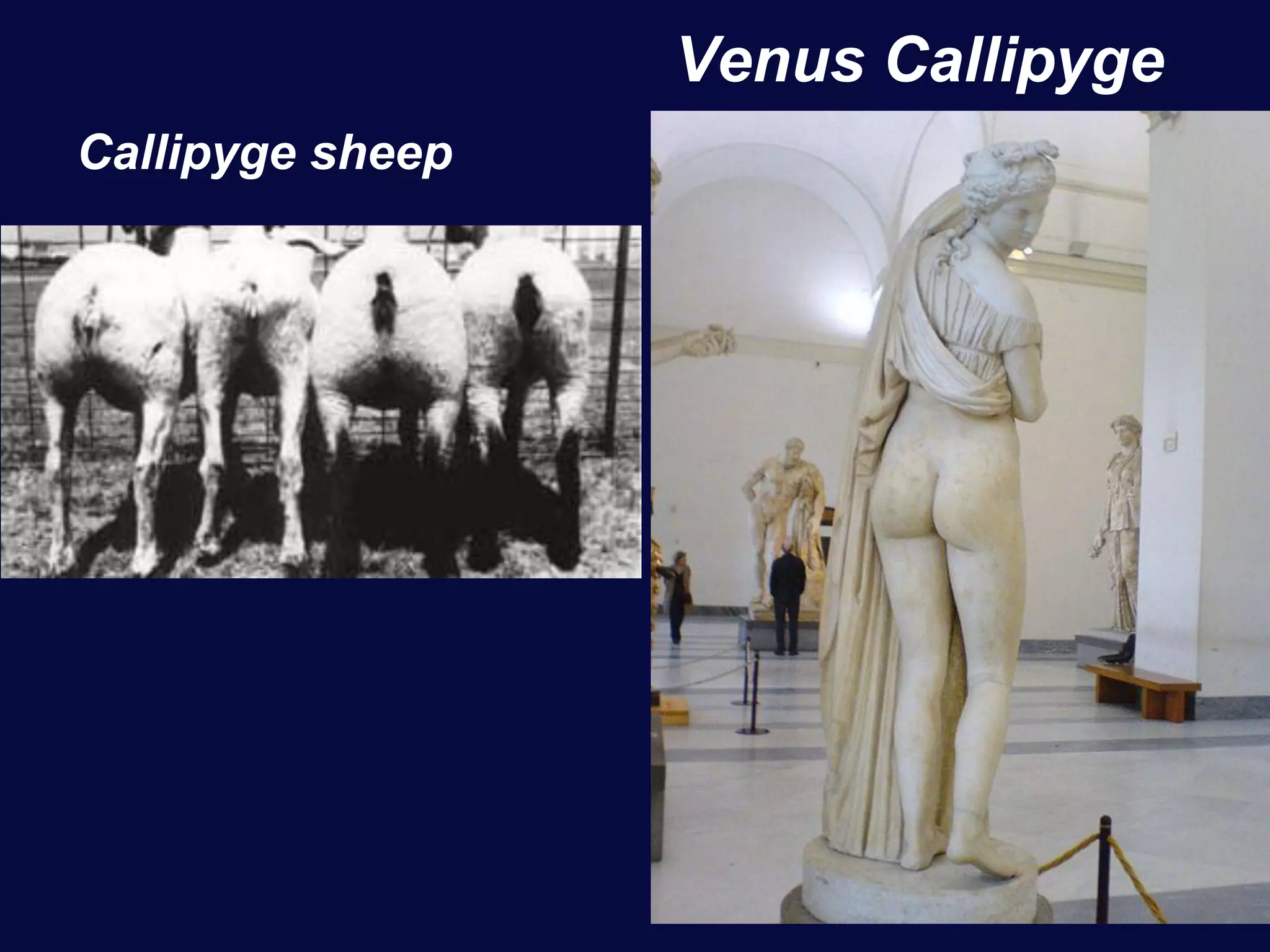
Venus Callipyge
Callipyge sheep
Callipege
Systolic and Diastolic
Blood Pressure-SDS
*
p=<0.001
*
p=<0.001
*
Gkourogianni et al. Fertility Sterility 2010
Results
Comparison between SGA-IVF, AGA-IVF
and controls
Triglycerides
59,5
52,4
*
p= 0,031
Gkourogianni et al. PLoS One 2015
Epigenome
CpG islands in 60% of gene promoters
25% of methylation in stem cells is in
non-CpG context
Global demethylation of the trophoblast
Global demethylation in aging
Global demethylation in cancer
Epigenome
Preimplantation: Methylome erasure
Paternal first, maternal ensues
Remethylation: Morula-Blastocyst
Inner cell mass: hypermethylation
Trophoblast: hypomethylation
Gametogenesis: epigenetic
reprogramming/ erasure-remethylation
Blastulation: 1 - morula, 2 - blastula.
Blastocyst
IndividualSpecies vs.
Epigenotype
Evolution
Genetics
CNS complexity
Development
Epigenetics
CNS plasticity
ENVIRONMENTAL STRESSORS
Genotype
Starvation
Dehydration
Injurious agents-inflammations
Adversaries-anticipation
Adversaries-avoidance
Injury-minimization
Phenotype
Maternal Stress,
Embryogenesis
‘Be equanimous and remember
not to believe easily’
   

Epigenetics at the early stages of childhood evo devo genetics vs epigenetics