Behavioral Genetics
   Brian J. Piper, Ph.D.


                           1
Goals
• Genetics Primer
• Behavioral Genetics Methods
  – Selective Breeding
  – Pedigree Analysis
  – Twins (& Adopted Twins!)
• Evolutionary Psychology


                                2
3
Gregor Mendel
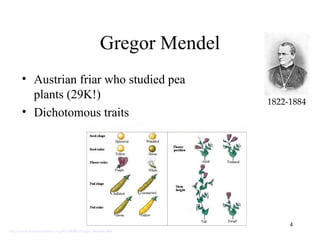
       • Austrian friar who studied pea
         plants (29K!)
                                                                   1822-1884
       • Dichotomous traits


                                                                        4
http://www.accessexcellence.org/RC/AB/BC/Gregor_Mendel.php
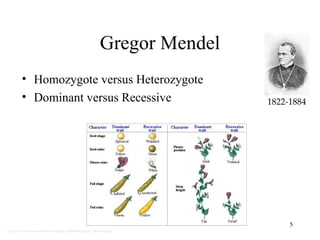
Gregor Mendel
       • Homozygote versus Heterozygote
       • Dominant versus Recessive                                 1822-1884


                                                                        5
http://www.accessexcellence.org/RC/AB/BC/Gregor_Mendel.php
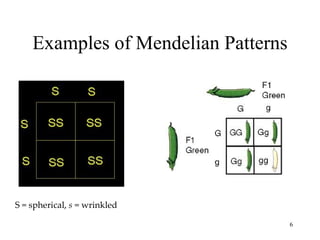
Examples of Mendelian Patterns


S = spherical, s = wrinkled

                                     6
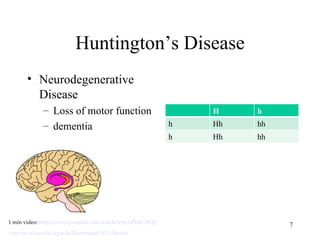
Huntington’s Disease
       • Neurodegenerative
         Disease
              – Loss of motor function                        H    h
              – dementia                                  h   Hh   hh
                                                          h   Hh   hh


1 min video: http://www.youtube.com/watch?v=JzAPh2v-SCQ                 7
http://en.wikipedia.org/wiki/Huntington%27s_Disease
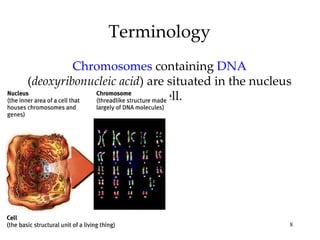
Terminology
         Chromosomes containing DNA
(deoxyribonucleic acid) are situated in the nucleus
                      of a cell.


                                                  8
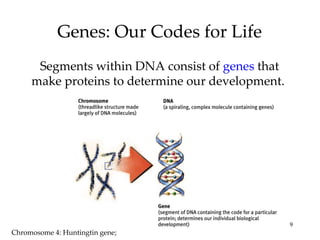
Genes: Our Codes for Life
      Segments within DNA consist of genes that
     make proteins to determine our development.


                                                   9
Chromosome 4: Huntingtin gene;
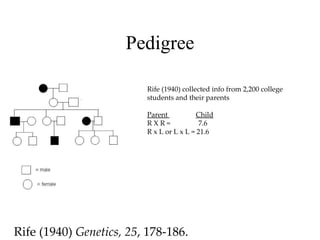
Pedigree

                         Rife (1940) collected info from 2,200 college
                         students and their parents

                         Parent           Child
                         RXR=              7.6
                         R x L or L x L = 21.6


Rife (1940) Genetics, 25, 178-186.
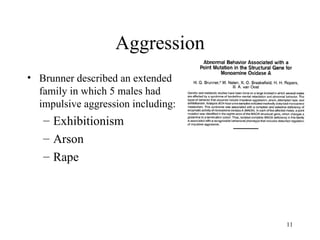
Aggression
• Brunner described an extended
  family in which 5 males had
  impulsive aggression including:
   – Exhibitionism
   – Arson
   – Rape


                                    11
Limitations of Pedigree
• Paternity
• Best for Dichotomous Characteristics
• Families share environments too


                                         12
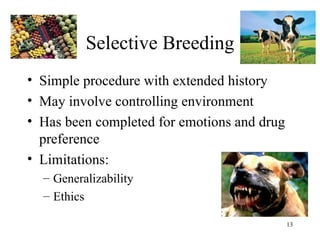
Selective Breeding
• Simple procedure with extended history
• May involve controlling environment
• Has been completed for emotions and drug
  preference
• Limitations:
  – Generalizability
  – Ethics

                                             13
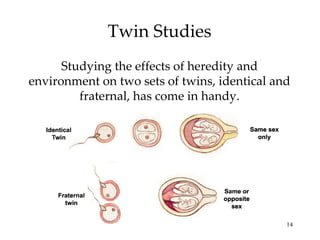
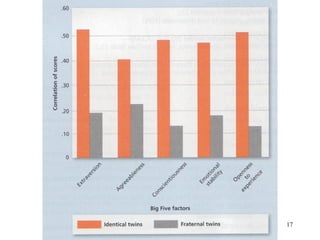
Twin Studies
      Studying the effects of heredity and
environment on two sets of twins, identical and
         fraternal, has come in handy.


                                              14
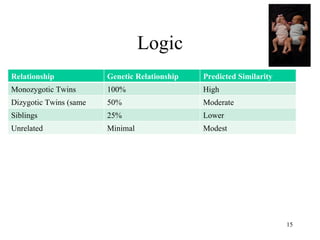
Logic
Relationship            Genetic Relationship   Predicted Similarity
Monozygotic Twins       100%                   High
Dizygotic Twins (same   50%                    Moderate
sex)
Siblings                25%                    Lower
Unrelated               Minimal                Modest


                                                                      15
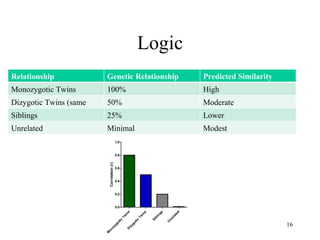
Logic
Relationship            Genetic Relationship   Predicted Similarity
Monozygotic Twins       100%                   High
Dizygotic Twins (same   50%                    Moderate
sex)
Siblings                25%                    Lower
Unrelated               Minimal                Modest


                                                                      16
17
Temperament and Heredity


    Temperament refers to a person’s stable
  emotional reactivity and intensity. Identical
twins express similar temperaments, suggesting
      heredity predisposes temperament.


                                              18
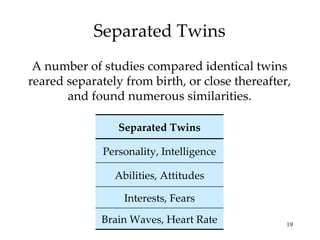
Separated Twins
 A number of studies compared identical twins
reared separately from birth, or close thereafter,
       and found numerous similarities.

                 Separated Twins

              Personality, Intelligence

                Abilities, Attitudes

                  Interests, Fears

             Brain Waves, Heart Rate             19
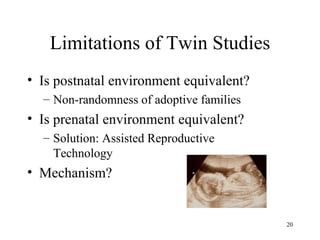
Limitations of Twin Studies
• Is postnatal environment equivalent?
  – Non-randomness of adoptive families
• Is prenatal environment equivalent?
  – Solution: Assisted Reproductive
    Technology
• Mechanism?


                                          20
Evolutionary Psychology:
  Understanding Human Nature


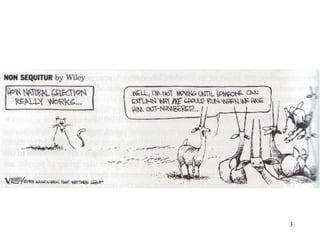
Evolutionary psychology studies why we as
humans are alike. In particular, it studies the
  evolution of behavior and mind using
       principles of natural selection.


                                                  21
Topics of Evolutionary
            Psychology
A number of human traits have been identified
  as a result of pressures afforded by natural
                    selection.

  Why do infants fear strangers when they become
                      mobile?

  Why do people fear spiders and snakes and not
              electricity and guns?

  How are men and women alike? How and why do
       men’s and women’s sexuality differ?
                                                   22
Natural Selection


  Natural selection is an evolutionary process
through which adaptive traits are passed on to
 ongoing generations because these traits help
       animals survive and reproduce.


                                             23
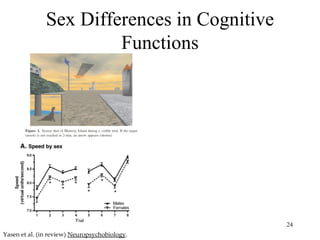
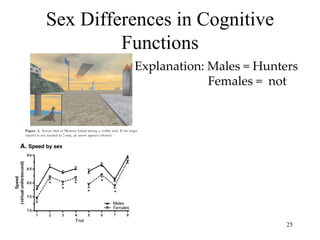
Sex Differences in Cognitive
                        Functions


                                               24
Yasen et al. (in review) Neuropsychobiology.
Sex Differences in Cognitive
         Functions
          Explanation: Males = Hunters
                       Females = not


                                    25
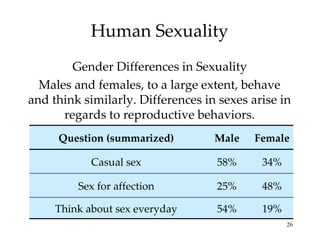
Human Sexuality
        Gender Differences in Sexuality
  Males and females, to a large extent, behave
and think similarly. Differences in sexes arise in
      regards to reproductive behaviors.
     Question (summarized)         Male    Female

            Casual sex             58%      34%

         Sex for affection         25%      48%

     Think about sex everyday      54%      19%
                                                  26
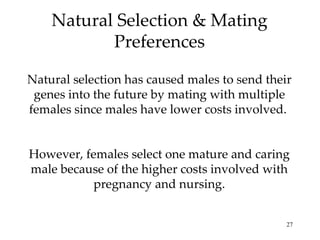
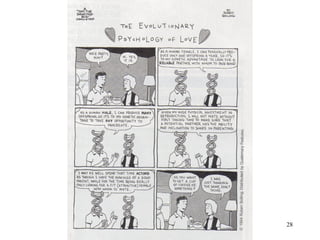
Natural Selection & Mating
           Preferences

Natural selection has caused males to send their
 genes into the future by mating with multiple
females since males have lower costs involved.


However, females select one mature and caring
male because of the higher costs involved with
          pregnancy and nursing.


                                               27
28
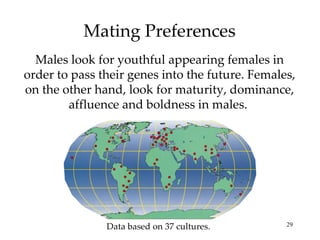
Mating Preferences
  Males look for youthful appearing females in
order to pass their genes into the future. Females,
on the other hand, look for maturity, dominance,
        affluence and boldness in males.


               Data based on 37 cultures.        29
Critiquing the Evolutionary
              Perspective
 Evolutionary psychologists take a behavior and work
  backward to explain it in terms of natural selection.


Evolutionary psychology proposes genetic determinism
    and undercuts morality in establishing society.


                                                          30
Summary
• Genetics Primer
• Behavioral Genetics Methods
  – Selective Breeding
  – Pedigree Analysis
  – Twins (& Adopted Twins!)
• Evolutionary Psychology


                                31
Video: Genetics versus
      Environment in Dogs
• Behavioral Genetics: Dogs Decoded: Nova,
  30:00 to 34:30


                                         32

Introductory Psychology: Behavior Genetics

  • 1.
    Behavioral Genetics Brian J. Piper, Ph.D. 1
  • 2.
    Goals • Genetics Primer •Behavioral Genetics Methods – Selective Breeding – Pedigree Analysis – Twins (& Adopted Twins!) • Evolutionary Psychology 2
  • 3.
  • 4.
    Gregor Mendel • Austrian friar who studied pea plants (29K!) 1822-1884 • Dichotomous traits 4 http://www.accessexcellence.org/RC/AB/BC/Gregor_Mendel.php
  • 5.
    Gregor Mendel • Homozygote versus Heterozygote • Dominant versus Recessive 1822-1884 5 http://www.accessexcellence.org/RC/AB/BC/Gregor_Mendel.php
  • 6.
    Examples of MendelianPatterns S = spherical, s = wrinkled 6
  • 7.
    Huntington’s Disease • Neurodegenerative Disease – Loss of motor function H h – dementia h Hh hh h Hh hh 1 min video: http://www.youtube.com/watch?v=JzAPh2v-SCQ 7 http://en.wikipedia.org/wiki/Huntington%27s_Disease
  • 8.
    Terminology Chromosomes containing DNA (deoxyribonucleic acid) are situated in the nucleus of a cell. 8
  • 9.
    Genes: Our Codesfor Life Segments within DNA consist of genes that make proteins to determine our development. 9 Chromosome 4: Huntingtin gene;
  • 10.
    Pedigree Rife (1940) collected info from 2,200 college students and their parents Parent Child RXR= 7.6 R x L or L x L = 21.6 Rife (1940) Genetics, 25, 178-186.
  • 11.
    Aggression • Brunner describedan extended family in which 5 males had impulsive aggression including: – Exhibitionism – Arson – Rape 11
  • 12.
    Limitations of Pedigree •Paternity • Best for Dichotomous Characteristics • Families share environments too 12
  • 13.
    Selective Breeding • Simpleprocedure with extended history • May involve controlling environment • Has been completed for emotions and drug preference • Limitations: – Generalizability – Ethics 13
  • 14.
    Twin Studies Studying the effects of heredity and environment on two sets of twins, identical and fraternal, has come in handy. 14
  • 15.
    Logic Relationship Genetic Relationship Predicted Similarity Monozygotic Twins 100% High Dizygotic Twins (same 50% Moderate sex) Siblings 25% Lower Unrelated Minimal Modest 15
  • 16.
    Logic Relationship Genetic Relationship Predicted Similarity Monozygotic Twins 100% High Dizygotic Twins (same 50% Moderate sex) Siblings 25% Lower Unrelated Minimal Modest 16
  • 17.
  • 18.
    Temperament and Heredity Temperament refers to a person’s stable emotional reactivity and intensity. Identical twins express similar temperaments, suggesting heredity predisposes temperament. 18
  • 19.
    Separated Twins Anumber of studies compared identical twins reared separately from birth, or close thereafter, and found numerous similarities. Separated Twins Personality, Intelligence Abilities, Attitudes Interests, Fears Brain Waves, Heart Rate 19
  • 20.
    Limitations of TwinStudies • Is postnatal environment equivalent? – Non-randomness of adoptive families • Is prenatal environment equivalent? – Solution: Assisted Reproductive Technology • Mechanism? 20
  • 21.
    Evolutionary Psychology: Understanding Human Nature Evolutionary psychology studies why we as humans are alike. In particular, it studies the evolution of behavior and mind using principles of natural selection. 21
  • 22.
    Topics of Evolutionary Psychology A number of human traits have been identified as a result of pressures afforded by natural selection. Why do infants fear strangers when they become mobile? Why do people fear spiders and snakes and not electricity and guns? How are men and women alike? How and why do men’s and women’s sexuality differ? 22
  • 23.
    Natural Selection Natural selection is an evolutionary process through which adaptive traits are passed on to ongoing generations because these traits help animals survive and reproduce. 23
  • 24.
    Sex Differences inCognitive Functions 24 Yasen et al. (in review) Neuropsychobiology.
  • 25.
    Sex Differences inCognitive Functions Explanation: Males = Hunters Females = not 25
  • 26.
    Human Sexuality Gender Differences in Sexuality Males and females, to a large extent, behave and think similarly. Differences in sexes arise in regards to reproductive behaviors. Question (summarized) Male Female Casual sex 58% 34% Sex for affection 25% 48% Think about sex everyday 54% 19% 26
  • 27.
    Natural Selection &Mating Preferences Natural selection has caused males to send their genes into the future by mating with multiple females since males have lower costs involved. However, females select one mature and caring male because of the higher costs involved with pregnancy and nursing. 27
  • 28.
  • 29.
    Mating Preferences Males look for youthful appearing females in order to pass their genes into the future. Females, on the other hand, look for maturity, dominance, affluence and boldness in males. Data based on 37 cultures. 29
  • 30.
    Critiquing the Evolutionary Perspective Evolutionary psychologists take a behavior and work backward to explain it in terms of natural selection. Evolutionary psychology proposes genetic determinism and undercuts morality in establishing society. 30
  • 31.
    Summary • Genetics Primer •Behavioral Genetics Methods – Selective Breeding – Pedigree Analysis – Twins (& Adopted Twins!) • Evolutionary Psychology 31
  • 32.
    Video: Genetics versus Environment in Dogs • Behavioral Genetics: Dogs Decoded: Nova, 30:00 to 34:30 32

Editor's Notes

  • #19 Preview Question 2: What is heritability, and how does it relate to individuals and groups?
  • #22 Preview Question 4: How do evolutionary psychologists use natural selection to explain behavior tendencies?
  • #27 Preview Question 5: How might and evolutionary psychologist explain gender differences in mating preferences?
  • #31 Preview Question 6: What are the key criticisms of evolutionary psychology?