ELECTRICITY
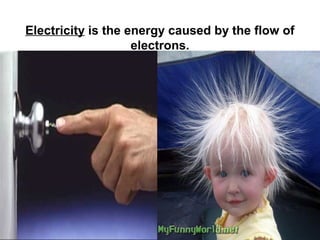
Electricity is the energy caused by the flow of
electrons.
Charge and Static Electricity
Chapter 17
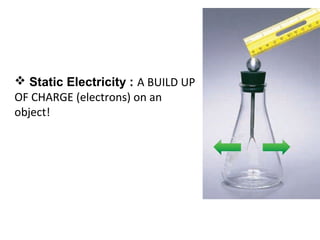
 Static Electricity : A BUILD UP
OF CHARGE (electrons) on an
object!
Static electricity by friction and
conduction
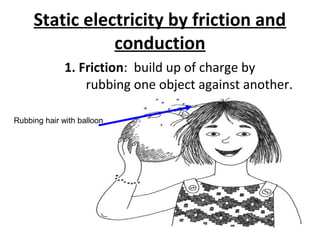
1. Friction: build up of charge by
rubbing one object against another.
Rubbing hair with balloon
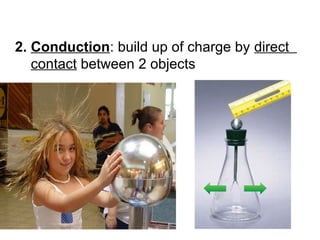
2. Conduction: build up of charge by direct
contact between 2 objects
Current electricity
• Current is a flow of electric charges. It is not a build up of
charge that is discharged.
• All current electricity needs a circuit (a close pathway for
electric charges to flow).
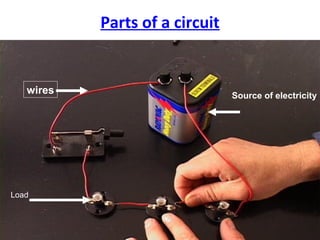
• All circuits must have at least 3 parts :
1) wires, 2) a source 3) a load(s).
Parts of a circuit
wires Source of electricity
Load
Conductors
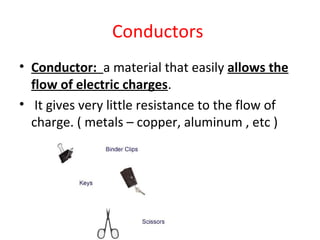
• Conductor: a material that easily allows the
flow of electric charges.
• It gives very little resistance to the flow of
charge. ( metals – copper, aluminum , etc )
Insulators
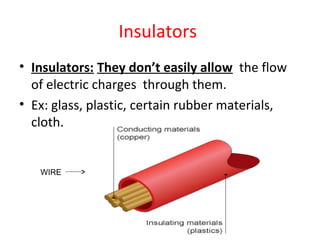
• Insulators: They don’t easily allow the flow
of electric charges through them.
• Ex: glass, plastic, certain rubber materials,
cloth.
WIRE
Types of circuits
• http://www.brainpop.com/science/energy/el
ectriccircuits/
http://www.brainpop.com/science/energy/electri
Types of circuits
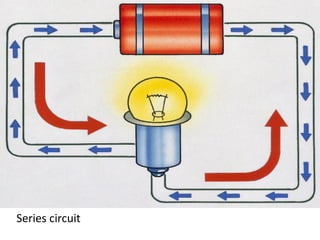
• 1. Series Circuit: only 1 path for the electric
charges to flow
• 2. Parallel Circuit: has More than one path
for the electric charges to flow.
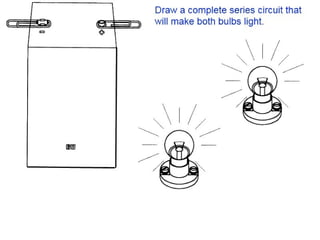
Series circuit
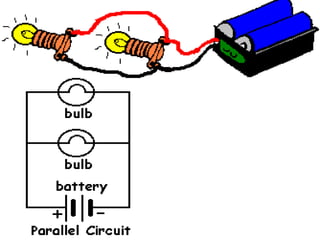
2. Parallel Circuit: has more than 1 path for
electric charges to flow, so if 1 load goes “out,”
the other loads will still work !
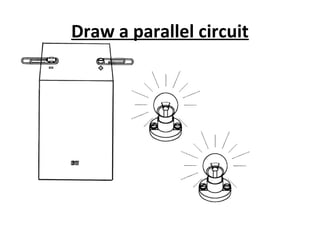
Draw a parallel circuit
SWITCHES
• A switch is a device that opens or closes a
circuit. When you switch on a lamp, you close
the circuit. When you switch off a lamp, you
open the circuit.

Electricity lesson

  • 1.
  • 2.
    Electricity is theenergy caused by the flow of electrons.
  • 3.
    Charge and StaticElectricity Chapter 17  Static Electricity : A BUILD UP OF CHARGE (electrons) on an object!
  • 4.
    Static electricity byfriction and conduction 1. Friction: build up of charge by rubbing one object against another. Rubbing hair with balloon
  • 5.
    2. Conduction: buildup of charge by direct contact between 2 objects
  • 6.
    Current electricity • Currentis a flow of electric charges. It is not a build up of charge that is discharged. • All current electricity needs a circuit (a close pathway for electric charges to flow). • All circuits must have at least 3 parts : 1) wires, 2) a source 3) a load(s).
  • 7.
    Parts of acircuit wires Source of electricity Load
  • 8.
    Conductors • Conductor: amaterial that easily allows the flow of electric charges. • It gives very little resistance to the flow of charge. ( metals – copper, aluminum , etc )
  • 9.
    Insulators • Insulators: Theydon’t easily allow the flow of electric charges through them. • Ex: glass, plastic, certain rubber materials, cloth. WIRE
  • 10.
    Types of circuits •http://www.brainpop.com/science/energy/el ectriccircuits/ http://www.brainpop.com/science/energy/electri
  • 11.
    Types of circuits •1. Series Circuit: only 1 path for the electric charges to flow • 2. Parallel Circuit: has More than one path for the electric charges to flow.
  • 12.
  • 14.
    2. Parallel Circuit:has more than 1 path for electric charges to flow, so if 1 load goes “out,” the other loads will still work !
  • 16.
  • 17.
    SWITCHES • A switchis a device that opens or closes a circuit. When you switch on a lamp, you close the circuit. When you switch off a lamp, you open the circuit.