Isabel Laufer
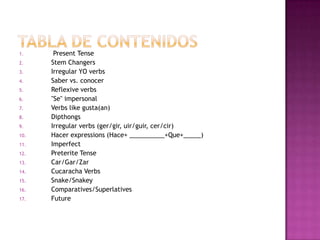
1.     Present Tense
2.    Stem Changers
3.    Irregular YO verbs
4.    Saber vs. conocer
5.    Reflexive verbs
6.    "Se" impersonal
7.    Verbs like gusta(an)
8.    Dipthongs
9.    Irregular verbs (ger/gir, uir/guir, cer/cir)
10.   Hacer expressions (Hace+ __________+Que+_____)
11.   Imperfect
12.   Preterite Tense
13.   Car/Gar/Zar
14.   Cucaracha Verbs
15.   Snake/Snakey
16.   Comparatives/Superlatives
17.   Future
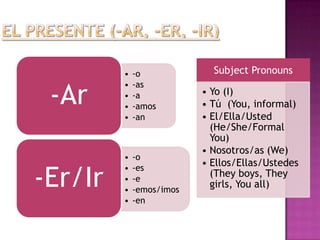
•   -o             Subject Pronouns

 -Ar
         •   -as
         •   -a           • Yo (I)
         •   -amos        • Tú (You, informal)
         •   -an          • El/Ella/Usted
                            (He/She/Formal
                            You)
                          • Nosotros/as (We)
         •   -o
                          • Ellos/Ellas/Ustedes

-Er/Ir
         •   -es
         •   -e
                            (They boys, They
         •   -emos/imos
                            girls, You all)
         •   -en
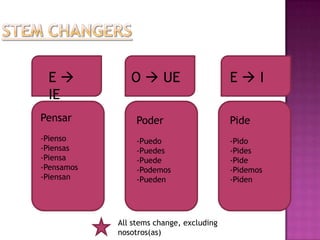
E            O  UE                     EI
 IE
Pensar           Poder                    Pide
-Pienso          -Puedo                   -Pido
-Piensas         -Puedes                  -Pides
-Piensa          -Puede                   -Pide
-Pensamos        -Podemos                 -Pidemos
-Piensan         -Pueden                  -Piden


            All stems change, excluding
            nosotros(as)
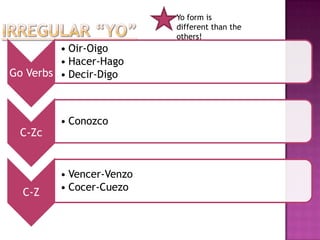
Yo form is
                          different than the
                          others!
         • Oir-Oigo
         • Hacer-Hago
Go Verbs • Decir-Digo


         • Conozco
 C-Zc


         • Vencer-Venzo
  C-Z    • Cocer-Cuezo
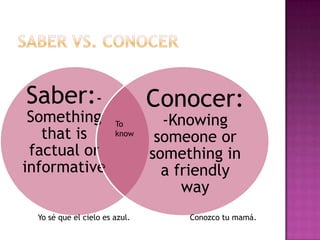
Saber:-                         Conocer:
 Something              To        -Knowing
   that is              know
                                 someone or
 factual or                     something in
informative                       a friendly
                                     way
  Yo sé que el cielo es azul.        Conozco tu mamá.
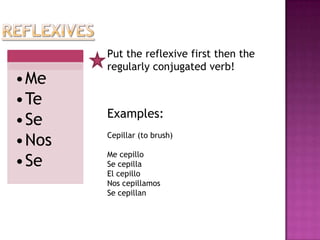
Put the reflexive first then the
       regularly conjugated verb!
•Me
•Te
       Examples:
•Se
•Nos   Cepillar (to brush)

       Me cepillo
•Se    Se cepilla
       El cepillo
       Nos cepillamos
       Se cepillan
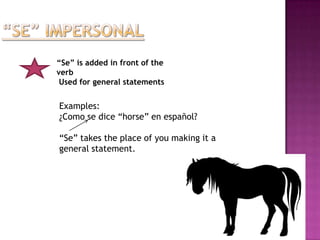
“Se” is added in front of the
verb
 Used for general statements


Examples:
¿Como se dice “horse” en español?

“Se” takes the place of you making it a
general statement.
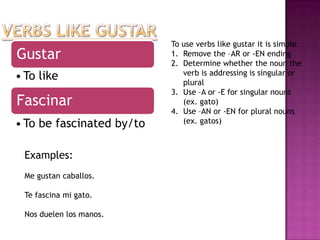
To use verbs like gustar it is simple.
Gustar                     1. Remove the –AR or -EN ending
                           2. Determine whether the noun the
                              verb is addressing is singular or
• To like                     plural
                           3. Use –A or -E for singular nouns
Fascinar                      (ex. gato)
                           4. Use –AN or -EN for plural nouns
• To be fascinated by/to      (ex. gatos)


 Examples:
 Me gustan caballos.

 Te fascina mi gato.

 Nos duelen los manos.
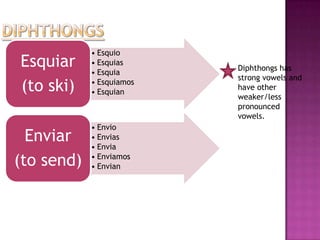
• Esquio
Esquiar     • Esquias
            • Esquia
                          Diphthongs has
                          strong vowels and
(to ski)    • Esquiamos
            • Esquian
                          have other
                          weaker/less
                          pronounced
                          vowels.
            • Envio
  Enviar    • Envias
            • Envia

(to send)   • Enviamos
            • Envian
Coger                             Distinguir
-Cojo
                                  -Distingo
-Coges
                                  -Distingues
-Coge
                                  -Distingue
-Cogemos
                                  -Distinguimos
-Cogen
                                  -Distinguen


           Exigir      Decir
           -Exijo      -Digo
           -Exiges     -Dices
           -Exige      -Dice
           -Exigimos   -Decimos
           -Exigen     -Dicen
 Showslength of time in which the action has
 taken place.
 Hace+ (time) + que + (Present tense form of verb)

                     Example:

      Hace catorce anos que montar a caballo.

      (I have ridden horses for fourteen years)
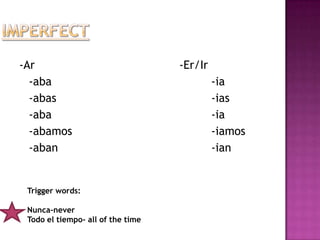
-Ar                                -Er/Ir
  -aba                                      -ia
  -abas                                     -ias
  -aba                                      -ia
  -abamos                                   -iamos
  -aban                                     -ian


 Trigger words:

 Nunca-never
 Todo el tiempo- all of the time
-Ar           Preterite=Past    -Er/Ir
     é       tense             -í
     aste                               -iste
              Connect them to
     ó       the verbs just             - ío
     amos    like any other             -
      imos    conjugation

     aron                               -
      ieron
el dia anterior, ayer, la semana pasada, el fin de
   semana pasado, el otro dia, esta tarde, esta
             noche, ayer por la manana
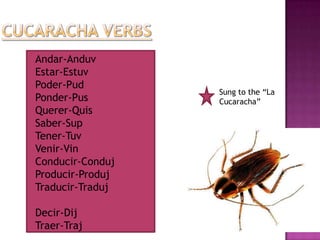
Andar-Anduv
Estar-Estuv
Poder-Pud
                  Sung to the “La
Ponder-Pus        Cucaracha”
Querer-Quis
Saber-Sup
Tener-Tuv
Venir-Vin
Conducir-Conduj
Producir-Produj
Traducir-Traduj

Decir-Dij
Traer-Traj
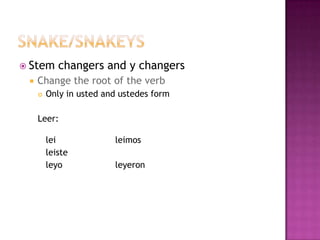
 Stem      changers and y changers
    Change the root of the verb
        Only in usted and ustedes form

     Leer:

         lei             leimos
         leiste
         leyo            leyeron
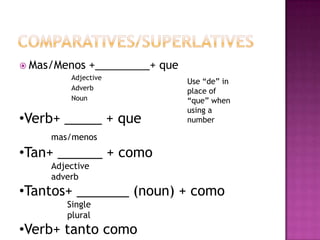
 Mas/Menos   +_________+ que
         Adjective
                                Use “de” in
         Adverb                 place of
         Noun                   “que” when
                                using a
•Verb+ _____ + que              number

     mas/menos
•Tan+ ______ + como
     Adjective
     adverb
•Tantos+ _______ (noun) + como
        Single
        plural
•Verb+ tanto como
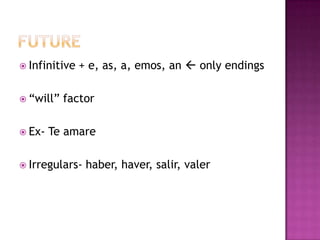
 Infinitive   + e, as, a, emos, an  only endings

 “will”   factor

 Ex-   Te amare

 Irregulars-   haber, haver, salir, valer

El libro de gramática

  • 1.
  • 2.
    1. Present Tense 2. Stem Changers 3. Irregular YO verbs 4. Saber vs. conocer 5. Reflexive verbs 6. "Se" impersonal 7. Verbs like gusta(an) 8. Dipthongs 9. Irregular verbs (ger/gir, uir/guir, cer/cir) 10. Hacer expressions (Hace+ __________+Que+_____) 11. Imperfect 12. Preterite Tense 13. Car/Gar/Zar 14. Cucaracha Verbs 15. Snake/Snakey 16. Comparatives/Superlatives 17. Future
  • 3.
    -o Subject Pronouns -Ar • -as • -a • Yo (I) • -amos • Tú (You, informal) • -an • El/Ella/Usted (He/She/Formal You) • Nosotros/as (We) • -o • Ellos/Ellas/Ustedes -Er/Ir • -es • -e (They boys, They • -emos/imos girls, You all) • -en
  • 4.
    E O  UE EI IE Pensar Poder Pide -Pienso -Puedo -Pido -Piensas -Puedes -Pides -Piensa -Puede -Pide -Pensamos -Podemos -Pidemos -Piensan -Pueden -Piden All stems change, excluding nosotros(as)
  • 5.
    Yo form is different than the others! • Oir-Oigo • Hacer-Hago Go Verbs • Decir-Digo • Conozco C-Zc • Vencer-Venzo C-Z • Cocer-Cuezo
  • 6.
    Saber:- Conocer: Something To -Knowing that is know someone or factual or something in informative a friendly way Yo sé que el cielo es azul. Conozco tu mamá.
  • 7.
    Put the reflexivefirst then the regularly conjugated verb! •Me •Te Examples: •Se •Nos Cepillar (to brush) Me cepillo •Se Se cepilla El cepillo Nos cepillamos Se cepillan
  • 8.
    “Se” is addedin front of the verb Used for general statements Examples: ¿Como se dice “horse” en español? “Se” takes the place of you making it a general statement.
  • 9.
    To use verbslike gustar it is simple. Gustar 1. Remove the –AR or -EN ending 2. Determine whether the noun the verb is addressing is singular or • To like plural 3. Use –A or -E for singular nouns Fascinar (ex. gato) 4. Use –AN or -EN for plural nouns • To be fascinated by/to (ex. gatos) Examples: Me gustan caballos. Te fascina mi gato. Nos duelen los manos.
  • 10.
    • Esquio Esquiar • Esquias • Esquia Diphthongs has strong vowels and (to ski) • Esquiamos • Esquian have other weaker/less pronounced vowels. • Envio Enviar • Envias • Envia (to send) • Enviamos • Envian
  • 11.
    Coger Distinguir -Cojo -Distingo -Coges -Distingues -Coge -Distingue -Cogemos -Distinguimos -Cogen -Distinguen Exigir Decir -Exijo -Digo -Exiges -Dices -Exige -Dice -Exigimos -Decimos -Exigen -Dicen
  • 12.
     Showslength oftime in which the action has taken place. Hace+ (time) + que + (Present tense form of verb) Example: Hace catorce anos que montar a caballo. (I have ridden horses for fourteen years)
  • 13.
    -Ar -Er/Ir -aba -ia -abas -ias -aba -ia -abamos -iamos -aban -ian Trigger words: Nunca-never Todo el tiempo- all of the time
  • 14.
    -Ar Preterite=Past -Er/Ir  é tense -í  aste -iste Connect them to  ó the verbs just - ío  amos like any other - imos conjugation  aron - ieron
  • 15.
    el dia anterior,ayer, la semana pasada, el fin de semana pasado, el otro dia, esta tarde, esta noche, ayer por la manana
  • 16.
    Andar-Anduv Estar-Estuv Poder-Pud Sung to the “La Ponder-Pus Cucaracha” Querer-Quis Saber-Sup Tener-Tuv Venir-Vin Conducir-Conduj Producir-Produj Traducir-Traduj Decir-Dij Traer-Traj
  • 17.
     Stem changers and y changers  Change the root of the verb  Only in usted and ustedes form Leer: lei leimos leiste leyo leyeron
  • 18.
     Mas/Menos +_________+ que Adjective Use “de” in Adverb place of Noun “que” when using a •Verb+ _____ + que number mas/menos •Tan+ ______ + como Adjective adverb •Tantos+ _______ (noun) + como Single plural •Verb+ tanto como
  • 19.
     Infinitive + e, as, a, emos, an  only endings  “will” factor  Ex- Te amare  Irregulars- haber, haver, salir, valer