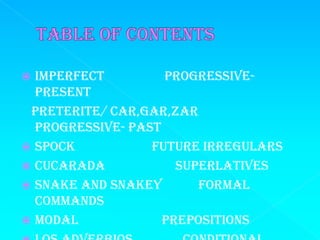
 Imperfect         Progressive-
  Present
 Preterite/ car,gar,zar
  Progressive- Past
 Spock           Future irregulars
 Cucarada            Superlatives
 Snake and Snakey       Formal
  Commands
 Modal             prepositions
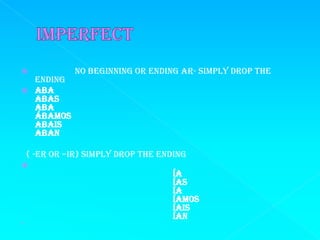
             No beginning or ending Ar- simply drop the
     ending
    aba
     abas
     aba
     ábamos
     abais
     aban

    ( -er or –ir) simply drop the ending

                                    ía
                                    ías
                                    ía
                                    íamos
                                    íais
                                    ían

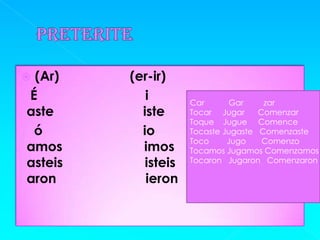
(Ar)    (er-ir)
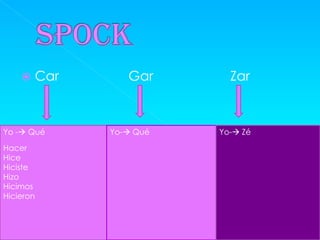
É           i        Car      Gar     zar
aste       iste      Tocar Jugar     Comenzar
                     Toque Jugue Comence
 ó         io        Tocaste Jugaste Comenzaste
                     Toco     Jugo    Comenzo
amos       imos      Tocamos Jugamos Comenzamos
asteis      isteis   Tocaron Jugaron Comenzaron

aron        ieron
      Car      Gar       Zar


Yo - Qué        Yo- Qué   Yo- Zé

Hacer
Hice
Hiciste
Hizo
Hicimos
Hicieron
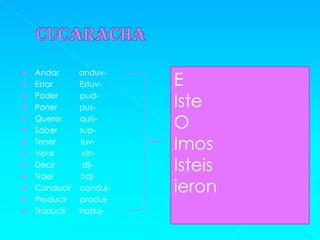
Andar    anduv-
                     E

 Estar    Estuv-
 Poder
 Poner
           pud-
           pus-      Iste
 Querer
 Saber
           quis-
           sup-
                     O
 Tener
 Venir
            tuv-
            vin-
                     Imos
 Decir
 Traer
             dij-
            traj-
                     Isteis
 Conducir conduj-   ieron
 Producir produj-
 Traducir traduj-
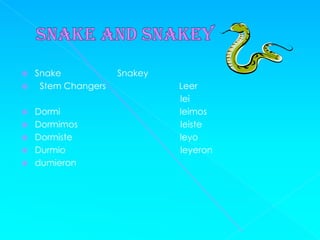
   Snake            Snakey
    Stem Changers            Leer
                              lei
   Dormi                     leimos
   Dormimos                  leiste
   Dormiste                  leyo
   Durmio                    leyeron
   dumieron
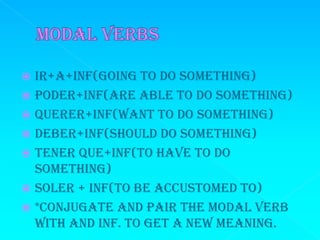
 Ir+a+inf(going to do something)
 Poder+inf(are able to do something)
 Querer+inf(want to do something)
 Deber+inf(should do something)
 Tener que+inf(to have to do
  something)
 Soler + inf(to be accustomed to)
 *Conjugate and pair the modal verb
  with and inf. To get a new meaning.
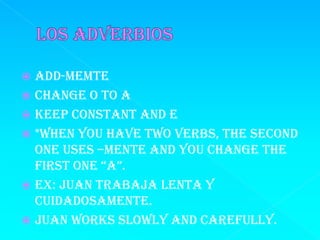
 Add-memte
 Change o to a
 Keep constant and e
 *When you have two verbs, the second
  one uses –mente and you change the
  first one “a”.
 Ex: Juan trabaja lenta y
  cuidadosamente.
 Juan works slowly and carefully.
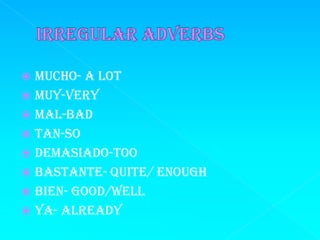
 Mucho- A lot
 Muy-Very
 Mal-Bad
 Tan-So
 Demasiado-Too
 Bastante- Quite/ Enough
 Bien- Good/Well
 Ya- Already
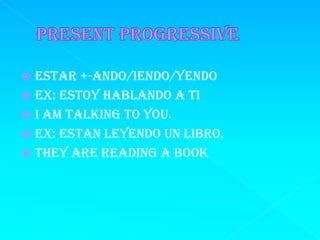
 Estar +-ando/iendo/yendo
 Ex: estoy hablando a ti
 I am talking to you.
 Ex: estan leyendo un libro.
 They are reading a book
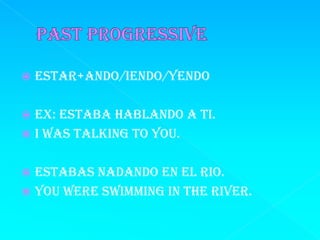
   Estar+ando/iendo/yendo

 Ex: Estaba hablando a ti.
 I was talking to you.


 Estabas nadando en el rio.
 You were swimming in the river.
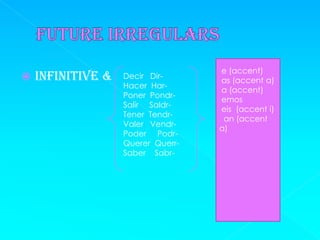
e (accent)
   Infinitive &   Decir Dir-
                                   as (accent a)
                   Hacer Har-
                                   a (accent)
                   Poner Pondr-
                                   emos
                   Salir Saldr-
                                   eis (accent i)
                   Tener Tendr-
                                    an (accent
                   Valer Vendr-
                                   a)
                   Poder Podr-
                   Querer Querr-
                   Saber Sabr-
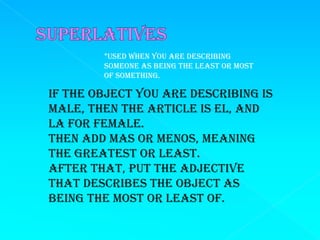
*Used when you are describing
        someone as being the least or most
        of something.

If the object you are describing is
male, then the article is el, and
la for female.
Then add mas or menos, meaning
the greatest or least.
After that, put the adjective
that describes the object as
being the most or least of.
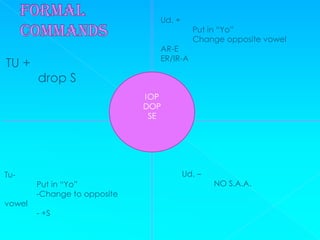
Ud. +
                                        Put in “Yo”
                                        Change opposite vowel
                              AR-E
                              ER/IR-A
TU +
        drop S


Tu-                                   Ud. –
        Put in “Yo”                           NO S.A.A.
        -Change to opposite
vowel
        - +S
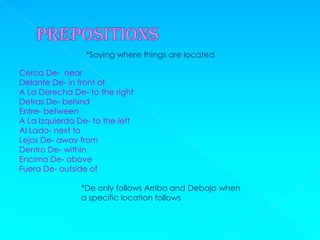
*Saying where things are located

Cerca De- near
Delante De- in front of
A La Derecha De- to the right
Detras De- behind
Entre- between
A La Izquierda De- to the left
Al Lado- next to
Lejos De- away from
Dentro De- within
Encima De- above
Fuera De- outside of

                *De only follows Arriba and Debajo when
                a specific location follows
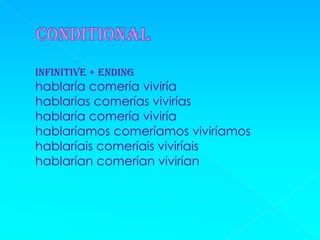
Infinitive + ending
hablaría comería viviría
hablarías comerías vivirías
hablaría comería viviría
hablaríamos comeríamos viviríamos
hablaríais comeríais viviríais
hablarían comerían vivirían
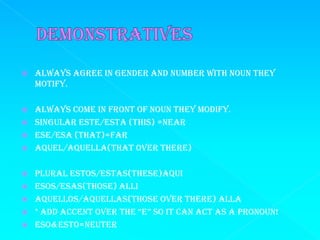
   Always agree in gender and number with noun they
    motify.

   Always come in front of noun they modify.
   Singular este/esta (this) =near
   Ese/esa (that)=far
   Aquel/Aquella(that over there)

   Plural Estos/estas(these)aqui
   Esos/esas(those) alli
   Aquellos/Aquellas(those over there) alla
   * add accent over the “e” so it can act as a pronoun!
   Eso&Esto=neuter

Grammar book 2 anyssa

  • 2.
     Imperfect Progressive- Present Preterite/ car,gar,zar Progressive- Past  Spock Future irregulars  Cucarada Superlatives  Snake and Snakey Formal Commands  Modal prepositions
  • 3.
    No beginning or ending Ar- simply drop the ending  aba abas aba ábamos abais aban ( -er or –ir) simply drop the ending  ía ías ía íamos íais ían 
  • 4.
    (Ar) (er-ir) É i Car Gar zar aste iste Tocar Jugar Comenzar Toque Jugue Comence ó io Tocaste Jugaste Comenzaste Toco Jugo Comenzo amos imos Tocamos Jugamos Comenzamos asteis isteis Tocaron Jugaron Comenzaron aron ieron
  • 5.
    Car Gar Zar Yo - Qué Yo- Qué Yo- Zé Hacer Hice Hiciste Hizo Hicimos Hicieron
  • 6.
    Andar anduv- E   Estar Estuv-  Poder  Poner pud- pus- Iste  Querer  Saber quis- sup- O  Tener  Venir tuv- vin- Imos  Decir  Traer dij- traj- Isteis  Conducir conduj- ieron  Producir produj-  Traducir traduj-
  • 7.
    Snake Snakey  Stem Changers Leer lei  Dormi leimos  Dormimos leiste  Dormiste leyo  Durmio leyeron  dumieron
  • 8.
     Ir+a+inf(going todo something)  Poder+inf(are able to do something)  Querer+inf(want to do something)  Deber+inf(should do something)  Tener que+inf(to have to do something)  Soler + inf(to be accustomed to)  *Conjugate and pair the modal verb with and inf. To get a new meaning.
  • 9.
     Add-memte  Changeo to a  Keep constant and e  *When you have two verbs, the second one uses –mente and you change the first one “a”.  Ex: Juan trabaja lenta y cuidadosamente.  Juan works slowly and carefully.
  • 10.
     Mucho- Alot  Muy-Very  Mal-Bad  Tan-So  Demasiado-Too  Bastante- Quite/ Enough  Bien- Good/Well  Ya- Already
  • 11.
     Estar +-ando/iendo/yendo Ex: estoy hablando a ti  I am talking to you.  Ex: estan leyendo un libro.  They are reading a book
  • 12.
    Estar+ando/iendo/yendo  Ex: Estaba hablando a ti.  I was talking to you.  Estabas nadando en el rio.  You were swimming in the river.
  • 13.
    e (accent)  Infinitive & Decir Dir- as (accent a) Hacer Har- a (accent) Poner Pondr- emos Salir Saldr- eis (accent i) Tener Tendr- an (accent Valer Vendr- a) Poder Podr- Querer Querr- Saber Sabr-
  • 14.
    *Used when youare describing someone as being the least or most of something. If the object you are describing is male, then the article is el, and la for female. Then add mas or menos, meaning the greatest or least. After that, put the adjective that describes the object as being the most or least of.
  • 15.
    Ud. + Put in “Yo” Change opposite vowel AR-E ER/IR-A TU + drop S Tu- Ud. – Put in “Yo” NO S.A.A. -Change to opposite vowel - +S
  • 16.
    *Saying where thingsare located Cerca De- near Delante De- in front of A La Derecha De- to the right Detras De- behind Entre- between A La Izquierda De- to the left Al Lado- next to Lejos De- away from Dentro De- within Encima De- above Fuera De- outside of *De only follows Arriba and Debajo when a specific location follows
  • 17.
    Infinitive + ending hablaríacomería viviría hablarías comerías vivirías hablaría comería viviría hablaríamos comeríamos viviríamos hablaríais comeríais viviríais hablarían comerían vivirían
  • 18.
    Always agree in gender and number with noun they motify.  Always come in front of noun they modify.  Singular este/esta (this) =near  Ese/esa (that)=far  Aquel/Aquella(that over there)  Plural Estos/estas(these)aqui  Esos/esas(those) alli  Aquellos/Aquellas(those over there) alla  * add accent over the “e” so it can act as a pronoun!  Eso&Esto=neuter