GRAMMAR
BOOK
Lila Masters
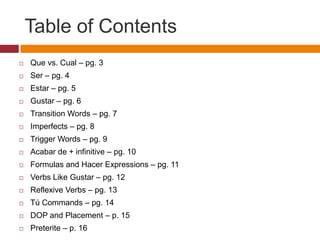
Table of Contents
   Que vs. Cual – pg. 3
   Ser – pg. 4
   Estar – pg. 5
   Gustar – pg. 6
   Transition Words – pg. 7
   Imperfects – pg. 8
   Trigger Words – pg. 9
   Acabar de + infinitive – pg. 10
   Formulas and Hacer Expressions – pg. 11
   Verbs Like Gustar – pg. 12
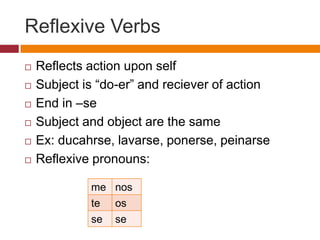
   Reflexive Verbs – pg. 13
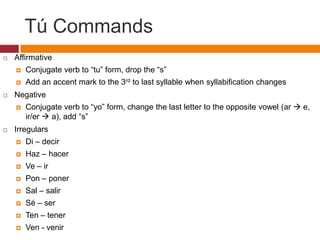
   Tú Commands – pg. 14
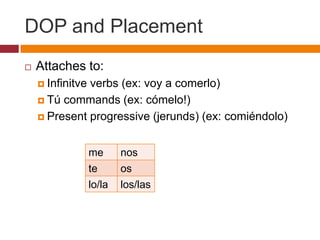
   DOP and Placement – p. 15
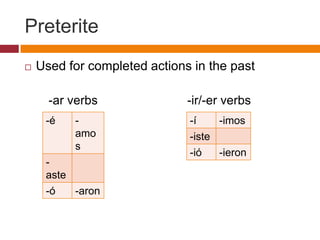
   Preterite – p. 16
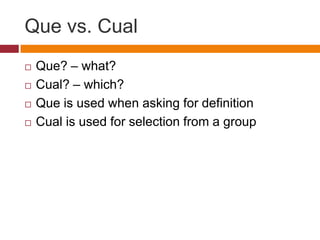
Que vs. Cual
   Que? – what?
   Cual? – which?
   Que is used when asking for definition
   Cual is used for selection from a group
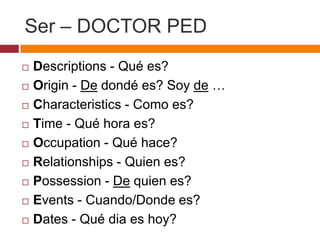
Ser – DOCTOR PED
   Descriptions - Qué es?
   Origin - De dondé es? Soy de …
   Characteristics - Como es?
   Time - Qué hora es?
   Occupation - Qué hace?
   Relationships - Quien es?
   Possession - De quien es?
   Events - Cuando/Donde es?
   Dates - Qué dia es hoy?
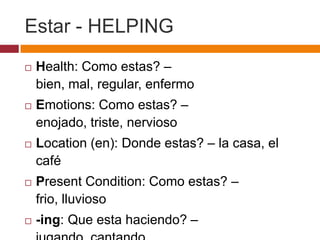
Estar - HELPING
   Health: Como estas? –
    bien, mal, regular, enfermo
   Emotions: Como estas? –
    enojado, triste, nervioso
   Location (en): Donde estas? – la casa, el
    café
   Present Condition: Como estas? –
    frio, lluvioso
   -ing: Que esta haciendo? –
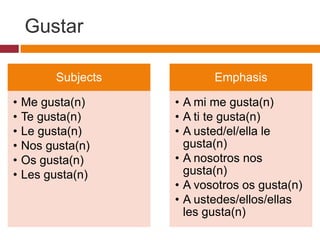
Gustar

          Subjects          Emphasis

•   Me gusta(n)      • A mi me gusta(n)
•   Te gusta(n)      • A ti te gusta(n)
•   Le gusta(n)      • A usted/el/ella le
•   Nos gusta(n)       gusta(n)
•   Os gusta(n)      • A nosotros nos
•   Les gusta(n)       gusta(n)
                     • A vosotros os gusta(n)
                     • A ustedes/ellos/ellas
                       les gusta(n)
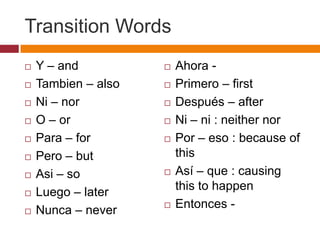
Transition Words
   Y – and             Ahora -
   Tambien – also      Primero – first
   Ni – nor            Después – after
   O – or              Ni – ni : neither nor
   Para – for          Por – eso : because of
   Pero – but           this
   Asi – so            Así – que : causing
   Luego – later        this to happen
                        Entonces -
   Nunca – never
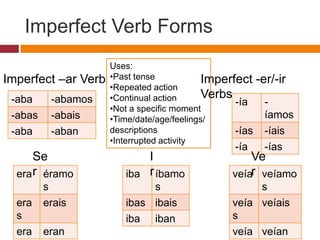
Imperfect Verb Forms
                   Uses:
Imperfect –ar Verbs•Past tense            Imperfect    -er/-ir
                   •Repeated action
 -aba   -abamos    •Continual action      Verbs
                                                -ía      -
                   •Not a specific moment
 -abas -abais      •Time/date/age/feelings/              íamos
 -aba   -aban      descriptions                 -ías     -íais
                   •Interrupted activity
                                                -ía      -ías
      Se                     I                     Ve
  era r éramo            iba r íbamo           veíar veíamo
        s                     s                     s
  era   erais            ibas ibais            veía veíais
  s                      iba iban              s
  era   eran                                   veía veían
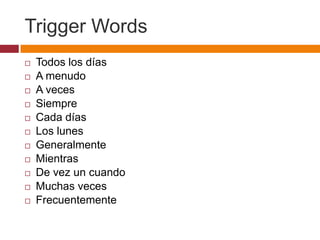
Trigger Words
   Todos los días
   A menudo
   A veces
   Siempre
   Cada días
   Los lunes
   Generalmente
   Mientras
   De vez un cuando
   Muchas veces
   Frecuentemente
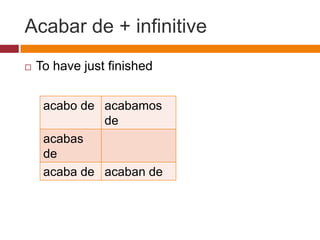
Acabar de + infinitive
   To have just finished


     acabo de acabamos
              de
     acabas
     de
     acaba de acaban de
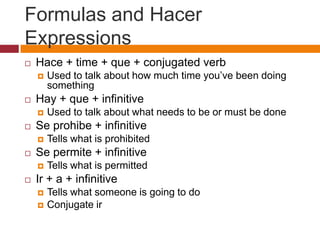
Formulas and Hacer
Expressions
   Hace + time + que + conjugated verb
       Used to talk about how much time you’ve been doing
        something
   Hay + que + infinitive
       Used to talk about what needs to be or must be done
   Se prohibe + infinitive
       Tells what is prohibited
   Se permite + infinitive
       Tells what is permitted
   Ir + a + infinitive
       Tells what someone is going to do
       Conjugate ir
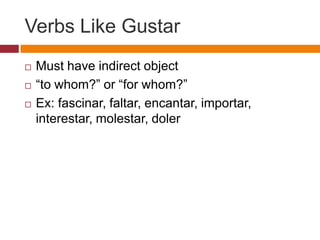
Verbs Like Gustar
   Must have indirect object
   “to whom?” or “for whom?”
   Ex: fascinar, faltar, encantar, importar,
    interestar, molestar, doler
Reflexive Verbs
   Reflects action upon self
   Subject is “do-er” and reciever of action
   End in –se
   Subject and object are the same
   Ex: ducahrse, lavarse, ponerse, peinarse
   Reflexive pronouns:

             me nos
             te os
             se se
Tú Commands
   Affirmative
       Conjugate verb to “tu” form, drop the “s”
       Add an accent mark to the 3rd to last syllable when syllabification changes
   Negative
       Conjugate verb to “yo” form, change the last letter to the opposite vowel (ar  e,
        ir/er  a), add “s”
   Irregulars
       Di – decir
       Haz – hacer
       Ve – ir
       Pon – poner
       Sal – salir
       Sé – ser
       Ten – tener
       Ven - venir
DOP and Placement
   Attaches to:
     Infinitve
              verbs (ex: voy a comerlo)
     Tú commands (ex: cómelo!)

     Present progressive (jerunds) (ex: comiéndolo)


                  me      nos
                  te      os
                  lo/la   los/las
Preterite
   Used for completed actions in the past

      -ar verbs               -ir/-er verbs
     -é     -                 -í    -imos
            amo               -iste
            s
                              -ió   -ieron
     -
     aste
     -ó     -aron

Grammar book

  • 1.
  • 2.
    Table of Contents  Que vs. Cual – pg. 3  Ser – pg. 4  Estar – pg. 5  Gustar – pg. 6  Transition Words – pg. 7  Imperfects – pg. 8  Trigger Words – pg. 9  Acabar de + infinitive – pg. 10  Formulas and Hacer Expressions – pg. 11  Verbs Like Gustar – pg. 12  Reflexive Verbs – pg. 13  Tú Commands – pg. 14  DOP and Placement – p. 15  Preterite – p. 16
  • 3.
    Que vs. Cual  Que? – what?  Cual? – which?  Que is used when asking for definition  Cual is used for selection from a group
  • 4.
    Ser – DOCTORPED  Descriptions - Qué es?  Origin - De dondé es? Soy de …  Characteristics - Como es?  Time - Qué hora es?  Occupation - Qué hace?  Relationships - Quien es?  Possession - De quien es?  Events - Cuando/Donde es?  Dates - Qué dia es hoy?
  • 5.
    Estar - HELPING  Health: Como estas? – bien, mal, regular, enfermo  Emotions: Como estas? – enojado, triste, nervioso  Location (en): Donde estas? – la casa, el café  Present Condition: Como estas? – frio, lluvioso  -ing: Que esta haciendo? –
  • 6.
    Gustar Subjects Emphasis • Me gusta(n) • A mi me gusta(n) • Te gusta(n) • A ti te gusta(n) • Le gusta(n) • A usted/el/ella le • Nos gusta(n) gusta(n) • Os gusta(n) • A nosotros nos • Les gusta(n) gusta(n) • A vosotros os gusta(n) • A ustedes/ellos/ellas les gusta(n)
  • 7.
    Transition Words  Y – and  Ahora -  Tambien – also  Primero – first  Ni – nor  Después – after  O – or  Ni – ni : neither nor  Para – for  Por – eso : because of  Pero – but this  Asi – so  Así – que : causing  Luego – later this to happen  Entonces -  Nunca – never
  • 8.
    Imperfect Verb Forms Uses: Imperfect –ar Verbs•Past tense Imperfect -er/-ir •Repeated action -aba -abamos •Continual action Verbs -ía - •Not a specific moment -abas -abais •Time/date/age/feelings/ íamos -aba -aban descriptions -ías -íais •Interrupted activity -ía -ías Se I Ve era r éramo iba r íbamo veíar veíamo s s s era erais ibas ibais veía veíais s iba iban s era eran veía veían
  • 9.
    Trigger Words  Todos los días  A menudo  A veces  Siempre  Cada días  Los lunes  Generalmente  Mientras  De vez un cuando  Muchas veces  Frecuentemente
  • 10.
    Acabar de +infinitive  To have just finished acabo de acabamos de acabas de acaba de acaban de
  • 11.
    Formulas and Hacer Expressions  Hace + time + que + conjugated verb  Used to talk about how much time you’ve been doing something  Hay + que + infinitive  Used to talk about what needs to be or must be done  Se prohibe + infinitive  Tells what is prohibited  Se permite + infinitive  Tells what is permitted  Ir + a + infinitive  Tells what someone is going to do  Conjugate ir
  • 12.
    Verbs Like Gustar  Must have indirect object  “to whom?” or “for whom?”  Ex: fascinar, faltar, encantar, importar, interestar, molestar, doler
  • 13.
    Reflexive Verbs  Reflects action upon self  Subject is “do-er” and reciever of action  End in –se  Subject and object are the same  Ex: ducahrse, lavarse, ponerse, peinarse  Reflexive pronouns: me nos te os se se
  • 14.
    Tú Commands  Affirmative  Conjugate verb to “tu” form, drop the “s”  Add an accent mark to the 3rd to last syllable when syllabification changes  Negative  Conjugate verb to “yo” form, change the last letter to the opposite vowel (ar  e, ir/er  a), add “s”  Irregulars  Di – decir  Haz – hacer  Ve – ir  Pon – poner  Sal – salir  Sé – ser  Ten – tener  Ven - venir
  • 15.
    DOP and Placement  Attaches to:  Infinitve verbs (ex: voy a comerlo)  Tú commands (ex: cómelo!)  Present progressive (jerunds) (ex: comiéndolo) me nos te os lo/la los/las
  • 16.
    Preterite  Used for completed actions in the past -ar verbs -ir/-er verbs -é - -í -imos amo -iste s -ió -ieron - aste -ó -aron