Grammar Book

By: Jazmin Watley
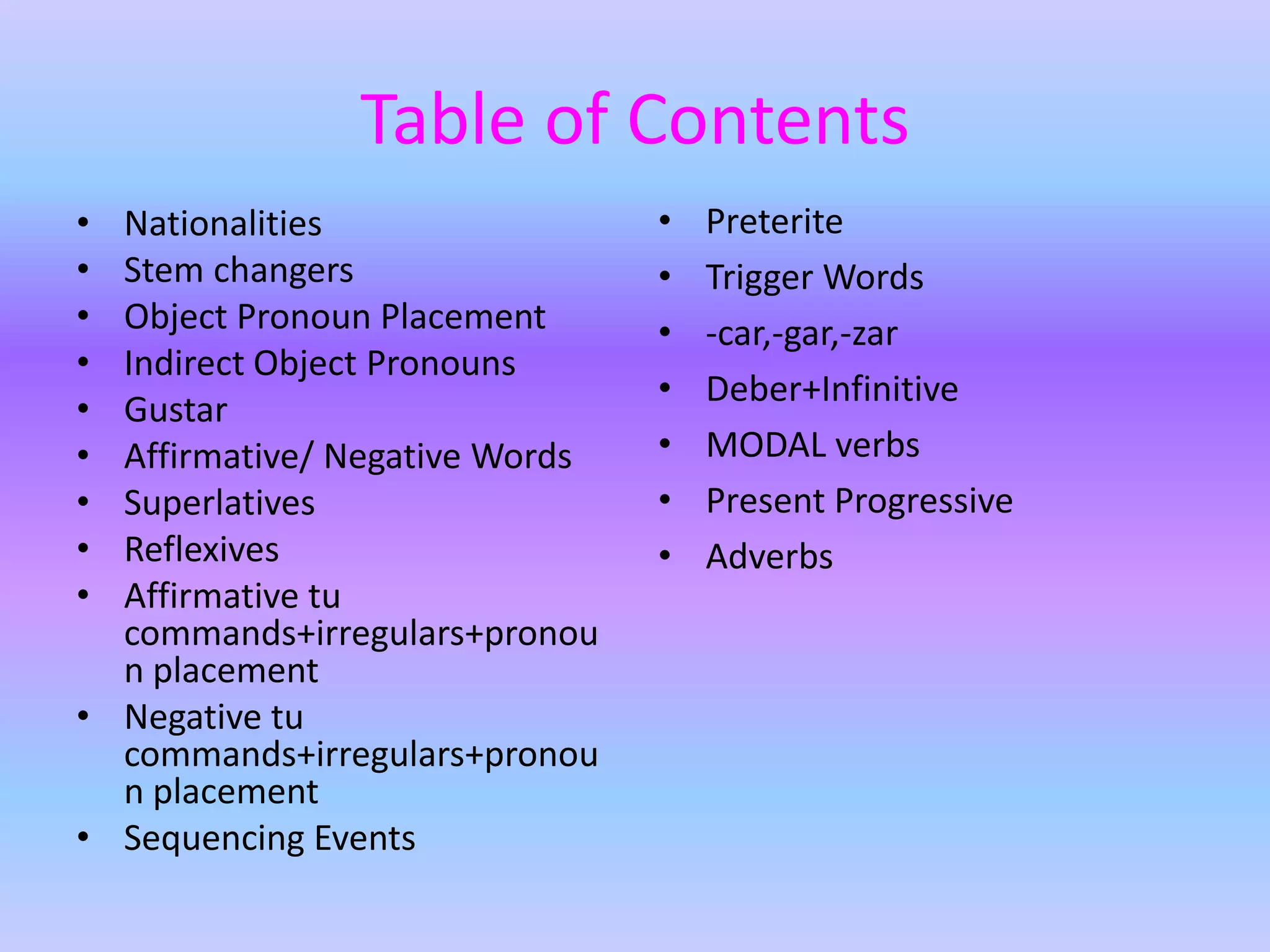
Table of Contents
• Nationalities                 •   Preterite
• Stem changers                 •   Trigger Words
• Object Pronoun Placement      •   -car,-gar,-zar
• Indirect Object Pronouns
                                •   Deber+Infinitive
• Gustar
• Affirmative/ Negative Words   •   MODAL verbs
• Superlatives                  •   Present Progressive
• Reflexives                    •   Adverbs
• Affirmative tu
  commands+irregulars+pronou
  n placement
• Negative tu
  commands+irregulars+pronou
  n placement
• Sequencing Events
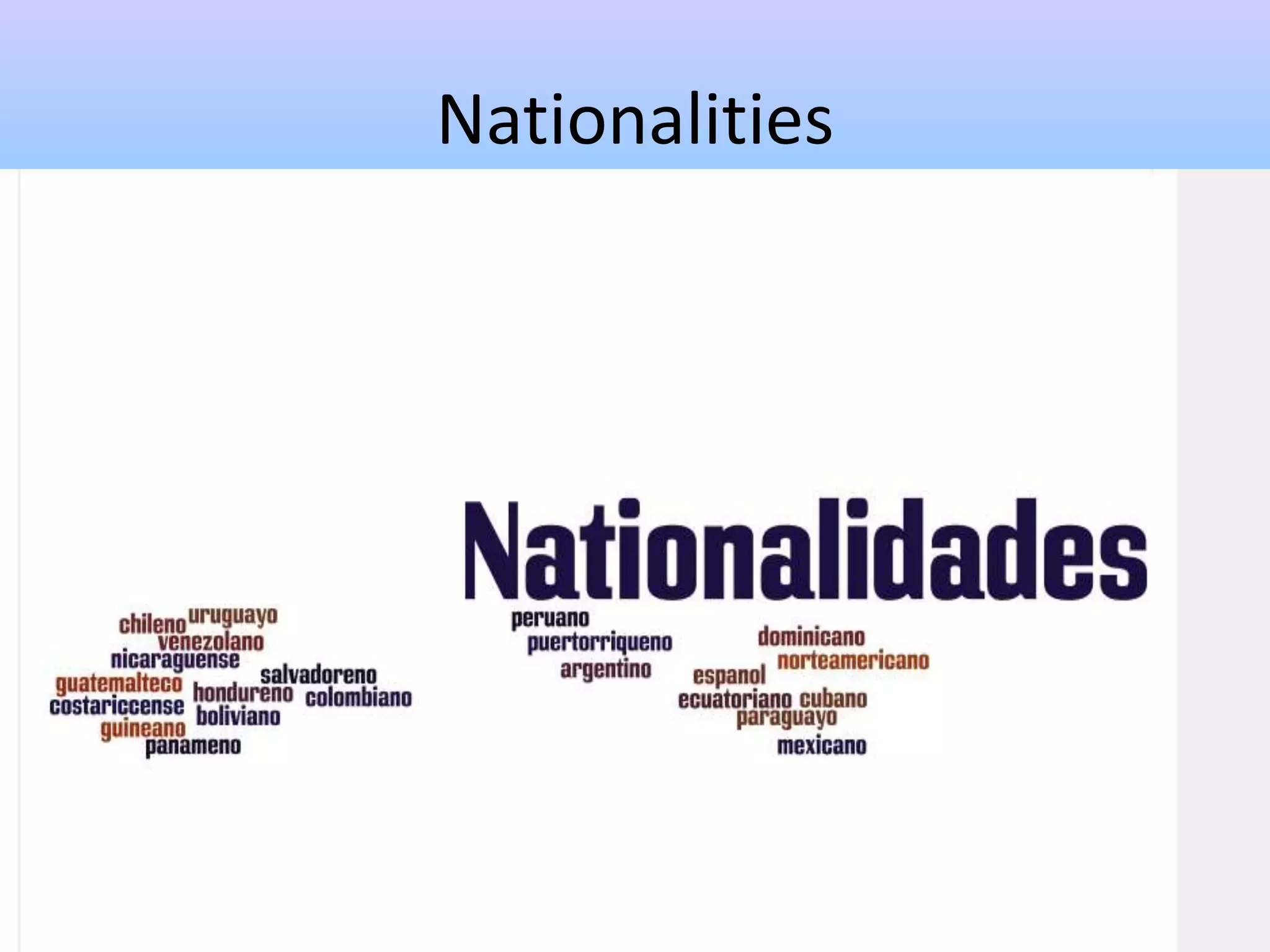
Nationalities
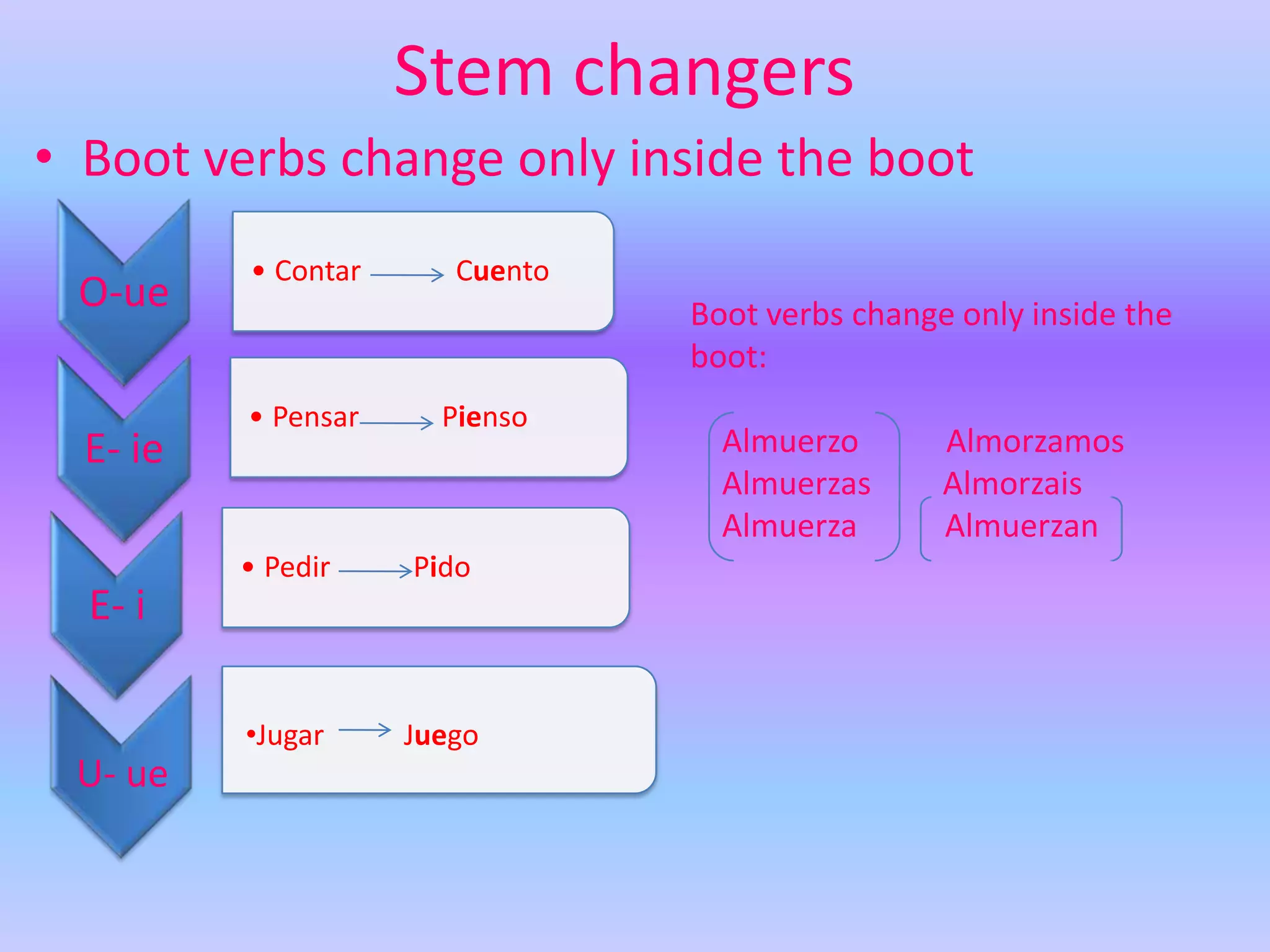
Stem changers
• Boot verbs change only inside the boot
          • Contar      Cuento
 O-ue                            Boot verbs change only inside the
                                 boot:
          • Pensar     Pienso
  E- ie                            Almuerzo       Almorzamos
                                   Almuerzas      Almorzais
                                   Almuerza       Almuerzan
          • Pedir    Pido
  E- i

          •Jugar     Juego
 U- ue
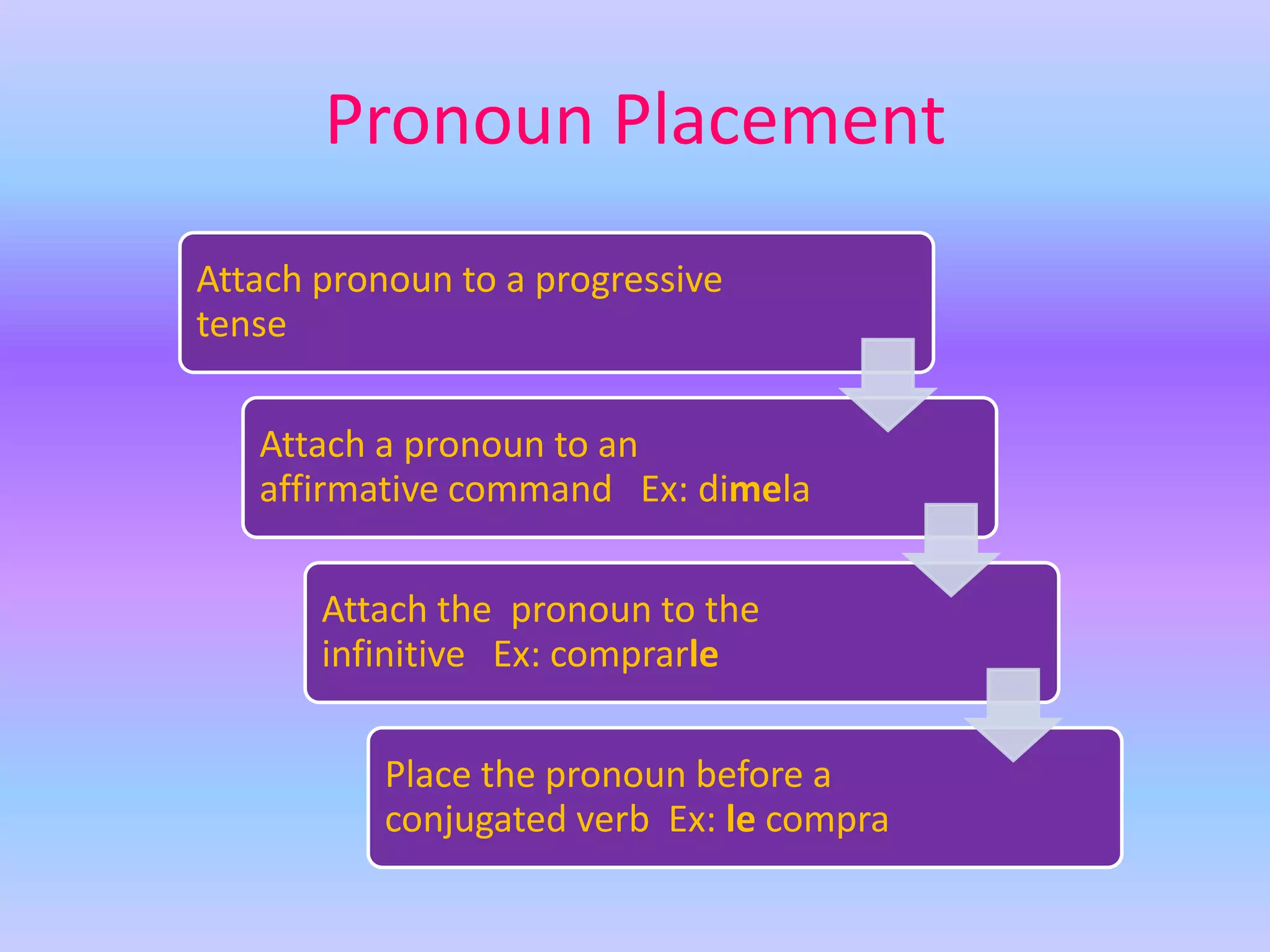
Pronoun Placement
Attach pronoun to a progressive
tense

   Attach a pronoun to an
   affirmative command Ex: dimela

       Attach the pronoun to the
       infinitive Ex: comprarle

           Place the pronoun before a
           conjugated verb Ex: le compra
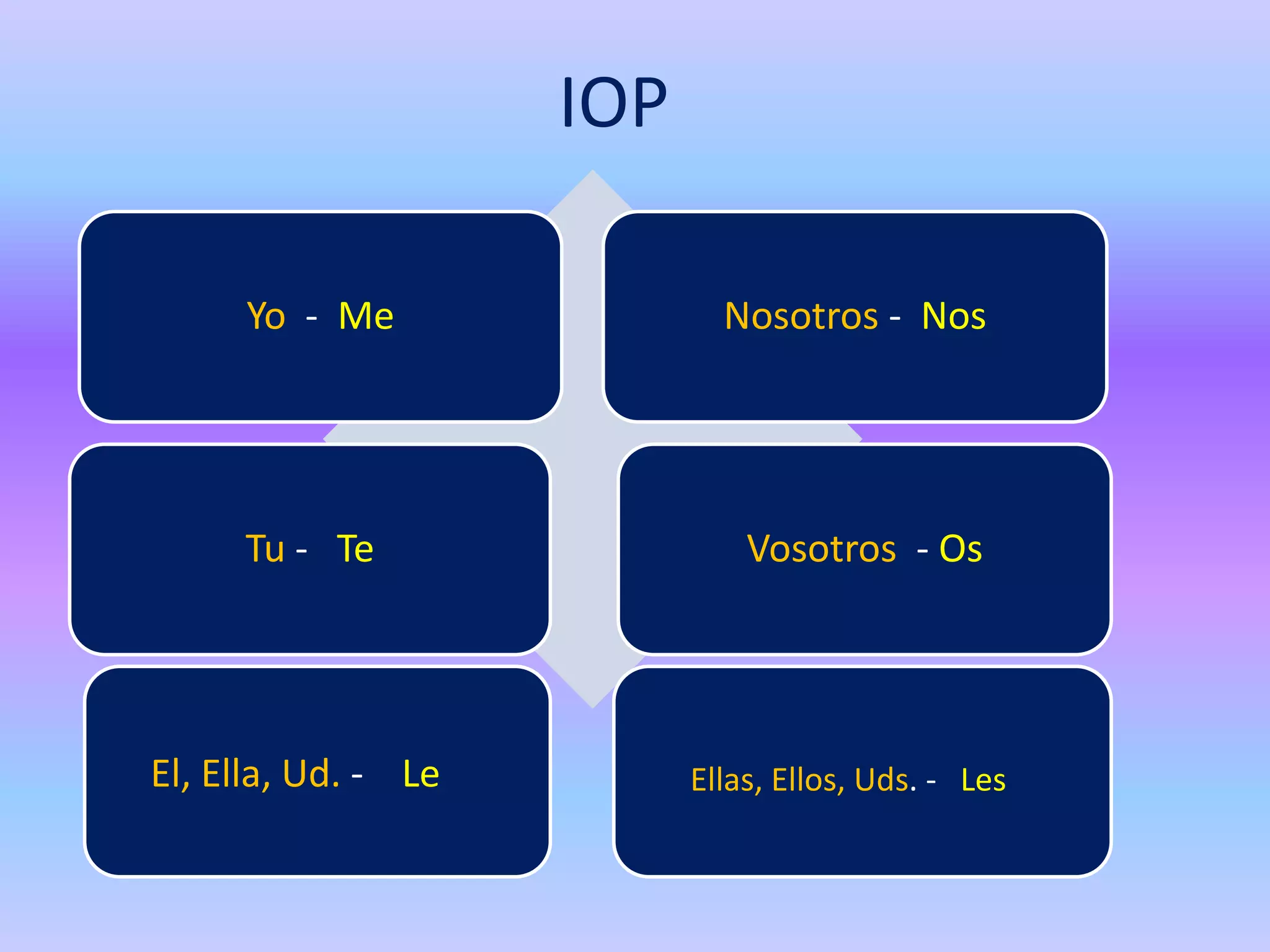
IOP

     Yo - Me                 Nosotros - Nos


     Tu - Te                   Vosotros - Os


El, Ella, Ud. - Le         Ellas, Ellos, Uds. - Les
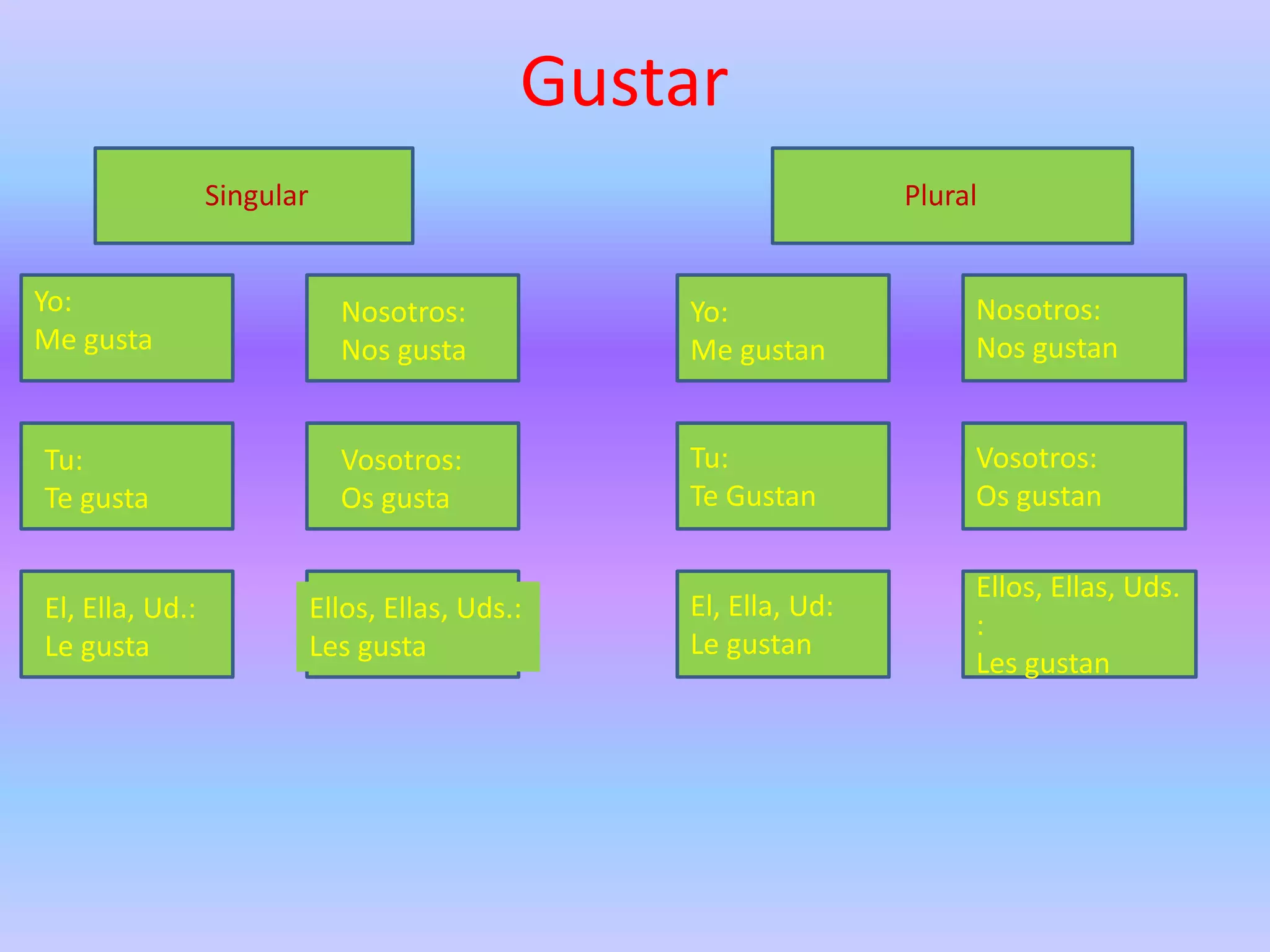
Gustar
                 Singular                                         Plural


Yo:                           Nosotros:           Yo:                  Nosotros:
Me gusta                      Nos gusta           Me gustan            Nos gustan


Tu:                           Vosotros:           Tu:                  Vosotros:
Te gusta                      Os gusta            Te Gustan            Os gustan

                                                                       Ellos, Ellas, Uds.
El, Ella, Ud.:              Ellos, Ellas, Uds.:   El, Ella, Ud:
                                                                       :
Le gusta                    Les gusta             Le gustan
                                                                       Les gustan
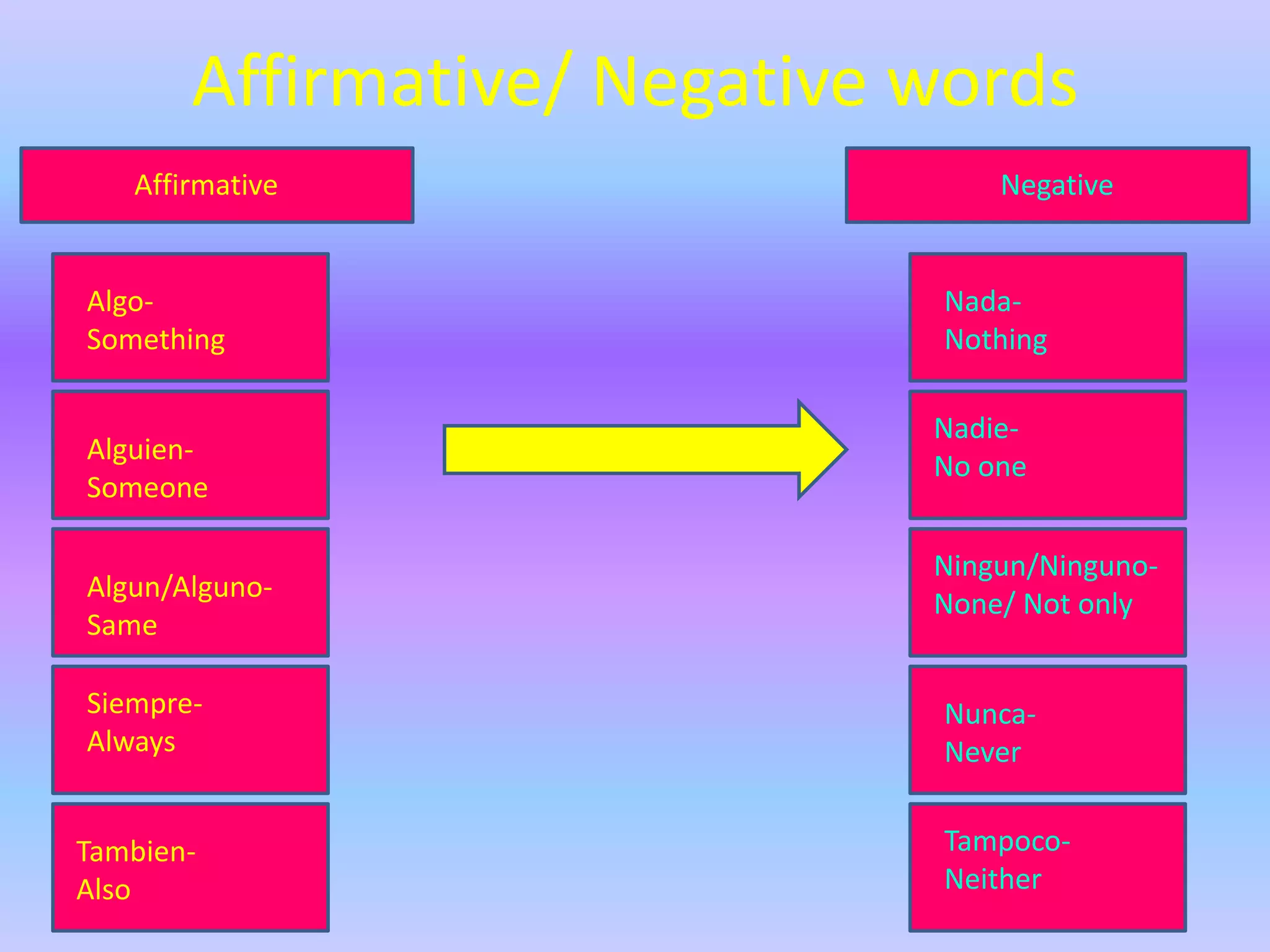
Affirmative/ Negative words
   Affirmative                   Negative


Algo-                        Nada-
Something                    Nothing

                             Nadie-
Alguien-
                             No one
Someone

                             Ningun/Ninguno-
Algun/Alguno-
                             None/ Not only
Same

Siempre-                     Nunca-
Always                       Never


Tambien-                     Tampoco-
Also                         Neither
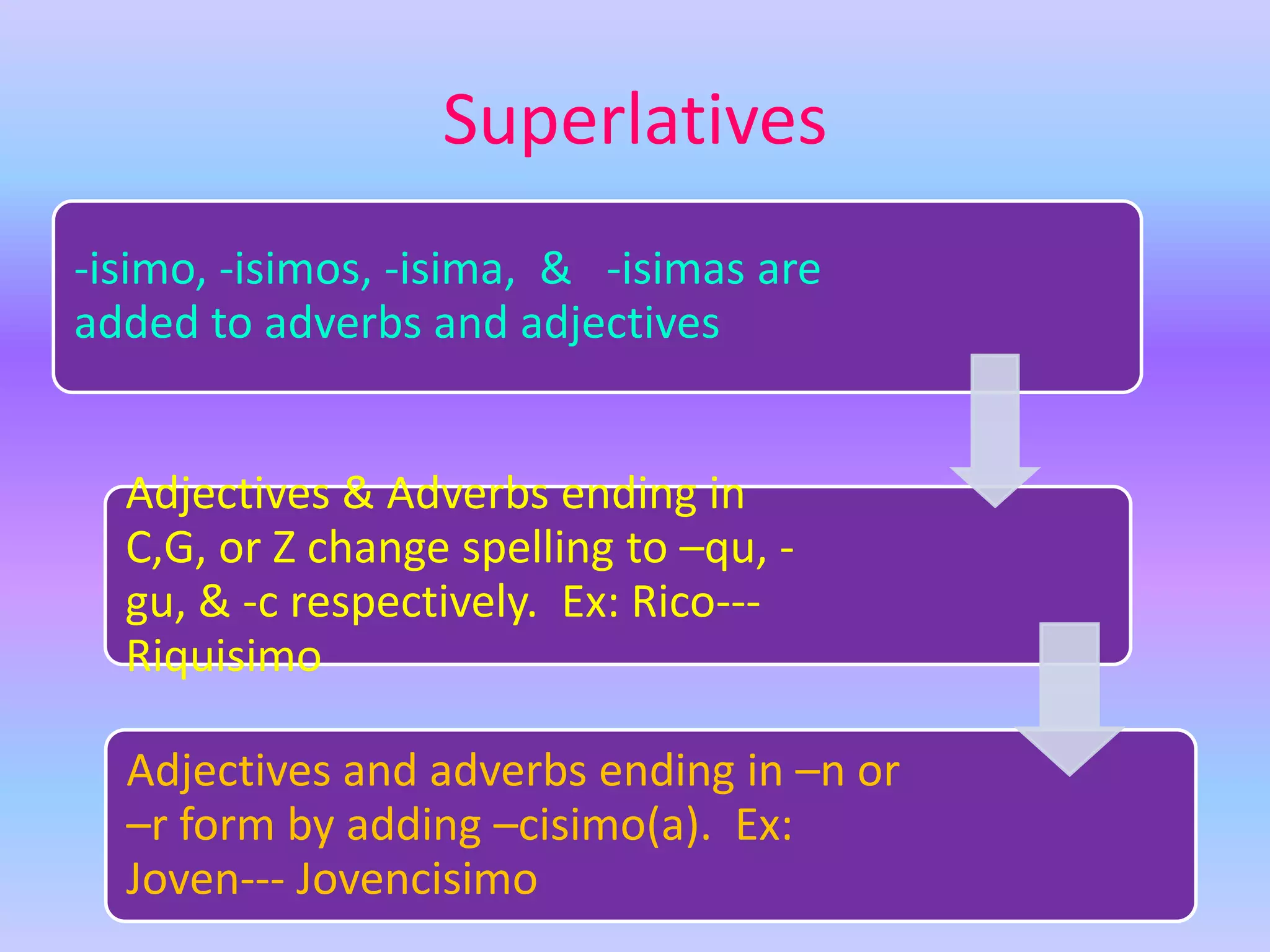
Superlatives
-isimo, -isimos, -isima, & -isimas are
added to adverbs and adjectives


  Adjectives & Adverbs ending in
  C,G, or Z change spelling to –qu, -
  gu, & -c respectively. Ex: Rico---
  Riquisimo

  Adjectives and adverbs ending in –n or
  –r form by adding –cisimo(a). Ex:
  Joven--- Jovencisimo
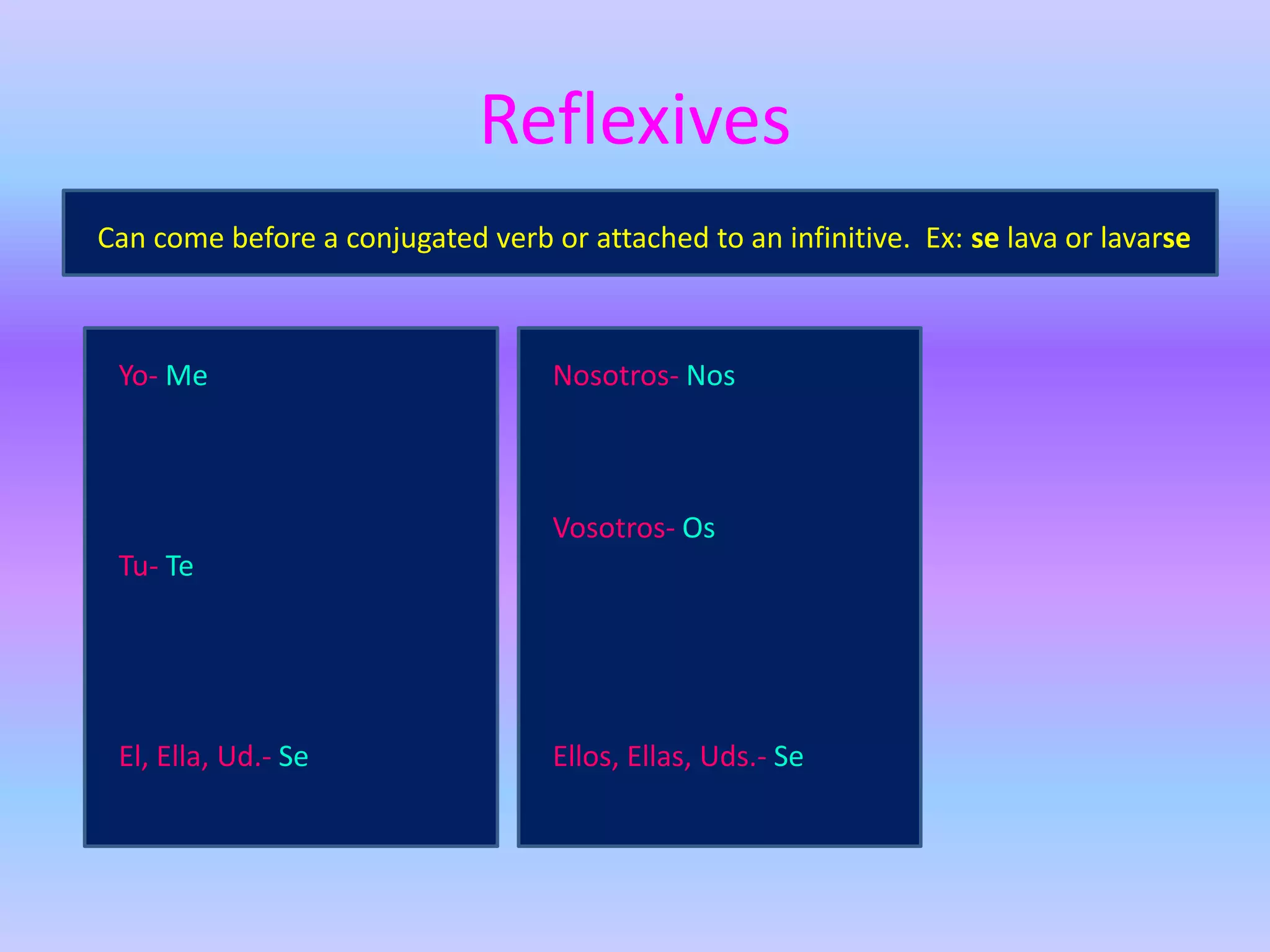
Reflexives
Can come before a conjugated verb or attached to an infinitive. Ex: se lava or lavarse


 Yo- Me                            Nosotros- Nos


                                   Vosotros- Os
 Tu- Te


 El, Ella, Ud.- Se                 Ellos, Ellas, Uds.- Se
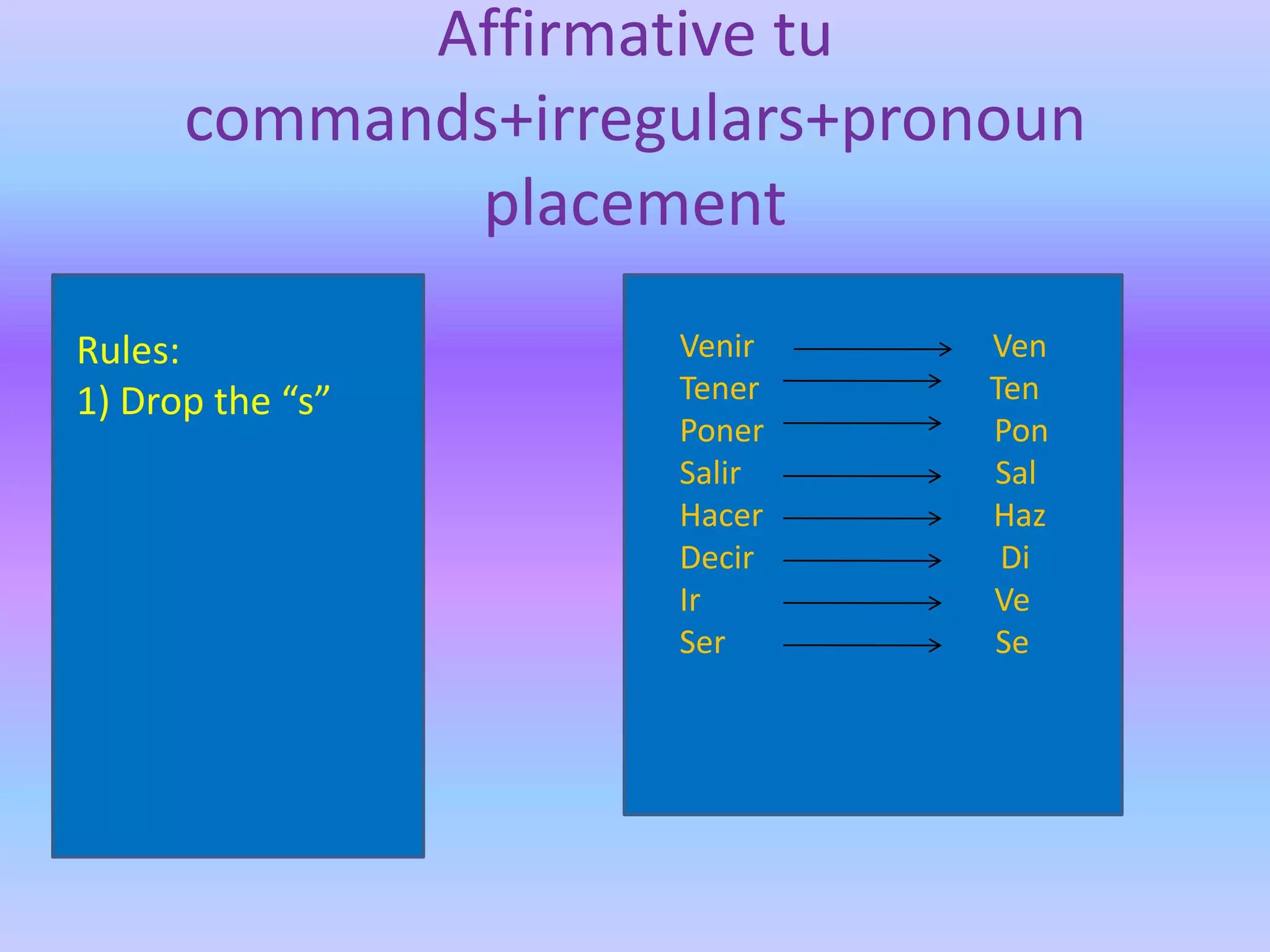
Affirmative tu
      commands+irregulars+pronoun
             placement
Rules:              Venir     Ven
1) Drop the “s”     Tener     Ten
                    Poner     Pon
                    Salir     Sal
                    Hacer     Haz
                    Decir      Di
                    Ir        Ve
                    Ser       Se
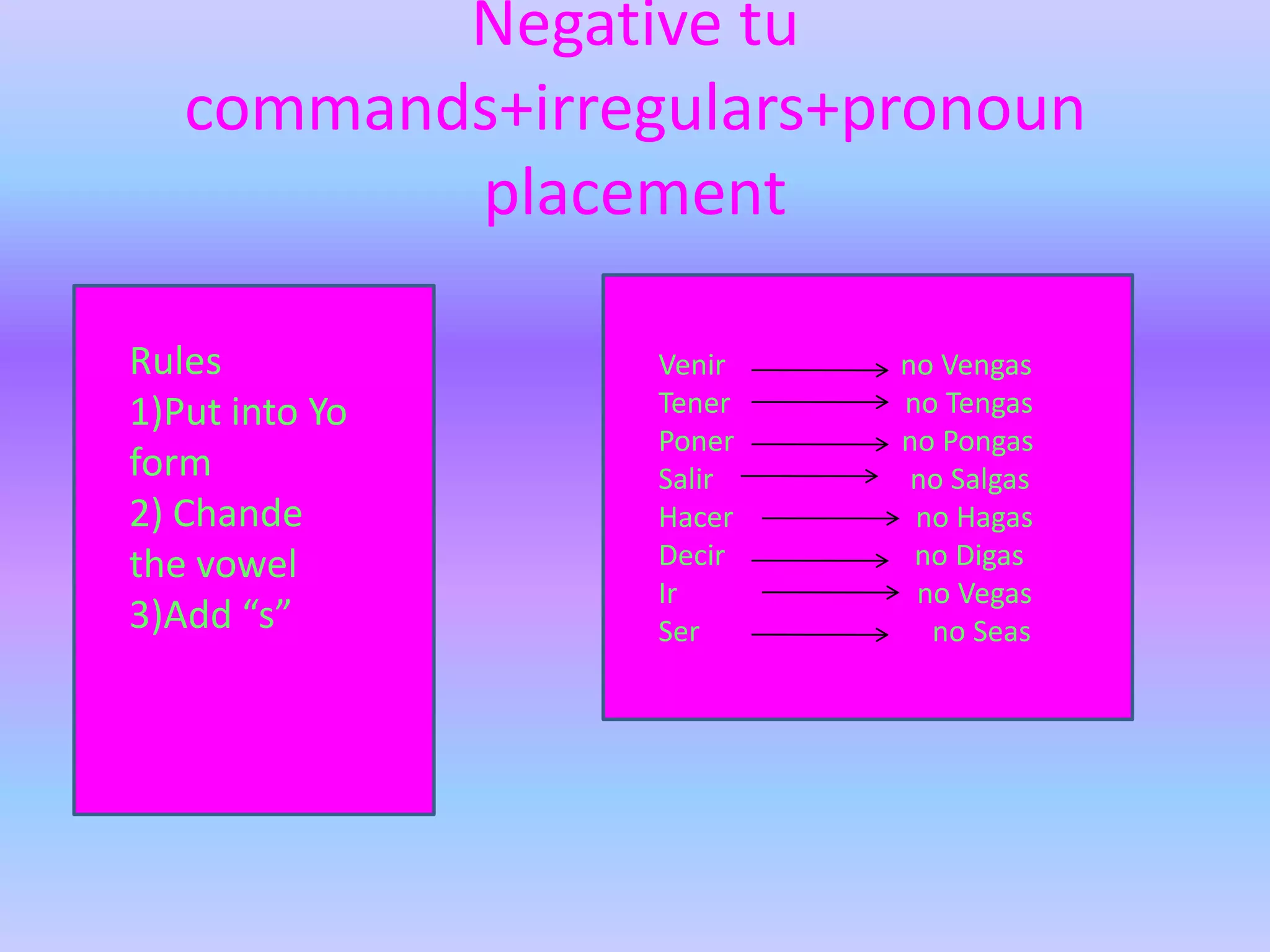
Negative tu
   commands+irregulars+pronoun
          placement

Rules            Venir   no Vengas
1)Put into Yo    Tener   no Tengas
                 Poner   no Pongas
form             Salir    no Salgas
2) Chande        Hacer    no Hagas
the vowel        Decir    no Digas
                 Ir       no Vegas
3)Add “s”        Ser       no Seas
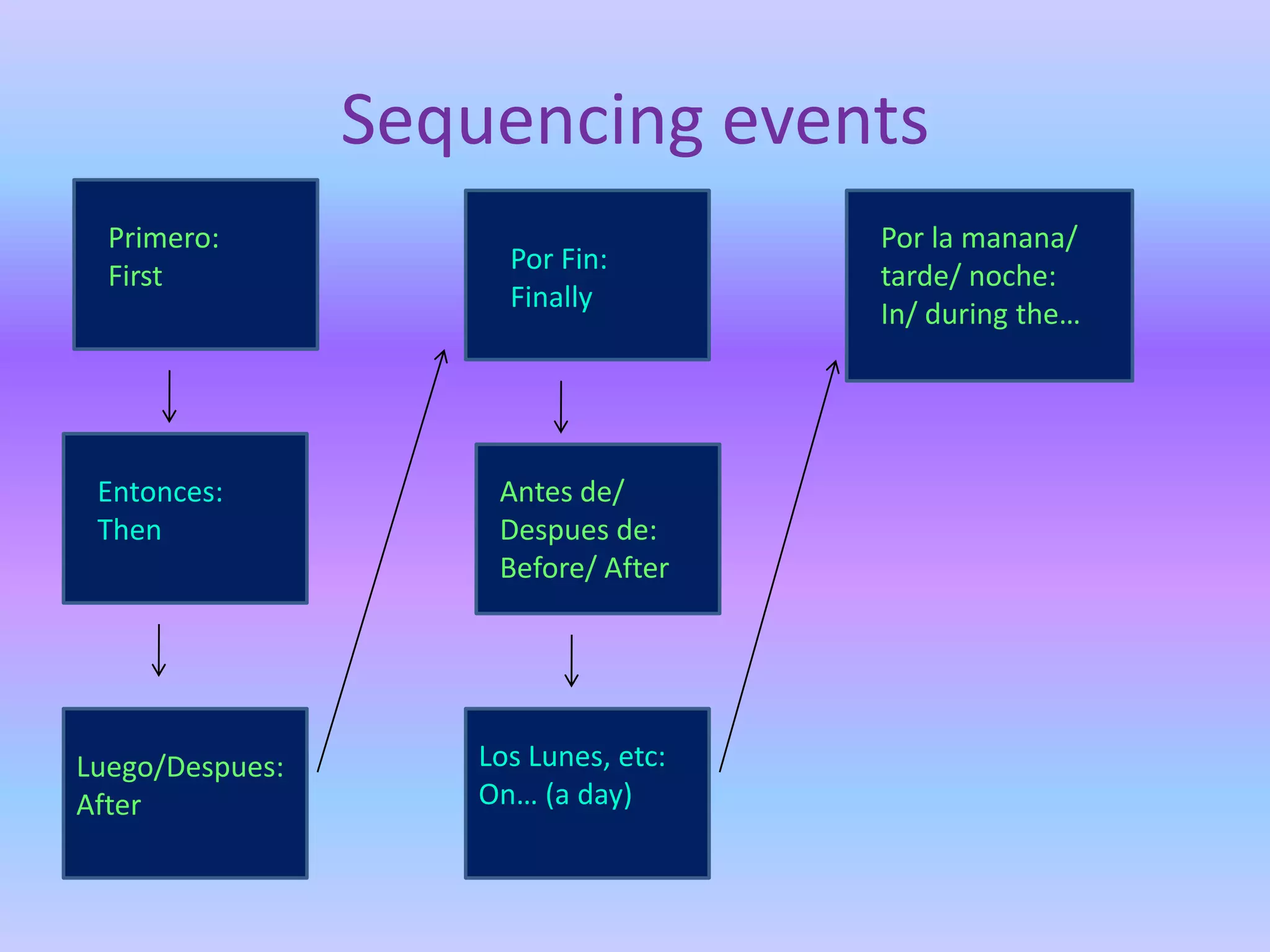
Sequencing events
  Primero:                            Por la manana/
                      Por Fin:
  First                               tarde/ noche:
                      Finally
                                      In/ during the…


 Entonces:           Antes de/
 Then                Despues de:
                     Before/ After


Luego/Despues:      Los Lunes, etc:
After               On… (a day)
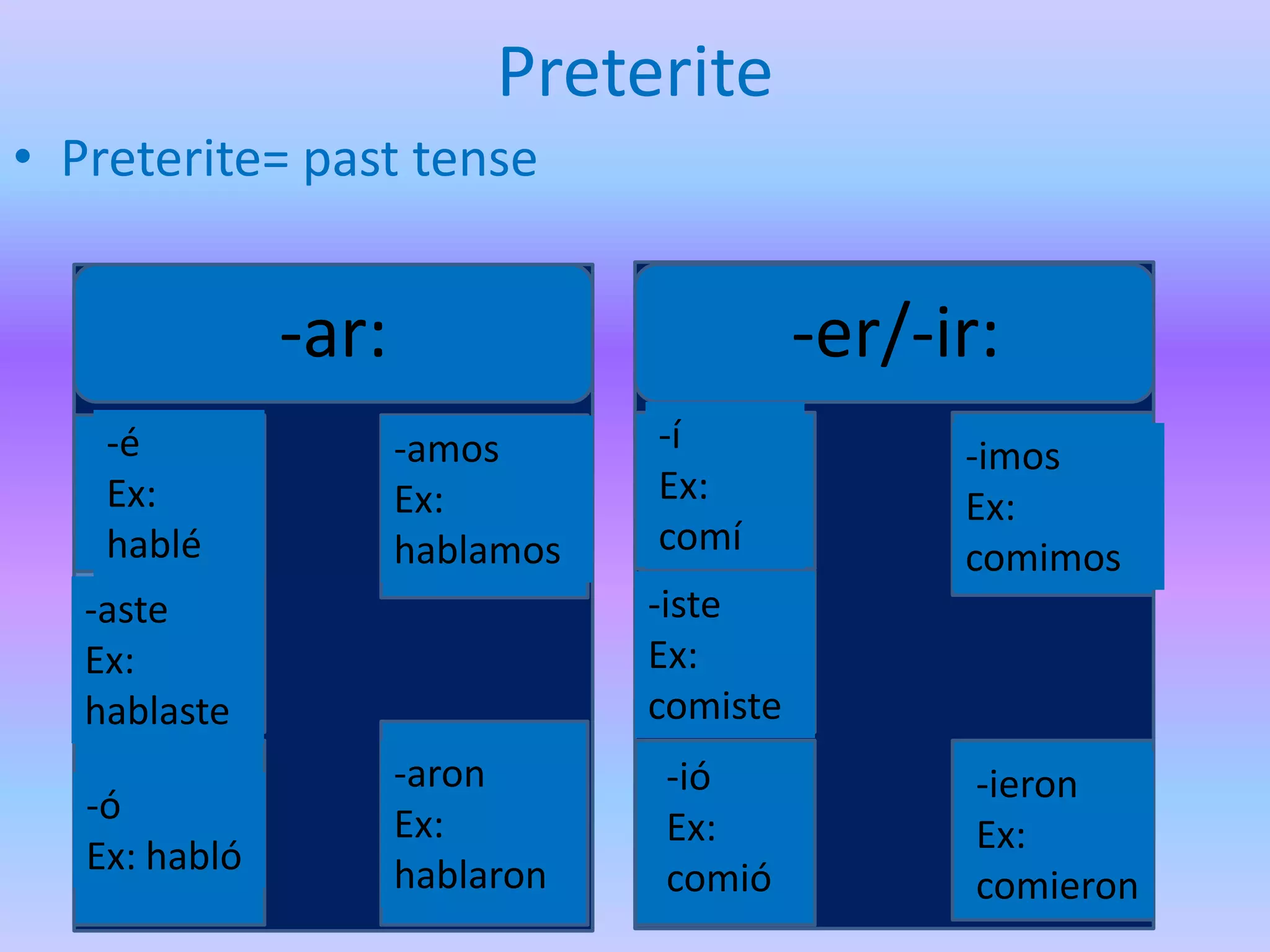
Preterite
• Preterite= past tense


               -ar:                        -er/-ir:
    -é                -amos      -í              -imos
    Ex:               Ex:        Ex:             Ex:
    hablé             hablamos   comí            comimos
   -aste                         -iste
   Ex:                           Ex:
   hablaste                      comiste
                      -aron      -ió              -ieron
   -ó                 Ex:        Ex:              Ex:
   Ex: habló          hablaron   comió            comieron
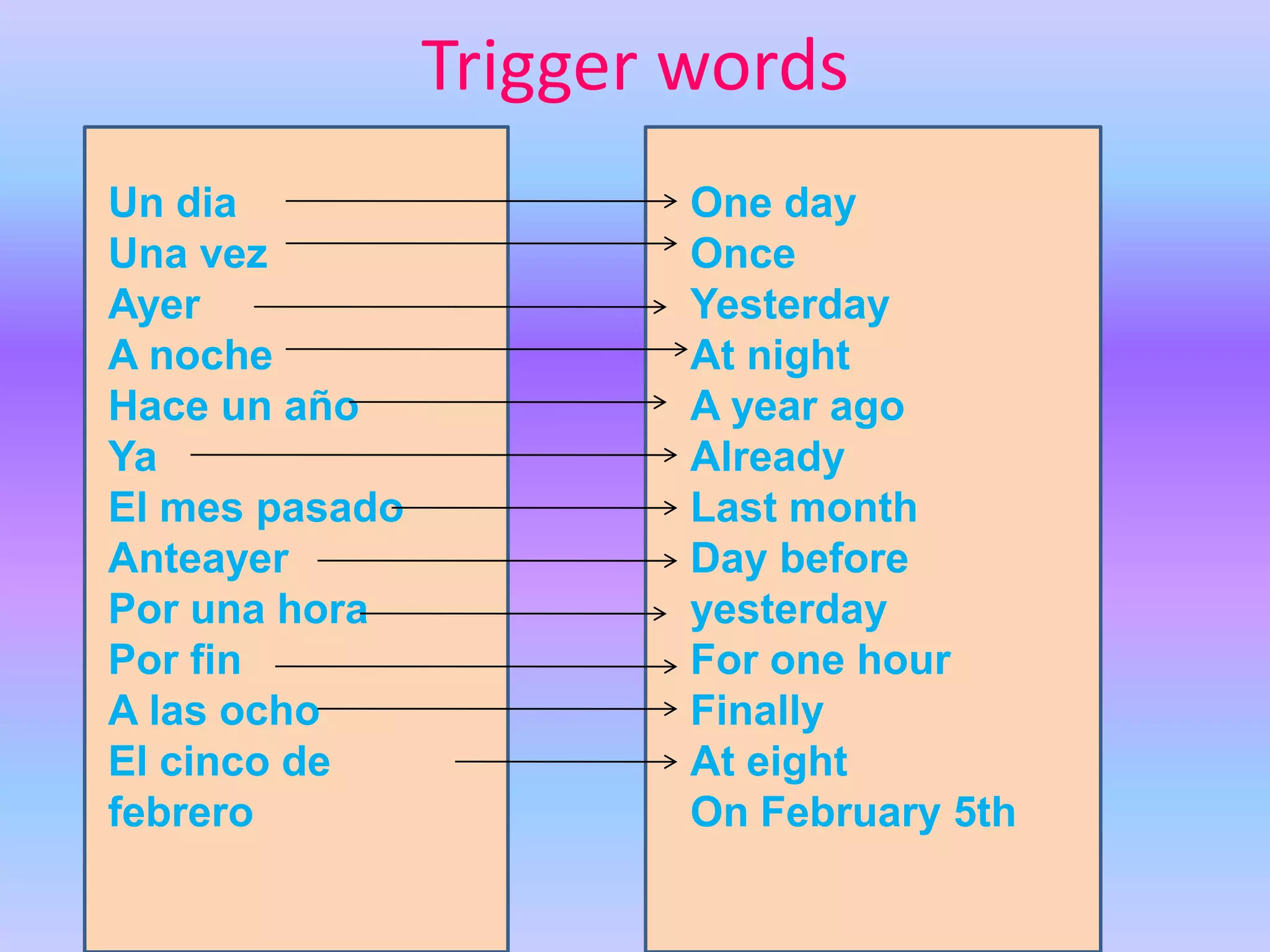
Trigger words
Un dia                  One day
Una vez                 Once
Ayer                    Yesterday
A noche                 At night
Hace un año             A year ago
Ya                      Already
El mes pasado           Last month
Anteayer                Day before
Por una hora            yesterday
Por fin                 For one hour
A las ocho              Finally
El cinco de             At eight
febrero                 On February 5th
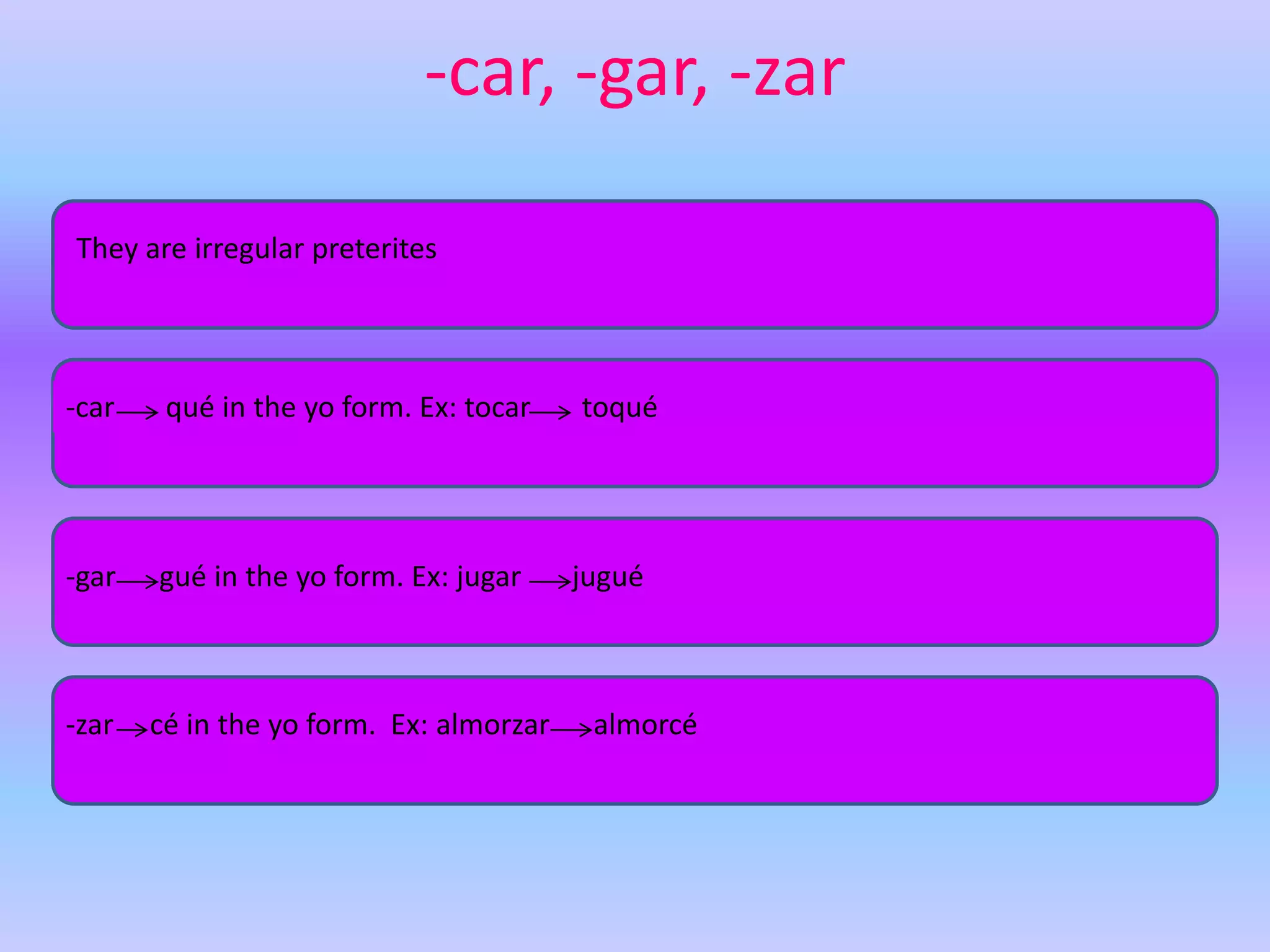
-car, -gar, -zar

They are irregular preterites


-car    qué in the yo form. Ex: tocar    toqué


-gar   gué in the yo form. Ex: jugar     jugué


-zar   cé in the yo form. Ex: almorzar    almorcé
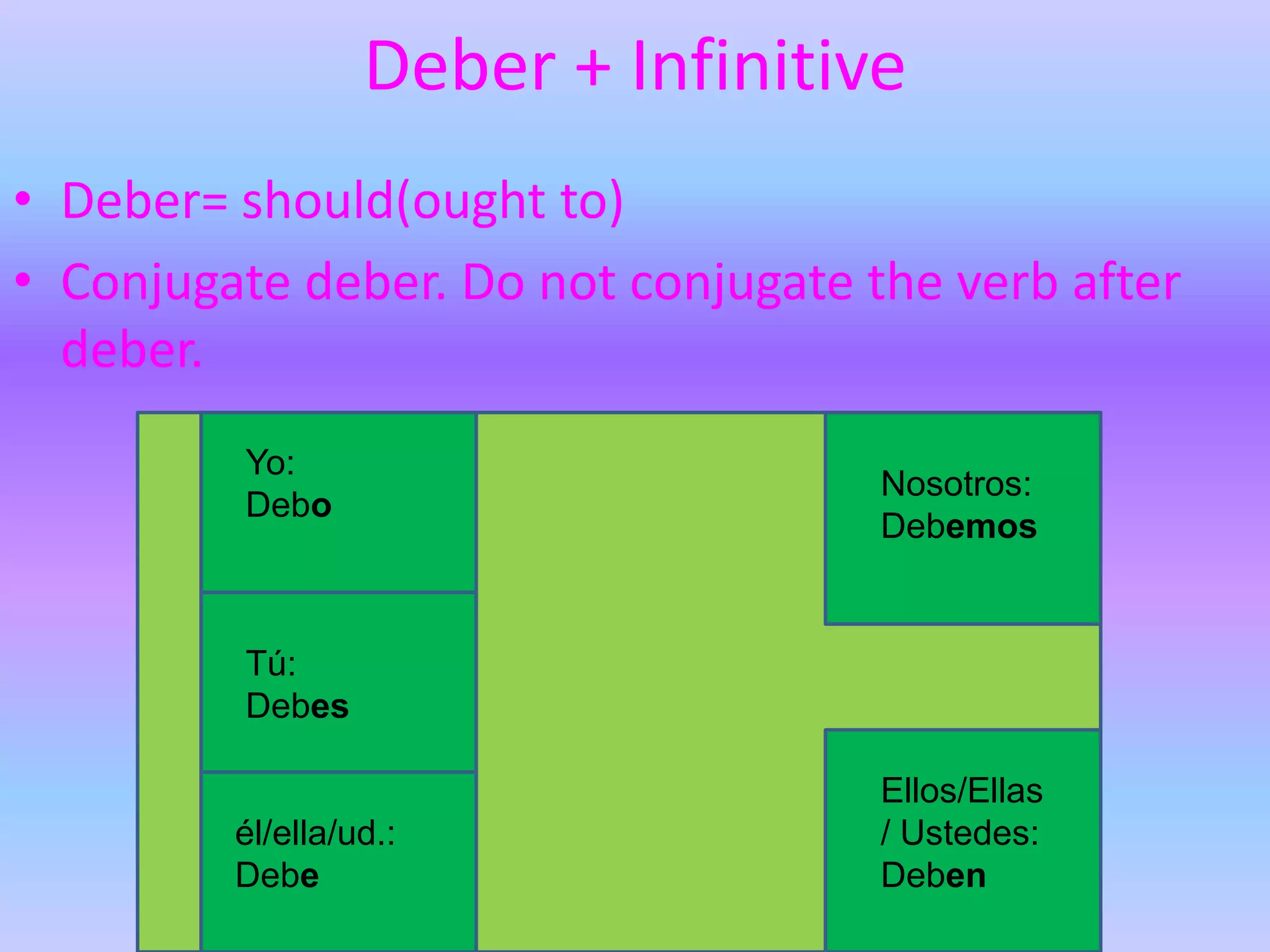
Deber + Infinitive
• Deber= should(ought to)
• Conjugate deber. Do not conjugate the verb after
  deber.
         Yo:
                                     Nosotros:
         Debo
                                     Debemos


         Tú:
         Debes

                                     Ellos/Ellas
         él/ella/ud.:                / Ustedes:
         Debe                        Deben
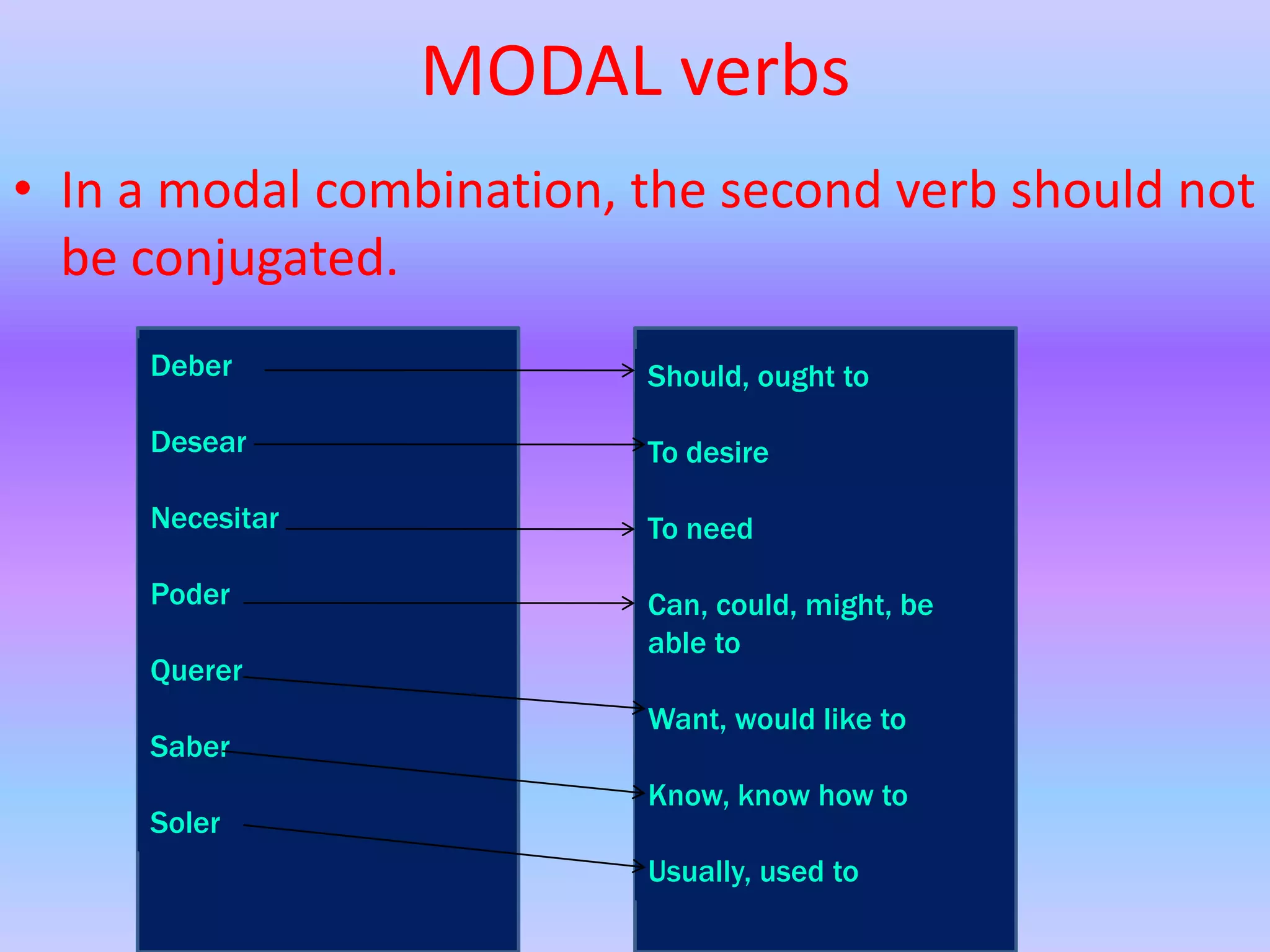
MODAL verbs
• In a modal combination, the second verb should not
  be conjugated.
     Deber                Should, ought to

     Desear               To desire

     Necesitar            To need

     Poder                Can, could, might, be
                          able to
     Querer
                          Want, would like to
     Saber
                          Know, know how to
     Soler
                          Usually, used to
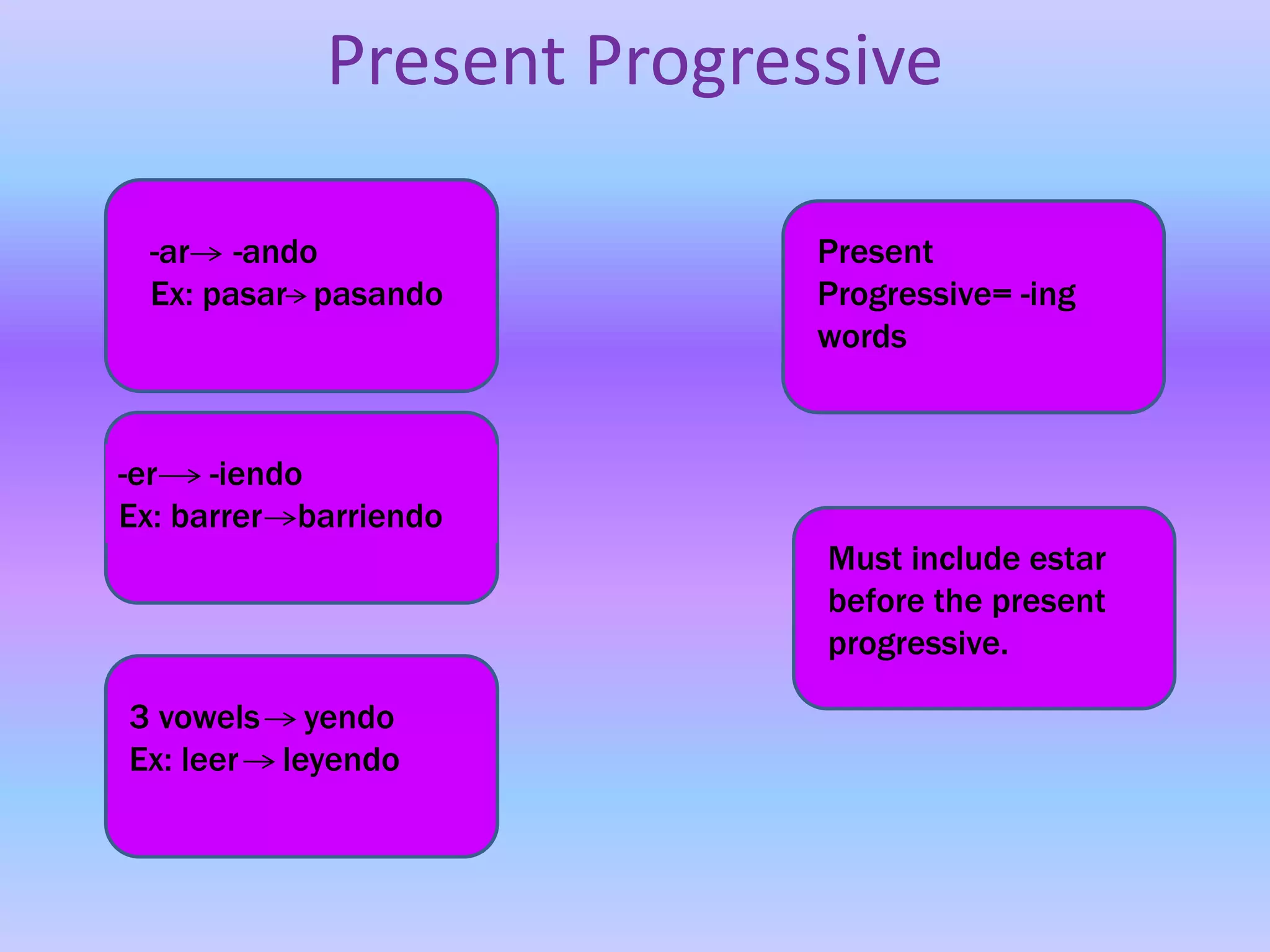
Present Progressive

 -ar -ando                 Present
 Ex: pasar pasando         Progressive= -ing
                           words


-er -iendo
Ex: barrer barriendo
                           Must include estar
                           before the present
                           progressive.

3 vowels yendo
Ex: leer leyendo
Adverbs
 Used to describe how something is done.


When an adjective ends in –e, -l, or –z, add –mente to the end.


 If the adjective ends in –o, change it to feminine and add –mente.


 If 2 adverbs modify the same verb, only the 2nd adverb ends in –mente.


                                       Examples
                                  Lento     lentamente
                                   Feliz     Felizmente
                                Especial Especialmente

Grammar book sp2 h pp2

  • 1.
  • 2.
    Table of Contents •Nationalities • Preterite • Stem changers • Trigger Words • Object Pronoun Placement • -car,-gar,-zar • Indirect Object Pronouns • Deber+Infinitive • Gustar • Affirmative/ Negative Words • MODAL verbs • Superlatives • Present Progressive • Reflexives • Adverbs • Affirmative tu commands+irregulars+pronou n placement • Negative tu commands+irregulars+pronou n placement • Sequencing Events
  • 3.
  • 4.
    Stem changers • Bootverbs change only inside the boot • Contar Cuento O-ue Boot verbs change only inside the boot: • Pensar Pienso E- ie Almuerzo Almorzamos Almuerzas Almorzais Almuerza Almuerzan • Pedir Pido E- i •Jugar Juego U- ue
  • 5.
    Pronoun Placement Attach pronounto a progressive tense Attach a pronoun to an affirmative command Ex: dimela Attach the pronoun to the infinitive Ex: comprarle Place the pronoun before a conjugated verb Ex: le compra
  • 6.
    IOP Yo - Me Nosotros - Nos Tu - Te Vosotros - Os El, Ella, Ud. - Le Ellas, Ellos, Uds. - Les
  • 7.
    Gustar Singular Plural Yo: Nosotros: Yo: Nosotros: Me gusta Nos gusta Me gustan Nos gustan Tu: Vosotros: Tu: Vosotros: Te gusta Os gusta Te Gustan Os gustan Ellos, Ellas, Uds. El, Ella, Ud.: Ellos, Ellas, Uds.: El, Ella, Ud: : Le gusta Les gusta Le gustan Les gustan
  • 8.
    Affirmative/ Negative words Affirmative Negative Algo- Nada- Something Nothing Nadie- Alguien- No one Someone Ningun/Ninguno- Algun/Alguno- None/ Not only Same Siempre- Nunca- Always Never Tambien- Tampoco- Also Neither
  • 9.
    Superlatives -isimo, -isimos, -isima,& -isimas are added to adverbs and adjectives Adjectives & Adverbs ending in C,G, or Z change spelling to –qu, - gu, & -c respectively. Ex: Rico--- Riquisimo Adjectives and adverbs ending in –n or –r form by adding –cisimo(a). Ex: Joven--- Jovencisimo
  • 10.
    Reflexives Can come beforea conjugated verb or attached to an infinitive. Ex: se lava or lavarse Yo- Me Nosotros- Nos Vosotros- Os Tu- Te El, Ella, Ud.- Se Ellos, Ellas, Uds.- Se
  • 11.
    Affirmative tu commands+irregulars+pronoun placement Rules: Venir Ven 1) Drop the “s” Tener Ten Poner Pon Salir Sal Hacer Haz Decir Di Ir Ve Ser Se
  • 12.
    Negative tu commands+irregulars+pronoun placement Rules Venir no Vengas 1)Put into Yo Tener no Tengas Poner no Pongas form Salir no Salgas 2) Chande Hacer no Hagas the vowel Decir no Digas Ir no Vegas 3)Add “s” Ser no Seas
  • 13.
    Sequencing events Primero: Por la manana/ Por Fin: First tarde/ noche: Finally In/ during the… Entonces: Antes de/ Then Despues de: Before/ After Luego/Despues: Los Lunes, etc: After On… (a day)
  • 14.
    Preterite • Preterite= pasttense -ar: -er/-ir: -é -amos -í -imos Ex: Ex: Ex: Ex: hablé hablamos comí comimos -aste -iste Ex: Ex: hablaste comiste -aron -ió -ieron -ó Ex: Ex: Ex: Ex: habló hablaron comió comieron
  • 15.
    Trigger words Un dia One day Una vez Once Ayer Yesterday A noche At night Hace un año A year ago Ya Already El mes pasado Last month Anteayer Day before Por una hora yesterday Por fin For one hour A las ocho Finally El cinco de At eight febrero On February 5th
  • 16.
    -car, -gar, -zar Theyare irregular preterites -car qué in the yo form. Ex: tocar toqué -gar gué in the yo form. Ex: jugar jugué -zar cé in the yo form. Ex: almorzar almorcé
  • 17.
    Deber + Infinitive •Deber= should(ought to) • Conjugate deber. Do not conjugate the verb after deber. Yo: Nosotros: Debo Debemos Tú: Debes Ellos/Ellas él/ella/ud.: / Ustedes: Debe Deben
  • 18.
    MODAL verbs • Ina modal combination, the second verb should not be conjugated. Deber Should, ought to Desear To desire Necesitar To need Poder Can, could, might, be able to Querer Want, would like to Saber Know, know how to Soler Usually, used to
  • 19.
    Present Progressive -ar-ando Present Ex: pasar pasando Progressive= -ing words -er -iendo Ex: barrer barriendo Must include estar before the present progressive. 3 vowels yendo Ex: leer leyendo
  • 20.
    Adverbs Used todescribe how something is done. When an adjective ends in –e, -l, or –z, add –mente to the end. If the adjective ends in –o, change it to feminine and add –mente. If 2 adverbs modify the same verb, only the 2nd adverb ends in –mente. Examples Lento lentamente Feliz Felizmente Especial Especialmente