Por: Nacho Kapcsos
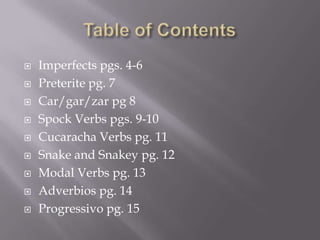
   Imperfects pgs. 4-6
   Preterite pg. 7
   Car/gar/zar pg 8
   Spock Verbs pgs. 9-10
   Cucaracha Verbs pg. 11
   Snake and Snakey pg. 12
   Modal Verbs pg. 13
   Adverbios pg. 14
   Progressivo pg. 15
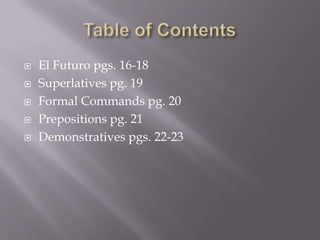
   El Futuro pgs. 16-18
   Superlatives pg. 19
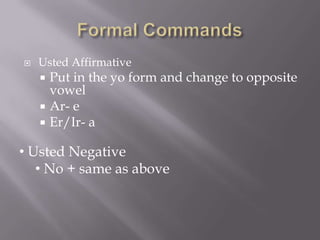
   Formal Commands pg. 20
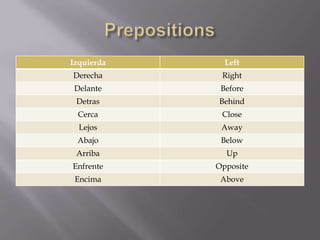
   Prepositions pg. 21
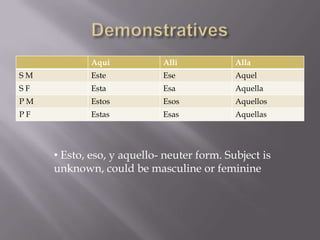
   Demonstratives pgs. 22-23
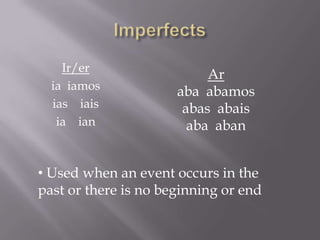
Ir/er
                           Ar
  ia iamos            aba abamos
  ias iais             abas abais
   ia ian               aba aban


• Used when an event occurs in the
past or there is no beginning or end
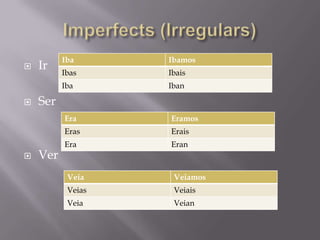
Iba      Ibamos
   Ir    Ibas     Ibais
          Iba      Iban

   Ser
          Era      Eramos
          Eras     Erais
          Era      Eran
   Ver
           Veia     Veiamos
           Veias    Veiais
           Veia     Veian
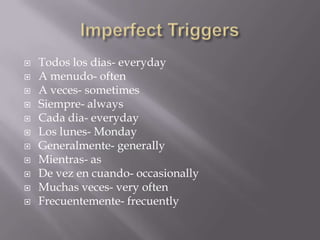
   Todos los dias- everyday
   A menudo- often
   A veces- sometimes
   Siempre- always
   Cada dia- everyday
   Los lunes- Monday
   Generalmente- generally
   Mientras- as
   De vez en cuando- occasionally
   Muchas veces- very often
   Frecuentemente- frecuently
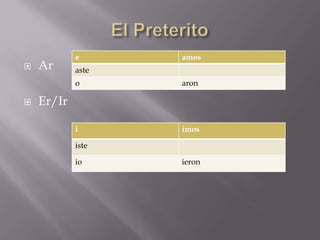
e      amos
   Ar      aste
            o      aron

   Er/Ir

            i      imos

            iste

            io     ieron
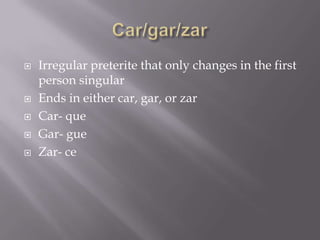
   Irregular preterite that only changes in the first
    person singular
   Ends in either car, gar, or zar
   Car- que
   Gar- gue
   Zar- ce
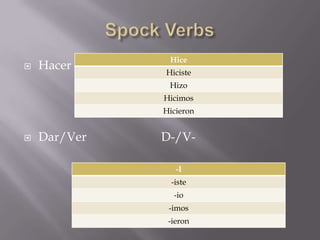
Hice
   Hacer     Hiciste
               Hizo
              Hicimos
              Hicieron


   Dar/Ver   D-/V-

                 -I
                -iste
                -io
               -imos
               -ieron
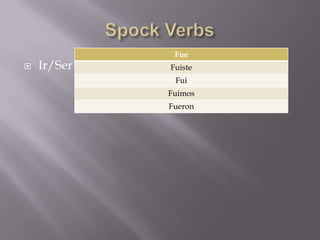
Fue
   Ir/Ser   Fuiste
              Fui
             Fuimos
             Fueron
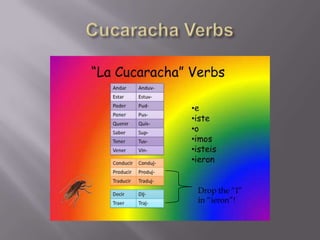
Drop the “I”
in “ieron”!
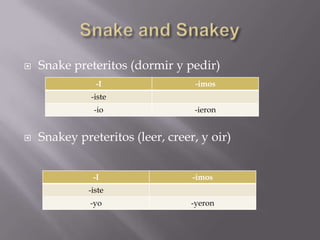
   Snake preteritos (dormir y pedir)
               -I                  -imos
              -iste
              -io                 -ieron


   Snakey preteritos (leer, creer, y oir)


              -I                  -imos
             -iste
              -yo                 -yeron
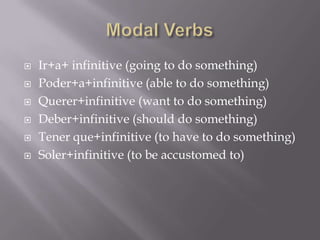
   Ir+a+ infinitive (going to do something)
   Poder+a+infinitive (able to do something)
   Querer+infinitive (want to do something)
   Deber+infinitive (should do something)
   Tener que+infinitive (to have to do something)
   Soler+infinitive (to be accustomed to)
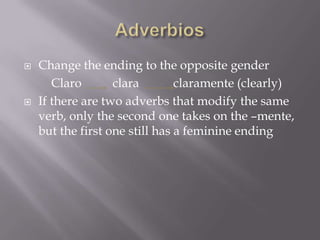
   Change the ending to the opposite gender
       Claro       clara        claramente (clearly)
   If there are two adverbs that modify the same
    verb, only the second one takes on the –mente,
    but the first one still has a feminine ending
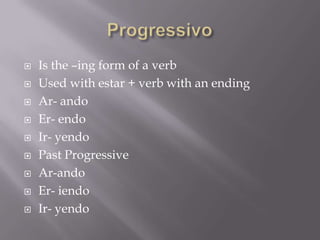
   Is the –ing form of a verb
   Used with estar + verb with an ending
   Ar- ando
   Er- endo
   Ir- yendo
   Past Progressive
   Ar-ando
   Er- iendo
   Ir- yendo
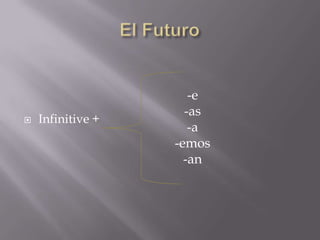
-e
                     -as
   Infinitive +
                      -a
                   -emos
                     -an
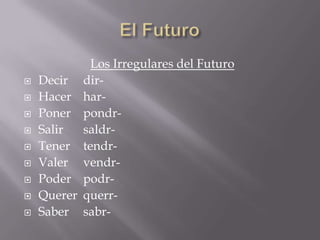
Los Irregulares del Futuro
   Decir    dir-
   Hacer    har-
   Poner    pondr-
   Salir    saldr-
   Tener    tendr-
   Valer    vendr-
   Poder    podr-
   Querer   querr-
   Saber    sabr-
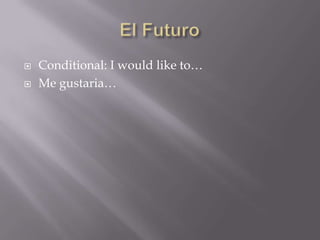
   Conditional: I would like to…
   Me gustaria…
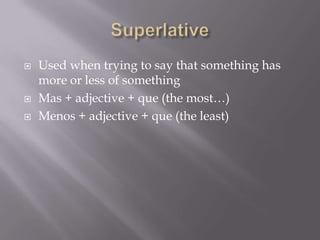
   Used when trying to say that something has
    more or less of something
   Mas + adjective + que (the most…)
   Menos + adjective + que (the least)
   Usted Affirmative
     Put in the yo form and change to opposite
      vowel
     Ar- e
     Er/Ir- a

• Usted Negative
   • No + same as above
Izquierda     Left
Derecha      Right
 Delante     Before
 Detras     Behind
 Cerca       Close
  Lejos      Away
 Abajo       Below
 Arriba       Up
Enfrente    Opposite
 Encima      Above
Aqui           Alli            Alla
SM           Este           Ese             Aquel
SF           Esta           Esa             Aquella
PM           Estos          Esos            Aquellos
PF           Estas          Esas            Aquellas


     • Esto, eso, y aquello- neuter form. Subject is
     unknown, could be masculine or feminine
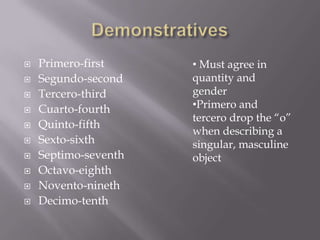
   Primero-first     • Must agree in
   Segundo-second    quantity and
   Tercero-third     gender
   Cuarto-fourth     •Primero and
                      tercero drop the “o”
   Quinto-fifth
                      when describing a
   Sexto-sixth       singular, masculine
   Septimo-seventh   object
   Octavo-eighth
   Novento-nineth
   Decimo-tenth
Libro de gramatica 2

Libro de gramatica 2

  • 1.
  • 2.
    Imperfects pgs. 4-6  Preterite pg. 7  Car/gar/zar pg 8  Spock Verbs pgs. 9-10  Cucaracha Verbs pg. 11  Snake and Snakey pg. 12  Modal Verbs pg. 13  Adverbios pg. 14  Progressivo pg. 15
  • 3.
    El Futuro pgs. 16-18  Superlatives pg. 19  Formal Commands pg. 20  Prepositions pg. 21  Demonstratives pgs. 22-23
  • 4.
    Ir/er Ar ia iamos aba abamos ias iais abas abais ia ian aba aban • Used when an event occurs in the past or there is no beginning or end
  • 5.
    Iba Ibamos  Ir Ibas Ibais Iba Iban  Ser Era Eramos Eras Erais Era Eran  Ver Veia Veiamos Veias Veiais Veia Veian
  • 6.
    Todos los dias- everyday  A menudo- often  A veces- sometimes  Siempre- always  Cada dia- everyday  Los lunes- Monday  Generalmente- generally  Mientras- as  De vez en cuando- occasionally  Muchas veces- very often  Frecuentemente- frecuently
  • 7.
    e amos  Ar aste o aron  Er/Ir i imos iste io ieron
  • 8.
    Irregular preterite that only changes in the first person singular  Ends in either car, gar, or zar  Car- que  Gar- gue  Zar- ce
  • 9.
    Hice  Hacer Hiciste Hizo Hicimos Hicieron  Dar/Ver D-/V- -I -iste -io -imos -ieron
  • 10.
    Fue  Ir/Ser Fuiste Fui Fuimos Fueron
  • 11.
    Drop the “I” in“ieron”!
  • 12.
    Snake preteritos (dormir y pedir) -I -imos -iste -io -ieron  Snakey preteritos (leer, creer, y oir) -I -imos -iste -yo -yeron
  • 13.
    Ir+a+ infinitive (going to do something)  Poder+a+infinitive (able to do something)  Querer+infinitive (want to do something)  Deber+infinitive (should do something)  Tener que+infinitive (to have to do something)  Soler+infinitive (to be accustomed to)
  • 14.
    Change the ending to the opposite gender Claro clara claramente (clearly)  If there are two adverbs that modify the same verb, only the second one takes on the –mente, but the first one still has a feminine ending
  • 15.
    Is the –ing form of a verb  Used with estar + verb with an ending  Ar- ando  Er- endo  Ir- yendo  Past Progressive  Ar-ando  Er- iendo  Ir- yendo
  • 16.
    -e -as  Infinitive + -a -emos -an
  • 17.
    Los Irregulares delFuturo  Decir dir-  Hacer har-  Poner pondr-  Salir saldr-  Tener tendr-  Valer vendr-  Poder podr-  Querer querr-  Saber sabr-
  • 18.
    Conditional: I would like to…  Me gustaria…
  • 19.
    Used when trying to say that something has more or less of something  Mas + adjective + que (the most…)  Menos + adjective + que (the least)
  • 20.
    Usted Affirmative  Put in the yo form and change to opposite vowel  Ar- e  Er/Ir- a • Usted Negative • No + same as above
  • 21.
    Izquierda Left Derecha Right Delante Before Detras Behind Cerca Close Lejos Away Abajo Below Arriba Up Enfrente Opposite Encima Above
  • 22.
    Aqui Alli Alla SM Este Ese Aquel SF Esta Esa Aquella PM Estos Esos Aquellos PF Estas Esas Aquellas • Esto, eso, y aquello- neuter form. Subject is unknown, could be masculine or feminine
  • 23.
    Primero-first • Must agree in  Segundo-second quantity and  Tercero-third gender  Cuarto-fourth •Primero and tercero drop the “o”  Quinto-fifth when describing a  Sexto-sixth singular, masculine  Septimo-seventh object  Octavo-eighth  Novento-nineth  Decimo-tenth