Downloaded 3,911 times


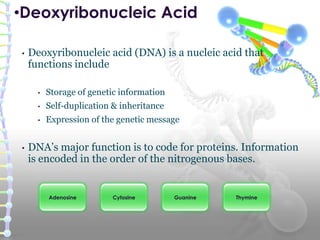
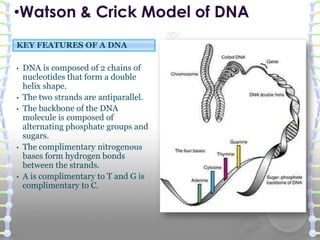
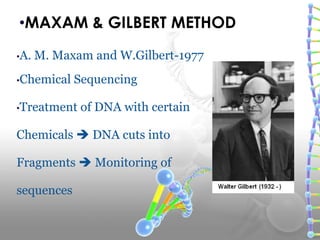
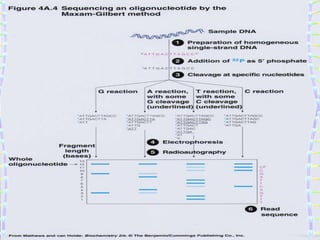
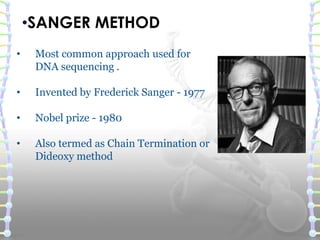
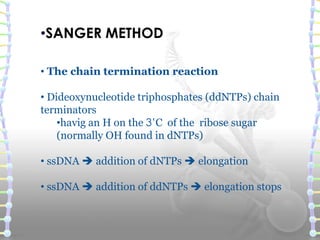
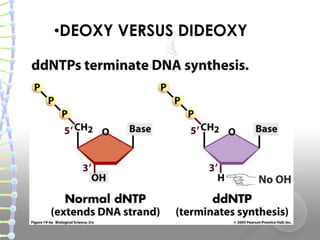

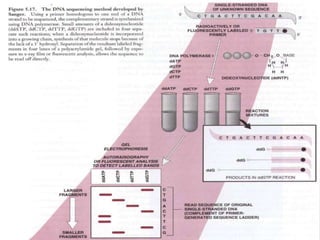
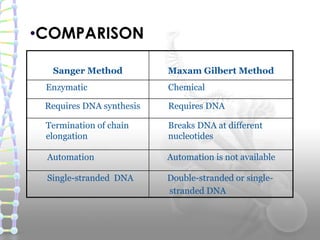
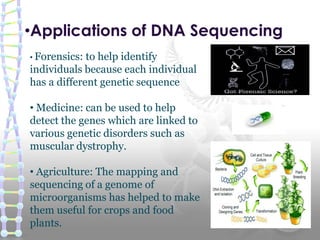


DNA sequencing determines the order of nucleotide bases in a DNA molecule. The first methods were developed in the 1970s by Maxam and Gilbert (chemical method) and Sanger (chain termination/dideoxy method). Sanger's method is now most commonly used and involves DNA synthesis with chain termination by dideoxynucleotides to generate fragments of different lengths that can be separated and read to determine the DNA sequence. DNA sequencing has revolutionized biological sciences by enabling diagnosis of genetic diseases, identification of disease-causing mutations, and mapping of genomes. It provides benefits for medicine, forensics, and agriculture.


