Pyrosequencing
By: Qadardana kakar
BS Biotechnology
7th semester
Aims/ Objective
 The Aim of presentation is to explain the process of pyrosequencing.
Content
 DNA sequencing
 Pyrosequencing
 Principle
 Methodology
 Application of pyrosequencing
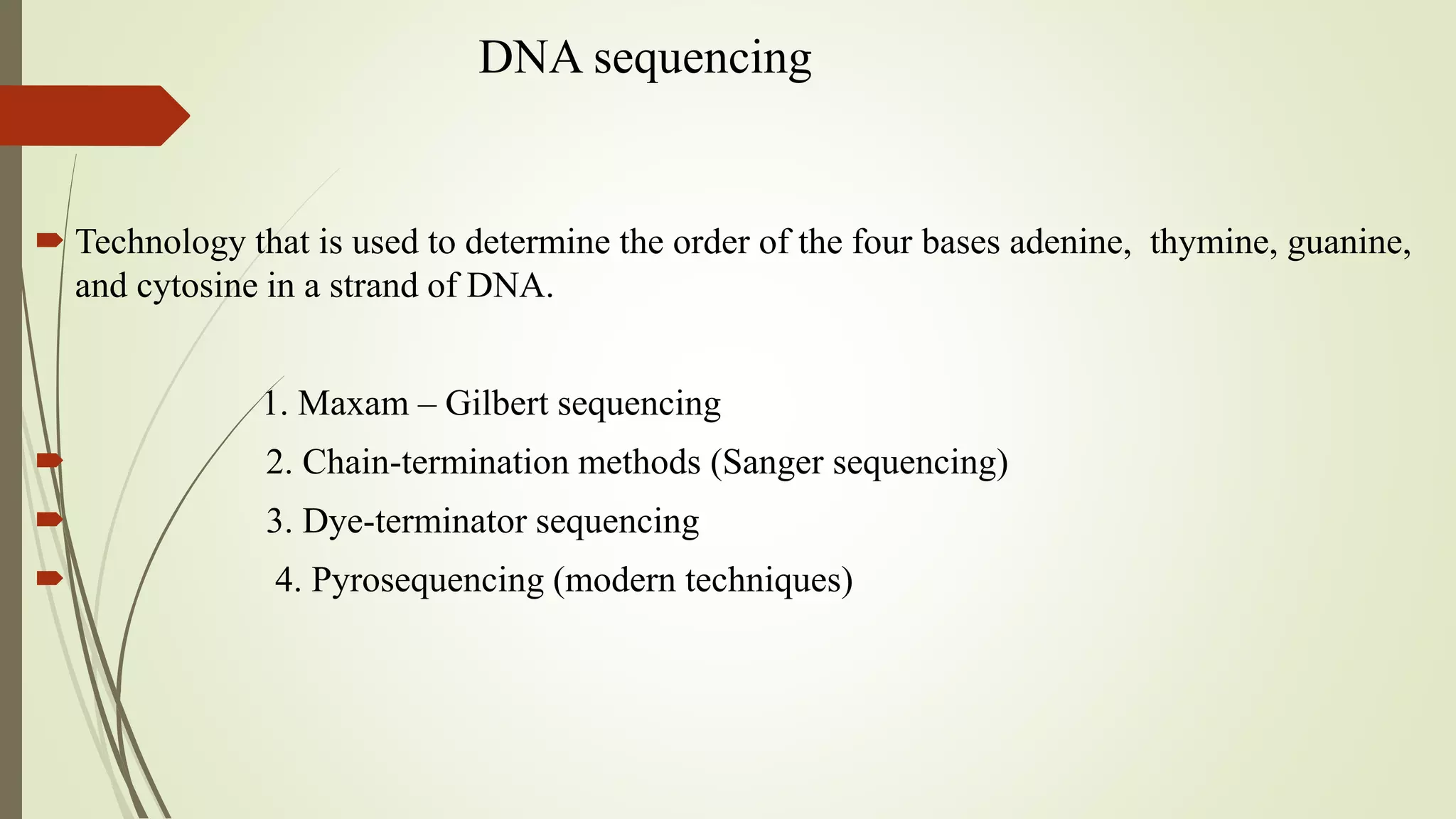
DNA sequencing
 Technology that is used to determine the order of the four bases adenine, thymine, guanine,
and cytosine in a strand of DNA.
1. Maxam – Gilbert sequencing
 2. Chain-termination methods (Sanger sequencing)
 3. Dye-terminator sequencing
 4. Pyrosequencing (modern techniques)
Pyrosequencing
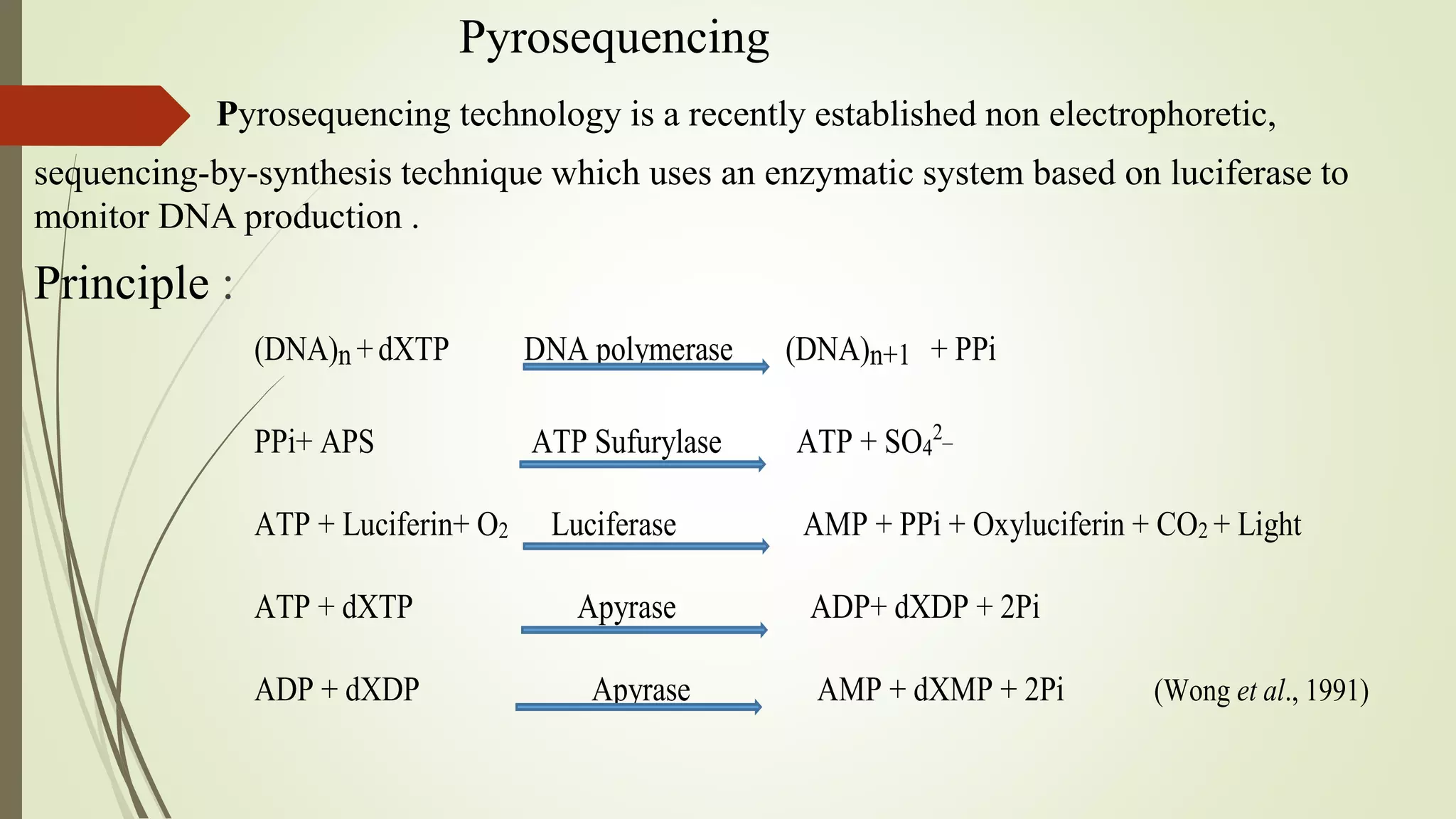
Pyrosequencing technology is a recently established non electrophoretic,
sequencing-by-synthesis technique which uses an enzymatic system based on luciferase to
monitor DNA production .
Principle :
(DNA)n +dXTP DNA polymerase (DNA)n+1 + PPi
PPi+ APS ATP Sufurylase ATP + SO4
2_
ATP + Luciferin+ O2 Luciferase AMP + PPi + Oxyluciferin + CO2 + Light
ATP + dXTP Apyrase ADP+ dXDP + 2Pi
ADP + dXDP Apyrase AMP + dXMP + 2Pi (Wong et al., 1991)
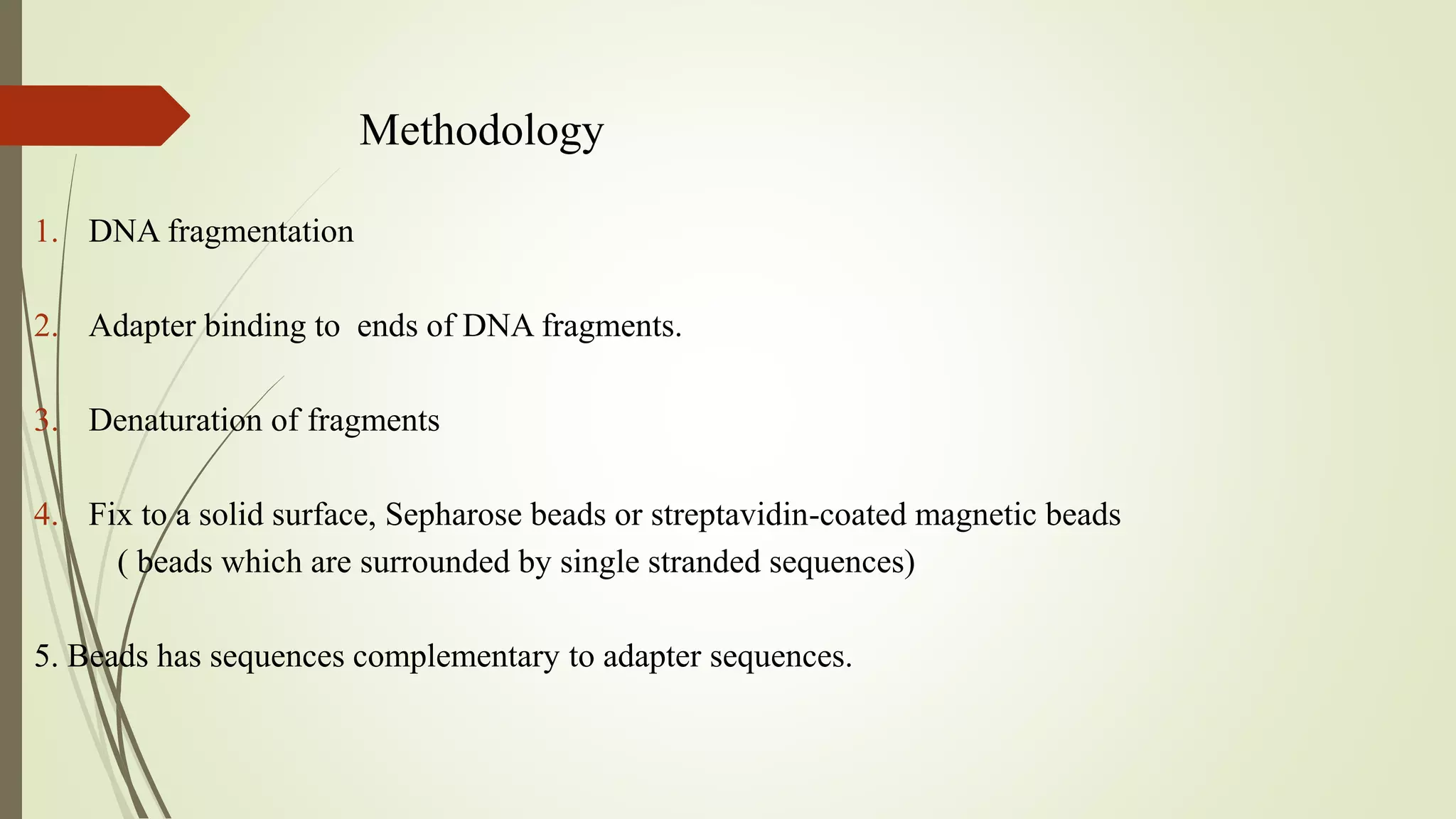
Methodology
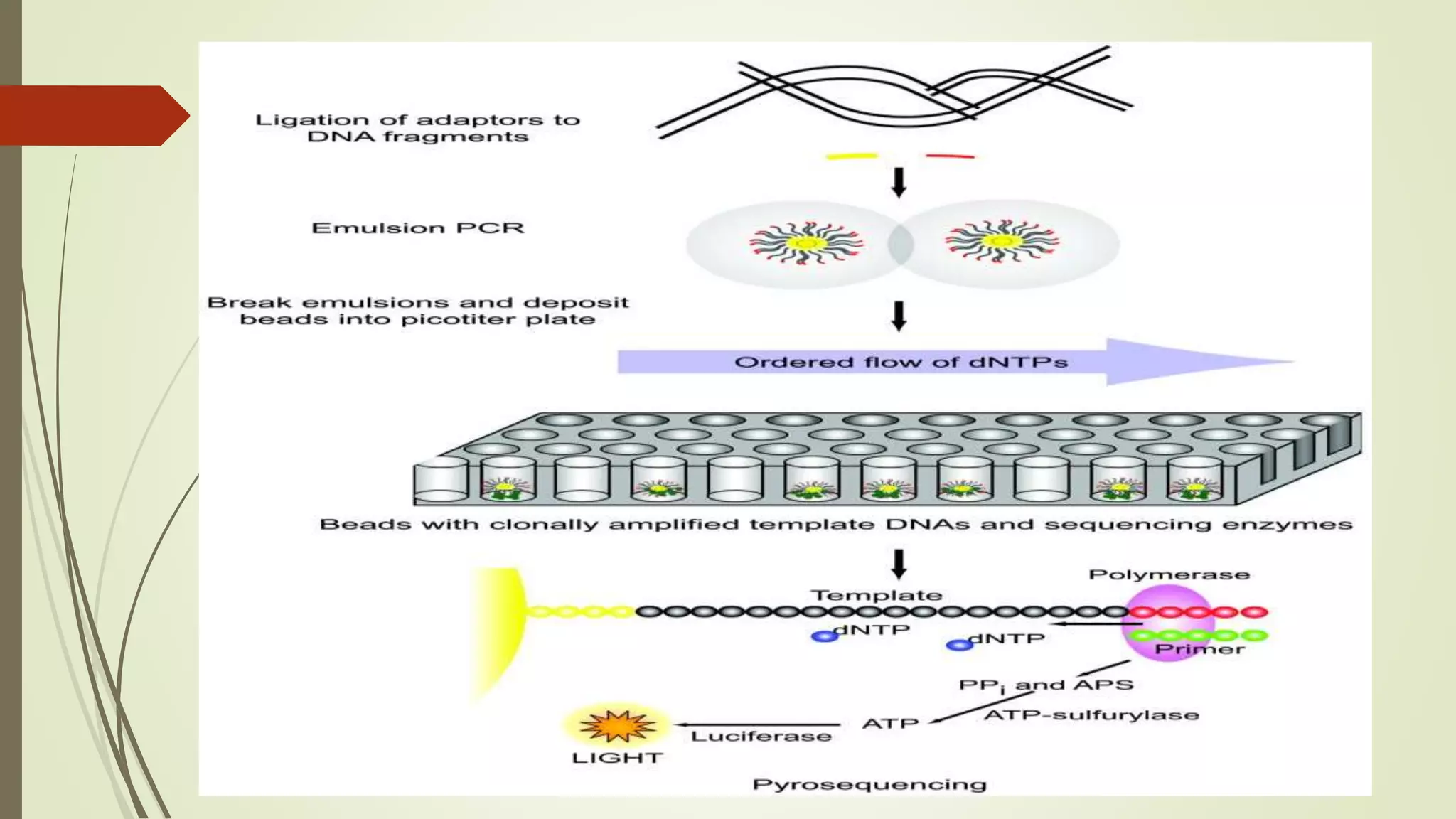
1. DNA fragmentation
2. Adapter binding to ends of DNA fragments.
3. Denaturation of fragments
4. Fix to a solid surface, Sepharose beads or streptavidin-coated magnetic beads
( beads which are surrounded by single stranded sequences)
5. Beads has sequences complementary to adapter sequences.
1. Methodology
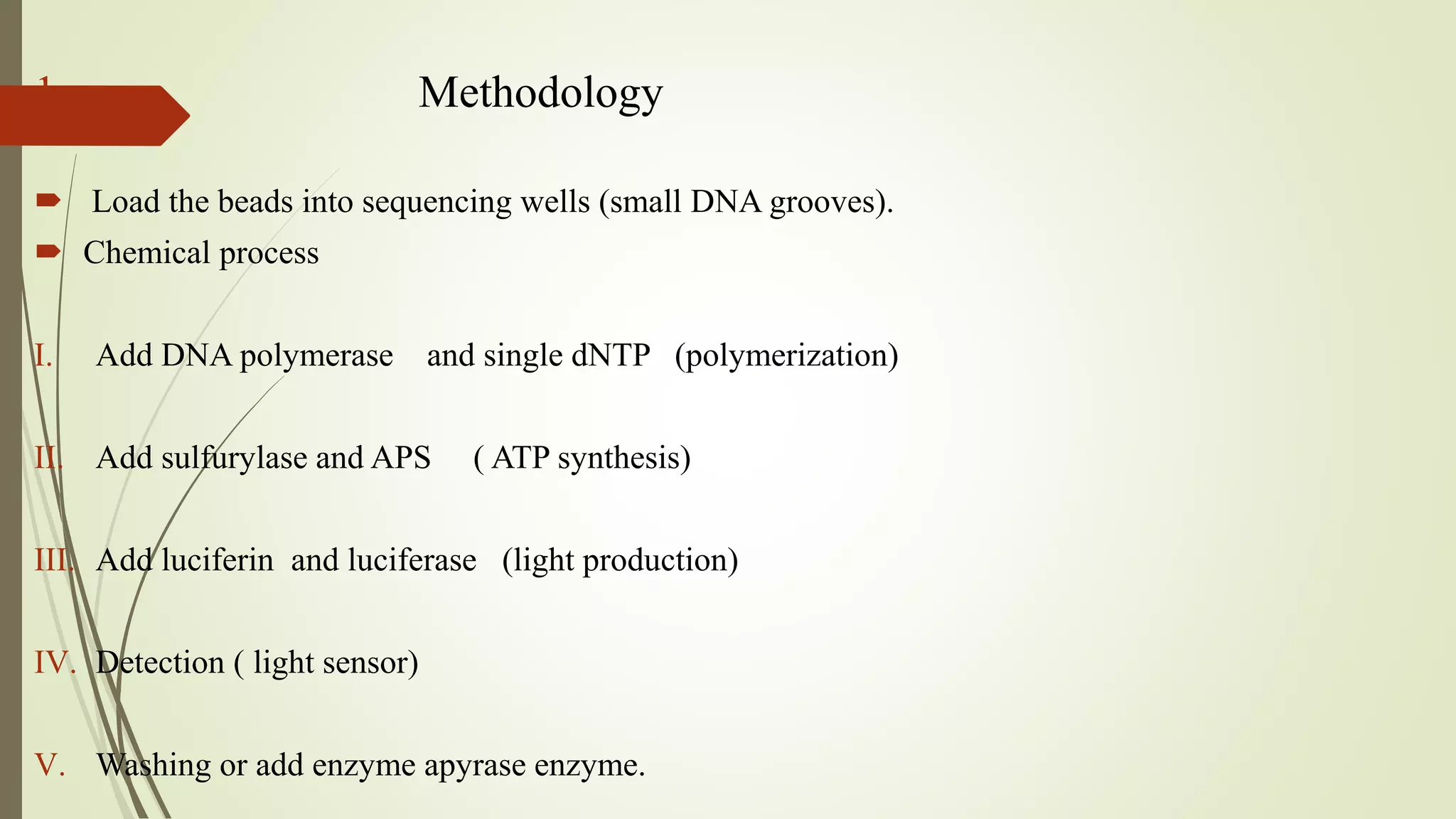
 Load the beads into sequencing wells (small DNA grooves).
 Chemical process
I. Add DNA polymerase and single dNTP (polymerization)
II. Add sulfurylase and APS ( ATP synthesis)
III. Add luciferin and luciferase (light production)
IV. Detection ( light sensor)
V. Washing or add enzyme apyrase enzyme.
Application of Pyrosequencing
 Pyrosequencing has shown well performance in determination of complex DNA structure
such as

 cDNA analysis, mutation detection

 Re-sequencing of diseases linked genes,
 viral typing, bacterial typing, and SNPs.

Pyrosequencing

  • 1.
    Pyrosequencing By: Qadardana kakar BSBiotechnology 7th semester
  • 2.
    Aims/ Objective  TheAim of presentation is to explain the process of pyrosequencing.
  • 3.
    Content  DNA sequencing Pyrosequencing  Principle  Methodology  Application of pyrosequencing
  • 4.
    DNA sequencing  Technologythat is used to determine the order of the four bases adenine, thymine, guanine, and cytosine in a strand of DNA. 1. Maxam – Gilbert sequencing  2. Chain-termination methods (Sanger sequencing)  3. Dye-terminator sequencing  4. Pyrosequencing (modern techniques)
  • 5.
    Pyrosequencing Pyrosequencing technology isa recently established non electrophoretic, sequencing-by-synthesis technique which uses an enzymatic system based on luciferase to monitor DNA production . Principle : (DNA)n +dXTP DNA polymerase (DNA)n+1 + PPi PPi+ APS ATP Sufurylase ATP + SO4 2_ ATP + Luciferin+ O2 Luciferase AMP + PPi + Oxyluciferin + CO2 + Light ATP + dXTP Apyrase ADP+ dXDP + 2Pi ADP + dXDP Apyrase AMP + dXMP + 2Pi (Wong et al., 1991)
  • 6.
    Methodology 1. DNA fragmentation 2.Adapter binding to ends of DNA fragments. 3. Denaturation of fragments 4. Fix to a solid surface, Sepharose beads or streptavidin-coated magnetic beads ( beads which are surrounded by single stranded sequences) 5. Beads has sequences complementary to adapter sequences.
  • 7.
    1. Methodology  Loadthe beads into sequencing wells (small DNA grooves).  Chemical process I. Add DNA polymerase and single dNTP (polymerization) II. Add sulfurylase and APS ( ATP synthesis) III. Add luciferin and luciferase (light production) IV. Detection ( light sensor) V. Washing or add enzyme apyrase enzyme.
  • 9.
    Application of Pyrosequencing Pyrosequencing has shown well performance in determination of complex DNA structure such as   cDNA analysis, mutation detection   Re-sequencing of diseases linked genes,  viral typing, bacterial typing, and SNPs.