Decision Making and Problem
Solving
Krishantha Jayasundara
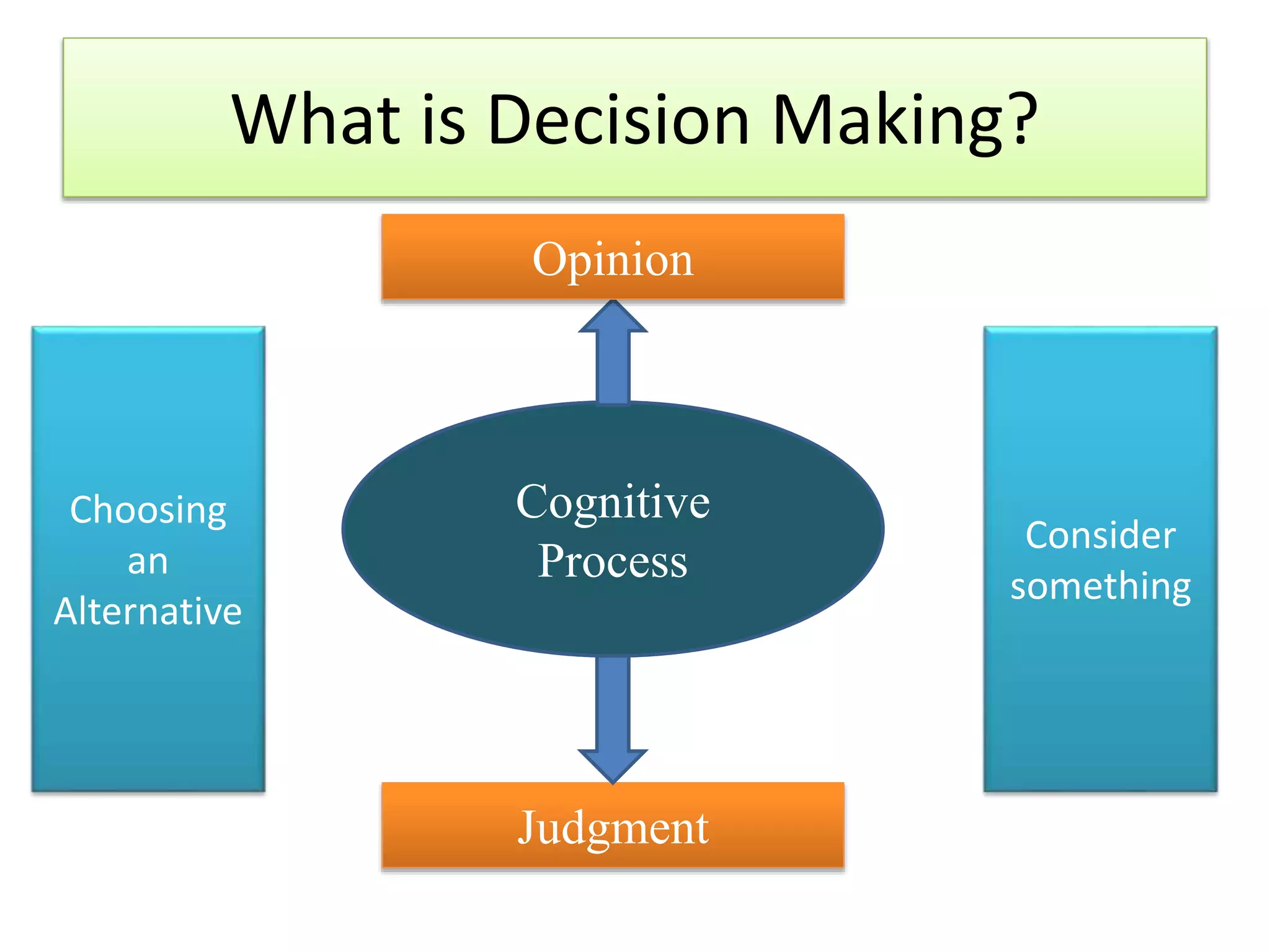
What is Decision Making?
Cognitive
Process
Opinion
Judgment
Choosing
an
Alternative
Consider
something
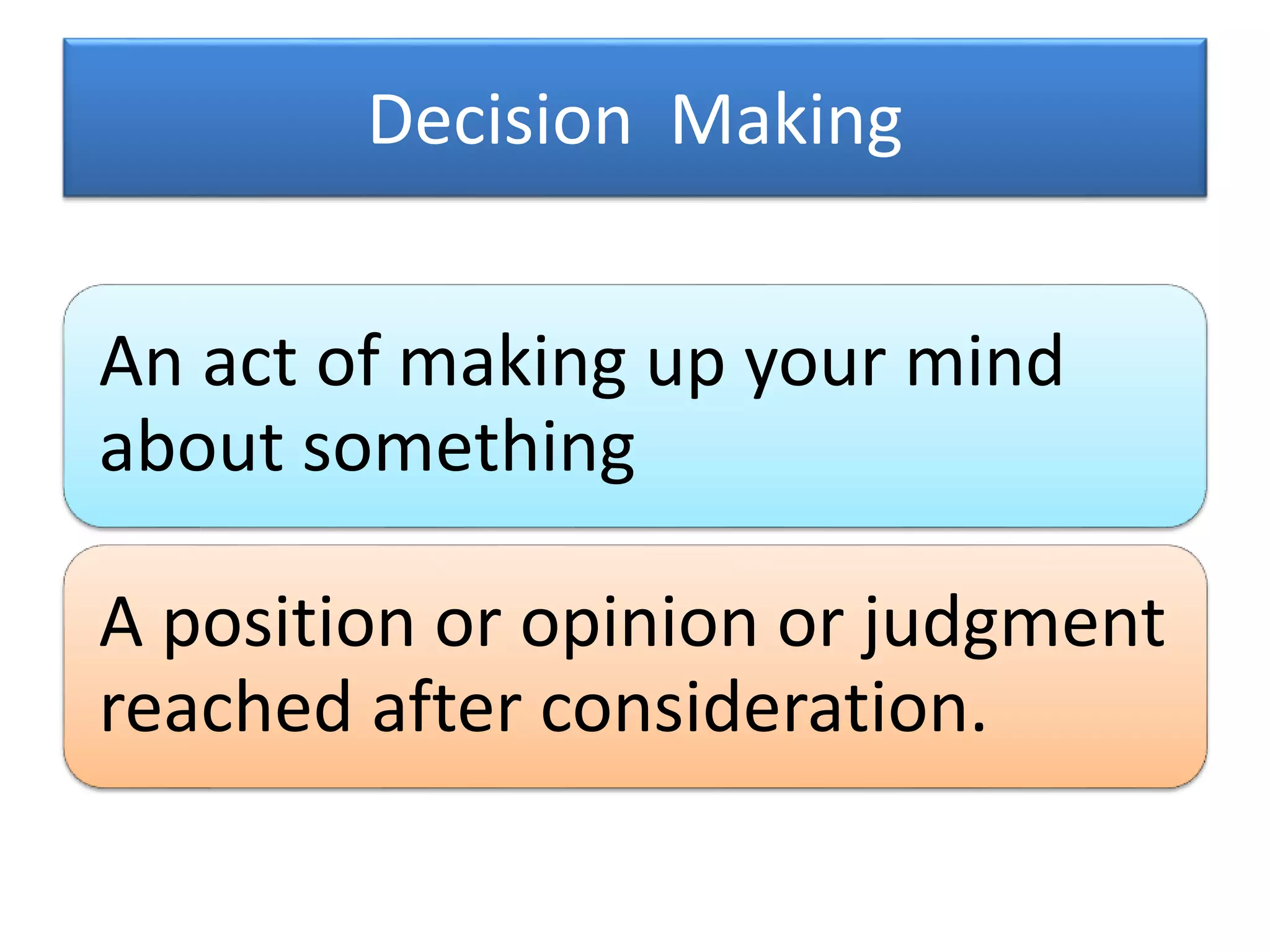
Decision Making
An act of making up your mind
about something
A position or opinion or judgment
reached after consideration.
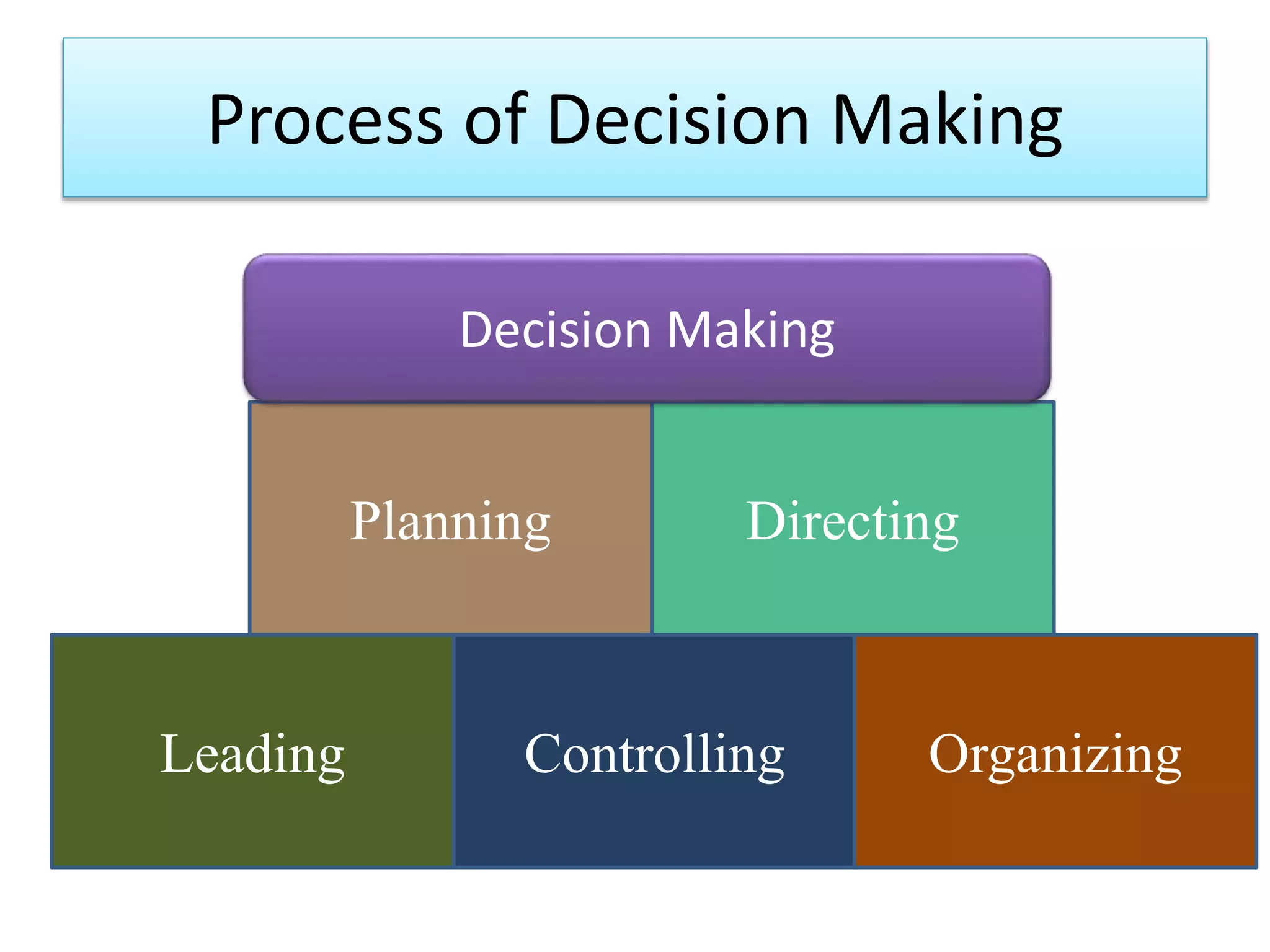
Process of Decision Making
Planning
Controlling OrganizingLeading
Directing
Decision Making
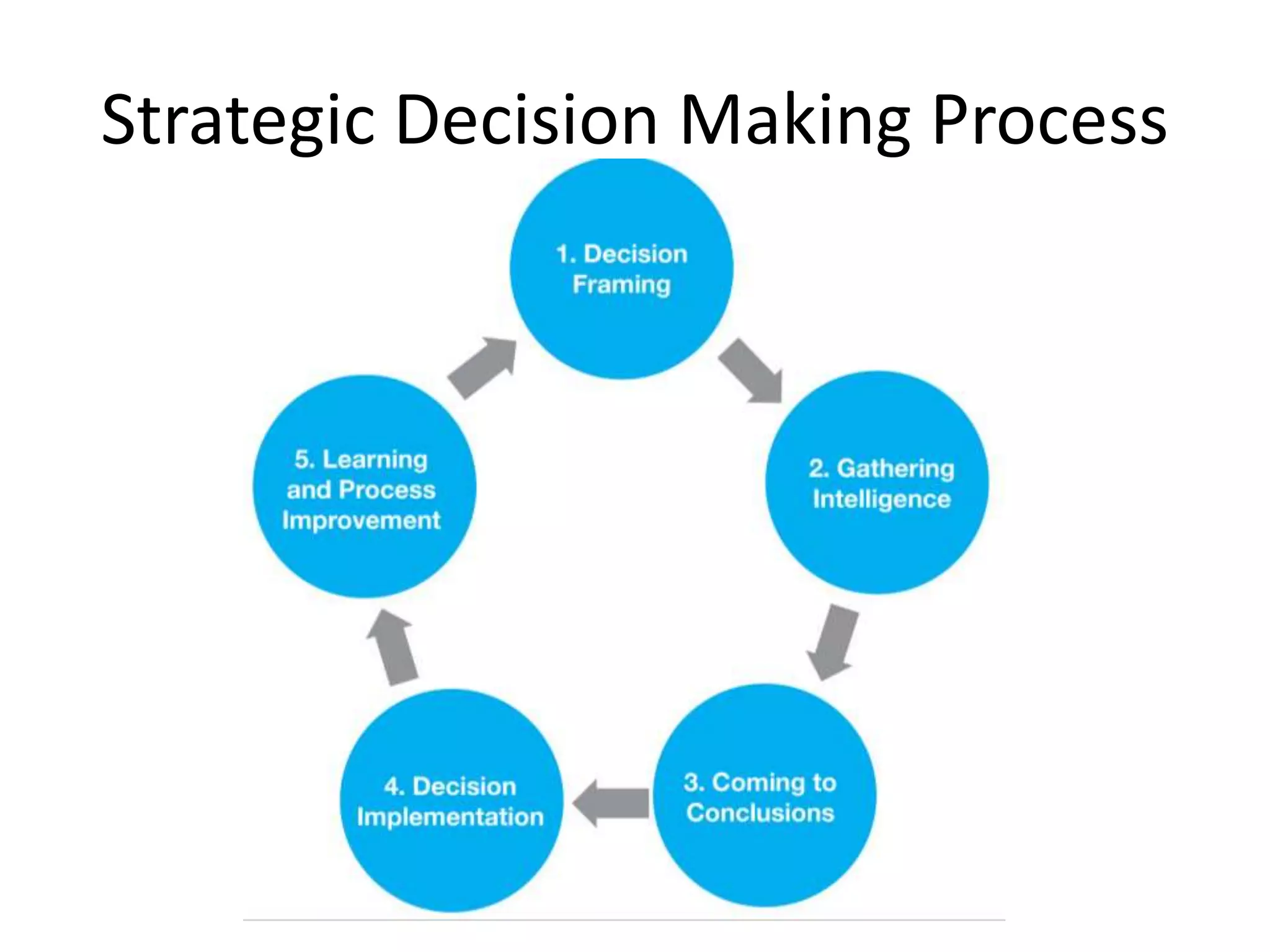
Strategic Decision Making Process
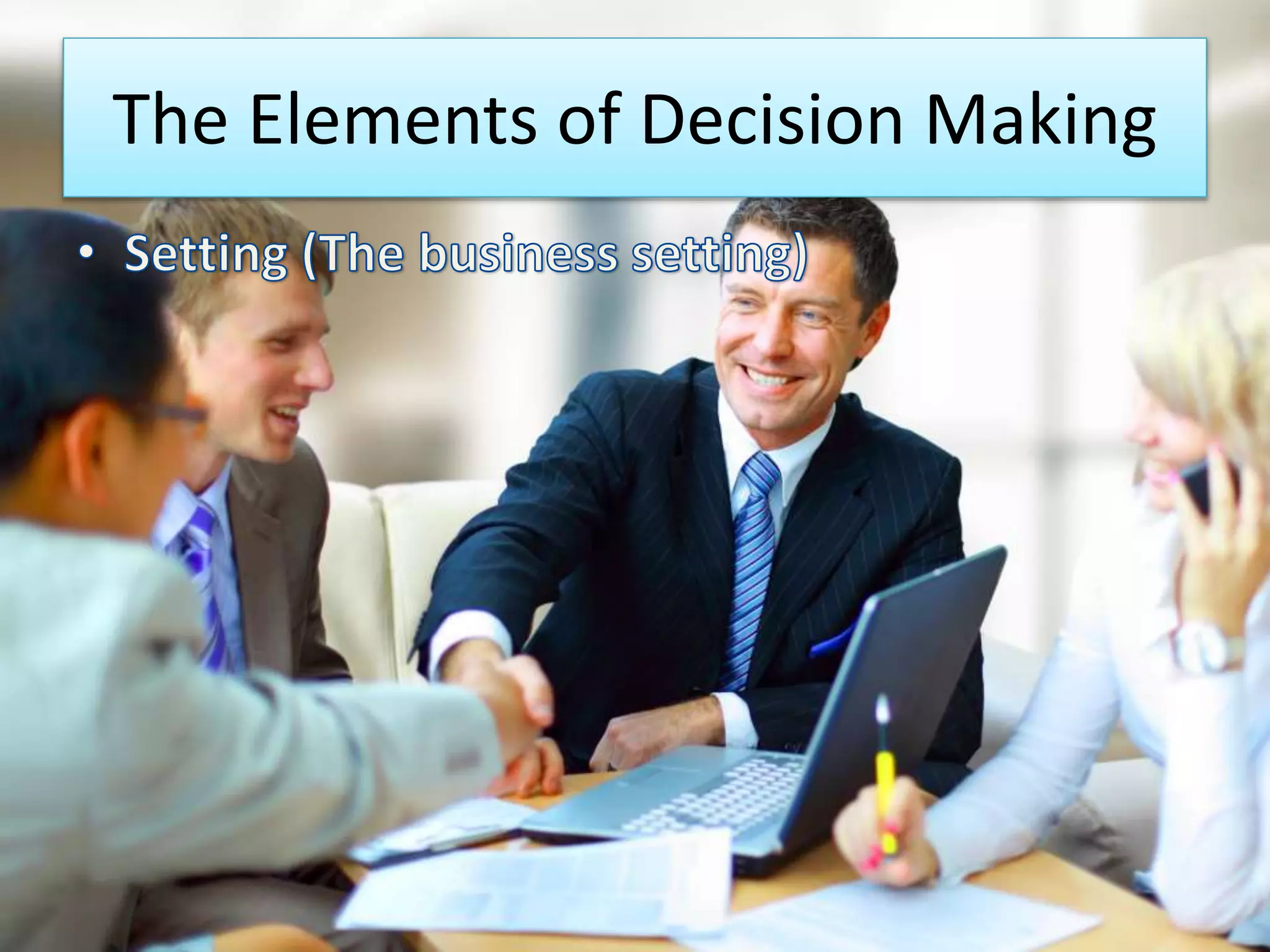
The Elements of Decision Making
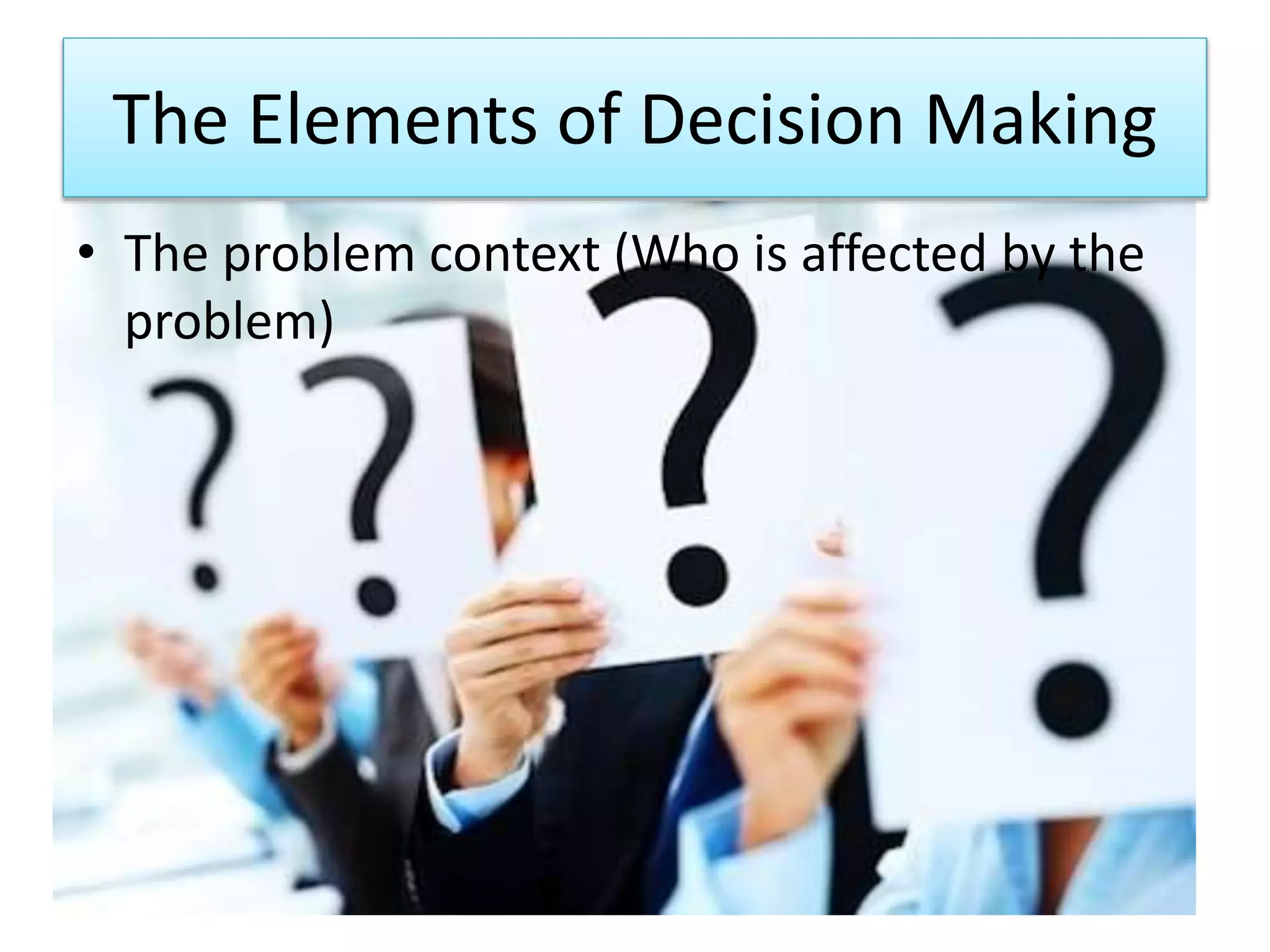
• The problem context (Who is affected by the
problem)
The Elements of Decision Making
• Problem finding and agenda setting
The Elements of Decision Making
• Rationales (the reason for doing or believing
in something)
The Elements of Decision Making
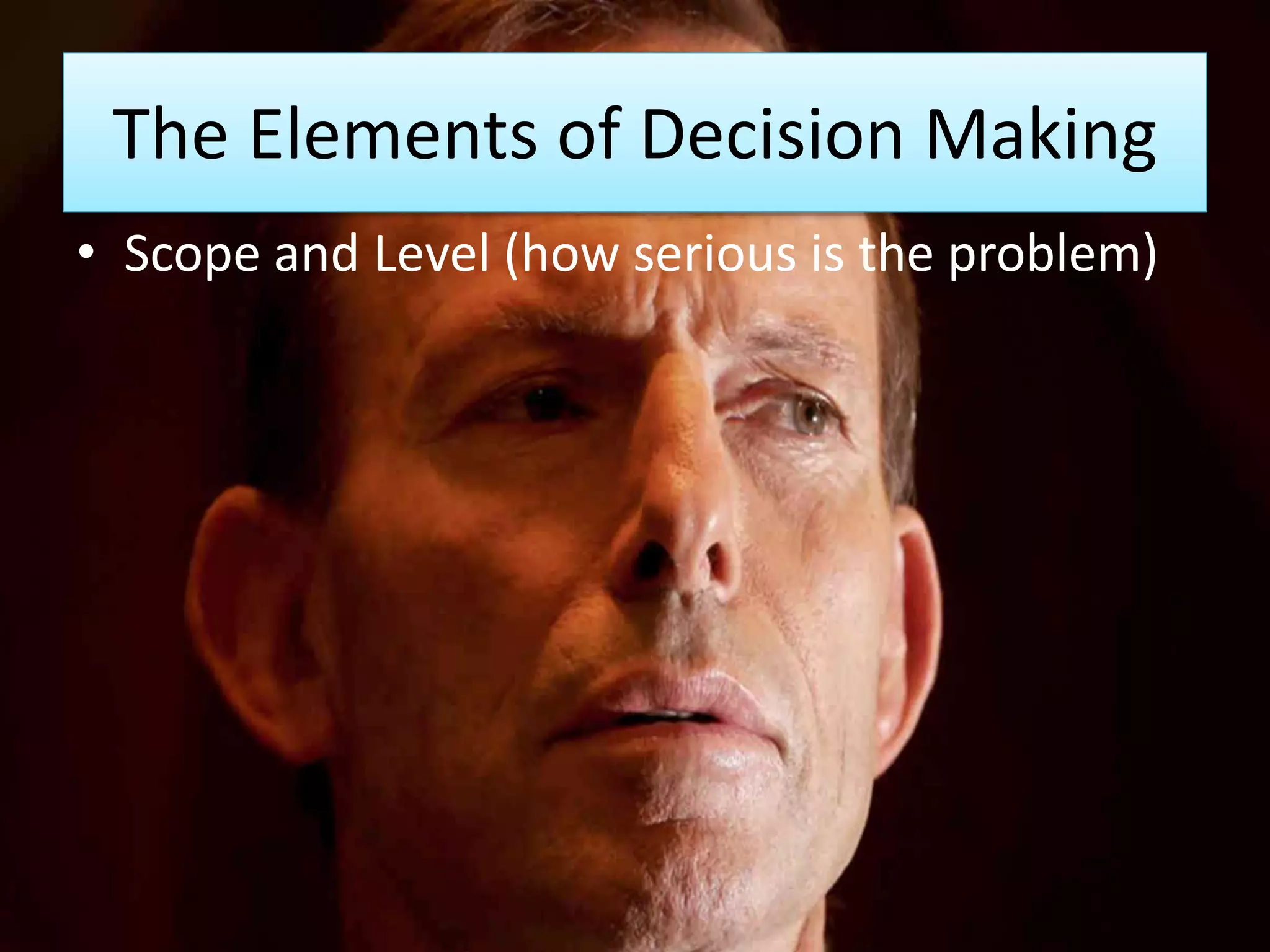
• Scope and Level (how serious is the problem)
The Elements of Decision Making
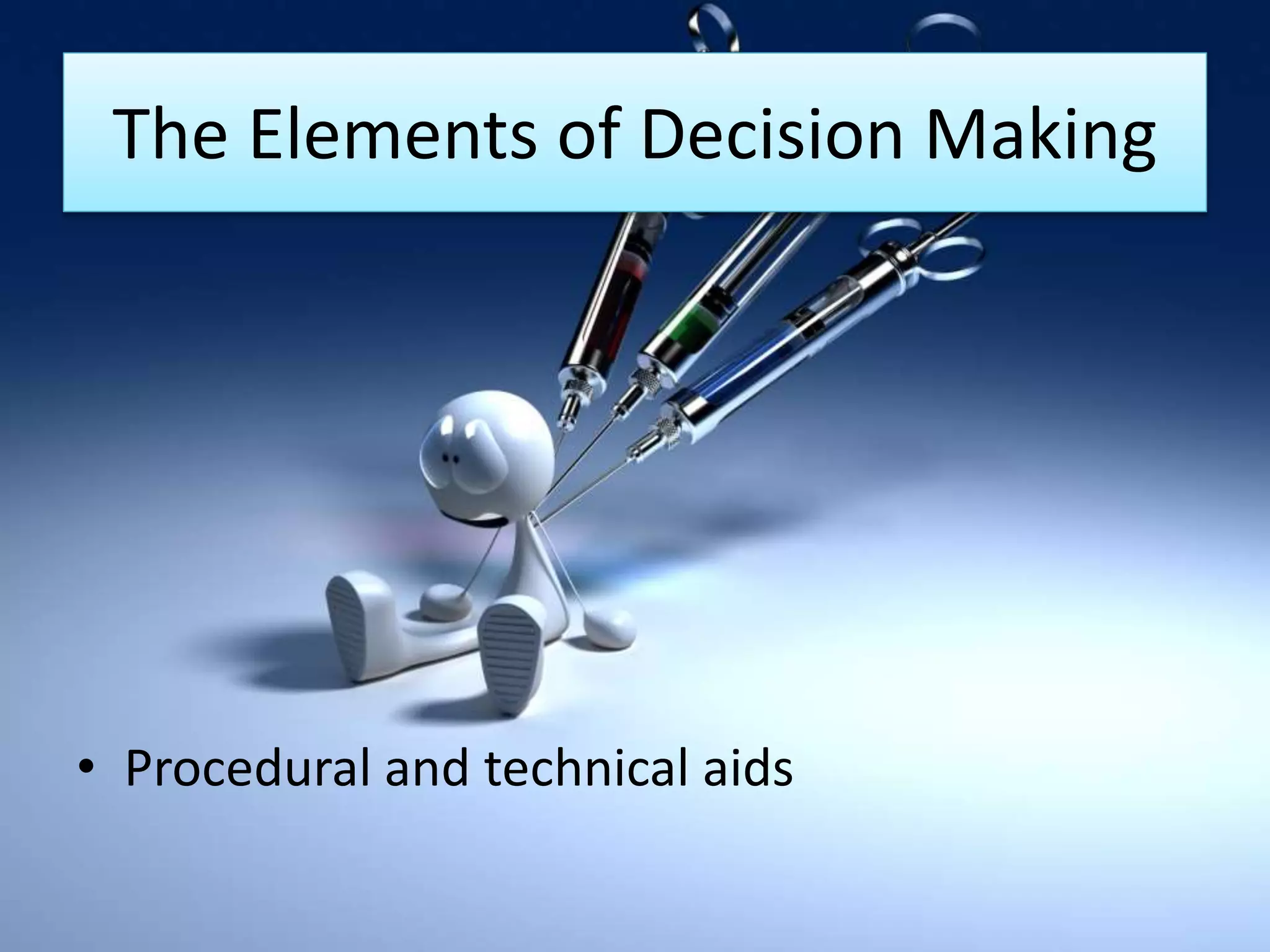
• Procedural and technical aids
The Elements of Decision Making
• Outcome (The result of the decision)
The Elements of Decision Making
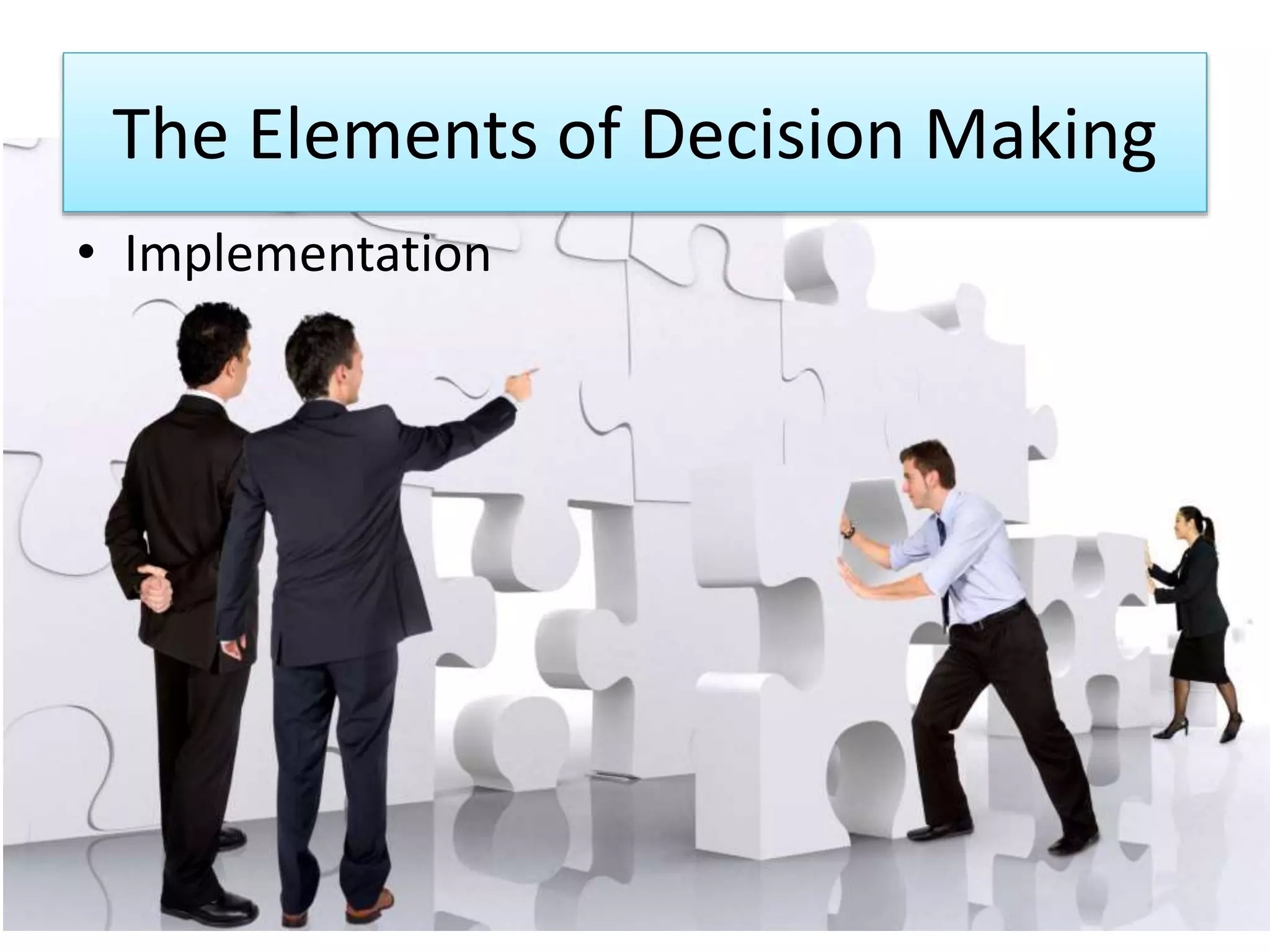
• Implementation
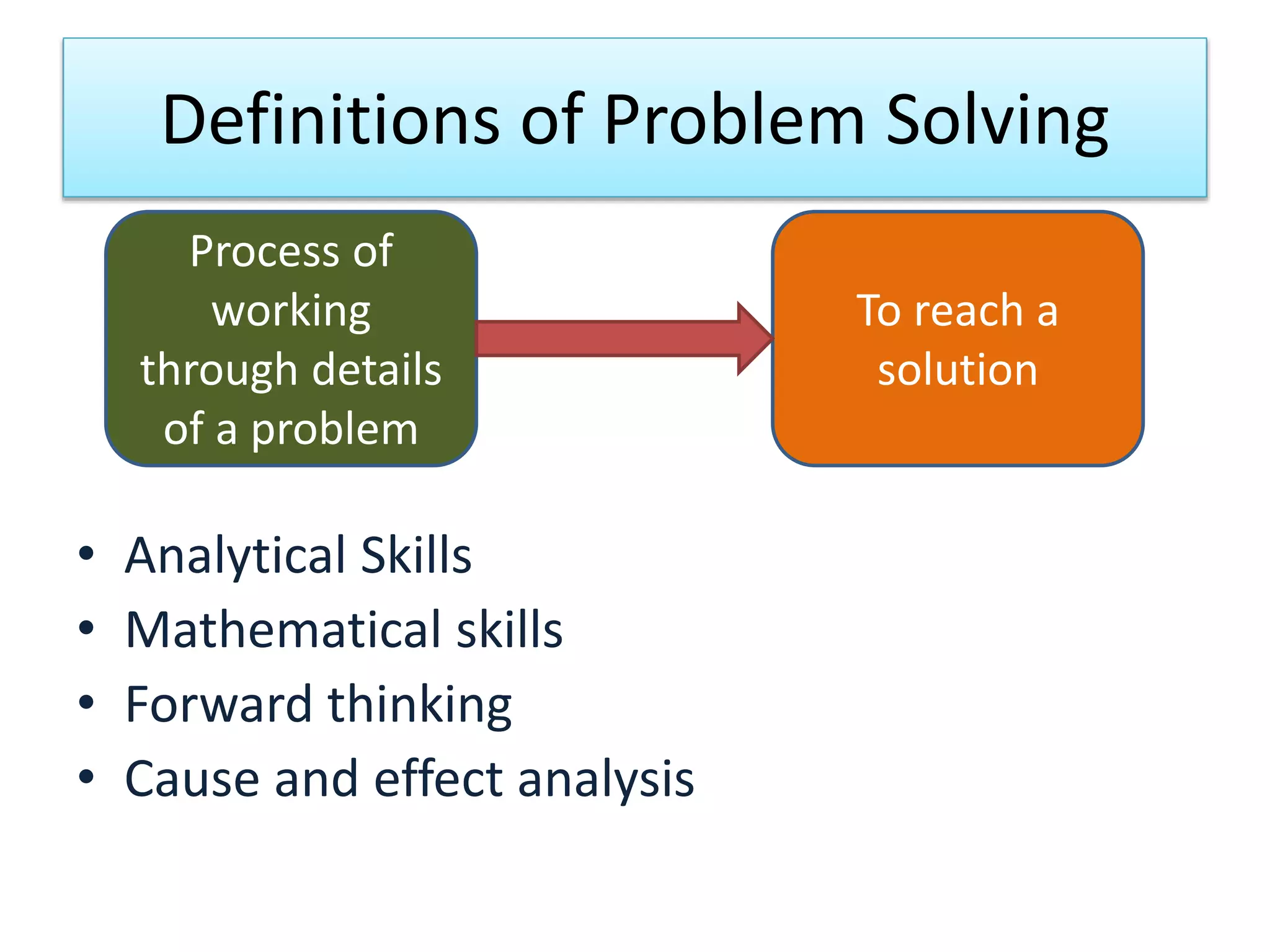
Definitions of Problem Solving
• Analytical Skills
• Mathematical skills
• Forward thinking
• Cause and effect analysis
Process of
working
through details
of a problem
To reach a
solution
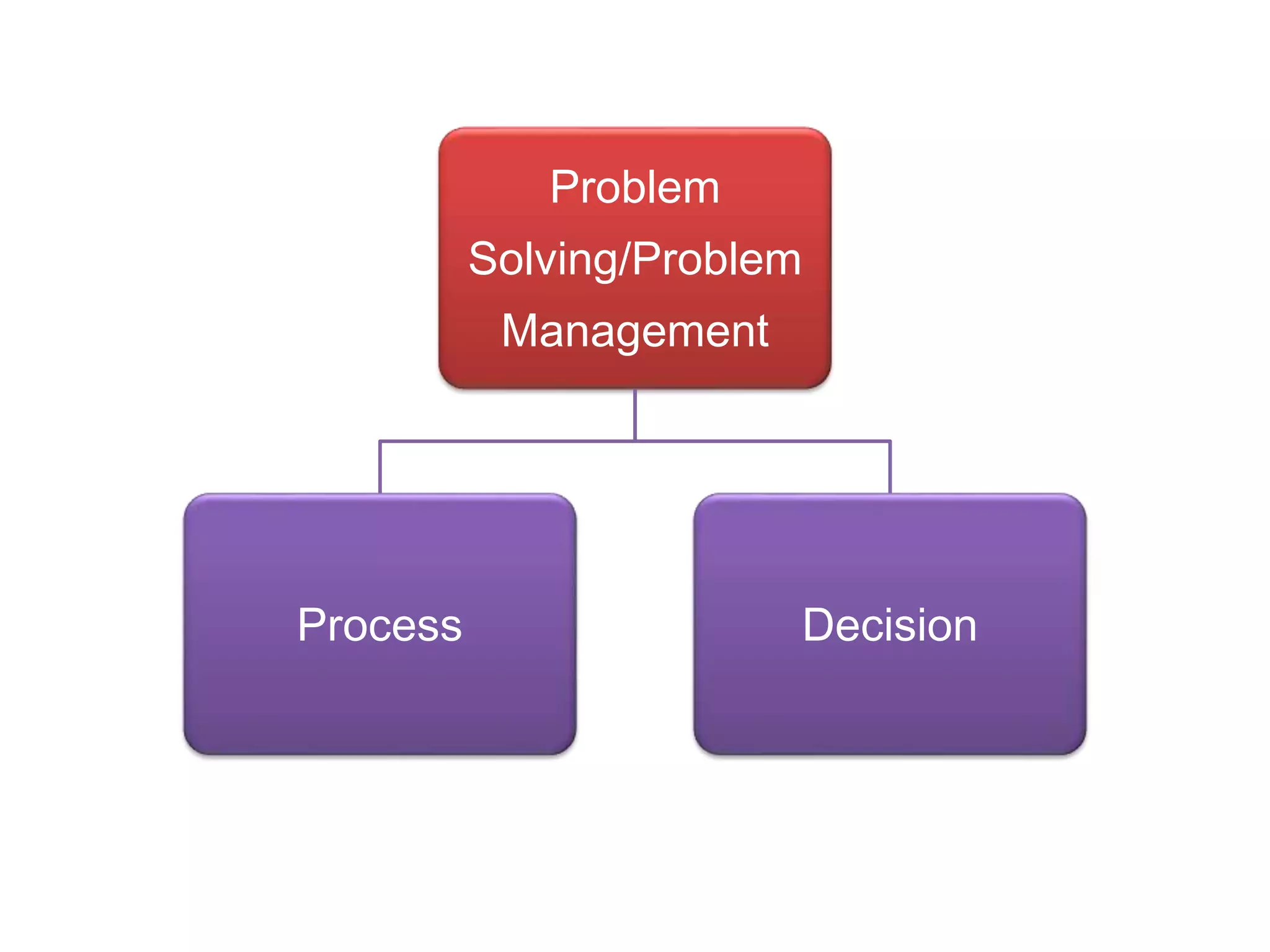
Problem
Solving/Problem
Management
Process Decision
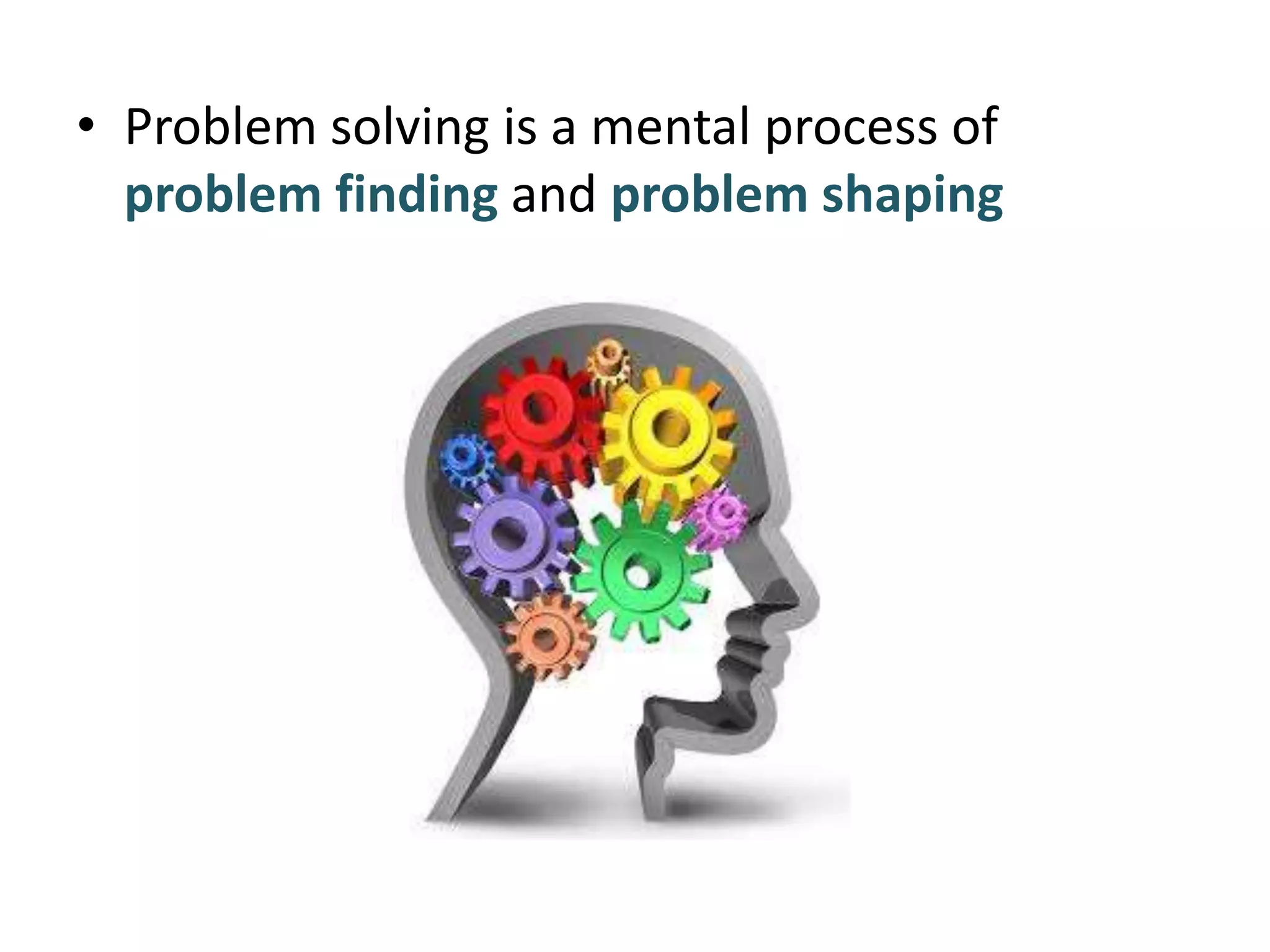
• Problem solving is a mental process of
problem finding and problem shaping
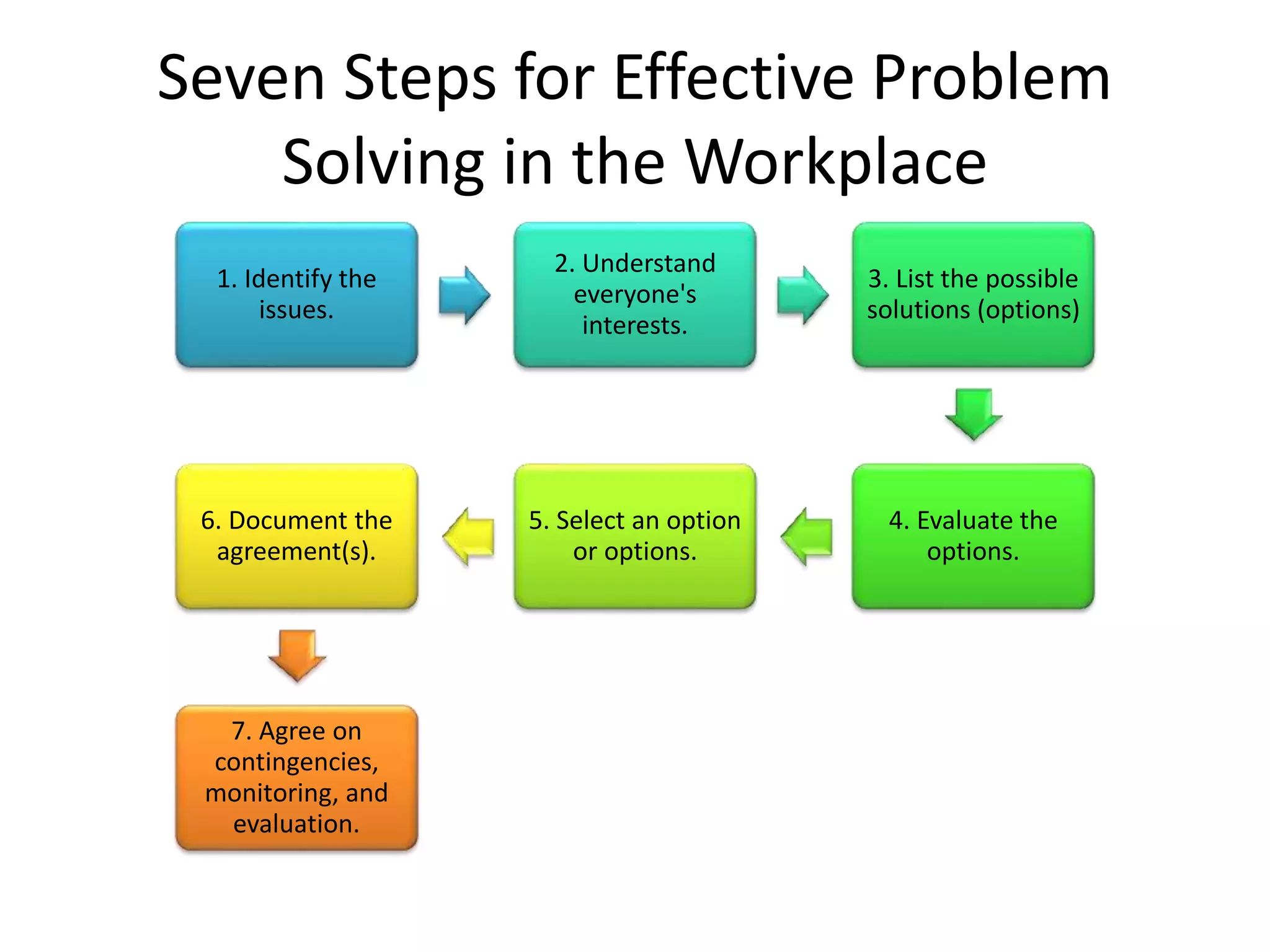
Seven Steps for Effective Problem
Solving in the Workplace
1. Identify the
issues.
2. Understand
everyone's
interests.
3. List the possible
solutions (options)
4. Evaluate the
options.
5. Select an option
or options.
6. Document the
agreement(s).
7. Agree on
contingencies,
monitoring, and
evaluation.
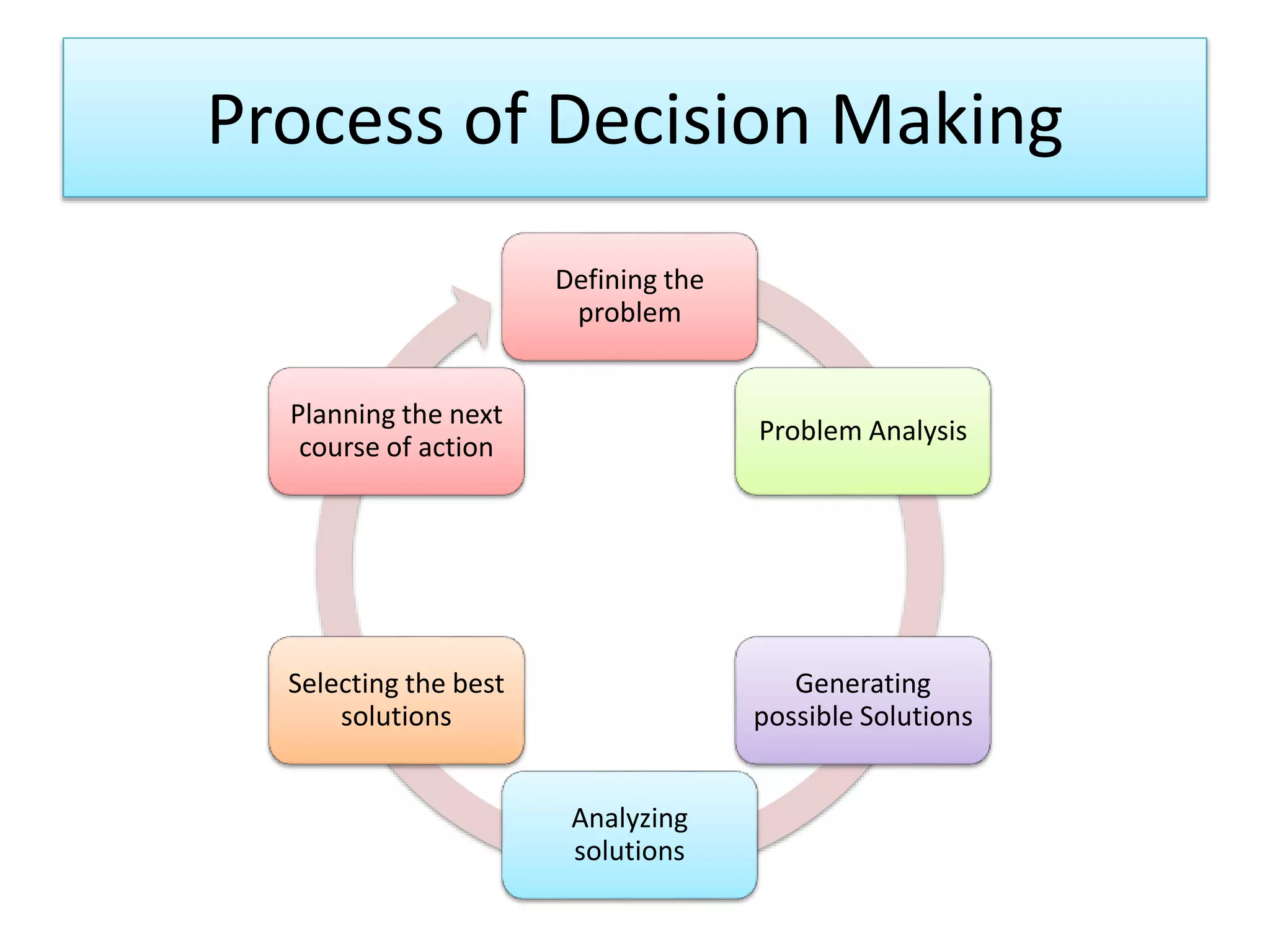
Process of Decision Making
Defining the
problem
Problem Analysis
Generating
possible Solutions
Analyzing
solutions
Selecting the best
solutions
Planning the next
course of action
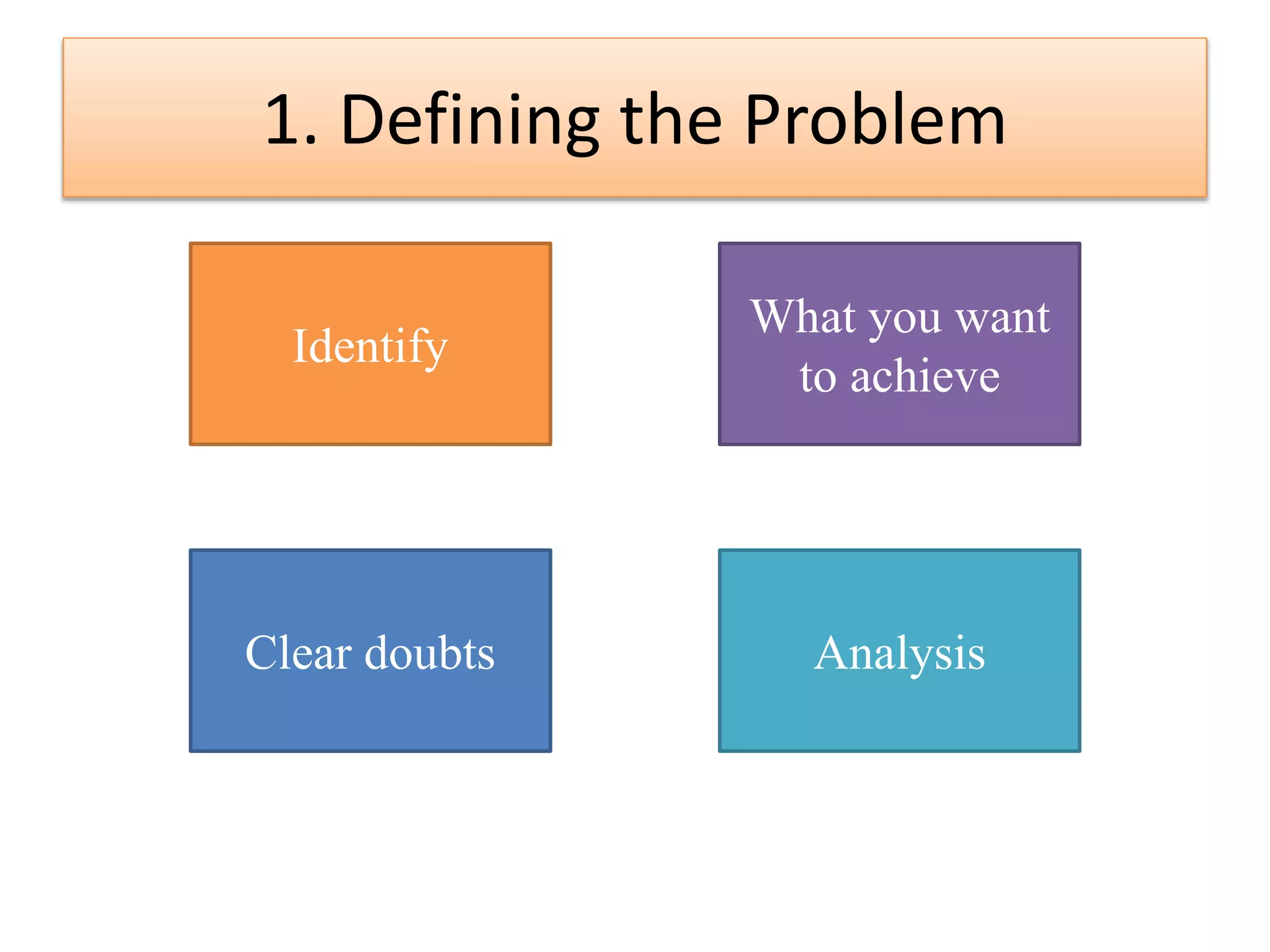
1. Defining the Problem
Identify
Clear doubts
What you want
to achieve
Analysis
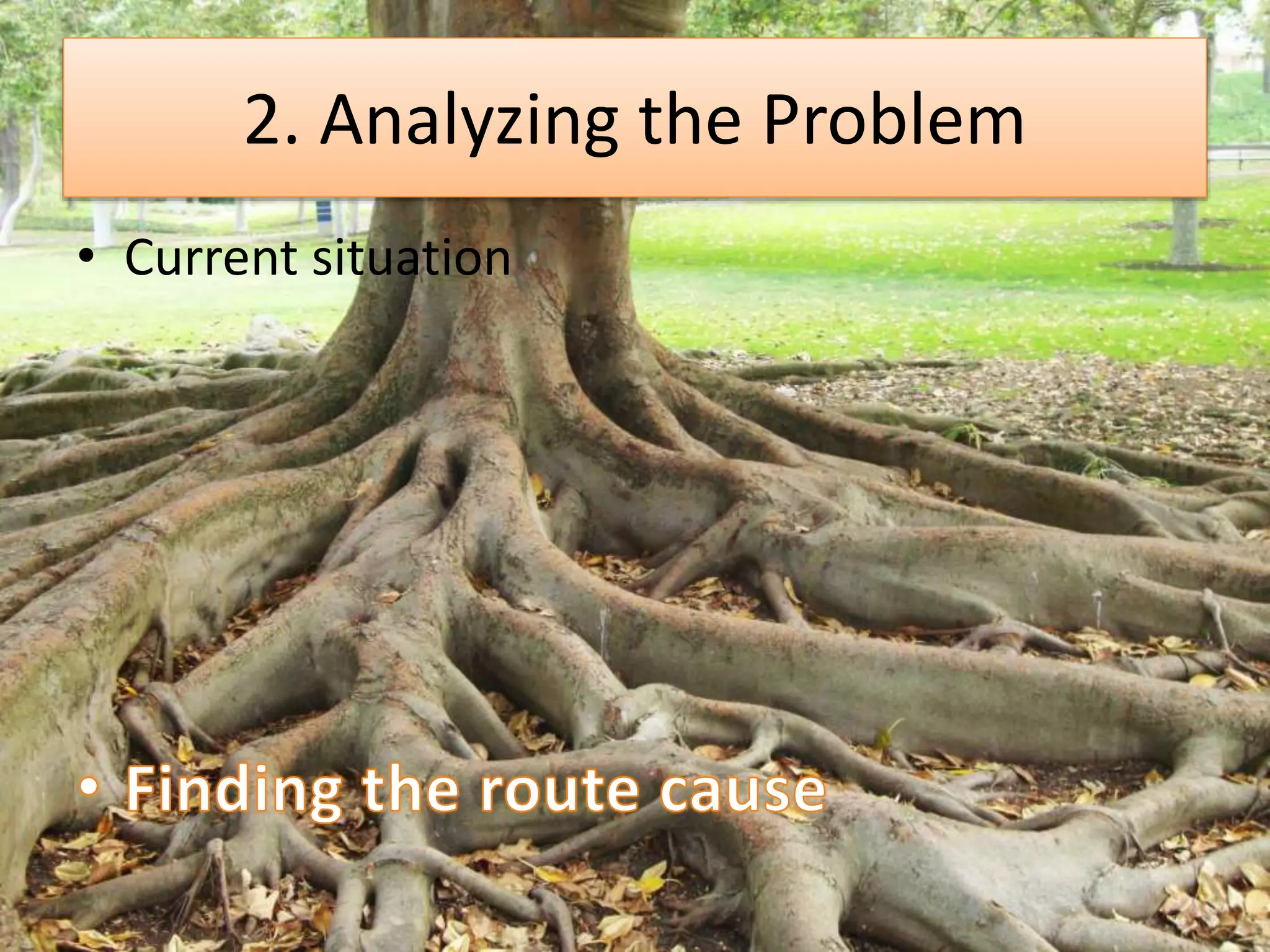
2. Analyzing the Problem
• Current situation
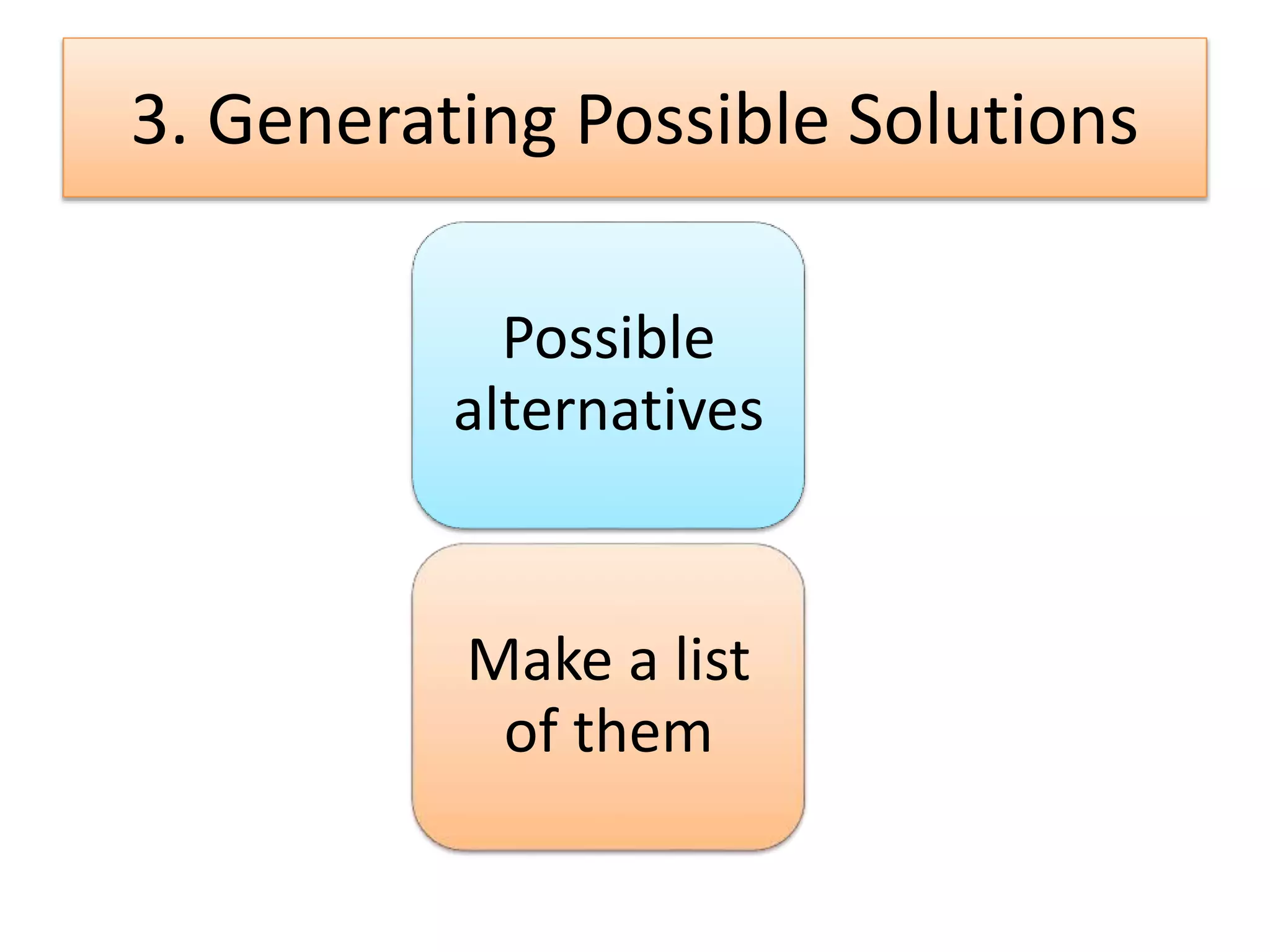
3. Generating Possible Solutions
Possible
alternatives
Make a list
of them
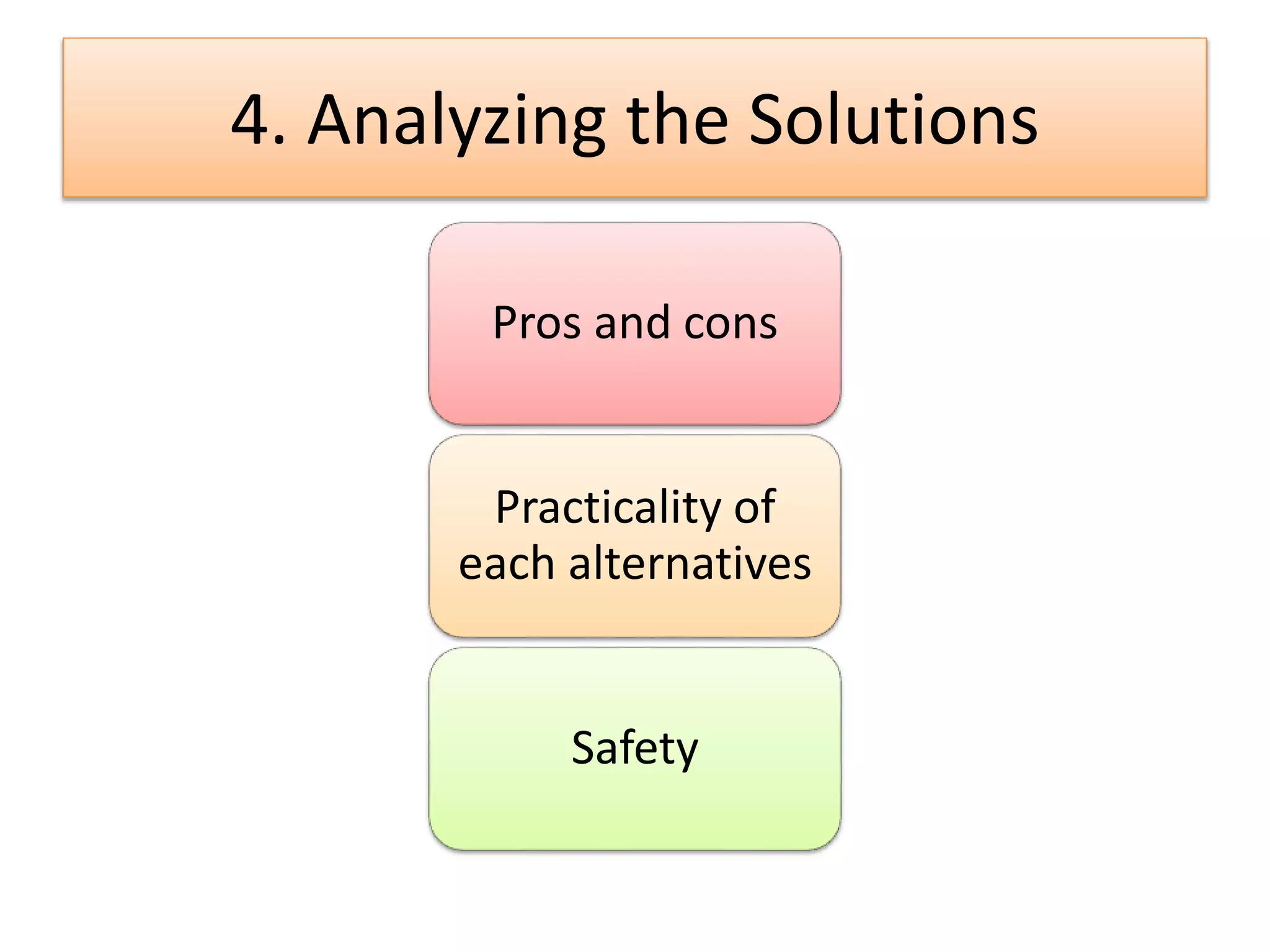
4. Analyzing the Solutions
Pros and cons
Practicality of
each alternatives
Safety
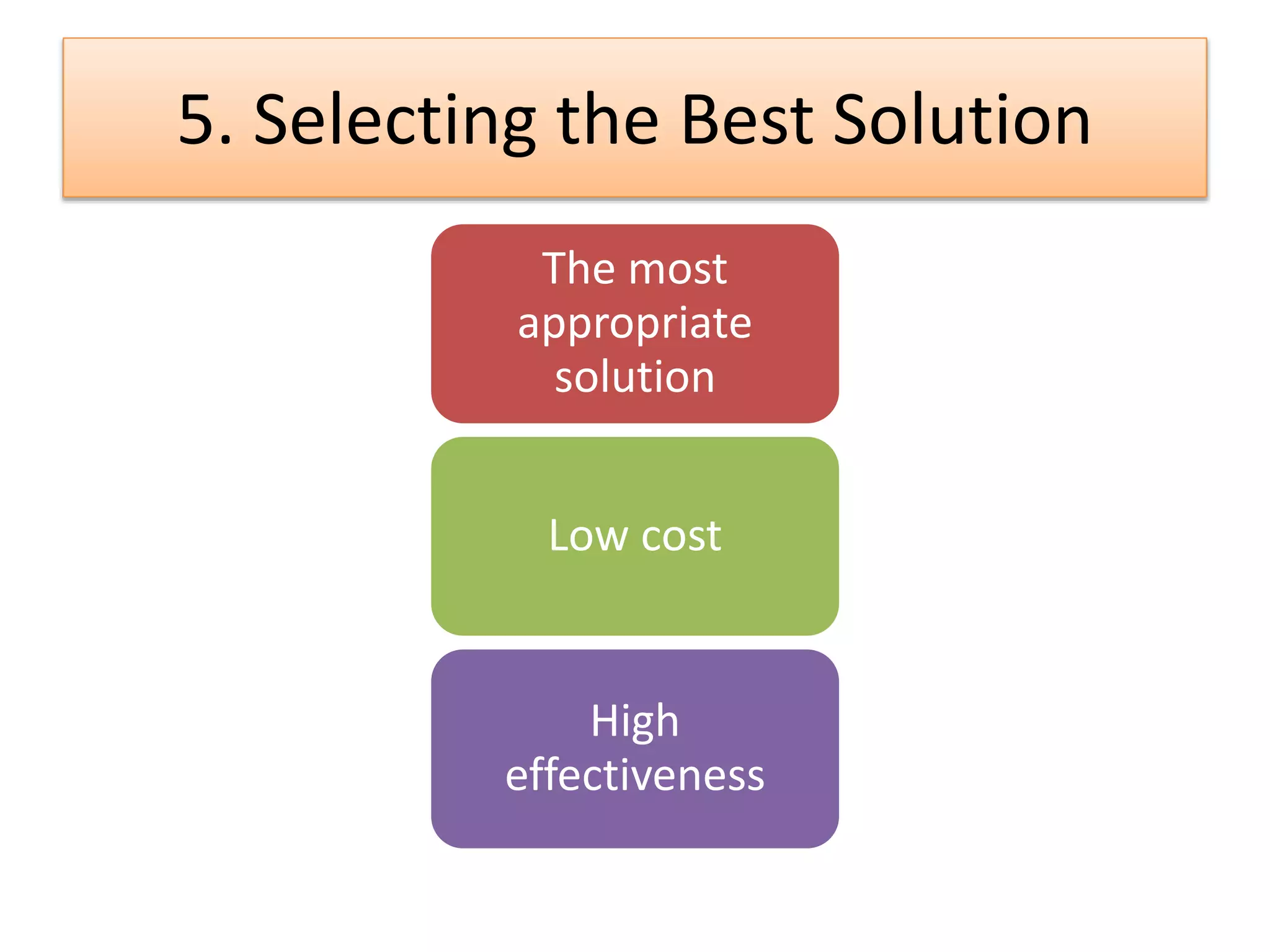
5. Selecting the Best Solution
The most
appropriate
solution
Low cost
High
effectiveness
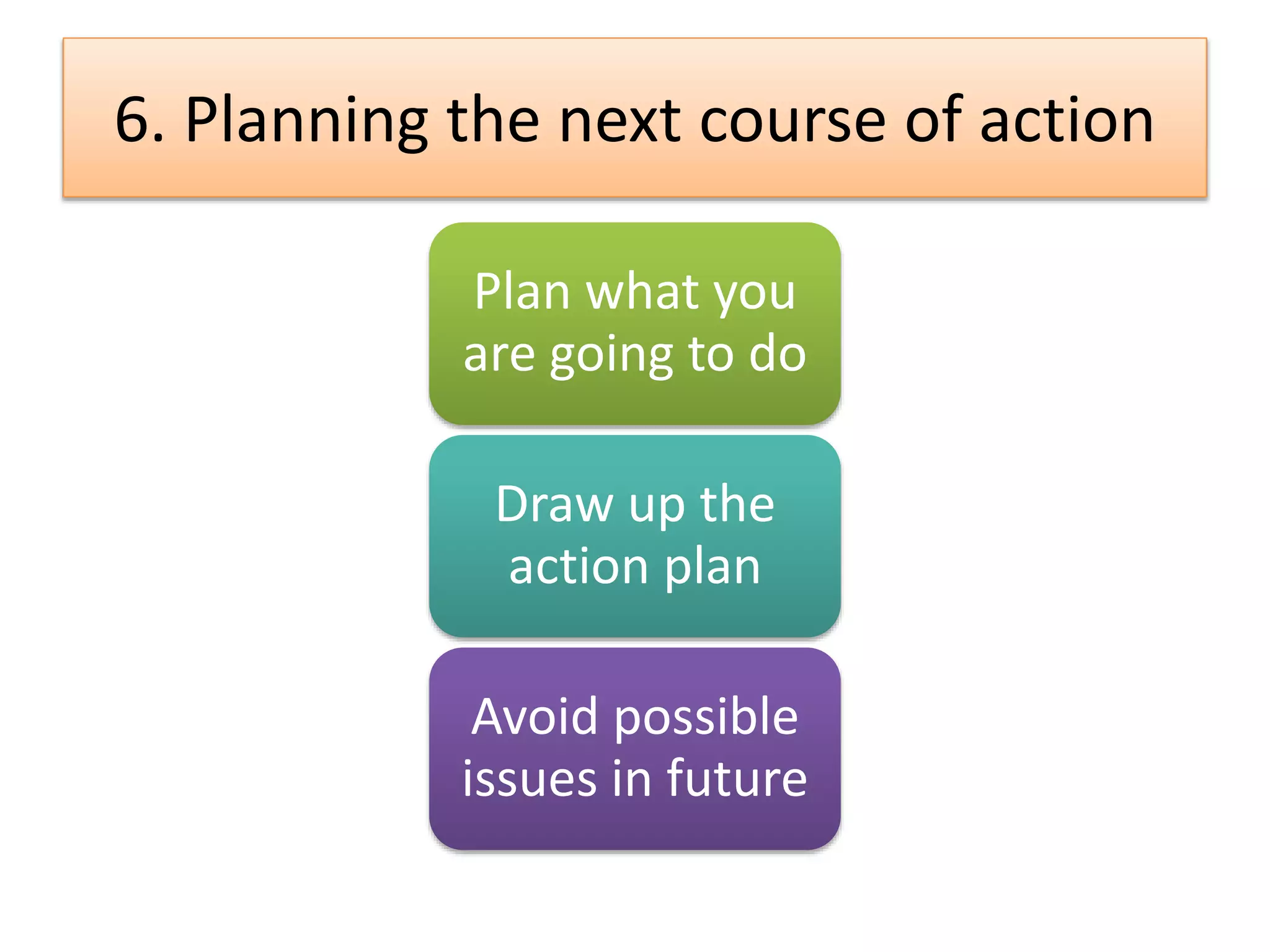
6. Planning the next course of action
Plan what you
are going to do
Draw up the
action plan
Avoid possible
issues in future
Decision making and problem solving

Decision making and problem solving

  • 1.
    Decision Making andProblem Solving Krishantha Jayasundara
  • 2.
    What is DecisionMaking? Cognitive Process Opinion Judgment Choosing an Alternative Consider something
  • 3.
    Decision Making An actof making up your mind about something A position or opinion or judgment reached after consideration.
  • 4.
    Process of DecisionMaking Planning Controlling OrganizingLeading Directing Decision Making
  • 5.
  • 6.
    The Elements ofDecision Making • The problem context (Who is affected by the problem)
  • 7.
    The Elements ofDecision Making • Problem finding and agenda setting
  • 8.
    The Elements ofDecision Making • Rationales (the reason for doing or believing in something)
  • 9.
    The Elements ofDecision Making
  • 10.
    The Elements ofDecision Making • Scope and Level (how serious is the problem)
  • 11.
    The Elements ofDecision Making • Procedural and technical aids
  • 12.
    The Elements ofDecision Making • Outcome (The result of the decision)
  • 13.
    The Elements ofDecision Making • Implementation
  • 14.
    Definitions of ProblemSolving • Analytical Skills • Mathematical skills • Forward thinking • Cause and effect analysis Process of working through details of a problem To reach a solution
  • 15.
  • 16.
    • Problem solvingis a mental process of problem finding and problem shaping
  • 17.
    Seven Steps forEffective Problem Solving in the Workplace 1. Identify the issues. 2. Understand everyone's interests. 3. List the possible solutions (options) 4. Evaluate the options. 5. Select an option or options. 6. Document the agreement(s). 7. Agree on contingencies, monitoring, and evaluation.
  • 18.
    Process of DecisionMaking Defining the problem Problem Analysis Generating possible Solutions Analyzing solutions Selecting the best solutions Planning the next course of action
  • 19.
    1. Defining theProblem Identify Clear doubts What you want to achieve Analysis
  • 20.
    2. Analyzing theProblem • Current situation
  • 21.
    3. Generating PossibleSolutions Possible alternatives Make a list of them
  • 22.
    4. Analyzing theSolutions Pros and cons Practicality of each alternatives Safety
  • 23.
    5. Selecting theBest Solution The most appropriate solution Low cost High effectiveness
  • 24.
    6. Planning thenext course of action Plan what you are going to do Draw up the action plan Avoid possible issues in future