Krishantha Jayasundara
 Induction
 Orientation
 Familiarization
“Induction is a technique
by which new employee is habilitated
in the changed surroundings
and
introduced to the practices, policies, and
procedures of the organization”
-Billimoria-
“Introduction of newly appointed employee to
his job,
to his fellow employees and
to the organization
by providing him relevant information
so that he may not experience any difficulty
in discharging his duties and
responsibilities
efficiently and effectively”
-Strategic Approach to Human Resource Management -
By Tapomoy Deb
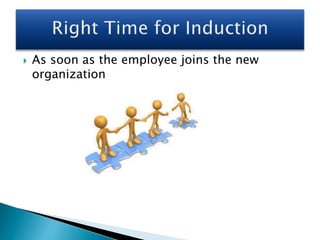
 As soon as the employee joins the new
organization
 Risk of getting fed with wrong information of
the organization and people
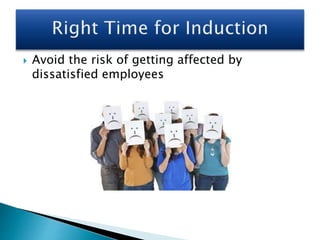
 Avoid the risk of getting affected by
dissatisfied employees
 To avoid frustration, dissatisfaction and
turnover
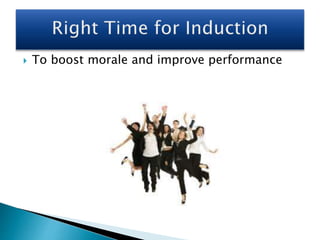
 To boost morale and improve performance
 To reduce fear to work among new
employees.
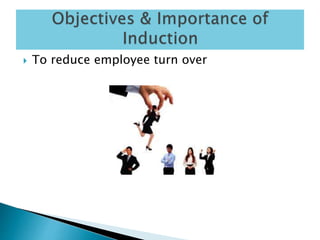
 To reduce employee turn over
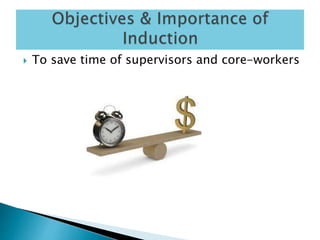
 To save time of supervisors and core-workers
 To develop realistic job expectations.
 To create positive attitudes towards the
employer
 To create job satisfaction
 To bring an agreement between the personal
goals and the organizational goals.
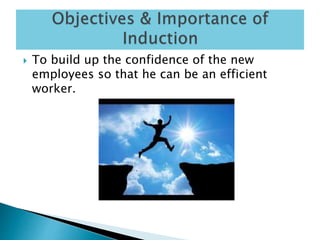
 To build up the confidence of the new
employees so that he can be an efficient
worker.
 To build up the confidence of the new
employees so that he can be an efficient
worker.
 To give information about the organization,
its culture, structure, products, services, rules
and regulations.
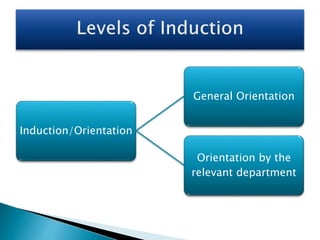
Induction/Orientation
General Orientation
Orientation by the
relevant department
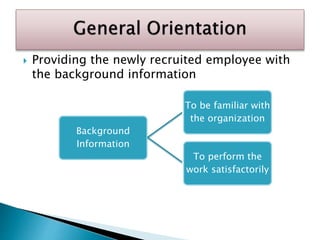
 Providing the newly recruited employee with
the background information
Background
Information
To be familiar with
the organization
To perform the
work satisfactorily
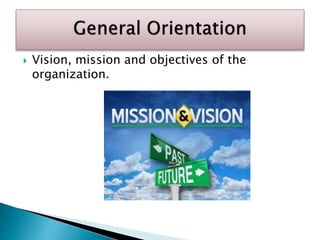
 Vision, mission and objectives of the
organization.
 Company rules, regulations, procedures,
practices and working hours.
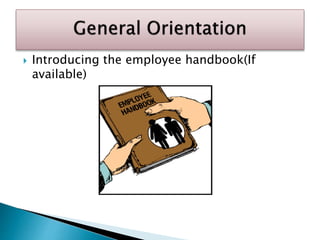
 Introducing the employee handbook(If
available)
 Disciplinary procedures and grievance
procedures
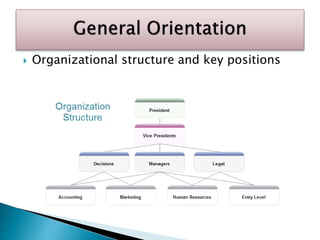
 Organizational structure and key positions
 Benefits of the employees
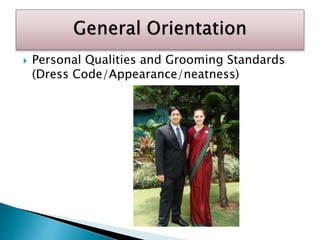
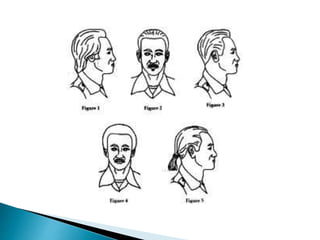
 Personal Qualities and Grooming Standards
(Dress Code/Appearance/neatness)
 Providing the new employee with information
needed for effective and efficient
performance on the job
 Introduction to the work place and job
environment
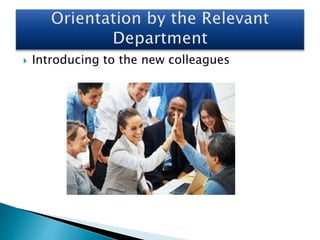
 Introducing to the new colleagues
 Creating “feel at home” mentality
 Initial instructions on the job
 Introducing a mentor
 Providing/briefing on the job description
 Introduction to the immediate supervisor
Training is the act of increasing the knowledge and
skills of an employee for doing a particular job
Edwin.B.Flippo
Training
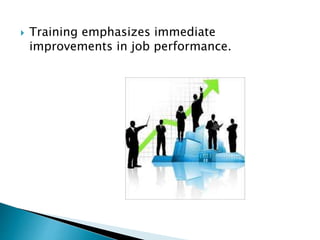
 Training emphasizes immediate
improvements in job performance.
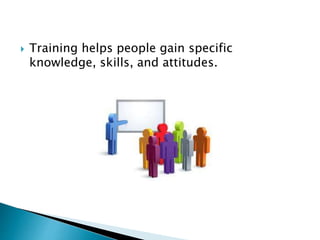
 Training helps people gain specific
knowledge, skills, and attitudes.
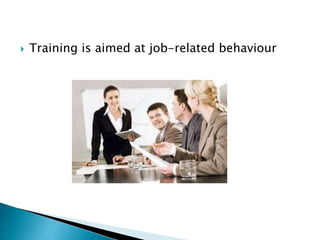
 Training is aimed at job-related behaviour
 Changes in the external environment
1. Technology
2. Legislations
3. Competitiveness
 Changes in the internal environment
1. New processes
2. New procedures
3. Installation of new machines and systems
 Better Performance
 Lesser Learning Time
 Minimum Supervision
 Reduce wastage and improve quality
 Increasing morale of employees
 Facilitate the management (planning,
organizing, leading, and controlling)
 Facilitate the management (planning,
organizing, leading, and controlling)
 Standardization of methods of performing
work
 Standardization of methods of performing
work
 Organizational stability and flexibility
 Motivation through sense of recognition
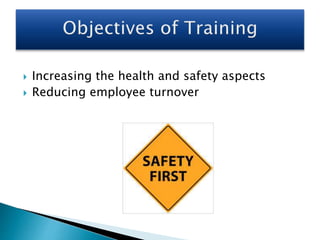
 Increasing the health and safety aspects
 Reducing employee turnover
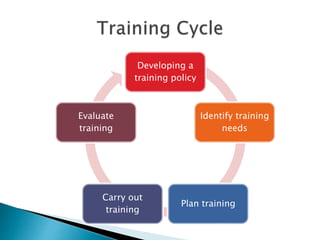
Developing a
training policy
Identify training
needs
Plan training
Carry out
training
Evaluate
training
 Based on the vision and Mission of the
organization.
 Areas focused on/Skills to be improved
 Developing the expected results of the
training
 Identify the skill gap of the employees
 Identify the areas which show low efficiency
and productivity.
 Identify the employees who are with negative
and frustrated feelings
 Plan the content
 Put an attractive title for the training
 Develop broachers, hand bills and other
materials
 Plan the date, time and place of training
 Refreshments and meals
 Evaluation methods
 Lecturers and resource persons.
 The most crucial part of training.
 Make sure that the training centre is free
from disturbances such as noises
 Ensure that electricity is stable during the
delivery of training.
 Ensure the participation of the target group
until the end of the training.
 To see whether employees have learned
something new
 To see whether there is a change in their
attitudes
 To see the overall success of the training
 What do you mean by the term “training and
development”?
 What are the objectives of induction?
 Briefly mention the benefits of training for an
organization
 What are the objectives of training?
 Explain the “training cycle” with examples
2 induction and training

2 induction and training

  • 1.
  • 2.
  • 3.
    “Induction is atechnique by which new employee is habilitated in the changed surroundings and introduced to the practices, policies, and procedures of the organization” -Billimoria-
  • 4.
    “Introduction of newlyappointed employee to his job, to his fellow employees and to the organization by providing him relevant information so that he may not experience any difficulty in discharging his duties and responsibilities efficiently and effectively” -Strategic Approach to Human Resource Management - By Tapomoy Deb
  • 5.
     As soonas the employee joins the new organization
  • 6.
     Risk ofgetting fed with wrong information of the organization and people
  • 7.
     Avoid therisk of getting affected by dissatisfied employees
  • 8.
     To avoidfrustration, dissatisfaction and turnover
  • 9.
     To boostmorale and improve performance
  • 10.
     To reducefear to work among new employees.
  • 11.
     To reduceemployee turn over
  • 12.
     To savetime of supervisors and core-workers
  • 13.
     To developrealistic job expectations.
  • 14.
     To createpositive attitudes towards the employer
  • 15.
     To createjob satisfaction
  • 16.
     To bringan agreement between the personal goals and the organizational goals.
  • 17.
     To buildup the confidence of the new employees so that he can be an efficient worker.
  • 18.
     To buildup the confidence of the new employees so that he can be an efficient worker.
  • 19.
     To giveinformation about the organization, its culture, structure, products, services, rules and regulations.
  • 20.
  • 21.
     Providing thenewly recruited employee with the background information Background Information To be familiar with the organization To perform the work satisfactorily
  • 22.
     Vision, missionand objectives of the organization.
  • 23.
     Company rules,regulations, procedures, practices and working hours.
  • 24.
     Introducing theemployee handbook(If available)
  • 25.
     Disciplinary proceduresand grievance procedures
  • 26.
  • 27.
     Benefits ofthe employees
  • 28.
     Personal Qualitiesand Grooming Standards (Dress Code/Appearance/neatness)
  • 31.
     Providing thenew employee with information needed for effective and efficient performance on the job
  • 32.
     Introduction tothe work place and job environment
  • 33.
     Introducing tothe new colleagues
  • 34.
     Creating “feelat home” mentality  Initial instructions on the job
  • 35.
     Introducing amentor  Providing/briefing on the job description  Introduction to the immediate supervisor
  • 37.
    Training is theact of increasing the knowledge and skills of an employee for doing a particular job Edwin.B.Flippo Training
  • 38.
     Training emphasizesimmediate improvements in job performance.
  • 39.
     Training helpspeople gain specific knowledge, skills, and attitudes.
  • 40.
     Training isaimed at job-related behaviour
  • 41.
     Changes inthe external environment 1. Technology 2. Legislations 3. Competitiveness
  • 42.
     Changes inthe internal environment 1. New processes 2. New procedures 3. Installation of new machines and systems
  • 43.
     Better Performance Lesser Learning Time
  • 44.
     Minimum Supervision Reduce wastage and improve quality
  • 45.
     Increasing moraleof employees  Facilitate the management (planning, organizing, leading, and controlling)
  • 46.
     Facilitate themanagement (planning, organizing, leading, and controlling)  Standardization of methods of performing work
  • 47.
     Standardization ofmethods of performing work  Organizational stability and flexibility
  • 48.
     Organizational stabilityand flexibility  Motivation through sense of recognition
  • 49.
     Increasing thehealth and safety aspects  Reducing employee turnover
  • 50.
    Developing a training policy Identifytraining needs Plan training Carry out training Evaluate training
  • 51.
     Based onthe vision and Mission of the organization.  Areas focused on/Skills to be improved  Developing the expected results of the training
  • 52.
     Identify theskill gap of the employees  Identify the areas which show low efficiency and productivity.  Identify the employees who are with negative and frustrated feelings
  • 53.
     Plan thecontent  Put an attractive title for the training  Develop broachers, hand bills and other materials  Plan the date, time and place of training  Refreshments and meals  Evaluation methods  Lecturers and resource persons.
  • 54.
     The mostcrucial part of training.  Make sure that the training centre is free from disturbances such as noises  Ensure that electricity is stable during the delivery of training.  Ensure the participation of the target group until the end of the training.
  • 55.
     To seewhether employees have learned something new  To see whether there is a change in their attitudes  To see the overall success of the training
  • 56.
     What doyou mean by the term “training and development”?
  • 57.
     What arethe objectives of induction?
  • 58.
     Briefly mentionthe benefits of training for an organization
  • 59.
     What arethe objectives of training?
  • 60.
     Explain the“training cycle” with examples