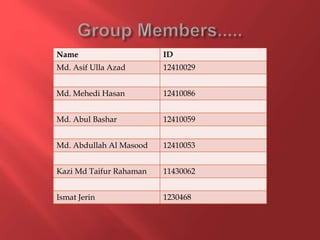
Name ID
Md. Asif Ulla Azad 12410029
Md. Mehedi Hasan 12410086
Md. Abul Bashar 12410059
Md. Abdullah Al Masood 12410053
Kazi Md Taifur Rahaman 11430062
Ismat Jerin 1230468
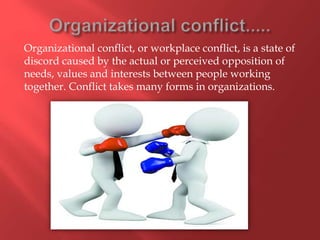
Organizational conflict, or workplace conflict, is a state of
discord caused by the actual or perceived opposition of
needs, values and interests between people working
together. Conflict takes many forms in organizations.
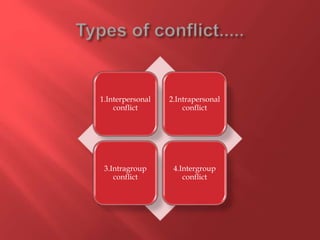
1.Interpersonal
conflict
2.Intrapersonal
conflict
3.Intragroup
conflict
4.Intergroup
conflict
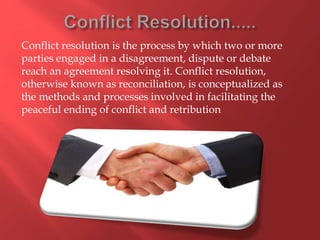
Conflict resolution is the process by which two or more
parties engaged in a disagreement, dispute or debate
reach an agreement resolving it. Conflict resolution,
otherwise known as reconciliation, is conceptualized as
the methods and processes involved in facilitating the
peaceful ending of conflict and retribution
Conflict, arguments, and change are natural parts of our
lives, as well as the lives of every agency, organization,
and nation.
Conflict resolution is a way for two or more parties to find
a peaceful solution to a disagreement among them. The
disagreement may be personal, financial, political, or
emotional.
When a dispute arises, often the best course of action
is negotiation to resolve the disagreement.
The goals of negotiation are:
Ø To produce a solution that all parties can
agree
Ø To work as quickly as possible to find this
solution
Ø To improve, not hurt, the relationship
between the groups in conflict
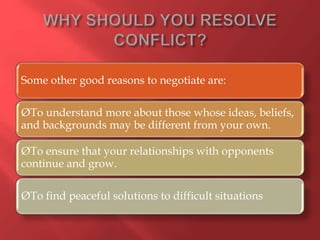
Some other good reasons to negotiate are:
ØTo understand more about those whose ideas, beliefs,
and backgrounds may be different from your own.
ØTo ensure that your relationships with opponents
continue and grow.
ØTo find peaceful solutions to difficult situations
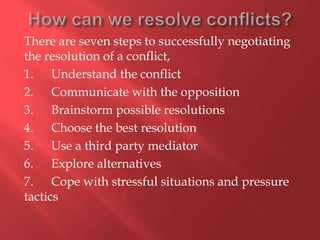
There are seven steps to successfully negotiating
the resolution of a conflict,
1. Understand the conflict
2. Communicate with the opposition
3. Brainstorm possible resolutions
4. Choose the best resolution
5. Use a third party mediator
6. Explore alternatives
7. Cope with stressful situations and pressure
tactics
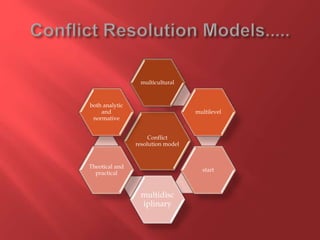
Conflict
resolution model
multicultural
multilevel
start
multidisc
iplinary
Theotical and
practical
both analytic
and
normative
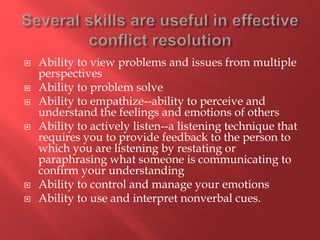
 Ability to view problems and issues from multiple
perspectives
 Ability to problem solve
 Ability to empathize--ability to perceive and
understand the feelings and emotions of others
 Ability to actively listen--a listening technique that
requires you to provide feedback to the person to
which you are listening by restating or
paraphrasing what someone is communicating to
confirm your understanding
 Ability to control and manage your emotions
 Ability to use and interpret nonverbal cues.
Wars may occur between warring parties who contest an
incompatibility. The nature of an incompatibility can be
territorial or governmental, but a warring party must be a
"government of a state or any opposition organization or
alliance of organizations that uses armed force to promote
its position in the incompatibility in an intrastate or an
interstate armed conflict
Conflict Resolution Throughout life people should consider
developing integrated conflict management systems to
prevent and resolve conflict and provide practical guidelines
for designing and implementing such systems. The principles
identified in this document can be used to manage external
conflict with customers, clients and the public. Better
understanding of people's personality types is the first step in
resolving conflict. Group participation is another area that
deserves attention.
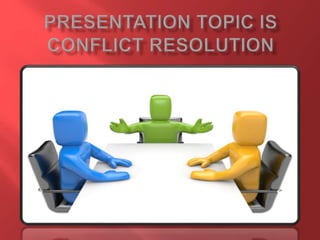
Conflict resolution

Conflict resolution

  • 2.
    Name ID Md. AsifUlla Azad 12410029 Md. Mehedi Hasan 12410086 Md. Abul Bashar 12410059 Md. Abdullah Al Masood 12410053 Kazi Md Taifur Rahaman 11430062 Ismat Jerin 1230468
  • 4.
    Organizational conflict, orworkplace conflict, is a state of discord caused by the actual or perceived opposition of needs, values and interests between people working together. Conflict takes many forms in organizations.
  • 5.
  • 6.
    Conflict resolution isthe process by which two or more parties engaged in a disagreement, dispute or debate reach an agreement resolving it. Conflict resolution, otherwise known as reconciliation, is conceptualized as the methods and processes involved in facilitating the peaceful ending of conflict and retribution
  • 8.
    Conflict, arguments, andchange are natural parts of our lives, as well as the lives of every agency, organization, and nation. Conflict resolution is a way for two or more parties to find a peaceful solution to a disagreement among them. The disagreement may be personal, financial, political, or emotional.
  • 9.
    When a disputearises, often the best course of action is negotiation to resolve the disagreement. The goals of negotiation are: Ø To produce a solution that all parties can agree Ø To work as quickly as possible to find this solution Ø To improve, not hurt, the relationship between the groups in conflict
  • 10.
    Some other goodreasons to negotiate are: ØTo understand more about those whose ideas, beliefs, and backgrounds may be different from your own. ØTo ensure that your relationships with opponents continue and grow. ØTo find peaceful solutions to difficult situations
  • 11.
    There are sevensteps to successfully negotiating the resolution of a conflict, 1. Understand the conflict 2. Communicate with the opposition 3. Brainstorm possible resolutions 4. Choose the best resolution 5. Use a third party mediator 6. Explore alternatives 7. Cope with stressful situations and pressure tactics
  • 12.
  • 13.
     Ability toview problems and issues from multiple perspectives  Ability to problem solve  Ability to empathize--ability to perceive and understand the feelings and emotions of others  Ability to actively listen--a listening technique that requires you to provide feedback to the person to which you are listening by restating or paraphrasing what someone is communicating to confirm your understanding  Ability to control and manage your emotions  Ability to use and interpret nonverbal cues.
  • 15.
    Wars may occurbetween warring parties who contest an incompatibility. The nature of an incompatibility can be territorial or governmental, but a warring party must be a "government of a state or any opposition organization or alliance of organizations that uses armed force to promote its position in the incompatibility in an intrastate or an interstate armed conflict
  • 16.
    Conflict Resolution Throughoutlife people should consider developing integrated conflict management systems to prevent and resolve conflict and provide practical guidelines for designing and implementing such systems. The principles identified in this document can be used to manage external conflict with customers, clients and the public. Better understanding of people's personality types is the first step in resolving conflict. Group participation is another area that deserves attention.