PROBLEM SOLVING PROCESS
P R E S E N T E D B Y:
P R I N S O N R O D R I G U E S
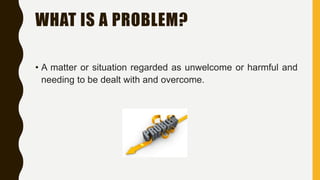
WHAT IS A PROBLEM?
• A matter or situation regarded as unwelcome or harmful and
needing to be dealt with and overcome.
PROCESS
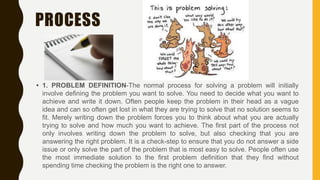
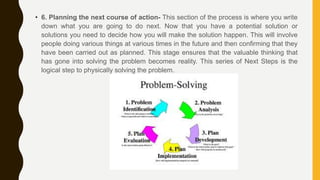
• 1. PROBLEM DEFINITION-The normal process for solving a problem will initially
involve defining the problem you want to solve. You need to decide what you want to
achieve and write it down. Often people keep the problem in their head as a vague
idea and can so often get lost in what they are trying to solve that no solution seems to
fit. Merely writing down the problem forces you to think about what you are actually
trying to solve and how much you want to achieve. The first part of the process not
only involves writing down the problem to solve, but also checking that you are
answering the right problem. It is a check-step to ensure that you do not answer a side
issue or only solve the part of the problem that is most easy to solve. People often use
the most immediate solution to the first problem definition that they find without
spending time checking the problem is the right one to answer.
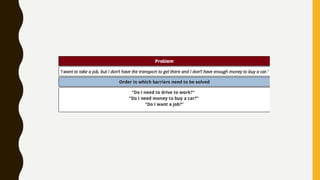
• Looking at the problem in terms of goals and barriers can offer an effective way
of defining many problems and splitting bigger problems into more manageable
sub-problems.
• Sometimes it will become apparent that what seems to be a single problem, is more
accurately a series of sub-problems. For example, in the problem:
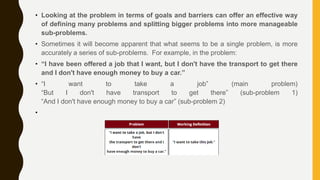
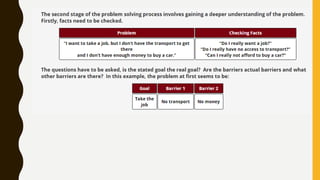
• “I have been offered a job that I want, but I don't have the transport to get there
and I don't have enough money to buy a car.”
• “I want to take a job” (main problem)
“But I don't have transport to get there” (sub-problem 1)
“And I don't have enough money to buy a car” (sub-problem 2)
•
• 2.PROBLEM ANALYSIS- The next step in the process is often to check where we
are, what is the current situation and what is involved in making it a problem. For
example, what are the benefits of the current product/service/process? And why did we
decide to make it like that? Understanding where the problem is coming from, how it
fits in with current developments and what the current environment is, is crucial when
working out whether a solution will actually work or not. Similarly you must have a set
of criteria by which to evaluate any new solutions or you will not know whether the idea
is workable or not. This section of the problem solving process ensures that time is
spent in stepping back and assessing the current situation and what actually needs to
be changed.
• After this investigation, it is often good to go back one step to reconfirm that your
problem definition is still valid. Frequently after the investigation people discover that
the problem they really want to answer is very different from their original interpretation
of it.
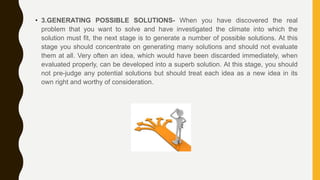
• 3.GENERATING POSSIBLE SOLUTIONS- When you have discovered the real
problem that you want to solve and have investigated the climate into which the
solution must fit, the next stage is to generate a number of possible solutions. At this
stage you should concentrate on generating many solutions and should not evaluate
them at all. Very often an idea, which would have been discarded immediately, when
evaluated properly, can be developed into a superb solution. At this stage, you should
not pre-judge any potential solutions but should treat each idea as a new idea in its
own right and worthy of consideration.
• 4.ANALYZING THE SOLUTIONS- This section of the problem solving process is
where you investigate the various factors about each of the potential solutions. You
note down the good and bad points and other things which are relevant to each
solution. Even at this stage you are not evaluating the solution because if you do so
then you could decide not to write down the valid good points about it because overall
you think it will not work. However you might discover that by writing down its
advantages that it has a totally unique advantage. Only by discovering this might you
choose to put the effort in to develop the idea so that it will work.
• 5.SLECTING THE BEST SOLUTION- This is the section where you look through the
various influencing factors for each possible solution and decide which solutions to
keep and which to disregard. You look at the solution as a whole and use your
judgement as to whether to use the solution or not. In Innovation Toolbox, you can vote
using either a Yes/No/Interesting process or on a sliding scale depending on how good
the idea is. Sometimes pure facts and figures dictate which ideas will work and which
will not. In other situations, it will be purely feelings and intuition that decides.
Remember that intuition is really a lifetimes experience and judgement compressed
into a single decision.
• By voting for the solutions you will end up with a shortlist of potential solutions. You
may want to increase the depth in the analysis of each idea and vote again on that
shortlist to further refine your shortlist.
• You will then end up with one, many or no viable solutions. In the case where you have
no solutions that work, you will need to repeat the generation of solutions section to
discover more potential solutions. Alternatively you might consider re-evaluating the
problem again as sometimes you may not find a solution because the problem
definition is not well defined or self-contradictory.
• 6. Planning the next course of action- This section of the process is where you write
down what you are going to do next. Now that you have a potential solution or
solutions you need to decide how you will make the solution happen. This will involve
people doing various things at various times in the future and then confirming that they
have been carried out as planned. This stage ensures that the valuable thinking that
has gone into solving the problem becomes reality. This series of Next Steps is the
logical step to physically solving the problem.
THANK YOU

Problem Solving Process

  • 1.
    PROBLEM SOLVING PROCESS PR E S E N T E D B Y: P R I N S O N R O D R I G U E S
  • 2.
    WHAT IS APROBLEM? • A matter or situation regarded as unwelcome or harmful and needing to be dealt with and overcome.
  • 3.
    PROCESS • 1. PROBLEMDEFINITION-The normal process for solving a problem will initially involve defining the problem you want to solve. You need to decide what you want to achieve and write it down. Often people keep the problem in their head as a vague idea and can so often get lost in what they are trying to solve that no solution seems to fit. Merely writing down the problem forces you to think about what you are actually trying to solve and how much you want to achieve. The first part of the process not only involves writing down the problem to solve, but also checking that you are answering the right problem. It is a check-step to ensure that you do not answer a side issue or only solve the part of the problem that is most easy to solve. People often use the most immediate solution to the first problem definition that they find without spending time checking the problem is the right one to answer.
  • 4.
    • Looking atthe problem in terms of goals and barriers can offer an effective way of defining many problems and splitting bigger problems into more manageable sub-problems. • Sometimes it will become apparent that what seems to be a single problem, is more accurately a series of sub-problems. For example, in the problem: • “I have been offered a job that I want, but I don't have the transport to get there and I don't have enough money to buy a car.” • “I want to take a job” (main problem) “But I don't have transport to get there” (sub-problem 1) “And I don't have enough money to buy a car” (sub-problem 2) •
  • 5.
    • 2.PROBLEM ANALYSIS-The next step in the process is often to check where we are, what is the current situation and what is involved in making it a problem. For example, what are the benefits of the current product/service/process? And why did we decide to make it like that? Understanding where the problem is coming from, how it fits in with current developments and what the current environment is, is crucial when working out whether a solution will actually work or not. Similarly you must have a set of criteria by which to evaluate any new solutions or you will not know whether the idea is workable or not. This section of the problem solving process ensures that time is spent in stepping back and assessing the current situation and what actually needs to be changed. • After this investigation, it is often good to go back one step to reconfirm that your problem definition is still valid. Frequently after the investigation people discover that the problem they really want to answer is very different from their original interpretation of it.
  • 7.
    • 3.GENERATING POSSIBLESOLUTIONS- When you have discovered the real problem that you want to solve and have investigated the climate into which the solution must fit, the next stage is to generate a number of possible solutions. At this stage you should concentrate on generating many solutions and should not evaluate them at all. Very often an idea, which would have been discarded immediately, when evaluated properly, can be developed into a superb solution. At this stage, you should not pre-judge any potential solutions but should treat each idea as a new idea in its own right and worthy of consideration.
  • 10.
    • 4.ANALYZING THESOLUTIONS- This section of the problem solving process is where you investigate the various factors about each of the potential solutions. You note down the good and bad points and other things which are relevant to each solution. Even at this stage you are not evaluating the solution because if you do so then you could decide not to write down the valid good points about it because overall you think it will not work. However you might discover that by writing down its advantages that it has a totally unique advantage. Only by discovering this might you choose to put the effort in to develop the idea so that it will work.
  • 11.
    • 5.SLECTING THEBEST SOLUTION- This is the section where you look through the various influencing factors for each possible solution and decide which solutions to keep and which to disregard. You look at the solution as a whole and use your judgement as to whether to use the solution or not. In Innovation Toolbox, you can vote using either a Yes/No/Interesting process or on a sliding scale depending on how good the idea is. Sometimes pure facts and figures dictate which ideas will work and which will not. In other situations, it will be purely feelings and intuition that decides. Remember that intuition is really a lifetimes experience and judgement compressed into a single decision. • By voting for the solutions you will end up with a shortlist of potential solutions. You may want to increase the depth in the analysis of each idea and vote again on that shortlist to further refine your shortlist. • You will then end up with one, many or no viable solutions. In the case where you have no solutions that work, you will need to repeat the generation of solutions section to discover more potential solutions. Alternatively you might consider re-evaluating the problem again as sometimes you may not find a solution because the problem definition is not well defined or self-contradictory.
  • 12.
    • 6. Planningthe next course of action- This section of the process is where you write down what you are going to do next. Now that you have a potential solution or solutions you need to decide how you will make the solution happen. This will involve people doing various things at various times in the future and then confirming that they have been carried out as planned. This stage ensures that the valuable thinking that has gone into solving the problem becomes reality. This series of Next Steps is the logical step to physically solving the problem.
  • 13.