Foundation Course in Human Resource Management
Discipline & Employee Discipline
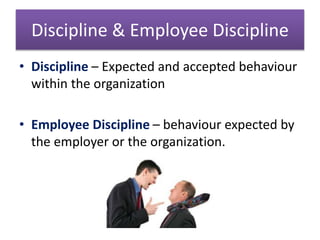
• Discipline – Expected and accepted behaviour
within the organization
• Employee Discipline – behaviour expected by
the employer or the organization.
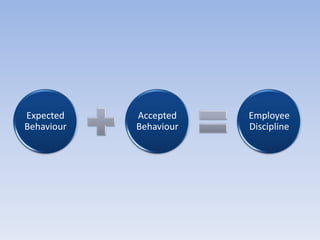
Expected
Behaviour
Accepted
Behaviour
Employee
Discipline
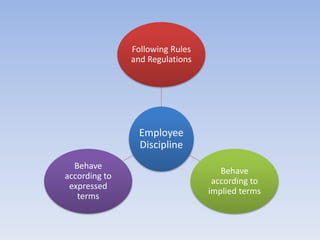
Employee
Discipline
Following Rules
and Regulations
Behave
according to
implied terms
Behave
according to
expressed
terms
Expressed Terms
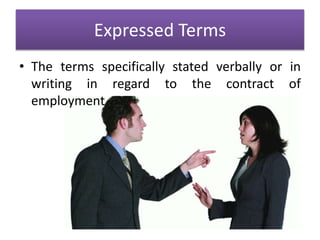
• The terms specifically stated verbally or in
writing in regard to the contract of
employment
Expressed Terms
• These terms are found in
1. Letter of Appointment
2. Circulars
3. Standing Orders
4. Collective Agreements
5. Provisions and relevant Acts (Shop & Office
Act/Wages Board Ordinance)
Implied Terms
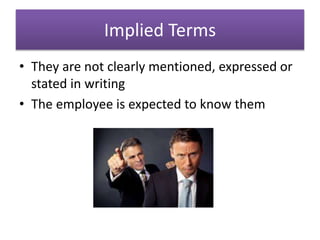
• They are not clearly mentioned, expressed or
stated in writing
• The employee is expected to know them
Implied Terms
• Carrying out one’s duties and responsibilities
effectively and efficiently
• Behaving well inside and outside the
organization
• Following the orders of the superior
• Respecting the boss
• Protecting the good will of the organization
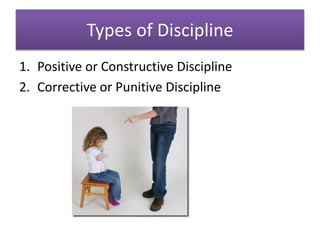
Types of Discipline
1. Positive or Constructive Discipline
2. Corrective or Punitive Discipline
Positive or Constructive Discipline
• Promoting “self-discipline” within the
organization by educating all the employees
on rules, regulations and standards
Positive or Constructive Discipline
• Educating employees on the objectives expected
from those rules, regulations and standards
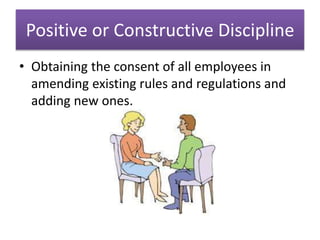
Positive or Constructive Discipline
• Obtaining the consent of all employees in
amending existing rules and regulations and
adding new ones.
Positive or Constructive Discipline
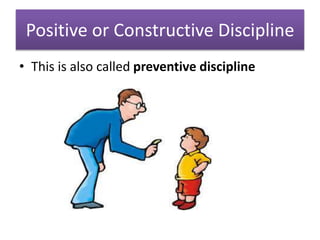
• This is also called preventive discipline
Constructive or Punitive Discipline
• Making employees disciplined by punishing
those who violate the code of conduct.
• This is used as a preventive method of future
violation of discipline
Constructive or Punitive Discipline
1. Positive Approach
• Based on the idea that there is no bad
human behavior
• Encouraging the positive behavioral patterns
• Promoting the ethical and lawful behavior
inside the organization
• Constructive discipline
Constructive or Punitive Discipline
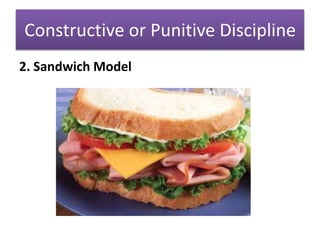
2. Sandwich Model
Constructive or Punitive Discipline
2. Sandwich Model
• Giving a critical feedback to someone to
change his or her behavior
• without hurting his or her feelings
• To avoid defensive reactions from the
recipient
Constructive or Punitive Discipline
2. Sandwich Model
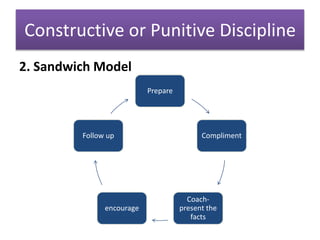
Prepare
Compliment
Coach-
present the
facts
encourage
Follow up
Constructive or Punitive Discipline
3. Progressive Discipline
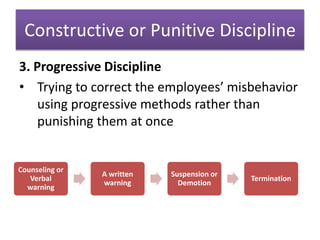
• Trying to correct the employees’ misbehavior
using progressive methods rather than
punishing them at once
Counseling or
Verbal
warning
A written
warning
Suspension or
Demotion
Termination
Constructive or Punitive Discipline
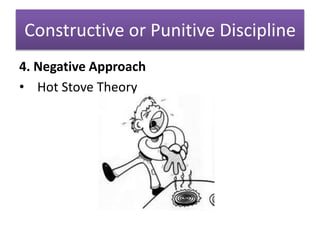
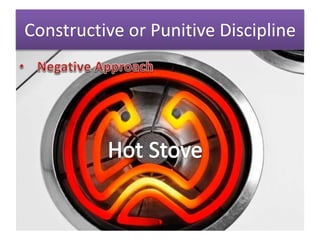
4. Negative Approach
• Hot Stove Theory
Constructive or Punitive Discipline
Employee Misconduct
• Violating rules and regulations of the
organization
• Breach of “expressed” or “implied” terms of
the contract of employment
• An act done inside or outside the organization
which has an impact on the smoothing
functioning of the organization
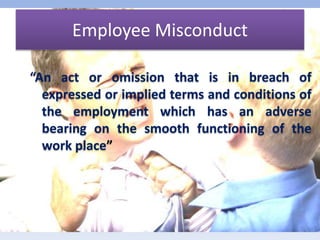
Employee Misconduct
“An act or omission that is in breach of
expressed or implied terms and conditions of
the employment which has an adverse
bearing on the smooth functioning of the
work place”
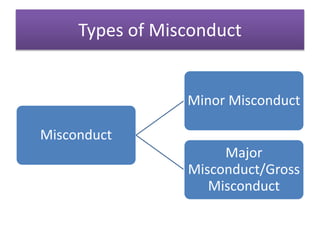
Types of Misconduct
Misconduct
Minor Misconduct
Major
Misconduct/Gross
Misconduct
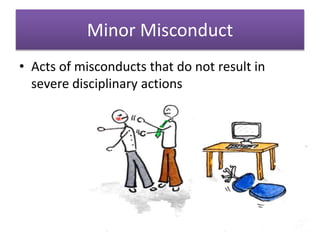
Minor Misconduct
• Acts of misconducts that do not result in
severe disciplinary actions
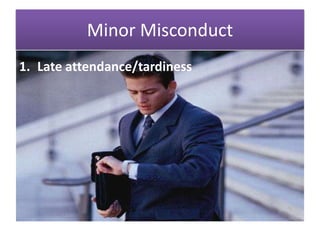
Minor Misconduct
1. Late attendance/tardiness
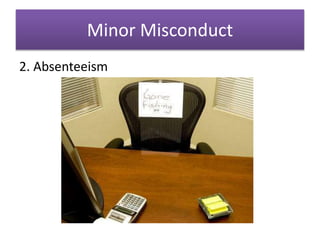
Minor Misconduct
2. Absenteeism
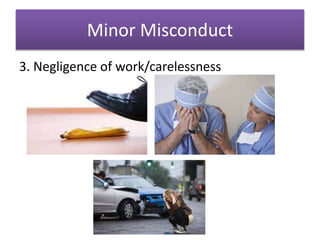
Minor Misconduct
3. Negligence of work/carelessness
Minor Misconduct
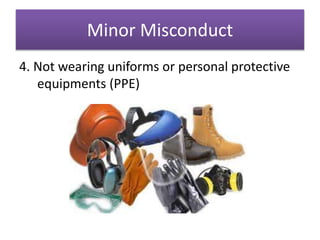
4. Not wearing uniforms or personal protective
equipments (PPE)
Minor Misconduct
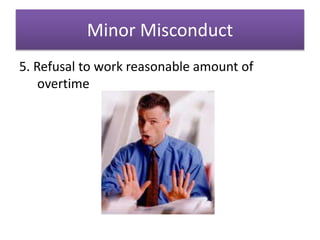
5. Refusal to work reasonable amount of
overtime
Major Misconduct/Gross Misconduct
• Misconducts that result in server disciplinary
actions including the termination as well
Major Misconduct/Gross Misconduct
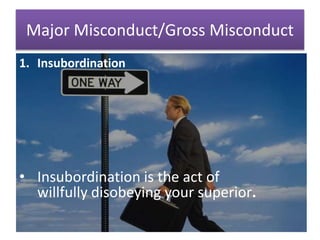
1. Insubordination
• Insubordination is the act of
willfully disobeying your superior.
Major Misconduct/Gross Misconduct
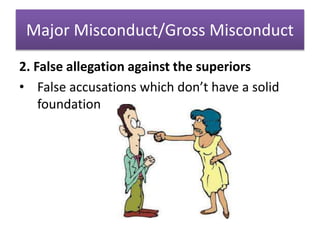
2. False allegation against the superiors
• False accusations which don’t have a solid
foundation
Major Misconduct/Gross Misconduct
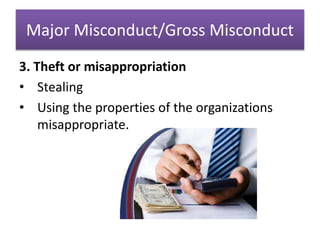
3. Theft or misappropriation
• Stealing
• Using the properties of the organizations
misappropriate.
Major Misconduct/Gross Misconduct
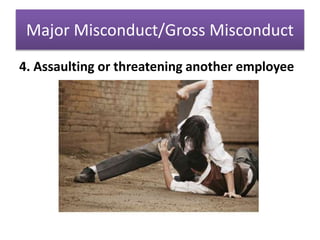
4. Assaulting or threatening another employee
Major Misconduct/Gross Misconduct
5.Using abusive language to address superiors
Major Misconduct/Gross Misconduct
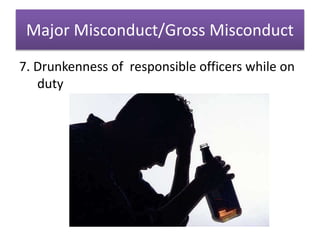
7. Drunkenness of responsible officers while on
duty
Disciplinary Procedure
1. Preliminary Investigation
• Collecting materials
• Recording evidence
• Analysis evidence
• Deciding whether it is needed to do a proper
inquiry
Disciplinary Procedure
2. Show cause or charge sheet
• Showing the mistakes committed
• Explaining the gravity of those mistakes
• Explaining the charges for those mistakes
Disciplinary Procedure
3. Receiving explanations
• Obtaining answers for the mistakes committed
• Obtaining reasons for the behaviour
Disciplinary Procedure
4. Accepting or rejecting explanation
• Analyzing the answers and explanations to see
the validity
• Treating the answers and explanations based on
their validity
Disciplinary Procedure
5. Domestic inquiry
• In depth analysis of the incident related to the
disciplinary procedure
• Inquiry by the management from the employee
accused
• He can either defend or accept
Disciplinary Procedure
6. Findings of the report
• The report is prepared by an independent and
impartial person
• The report consists the findings on which the
decisions can be made
Disciplinary Procedure
7. Taking disciplinary actions
• Depending on the gravity of the mistakes
committed
• Higher the gravity more tight the punishment is
Types of Punishments/Disciplinary
Actions
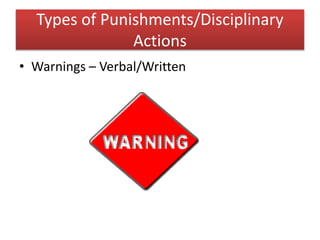
• Warnings – Verbal/Written
Types of Punishments/Disciplinary
Actions
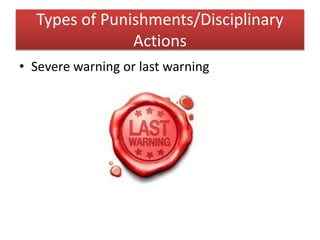
• Severe warning or last warning
Types of Punishments/Disciplinary
Actions
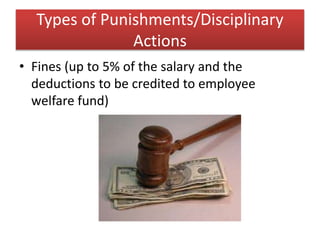
• Fines (up to 5% of the salary and the
deductions to be credited to employee
welfare fund)
Types of Punishments/Disciplinary
Actions
• Suspending (without pay for a definite period)
Types of Punishments/Disciplinary
Actions
• Transfer
Types of Punishments/Disciplinary
Actions
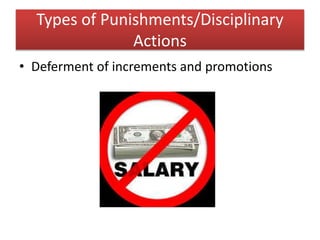
• Deferment of increments and promotions
Types of Punishments/Disciplinary
Actions
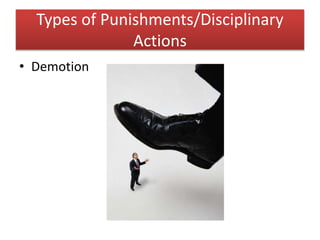
• Demotion
Model Questions
1. What is misconduct?
Model Questions
2. Explain the purpose of preliminary
investigation
Model Questions
3. What do you mean by “Minor Misconduct” in
an organization? Give examples
Model Questions
4. Name the six steps involved in disciplinary
procedure
Model Questions
5. Explain how you can improve discipline in an
organization
Model Questions
6. List and explain the types of punishments
Thank you…!!!

3 employee discipline