COMMUNICATION
The Achievers
4th
Jan 2013
Group Members
Ayesha Khalil 4427
Rubina Rafique
4437
Komal Javed 4433
Format of the Presentation
(Ayesha Khalil)
1.Definition
2.Different ways of Communication
3.Function of Communication
4.Communication Process
5.Effective Communication
(Rubina Rafique)
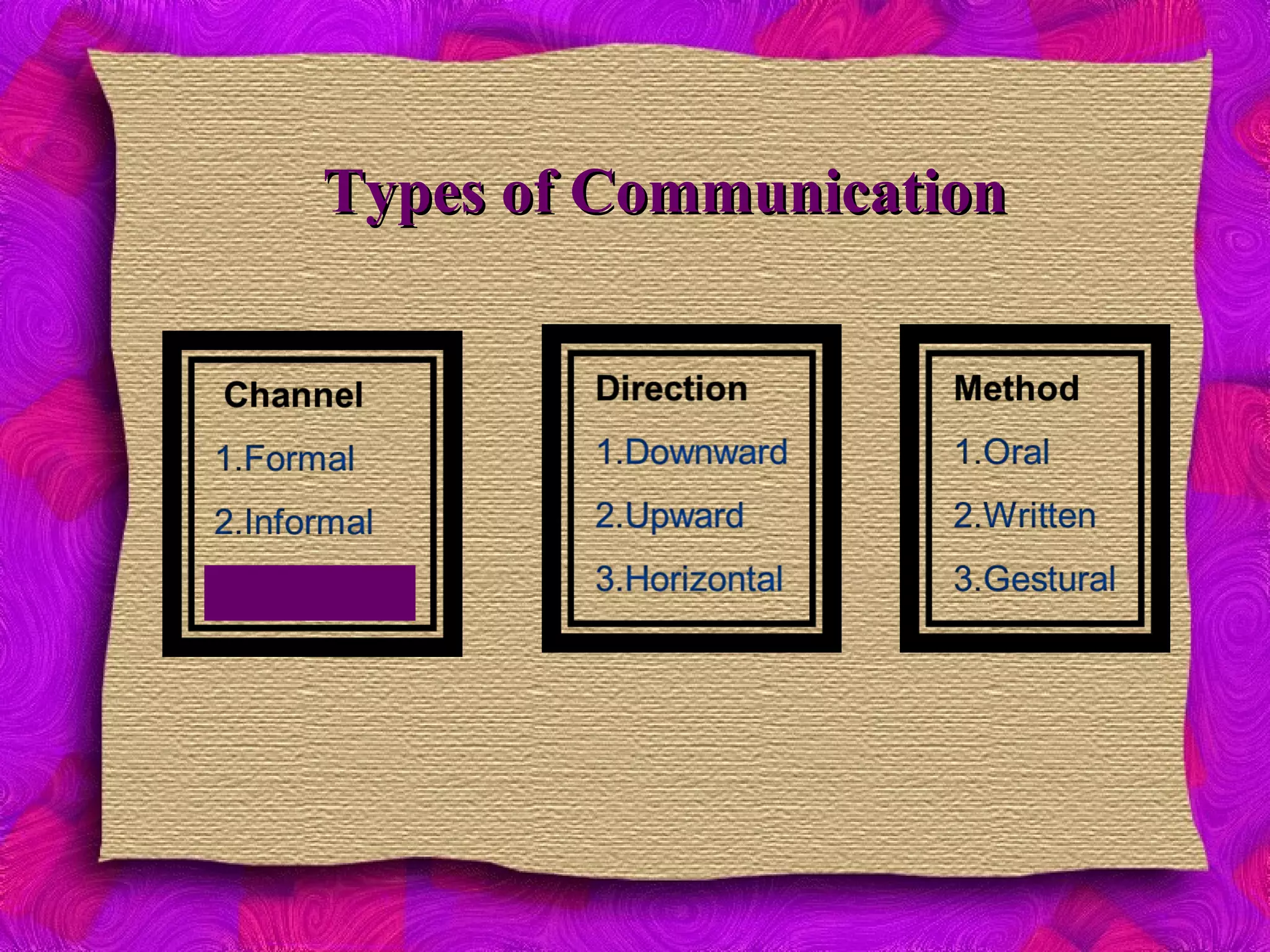
1.Types of Communication
2.Channels of Communication
3.Direction of Communication
4.Verbal Communication
5.Methods of Communication
6.Communication is a Series of Experience
(Komal Javed)
• Barriers to Effective Communication
• Types of Barriers Communication
Ayesha
What is Communication
Definition
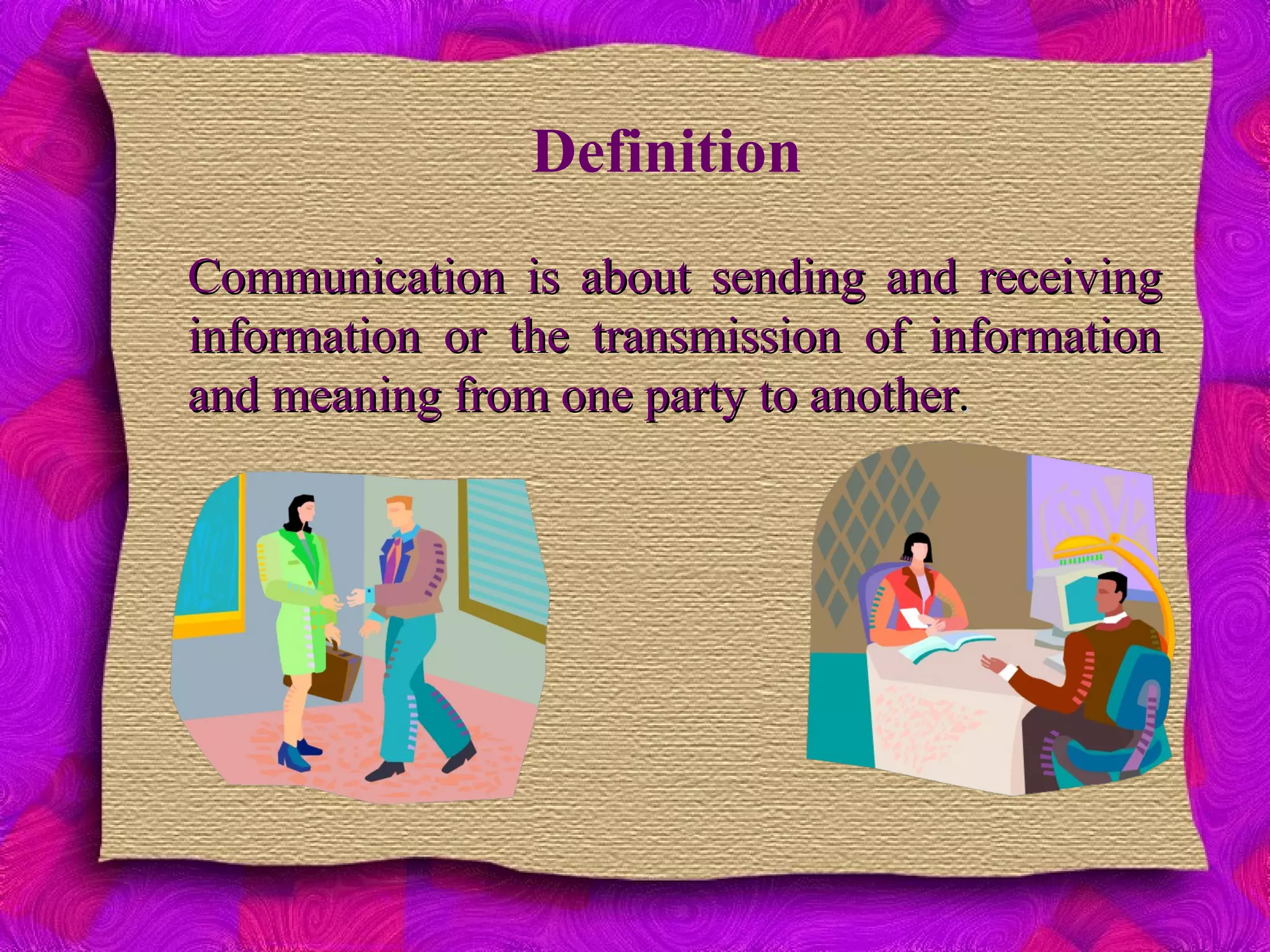
Communication is about sending and receivingCommunication is about sending and receiving
information or the transmission of informationinformation or the transmission of information
and meaning from one party to anotherand meaning from one party to another..
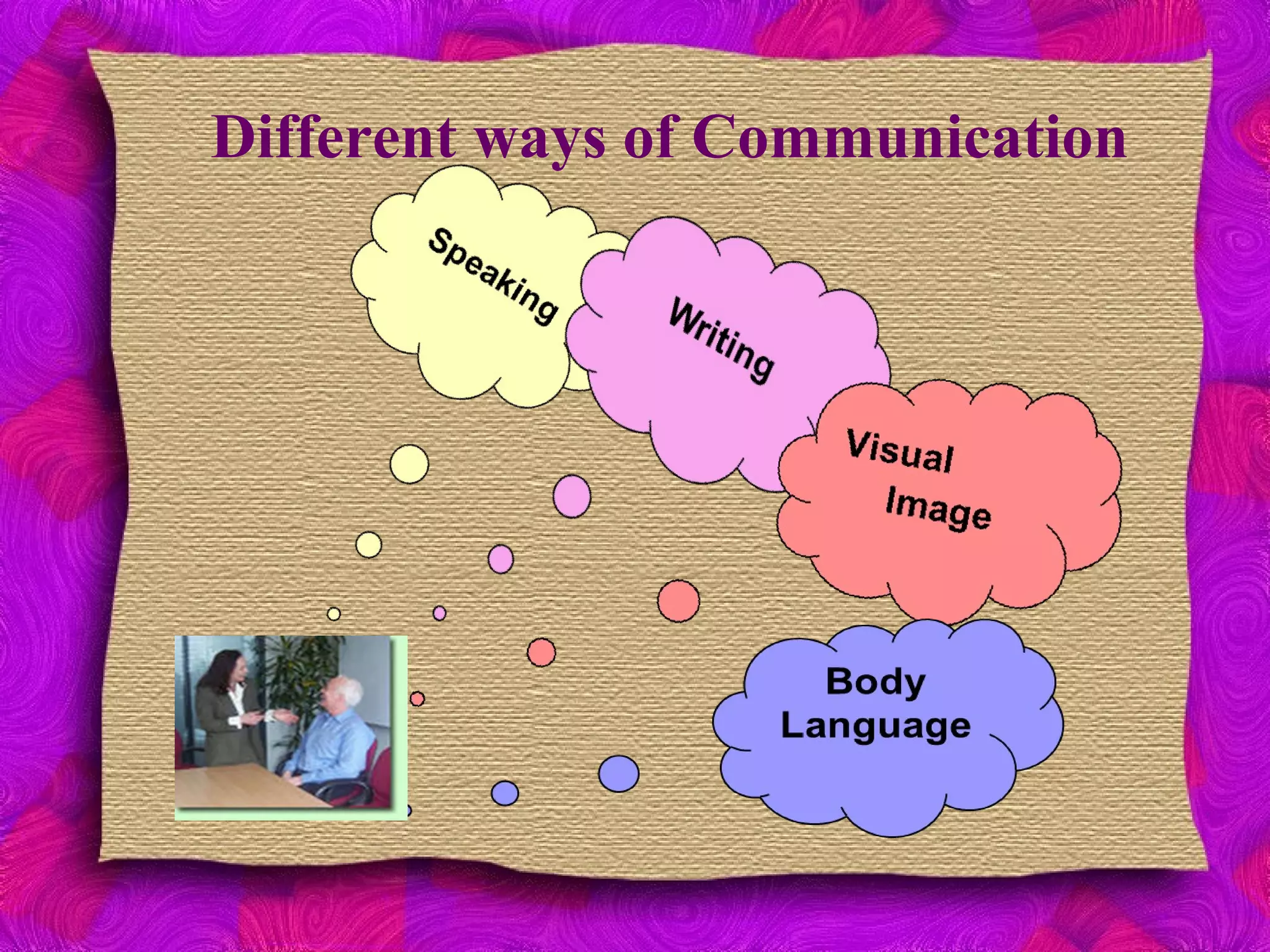
Different ways of Communication
Function of Communication
Four functions
Information
Motivation
Control
Emotional expression
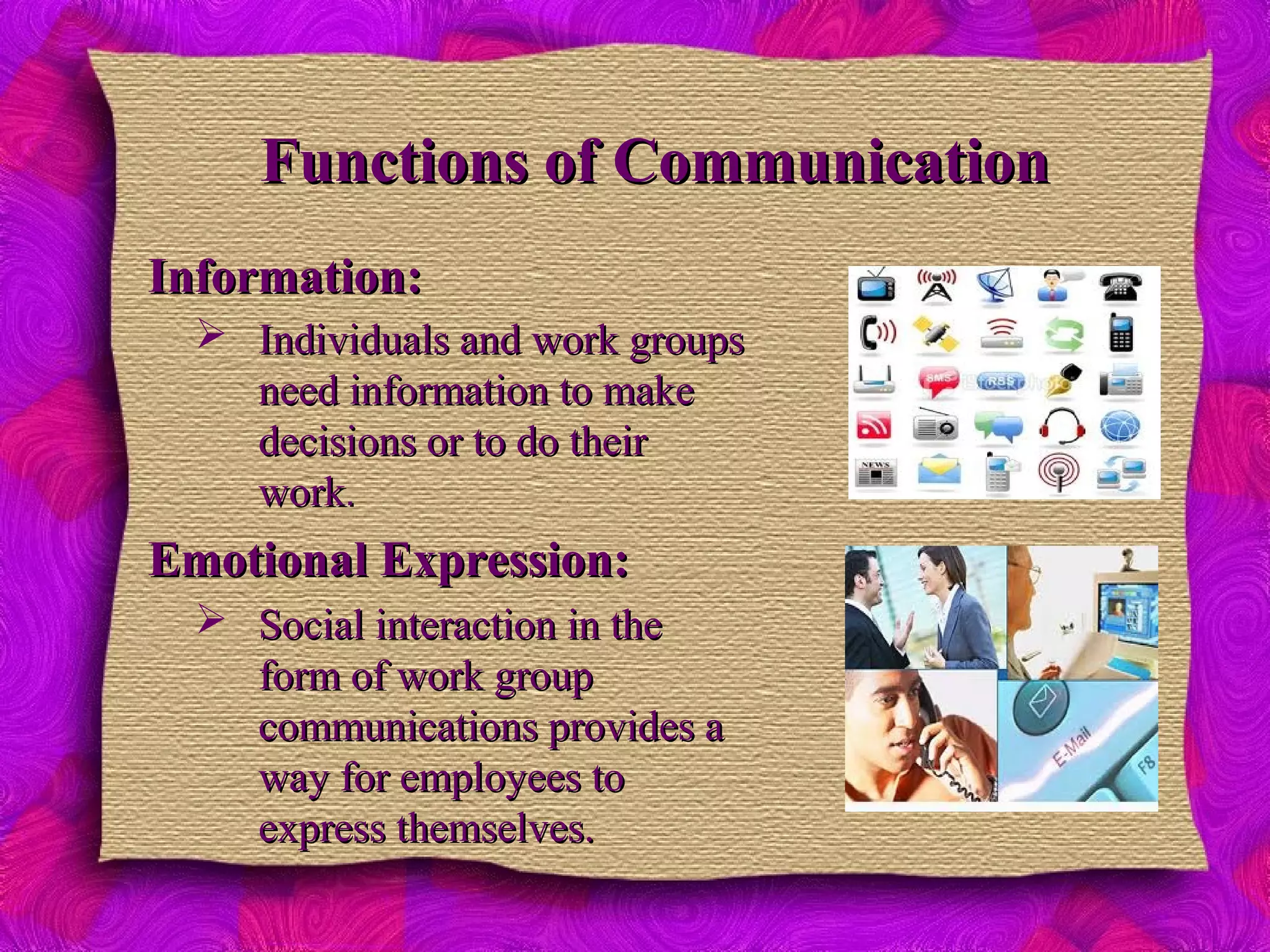
Functions of CommunicationFunctions of Communication
Information:Information:
 Individuals and work groupsIndividuals and work groups
need information to makeneed information to make
decisions or to do theirdecisions or to do their
workwork..
Emotional Expression:Emotional Expression:
 Social interaction in theSocial interaction in the
form of work groupform of work group
communications provides acommunications provides a
way for employees toway for employees to
express themselves.express themselves.
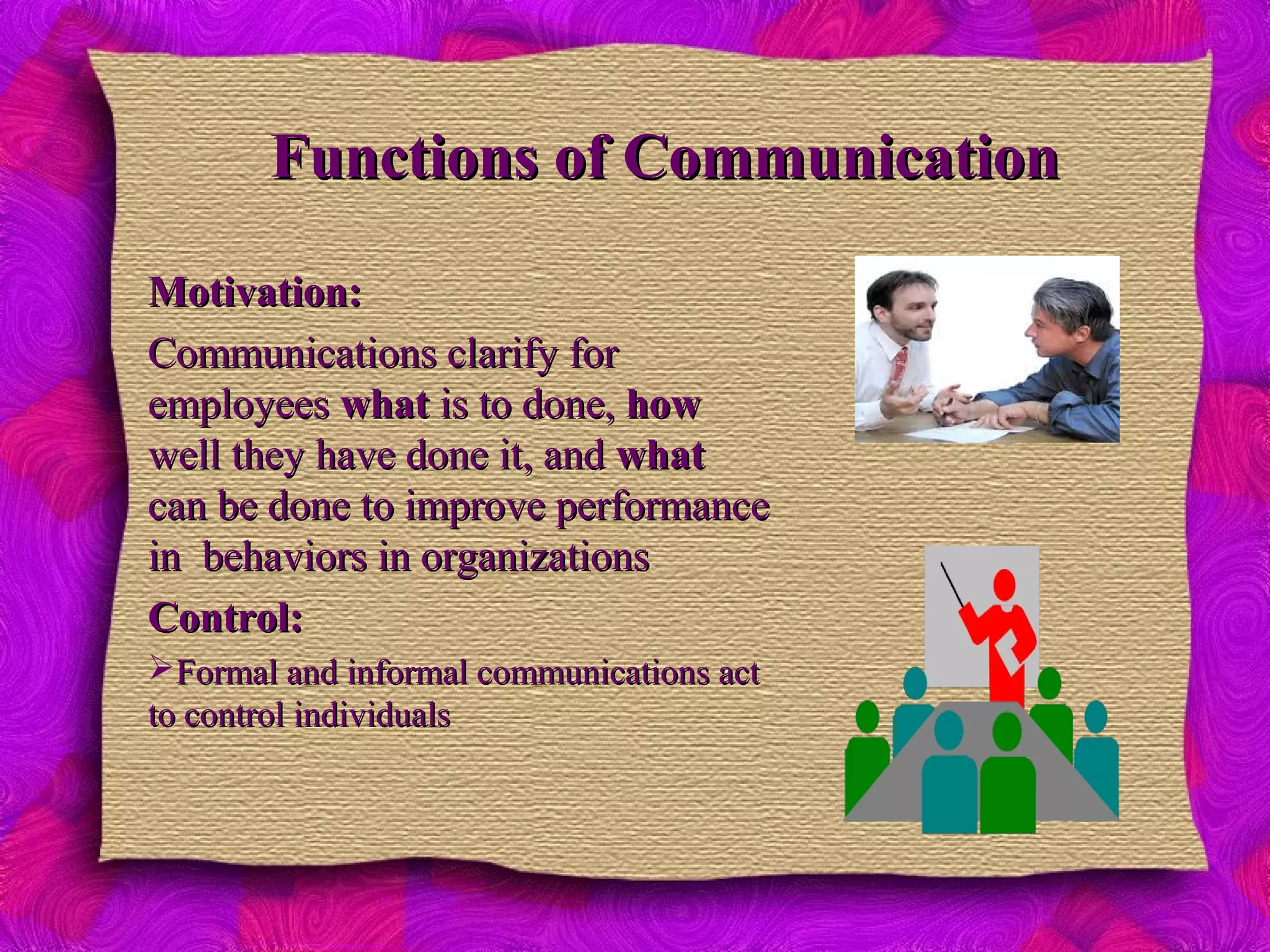
Functions of CommunicationFunctions of Communication
Motivation:Motivation:
Communications clarify forCommunications clarify for
employeesemployees whatwhat is to done,is to done, howhow
well they have done it, andwell they have done it, and whatwhat
can be done to improve performancecan be done to improve performance
in behaviors in organizationsin behaviors in organizations
Control:Control:
Formal and informal communications actFormal and informal communications act
to control individualsto control individuals
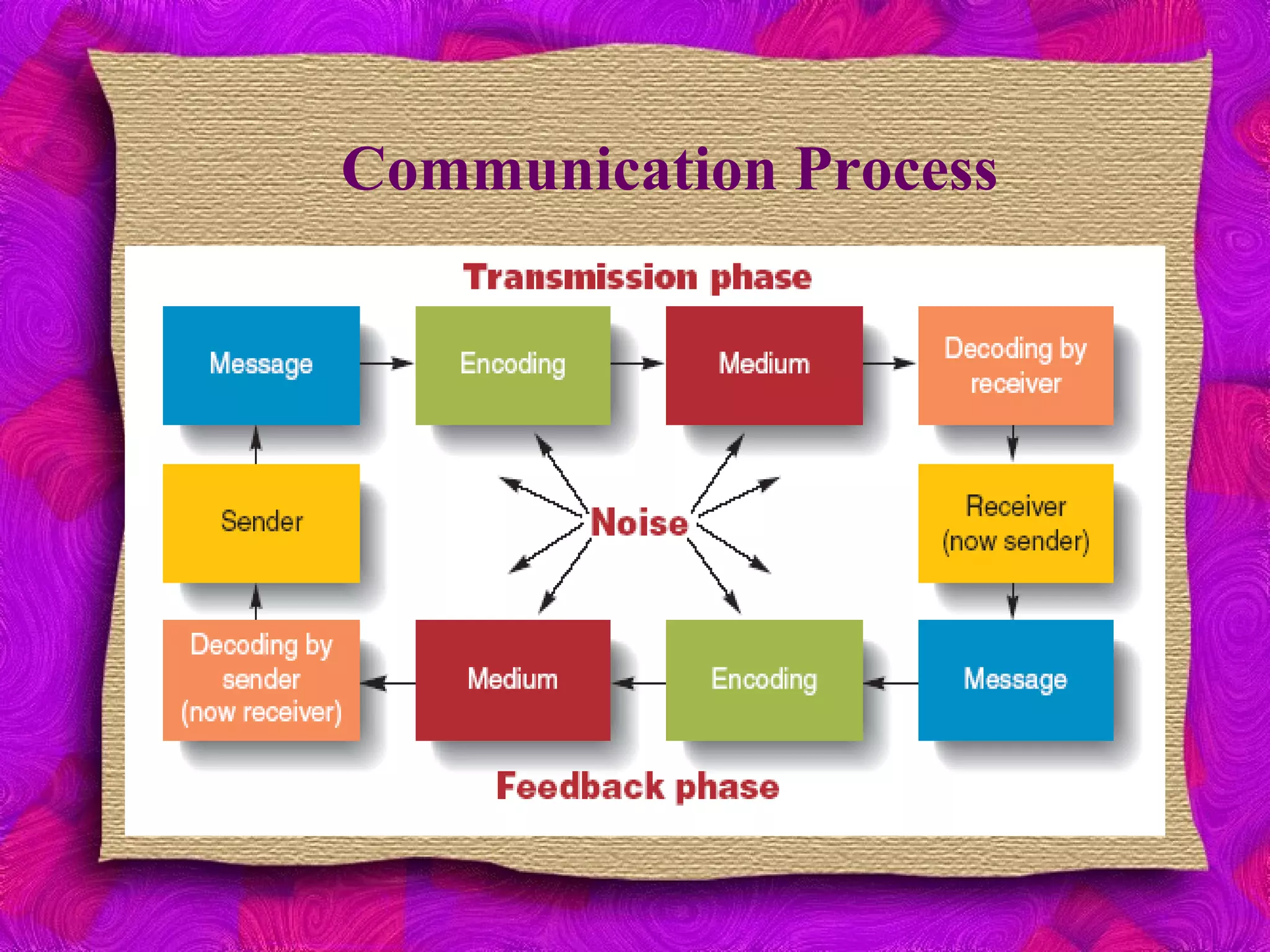
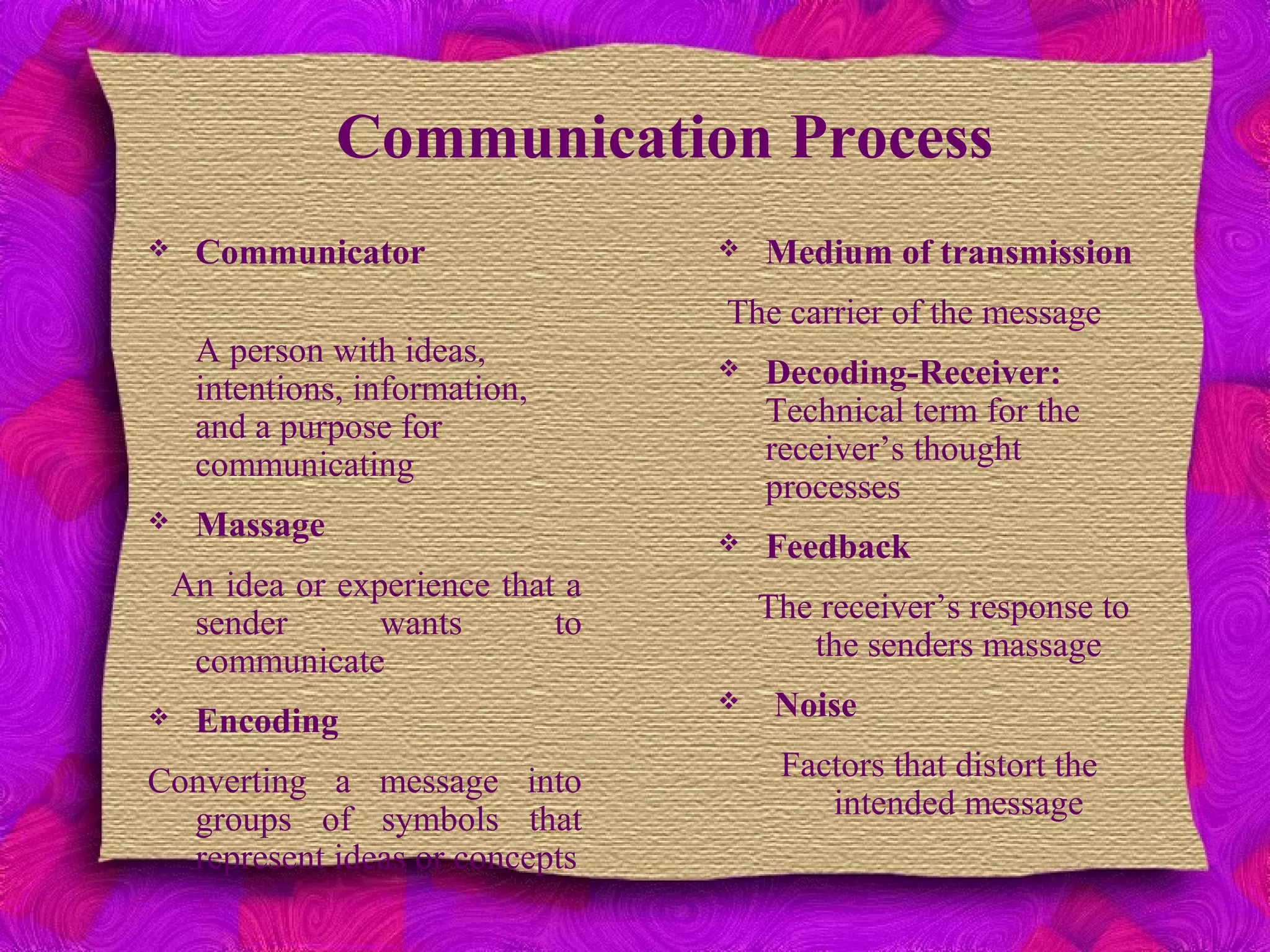
Communication Process
 Communicator
A person with ideas,
intentions, information,
and a purpose for
communicating
 Massage
An idea or experience that a
sender wants to
communicate
 Encoding
Converting a message into
groups of symbols that
represent ideas or concepts
 Medium of transmission
The carrier of the message
 Decoding-Receiver:
Technical term for the
receiver’s thought
processes
 Feedback
The receiver’s response to
the senders massage
 Noise
Factors that distort the
intended message
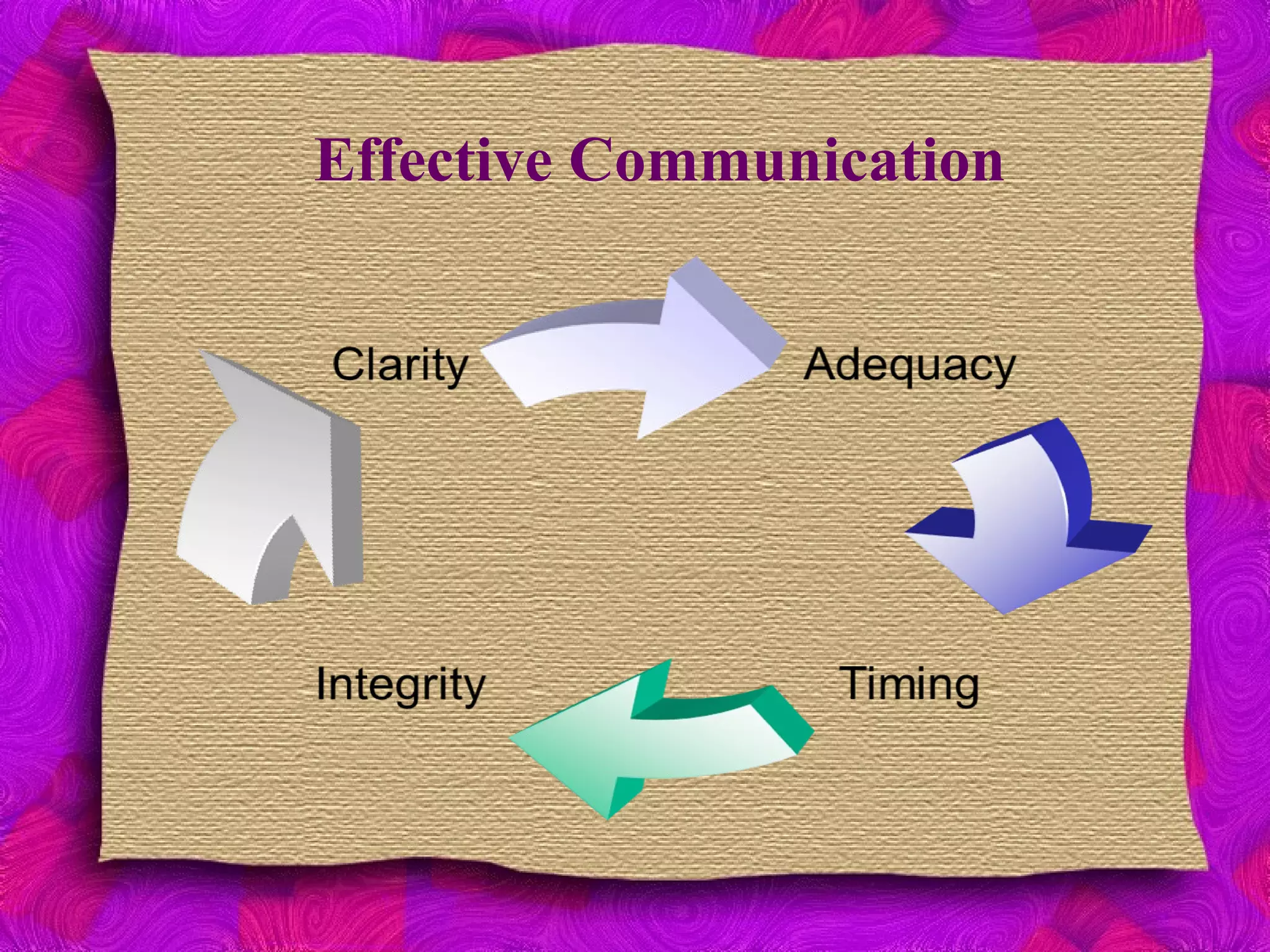
Effective Communication
RubinaRubina
Types of CommunicationTypes of Communication
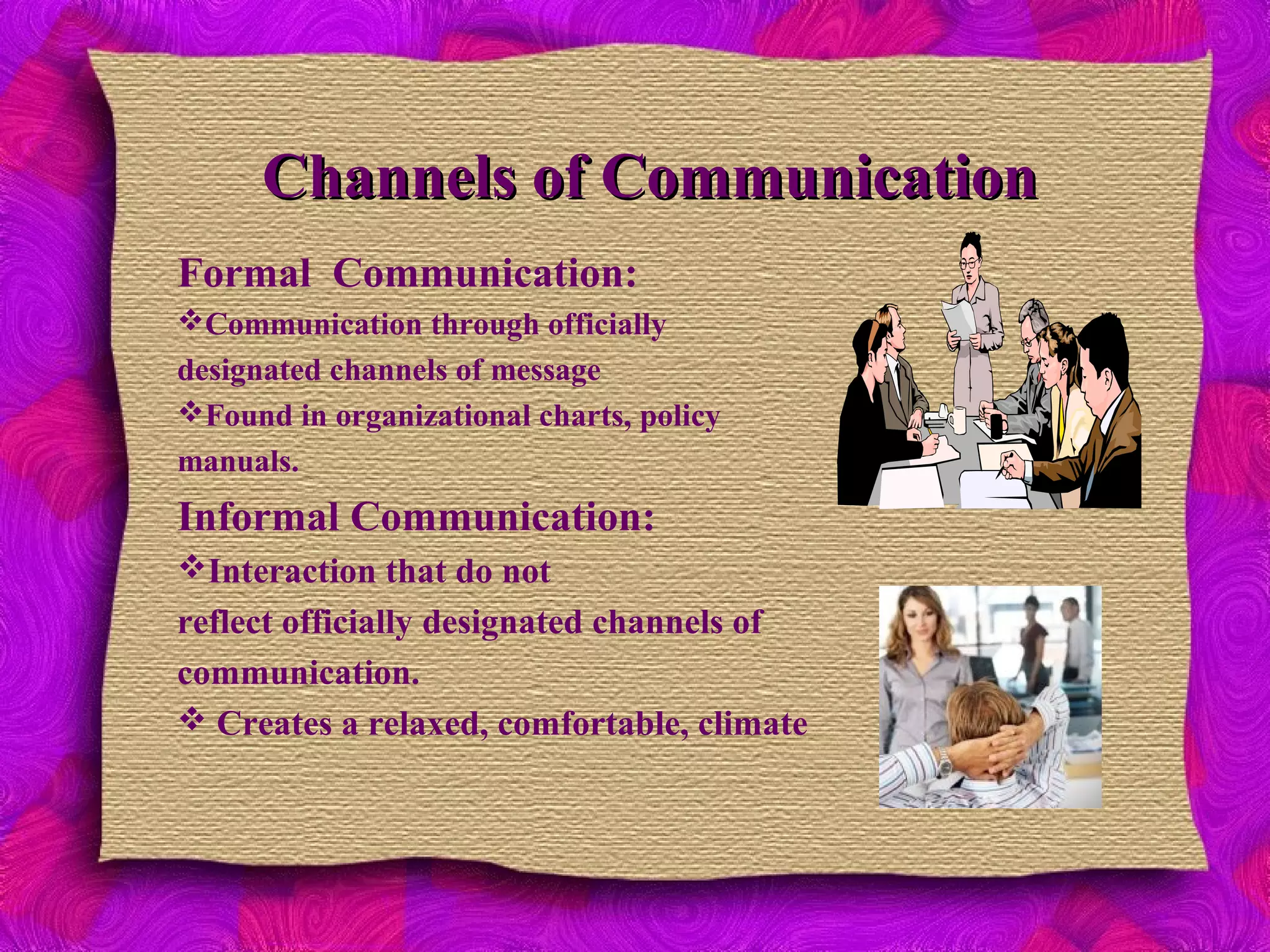
Channels of CommunicationChannels of Communication
Formal Communication:
Communication through officially
designated channels of message
Found in organizational charts, policy
manuals.
Informal Communication:
Interaction that do not
reflect officially designated channels of
communication.
 Creates a relaxed, comfortable, climate
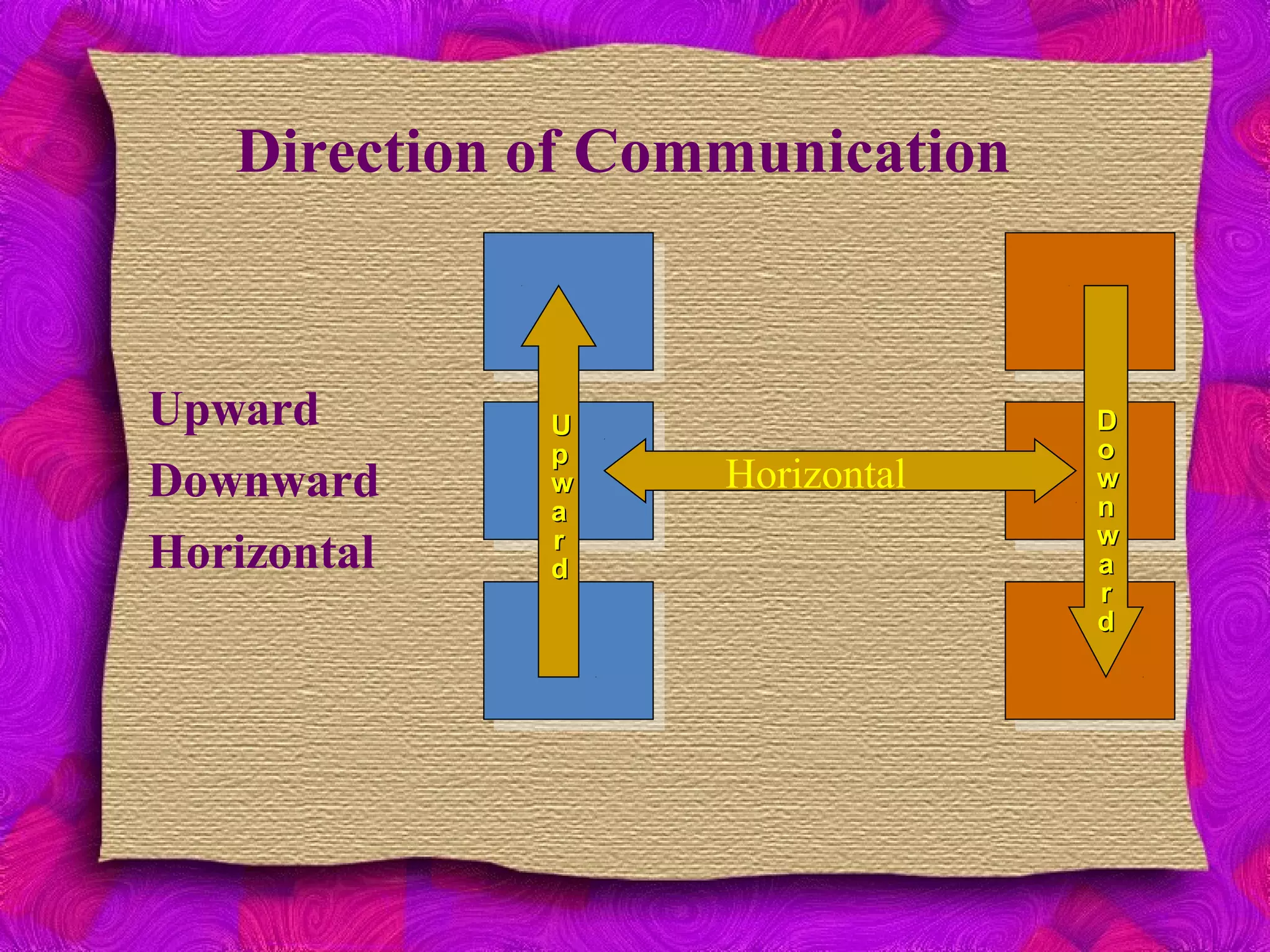
Direction of Communication
Upward
Downward
Horizontal
Horizontal
DD
oo
ww
nn
ww
aa
rr
dd
UU
pp
ww
aa
rr
dd
Direction of Communication
Downward
Flow from upper
management down to
the employees at
lower ranks
•Job instruction
•Ideology
•Information
•feedback
Horizontal Communication
•The flow of information between colleagues and
peers
•Organization have enhance its importance
•Not recognized as official
Facial Expressions
Methods
of
communication
Verbal Communication
It means communicating with words, written or
spoken. Verbal communication consists of
speaking, listening, writing and reading
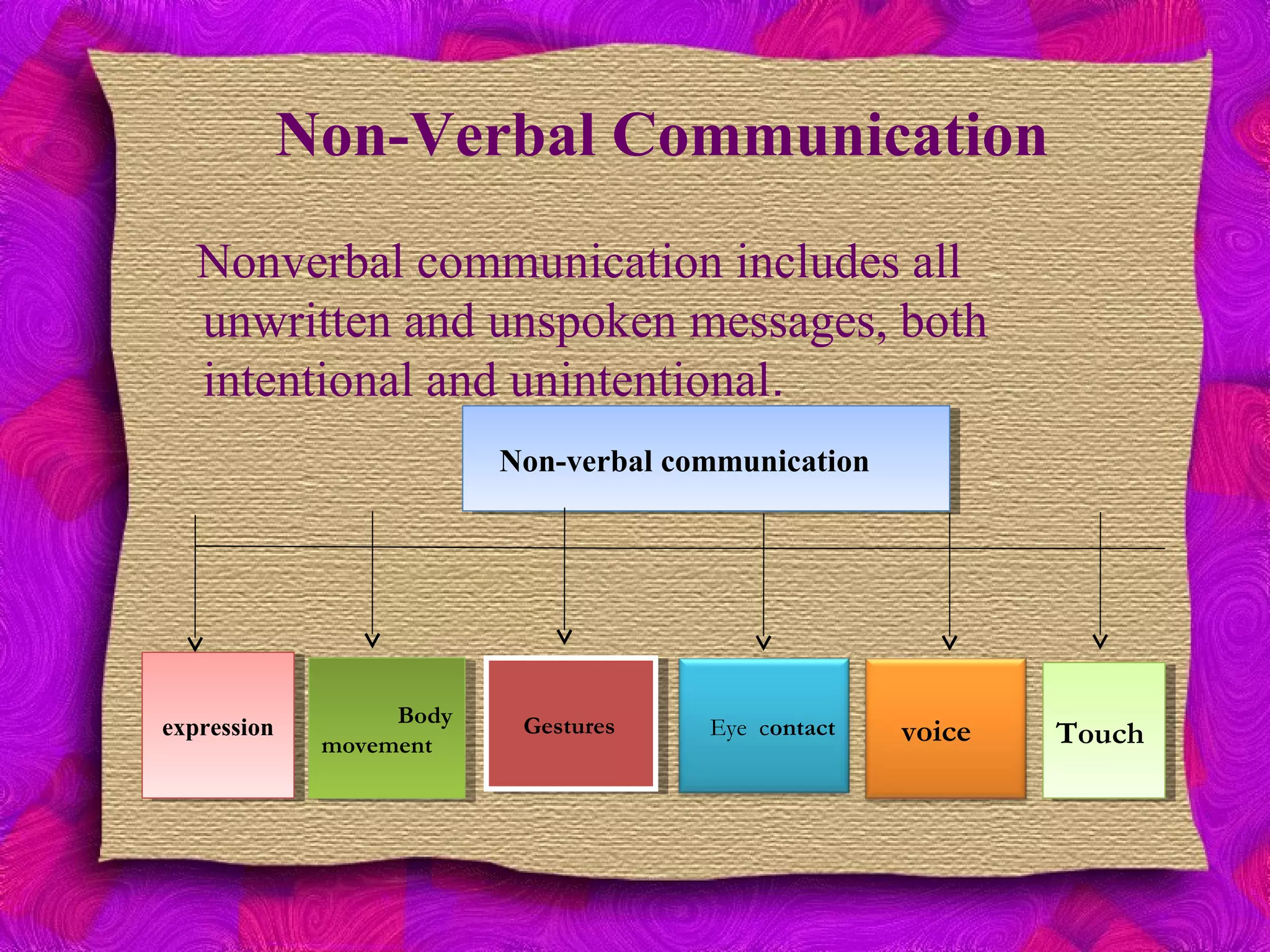
Non-Verbal Communication
Nonverbal communication includes all
unwritten and unspoken messages, both
intentional and unintentional.
Non-verbal communicationNon-verbal communication
Body
movement
Body
movement
GesturesGestures Eye contact voice TouchTouchexpressionexpression
Body Language includes:
Facial expressions
Gestures
i. Handshakes
ii. Nodding
iii. Eye contact
Posture
Even without words, the message can be strong
Gestures do not have the same meaning in all cultures
Communication is a Series of
Experience
Komal
Barriers
To Effective
Communication
Barriers
To Effective
Communication
“Any obstacle that blocks communication”
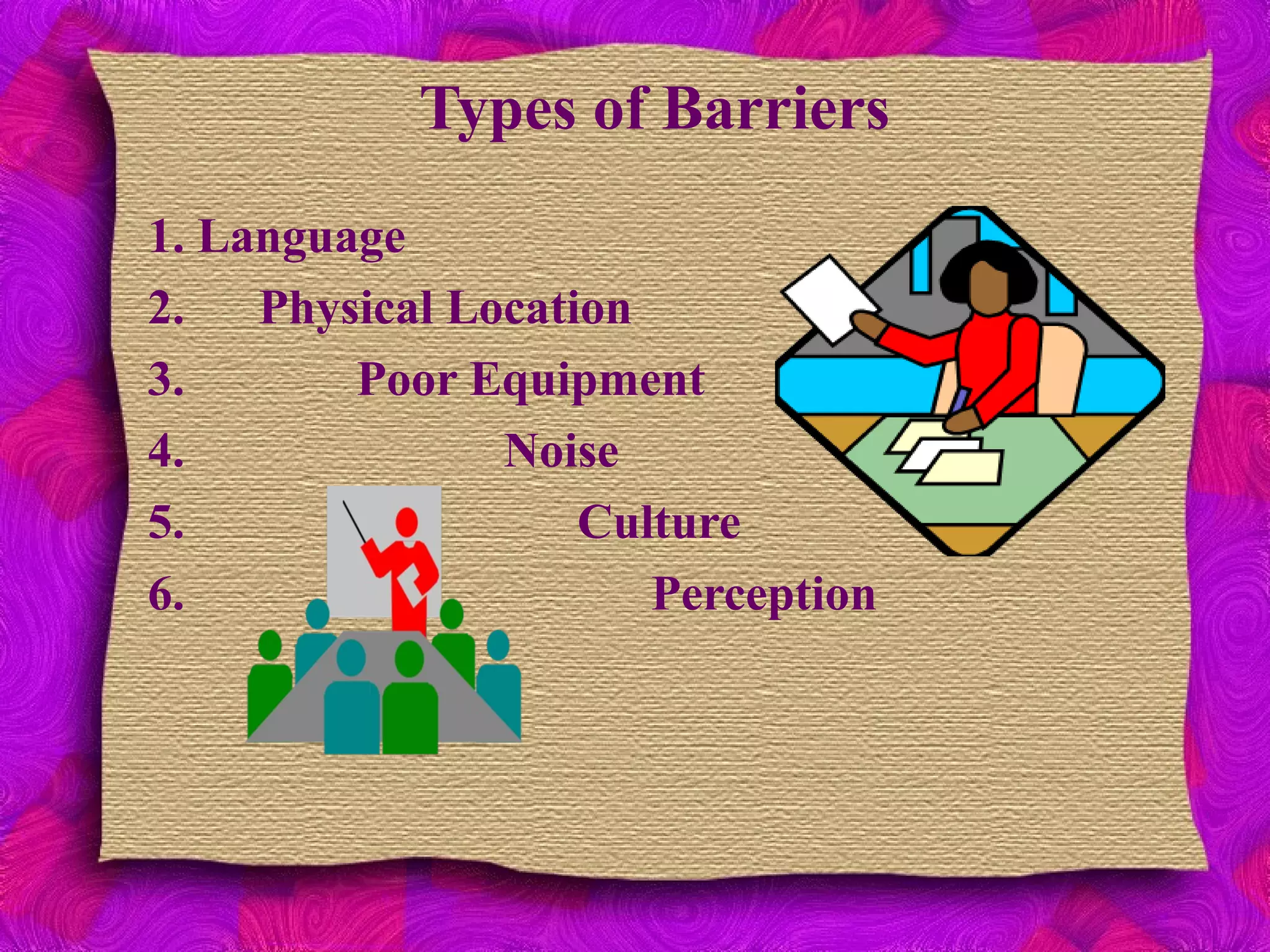
Types of Barriers
1. Language
2. Physical Location
3. Poor Equipment
4. Noise
5. Culture
6. Perception
Types of Barriers
1. Language:
Speaking in
different languages, or where a
language is not your first
language
2. Physical Location:
When teams are spread
across the world and diverse
teams are created.
Types of Barriers
3. Poor Equipment:
Not having the
right IT infrastructure, slow
computers, poor quality audio
teleconference systems making it
difficult to hear what is being said.
4. Noise:
When a person is
communicating to another and
someone or something makes
noise , then its fails.
Types of Barriers
5. Culture:
Spelling the same
language but words having
different meaning in different
countries, e.g. UK English and
USA English have different
words for rubber/eraser.
6.. Perception:
One message has two or
more different meanings when
spoken or put into an email.
Communication

Communication

  • 1.
  • 2.
    Group Members Ayesha Khalil4427 Rubina Rafique 4437 Komal Javed 4433
  • 3.
    Format of thePresentation (Ayesha Khalil) 1.Definition 2.Different ways of Communication 3.Function of Communication 4.Communication Process 5.Effective Communication
  • 4.
    (Rubina Rafique) 1.Types ofCommunication 2.Channels of Communication 3.Direction of Communication 4.Verbal Communication 5.Methods of Communication 6.Communication is a Series of Experience (Komal Javed) • Barriers to Effective Communication • Types of Barriers Communication
  • 5.
  • 6.
  • 7.
    Definition Communication is aboutsending and receivingCommunication is about sending and receiving information or the transmission of informationinformation or the transmission of information and meaning from one party to anotherand meaning from one party to another..
  • 8.
    Different ways ofCommunication
  • 9.
    Function of Communication Fourfunctions Information Motivation Control Emotional expression
  • 10.
    Functions of CommunicationFunctionsof Communication Information:Information:  Individuals and work groupsIndividuals and work groups need information to makeneed information to make decisions or to do theirdecisions or to do their workwork.. Emotional Expression:Emotional Expression:  Social interaction in theSocial interaction in the form of work groupform of work group communications provides acommunications provides a way for employees toway for employees to express themselves.express themselves.
  • 11.
    Functions of CommunicationFunctionsof Communication Motivation:Motivation: Communications clarify forCommunications clarify for employeesemployees whatwhat is to done,is to done, howhow well they have done it, andwell they have done it, and whatwhat can be done to improve performancecan be done to improve performance in behaviors in organizationsin behaviors in organizations Control:Control: Formal and informal communications actFormal and informal communications act to control individualsto control individuals
  • 12.
  • 13.
    Communication Process  Communicator Aperson with ideas, intentions, information, and a purpose for communicating  Massage An idea or experience that a sender wants to communicate  Encoding Converting a message into groups of symbols that represent ideas or concepts  Medium of transmission The carrier of the message  Decoding-Receiver: Technical term for the receiver’s thought processes  Feedback The receiver’s response to the senders massage  Noise Factors that distort the intended message
  • 14.
  • 15.
  • 16.
  • 17.
  • 18.
    Channels of CommunicationChannelsof Communication Formal Communication: Communication through officially designated channels of message Found in organizational charts, policy manuals. Informal Communication: Interaction that do not reflect officially designated channels of communication.  Creates a relaxed, comfortable, climate
  • 19.
  • 20.
    Direction of Communication Downward Flowfrom upper management down to the employees at lower ranks •Job instruction •Ideology •Information •feedback
  • 21.
    Horizontal Communication •The flowof information between colleagues and peers •Organization have enhance its importance •Not recognized as official
  • 22.
  • 23.
  • 24.
    Verbal Communication It meanscommunicating with words, written or spoken. Verbal communication consists of speaking, listening, writing and reading
  • 25.
    Non-Verbal Communication Nonverbal communicationincludes all unwritten and unspoken messages, both intentional and unintentional. Non-verbal communicationNon-verbal communication Body movement Body movement GesturesGestures Eye contact voice TouchTouchexpressionexpression
  • 26.
    Body Language includes: Facialexpressions Gestures i. Handshakes ii. Nodding iii. Eye contact Posture Even without words, the message can be strong Gestures do not have the same meaning in all cultures
  • 27.
    Communication is aSeries of Experience
  • 28.
  • 29.
  • 30.
  • 31.
    Types of Barriers 1.Language 2. Physical Location 3. Poor Equipment 4. Noise 5. Culture 6. Perception
  • 32.
    Types of Barriers 1.Language: Speaking in different languages, or where a language is not your first language 2. Physical Location: When teams are spread across the world and diverse teams are created.
  • 34.
    Types of Barriers 3.Poor Equipment: Not having the right IT infrastructure, slow computers, poor quality audio teleconference systems making it difficult to hear what is being said. 4. Noise: When a person is communicating to another and someone or something makes noise , then its fails.
  • 35.
    Types of Barriers 5.Culture: Spelling the same language but words having different meaning in different countries, e.g. UK English and USA English have different words for rubber/eraser. 6.. Perception: One message has two or more different meanings when spoken or put into an email.