COMMUNICATION
What is Communication?
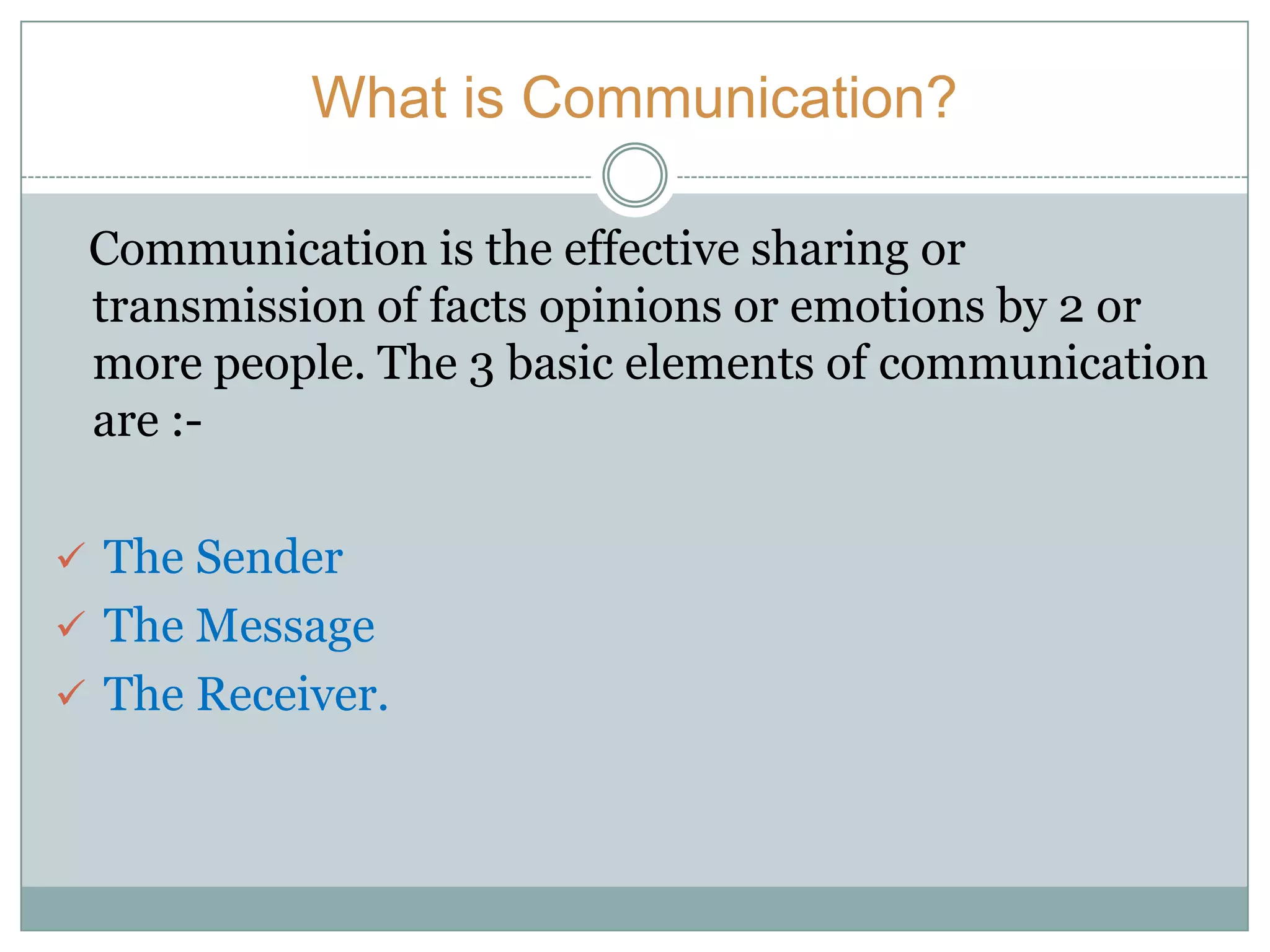
Communication is the effective sharing or
transmission of facts opinions or emotions by 2 or
more people. The 3 basic elements of communication
are :-
 The Sender
 The Message
 The Receiver.
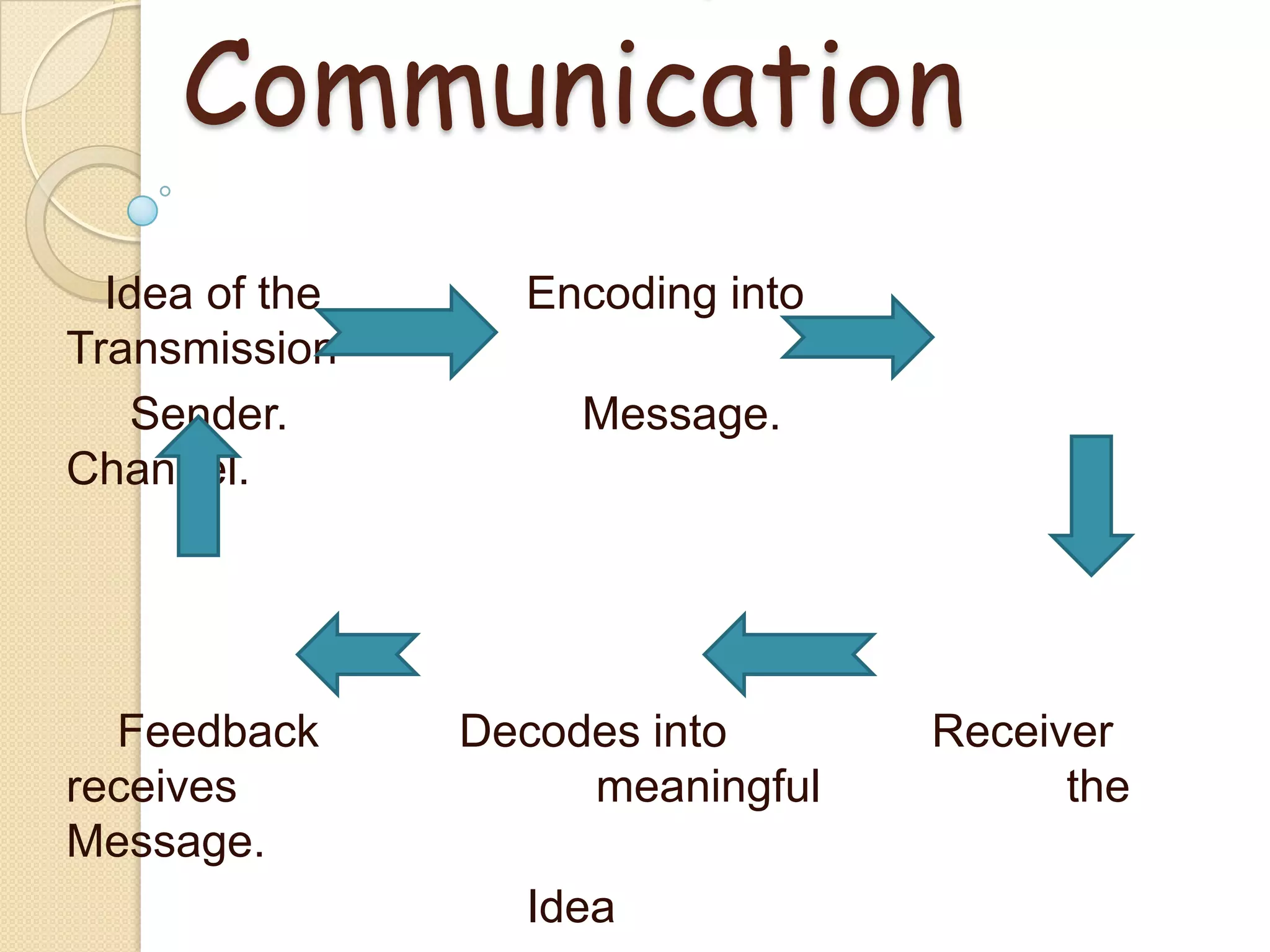
Communication
Idea of the Encoding into
Transmission
Sender. Message.
Channel.
Feedback Decodes into Receiver
receives meaningful the
Message.
Idea
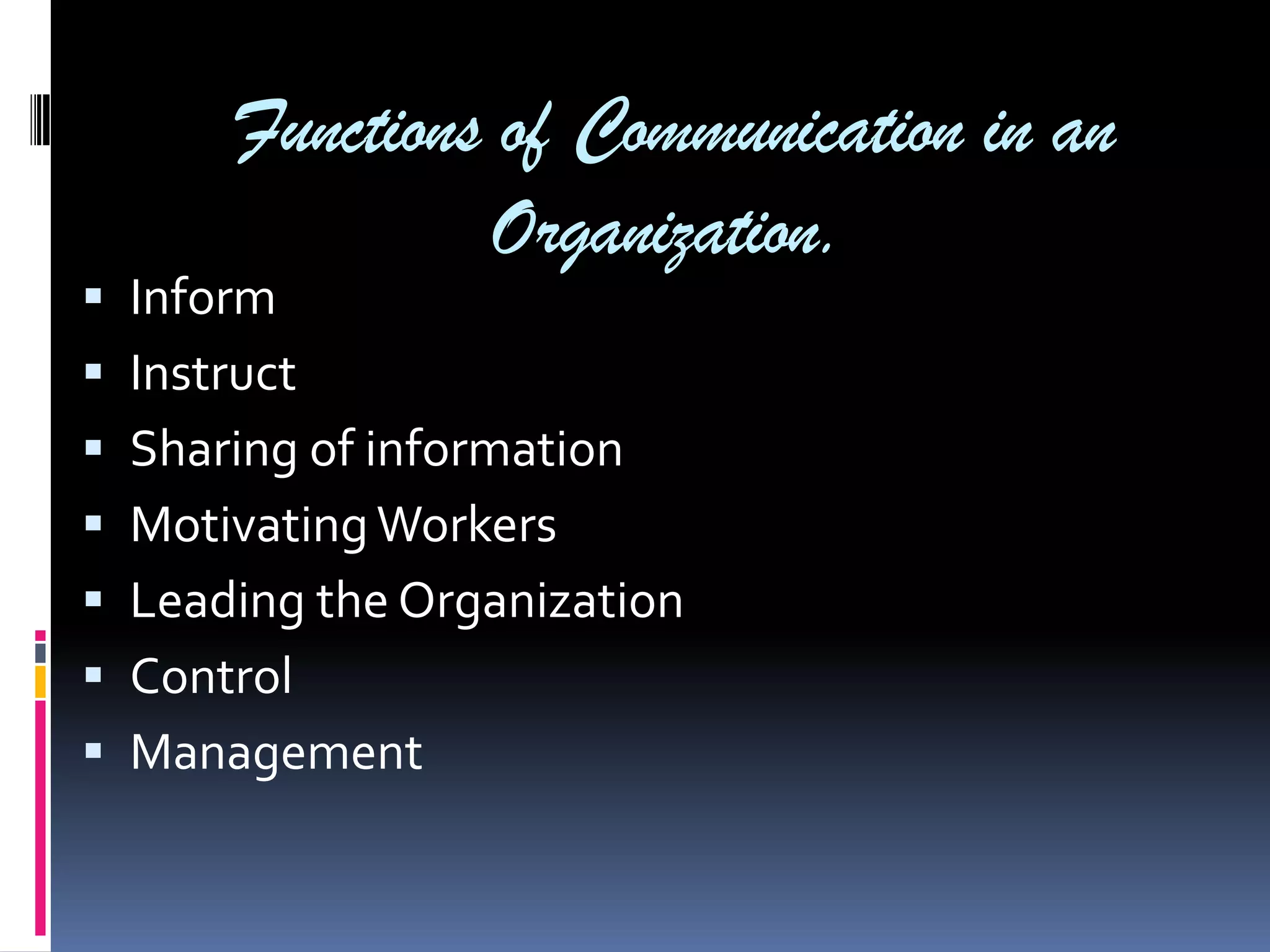
Functions of Communication in an
Organization.
 Inform
 Instruct
 Sharing of information
 MotivatingWorkers
 Leading the Organization
 Control
 Management
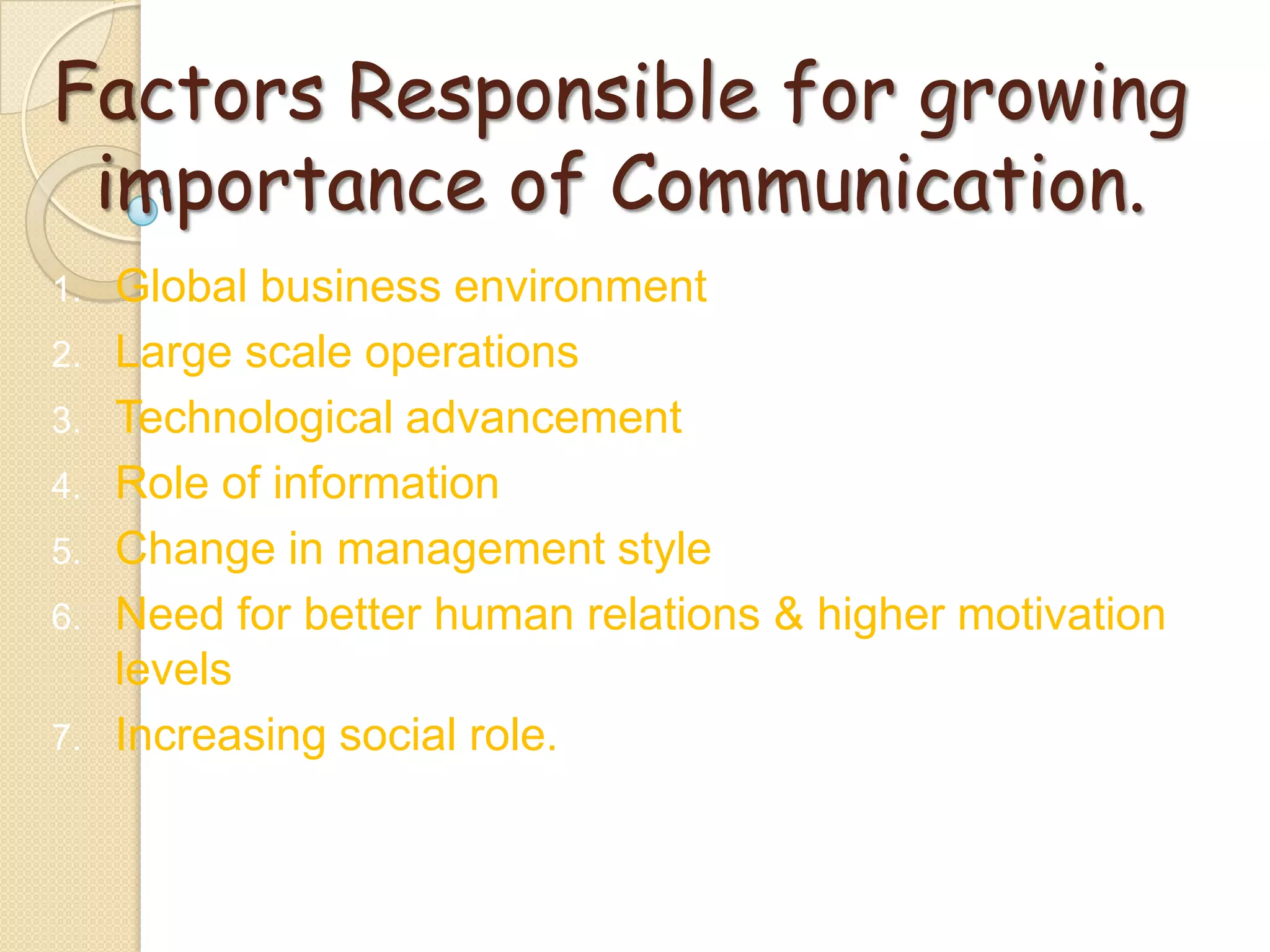
Factors Responsible for growing
importance of Communication.
1. Global business environment
2. Large scale operations
3. Technological advancement
4. Role of information
5. Change in management style
6. Need for better human relations & higher motivation
levels
7. Increasing social role.
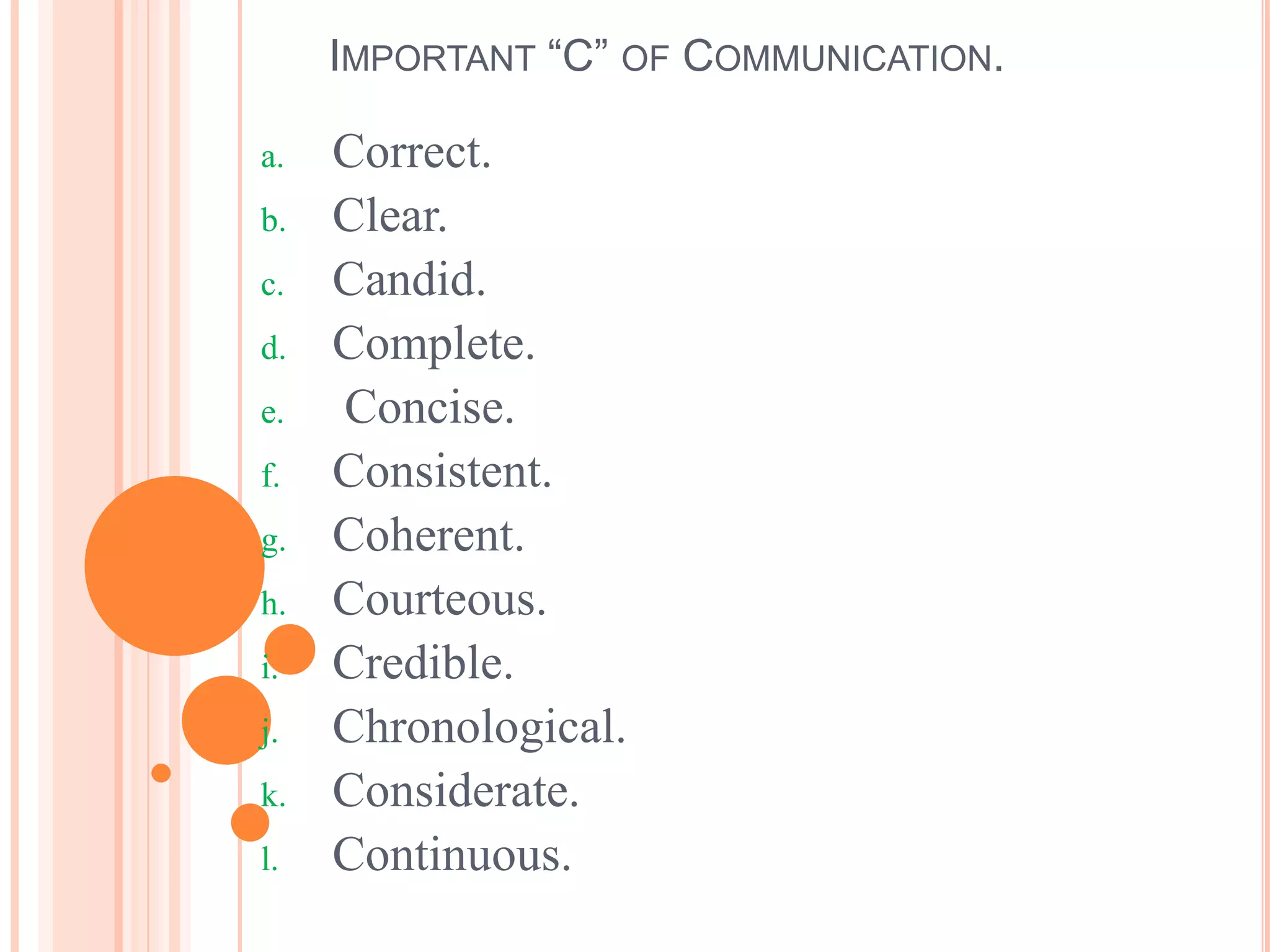
IMPORTANT “C” OF COMMUNICATION.
a. Correct.
b. Clear.
c. Candid.
d. Complete.
e. Concise.
f. Consistent.
g. Coherent.
h. Courteous.
i. Credible.
j. Chronological.
k. Considerate.
l. Continuous.
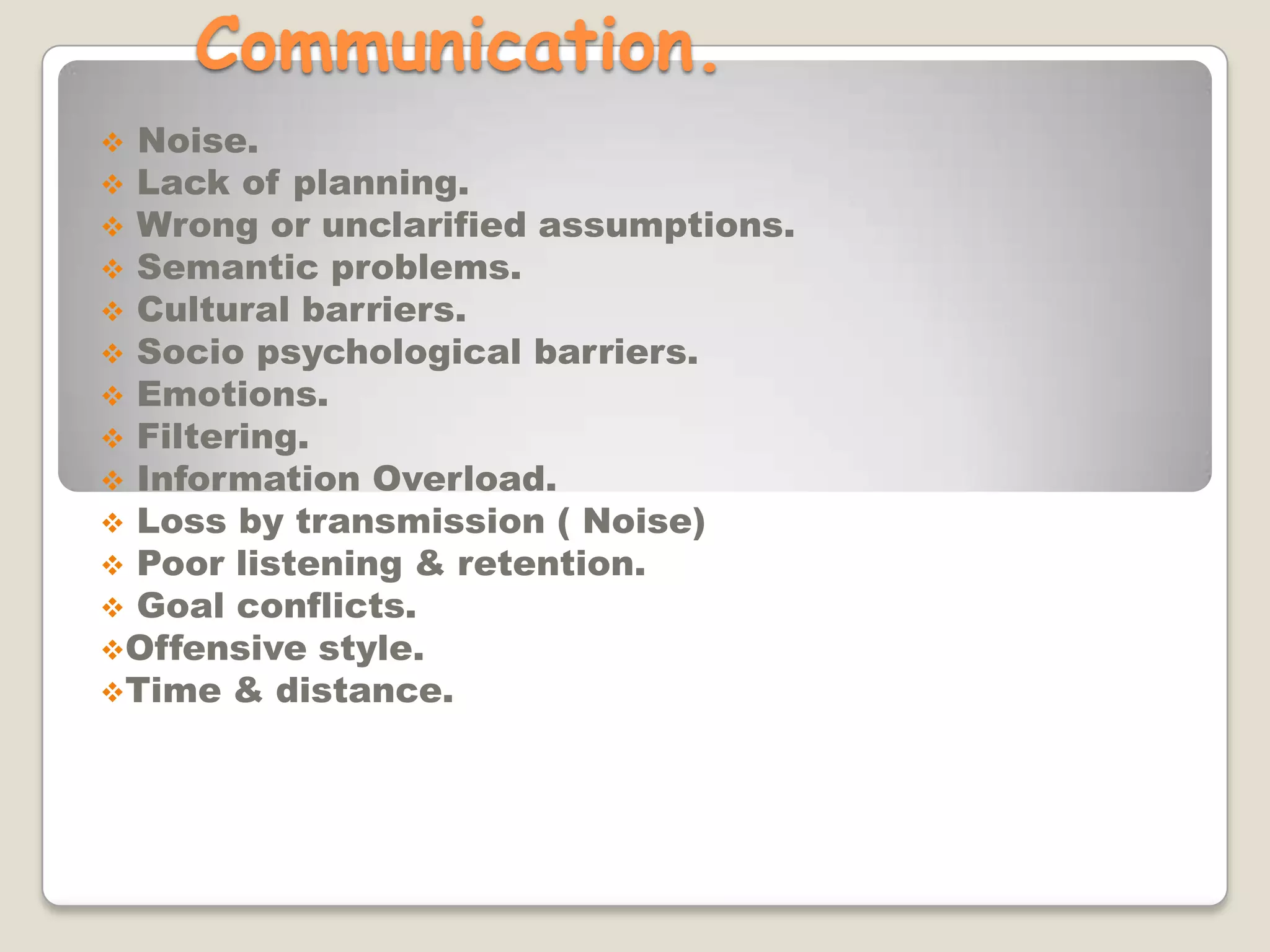
Communication.
 Noise.
 Lack of planning.
 Wrong or unclarified assumptions.
 Semantic problems.
 Cultural barriers.
 Socio psychological barriers.
 Emotions.
 Filtering.
 Information Overload.
 Loss by transmission ( Noise)
 Poor listening & retention.
 Goal conflicts.
Offensive style.
Time & distance.
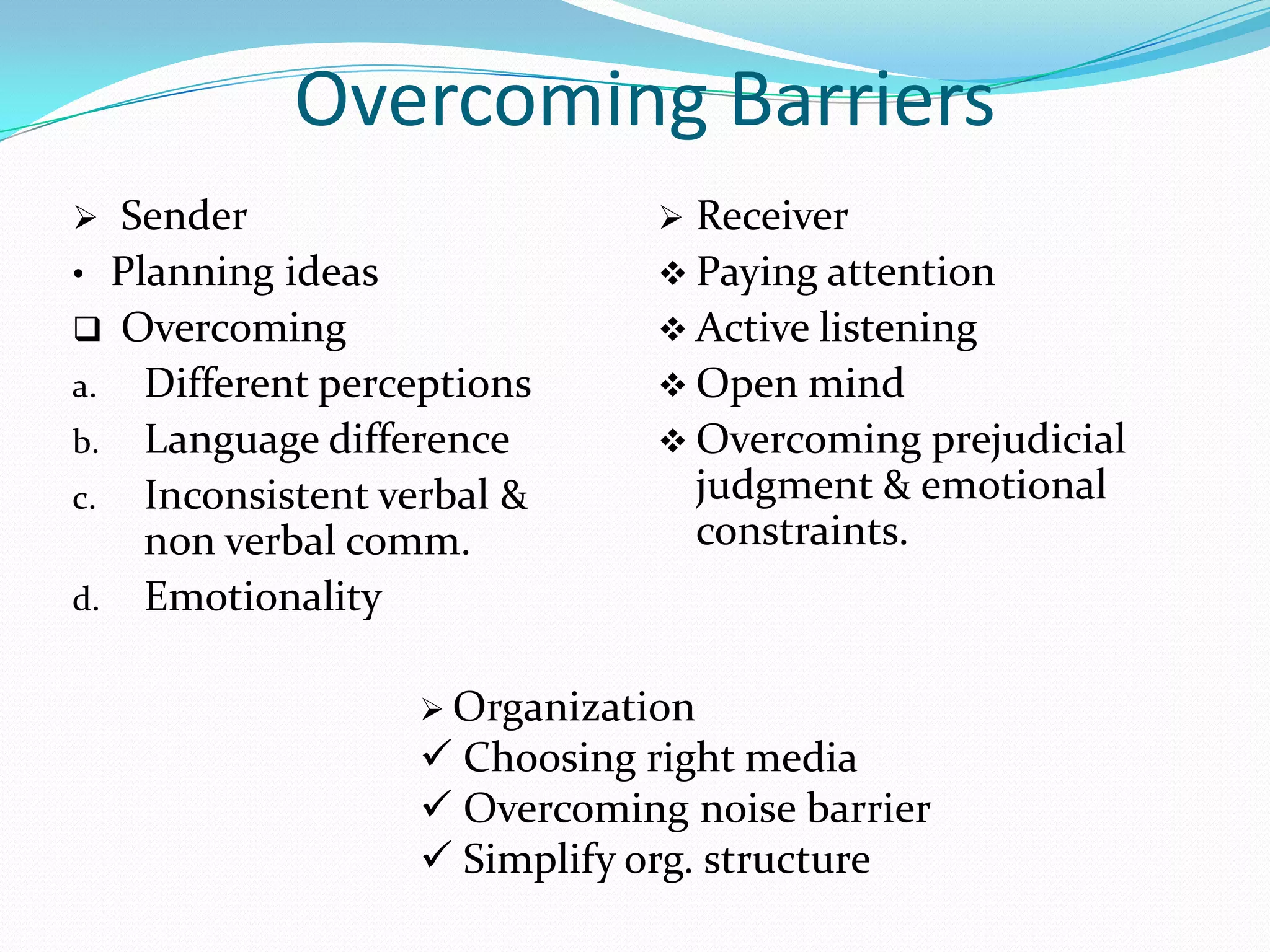
Overcoming Barriers
 Sender
• Planning ideas
 Overcoming
a. Different perceptions
b. Language difference
c. Inconsistent verbal &
non verbal comm.
d. Emotionality
 Receiver
 Paying attention
 Active listening
 Open mind
 Overcoming prejudicial
judgment & emotional
constraints.
 Organization
 Choosing right media
 Overcoming noise barrier
 Simplify org. structure
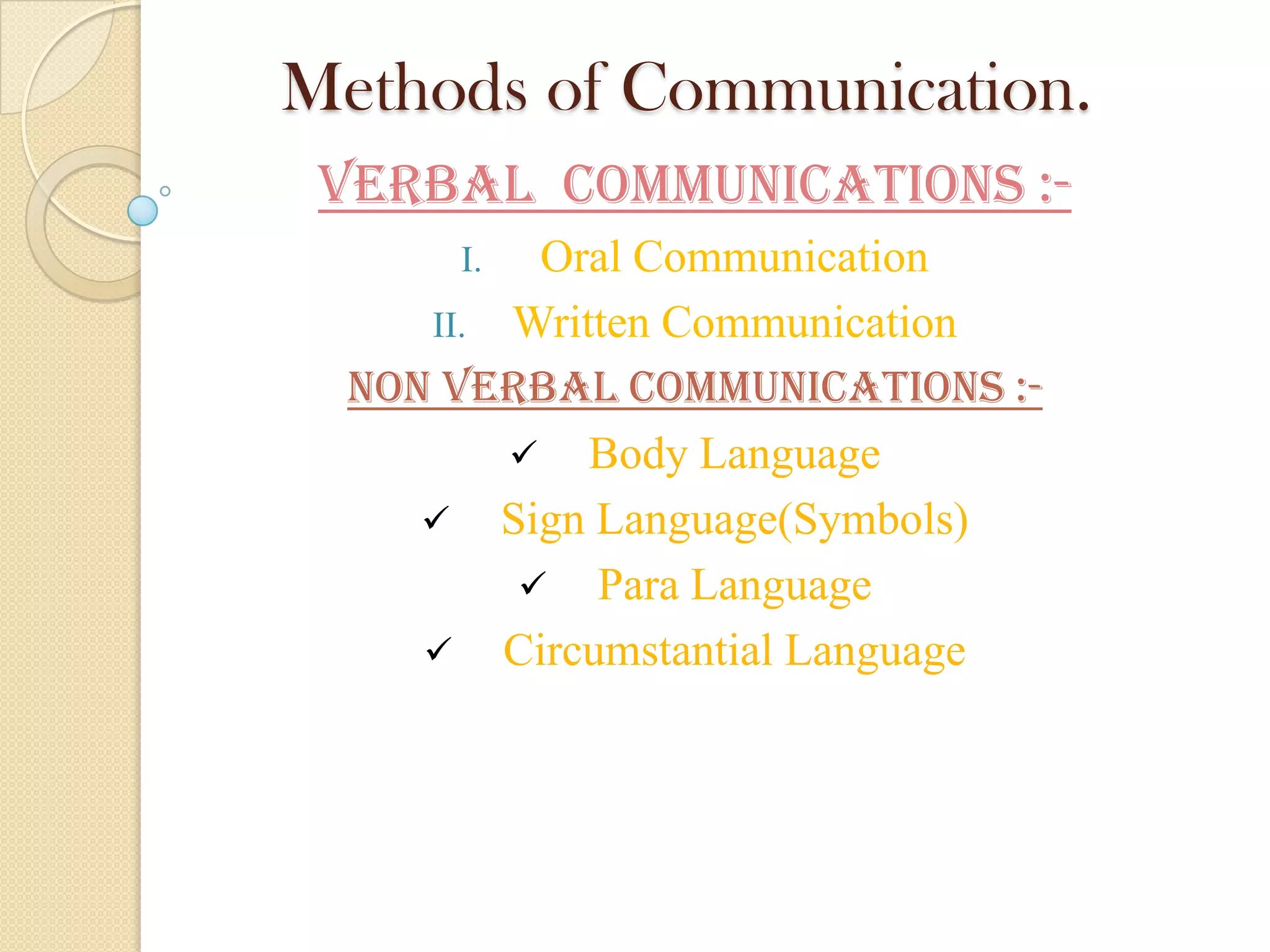
Methods of Communication.
Verbal Communications :-
I. Oral Communication
II. Written Communication
Non Verbal Communications :-
 Body Language
 Sign Language(Symbols)
 Para Language
 Circumstantial Language
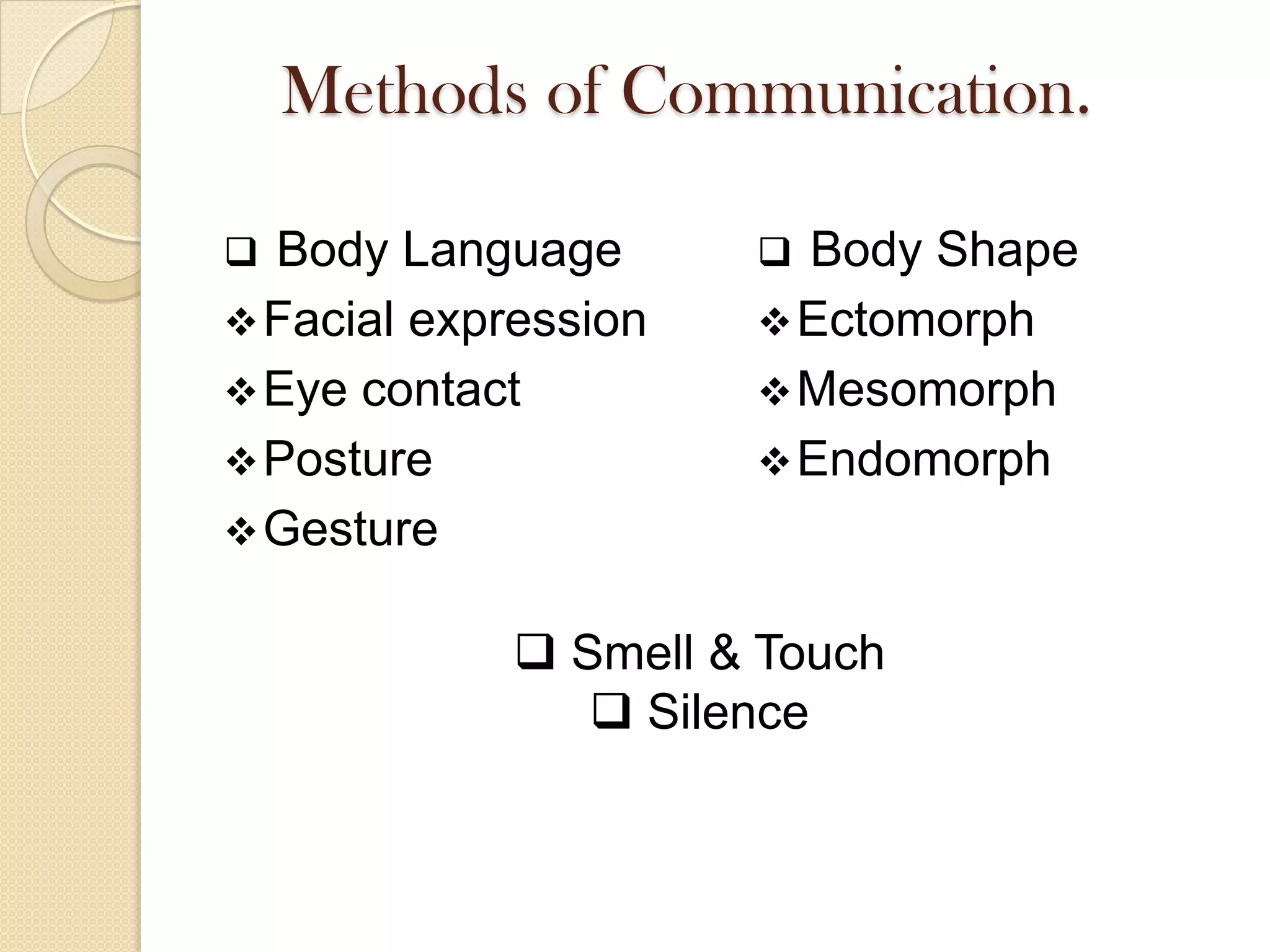
Methods of Communication.
 Body Language
Facial expression
Eye contact
Posture
Gesture
 Body Shape
Ectomorph
Mesomorph
Endomorph
 Smell & Touch
 Silence
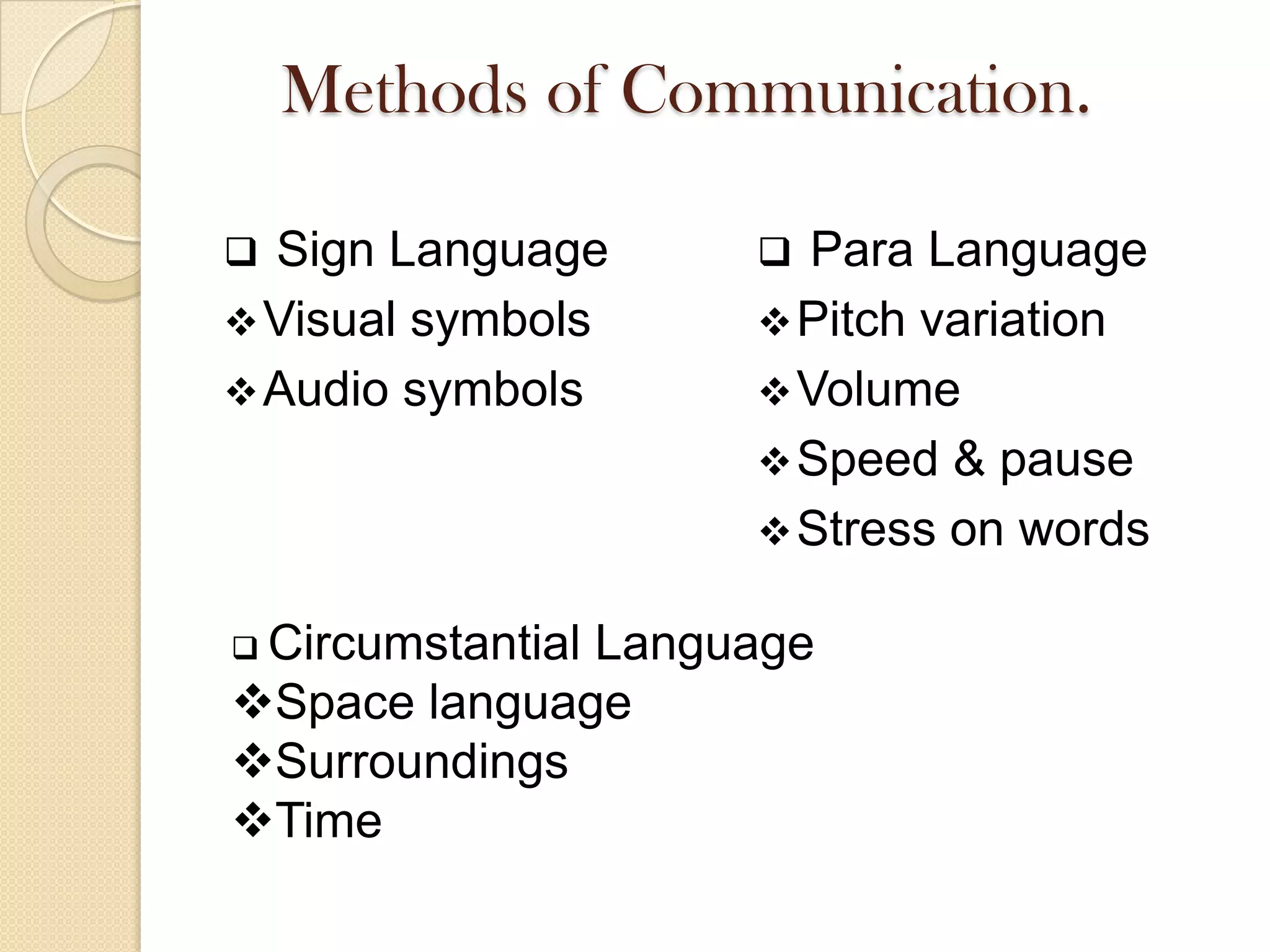
Methods of Communication.
 Sign Language
Visual symbols
Audio symbols
 Para Language
Pitch variation
Volume
Speed & pause
Stress on words
 Circumstantial Language
Space language
Surroundings
Time
THE END
THANK YOU

Communication - Process & Definition Power Point Presentation

  • 1.
  • 2.
    What is Communication? Communicationis the effective sharing or transmission of facts opinions or emotions by 2 or more people. The 3 basic elements of communication are :-  The Sender  The Message  The Receiver.
  • 3.
    Communication Idea of theEncoding into Transmission Sender. Message. Channel. Feedback Decodes into Receiver receives meaningful the Message. Idea
  • 4.
    Functions of Communicationin an Organization.  Inform  Instruct  Sharing of information  MotivatingWorkers  Leading the Organization  Control  Management
  • 5.
    Factors Responsible forgrowing importance of Communication. 1. Global business environment 2. Large scale operations 3. Technological advancement 4. Role of information 5. Change in management style 6. Need for better human relations & higher motivation levels 7. Increasing social role.
  • 6.
    IMPORTANT “C” OFCOMMUNICATION. a. Correct. b. Clear. c. Candid. d. Complete. e. Concise. f. Consistent. g. Coherent. h. Courteous. i. Credible. j. Chronological. k. Considerate. l. Continuous.
  • 7.
    Communication.  Noise.  Lackof planning.  Wrong or unclarified assumptions.  Semantic problems.  Cultural barriers.  Socio psychological barriers.  Emotions.  Filtering.  Information Overload.  Loss by transmission ( Noise)  Poor listening & retention.  Goal conflicts. Offensive style. Time & distance.
  • 8.
    Overcoming Barriers  Sender •Planning ideas  Overcoming a. Different perceptions b. Language difference c. Inconsistent verbal & non verbal comm. d. Emotionality  Receiver  Paying attention  Active listening  Open mind  Overcoming prejudicial judgment & emotional constraints.  Organization  Choosing right media  Overcoming noise barrier  Simplify org. structure
  • 9.
    Methods of Communication. VerbalCommunications :- I. Oral Communication II. Written Communication Non Verbal Communications :-  Body Language  Sign Language(Symbols)  Para Language  Circumstantial Language
  • 10.
    Methods of Communication. Body Language Facial expression Eye contact Posture Gesture  Body Shape Ectomorph Mesomorph Endomorph  Smell & Touch  Silence
  • 11.
    Methods of Communication. Sign Language Visual symbols Audio symbols  Para Language Pitch variation Volume Speed & pause Stress on words  Circumstantial Language Space language Surroundings Time
  • 12.