Professional
Communication
LESSON #03

THE 7 FUNCTIONS OF
COMMUNICATION
BY JAIME ALFREDO CABRERA

ALBUKHARY INTERNATIONAL UNIVERSITY

SLH1013 - Professional English

Tuesday, October 29, 2013
7 Reasons for Communicating
1.

2.
3.
4.
5.
6.
7.

To Entertain- To elicit a receiver’s willing suspension of
disbelief; to help the receiver forget reality for a while
To Persuade - To convince a receiver to change a belief
or mind-set; to convince a receiver to act
To Preserve - To record an event, information, or data for
posterity
To Measure Reaction - To elicit and measure a receiver's
reaction or output
To Inform - To effectively transfer information to a receiver
To Affect Affect - To modify or change a receiver’s
attitude, tendency, or feeling about something
To Educate - To cause the acquisition of
information, skills, and attitude

SLH1013 - Professional English

Tuesday, October 29, 2013
1. TO ENTERTAIN
To elicit a receiver’s willing suspension of disbelief; to forget reality for a while

Entertaining

Not Entertaining

 A dramatic movie

 A documentary film

 A soap opera on

 A weather report on

radio
 A romantic novel
 A joke about life on
campus

radio
 A math textbook
 A speech about
campus safety

SLH1013 - Professional English

Tuesday, October 29, 2013
2. TO PERSUADE
To convince a receiver to change a belief or mind-set

Persuasive

Not Persuasive

 Advertisement

 Advertisement

showing white teeth
 Receiver’s
mindset is
different
 Receiver’s belief is
modified or
changed

SLH1013 - Professional English

showing toothpaste
 Receiver’s
mindset is the
same
 Receiver’s belief is
the same
Tuesday, October 29, 2013
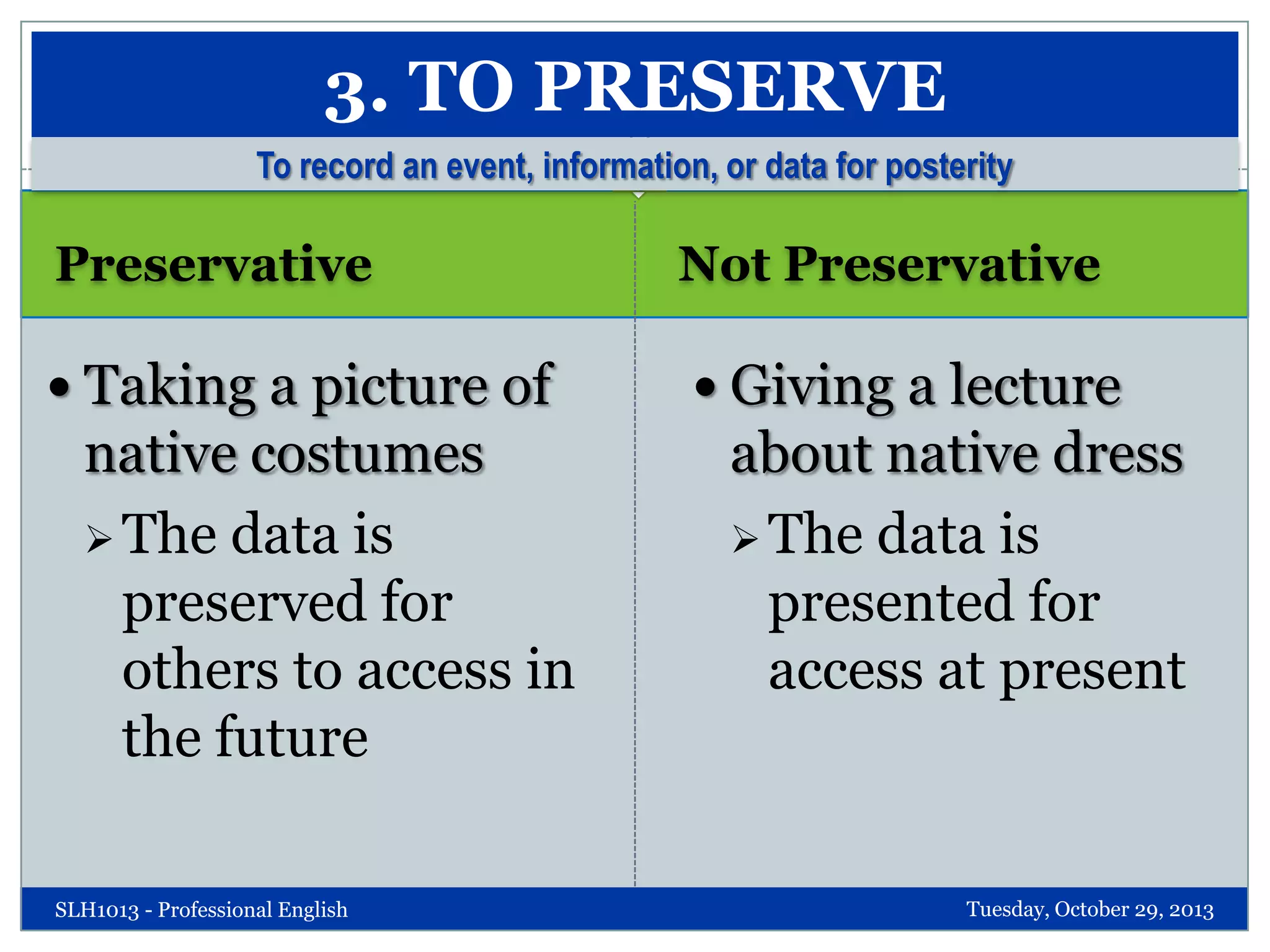
3. TO PRESERVE
To record an event, information, or data for posterity

Preservative

Not Preservative

 Taking a picture of

 Giving a lecture

native costumes
 The data is
preserved for
others to access in
the future
SLH1013 - Professional English

about native dress
 The data is
presented for
access at present

Tuesday, October 29, 2013
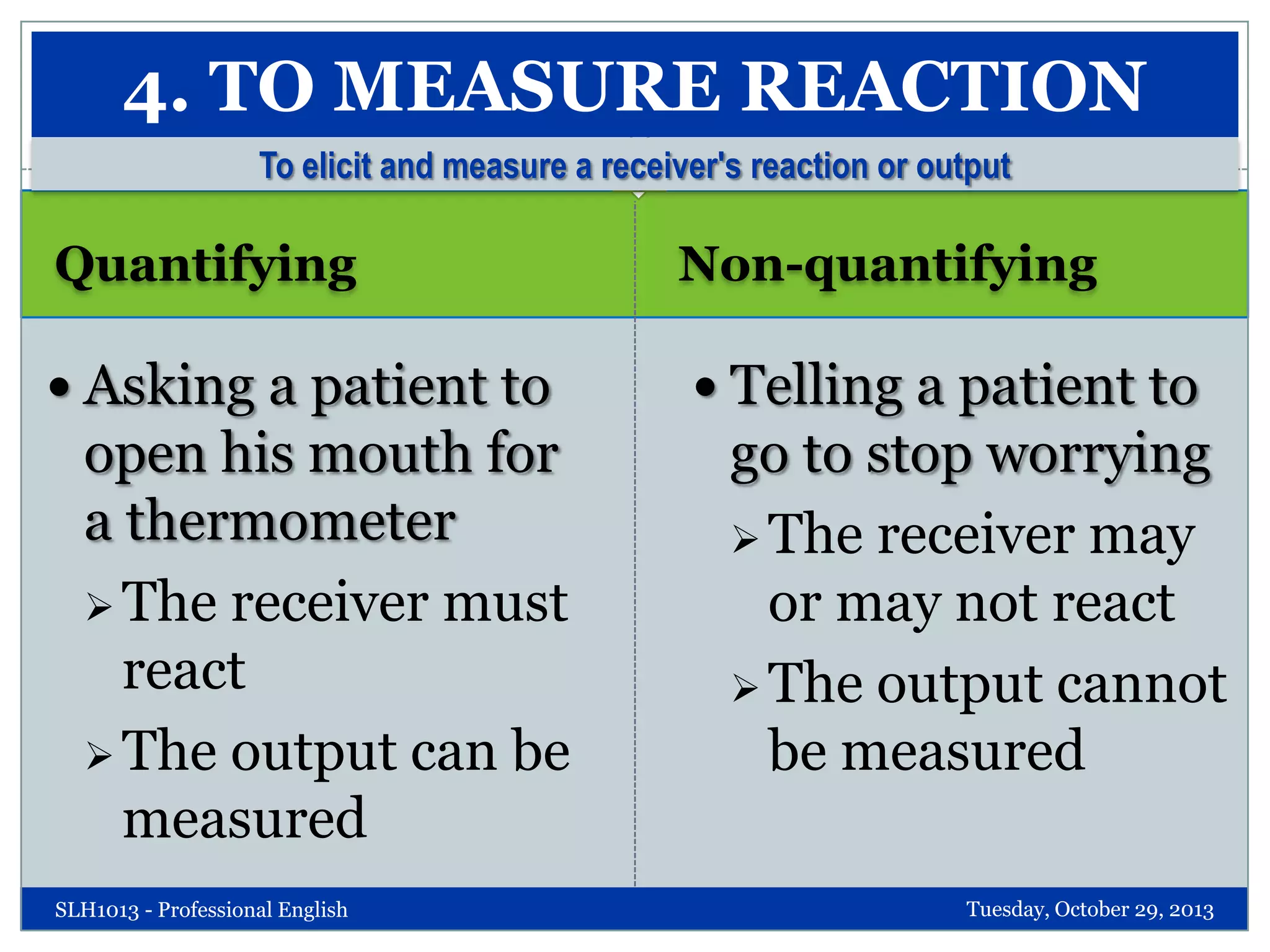
4. TO MEASURE REACTION
To elicit and measure a receiver's reaction or output

Quantifying

Non-quantifying

 Asking a patient to

 Telling a patient to

open his mouth for
a thermometer
 The receiver must
react
 The output can be
measured
SLH1013 - Professional English

go to stop worrying
 The receiver may
or may not react
 The output cannot
be measured
Tuesday, October 29, 2013
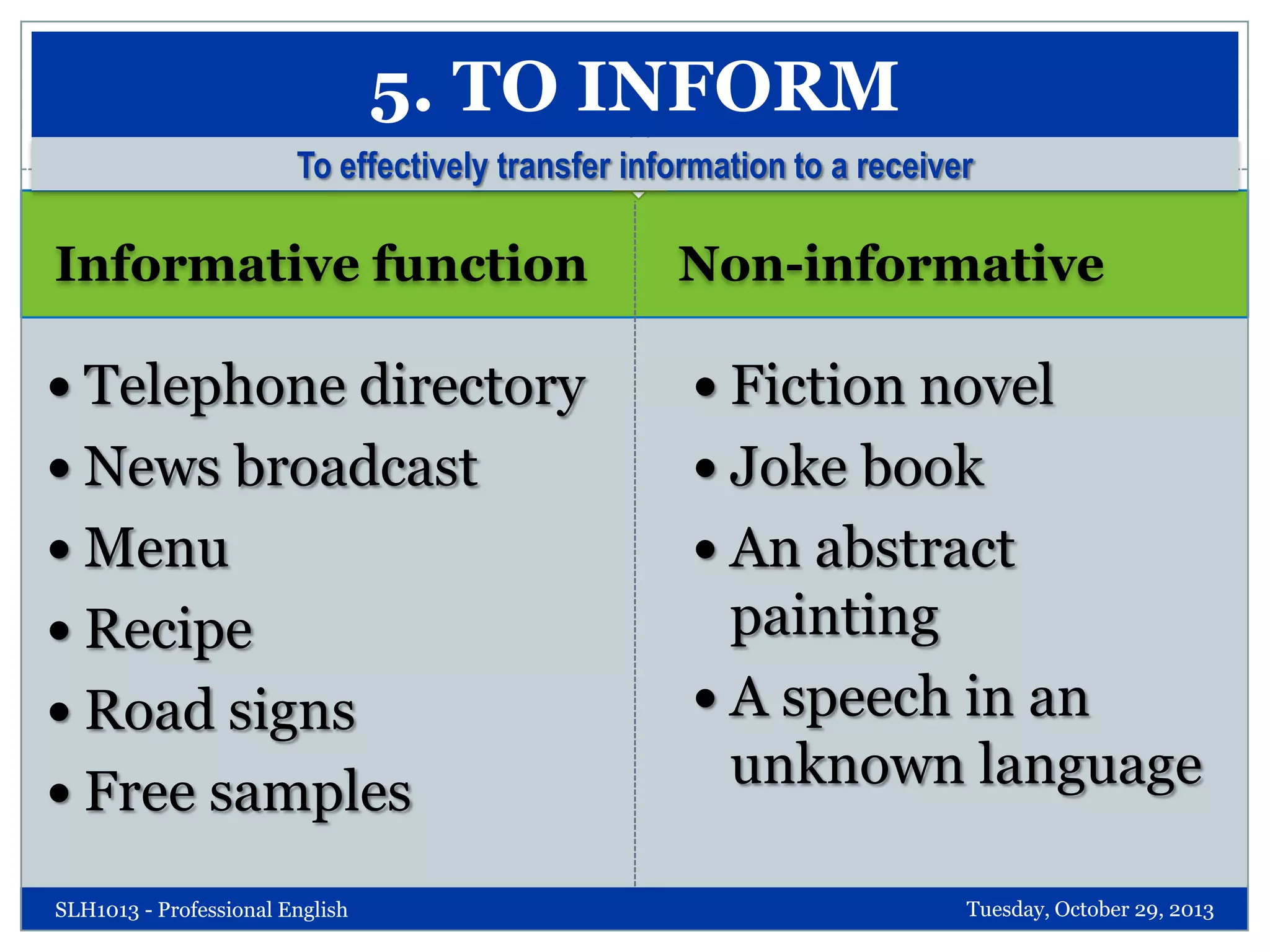
5. TO INFORM
To effectively transfer information to a receiver

Informative function

Non-informative

 Telephone directory

 Fiction novel

 News broadcast

 Joke book

 Menu

 An abstract

 Recipe

painting
 A speech in an
unknown language

 Road signs
 Free samples
SLH1013 - Professional English

Tuesday, October 29, 2013
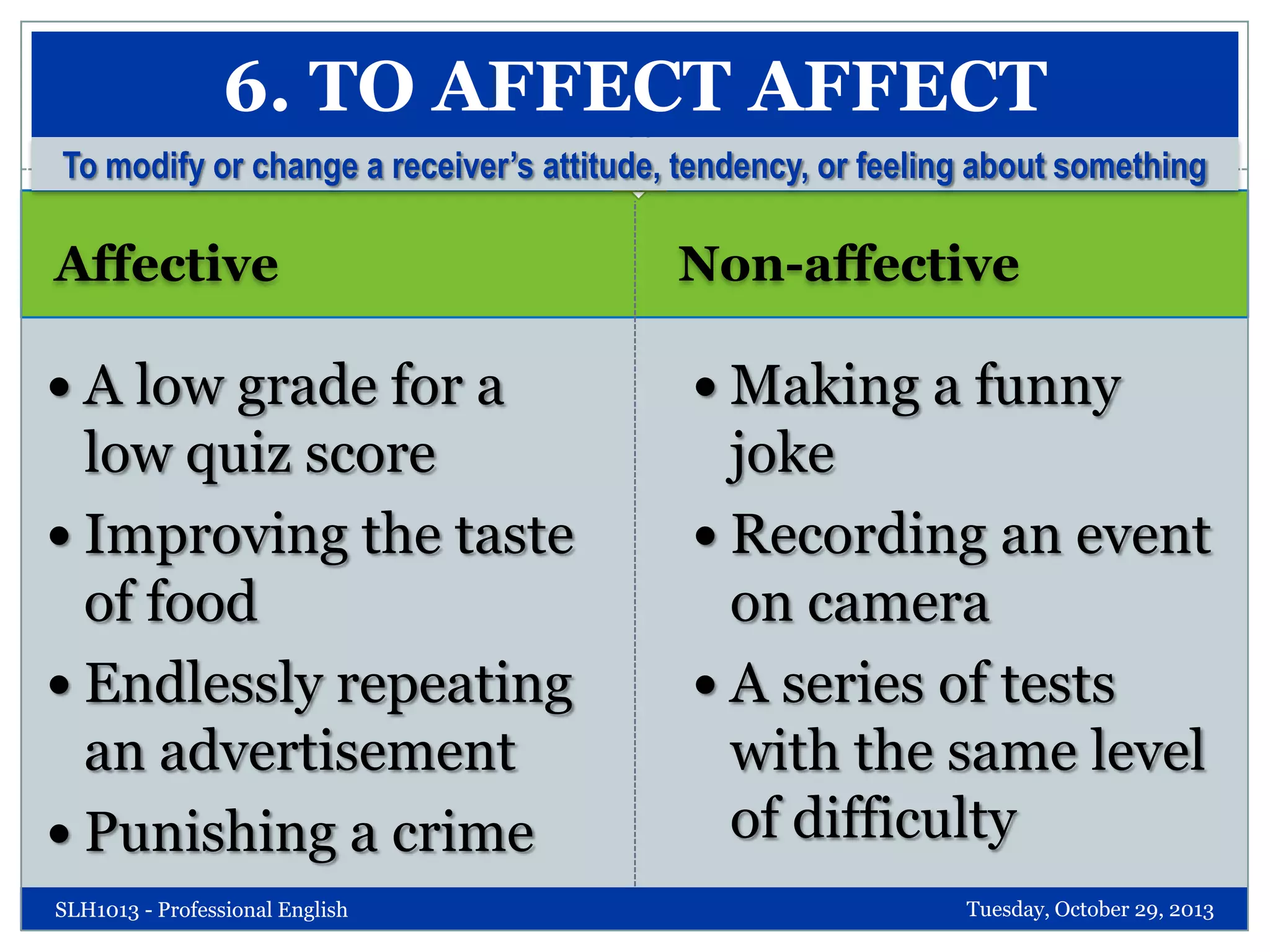
6. TO AFFECT AFFECT
To modify or change a receiver’s attitude, tendency, or feeling about something

Affective

Non-affective

 A low grade for a

 Making a funny

low quiz score
 Improving the taste
of food
 Endlessly repeating
an advertisement
 Punishing a crime

joke
 Recording an event
on camera
 A series of tests
with the same level
of difficulty

SLH1013 - Professional English

Tuesday, October 29, 2013
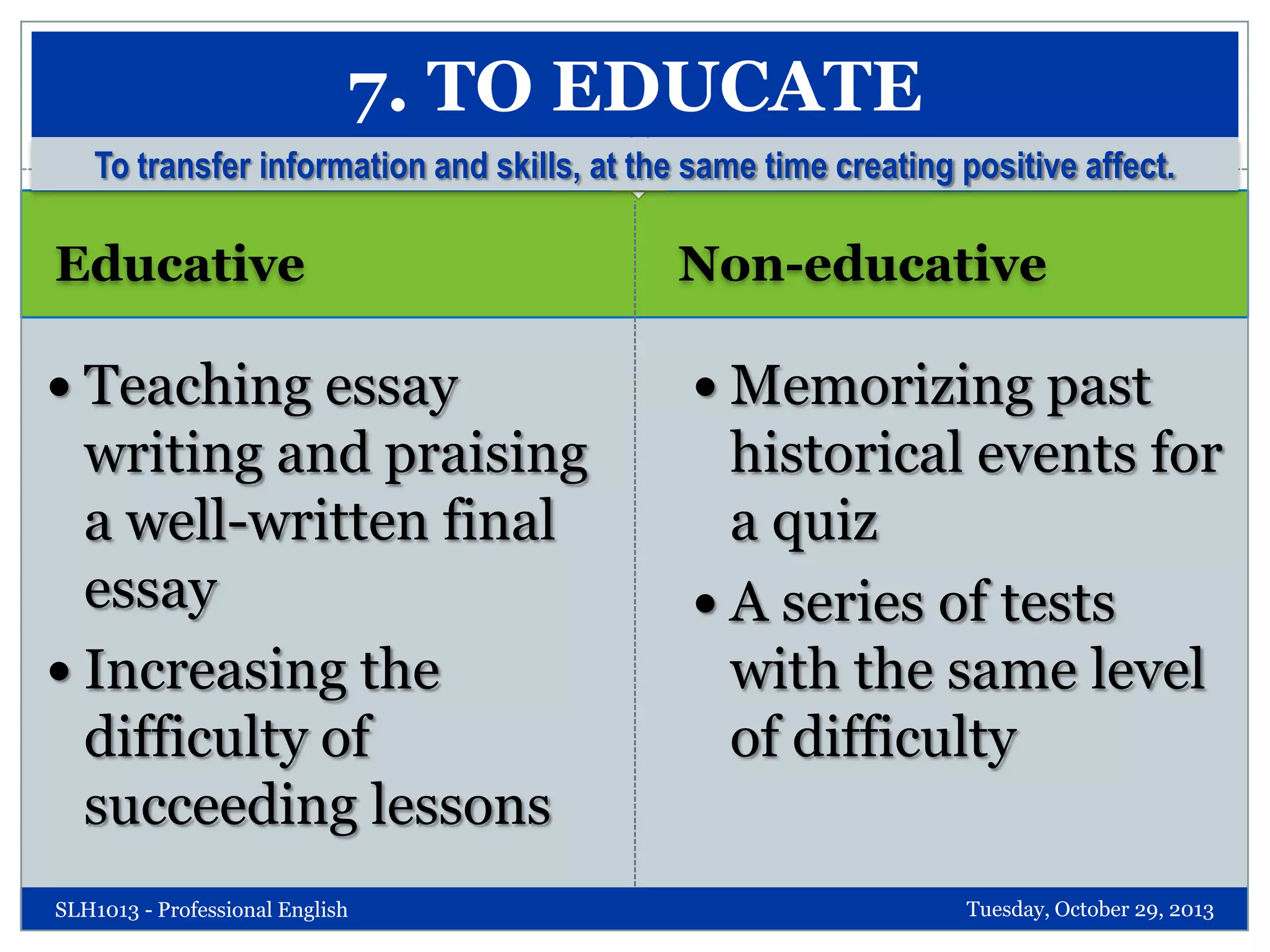
7. TO EDUCATE
To transfer information and skills, at the same time creating positive affect.

Educative

Non-educative

 Teaching essay

 Memorizing past

writing and praising
a well-written final
essay
 Increasing the
difficulty of
succeeding lessons

historical events for
a quiz
 A series of tests
with the same level
of difficulty

SLH1013 - Professional English

Tuesday, October 29, 2013
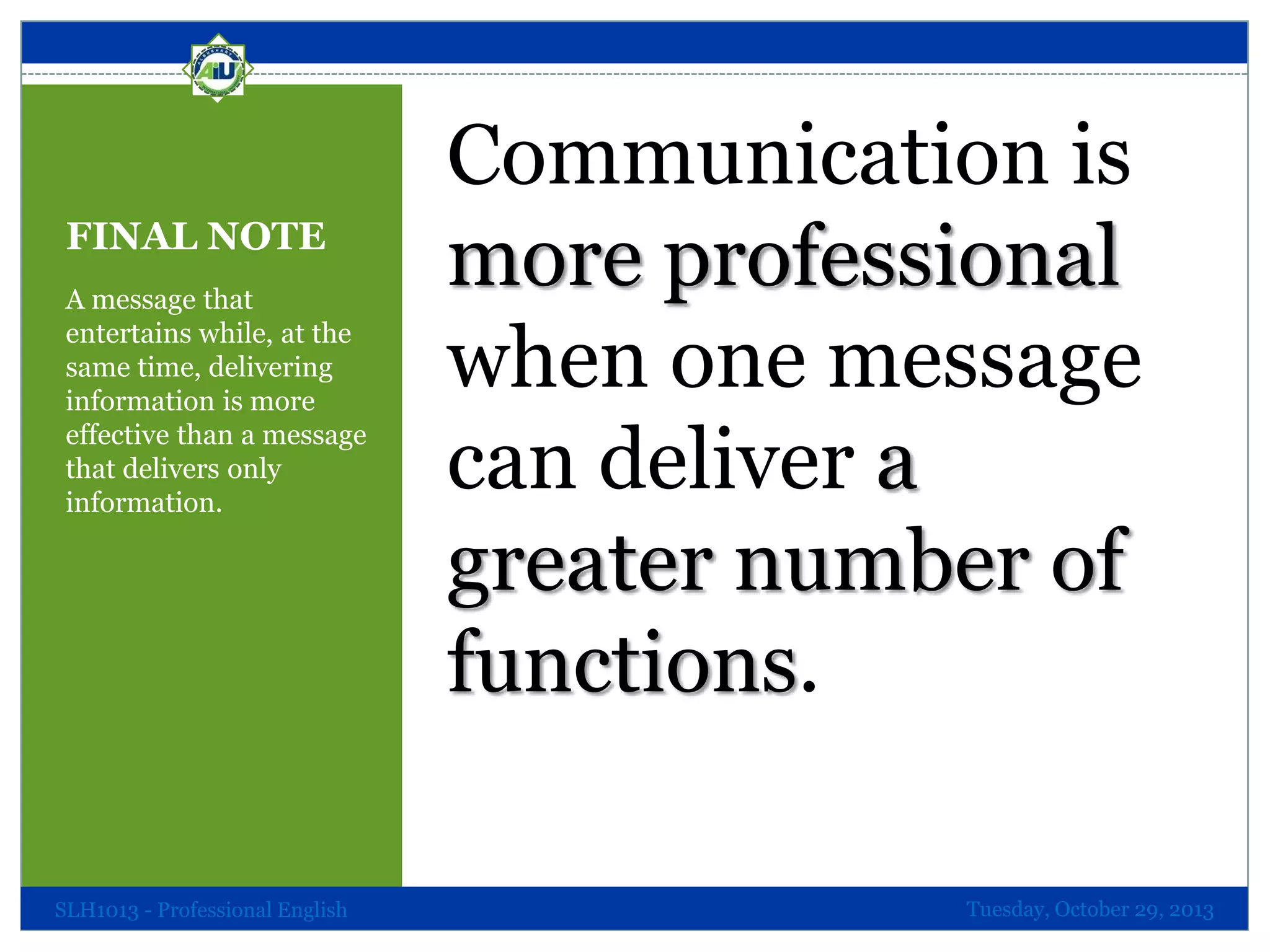
FINAL NOTE
A message that
entertains while, at the
same time, delivering
information is more
effective than a message
that delivers only
information.

SLH1013 - Professional English

Communication is
more professional
when one message
can deliver a
greater number of
functions.
Tuesday, October 29, 2013
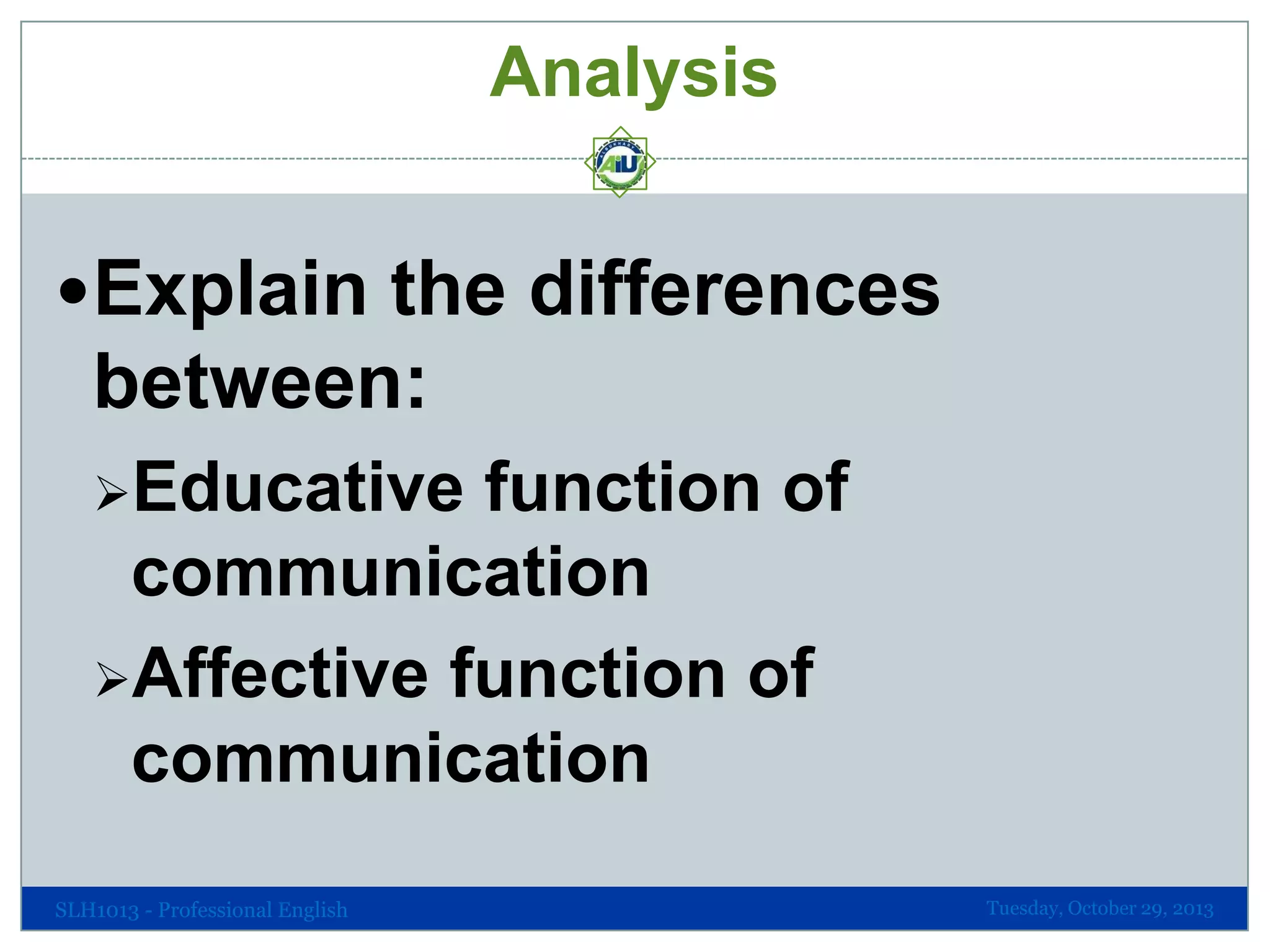
Analysis
Explain the differences

between:
Educative

function of
communication
Affective function of
communication
SLH1013 - Professional English

Tuesday, October 29, 2013
Analysis

What is the

communicative purpose
of a course in computer
repair?
SLH1013 - Professional English

Tuesday, October 29, 2013
Professional
Communication
LESSON #04

THE EIGHT ELEMENTS OF
PROFESSIONAL
COMMUNICATION

SLH1013 - Professional English

Tuesday, October 29, 2013

Professional Communication 03 - Seven Functions of Professionalism in Communication

  • 1.
    Professional Communication LESSON #03 THE 7FUNCTIONS OF COMMUNICATION BY JAIME ALFREDO CABRERA ALBUKHARY INTERNATIONAL UNIVERSITY SLH1013 - Professional English Tuesday, October 29, 2013
  • 2.
    7 Reasons forCommunicating 1. 2. 3. 4. 5. 6. 7. To Entertain- To elicit a receiver’s willing suspension of disbelief; to help the receiver forget reality for a while To Persuade - To convince a receiver to change a belief or mind-set; to convince a receiver to act To Preserve - To record an event, information, or data for posterity To Measure Reaction - To elicit and measure a receiver's reaction or output To Inform - To effectively transfer information to a receiver To Affect Affect - To modify or change a receiver’s attitude, tendency, or feeling about something To Educate - To cause the acquisition of information, skills, and attitude SLH1013 - Professional English Tuesday, October 29, 2013
  • 3.
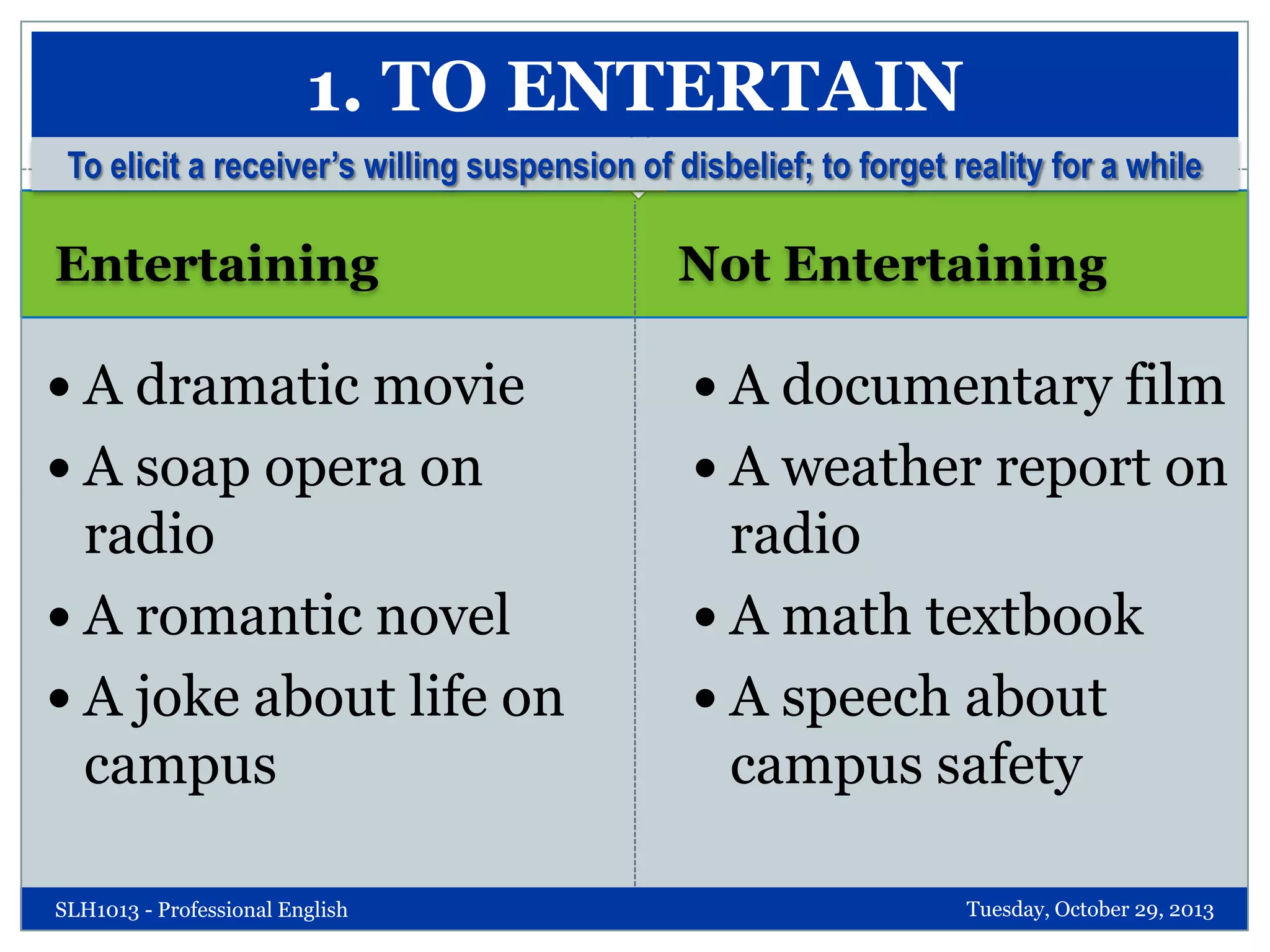
    1. TO ENTERTAIN Toelicit a receiver’s willing suspension of disbelief; to forget reality for a while Entertaining Not Entertaining  A dramatic movie  A documentary film  A soap opera on  A weather report on radio  A romantic novel  A joke about life on campus radio  A math textbook  A speech about campus safety SLH1013 - Professional English Tuesday, October 29, 2013
  • 4.
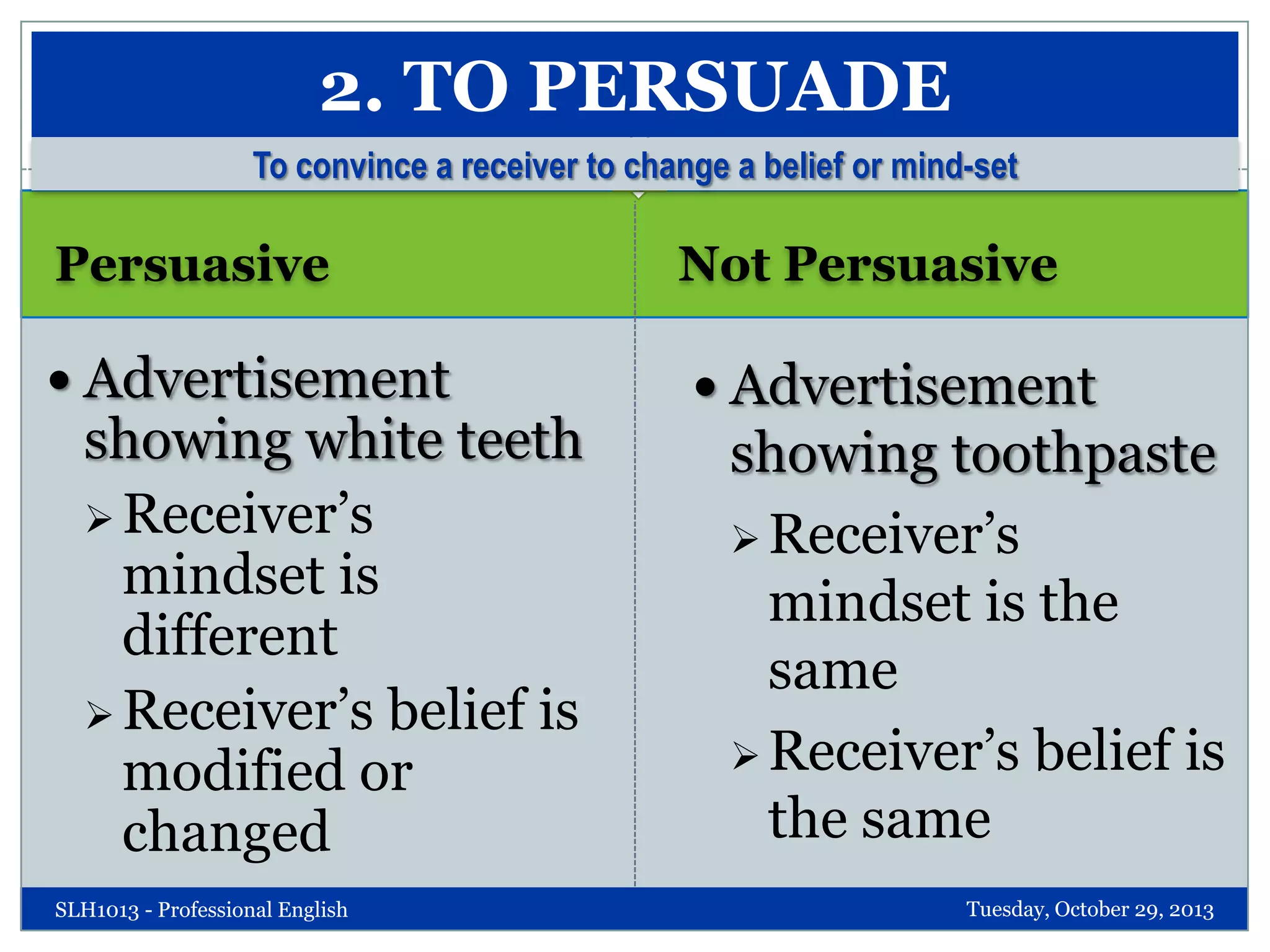
    2. TO PERSUADE Toconvince a receiver to change a belief or mind-set Persuasive Not Persuasive  Advertisement  Advertisement showing white teeth  Receiver’s mindset is different  Receiver’s belief is modified or changed SLH1013 - Professional English showing toothpaste  Receiver’s mindset is the same  Receiver’s belief is the same Tuesday, October 29, 2013
  • 5.
    3. TO PRESERVE Torecord an event, information, or data for posterity Preservative Not Preservative  Taking a picture of  Giving a lecture native costumes  The data is preserved for others to access in the future SLH1013 - Professional English about native dress  The data is presented for access at present Tuesday, October 29, 2013
  • 6.
    4. TO MEASUREREACTION To elicit and measure a receiver's reaction or output Quantifying Non-quantifying  Asking a patient to  Telling a patient to open his mouth for a thermometer  The receiver must react  The output can be measured SLH1013 - Professional English go to stop worrying  The receiver may or may not react  The output cannot be measured Tuesday, October 29, 2013
  • 7.
    5. TO INFORM Toeffectively transfer information to a receiver Informative function Non-informative  Telephone directory  Fiction novel  News broadcast  Joke book  Menu  An abstract  Recipe painting  A speech in an unknown language  Road signs  Free samples SLH1013 - Professional English Tuesday, October 29, 2013
  • 8.
    6. TO AFFECTAFFECT To modify or change a receiver’s attitude, tendency, or feeling about something Affective Non-affective  A low grade for a  Making a funny low quiz score  Improving the taste of food  Endlessly repeating an advertisement  Punishing a crime joke  Recording an event on camera  A series of tests with the same level of difficulty SLH1013 - Professional English Tuesday, October 29, 2013
  • 9.
    7. TO EDUCATE Totransfer information and skills, at the same time creating positive affect. Educative Non-educative  Teaching essay  Memorizing past writing and praising a well-written final essay  Increasing the difficulty of succeeding lessons historical events for a quiz  A series of tests with the same level of difficulty SLH1013 - Professional English Tuesday, October 29, 2013
  • 10.
    FINAL NOTE A messagethat entertains while, at the same time, delivering information is more effective than a message that delivers only information. SLH1013 - Professional English Communication is more professional when one message can deliver a greater number of functions. Tuesday, October 29, 2013
  • 11.
    Analysis Explain the differences between: Educative functionof communication Affective function of communication SLH1013 - Professional English Tuesday, October 29, 2013
  • 12.
    Analysis What is the communicativepurpose of a course in computer repair? SLH1013 - Professional English Tuesday, October 29, 2013
  • 13.
    Professional Communication LESSON #04 THE EIGHTELEMENTS OF PROFESSIONAL COMMUNICATION SLH1013 - Professional English Tuesday, October 29, 2013

Editor's Notes

  • #3 When you take pictures at your friend’s wedding, the communicative purpose is to ___. entertain persuade *preserve measure reaction inform affect feelings educateWhen you show a little boy how to button a shirt with care, the communicative purpose is to ___. entertain persuade preserve measure reaction inform affect feelings *educateWhen a teacher begins a lesson with a funny story that is related to the lesson, the communicative purpose is to ___. entertain persuade preserve measure reaction inform *affect feelings educateWhen an advertisement for toothpaste shows people with perfect teeth, the communicative purpose is to ___. entertain *persuade preserve measure reaction inform affect feelings educate
  • #11 Communication is more professional when one message can deliver a greater number of communicative ___. Functions messages responses effects effectiveness professionalism
  • #12 The affective function of communication is to ___. change something transfer something create something discover somethingThe educative function of communication is to ___. change something transfer something create something discover somethingThe communicative purpose of a message is to ___. transfer something create something discover something change something