



.
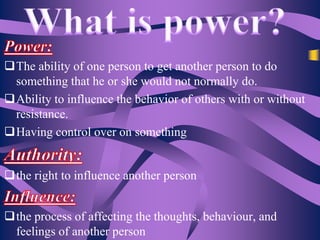
The ability of one person to get another person to do
something that he or she would not normally do.
Ability to influence the behavior of others with or without
resistance.
Having control over on something
the right to influence another person

the process of affecting the thoughts, behaviour, and
feelings of another person
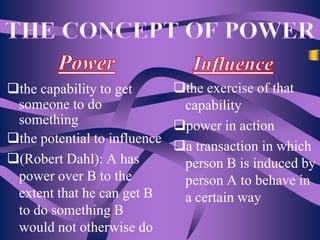
the exercise of that
the capability to get
someone to do
capability
something
power in action
the potential to influence
a transaction in which
(Robert Dahl): A has
person B is induced by
power over B to the
person A to behave in
extent that he can get B
a certain way
to do something B
would not otherwise do
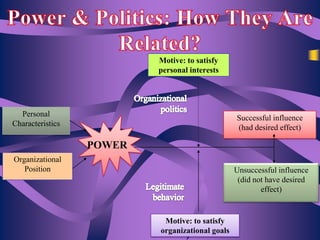
Motive: to satisfy
personal interests

Personal
Characteristics

Successful influence
(had desired effect)

POWER
Organizational
Position

Unsuccessful influence
(did not have desired
effect)

Motive: to satisfy
organizational goals
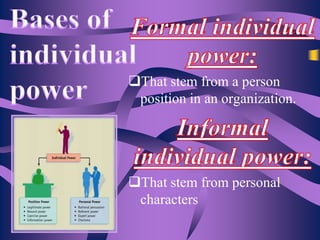
That stem from a person
position in an organization.

That stem from personal
characters
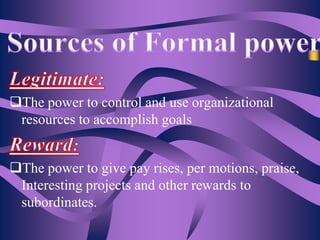
The power to control and use organizational
resources to accomplish goals
The power to give pay rises, per motions, praise,
Interesting projects and other rewards to
subordinates.
The power to give or with
hold punishment such as
suspension, termination, or
even the withholding praise
or good will.
That stem to access to and
control over information
That stem from superior ability or expertise
That stem from being liked, admired, or respect,
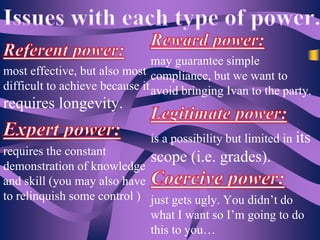
may guarantee simple
most effective, but also most compliance, but we want to
difficult to achieve because it avoid bringing Ivan to the party.

requires longevity.

is a possibility but limited in its

requires the constant
scope (i.e. grades).
demonstration of knowledge
and skill (you may also have
to relinquish some control ) just gets ugly. You didn’t do
what I want so I’m going to do
this to you…
Be polite and clear.
Explain reasons when requesting
something from your staff.
Respond to concerns of staffers
Use legitimate authority.
Attempts to influence others using discretionary
behaviours to promote personal objectives
Discretionary behaviours -- neither explicitly
prescribed nor prohibited
Politics may be good or bad for the organization
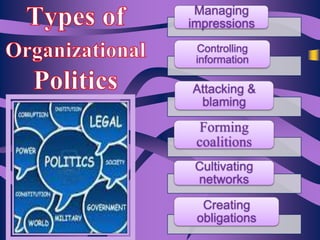
Managing
impressions
Controlling
information

Attacking &
blaming

Forming
coalitions
Cultivating
networks
Creating
obligations







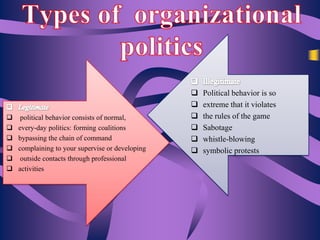
political behavior consists of normal,
every-day politics: forming coalitions
bypassing the chain of command
complaining to your supervise or developing
outside contacts through professional
activities








Political behavior is so
extreme that it violates
the rules of the game
Sabotage
whistle-blowing
symbolic protests
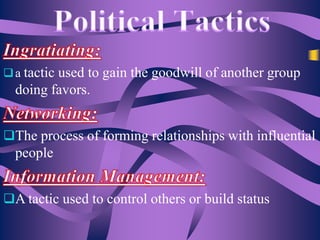
 a tactic

used to gain the goodwill of another group
doing favors.

The process of forming relationships with influential

people
A tactic used to control others or build status
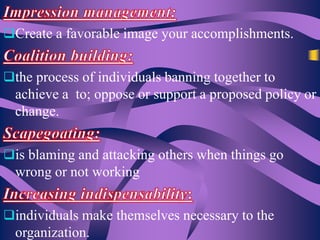
Create a favorable image your accomplishments.
the process of individuals banning together to

achieve a to; oppose or support a proposed policy or
change.
is blaming and attacking others when things go

wrong or not working
individuals make themselves necessary to the

organization.
Power and politics
Power and politics
Power and politics
Power and politics

Power and politics

  • 2.
  • 4.
    The ability ofone person to get another person to do something that he or she would not normally do. Ability to influence the behavior of others with or without resistance. Having control over on something the right to influence another person the process of affecting the thoughts, behaviour, and feelings of another person
  • 5.
    the exercise ofthat the capability to get someone to do capability something power in action the potential to influence a transaction in which (Robert Dahl): A has person B is induced by power over B to the person A to behave in extent that he can get B a certain way to do something B would not otherwise do
  • 6.
    Motive: to satisfy personalinterests Personal Characteristics Successful influence (had desired effect) POWER Organizational Position Unsuccessful influence (did not have desired effect) Motive: to satisfy organizational goals
  • 7.
    That stem froma person position in an organization. That stem from personal characters
  • 8.
    The power tocontrol and use organizational resources to accomplish goals The power to give pay rises, per motions, praise, Interesting projects and other rewards to subordinates.
  • 9.
    The power togive or with hold punishment such as suspension, termination, or even the withholding praise or good will. That stem to access to and control over information
  • 10.
    That stem fromsuperior ability or expertise That stem from being liked, admired, or respect,
  • 11.
    may guarantee simple mosteffective, but also most compliance, but we want to difficult to achieve because it avoid bringing Ivan to the party. requires longevity. is a possibility but limited in its requires the constant scope (i.e. grades). demonstration of knowledge and skill (you may also have to relinquish some control ) just gets ugly. You didn’t do what I want so I’m going to do this to you…
  • 12.
    Be polite andclear. Explain reasons when requesting something from your staff. Respond to concerns of staffers Use legitimate authority.
  • 14.
    Attempts to influenceothers using discretionary behaviours to promote personal objectives Discretionary behaviours -- neither explicitly prescribed nor prohibited Politics may be good or bad for the organization
  • 15.
  • 16.
          political behavior consistsof normal, every-day politics: forming coalitions bypassing the chain of command complaining to your supervise or developing outside contacts through professional activities       Political behavior is so extreme that it violates the rules of the game Sabotage whistle-blowing symbolic protests
  • 17.
     a tactic usedto gain the goodwill of another group doing favors. The process of forming relationships with influential people A tactic used to control others or build status
  • 18.
    Create a favorableimage your accomplishments. the process of individuals banning together to achieve a to; oppose or support a proposed policy or change. is blaming and attacking others when things go wrong or not working individuals make themselves necessary to the organization.