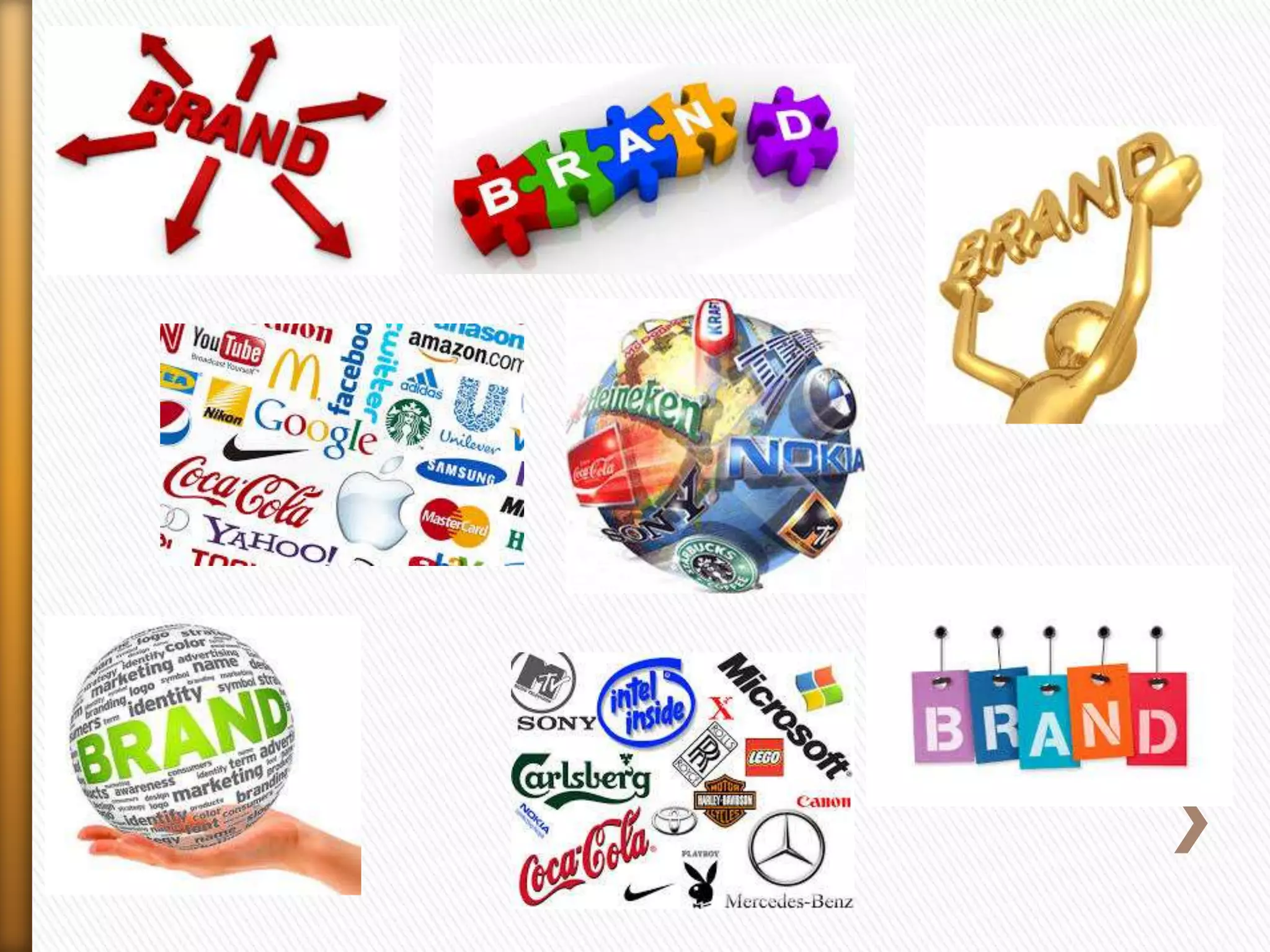

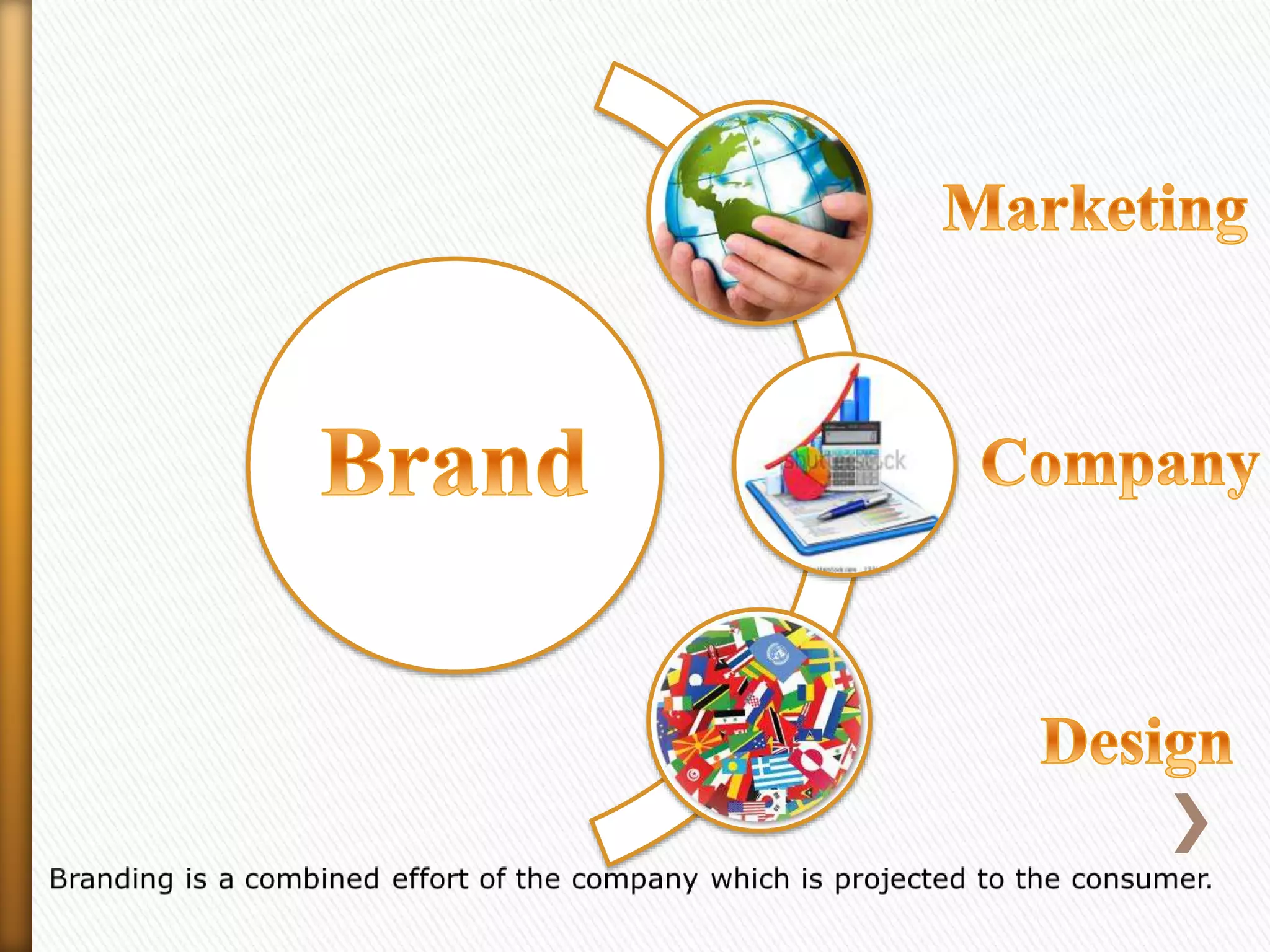



Name, term, sign, symbol, design, or some
Combination that identifies the products of
one firm While differentiating them from
the competitions.
Marketing is more then selling and pricing
The business must identify & satisfy customers
needs wants and demands in order to make
profit,
Marketing is about gain and retain customer.
Satisfying customer needs and build long term
relationship with them
Marketing is about creating for customer value
people or institutions with sufficient purchasing
power, authority, and willingness to buy

specific segment of consumers most likely to
purchase a particular product
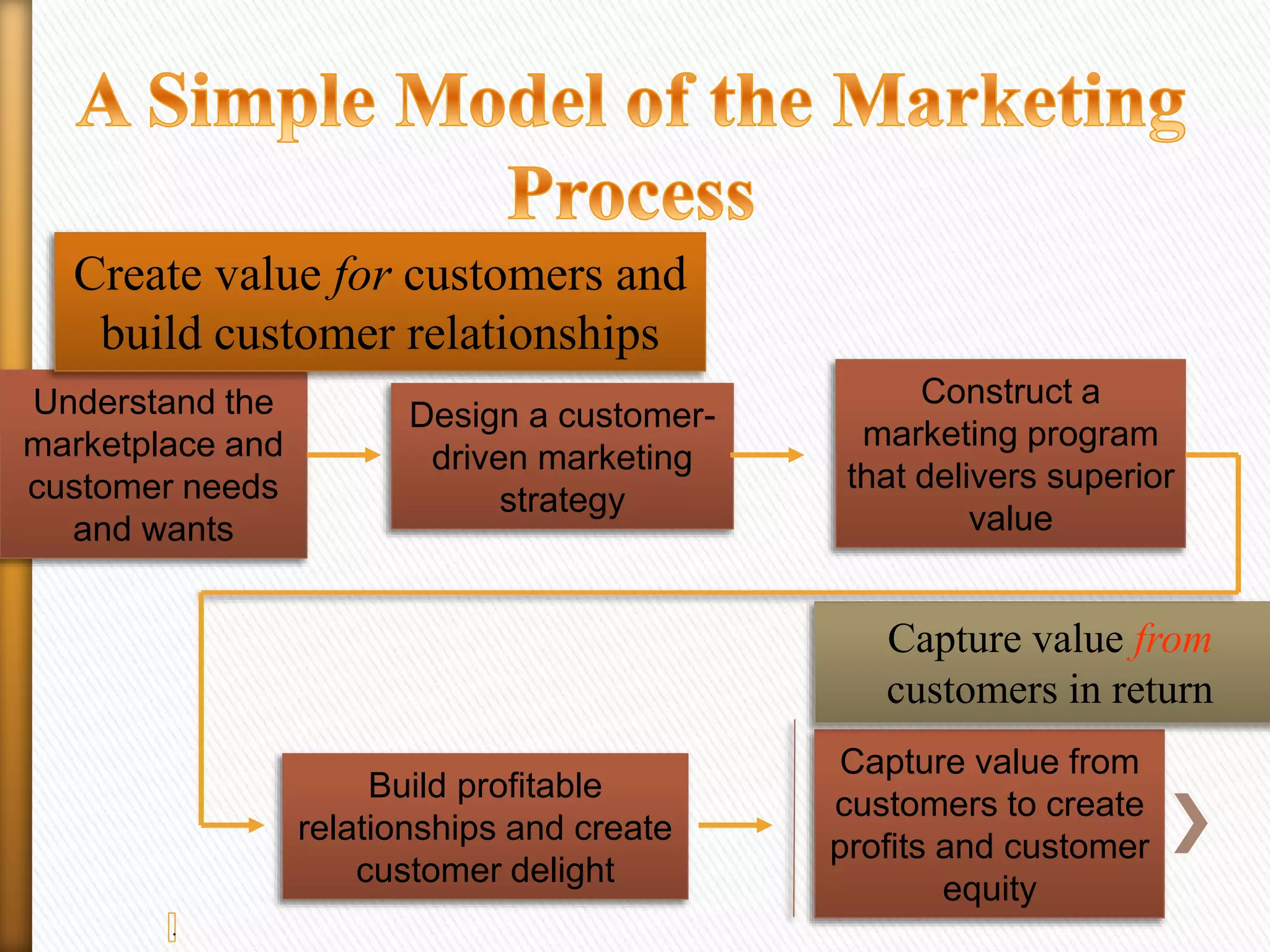
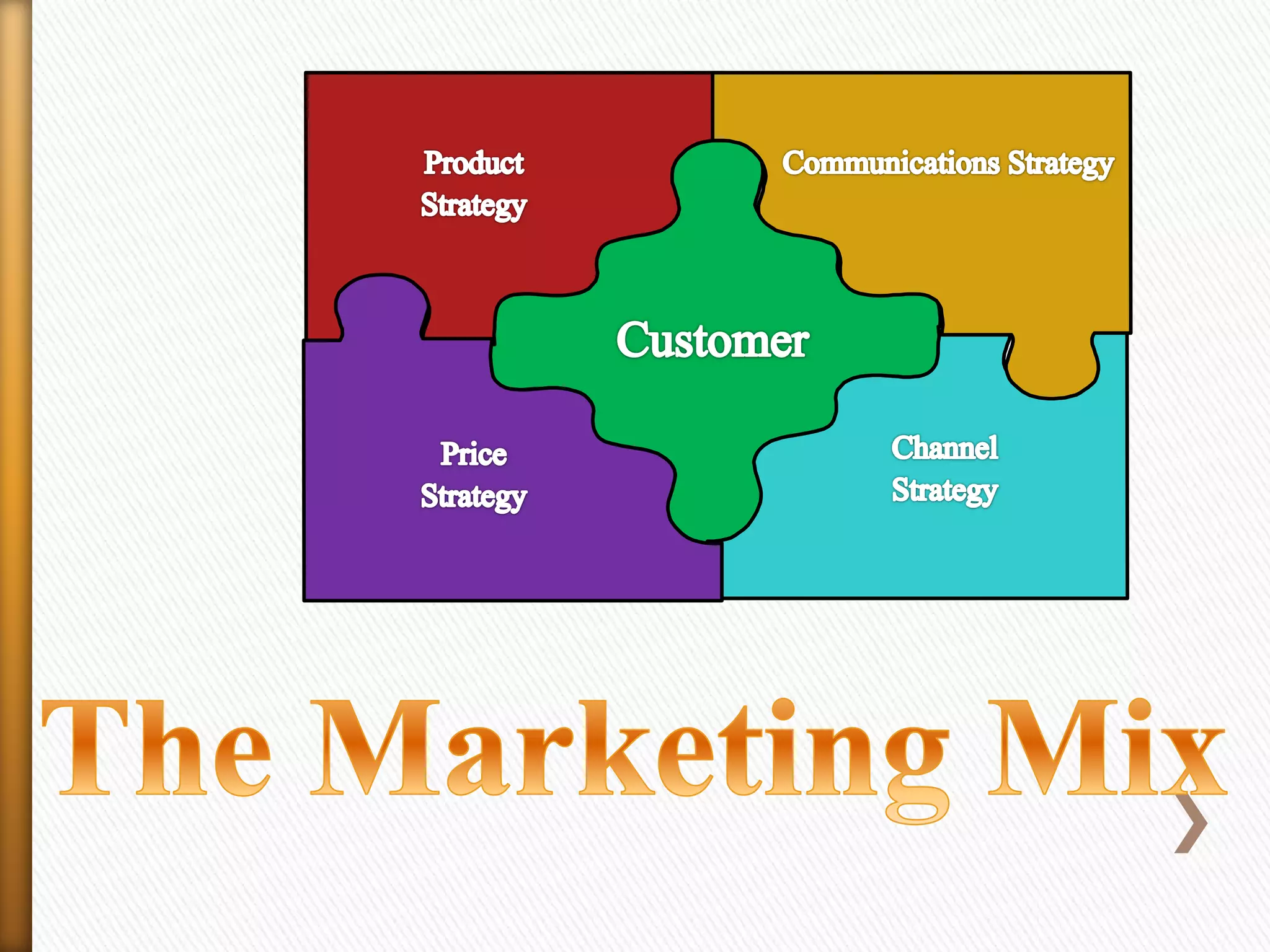
Create value for customers and
build customer relationships
Understand the
marketplace and
customer needs
and wants

Design a customerdriven marketing
strategy

Construct a
marketing program
that delivers superior
value

Capture value from
customers in return
Build profitable
relationships and create
customer delight
.

Capture value from
customers to create
profits and customer
equity
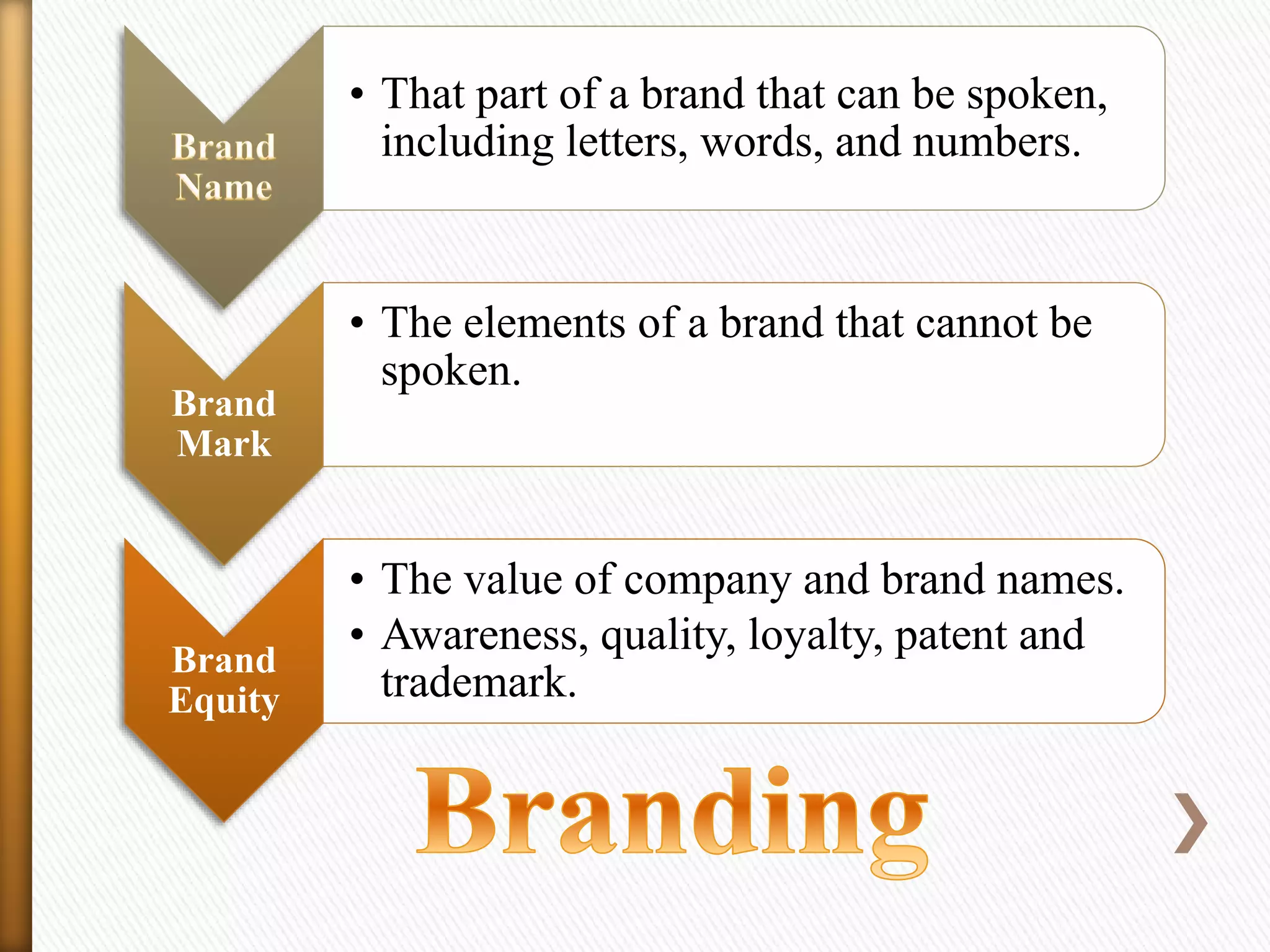
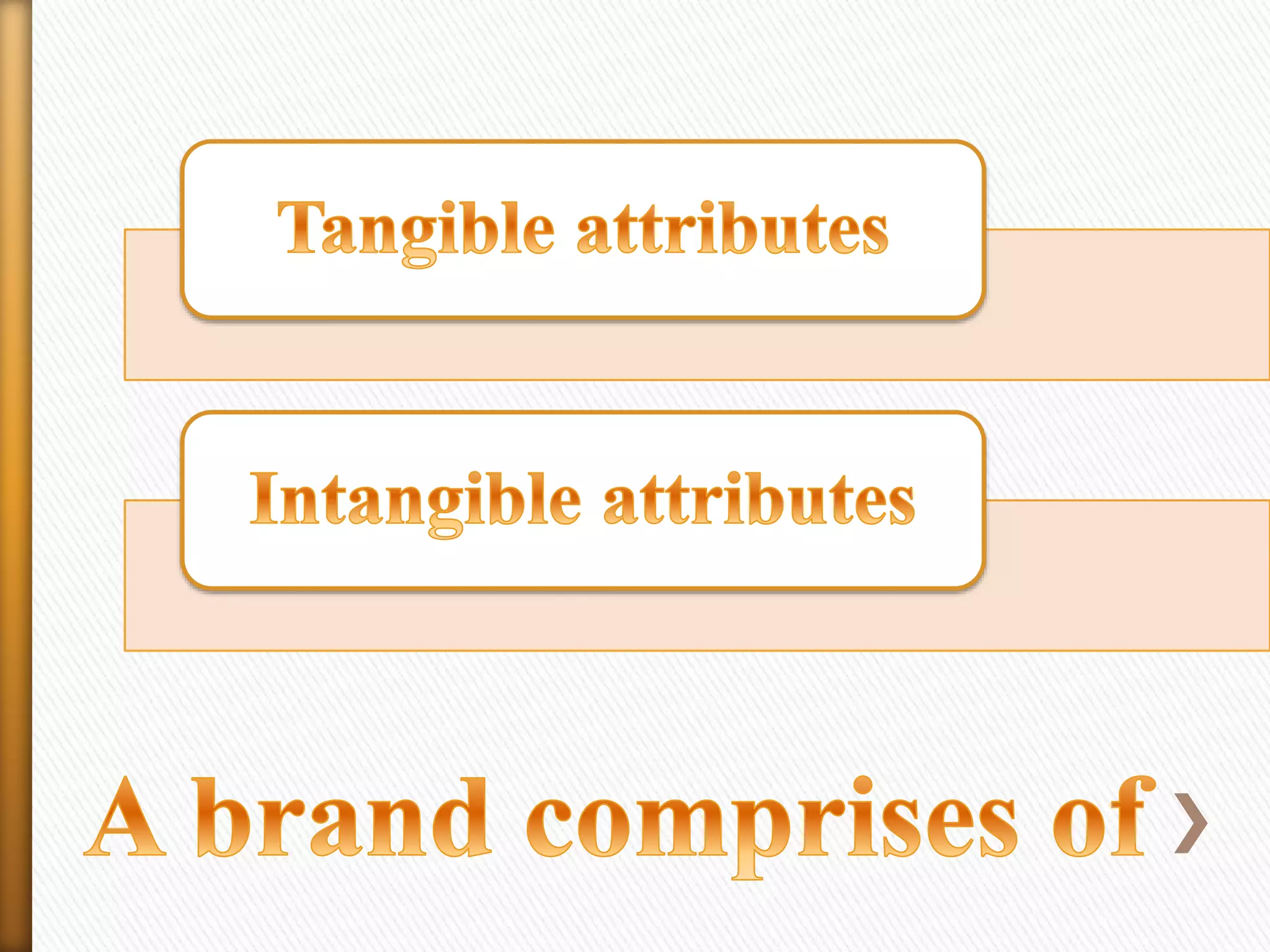
• That part of a brand that can be spoken,
including letters, words, and numbers.

Brand
Mark

Brand
Equity

• The elements of a brand that cannot be
spoken.

• The value of company and brand names.
• Awareness, quality, loyalty, patent and
trademark.
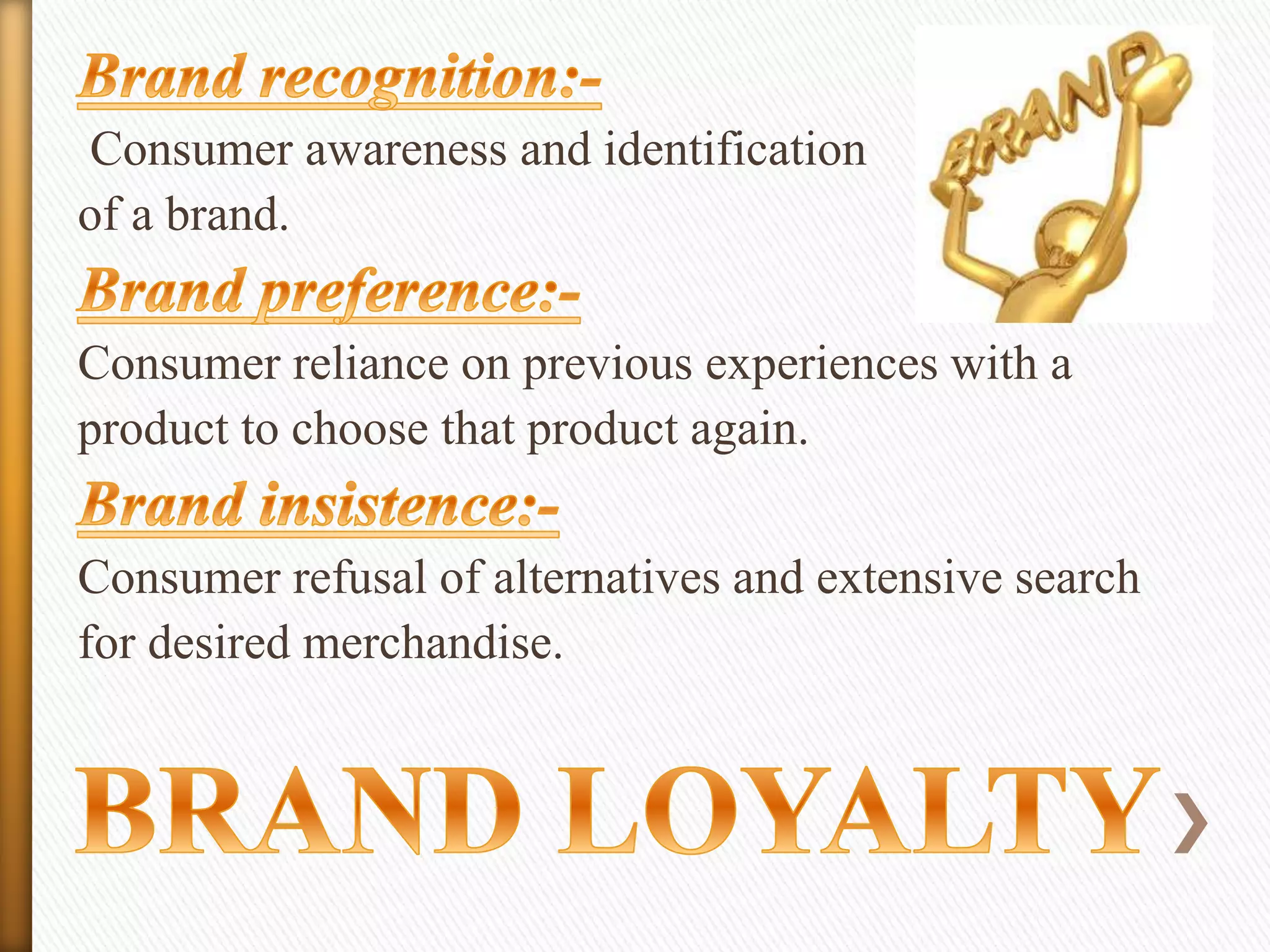
Consumer awareness and identification
of a brand.
Consumer reliance on previous experiences with a
product to choose that product again.
Consumer refusal of alternatives and extensive search
for desired merchandise.
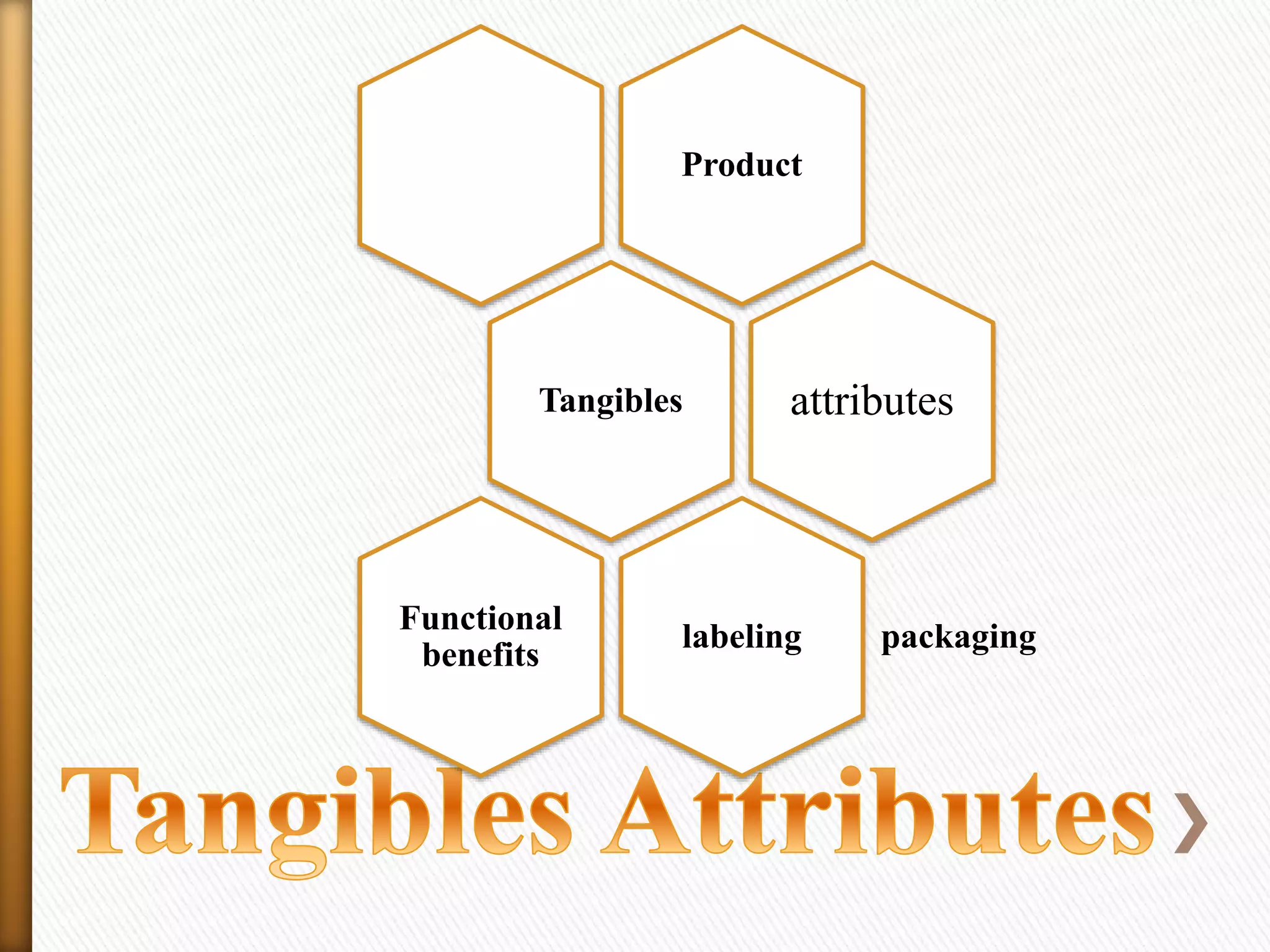
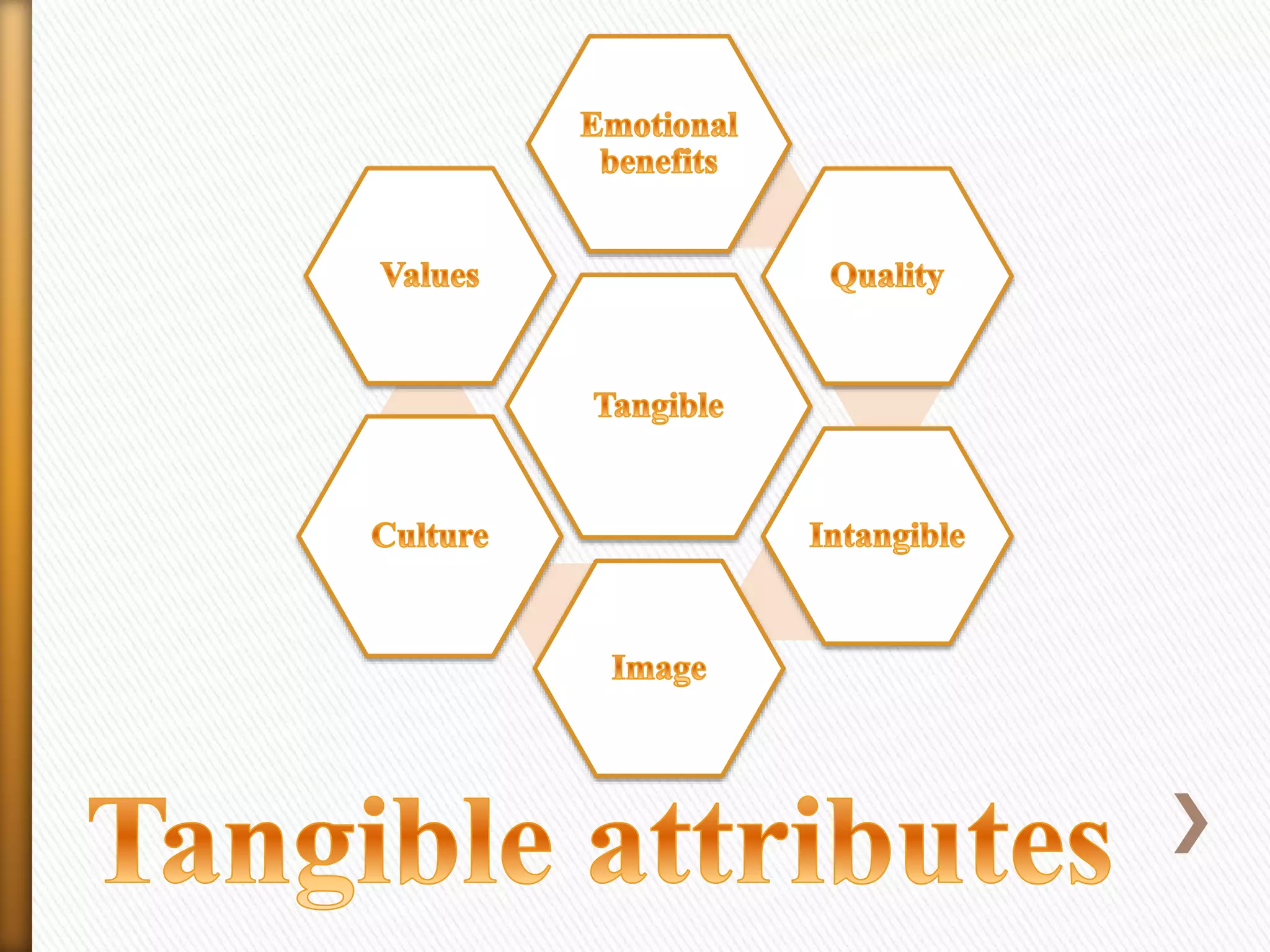
Product

Tangibles

Functional
benefits

attributes

labeling

packaging
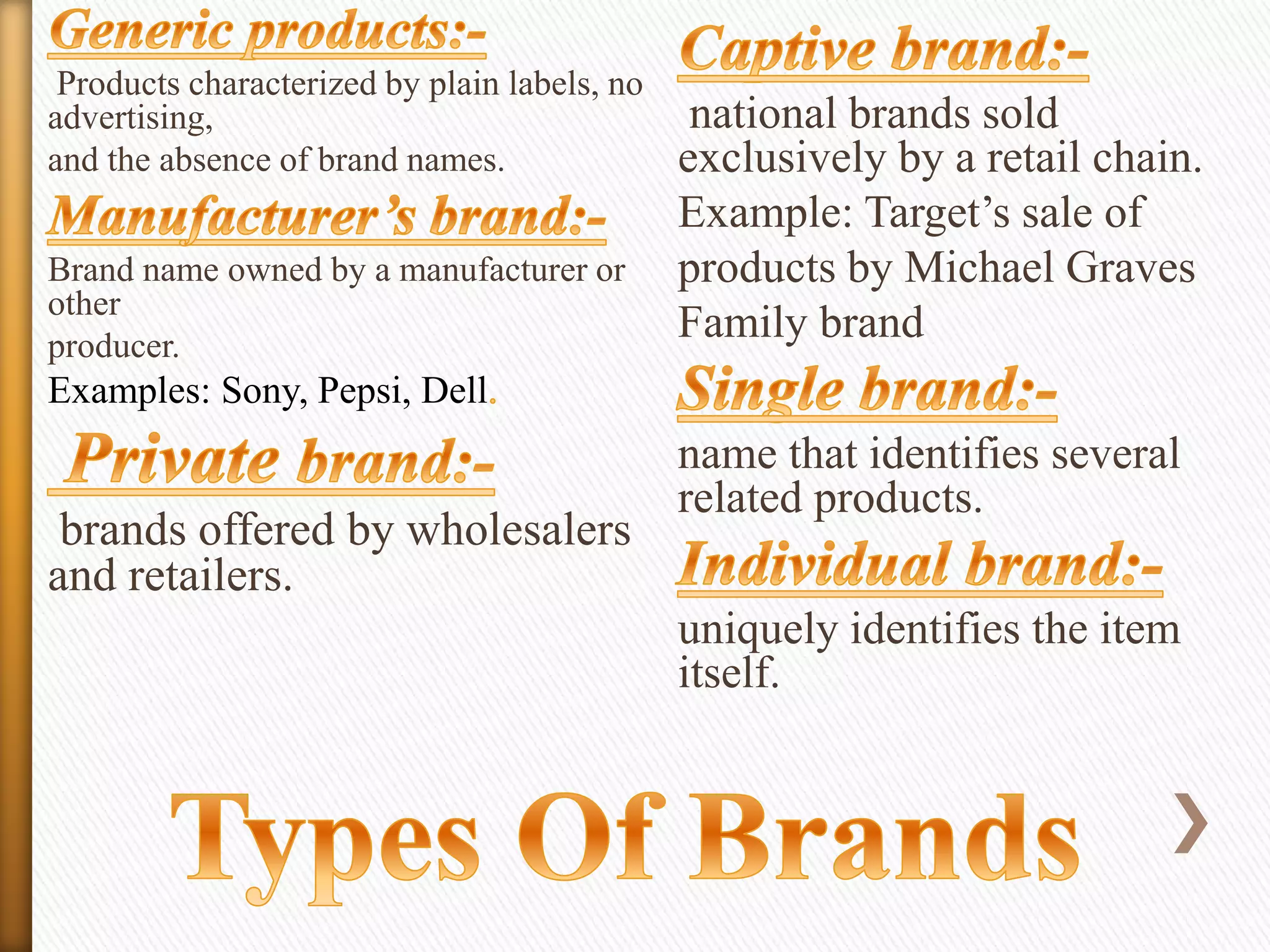
Products characterized by plain labels, no
advertising,
and the absence of brand names.
Brand name owned by a manufacturer or
other
producer.

national brands sold
exclusively by a retail chain.
Example: Target’s sale of
products by Michael Graves
Family brand

Examples: Sony, Pepsi, Dell

brands offered by wholesalers
and retailers.

name that identifies several
related products.
uniquely identifies the item
itself.
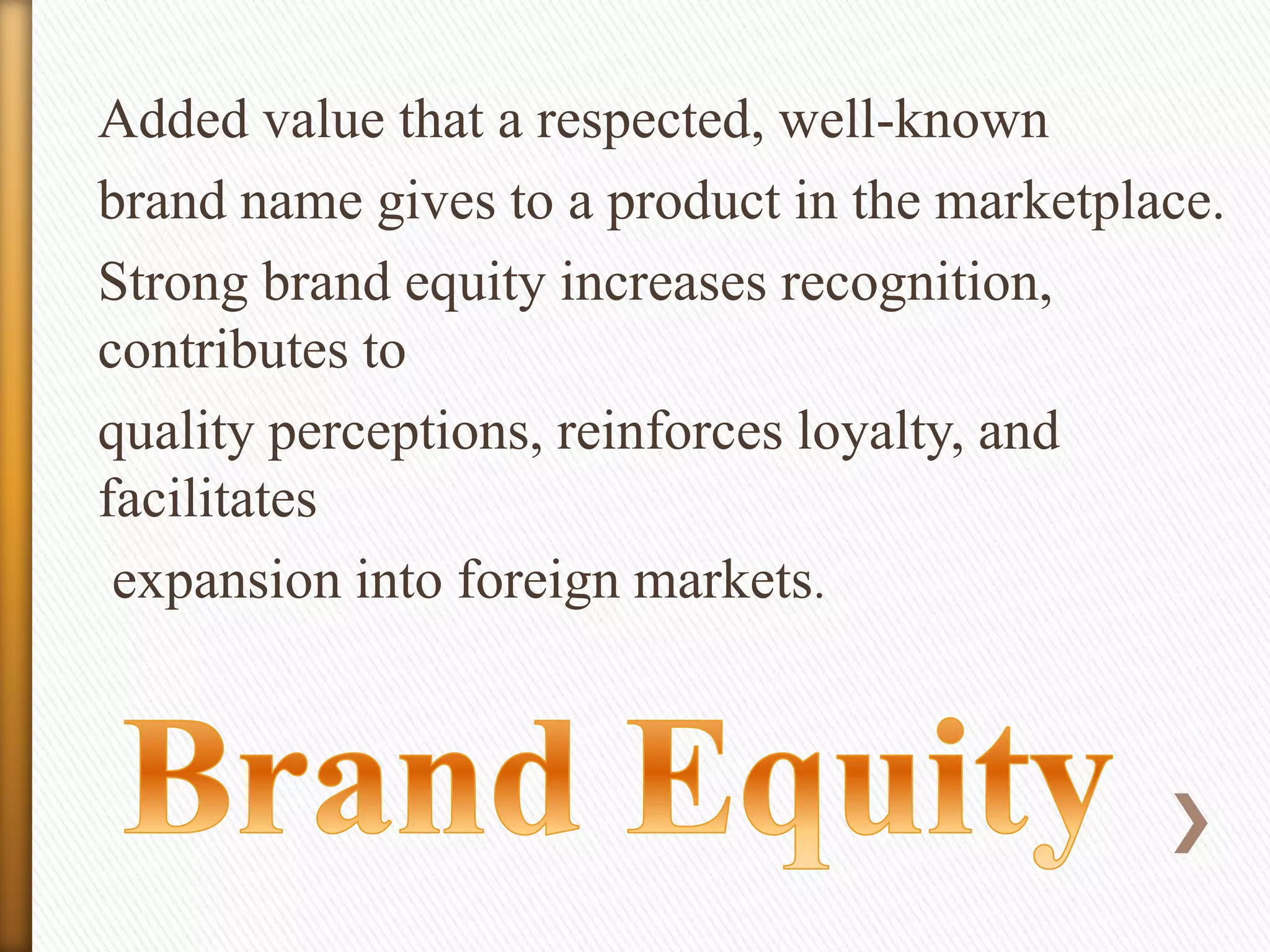
Added value that a respected, well-known
brand name gives to a product in the marketplace.
Strong brand equity increases recognition,
contributes to
quality perceptions, reinforces loyalty, and
facilitates
expansion into foreign markets.
Product management system in which a category
Manager with profit and loss responsibility
oversees a product line.
Helps category buyer identify opportunities for
growth, set performance
targets, and create marketing strategy.
Part of a brand consisting of words or letters that form a
name that identifies and distinguishes a firm’s offerings from those of
its competitors.
symbol or pictorial design that distinguishes a product.
Brand for which the owner claims exclusive legal protection.
Gives firm exclusive legal right to use brand name, brand mark,
and any slogan name or product name appreciation.
visual cues in branding that create an overall look.
An excellent name or symbol in one country may be
a poor choice in another.
Some sounds are common to most languages, such as
o, k, and short a, so
names such as Coca-Cola and Texaco tend to work
well worldwide.
Can powerfully influence buyers’ decisions.
Protects against damage, spoilage, and pilferage.
Assists in marketing the product.
Must be cost-effective.
Includes labelling that carries an item’s brand name or
symbol and other
marketing and legally required information.
.
Strategy of attaching a popular brand name to a new
product in an unrelated product category.
Development by Mattel of Barbie-branded high-end
clothing and
accessories for women from their teens through their
30s
Authorizing other companies to use a firm’s brand name.
Brand’s owner receives royalties, typically four to eight
per cent of wholesale revenues.
Can hurt a brand if the licensed product is poor quality or
ethically
incompatible with the brand.
Another risk is overextending the brand.
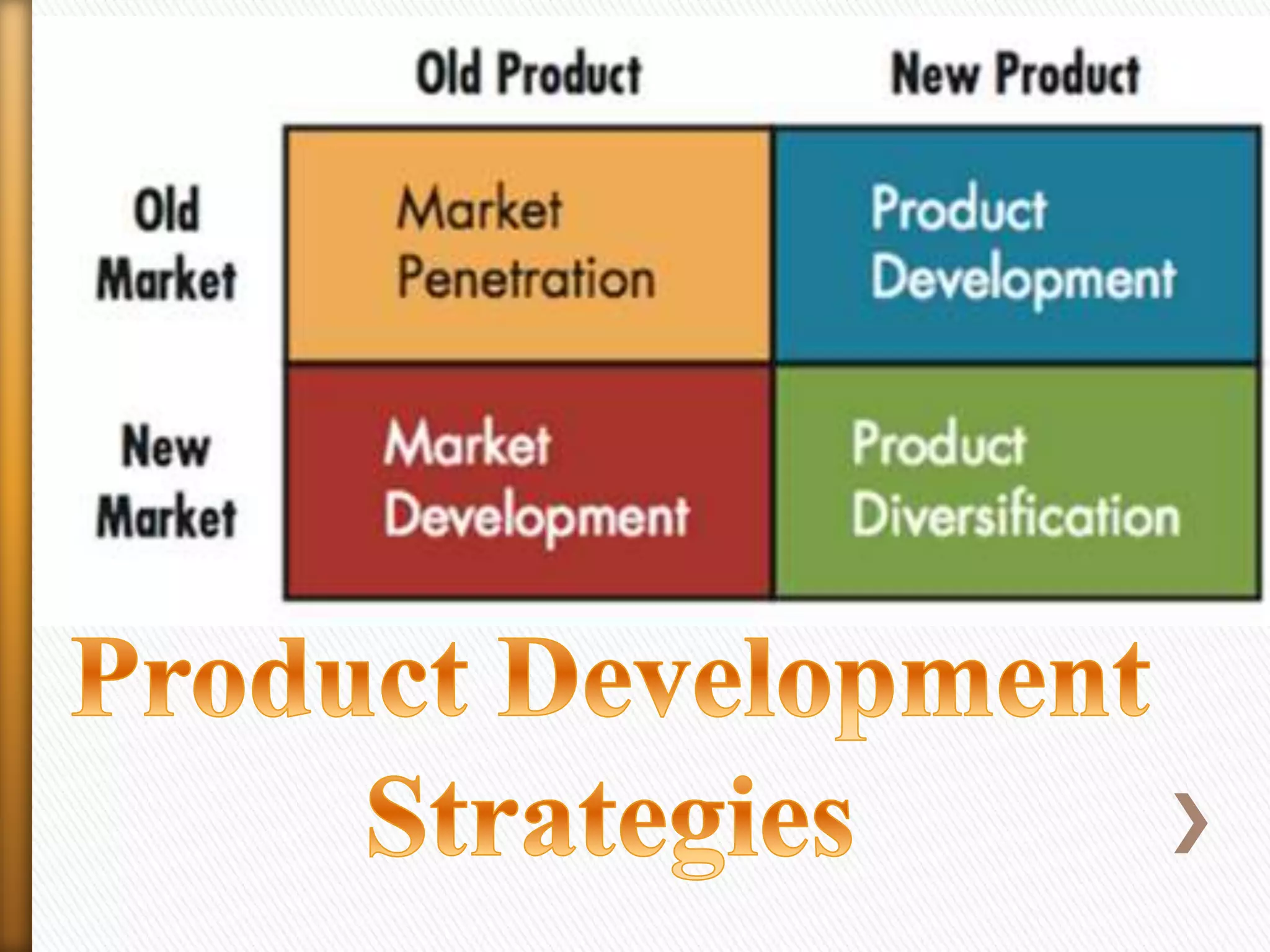
Seeking a larger market share in a market in which
organization already has an offering

Attempts to increase present buyer’s usage or
consumption rates of the offering
Attracting buyers of competing offerings
Stimulating product trial among potential consumers
Introducing its existing offerings to markets other than those
that the organization is currently serving.

Carefully considering competitor strengths and weaknesses and
competitor retaliation potential
Modification of the basic offering
Different distribution outlets
Change in sales effort and advertising
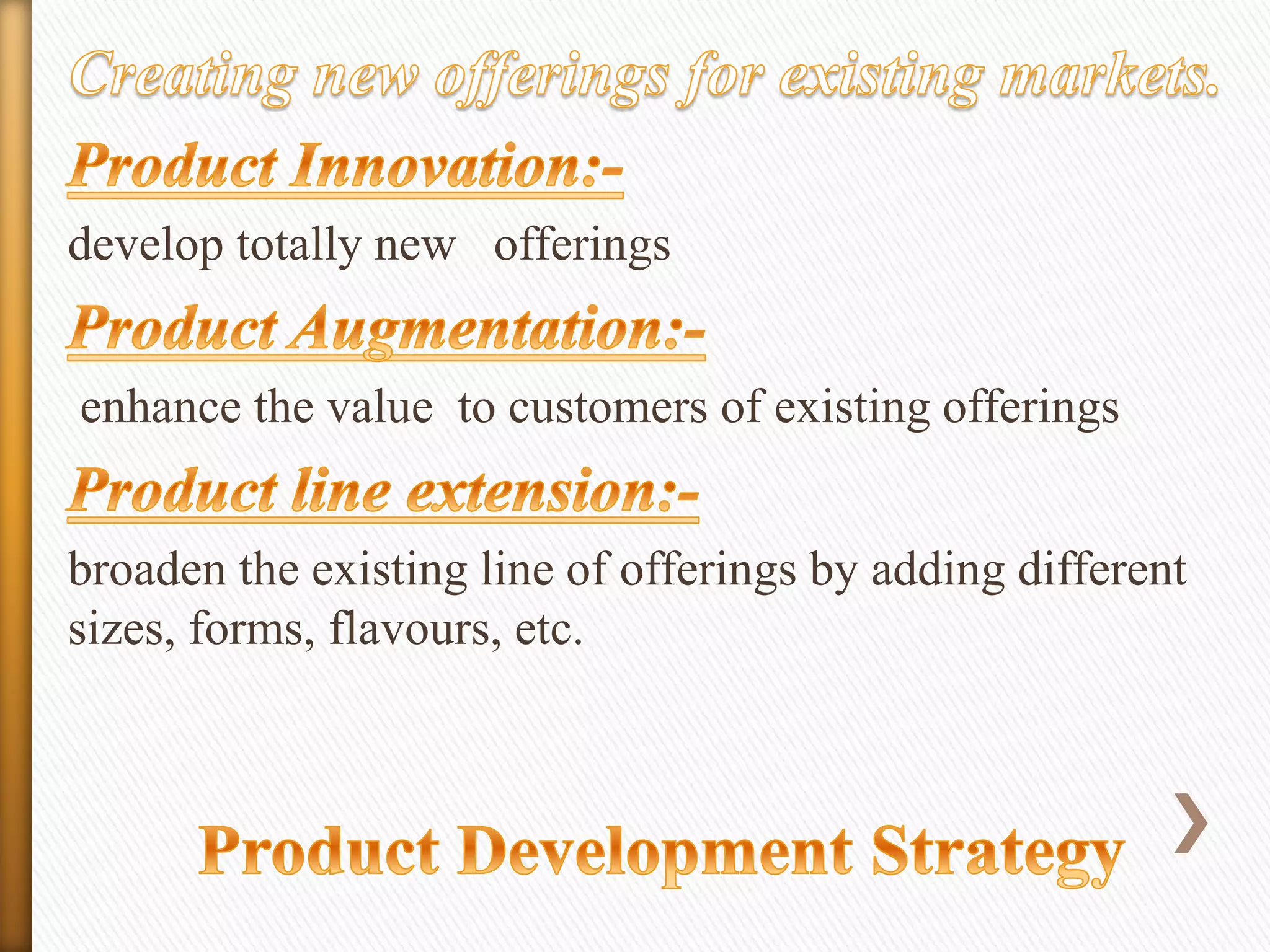
develop totally new offerings
enhance the value to customers of existing offerings
broaden the existing line of offerings by adding different
sizes, forms, flavours, etc.
Development or acquisition of offerings new to the
organization and introducing those offerings to publics
not previously served by the organization.
Growing trend in recent years
High-risk strategy because both the offering and
market served are new to the organization
refers to consumers’ perceptions of a product’s attributes,

uses, quality, and advantages and disadvantages relative to

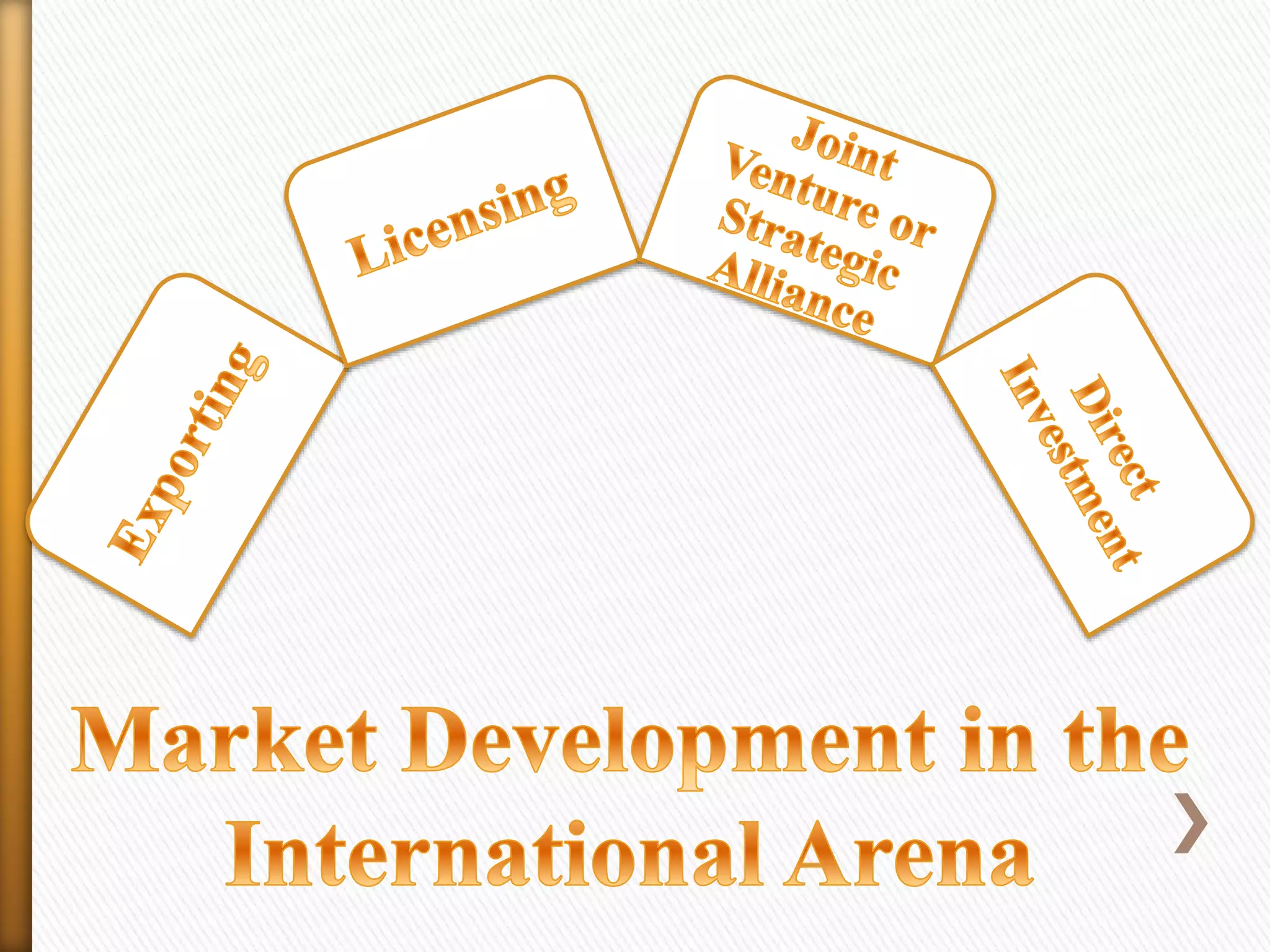
Market development concentrates on finding new markets
for existing products.
introduction of new products into identifiable or established
markets.

focuses on developing entirely new products for new markets.
introducing a new product that adversely affects sales of
existing products.
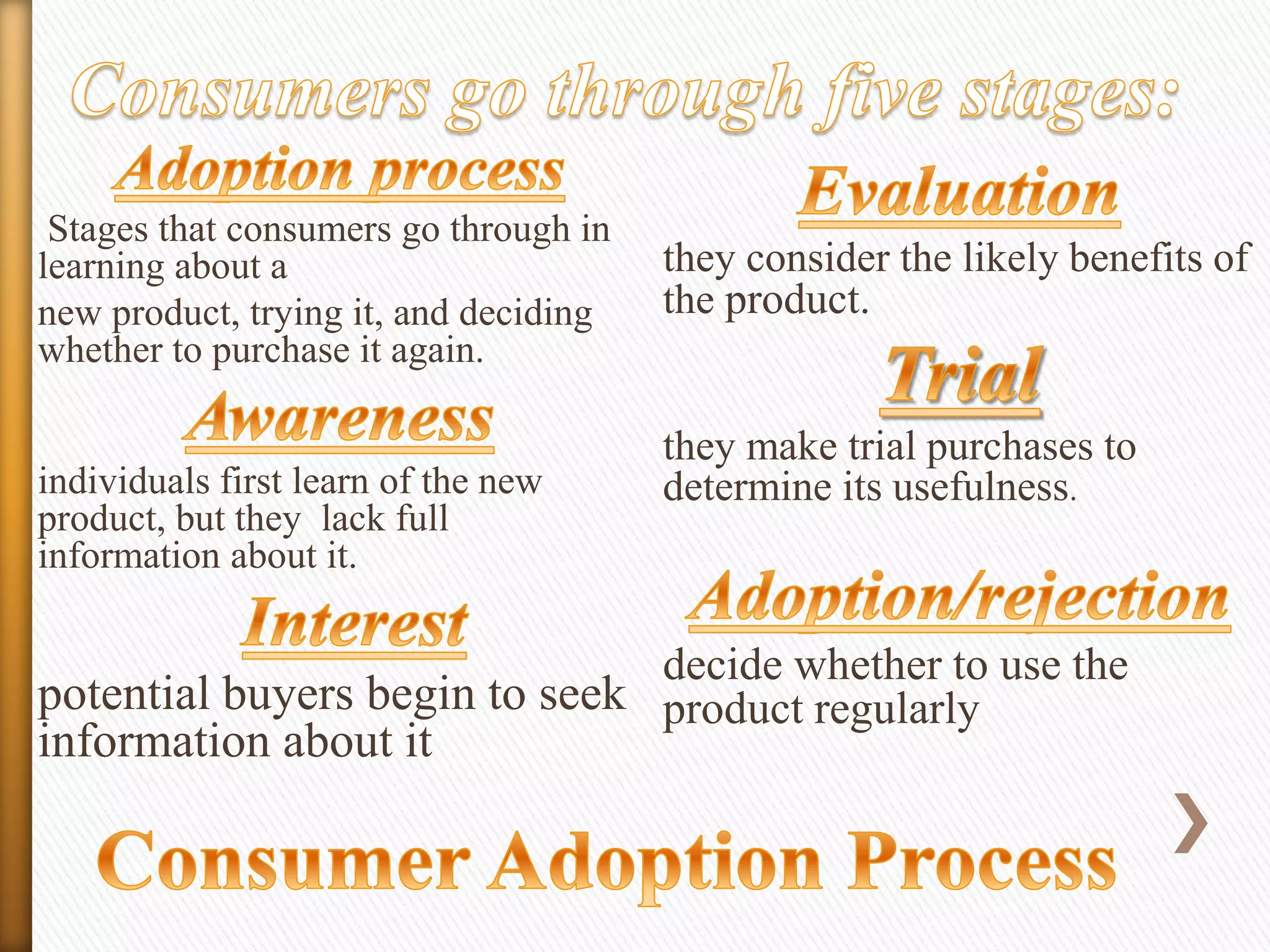
Stages that consumers go through in
learning about a
new product, trying it, and deciding
whether to purchase it again.
individuals first learn of the new
product, but they lack full
information about it.

they consider the likely benefits of
the product.

they make trial purchases to
determine its usefulness.

decide whether to use the
potential buyers begin to seek product regularly

information about it
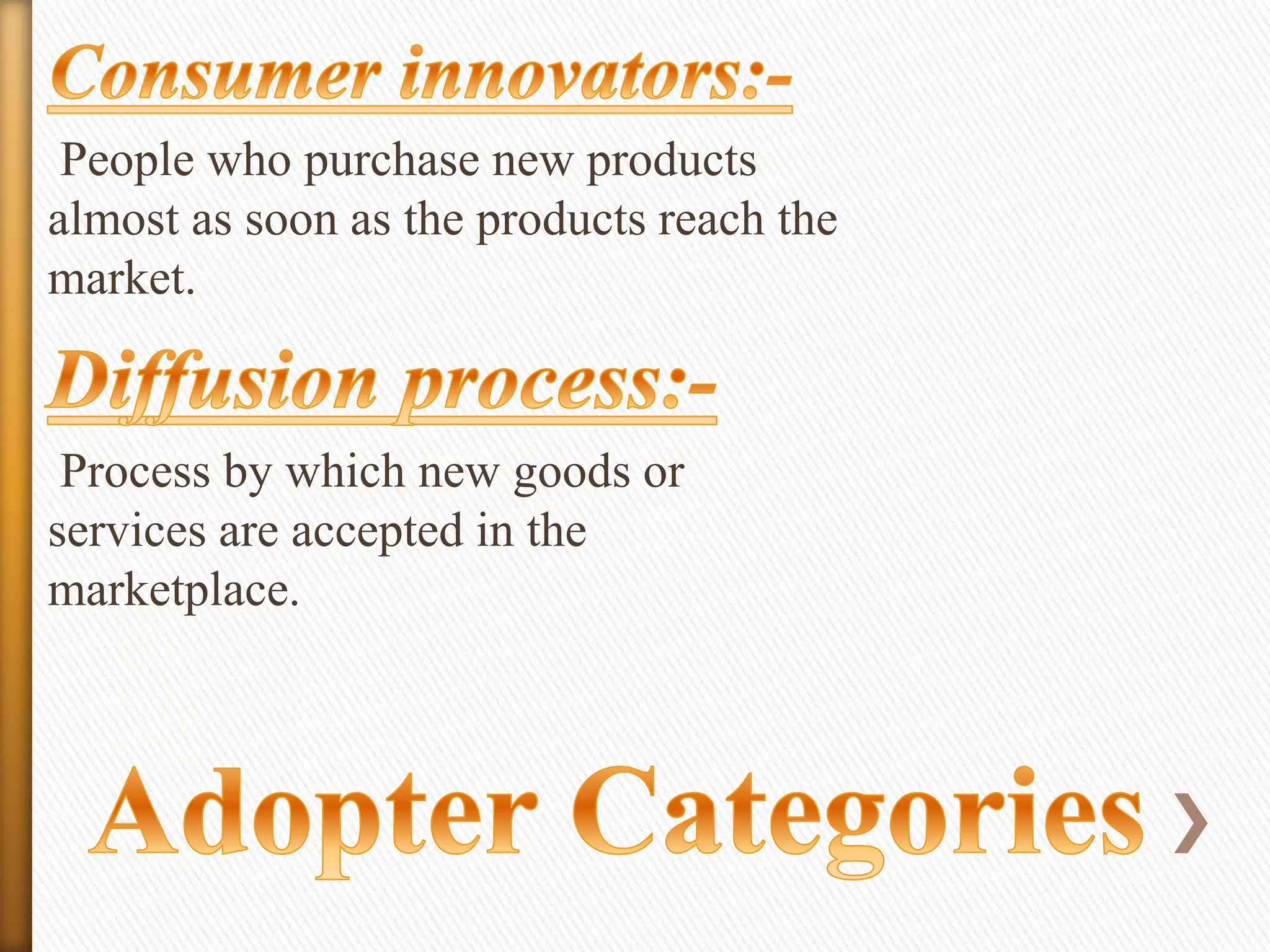
People who purchase new products
almost as soon as the products reach the
market.

Process by which new goods or
services are accepted in the
marketplace.
Managing brands for  competitive  advantages

Managing brands for competitive advantages

  • 7.
    Name, term, sign,symbol, design, or some Combination that identifies the products of one firm While differentiating them from the competitions.
  • 8.
    Marketing is morethen selling and pricing The business must identify & satisfy customers needs wants and demands in order to make profit, Marketing is about gain and retain customer. Satisfying customer needs and build long term relationship with them Marketing is about creating for customer value
  • 9.
    people or institutionswith sufficient purchasing power, authority, and willingness to buy specific segment of consumers most likely to purchase a particular product
  • 10.
    Create value forcustomers and build customer relationships Understand the marketplace and customer needs and wants Design a customerdriven marketing strategy Construct a marketing program that delivers superior value Capture value from customers in return Build profitable relationships and create customer delight . Capture value from customers to create profits and customer equity
  • 12.
    • That partof a brand that can be spoken, including letters, words, and numbers. Brand Mark Brand Equity • The elements of a brand that cannot be spoken. • The value of company and brand names. • Awareness, quality, loyalty, patent and trademark.
  • 13.
    Consumer awareness andidentification of a brand. Consumer reliance on previous experiences with a product to choose that product again. Consumer refusal of alternatives and extensive search for desired merchandise.
  • 16.
  • 19.
    Products characterized byplain labels, no advertising, and the absence of brand names. Brand name owned by a manufacturer or other producer. national brands sold exclusively by a retail chain. Example: Target’s sale of products by Michael Graves Family brand Examples: Sony, Pepsi, Dell brands offered by wholesalers and retailers. name that identifies several related products. uniquely identifies the item itself.
  • 21.
    Added value thata respected, well-known brand name gives to a product in the marketplace. Strong brand equity increases recognition, contributes to quality perceptions, reinforces loyalty, and facilitates expansion into foreign markets.
  • 22.
    Product management systemin which a category Manager with profit and loss responsibility oversees a product line. Helps category buyer identify opportunities for growth, set performance targets, and create marketing strategy.
  • 24.
    Part of abrand consisting of words or letters that form a name that identifies and distinguishes a firm’s offerings from those of its competitors. symbol or pictorial design that distinguishes a product. Brand for which the owner claims exclusive legal protection. Gives firm exclusive legal right to use brand name, brand mark, and any slogan name or product name appreciation. visual cues in branding that create an overall look.
  • 26.
    An excellent nameor symbol in one country may be a poor choice in another. Some sounds are common to most languages, such as o, k, and short a, so names such as Coca-Cola and Texaco tend to work well worldwide.
  • 27.
    Can powerfully influencebuyers’ decisions. Protects against damage, spoilage, and pilferage. Assists in marketing the product. Must be cost-effective. Includes labelling that carries an item’s brand name or symbol and other marketing and legally required information. .
  • 29.
    Strategy of attachinga popular brand name to a new product in an unrelated product category. Development by Mattel of Barbie-branded high-end clothing and accessories for women from their teens through their 30s
  • 30.
    Authorizing other companiesto use a firm’s brand name. Brand’s owner receives royalties, typically four to eight per cent of wholesale revenues. Can hurt a brand if the licensed product is poor quality or ethically incompatible with the brand. Another risk is overextending the brand.
  • 34.
    Seeking a largermarket share in a market in which organization already has an offering Attempts to increase present buyer’s usage or consumption rates of the offering Attracting buyers of competing offerings Stimulating product trial among potential consumers
  • 35.
    Introducing its existingofferings to markets other than those that the organization is currently serving. Carefully considering competitor strengths and weaknesses and competitor retaliation potential Modification of the basic offering Different distribution outlets Change in sales effort and advertising
  • 37.
    develop totally newofferings enhance the value to customers of existing offerings broaden the existing line of offerings by adding different sizes, forms, flavours, etc.
  • 38.
    Development or acquisitionof offerings new to the organization and introducing those offerings to publics not previously served by the organization. Growing trend in recent years High-risk strategy because both the offering and market served are new to the organization
  • 40.
    refers to consumers’perceptions of a product’s attributes, uses, quality, and advantages and disadvantages relative to Market development concentrates on finding new markets for existing products.
  • 41.
    introduction of newproducts into identifiable or established markets. focuses on developing entirely new products for new markets. introducing a new product that adversely affects sales of existing products.
  • 43.
    Stages that consumersgo through in learning about a new product, trying it, and deciding whether to purchase it again. individuals first learn of the new product, but they lack full information about it. they consider the likely benefits of the product. they make trial purchases to determine its usefulness. decide whether to use the potential buyers begin to seek product regularly information about it
  • 45.
    People who purchasenew products almost as soon as the products reach the market. Process by which new goods or services are accepted in the marketplace.