2025
WWW.THEGLOBALSUCCESSREVIEW.COM
Renewable
Energy
Investment
The Impact of
Mentorship on
Professional
Growth
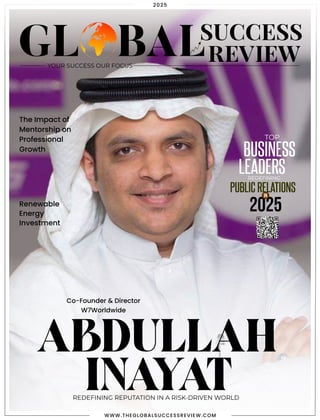
ABDULLAH
INAYAT
GL BALSUCCESS
REVIEW
BUSINESS
LEADERS
Co-Founder & Director
W7Worldwide
PUBLIC RELATIONS
2025
IN
EDITOR’S DESK
Chloe Martin
n an era defined by speed, scrutiny, and constant connectivity, reputation has become one of the most valuable
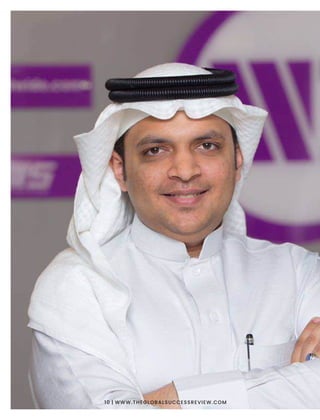
Icurrencies a business can hold. Few leaders understand this better than Abdullah Inayat, Co-Founder & Director
of W7Worldwide, whose work is reshaping how organizations across the Middle East and beyond think about
trust, risk, and credibility.
From the outset of his career, Abdullah viewed public relations as more than media exposure or headline generation. For
him, PR has always been about trust how it is built, protected, and sustained, especially when organizations face
moments of uncertainty. This belief became the foundation of W7Worldwide, a firm built on the idea that reputation
management must be proactive, strategic, and deeply embedded within business leadership.
As markets evolve and crises escalate within minutes, Abdullah has consistently championed foresight over reaction. He
emphasizes anticipating risks, aligning stakeholders early, and ensuring leadership narratives remain authentic under
pressure. In today's hyper-connected environment, he argues, reputation is not only an asset it is also a vulnerability that
demands constant care. One of Abdullah's most influential contributions to modern communication is his focus on
executive positioning. By helping leaders communicate with clarity, cultural intelligence, and authenticity, he has
enabled organizations to build confidence among employees, investors, regulators, and the wider public. In regions
where leadership perception carries cultural and national significance, this approach has proven transformative.
At the core of his strategy lies a deep respect for stakeholders. Abdullah advocates dialogue-driven communication,
where listening is as important as messaging. This philosophy has helped organizations move away from one-way
broadcasting toward meaningful engagement, reducing reputational risk before crises arise.
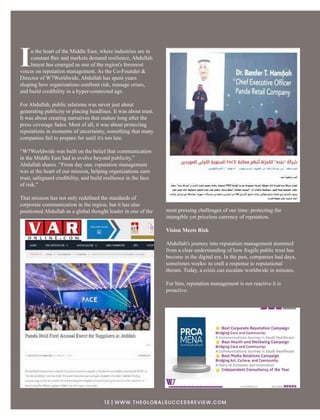
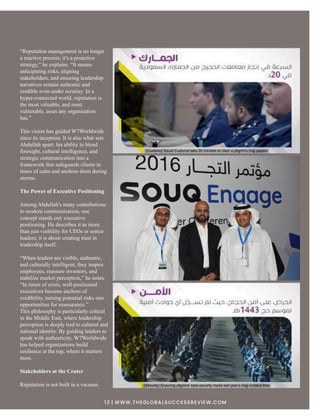
Under his leadership, W7Worldwide has delivered campaigns that balance strategic precision with cultural sensitivity,
including initiatives around Ramadan and Hajj. These efforts demonstrated how thoughtful communication can
reinforce trust during moments of high emotional and societal importance.
Looking ahead, Abdullah identifies misinformation, geopolitical shifts, and rising societal expectations as defining
challenges for reputation management. His response is clear: integrity, agility, and purpose must guide every decision.
As 2025 unfolds, Abdullah Inayat stands out not just as a PR leader, but as a guardian of trust proving that reputation,
once considered intangible, is now central to leadership, resilience, and global competitiveness.
Chief Editor
Chloe Martin
Business Growth Specialist
Alex Hardy | Sharon Parkar
Lead Designer
Matthew Eden
Design Associate
Amy Muller
Creative Director
Kerry Burns
Research Analyst
Martina V.
Technical Specialist
Jenny Lopez
SEO Strategist
Joss Clark
Copyright 2025 @THE GLOBAL SUCCESS REVIEW. No portion of the images or content in this publication may be
copied, reproduced, or distributed by any means whether electronic, mechanical, or otherwise without the express
permission of THE GLOBAL SUCCESS REVIEW. Reprint rights belong solely to THE GLOBAL SUCCESS REVIEW.
GL BALSUCCESS
REVIEW
COVER
sTORY
10
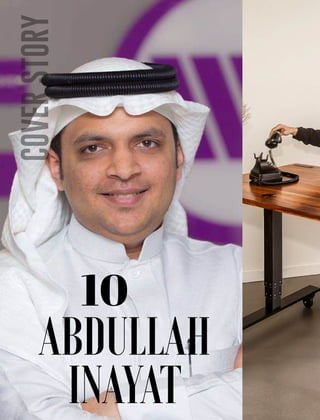
ABDULLAH
INAYAT
PG No. 26
The Impact
of Mentorship
on Professional
Growth
Renewable
Energy
Investment:
Opportunities
and Challenges
in a Carbon-
Conscious
World
PG No. 22
A
R
T
I
C
L
E
10 | WWW.THEGLOBALSUCCESSREVIEW.COM
ABDULLAH
INAYAT
Co-Founder & Director
W7Worldwide
C O V E R S T O R Y
11 | WWW.THEGLOBALSUCCESSREVIEW.COM
most pressing challenges of our time: protecting the
intangible yet priceless currency of reputation.
Vision Meets Risk
Abdullah's journey into reputation management stemmed
from a clear understanding of how fragile public trust has
become in the digital era. In the past, companies had days,
sometimes weeks- to craft a response to reputational
threats. Today, a crisis can escalate worldwide in minutes.
For him, reputation management is not reactive it is
proactive.
n the heart of the Middle East, where industries are in
Iconstant flux and markets demand resilience, Abdullah
Inayat has emerged as one of the region's foremost
voices on reputation management. As the Co-Founder &
Director of W7Worldwide, Abdullah has spent years
shaping how organizations confront risk, manage crises,
and build credibility in a hyper-connected age.
For Abdullah, public relations was never just about
generating publicity or placing headlines. It was about trust.
It was about creating narratives that endure long after the
press coverage fades. Most of all, it was about protecting
reputations in moments of uncertainty, something that many
companies fail to prepare for until it's too late.
ā€œW7Worldwide was built on the belief that communication
in the Middle East had to evolve beyond publicity,ā€
Abdullah shares. ā€œFrom day one, reputation management
was at the heart of our mission, helping organizations earn
trust, safeguard credibility, and build resilience in the face
of risk.ā€
That mission has not only redefined the standards of
corporate communication in the region, but it has also
positioned Abdullah as a global thought leader in one of the
12 | WWW.THEGLOBALSUCCESSREVIEW.COM
ā€œReputation management is no longer
a reactive process; it's a proactive
strategy,ā€ he explains. ā€œIt means
anticipating risks, aligning
stakeholders, and ensuring leadership
narratives remain authentic and
credible even under scrutiny. In a
hyper-connected world, reputation is
the most valuable, and most
vulnerable, asset any organization
has.ā€
This vision has guided W7Worldwide
since its inception. It is also what sets
Abdullah apart: his ability to blend
foresight, cultural intelligence, and
strategic communication into a
framework that safeguards clients in
times of calm and anchors them during
storms.
The Power of Executive Positioning
Among Abdullah's many contributions
to modern communication, one
concept stands out: executive
positioning. He describes it as more
than just visibility for CEOs or senior
leaders; it is about creating trust in
leadership itself.
ā€œWhen leaders are visible, authentic,
and culturally intelligent, they inspire
employees, reassure investors, and
stabilize market perception,ā€ he notes.
ā€œIn times of crisis, well-positioned
executives become anchors of
credibility, turning potential risks into
opportunities for reassurance.ā€
This philosophy is particularly critical
in the Middle East, where leadership
perception is deeply tied to cultural and
national identity. By guiding leaders to
speak with authenticity, W7Worldwide
has helped organizations build
resilience at the top, where it matters
most.
Stakeholders at the Center
Reputation is not built in a vacuum.
13 | WWW.THEGLOBALSUCCESSREVIEW.COM
14 | WWW.THEGLOBALSUCCESSREVIEW.COM
15 | WWW.THEGLOBALSUCCESSREVIEW.COM
Abdullah emphasizes that stakeholder
engagement often determines how
crises unfold. His approach is
meticulous, mapping every stakeholder
group, customers, employees,
regulators, investors, and media, and
tailoring communication strategies for
each.
ā€œBy listening, engaging, and aligning
with expectations early, we minimize
reputational damage when crises
arise,ā€ he explains.
This philosophy has redefined the way
many Middle Eastern organizations
approach communication. Instead of
seeing PR as a one-way broadcast,
Abdullah has pushed companies to
adopt a dialogue-driven model, where
stakeholder trust is earned consistently,
not only in moments of crisis.
Crisis as Opportunity
ā€œA crisis is not defined by the event
itself but by how you respond,ā€
Abdullah insists.
At W7Worldwide, this
response is rooted in
preparation and foresight.
From scenario planning and
real-time monitoring to
equipping executives with
ready-to-go messaging, his
firm ensures that clients are
not caught off guard.
But beyond survival,
Abdullah believes that crises
present an opportunity to
demonstrate accountability,
resilience, and leadership. In
fact, some of W7Worldwide's
most celebrated campaigns,
like their Ramadan and Hajj
initiatives, were built around
sensitive cultural moments
that required not just
communication expertise but
also emotional intelligence.
Campaigns that Build Trust
Two initiatives stand out as
testaments to
W7Worldwide's reputation
and expertise.
The first, ā€œCommunicating
the Unifying Spirit of
Ramadan,ā€ went far beyond
storytelling. It highlighted
the values of compassion,
unity, and generosity during
one of the most sacred
times of the year,
positioning clients as
aligned with cultural values
while reinforcing public
trust.
The second, their Hajj
campaign, carried an even
greater weight. Balancing
spirituality, sensitivity, and
national preparedness, the
campaign not only
reassured millions of
pilgrims but also showcased the
Kingdom's readiness to the world.
ā€œBoth campaigns reinforced how
proactive communication mitigates
reputational risk,ā€ Abdullah reflects.
They also showcased W7Worldwide's
ability to translate cultural nuance into
reputational strength, a rare skill in
today's fast-paced PR world.
Technology and Cultural Intelligence
Of course, no conversation about
reputation management in 2025 is
complete without acknowledging the
role of technology. Abdullah
recognizes that digital platforms can
amplify risks within minutes.
To counter this, W7Worldwide deploys
tools like AI-driven analytics,
sentiment tracking, and narrative
mapping. Yet, Abdullah is quick to
caution against over-reliance on
technology alone.
16 | WWW.THEGLOBALSUCCESSREVIEW.COM
17 | WWW.THEGLOBALSUCCESSREVIEW.COM
ā€œTechnology gives us speed, but cultural intelligence
ensures our responses are human, authentic, and resonant,ā€
he explains.
This balance, between data and humanity, algorithms and
authenticity, is at the core of his firm's success.
Values that Lead
At the heart of Abdullah's leadership lies three guiding
values: integrity, agility, and purpose.
ā€œIn crisis scenarios, integrity builds trust, agility ensures
swift response, and purpose keeps communication
authentic,ā€ he shares.
These values are not just principles on paper; they are the
DNA of W7Worldwide. They shape the way teams respond
under pressure, how clients experience the firm's service,
and how the company positions itself as a trusted partner
in turbulent times.
Lessons from Missteps
Asked about the biggest mistakes organizations make,
Abdullah is candid: waiting too long to act.
ā€œSilence or slow responses create an information vacuum
that stakeholders fill with speculation,ā€ he warns. ā€œThe
biggest mistake is treating reputation as an afterthought
instead of embedding it into business strategy.ā€
This insight is particularly relevant in an age where
misinformation spreads faster than truth. Abdullah's mantra,
'respond early, respond authentically,' has saved clients
from reputational collapse time and again.
Risks That Will Define the Future
Looking ahead, Abdullah identifies three forces that will
shape reputation management in the years to come:
geopolitical shifts, misinformation, and rising societal
expectations.
Companies that fail to align with environmental, social, and
governance (ESG) standards or ignore cultural sensitivities
will find themselves increasingly exposed.
ā€œThe winners will be those who treat reputation as a living,
strategic asset,ā€ he asserts. ā€œReputation will no longer be a
defensive tool; it will be the driver of trust and global
competitiveness.ā€
18 | WWW.THEGLOBALSUCCESSREVIEW.COM
A Legacy in the Making
For Abdullah, his work is not just about managing risks
today but about redefining the future of reputation
management in the Middle East.
ā€œI want to redefine how Middle Eastern organizations
approach reputation, not as a defensive tool, but as a driver
of leadership, trust, and global competitiveness,ā€ he says.
His ultimate legacy? Proving that with foresight, cultural
intelligence, and innovation, reputation can become both a
shield and a source of opportunity.
Final Word
As 2025 unfolds, Abdullah Inayat stands at the forefront of
a communication revolution in the Middle East. He is not
just a PR professional, he is a strategist, a risk manager, and
above all, a guardian of trust.
From mapping stakeholder expectations to guiding
executives through crises, from harnessing AI to embracing
cultural nuance, Abdullah is rewriting the rules of
reputation management. His story is a reminder that in
today's world, leadership is not only about building
organizations but also about safeguarding the trust that
sustains them.
At a time when misinformation spreads faster than facts and
public trust is harder to earn than ever, leaders like
Abdullah Inayat are showing the world that reputation, once
dismissed as intangible, is now the most powerful asset of
all.
19 | WWW.THEGLOBALSUCCESSREVIEW.COM
entorship has become a pivotal
Melement in professional
development across various
industries. Whether formal or informal,
mentorship bridges the gap between
theoretical knowledge and practical
application, fostering a conducive
environment for personal and professional
growth. This article explores the
multifaceted impact of mentorship on
professional growth, highlighting its
benefits, mechanisms, and best practices.
The Benefits of Mentorship
Skill Development
One of the primary benefits of mentorship
is the development of skills. Mentors
provide mentees with valuable insights and
practical knowledge that are often not
covered in formal education. Through
regular interactions, mentors can identify
areas where mentees need improvement
and offer targeted advice and training. This
hands-on approach accelerates the learning
process and helps mentees acquire new
skills more efficiently.
Increased Confidence
Having a mentor can significantly boost a
mentee's confidence. Mentors offer
encouragement, constructive feedback, and
The Impact of
Mentorship on
Professional
Growth
22 | WWW.THEGLOBALSUCCESSREVIEW.COM
reassurance, helping mentees
overcome self-doubt and build self-
assurance. This increased confidence
enables mentees to take on new
challenges, seize opportunities, and
push their boundaries, ultimately
leading to career growth.
Networking Opportunities
Mentors often have extensive
professional networks that they can
introduce to their mentees. These
connections can open doors to new
opportunities, including job
placements, collaborations, and
industry insights. Networking through
mentorship allows mentees to build
relationships with key industry players,
enhancing their visibility and
reputation in their field.
Personal Growth
Mentorship is not limited to
professional development; it also
fosters personal growth. Mentors often
act as role models, demonstrating
values, ethics, and behaviors that
mentees can emulate. This holistic
approach to development helps
mentees cultivate a strong sense of
identity, purpose, and direction in their
careers and personal lives.
Mechanisms of Effective Mentorship
Clear Communication
Effective communication is the
cornerstone of successful mentorship.
Mentors and mentees should establish
clear expectations, goals, and
boundaries from the outset. Regular,
open, and honest communication helps
build trust and ensures that both parties
are aligned in their objectives. Mentors
should actively listen to their mentees'
concerns and aspirations, providing
tailored advice and feedback.
Goal Setting
Setting specific, measurable,
achievable, relevant, and time-bound
(SMART) goals is crucial for effective
mentorship. Goals provide a clear
roadmap for the mentee's development
and allow both parties to track progress
and celebrate achievements. Mentors
should work with their mentees to
identify short-term and long-term
goals, breaking them down into
actionable steps.
Regular Feedback
Constructive feedback is essential for
growth. Mentors should provide
regular, actionable feedback that
highlights strengths and areas for
improvement. This feedback should be
specific and focused on behaviors and
outcomes rather than personal
attributes. Mentees should be
encouraged to reflect on the feedback
and implement changes to enhance
their performance.
Flexibility and Adaptability
Mentorship should be flexible and
adaptable to meet the evolving needs
of the mentee. Mentors should be
willing to adjust their approach based
on the mentee's progress, challenges,
and changing circumstances. This
adaptability ensures that the
mentorship remains relevant and
effective throughout the relationship.
Case Studies: Mentorship in Action
Tech Industry
In the tech industry, mentorship has
been instrumental in bridging the
gender gap. Programs like Women
Who Code and Girls Who Code pair
experienced female professionals with
young women entering the field. These
mentorship relationships provide not
only technical guidance but also
support and encouragement, helping
women navigate the challenges of a
traditionally male-dominated industry.
Healthcare Sector
In the healthcare sector, mentorship
programs for medical students and
junior doctors play a critical role in
their professional development.
Experienced doctors mentor new
practitioners, providing clinical
guidance, emotional support, and
career advice. This mentorship helps
young doctors build confidence,
improve their clinical skills, and make
informed career decisions.
Corporate World
Many corporations have implemented
formal mentorship programs to foster
leadership development. Companies
like Google and General Electric have
mentorship initiatives that pair senior
leaders with emerging talent. These
programs aim to develop future leaders
by providing them with the knowledge,
skills, and networks needed to succeed
in their roles.
Mentorship is a powerful tool for
professional growth, offering a range
of benefits from skill development and
increased confidence to networking
opportunities and personal growth.
Effective mentorship requires clear
communication, goal setting, regular
feedback, and flexibility. By adopting
best practices and fostering a
supportive environment, organizations
can harness the full potential of
mentorship, driving individual and
organizational success. As industries
continue to evolve, the importance of
mentorship in shaping the future
workforce cannot be overstated.
23 | WWW.THEGLOBALSUCCESSREVIEW.COM
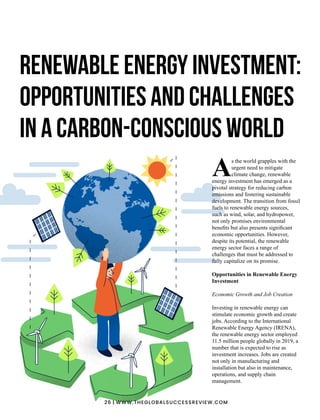
s the world grapples with the
Aurgent need to mitigate
climate change, renewable
energy investment has emerged as a
pivotal strategy for reducing carbon
emissions and fostering sustainable
development. The transition from fossil
fuels to renewable energy sources,
such as wind, solar, and hydropower,
not only promises environmental
benefits but also presents significant
economic opportunities. However,
despite its potential, the renewable
energy sector faces a range of
challenges that must be addressed to
fully capitalize on its promise.
Opportunities in Renewable Energy
Investment
Economic Growth and Job Creation
Investing in renewable energy can
stimulate economic growth and create
jobs. According to the International
Renewable Energy Agency (IRENA),
the renewable energy sector employed
11.5 million people globally in 2019, a
number that is expected to rise as
investment increases. Jobs are created
not only in manufacturing and
installation but also in maintenance,
operations, and supply chain
management.
Renewable Energy Investment:
Opportunities and Challenges
in a Carbon-Conscious World
26 | WWW.THEGLOBALSUCCESSREVIEW.COM
Energy Security and Independence
Renewable energy sources can enhance
energy security by reducing dependence
on imported fossil fuels. Countries can
harness their natural resources, such as
wind and sunlight, to generate energy
locally, which reduces vulnerability to
global energy market fluctuations and
geopolitical tensions.
Technological Advancements
Technological innovations are driving
down the cost of renewable energy and
increasing its efficiency. Advances in
energy storage, grid management, and
smart technologies are making it easier
to integrate renewables into existing
energy systems. For instance, the cost of
solar photovoltaic (PV) technology has
decreased by nearly 90% over the past
decade, making it one of the most
competitive energy sources.
Environmental and Health Benefits
Switching to renewable energy reduces
air pollution, which has significant
health benefits. Fossil fuel combustion
releases harmful pollutants that
contribute to respiratory diseases,
cardiovascular conditions, and
premature deaths. By reducing reliance
on fossil fuels, renewable energy can
improve public health and reduce
healthcare costs.
Challenges in Renewable Energy
Investment
High Initial Costs
One of the primary challenges of
renewable energy investment is the high
upfront capital costs. Building
infrastructure for wind farms, solar
parks, and other renewable energy
projects requires significant investment.
While the long-term savings and benefits
are substantial, the initial financial
outlay can be a barrier for many
investors and governments.
Intermittency and Reliability
Renewable energy sources like wind
and solar are intermittent, meaning
they do not produce energy
continuously. The sun doesn't always
shine, and the wind doesn't always
blow, which can lead to fluctuations in
energy supply. This intermittency
necessitates the development of
reliable energy storage solutions and
smart grid technologies to ensure a
stable energy supply.
Regulatory and Policy Uncertainty
The renewable energy sector is heavily
influenced by government policies and
regulations. Policy uncertainty can
deter investment, as investors seek
stable and predictable regulatory
environments. Incentives such as tax
credits, subsidies, and renewable
energy mandates play a crucial role in
promoting renewable energy
investment. However, changes in
political leadership or economic
priorities can lead to shifts in these
policies, creating uncertainty for
investors.
Infrastructure and Grid Integration
Integrating renewable energy into
existing power grids poses technical
and logistical challenges. Many current
grids were designed for centralized
power generation and may require
significant upgrades to handle
distributed renewable energy sources.
Developing the necessary
infrastructure to transmit and store
renewable energy is a complex and
costly endeavor.
Environmental and Social Impacts
While renewable energy projects offer
environmental benefits, they can also
have negative impacts. Large-scale
projects, such as hydroelectric dams
and wind farms, can disrupt local
ecosystems and communities. It's
essential to conduct thorough
environmental and social impact
assessments and engage with local
stakeholders to mitigate adverse
effects.
Strategies for Overcoming
Challenges
Innovative Financing Mechanisms
To overcome the high initial costs,
innovative financing mechanisms are
crucial. Green bonds, public-private
partnerships, and investment from
international development banks can
provide the necessary capital.
Governments can also play a role by
offering financial incentives and
reducing investment risks through
guarantees and insurance.
Advancing Energy Storage
Technologies
Investing in energy storage
technologies is key to addressing the
intermittency challenge. Batteries,
pumped hydro storage, and emerging
technologies like hydrogen storage can
help ensure a reliable energy supply.
Continued research and development
in this area are vital for the future of
renewable energy.
Upgrading Infrastructure
Significant investment is needed to
upgrade infrastructure and integrate
renewable energy into the grid. Smart
grid technologies, advanced metering,
and enhanced transmission networks
can help manage the variability of
renewable energy sources.
Collaboration between public and
private sectors is essential to achieve
these upgrades.
27 | WWW.THEGLOBALSUCCESSREVIEW.COM
GL BALSUCCESS
REVIEW