Verbal Communication

Guided By :                Prepare By
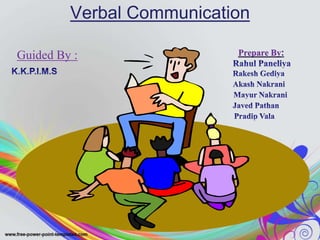
“Verbal Communication.”

• Verbal communication means communication
  through spoken and written words. It implies use
  of words which makes language.
• It is the ability to communication by using words.
Verbal
         Communication


   Oral              Written
Communication     Communication
Oral Communication
• Oral communication implies communication
  through mouth. It includes individuals
  conversing with each other, be it direct
  conversation or telephonic conversation.
  Speeches, presentations, discussions are all
  forms of oral communication.
Advantages
•   → Immediate Feedback
•   → Time Saving
•   → Economical
•   → Personal Touch
•   → Secrecy
•   → Group Communication
Disadvantage
•   → Poor Retention
•   → No Records
•   → Time Consuming
•   → Misunderstanding
•   → Unsuitable for Lengthy messages
•   → Lack of Responsibility
Forms of Oral Communication
•   Face to face communication
•   Interviews
•   Telephone conversations
•   Grapevine
•   Negotiations
•   Meetings
•   Lecture / speech
•   Presentation
•   Conferences / seminars / workshops
Written Communication
• A medium for communication that entails the written
  word. Letters, emails, and manuals are forms of
  written communication. Need for written of
  communication, the old style of communication did
  not have public relationship, advertising, technology
  and many aspects of modern day communication.
Advantages
•   → Wide Access
•   → Accuracy
•   → Lengthy Messages
•   → Permanent Record
•   → Legal Evidence
•   → Fixed Responsibility
•   → Convenience
Disadvantages

•   → Time Consuming
•   → Costly
•   → Lack of Secrecy
•   → Rigidity
•   → Impersonal
•   → Delayed Feedback
Forms of Written Communication

•   Email (Electronic mail)
•   Website
•   Memorandums
•   Letters
•   Reports (both business and academic reports)
•   Notices
•   Minutes
•   Circulars
•   Manuals
•   Handbooks
•   Orders
•   Enquiries
•   Complains
•   Quotations
•   Others like sales contracts, newsletters, bulletin-board notices etc.
Verbal Communication

Verbal Communication

  • 1.
  • 2.
    “Verbal Communication.” • Verbalcommunication means communication through spoken and written words. It implies use of words which makes language. • It is the ability to communication by using words.
  • 3.
    Verbal Communication Oral Written Communication Communication
  • 4.
    Oral Communication • Oralcommunication implies communication through mouth. It includes individuals conversing with each other, be it direct conversation or telephonic conversation. Speeches, presentations, discussions are all forms of oral communication.
  • 5.
    Advantages • → Immediate Feedback • → Time Saving • → Economical • → Personal Touch • → Secrecy • → Group Communication
  • 6.
    Disadvantage • → Poor Retention • → No Records • → Time Consuming • → Misunderstanding • → Unsuitable for Lengthy messages • → Lack of Responsibility
  • 7.
    Forms of OralCommunication • Face to face communication • Interviews • Telephone conversations • Grapevine • Negotiations • Meetings • Lecture / speech • Presentation • Conferences / seminars / workshops
  • 8.
    Written Communication • Amedium for communication that entails the written word. Letters, emails, and manuals are forms of written communication. Need for written of communication, the old style of communication did not have public relationship, advertising, technology and many aspects of modern day communication.
  • 9.
    Advantages • → Wide Access • → Accuracy • → Lengthy Messages • → Permanent Record • → Legal Evidence • → Fixed Responsibility • → Convenience
  • 10.
    Disadvantages • → Time Consuming • → Costly • → Lack of Secrecy • → Rigidity • → Impersonal • → Delayed Feedback
  • 11.
    Forms of WrittenCommunication • Email (Electronic mail) • Website • Memorandums • Letters • Reports (both business and academic reports) • Notices • Minutes • Circulars • Manuals • Handbooks • Orders • Enquiries • Complains • Quotations • Others like sales contracts, newsletters, bulletin-board notices etc.