Genus Escherichia coli
Dr Ravi Kant Agrawal, MVSc, PhD
Senior Scientist (Veterinary Microbiology)
Food Microbiology Laboratory
Division of Livestock Products Technology
ICAR-Indian Veterinary Research Institute
Izatnagar 243122 (UP) India
Enterobacteriaceae
The largest, most heterogeneous collection of medically
important Gram-negative rods
>40 genera and 150 species
Part of the normal intestinal flora of human and animals.
Ubiquitous organisms, found worldwide in soil, water, and
vegetation
Fewer than 20 species are responsible for more than 95% of the
infections
Responsible for 30% to 35% of all septicemias, more than 70% of
urinary tract infections (UTIs), and many intestinal infections
Infection may originate from an animal or from a human carrier
or through the endogenous spread of organisms
Commonly called as “enterobacteria” or "enteric bacteria”
Enterobacteriaceae
Gram-negative rods
Moderately sized (0.3-1.0 × 1.0-6.0 μm)
All ferment glucose producing acid with/ without gas
All reduce nitrate to nitrites
Catalase positive
Oxidase negative (exception Plesiomonas shigelloides)
Aerobic or Facultative anaerobes
Mostly motile with peritrichous flagella or some are non-motile
Do not form spores and non-acid fast
Have simple nutritional requirements
Ferment lactose: Escherichia, Klebsiella, Enterobacter, Citrobacter,
and Serratia spp.
Do not ferment lactose: Salmonella, Shigella, Proteus, and
Yersinia spp.
Some have prominent capsules
Resistance to bile salts
Enterobacteriaceae
• Family Enterobacteriaceae often referred to as “enterics”
• Four major features:
– All ferment glucose (dextrose)
– All reduce nitrates to nitrites
– All are oxidase negative, except Plesiomonas
– All except Klebsiella, Shigella, Yersinia pestis and Salmonella
Gallinarum-Pullorum are motile
• Colony morphology on BAP or CA of little value, as they look the
same
– large, moist and grey on SBA
• Selective and differential media are used for initial colony evaluation
– ex. MacConkey, HE, XLD agars
Classification of Enterics
• Various classifications of Enterobacteriaceae have been put
forward.
• Two important classifications are
1. based on taxonomy and
2. based on lactose fermentation.
Based on taxonomy
• Due to the very large number of organisms in the Family
Enterobacteriaceae, species are grouped into Tribes, which have
similar characteristics
• Within each Tribe, species are further subgrouped under
genera
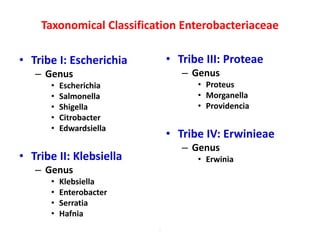
Taxonomical Classification Enterobacteriaceae
• Tribe I: Escherichia
– Genus
• Escherichia
• Salmonella
• Shigella
• Citrobacter
• Edwardsiella
• Tribe II: Klebsiella
– Genus
• Klebsiella
• Enterobacter
• Serratia
• Hafnia
• Tribe III: Proteae
– Genus
• Proteus
• Morganella
• Providencia
• Tribe IV: Erwinieae
– Genus
• Erwinia
.
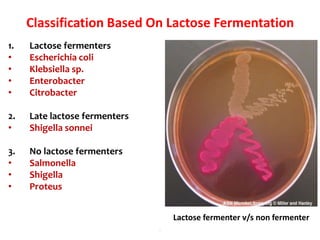
Classification Based On Lactose Fermentation
1. Lactose fermenters
• Escherichia coli
• Klebsiella sp.
• Enterobacter
• Citrobacter
2. Late lactose fermenters
• Shigella sonnei
3. No lactose fermenters
• Salmonella
• Shigella
• Proteus
.
Lactose fermenter v/s non fermenter
Clinical Significance of Enterics
• Enterics are ubiquitous in nature
• Except for few, most are present in the intestinal tract of
animals and humans as commensal flora; therefore, they are
sometimes call “fecal coliforms”
• Some live in water, soil and sewage
• Based on clinical infections produced, enterics are divided into
two categories:
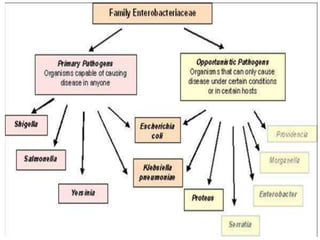
– Primary intestinal pathogens – not commensal flora, they
produce infection from ingestion of contaminated food or
water (Salmonella, Shigella, and Yersinia spp.)
– Opportunistic pathogens – normally part of the usual
intestinal flora that may produce infection outside the
intestine
Dr Praveg Gupta MD 9
Antigenic Structure
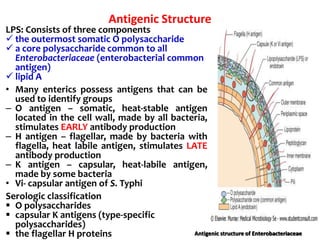
LPS: Consists of three components
 the outermost somatic O polysaccharide
 a core polysaccharide common to all
Enterobacteriaceae (enterobacterial common
antigen)
 lipid A
• Many enterics possess antigens that can be
used to identify groups
– O antigen – somatic, heat-stable antigen
located in the cell wall, made by all bacteria,
stimulates EARLY antibody production
– H antigen – flagellar, made by bacteria with
flagella, heat labile antigen, stimulates LATE
antibody production
– K antigen – capsular, heat-labile antigen,
made by some bacteria
• Vi- capsular antigen of S. Typhi
Serologic classification
 O polysaccharides
 capsular K antigens (type-specific
polysaccharides)
 the flagellar H proteins Antigenic structure of Enterobacteriaceae
Virulence Factors of Enterics
• Ability to colonize, adhere, produce various toxins and invade
tissues
• Some possess plasmids that may mediate resistance to
antibiotics
– ESBL’s: Extended-Spectrum beta lactamases
• Inactivate extended spectrum antibiotics like penicillins,
cephalosporins and aztreonam
• Common Virulence Factors Associated with Enterobacteriaceae
Endotoxin
Capsule
Antigenic phase variation
Type III secretion systems
Sequestration of growth factors
Resistance to serum killing
Antimicrobial resistance
Medically Important Enterobacteriaceae
• Escherichia coli
• Salmonella enterica
• Shigella sonnei, Shigella flexneri
• Citrobacter freundii, Citrobacter koseri
• Enterobacter aerogenes, Enterobacter cloacae
• Klebsiella pneumoniae, Klebsiella oxytoca
• Proteus mirabilis, Proteus vulgaris
• Morganella morganii
• Serratia marcescens
• Yersinia pestis, Yersinia enterocolitica, Yersinia
pseudotuberculosis
E. coli, Salmonella, Shigella, Yersinia
Genus Escherichia
• Named for Theodor Escherich, German physician (ca. 1885)
demonstrated that particular strains were responsible for
infant diarrhea and gastroenteritis
• Five species: E. coli, E. blattae, E. fergusonii,
E. hermannii and E. vulneris
• Sixth species recently added: E. albertii
Huys and others described a sixth species, E. albertii, associated
with diarrheal disease in Bangladeshi children.
E. albertii was originally isolated and identified by John Albert
and collaborators at the International Centre for Diarrhoeal
Disease Research, Bangladesh, as Hafnia alvei
E. coli: large intestine, colon (Mammalian large intestine)
E. blattae: Hindgut of cockroach Blatta orientalis
E. hermannii: American microbiologists George J. Hermann and
Lloyd G. Herman
E. fergusonii: American microbiologist William W. Ferguson
E. vulneris: vulneris, which is Latin for wound
• Sepsis, UTIs, meningitis, gastroenteritis
E. coli: Morphology
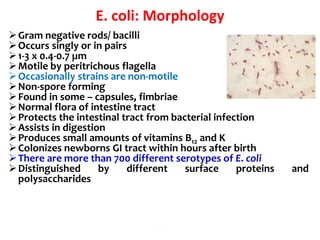
Gram negative rods/ bacilli
Occurs singly or in pairs
1-3 x 0.4-0.7 µm
Motile by peritrichous flagella
Occasionally strains are non-motile
Non-spore forming
Found in some – capsules, fimbriae
Normal flora of intestine tract
Protects the intestinal tract from bacterial infection
Assists in digestion
Produces small amounts of vitamins B12 and K
Colonizes newborns GI tract within hours after birth
There are more than 700 different serotypes of E. coli
Distinguished by different surface proteins and
polysaccharides
.
Culture Characteristics
• Aerobe and facultative anaerobe
• Growth occurs between 10-40°C (37°C)
• S = smooth forms seen in fresh isolates, easily emulsifiable in
saline.
• R = rough forms seen in older cultures, with irregular dull
surface, often auto-agglutinable in saline.
• S-R variation occurs as a result of repeated subcultures and is
associated with the loss of surface antigens and usually of
virulence.
• Many pathogenic isolates have polysaccharide capsules.
• Some strains may occur in the mucoid form.
.
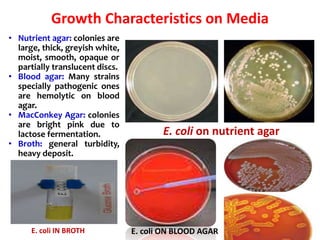
• Nutrient agar: colonies are
large, thick, greyish white,
moist, smooth, opaque or
partially translucent discs.
• Blood agar: Many strains
specially pathogenic ones
are hemolytic on blood
agar.
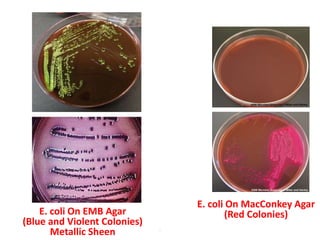
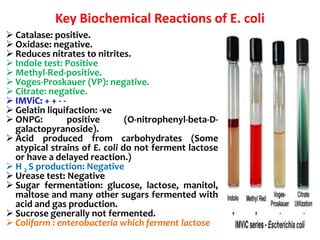
• MacConkey Agar: colonies
are bright pink due to
lactose fermentation.
• Broth: general turbidity,
heavy deposit.
. 16
E. coli on nutrient agar
E. coli ON BLOOD AGAR
Growth Characteristics on Media
E. coli IN BROTH
E. coli On MacConkey Agar
(Red Colonies)
.
E. coli On EMB Agar
(Blue and Violent Colonies)
Metallic Sheen
Key Biochemical Reactions of E. coli
.
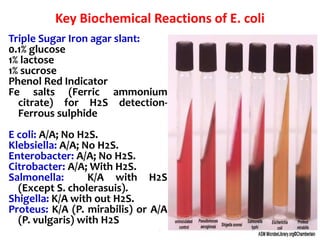
 Catalase: positive.
 Oxidase: negative.
 Reduces nitrates to nitrites.
 Indole test: Positive
 Methyl-Red-positive.
 Voges-Proskauer (VP): negative.
 Citrate: negative.
 IMViC: + + - -
 Gelatin liquifaction: -ve
 ONPG: positive (O-nitrophenyl-beta-D-
galactopyranoside).
 Acid produced from carbohydrates (Some
atypical strains of E. coli do not ferment lactose
or have a delayed reaction.)
 H 2 S production: Negative
 Urease test: Negative
 Sugar fermentation: glucose, lactose, manitol,
maltose and many other sugars fermented with
acid and gas production.
 Sucrose generally not fermented.
 Coliform : enterobacteria which ferment lactose
Key Biochemical Reactions of E. coli
.
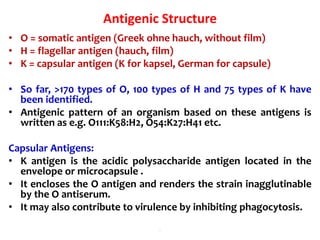
Triple Sugar Iron agar slant:
0.1% glucose
1% lactose
1% sucrose
Phenol Red Indicator
Fe salts (Ferric ammonium
citrate) for H2S detection-
Ferrous sulphide
E coli: A/A; No H2S.
Klebsiella: A/A; No H2S.
Enterobacter: A/A; No H2S.
Citrobacter: A/A; With H2S.
Salmonella: K/A with H2S
(Except S. cholerasuis).
Shigella: K/A with out H2S.
Proteus: K/A (P. mirabilis) or A/A
(P. vulgaris) with H2S
Antigenic Structure
• O = somatic antigen (Greek ohne hauch, without film)
• H = flagellar antigen (hauch, film)
• K = capsular antigen (K for kapsel, German for capsule)
• So far, >170 types of O, 100 types of H and 75 types of K have
been identified.
• Antigenic pattern of an organism based on these antigens is
written as e.g. O111:K58:H2, O54:K27:H41 etc.
Capsular Antigens:
• K antigen is the acidic polysaccharide antigen located in the
envelope or microcapsule .
• It encloses the O antigen and renders the strain inagglutinable
by the O antiserum.
• It may also contribute to virulence by inhibiting phagocytosis.
.
Virulence Factors
 Surface antigens: O and K
• O antigen – somatic lipopolysaccharide surface O antigen has
endotoxic activity, protects the bacteria from phagocytosis and
bactericidal effects of complement.
• K antigen – affords protection against phagocytosis and
antibacterial factors in normal serum.
 Fimbriae – plasmid coded, found in small numbers and mediate
mannose resistant hemagglutinins, act as virulence factors.
• Examples:
• CFA = colonization factor antigens in enterotoxigenic E. coli
causing human diarrhea.
• P fimbriae which bind to uroepithelial cells and P blood group
substance on human erythrocytes, have a role in urinary tract
infection.
.
Endotoxin (LPS): includes pyrogenic activity, endothelial
damage leading to DIC and endotoxin shock. More important in
septicaemic disease.
Capsules Polysaccharide: Produced by some E coli.
Antiphagocytic, interfere with antibacterial effect of
complement and weakly antigenic
Fimbriae (Pili): present on many enterotoxigenic strains. Allow
attachment to mucosal surfaces in small intestine and lower
urinary tract. Facilitates colonization and avoid flushing effects
Intimin: Appears necessary for binding of EPEC to enterocytes.
Flagella
Toxins: Enterotoxins, Verotoxins, Cytotoxic necrotizing factor
Hemolysins: Alpha hemolysins may increase the availability of
iron for invading organisms.
 Siderophores: Aerobactin and enterobactin produced by some
strains of E coli.
Antigenic variation
Drug resistance plasmids
Toxin and other virulence plasmids
Thermolabile toxin (LT)
Thermostable toxin (ST)
Found alone or together
Both are plasmid borne
Virulence factors of pathogenic strains of E. coli
E coli
Responsible for 30% to 35% of all septicemias, more than 70%
(50-80%) of urinary tract infections (UTIs), and many intestinal
infections
Causes ~70% of traveler’s diarrhea
Pathogenic strains frequent agents of infantile diarrhea –
greatest cause of mortality among babies
Indicator of fecal contamination in water
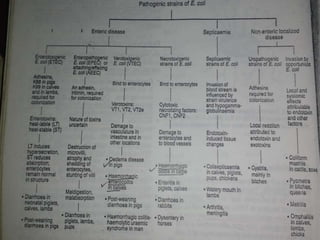
Pathogenic E. coli
Five classes of E. coli that cause diarrheal diseases are now
recognized:
1. Enterotoxigenic E. coli (ETEC)
2. Enteropathogenic E. coli (EPEC)
3. Enteroinvasive E. coli (EIEC)
4. Enteroaggregative E. coli (EAggEC)
5. Enterohemorrhagic E. coli (EHEC)
Enterotoxigenic E. coli (ETEC)
Adhere to intestinal mucosa by fimbriae
Produce enterotoxins
Plasmids contain genes for enterotoxins
Cause leakage of intestinal epithelial cells - Loss of
electrolytes and water
Cause diarrhea in children & adults
Traveler’s diarrhea
Weanling diarrhea
Persons from developed countries visiting endemic areas
often suffer from ETEC diarrhea – TRAVELER’S DIARRHEA.
Endemic in developing countries in tropics, all age groups.
Mild watery diarrhea to fatal disease indistinguishable
from cholera.
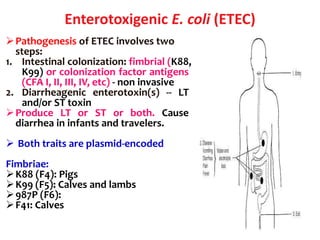
Enterotoxigenic E. coli (ETEC)
Pathogenesis of ETEC involves two
steps:
1. Intestinal colonization: fimbrial (K88,
K99) or colonization factor antigens
(CFA I, II, III, IV, etc) - non invasive
2. Diarrheagenic enterotoxin(s) -- LT
and/or ST toxin
Produce LT or ST or both. Cause
diarrhea in infants and travelers.
 Both traits are plasmid-encoded
Fimbriae:
K88 (F4): Pigs
K99 (F5): Calves and lambs
987P (F6):
F41: Calves
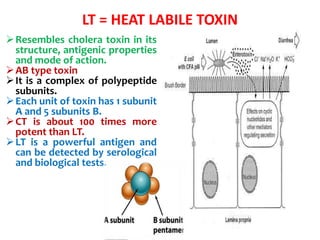
Resembles cholera toxin in its
structure, antigenic properties
and mode of action.
AB type toxin
It is a complex of polypeptide
subunits.
Each unit of toxin has 1 subunit
A and 5 subunits B.
CT is about 100 times more
potent than LT.
LT is a powerful antigen and
can be detected by serological
and biological tests.
LT = HEAT LABILE TOXIN
.
LT = HEAT LABILE TOXIN
MOA:
• The B (binding) subunit binds the toxin
to the target cells via a specific receptor
that has been identified as GM1
GANGLIOSIDE.
• The A (Active) subunit is then activated
by cleavage of a peptide bond and
internalized
• The activated subunit A then catalyzes
the ADP-ribosylation (transfer of ADP-
ribose from nicotinamide adenine
dinucleotide [NAD]) of a regulatory
subunit of membrane-bound adenylate
cyclase, the enzyme that converts ATP to
cAMP.
• This activates the adenylate cyclase,
which produces excess intracellular
cAMP, which leads to hypersecretion of
water and electrolytes into the bowel
lumen.
• Diagnosis done by demonstration of the
toxin. .
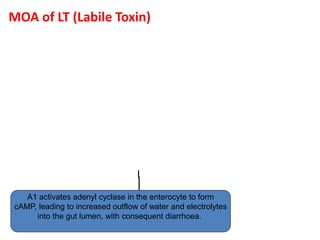
A1 activates adenyl cyclase in the enterocyte to form
cAMP, leading to increased outflow of water and electrolytes
into the gut lumen, with consequent diarrhoea.
.
MOA of LT (Labile Toxin)
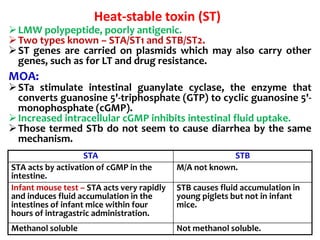
Heat-stable toxin (ST)
LMW polypeptide, poorly antigenic.
Two types known – STA/ST1 and STB/ST2.
ST genes are carried on plasmids which may also carry other
genes, such as for LT and drug resistance.
MOA:
STa stimulate intestinal guanylate cyclase, the enzyme that
converts guanosine 5'-triphosphate (GTP) to cyclic guanosine 5'-
monophosphate (cGMP).
Increased intracellular cGMP inhibits intestinal fluid uptake.
Those termed STb do not seem to cause diarrhea by the same
mechanism.
STA STB
STA acts by activation of cGMP in the
intestine.
M/A not known.
Infant mouse test – STA acts very rapidly
and induces fluid accumulation in the
intestines of infant mice within four
hours of intragastric administration.
STB causes fluid accumulation in
young piglets but not in infant
mice.
Methanol soluble Not methanol soluble.
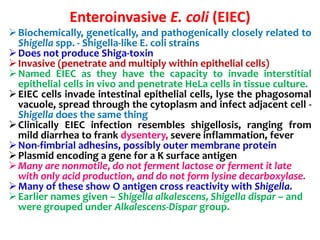
Enteroinvasive E. coli (EIEC)
Biochemically, genetically, and pathogenically closely related to
Shigella spp. - Shigella-like E. coli strains
Does not produce Shiga-toxin
Invasive (penetrate and multiply within epithelial cells)
Named EIEC as they have the capacity to invade interstitial
epithelial cells in vivo and penetrate HeLa cells in tissue culture.
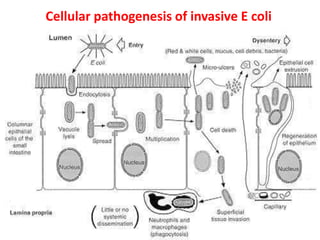
EIEC cells invade intestinal epithelial cells, lyse the phagosomal
vacuole, spread through the cytoplasm and infect adjacent cell -
Shigella does the same thing
Clinically EIEC infection resembles shigellosis, ranging from
mild diarrhea to frank dysentery, severe inflammation, fever
Non-fimbrial adhesins, possibly outer membrane protein
Plasmid encoding a gene for a K surface antigen
Many are nonmotile, do not ferment lactose or ferment it late
with only acid production, and do not form lysine decarboxylase.
Many of these show O antigen cross reactivity with Shigella.
Earlier names given – Shigella alkalescens, Shigella dispar – and
were grouped under Alkalescens-Dispar group.
Cellular pathogenesis of invasive E coli
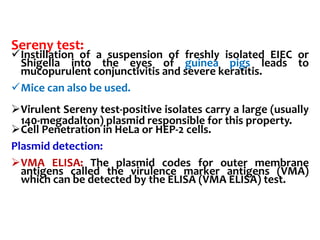
Sereny test:
Instillation of a suspension of freshly isolated EIEC or
Shigella into the eyes of guinea pigs leads to
mucopurulent conjunctivitis and severe keratitis.
Mice can also be used.
Virulent Sereny test-positive isolates carry a large (usually
140-megadalton) plasmid responsible for this property.
Cell Penetration in HeLa or HEP-2 cells.
Plasmid detection:
VMA ELISA: The plasmid codes for outer membrane
antigens called the virulence marker antigens (VMA)
which can be detected by the ELISA (VMA ELISA) test.
Enteropathogenic E. coli (EPEC)
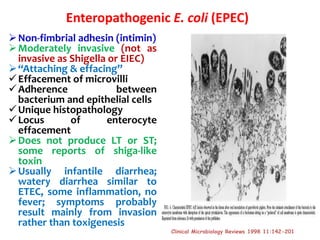
Non-fimbrial adhesin (intimin)
Moderately invasive (not as
invasive as Shigella or EIEC)
“Attaching & effacing”
Effacement of microvilli
Adherence between
bacterium and epithelial cells
Unique histopathology
Locus of enterocyte
effacement
Does not produce LT or ST;
some reports of shiga-like
toxin
Usually infantile diarrhea;
watery diarrhea similar to
ETEC, some inflammation, no
fever; symptoms probably
result mainly from invasion
rather than toxigenesis
Clinical Microbiology Reviews 1998 11:142-201
Associated with diarrhea in infants and children.
Institutional outbreaks, sporadic diarrhea.
Do not produce enterotoxins.
Not invasive.
M/A: Attach to mucosa of upper small intestine, cause
disruption of brush border microvilli.
Enteroadherent E. coli is another name given to them because
they can adhere to HEp-2 cells.
Enteroaggregative E. coli (EAggEC)
• Appear aggregated in a stacked brick
formation on Hep-2 cells or glass.
• They have been associated with
persistent diarrhea in young children
without inflammation, no fever,
especially in developing countries.
• They form a LMW heat stable
enterotoxin called EAST1 (entero
aggregative heat stable enterotoxin-1)
and a hemolysin .
Adhere to HEp-2 and Human laryngeal
carcinoma cells
Adhesins not characterized
Non-invasive
Do not secrete enterotoxins
Bacterial cells autoagglutinate
EHEC = ENTEROHAEMORRHAGIC E.COLI
• Produce VT
• Mild diarrhea to fatal hemorrhagic colitis and hemorrhagic
uremic syndrome (HUS) particularly in young children and
elderly.
• Primary target of VT = vascular endothelial cells.
• O157:H7, O26:H1 etc
• The disease may occur sporadically or as outbreaks of food
poisoning.
• Changing lifestyle and eating habits.
• Salad vegetables such as radish and alfalfa sprouts, in which
bacteria were found beneath the skin and in the deeper
tissues.
• Diagnosis: demonstration of VT.
. 37
Enterohemorrhagic E. coli (EHEC)
Severe gastrointestinal distress
Hemorrhagic colitis
Crampy abdominal pain
Watery diarrhea
Bloody diarrhea
Little or no fever
New serotype O157:H7 in 1983 - Undercooked hamburgers
157th somatic O antigen/ 7th flagellar H antigen
Hemorrhagic colitis: Abdominal cramps, blood stools, with minor
or no fever
Post diarrheal hemolytic ureamic syndrome
Acute renal injury
Thrombocytopenia: An abnormal decrease in the number of
platelets in circulatory blood.
Microangiopathic hemolytic anemia: The fragmentation of red
blood cells because of narrowing or obstruction of small blood
vessels.
Enterohemorrhagic E. coli (EHEC): Among the most dangerous
enteric pathogens
Enterohemorrhagic E. coli (EHEC)
Represented by a single strain
(serotype O157:H7)
Adhesins not characterized,
probably fimbriae
Moderately invasive
Produces shiga toxin but not
LT or ST
Copious bloody discharge
(hemorrhagic colitis), intense
inflammatory response, may
be complicated by hemolytic
uremia
Pediatric diarrhea caused by
this strain can be fatal due to
acute kidney failure
(hemolytic uremic syndrome
[HUS]).
The Lancet 1998 352:1207-1212
VT = VEROTOXIN = VEROCYTOTOXIN
A B type exotoxin - Has A and B subunits.
VT genes appear to be phage encoded.
VT1, VT2 identified.
Named so because it was first detected by its cytotoxic effect
on Vero cells, a cell line derived from African green monkey
kidney cells.
It is also known as SLT = shiga like toxin because it is similar to
the Shigella dysenteriae type 1 toxin in its physical, antigenic
and biological properties.
MOA: Very similar to toxin produced by Shigella dysenteriae
 Inhibits protein synthesis in host cell
 A subunit inactivates the 60S ribosomal subunit
• Most O157 strains produce Shiga toxin 2
– 25% produce Shiga toxin 1
.
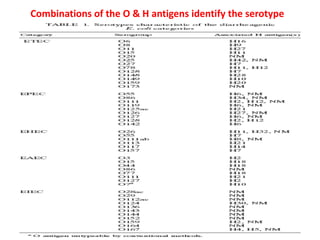
Combinations of the O & H antigens identify the serotype
Disease in Animals
Predisposing Factors
1. Insufficient or no colostral immunity
2. Build-up of pathogenic E. coli strains
3. Overcrowding or poor hygiene, facilitating increased
transmission of organism
4. Normal flora of neonates not fully established
5. Naïve immune system in neonates
6. Receptors for ETEC adhesins are only present during first week
of life in calves
7. Pigs retain receptors for some adhesins past weaning age
(post-weaning diarrhoea)
8. Digestive tract of young pigs equipped only for easily digested
foods. Accumulation of undigested and unabsorbed nutrients
encourages replication of E. coli.
9. Stress factors such as cold ambient temperatures and frequent
mixing of animals
Disease in Animals
Enteric Colibacillosis:
Affects primarily newborn calves, lambs and piglets.
Oral infection, colonization of intestine and toxin production are
pre-requisites.
In calves:
In calves diarrhea develops within first few days of birth.
Feces consistency variable: it may be profuse and watery in some
cases while in others may be pasty, white or yellowish and rancid
may accumulate on hind limb and tail.
Mildly affected animals may recover spontaneously while
untreated severely affected calves die within few days.
In pigs:
Piglets may succumb within 24 hours of birth.
Often entire litter is affected and as the diseases progresses,
piglets refuse to suck.
Profuse watery diarrhea rapidly leads to dehydration, weakness
and death.
In Lambs:
Enteric colibacillosis occasionally affects lambs. Septicemic form
more common.
Colispticaemia:
 Systemic infections with E. coli are relatively frequent in calves, lambs and
poultry.
 Septicaemic strains of E. coli invade blood stream following infection of the
intestine, lungs or umbilical tissues (naval ill).
 They have special attributes for resisting host defense.
 Affects primarily newborn calves, lambs and piglets.
 Oral infection, colonization of intestine and toxin production are pre-
requisites.
In calves:
 Often presents as acute fatal disease
 Pyrexia, depression, weakness and tachycardia with or without diarrhoea are
early signs
 Hypothermia and prostration precede death which may occur within 24 hours.
 Meningitis and Pneumonia are commonly encountered in affected calves and
lambs.
 Post-septicaemic localization in the joints of calves and lambs results in
arthritis with swelling, pain, lameness and stiff gait.
In poultry:
 Air sacculitis and pericarditis may develop following septicaemia.
 COLIGRANULOMA (HJARRE’S DISEASE) is characterized by chronic
inflammatory changes which are encountered at PM in laying hens and
resemble tuberculous lesions.
In Lambs:
 Watery mouth occurs in lambs up to 3 days of age
 Severe depression, loss of appetite, profuse salivation and abdominal
Oedema Disease of Pigs:
 Oedema disease is toxaemia which usually occurs 1 to 2 weeks after
weaning in rapidly growing pigs.
 Etiology complex and nutritional, environmental and other stress factors
contribute
 The non-invasive hemolytic strains isolated that produce verotoxin VT2
which is absorbed from intestine and damages vascular endothelial cells
with consequent perivascular oedema.
 The onset of oedema disease in sudden with some animals found dead
without showing clinical signs.
 Characteristic signs include posterior paresis, muscular tremor and
oedema of eyelids and front of face.
 The sequele may be hoarse due to laryngeal edema.
 Flaccid paralysis precedes death which typically occurs within 36 hours of
onset of clinical signs.
 Recovered animals usually have residual neurological dysfunction.
Post – weaning diarrhoea of pigs:
 The condition occurs within a week or two after weaning often following
changes in feeding or management and possible involvement of
rotaviruses.
 Majority of outbreaks are associated with ETEC strains. Occasionally
VTEC strains are implicated.
 Clinical signs vary from afebrile disease with inappetance to watery
diarrhoea in severe cases
 Diarrhoea with purplish discoloration of areas of skin are often observed.
Coliform mastitis:
Infection occurs in cows and sows.
In dairy cows, source is faecal contamination of udder skin and
relaxation of teat sphincter following milking.
No specific serotypes linked with mastitis
Acute form of disease in associated with endotoximia and may
be life threatening.
Peracute form fatal in 24-48 hours.
Mammary secretions are watery and contain white flecks.
Urogenital Tract Infections:
Opportunistic ascending infections of urinary tract result in
cystitis in bitches.
Strains possess virulence factors such as fimbriae for mucosal
colonization.
Invasion of endometrium leads to canine pyometra.
Prostatitis in dogs is also associated with invasion of
opportunistic E. coli strains.
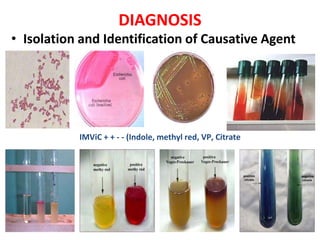
IMViC + + - - (Indole, methyl red, VP, Citrate
• Isolation and Identification of Causative Agent
DIAGNOSIS
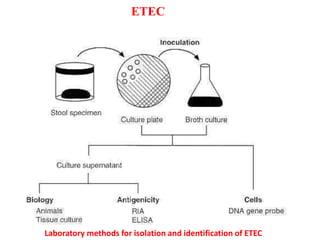
Laboratory methods for isolation and identification of ETEC
ETEC
Identification: O157:H7
• MacConkey agar (SMAC)
– Does not ferment sorbitol rapidly
– Forms colorless colonies on sorbitol containing
MacConkey agar
• Serology
– Colorless colonies on SMAC are screened for the
0157 antigen
Confirmation: By serotyping (O and H antisera)
In septicemia: Blood culture
Enterotoxins: by ELISA or other immunological methods
Verotoxins/ necrotoxins: by Vero cell assay
 Treatment is based on symptomatology.
 fluid replacement is the primary treatment.
 Antibiotics are generally not used except in severe disease or disease
that has progressed to a systemic stage (e.g. hemolytic-uremia
syndrome).
 E. coli may be sensitive to many drugs such as ampicillin,
chloramphenicol, chlortetracycline, neomycin, nitrofurans, gentamicin,
or methiprim-sulfadimethoxine, nalidixic acid, oxytetracycline,
polymyxin B, spectinomycin, streptomycin, and sulfa drugs.
 Drug resistant strains are increasingly prevalent.
 It is essential to do susceptibility testing.
 Treatment of patients with EHEC infections is not recommended
because it can increase the release of shiga-like toxins and actually
trigger HUS
 1st Line
 Nitrofurantoin
 Nalidixic acid
 Norfloxacin
 Ampicillin
 Cotrimoxazole
 2nd line
 Ciprofloxacin/Ceftriaxone/Cefuroxime
 Gentamicin
Treatment
Control
• Controlled by preventing transmission and by stressing the
importance of breast-feeding of infants
• The best treatment is oral fluid and electrolyte replacement
(intravenous in severe cases).
• Antibiotics are not recommended - antibiotic-resistant pathogenic E
coli
Vaccines:
 Commercially available killed vaccines containing prevalent
pathogenic E coli to pregnant sows
 Autologous killed vaccines
 Purified E coli K99 fimbrial or whole cell preparation combined with
Rotavirus in pregnant cows
Escherichia coli as a Genetic tool.
• The study of Escherichia coli and its plasmids and
bacteriophages has provided a vast body of genetical
information, much of it relevant to the whole of
biology.
• This was true even before the development of the new
techniques, for cloning and analysing DNA, that have
revolutionized biological research during the past
decade.
• Much of the background of knowledge necessary for
the cloning and expression of genetically engineered
information, as well as the techniques themselves,
came from work with this organism.
Why E.coli is preferred
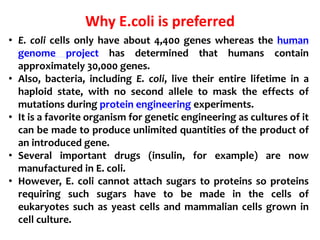
• E. coli cells only have about 4,400 genes whereas the human
genome project has determined that humans contain
approximately 30,000 genes.
• Also, bacteria, including E. coli, live their entire lifetime in a
haploid state, with no second allele to mask the effects of
mutations during protein engineering experiments.
• It is a favorite organism for genetic engineering as cultures of it
can be made to produce unlimited quantities of the product of
an introduced gene.
• Several important drugs (insulin, for example) are now
manufactured in E. coli.
• However, E. coli cannot attach sugars to proteins so proteins
requiring such sugars have to be made in the cells of
eukaryotes such as yeast cells and mammalian cells grown in
cell culture.
How Does Molecular Cloning Work?
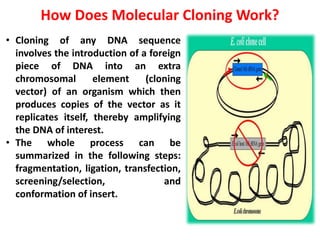
• Cloning of any DNA sequence
involves the introduction of a foreign
piece of DNA into an extra
chromosomal element (cloning
vector) of an organism which then
produces copies of the vector as it
replicates itself, thereby amplifying
the DNA of interest.
• The whole process can be
summarized in the following steps:
fragmentation, ligation, transfection,
screening/selection, and
conformation of insert.
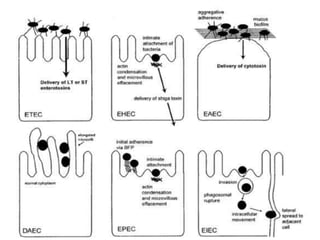
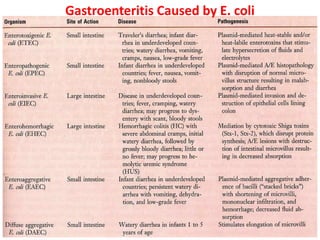
Gastroenteritis Caused by E. coli
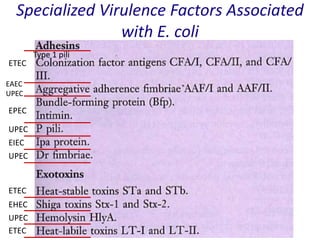
Specialized Virulence Factors Associated
with E. coli
EAEC
UPEC
EPEC
ETEC
Type 1 pili
UPEC
UPEC
EIEC
ETEC
ETEC
EHEC
UPEC
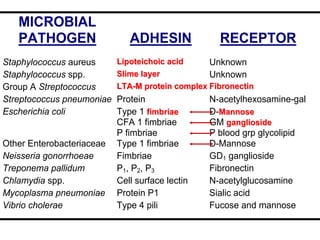
MICROBIAL
PATHOGEN ADHESIN RECEPTOR
Staphylococcus aureus LLiippootteeiicchhooiicc aacciidd Unknown
Staphylococcus spp. SSlliimmee llaayyeerr Unknown
Group A Streptococcus LLTTAA--MM pprrootteeiinn ccoommpplleexx FFiibbrroonneeccttiinn
Streptococcus pneumoniae Protein N-acetylhexosamine-gal
Escherichia coli Type 1 ffiimmbbrriiaaee
CFA 1 fimbriae
P fimbriae
D-MMaannnnoossee
GM ggaanngglliioossiiddee
P blood grp glycolipid
Other Enterobacteriaceae Type 1 fimbriae D-Mannose
Neisseria gonorrhoeae Fimbriae GD1 ganglioside
Treponema pallidum P1, P2, P3 Fibronectin
Chlamydia spp. Cell surface lectin N-acetylglucosamine
Mycoplasma pneumoniae Protein P1 Sialic acid
Vibrio cholerae Type 4 pili Fucose and mannose
Questions?
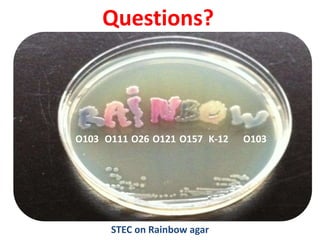
STEC on Rainbow agar
O103 O111 O26 O121 O157 K-12 O103
Thanks
Acknowledgement: All the material/presentations available online
on the subject are duly acknowledged.
Disclaimer: The author bear no responsibility with regard to the
source and authenticity of the content.

Genus Escherichia coli

  • 1.
    Genus Escherichia coli DrRavi Kant Agrawal, MVSc, PhD Senior Scientist (Veterinary Microbiology) Food Microbiology Laboratory Division of Livestock Products Technology ICAR-Indian Veterinary Research Institute Izatnagar 243122 (UP) India
  • 2.
    Enterobacteriaceae The largest, mostheterogeneous collection of medically important Gram-negative rods >40 genera and 150 species Part of the normal intestinal flora of human and animals. Ubiquitous organisms, found worldwide in soil, water, and vegetation Fewer than 20 species are responsible for more than 95% of the infections Responsible for 30% to 35% of all septicemias, more than 70% of urinary tract infections (UTIs), and many intestinal infections Infection may originate from an animal or from a human carrier or through the endogenous spread of organisms Commonly called as “enterobacteria” or "enteric bacteria”
  • 3.
    Enterobacteriaceae Gram-negative rods Moderately sized(0.3-1.0 × 1.0-6.0 μm) All ferment glucose producing acid with/ without gas All reduce nitrate to nitrites Catalase positive Oxidase negative (exception Plesiomonas shigelloides) Aerobic or Facultative anaerobes Mostly motile with peritrichous flagella or some are non-motile Do not form spores and non-acid fast Have simple nutritional requirements Ferment lactose: Escherichia, Klebsiella, Enterobacter, Citrobacter, and Serratia spp. Do not ferment lactose: Salmonella, Shigella, Proteus, and Yersinia spp. Some have prominent capsules Resistance to bile salts
  • 4.
    Enterobacteriaceae • Family Enterobacteriaceaeoften referred to as “enterics” • Four major features: – All ferment glucose (dextrose) – All reduce nitrates to nitrites – All are oxidase negative, except Plesiomonas – All except Klebsiella, Shigella, Yersinia pestis and Salmonella Gallinarum-Pullorum are motile • Colony morphology on BAP or CA of little value, as they look the same – large, moist and grey on SBA • Selective and differential media are used for initial colony evaluation – ex. MacConkey, HE, XLD agars
  • 5.
    Classification of Enterics •Various classifications of Enterobacteriaceae have been put forward. • Two important classifications are 1. based on taxonomy and 2. based on lactose fermentation. Based on taxonomy • Due to the very large number of organisms in the Family Enterobacteriaceae, species are grouped into Tribes, which have similar characteristics • Within each Tribe, species are further subgrouped under genera
  • 6.
    Taxonomical Classification Enterobacteriaceae •Tribe I: Escherichia – Genus • Escherichia • Salmonella • Shigella • Citrobacter • Edwardsiella • Tribe II: Klebsiella – Genus • Klebsiella • Enterobacter • Serratia • Hafnia • Tribe III: Proteae – Genus • Proteus • Morganella • Providencia • Tribe IV: Erwinieae – Genus • Erwinia .
  • 7.
    Classification Based OnLactose Fermentation 1. Lactose fermenters • Escherichia coli • Klebsiella sp. • Enterobacter • Citrobacter 2. Late lactose fermenters • Shigella sonnei 3. No lactose fermenters • Salmonella • Shigella • Proteus . Lactose fermenter v/s non fermenter
  • 8.
    Clinical Significance ofEnterics • Enterics are ubiquitous in nature • Except for few, most are present in the intestinal tract of animals and humans as commensal flora; therefore, they are sometimes call “fecal coliforms” • Some live in water, soil and sewage • Based on clinical infections produced, enterics are divided into two categories: – Primary intestinal pathogens – not commensal flora, they produce infection from ingestion of contaminated food or water (Salmonella, Shigella, and Yersinia spp.) – Opportunistic pathogens – normally part of the usual intestinal flora that may produce infection outside the intestine
  • 9.
  • 10.
    Antigenic Structure LPS: Consistsof three components  the outermost somatic O polysaccharide  a core polysaccharide common to all Enterobacteriaceae (enterobacterial common antigen)  lipid A • Many enterics possess antigens that can be used to identify groups – O antigen – somatic, heat-stable antigen located in the cell wall, made by all bacteria, stimulates EARLY antibody production – H antigen – flagellar, made by bacteria with flagella, heat labile antigen, stimulates LATE antibody production – K antigen – capsular, heat-labile antigen, made by some bacteria • Vi- capsular antigen of S. Typhi Serologic classification  O polysaccharides  capsular K antigens (type-specific polysaccharides)  the flagellar H proteins Antigenic structure of Enterobacteriaceae
  • 11.
    Virulence Factors ofEnterics • Ability to colonize, adhere, produce various toxins and invade tissues • Some possess plasmids that may mediate resistance to antibiotics – ESBL’s: Extended-Spectrum beta lactamases • Inactivate extended spectrum antibiotics like penicillins, cephalosporins and aztreonam • Common Virulence Factors Associated with Enterobacteriaceae Endotoxin Capsule Antigenic phase variation Type III secretion systems Sequestration of growth factors Resistance to serum killing Antimicrobial resistance
  • 12.
    Medically Important Enterobacteriaceae •Escherichia coli • Salmonella enterica • Shigella sonnei, Shigella flexneri • Citrobacter freundii, Citrobacter koseri • Enterobacter aerogenes, Enterobacter cloacae • Klebsiella pneumoniae, Klebsiella oxytoca • Proteus mirabilis, Proteus vulgaris • Morganella morganii • Serratia marcescens • Yersinia pestis, Yersinia enterocolitica, Yersinia pseudotuberculosis E. coli, Salmonella, Shigella, Yersinia
  • 13.
    Genus Escherichia • Namedfor Theodor Escherich, German physician (ca. 1885) demonstrated that particular strains were responsible for infant diarrhea and gastroenteritis • Five species: E. coli, E. blattae, E. fergusonii, E. hermannii and E. vulneris • Sixth species recently added: E. albertii Huys and others described a sixth species, E. albertii, associated with diarrheal disease in Bangladeshi children. E. albertii was originally isolated and identified by John Albert and collaborators at the International Centre for Diarrhoeal Disease Research, Bangladesh, as Hafnia alvei E. coli: large intestine, colon (Mammalian large intestine) E. blattae: Hindgut of cockroach Blatta orientalis E. hermannii: American microbiologists George J. Hermann and Lloyd G. Herman E. fergusonii: American microbiologist William W. Ferguson E. vulneris: vulneris, which is Latin for wound • Sepsis, UTIs, meningitis, gastroenteritis
  • 14.
    E. coli: Morphology Gramnegative rods/ bacilli Occurs singly or in pairs 1-3 x 0.4-0.7 µm Motile by peritrichous flagella Occasionally strains are non-motile Non-spore forming Found in some – capsules, fimbriae Normal flora of intestine tract Protects the intestinal tract from bacterial infection Assists in digestion Produces small amounts of vitamins B12 and K Colonizes newborns GI tract within hours after birth There are more than 700 different serotypes of E. coli Distinguished by different surface proteins and polysaccharides .
  • 15.
    Culture Characteristics • Aerobeand facultative anaerobe • Growth occurs between 10-40°C (37°C) • S = smooth forms seen in fresh isolates, easily emulsifiable in saline. • R = rough forms seen in older cultures, with irregular dull surface, often auto-agglutinable in saline. • S-R variation occurs as a result of repeated subcultures and is associated with the loss of surface antigens and usually of virulence. • Many pathogenic isolates have polysaccharide capsules. • Some strains may occur in the mucoid form. .
  • 16.
    • Nutrient agar:colonies are large, thick, greyish white, moist, smooth, opaque or partially translucent discs. • Blood agar: Many strains specially pathogenic ones are hemolytic on blood agar. • MacConkey Agar: colonies are bright pink due to lactose fermentation. • Broth: general turbidity, heavy deposit. . 16 E. coli on nutrient agar E. coli ON BLOOD AGAR Growth Characteristics on Media E. coli IN BROTH
  • 17.
    E. coli OnMacConkey Agar (Red Colonies) . E. coli On EMB Agar (Blue and Violent Colonies) Metallic Sheen
  • 18.
    Key Biochemical Reactionsof E. coli .  Catalase: positive.  Oxidase: negative.  Reduces nitrates to nitrites.  Indole test: Positive  Methyl-Red-positive.  Voges-Proskauer (VP): negative.  Citrate: negative.  IMViC: + + - -  Gelatin liquifaction: -ve  ONPG: positive (O-nitrophenyl-beta-D- galactopyranoside).  Acid produced from carbohydrates (Some atypical strains of E. coli do not ferment lactose or have a delayed reaction.)  H 2 S production: Negative  Urease test: Negative  Sugar fermentation: glucose, lactose, manitol, maltose and many other sugars fermented with acid and gas production.  Sucrose generally not fermented.  Coliform : enterobacteria which ferment lactose
  • 19.
    Key Biochemical Reactionsof E. coli . Triple Sugar Iron agar slant: 0.1% glucose 1% lactose 1% sucrose Phenol Red Indicator Fe salts (Ferric ammonium citrate) for H2S detection- Ferrous sulphide E coli: A/A; No H2S. Klebsiella: A/A; No H2S. Enterobacter: A/A; No H2S. Citrobacter: A/A; With H2S. Salmonella: K/A with H2S (Except S. cholerasuis). Shigella: K/A with out H2S. Proteus: K/A (P. mirabilis) or A/A (P. vulgaris) with H2S
  • 20.
    Antigenic Structure • O= somatic antigen (Greek ohne hauch, without film) • H = flagellar antigen (hauch, film) • K = capsular antigen (K for kapsel, German for capsule) • So far, >170 types of O, 100 types of H and 75 types of K have been identified. • Antigenic pattern of an organism based on these antigens is written as e.g. O111:K58:H2, O54:K27:H41 etc. Capsular Antigens: • K antigen is the acidic polysaccharide antigen located in the envelope or microcapsule . • It encloses the O antigen and renders the strain inagglutinable by the O antiserum. • It may also contribute to virulence by inhibiting phagocytosis. .
  • 21.
    Virulence Factors  Surfaceantigens: O and K • O antigen – somatic lipopolysaccharide surface O antigen has endotoxic activity, protects the bacteria from phagocytosis and bactericidal effects of complement. • K antigen – affords protection against phagocytosis and antibacterial factors in normal serum.  Fimbriae – plasmid coded, found in small numbers and mediate mannose resistant hemagglutinins, act as virulence factors. • Examples: • CFA = colonization factor antigens in enterotoxigenic E. coli causing human diarrhea. • P fimbriae which bind to uroepithelial cells and P blood group substance on human erythrocytes, have a role in urinary tract infection. .
  • 22.
    Endotoxin (LPS): includespyrogenic activity, endothelial damage leading to DIC and endotoxin shock. More important in septicaemic disease. Capsules Polysaccharide: Produced by some E coli. Antiphagocytic, interfere with antibacterial effect of complement and weakly antigenic Fimbriae (Pili): present on many enterotoxigenic strains. Allow attachment to mucosal surfaces in small intestine and lower urinary tract. Facilitates colonization and avoid flushing effects Intimin: Appears necessary for binding of EPEC to enterocytes. Flagella Toxins: Enterotoxins, Verotoxins, Cytotoxic necrotizing factor Hemolysins: Alpha hemolysins may increase the availability of iron for invading organisms.  Siderophores: Aerobactin and enterobactin produced by some strains of E coli. Antigenic variation Drug resistance plasmids Toxin and other virulence plasmids Thermolabile toxin (LT) Thermostable toxin (ST) Found alone or together Both are plasmid borne Virulence factors of pathogenic strains of E. coli
  • 23.
    E coli Responsible for30% to 35% of all septicemias, more than 70% (50-80%) of urinary tract infections (UTIs), and many intestinal infections Causes ~70% of traveler’s diarrhea Pathogenic strains frequent agents of infantile diarrhea – greatest cause of mortality among babies Indicator of fecal contamination in water
  • 24.
    Pathogenic E. coli Fiveclasses of E. coli that cause diarrheal diseases are now recognized: 1. Enterotoxigenic E. coli (ETEC) 2. Enteropathogenic E. coli (EPEC) 3. Enteroinvasive E. coli (EIEC) 4. Enteroaggregative E. coli (EAggEC) 5. Enterohemorrhagic E. coli (EHEC)
  • 25.
    Enterotoxigenic E. coli(ETEC) Adhere to intestinal mucosa by fimbriae Produce enterotoxins Plasmids contain genes for enterotoxins Cause leakage of intestinal epithelial cells - Loss of electrolytes and water Cause diarrhea in children & adults Traveler’s diarrhea Weanling diarrhea Persons from developed countries visiting endemic areas often suffer from ETEC diarrhea – TRAVELER’S DIARRHEA. Endemic in developing countries in tropics, all age groups. Mild watery diarrhea to fatal disease indistinguishable from cholera.
  • 26.
    Enterotoxigenic E. coli(ETEC) Pathogenesis of ETEC involves two steps: 1. Intestinal colonization: fimbrial (K88, K99) or colonization factor antigens (CFA I, II, III, IV, etc) - non invasive 2. Diarrheagenic enterotoxin(s) -- LT and/or ST toxin Produce LT or ST or both. Cause diarrhea in infants and travelers.  Both traits are plasmid-encoded Fimbriae: K88 (F4): Pigs K99 (F5): Calves and lambs 987P (F6): F41: Calves
  • 27.
    Resembles cholera toxinin its structure, antigenic properties and mode of action. AB type toxin It is a complex of polypeptide subunits. Each unit of toxin has 1 subunit A and 5 subunits B. CT is about 100 times more potent than LT. LT is a powerful antigen and can be detected by serological and biological tests. LT = HEAT LABILE TOXIN .
  • 28.
    LT = HEATLABILE TOXIN MOA: • The B (binding) subunit binds the toxin to the target cells via a specific receptor that has been identified as GM1 GANGLIOSIDE. • The A (Active) subunit is then activated by cleavage of a peptide bond and internalized • The activated subunit A then catalyzes the ADP-ribosylation (transfer of ADP- ribose from nicotinamide adenine dinucleotide [NAD]) of a regulatory subunit of membrane-bound adenylate cyclase, the enzyme that converts ATP to cAMP. • This activates the adenylate cyclase, which produces excess intracellular cAMP, which leads to hypersecretion of water and electrolytes into the bowel lumen. • Diagnosis done by demonstration of the toxin. .
  • 29.
    A1 activates adenylcyclase in the enterocyte to form cAMP, leading to increased outflow of water and electrolytes into the gut lumen, with consequent diarrhoea. . MOA of LT (Labile Toxin)
  • 30.
    Heat-stable toxin (ST) LMWpolypeptide, poorly antigenic. Two types known – STA/ST1 and STB/ST2. ST genes are carried on plasmids which may also carry other genes, such as for LT and drug resistance. MOA: STa stimulate intestinal guanylate cyclase, the enzyme that converts guanosine 5'-triphosphate (GTP) to cyclic guanosine 5'- monophosphate (cGMP). Increased intracellular cGMP inhibits intestinal fluid uptake. Those termed STb do not seem to cause diarrhea by the same mechanism. STA STB STA acts by activation of cGMP in the intestine. M/A not known. Infant mouse test – STA acts very rapidly and induces fluid accumulation in the intestines of infant mice within four hours of intragastric administration. STB causes fluid accumulation in young piglets but not in infant mice. Methanol soluble Not methanol soluble.
  • 31.
    Enteroinvasive E. coli(EIEC) Biochemically, genetically, and pathogenically closely related to Shigella spp. - Shigella-like E. coli strains Does not produce Shiga-toxin Invasive (penetrate and multiply within epithelial cells) Named EIEC as they have the capacity to invade interstitial epithelial cells in vivo and penetrate HeLa cells in tissue culture. EIEC cells invade intestinal epithelial cells, lyse the phagosomal vacuole, spread through the cytoplasm and infect adjacent cell - Shigella does the same thing Clinically EIEC infection resembles shigellosis, ranging from mild diarrhea to frank dysentery, severe inflammation, fever Non-fimbrial adhesins, possibly outer membrane protein Plasmid encoding a gene for a K surface antigen Many are nonmotile, do not ferment lactose or ferment it late with only acid production, and do not form lysine decarboxylase. Many of these show O antigen cross reactivity with Shigella. Earlier names given – Shigella alkalescens, Shigella dispar – and were grouped under Alkalescens-Dispar group.
  • 32.
    Cellular pathogenesis ofinvasive E coli
  • 33.
    Sereny test: Instillation ofa suspension of freshly isolated EIEC or Shigella into the eyes of guinea pigs leads to mucopurulent conjunctivitis and severe keratitis. Mice can also be used. Virulent Sereny test-positive isolates carry a large (usually 140-megadalton) plasmid responsible for this property. Cell Penetration in HeLa or HEP-2 cells. Plasmid detection: VMA ELISA: The plasmid codes for outer membrane antigens called the virulence marker antigens (VMA) which can be detected by the ELISA (VMA ELISA) test.
  • 34.
    Enteropathogenic E. coli(EPEC) Non-fimbrial adhesin (intimin) Moderately invasive (not as invasive as Shigella or EIEC) “Attaching & effacing” Effacement of microvilli Adherence between bacterium and epithelial cells Unique histopathology Locus of enterocyte effacement Does not produce LT or ST; some reports of shiga-like toxin Usually infantile diarrhea; watery diarrhea similar to ETEC, some inflammation, no fever; symptoms probably result mainly from invasion rather than toxigenesis Clinical Microbiology Reviews 1998 11:142-201
  • 35.
    Associated with diarrheain infants and children. Institutional outbreaks, sporadic diarrhea. Do not produce enterotoxins. Not invasive. M/A: Attach to mucosa of upper small intestine, cause disruption of brush border microvilli. Enteroadherent E. coli is another name given to them because they can adhere to HEp-2 cells.
  • 36.
    Enteroaggregative E. coli(EAggEC) • Appear aggregated in a stacked brick formation on Hep-2 cells or glass. • They have been associated with persistent diarrhea in young children without inflammation, no fever, especially in developing countries. • They form a LMW heat stable enterotoxin called EAST1 (entero aggregative heat stable enterotoxin-1) and a hemolysin . Adhere to HEp-2 and Human laryngeal carcinoma cells Adhesins not characterized Non-invasive Do not secrete enterotoxins Bacterial cells autoagglutinate
  • 37.
    EHEC = ENTEROHAEMORRHAGICE.COLI • Produce VT • Mild diarrhea to fatal hemorrhagic colitis and hemorrhagic uremic syndrome (HUS) particularly in young children and elderly. • Primary target of VT = vascular endothelial cells. • O157:H7, O26:H1 etc • The disease may occur sporadically or as outbreaks of food poisoning. • Changing lifestyle and eating habits. • Salad vegetables such as radish and alfalfa sprouts, in which bacteria were found beneath the skin and in the deeper tissues. • Diagnosis: demonstration of VT. . 37
  • 38.
    Enterohemorrhagic E. coli(EHEC) Severe gastrointestinal distress Hemorrhagic colitis Crampy abdominal pain Watery diarrhea Bloody diarrhea Little or no fever New serotype O157:H7 in 1983 - Undercooked hamburgers 157th somatic O antigen/ 7th flagellar H antigen Hemorrhagic colitis: Abdominal cramps, blood stools, with minor or no fever Post diarrheal hemolytic ureamic syndrome Acute renal injury Thrombocytopenia: An abnormal decrease in the number of platelets in circulatory blood. Microangiopathic hemolytic anemia: The fragmentation of red blood cells because of narrowing or obstruction of small blood vessels. Enterohemorrhagic E. coli (EHEC): Among the most dangerous enteric pathogens
  • 39.
    Enterohemorrhagic E. coli(EHEC) Represented by a single strain (serotype O157:H7) Adhesins not characterized, probably fimbriae Moderately invasive Produces shiga toxin but not LT or ST Copious bloody discharge (hemorrhagic colitis), intense inflammatory response, may be complicated by hemolytic uremia Pediatric diarrhea caused by this strain can be fatal due to acute kidney failure (hemolytic uremic syndrome [HUS]). The Lancet 1998 352:1207-1212
  • 40.
    VT = VEROTOXIN= VEROCYTOTOXIN A B type exotoxin - Has A and B subunits. VT genes appear to be phage encoded. VT1, VT2 identified. Named so because it was first detected by its cytotoxic effect on Vero cells, a cell line derived from African green monkey kidney cells. It is also known as SLT = shiga like toxin because it is similar to the Shigella dysenteriae type 1 toxin in its physical, antigenic and biological properties. MOA: Very similar to toxin produced by Shigella dysenteriae  Inhibits protein synthesis in host cell  A subunit inactivates the 60S ribosomal subunit • Most O157 strains produce Shiga toxin 2 – 25% produce Shiga toxin 1 .
  • 42.
    Combinations of theO & H antigens identify the serotype
  • 43.
    Disease in Animals PredisposingFactors 1. Insufficient or no colostral immunity 2. Build-up of pathogenic E. coli strains 3. Overcrowding or poor hygiene, facilitating increased transmission of organism 4. Normal flora of neonates not fully established 5. Naïve immune system in neonates 6. Receptors for ETEC adhesins are only present during first week of life in calves 7. Pigs retain receptors for some adhesins past weaning age (post-weaning diarrhoea) 8. Digestive tract of young pigs equipped only for easily digested foods. Accumulation of undigested and unabsorbed nutrients encourages replication of E. coli. 9. Stress factors such as cold ambient temperatures and frequent mixing of animals
  • 44.
    Disease in Animals EntericColibacillosis: Affects primarily newborn calves, lambs and piglets. Oral infection, colonization of intestine and toxin production are pre-requisites. In calves: In calves diarrhea develops within first few days of birth. Feces consistency variable: it may be profuse and watery in some cases while in others may be pasty, white or yellowish and rancid may accumulate on hind limb and tail. Mildly affected animals may recover spontaneously while untreated severely affected calves die within few days. In pigs: Piglets may succumb within 24 hours of birth. Often entire litter is affected and as the diseases progresses, piglets refuse to suck. Profuse watery diarrhea rapidly leads to dehydration, weakness and death. In Lambs: Enteric colibacillosis occasionally affects lambs. Septicemic form more common.
  • 45.
    Colispticaemia:  Systemic infectionswith E. coli are relatively frequent in calves, lambs and poultry.  Septicaemic strains of E. coli invade blood stream following infection of the intestine, lungs or umbilical tissues (naval ill).  They have special attributes for resisting host defense.  Affects primarily newborn calves, lambs and piglets.  Oral infection, colonization of intestine and toxin production are pre- requisites. In calves:  Often presents as acute fatal disease  Pyrexia, depression, weakness and tachycardia with or without diarrhoea are early signs  Hypothermia and prostration precede death which may occur within 24 hours.  Meningitis and Pneumonia are commonly encountered in affected calves and lambs.  Post-septicaemic localization in the joints of calves and lambs results in arthritis with swelling, pain, lameness and stiff gait. In poultry:  Air sacculitis and pericarditis may develop following septicaemia.  COLIGRANULOMA (HJARRE’S DISEASE) is characterized by chronic inflammatory changes which are encountered at PM in laying hens and resemble tuberculous lesions. In Lambs:  Watery mouth occurs in lambs up to 3 days of age  Severe depression, loss of appetite, profuse salivation and abdominal
  • 46.
    Oedema Disease ofPigs:  Oedema disease is toxaemia which usually occurs 1 to 2 weeks after weaning in rapidly growing pigs.  Etiology complex and nutritional, environmental and other stress factors contribute  The non-invasive hemolytic strains isolated that produce verotoxin VT2 which is absorbed from intestine and damages vascular endothelial cells with consequent perivascular oedema.  The onset of oedema disease in sudden with some animals found dead without showing clinical signs.  Characteristic signs include posterior paresis, muscular tremor and oedema of eyelids and front of face.  The sequele may be hoarse due to laryngeal edema.  Flaccid paralysis precedes death which typically occurs within 36 hours of onset of clinical signs.  Recovered animals usually have residual neurological dysfunction. Post – weaning diarrhoea of pigs:  The condition occurs within a week or two after weaning often following changes in feeding or management and possible involvement of rotaviruses.  Majority of outbreaks are associated with ETEC strains. Occasionally VTEC strains are implicated.  Clinical signs vary from afebrile disease with inappetance to watery diarrhoea in severe cases  Diarrhoea with purplish discoloration of areas of skin are often observed.
  • 47.
    Coliform mastitis: Infection occursin cows and sows. In dairy cows, source is faecal contamination of udder skin and relaxation of teat sphincter following milking. No specific serotypes linked with mastitis Acute form of disease in associated with endotoximia and may be life threatening. Peracute form fatal in 24-48 hours. Mammary secretions are watery and contain white flecks.
  • 48.
    Urogenital Tract Infections: Opportunisticascending infections of urinary tract result in cystitis in bitches. Strains possess virulence factors such as fimbriae for mucosal colonization. Invasion of endometrium leads to canine pyometra. Prostatitis in dogs is also associated with invasion of opportunistic E. coli strains.
  • 49.
    IMViC + +- - (Indole, methyl red, VP, Citrate • Isolation and Identification of Causative Agent DIAGNOSIS
  • 50.
    Laboratory methods forisolation and identification of ETEC ETEC
  • 51.
    Identification: O157:H7 • MacConkeyagar (SMAC) – Does not ferment sorbitol rapidly – Forms colorless colonies on sorbitol containing MacConkey agar • Serology – Colorless colonies on SMAC are screened for the 0157 antigen
  • 52.
    Confirmation: By serotyping(O and H antisera) In septicemia: Blood culture Enterotoxins: by ELISA or other immunological methods Verotoxins/ necrotoxins: by Vero cell assay
  • 53.
     Treatment isbased on symptomatology.  fluid replacement is the primary treatment.  Antibiotics are generally not used except in severe disease or disease that has progressed to a systemic stage (e.g. hemolytic-uremia syndrome).  E. coli may be sensitive to many drugs such as ampicillin, chloramphenicol, chlortetracycline, neomycin, nitrofurans, gentamicin, or methiprim-sulfadimethoxine, nalidixic acid, oxytetracycline, polymyxin B, spectinomycin, streptomycin, and sulfa drugs.  Drug resistant strains are increasingly prevalent.  It is essential to do susceptibility testing.  Treatment of patients with EHEC infections is not recommended because it can increase the release of shiga-like toxins and actually trigger HUS  1st Line  Nitrofurantoin  Nalidixic acid  Norfloxacin  Ampicillin  Cotrimoxazole  2nd line  Ciprofloxacin/Ceftriaxone/Cefuroxime  Gentamicin Treatment
  • 54.
    Control • Controlled bypreventing transmission and by stressing the importance of breast-feeding of infants • The best treatment is oral fluid and electrolyte replacement (intravenous in severe cases). • Antibiotics are not recommended - antibiotic-resistant pathogenic E coli Vaccines:  Commercially available killed vaccines containing prevalent pathogenic E coli to pregnant sows  Autologous killed vaccines  Purified E coli K99 fimbrial or whole cell preparation combined with Rotavirus in pregnant cows
  • 55.
    Escherichia coli asa Genetic tool. • The study of Escherichia coli and its plasmids and bacteriophages has provided a vast body of genetical information, much of it relevant to the whole of biology. • This was true even before the development of the new techniques, for cloning and analysing DNA, that have revolutionized biological research during the past decade. • Much of the background of knowledge necessary for the cloning and expression of genetically engineered information, as well as the techniques themselves, came from work with this organism.
  • 56.
    Why E.coli ispreferred • E. coli cells only have about 4,400 genes whereas the human genome project has determined that humans contain approximately 30,000 genes. • Also, bacteria, including E. coli, live their entire lifetime in a haploid state, with no second allele to mask the effects of mutations during protein engineering experiments. • It is a favorite organism for genetic engineering as cultures of it can be made to produce unlimited quantities of the product of an introduced gene. • Several important drugs (insulin, for example) are now manufactured in E. coli. • However, E. coli cannot attach sugars to proteins so proteins requiring such sugars have to be made in the cells of eukaryotes such as yeast cells and mammalian cells grown in cell culture.
  • 57.
    How Does MolecularCloning Work? • Cloning of any DNA sequence involves the introduction of a foreign piece of DNA into an extra chromosomal element (cloning vector) of an organism which then produces copies of the vector as it replicates itself, thereby amplifying the DNA of interest. • The whole process can be summarized in the following steps: fragmentation, ligation, transfection, screening/selection, and conformation of insert.
  • 59.
  • 60.
    Specialized Virulence FactorsAssociated with E. coli EAEC UPEC EPEC ETEC Type 1 pili UPEC UPEC EIEC ETEC ETEC EHEC UPEC
  • 61.
    MICROBIAL PATHOGEN ADHESIN RECEPTOR Staphylococcusaureus LLiippootteeiicchhooiicc aacciidd Unknown Staphylococcus spp. SSlliimmee llaayyeerr Unknown Group A Streptococcus LLTTAA--MM pprrootteeiinn ccoommpplleexx FFiibbrroonneeccttiinn Streptococcus pneumoniae Protein N-acetylhexosamine-gal Escherichia coli Type 1 ffiimmbbrriiaaee CFA 1 fimbriae P fimbriae D-MMaannnnoossee GM ggaanngglliioossiiddee P blood grp glycolipid Other Enterobacteriaceae Type 1 fimbriae D-Mannose Neisseria gonorrhoeae Fimbriae GD1 ganglioside Treponema pallidum P1, P2, P3 Fibronectin Chlamydia spp. Cell surface lectin N-acetylglucosamine Mycoplasma pneumoniae Protein P1 Sialic acid Vibrio cholerae Type 4 pili Fucose and mannose
  • 62.
    Questions? STEC on Rainbowagar O103 O111 O26 O121 O157 K-12 O103
  • 63.
    Thanks Acknowledgement: All thematerial/presentations available online on the subject are duly acknowledged. Disclaimer: The author bear no responsibility with regard to the source and authenticity of the content.