Informatics for Pharm D students Amy Beaith, Pharmacy Liaison Librarian   University of Toronto, July 3 rd , 2007
Overview Defining Informatics  Program objectives Roles/Responsibilities    Clinical/ Informatics Skills Case of the week PubMed vs. MEDLINE Limits Combining search terms: AND, OR, NOT Additional resources
Health Informatics -Defined “ Health informatics  or  medical informatics  is the intersection of  information science ,  computer science  and  health care . It deals with the resources, devices and methods required to optimize the acquisition, storage, retrieval and use of information in health and biomedicine. Health informatics tools include not only computers but also clinical guidelines, formal medical terminologies, and information and communication systems.” Wikipedia. 2007.  http://en.wikipedia.org/wiki/Medical_informatics
Pharmacy Informatics - defined “ Pharmacy informatics (PIX) , also referred to as  pharmacoinformatics , is the application of computers to the storage, retrieval and analysis of drug information…within health care with a focus on pharmaceutical care and improved patient safety.” Wikipedia. 2007  http://en.wikipedia.org/wiki/Pharmacy_informatics
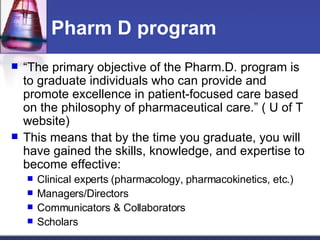
Pharm D program “ The primary objective of the Pharm.D. program is to graduate individuals who can provide and promote excellence in patient-focused care based on the philosophy of pharmaceutical care.” ( U of T website)  This means that by the time you graduate, you will have gained the skills, knowledge, and expertise to become effective: Clinical experts (pharmacology, pharmacokinetics, etc.) Managers/Directors Communicators & Collaborators Scholars
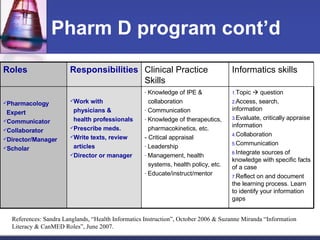
Pharm D program cont’d References: Sandra Langlands, “Health Informatics Instruction”, October 2006 & Suzanne Miranda “Information Literacy & CanMED Roles”, June 2007. Work with  physicians &  health professionals Prescribe meds. Write texts, review  articles Director or manager Responsibilities Topic    question Access, search, information Evaluate, critically appraise information Collaboration Communication Integrate sources of knowledge with specific facts of a case Reflect on and document the learning process. Learn to identify your information gaps Informatics skills Knowledge of IPE &  collaboration  Communication Knowledge of therapeutics,  pharmacokinetics, etc. - Critical appraisal Leadership Management, health  systems, health policy, etc. Educate/instruct/mentor Clinical Practice Skills Pharmacology  Expert Communicator Collaborator Director/Manager Scholar Roles
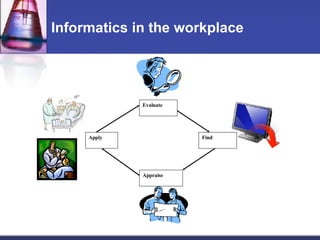
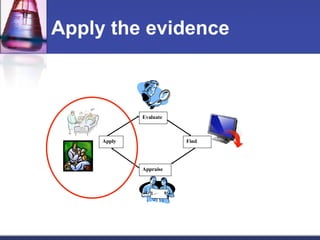
Informatics in the workplace Evaluate Find Appraise Apply
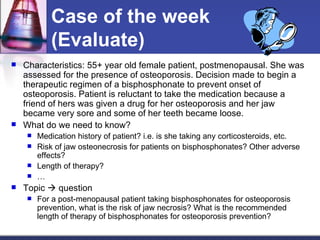
Case of the week (Evaluate) Characteristics: 55+ year old female patient, postmenopausal. She was assessed for the presence of osteoporosis. Decision made to begin a therapeutic regimen of a bisphosphonate to prevent onset of osteoporosis. Patient is reluctant to take the medication because a friend of hers was given a drug for her osteoporosis and her jaw became very sore and some of her teeth became loose. What do we need to know? Medication history of patient? i.e. is she taking any corticosteroids, etc. Risk of jaw osteonecrosis for patients on bisphosphonates? Other adverse effects? Length of therapy? … Topic    question For a post-menopausal patient taking bisphosphonates for osteoporosis prevention, what is the risk of jaw necrosis? What is the recommended length of therapy of bisphosphonates for osteoporosis prevention?
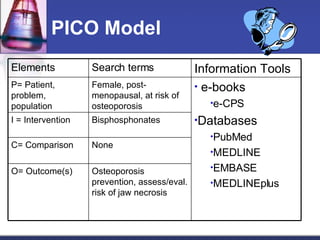
PICO Model Osteoporosis prevention, assess/eval. risk of jaw necrosis  None Bisphosphonates Female, post-menopausal, at risk of osteoporosis Search terms e-books e-CPS Databases PubMed MEDLINE EMBASE MEDLINEplus Information Tools O= Outcome(s) C= Comparison I = Intervention P= Patient, problem,  population  Elements
 
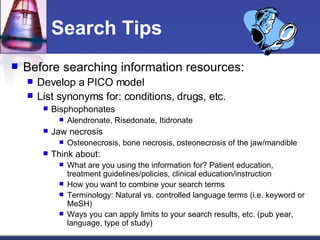
Search Tips Before searching information resources: Develop a PICO model  List synonyms for: conditions, drugs, etc. Bisphophonates Alendronate, Risedonate, Itidronate Jaw necrosis Osteonecrosis, bone necrosis, osteonecrosis of the jaw/mandible Think about:  What are you using the information for? Patient education, treatment guidelines/policies, clinical education/instruction How you want to combine your search terms Terminology: Natural vs. controlled language terms (i.e. keyword or MeSH) Ways you can apply limits to your search results, etc. (pub year, language, type of study)
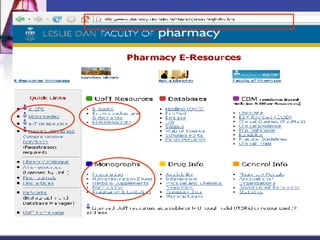
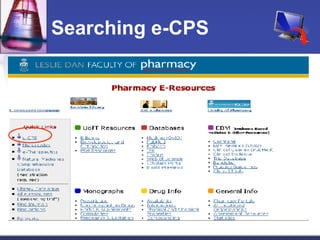
Searching e-CPS
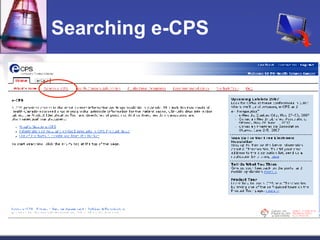
Searching e-CPS
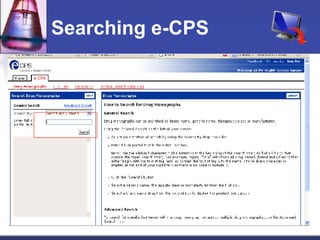
Searching e-CPS
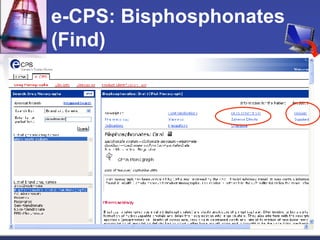
e-CPS: Bisphosphonates   (Find)
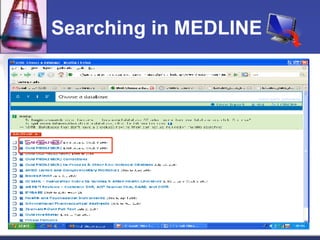
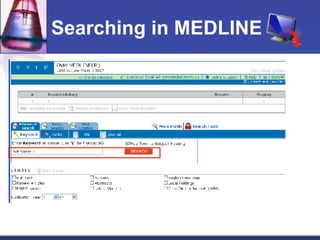
MEDLINE vs. PubMed Medline : Covers over 3900 biomedical  journals, majority English language publications with North American emphasis More limit features available through Ovid Medline Different interfaces e.g. Ovid, PubMed Can search using MeSH headings and/or keywords PubMed :  is more up to date than Ovid automatically searches keywords as well as MeSH headings Great tools: Clinical queries, related articles, etc. Sophisticated searches may be easier to manipulate in OVID MEDLINE
EMBASE Covers 3500+ international journals European, UK, Canadian content Indexes more drug journals than MEDLINE Good coverage of alternative medicine resources Part of the OVID databases. (i.e. same search interface as OVID MEDLINE) Can search using controlled vocabulary and/or keywords
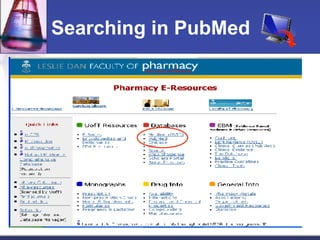
Searching in PubMed
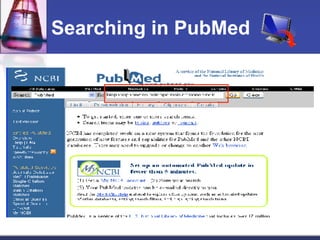
Searching in PubMed
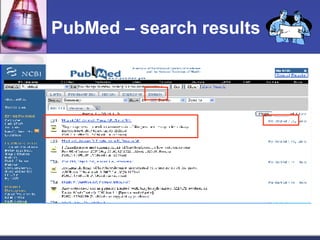
PubMed – search results
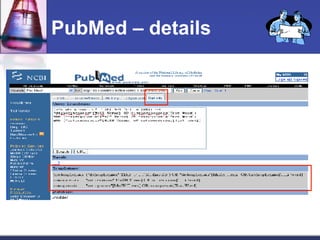
PubMed – details
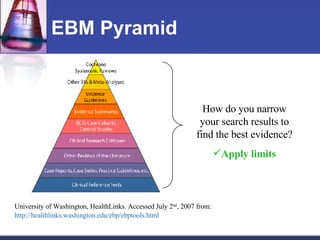
EBM Pyramid University of Washington, HealthLinks. Accessed July 2 nd , 2007 from:   http://healthlinks.washington.edu/ebp/ebptools.html   How do you narrow your search results to find the best evidence?  Apply limits
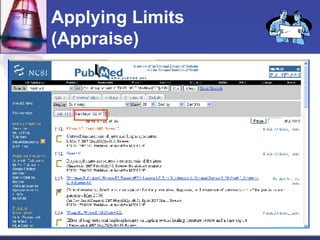
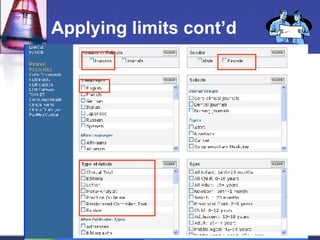
Applying Limits  (Appraise)
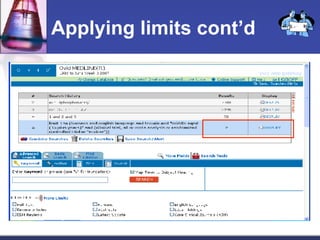
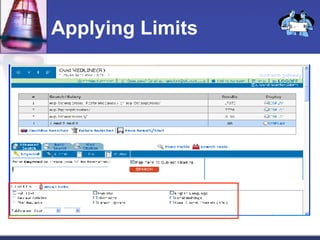
Applying limits cont’d
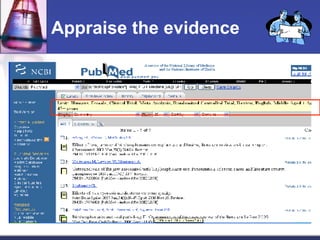
Appraise the evidence
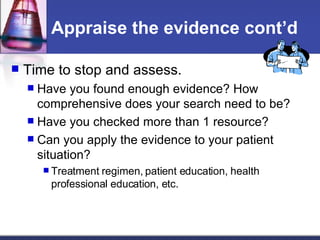
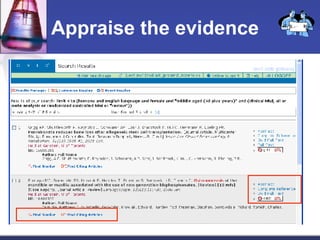
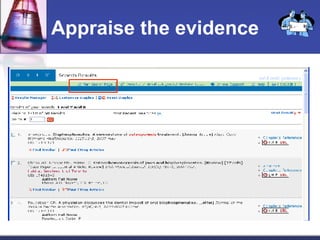
Appraise the evidence cont’d Time to stop and assess. Have you found enough evidence? How comprehensive does your search need to be? Have you checked more than 1 resource? Can you apply the evidence to your patient situation? Treatment regimen, patient education, health professional education, etc.
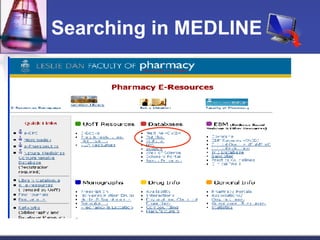
Searching in MEDLINE
Building a search strategy
Building a search strategy cont’d
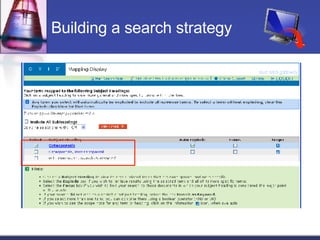
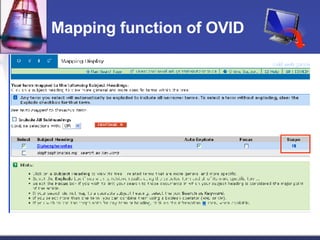
Mapping function of OVID
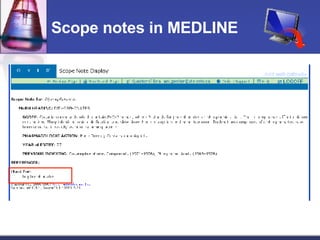
Scope notes in MEDLINE
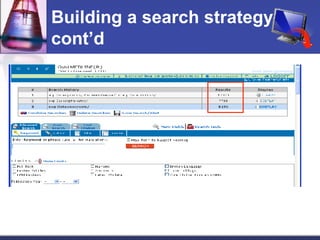
Building a search strategy cont’d
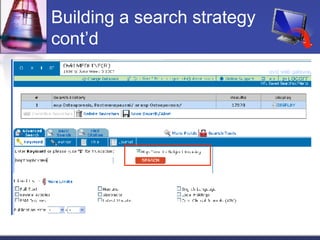
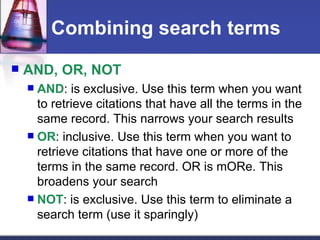
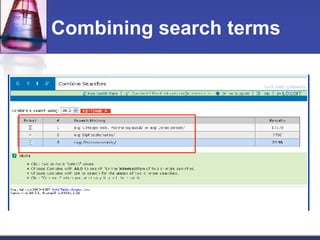
Combining search terms AND, OR, NOT AND : is exclusive. Use this term when you want to retrieve citations that have all the terms in the same record. This narrows your search results OR : inclusive. Use this term when you want to retrieve citations that have one or more of the terms in the same record. OR is mORe. This broadens your search NOT : is exclusive. Use this term to eliminate a search term (use it sparingly)
Combining search terms
Appraise the evidence
Applying Limits
Applying limits cont’d
Appraise the evidence
Apply the evidence Evaluate Find Appraise Apply
Questions?
Additional resources Databases: (linked on  pharmacy e-resources site ) HealthSTAR – health policy, health administration, health management EMBASE International Pharmaceutical Abstracts (IPA) Web of Science Google Scholar ( http:// scholar.google.com )  Clinical Practice Guidelines: MEDLINE (apply limits) EMBASE (apply limits) InfoBase (Canadian CPG database) National Guideline Clearinghouse (US, UK, some European content) Resource guides: Drug Information Comparison chart (Gerstein website)  http://www.library.utoronto.ca/gerstein/subjectguides/drug_chart.html Article databases by subject: pharmacy  (Gerstein website)

Informatics for Pharm D students

  • 1.
    Informatics for PharmD students Amy Beaith, Pharmacy Liaison Librarian University of Toronto, July 3 rd , 2007
  • 2.
    Overview Defining Informatics Program objectives Roles/Responsibilities  Clinical/ Informatics Skills Case of the week PubMed vs. MEDLINE Limits Combining search terms: AND, OR, NOT Additional resources
  • 3.
    Health Informatics -Defined“ Health informatics or medical informatics is the intersection of information science , computer science and health care . It deals with the resources, devices and methods required to optimize the acquisition, storage, retrieval and use of information in health and biomedicine. Health informatics tools include not only computers but also clinical guidelines, formal medical terminologies, and information and communication systems.” Wikipedia. 2007. http://en.wikipedia.org/wiki/Medical_informatics
  • 4.
    Pharmacy Informatics -defined “ Pharmacy informatics (PIX) , also referred to as pharmacoinformatics , is the application of computers to the storage, retrieval and analysis of drug information…within health care with a focus on pharmaceutical care and improved patient safety.” Wikipedia. 2007 http://en.wikipedia.org/wiki/Pharmacy_informatics
  • 5.
    Pharm D program“ The primary objective of the Pharm.D. program is to graduate individuals who can provide and promote excellence in patient-focused care based on the philosophy of pharmaceutical care.” ( U of T website) This means that by the time you graduate, you will have gained the skills, knowledge, and expertise to become effective: Clinical experts (pharmacology, pharmacokinetics, etc.) Managers/Directors Communicators & Collaborators Scholars
  • 6.
    Pharm D programcont’d References: Sandra Langlands, “Health Informatics Instruction”, October 2006 & Suzanne Miranda “Information Literacy & CanMED Roles”, June 2007. Work with physicians & health professionals Prescribe meds. Write texts, review articles Director or manager Responsibilities Topic  question Access, search, information Evaluate, critically appraise information Collaboration Communication Integrate sources of knowledge with specific facts of a case Reflect on and document the learning process. Learn to identify your information gaps Informatics skills Knowledge of IPE & collaboration Communication Knowledge of therapeutics, pharmacokinetics, etc. - Critical appraisal Leadership Management, health systems, health policy, etc. Educate/instruct/mentor Clinical Practice Skills Pharmacology Expert Communicator Collaborator Director/Manager Scholar Roles
  • 7.
    Informatics in theworkplace Evaluate Find Appraise Apply
  • 8.
    Case of theweek (Evaluate) Characteristics: 55+ year old female patient, postmenopausal. She was assessed for the presence of osteoporosis. Decision made to begin a therapeutic regimen of a bisphosphonate to prevent onset of osteoporosis. Patient is reluctant to take the medication because a friend of hers was given a drug for her osteoporosis and her jaw became very sore and some of her teeth became loose. What do we need to know? Medication history of patient? i.e. is she taking any corticosteroids, etc. Risk of jaw osteonecrosis for patients on bisphosphonates? Other adverse effects? Length of therapy? … Topic  question For a post-menopausal patient taking bisphosphonates for osteoporosis prevention, what is the risk of jaw necrosis? What is the recommended length of therapy of bisphosphonates for osteoporosis prevention?
  • 9.
    PICO Model Osteoporosisprevention, assess/eval. risk of jaw necrosis None Bisphosphonates Female, post-menopausal, at risk of osteoporosis Search terms e-books e-CPS Databases PubMed MEDLINE EMBASE MEDLINEplus Information Tools O= Outcome(s) C= Comparison I = Intervention P= Patient, problem, population Elements
  • 10.
  • 11.
    Search Tips Beforesearching information resources: Develop a PICO model List synonyms for: conditions, drugs, etc. Bisphophonates Alendronate, Risedonate, Itidronate Jaw necrosis Osteonecrosis, bone necrosis, osteonecrosis of the jaw/mandible Think about: What are you using the information for? Patient education, treatment guidelines/policies, clinical education/instruction How you want to combine your search terms Terminology: Natural vs. controlled language terms (i.e. keyword or MeSH) Ways you can apply limits to your search results, etc. (pub year, language, type of study)
  • 12.
  • 13.
  • 14.
  • 15.
  • 16.
    MEDLINE vs. PubMedMedline : Covers over 3900 biomedical journals, majority English language publications with North American emphasis More limit features available through Ovid Medline Different interfaces e.g. Ovid, PubMed Can search using MeSH headings and/or keywords PubMed : is more up to date than Ovid automatically searches keywords as well as MeSH headings Great tools: Clinical queries, related articles, etc. Sophisticated searches may be easier to manipulate in OVID MEDLINE
  • 17.
    EMBASE Covers 3500+international journals European, UK, Canadian content Indexes more drug journals than MEDLINE Good coverage of alternative medicine resources Part of the OVID databases. (i.e. same search interface as OVID MEDLINE) Can search using controlled vocabulary and/or keywords
  • 18.
  • 19.
  • 20.
  • 21.
  • 22.
    EBM Pyramid Universityof Washington, HealthLinks. Accessed July 2 nd , 2007 from: http://healthlinks.washington.edu/ebp/ebptools.html How do you narrow your search results to find the best evidence? Apply limits
  • 23.
    Applying Limits (Appraise)
  • 24.
  • 25.
  • 26.
    Appraise the evidencecont’d Time to stop and assess. Have you found enough evidence? How comprehensive does your search need to be? Have you checked more than 1 resource? Can you apply the evidence to your patient situation? Treatment regimen, patient education, health professional education, etc.
  • 27.
  • 28.
  • 29.
  • 30.
  • 31.
    Building a searchstrategy cont’d
  • 32.
  • 33.
  • 34.
    Building a searchstrategy cont’d
  • 35.
    Combining search termsAND, OR, NOT AND : is exclusive. Use this term when you want to retrieve citations that have all the terms in the same record. This narrows your search results OR : inclusive. Use this term when you want to retrieve citations that have one or more of the terms in the same record. OR is mORe. This broadens your search NOT : is exclusive. Use this term to eliminate a search term (use it sparingly)
  • 36.
  • 37.
  • 38.
  • 39.
  • 40.
  • 41.
    Apply the evidenceEvaluate Find Appraise Apply
  • 42.
  • 43.
    Additional resources Databases:(linked on pharmacy e-resources site ) HealthSTAR – health policy, health administration, health management EMBASE International Pharmaceutical Abstracts (IPA) Web of Science Google Scholar ( http:// scholar.google.com ) Clinical Practice Guidelines: MEDLINE (apply limits) EMBASE (apply limits) InfoBase (Canadian CPG database) National Guideline Clearinghouse (US, UK, some European content) Resource guides: Drug Information Comparison chart (Gerstein website) http://www.library.utoronto.ca/gerstein/subjectguides/drug_chart.html Article databases by subject: pharmacy (Gerstein website)