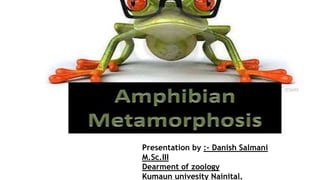
Presentation by :- Danish Salmani
M.Sc.III
Dearment of zoology
Kumaun univesity Nainital.
Metamorphosis?
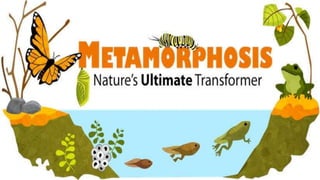
Metamorphosis is a type of process in which
transformation of a larva into an adult is termed as
metamorphosis.
Or
Metamorphosis is a post –embryonic extension of the
development potential and involves dramatic changes in
habitat , morpholology, physiology,and behaviour,of larva
so that it is transformed in to the adult having entirely
different habitat and structure.
Occurrence of Metamorphosis.
Metamorphosis occur in most metazoan phyla ,beginning with Porrifera and
ends with amphibia .Animals with indirect development exhibit a variety of
larvae which undergo metamorphsis .
The processs of metamorphosis in different animals groups differ both
in the nature of transformations and in mode of causation of whole
sequences ,so that it is not possible to describe their metamorphism in
common terms.
Two Basic Types Of Metamorpsis
1. Retrogressive Metamorphosis:-It occurs in ascidians where only the
larvae posses chordate feature ,the adult ,adapted to a sessile
existence , loss all larval locomotory organs and thereby giveup all
the traces of chordate relationship.
2. Progressive Metamorphosis:- It occurs in amphibians and insect and
include changes of simple larval organization into more
complexorganization of the adult.
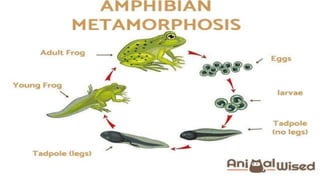
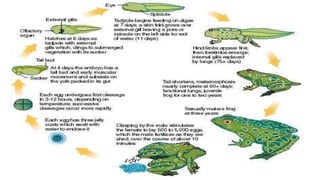
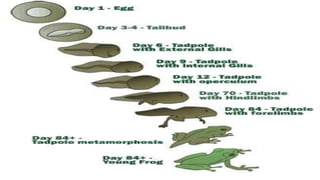
Metamorphosis In Amphibians.
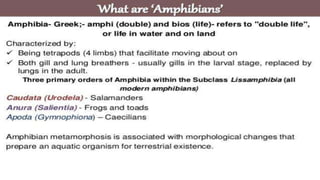
Amphibians furnish the best examples of metamorphosis in vertebrates. In them ,metamorphosis in
corporates following are as:-
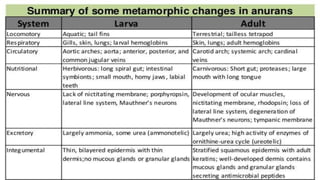
 Ecological Metamorphic changes
 Morphological Metamorphic changes
1. Progressive
2. Retrogressive
3. Organs which exist in both larva and adult.
 Physiological and Biochemical metamorphic changes
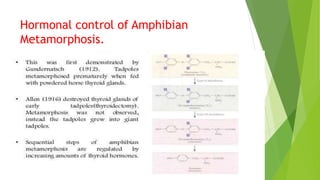
Hormonal control of Amphibian
Metamorphosis.
Reference:-
Metamorphosis in amphibians :- Developmental biology
book.
By Shastry and Shukla.
Thanks!!!

Metamorphosis

  • 1.
    Presentation by :-Danish Salmani M.Sc.III Dearment of zoology Kumaun univesity Nainital.
  • 3.
    Metamorphosis? Metamorphosis is atype of process in which transformation of a larva into an adult is termed as metamorphosis. Or Metamorphosis is a post –embryonic extension of the development potential and involves dramatic changes in habitat , morpholology, physiology,and behaviour,of larva so that it is transformed in to the adult having entirely different habitat and structure.
  • 4.
    Occurrence of Metamorphosis. Metamorphosisoccur in most metazoan phyla ,beginning with Porrifera and ends with amphibia .Animals with indirect development exhibit a variety of larvae which undergo metamorphsis . The processs of metamorphosis in different animals groups differ both in the nature of transformations and in mode of causation of whole sequences ,so that it is not possible to describe their metamorphism in common terms.
  • 5.
    Two Basic TypesOf Metamorpsis 1. Retrogressive Metamorphosis:-It occurs in ascidians where only the larvae posses chordate feature ,the adult ,adapted to a sessile existence , loss all larval locomotory organs and thereby giveup all the traces of chordate relationship. 2. Progressive Metamorphosis:- It occurs in amphibians and insect and include changes of simple larval organization into more complexorganization of the adult.
  • 8.
    Metamorphosis In Amphibians. Amphibiansfurnish the best examples of metamorphosis in vertebrates. In them ,metamorphosis in corporates following are as:-  Ecological Metamorphic changes  Morphological Metamorphic changes 1. Progressive 2. Retrogressive 3. Organs which exist in both larva and adult.  Physiological and Biochemical metamorphic changes
  • 11.
    Hormonal control ofAmphibian Metamorphosis.
  • 14.
    Reference:- Metamorphosis in amphibians:- Developmental biology book. By Shastry and Shukla.
  • 15.