
6th Lecture

Advanced Aminal Cell Culture

2013 2nd Semester
Department of Animal Science
Chungbuk National University
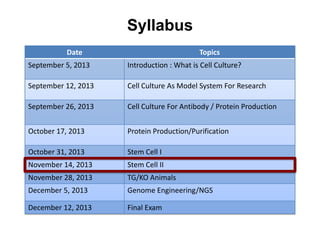
Syllabus
Date

Topics

September 5, 2013

Introduction : What is Cell Culture?

September 12, 2013

Cell Culture As Model System For Research

September 26, 2013

Cell Culture For Antibody / Protein Production

October 17, 2013

Protein Production/Purification

October 31, 2013

Stem Cell I

November 14, 2013

Stem Cell II

November 28, 2013

TG/KO Animals

December 5, 2013

Genome Engineering/NGS

December 12, 2013

Final Exam
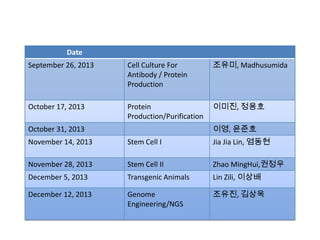
Date
September 26, 2013

Cell Culture For
Antibody / Protein
Production

조유미, Madhusumida

October 17, 2013

Protein
Production/Purification

이미진, 정용호
이영, 윤준호

October 31, 2013
November 14, 2013

Stem Cell I

Jia Jia Lin, 염동현

November 28, 2013

Stem Cell II

Zhao MingHui,권정우

December 5, 2013

Transgenic Animals

Lin Zili, 이상배

December 12, 2013

Genome
Engineering/NGS

조유진, 김상욱
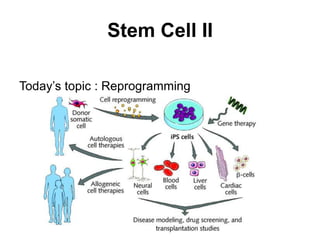
Stem Cell II
Today’s topic : Reprogramming
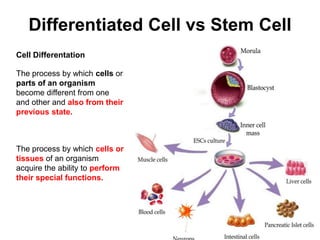
Differentiated Cell vs Stem Cell
Cell Differentation
The process by which cells or
parts of an organism
become different from one
and other and also from their
previous state.

The process by which cells or
tissues of an organism
acquire the ability to perform
their special functions.
Mechnism of Cell Differentitation
How is this accomplished?
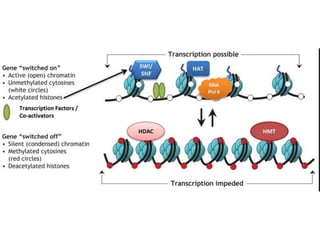
Selective gene transcription
In any given cell, only the genes necessary for basic metabolism
and that cell’s special functions are active.
* muscle cells - actin, myosin
* pancreatic acinar cells - digestive enzymes
* neurons – neurotransmitters

How selective gene transcription could be achieved?
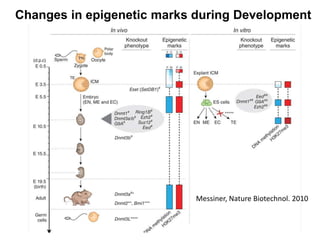
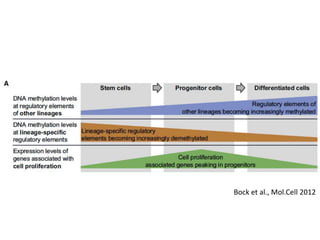
Changes in epigenetic marks during Development

Messiner, Nature Biotechnol. 2010
Bock et al., Mol.Cell 2012
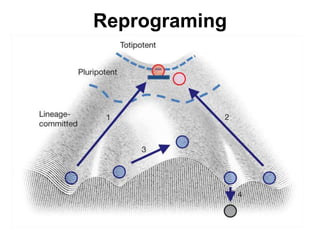
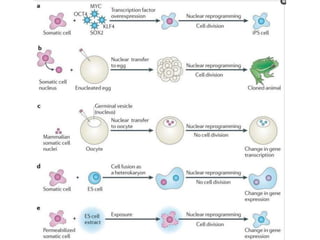
Reprograming
How to return back to pluripotent state?
Things to do :
- Reset all of epigenetic marks which repress pluripotent factors maintenance genes
(Activation)
- Reset all of epigenetic marks which activate lineage specific gene expression
(Repression)
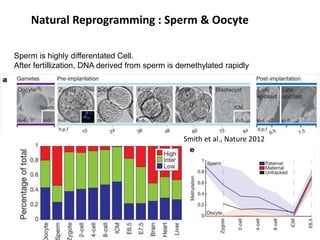
Natural Reprogramming : Sperm & Oocyte
Sperm is highly differentated Cell.
After fertillization, DNA derived from sperm is demethylated rapidly

Smith et al., Nature 2012
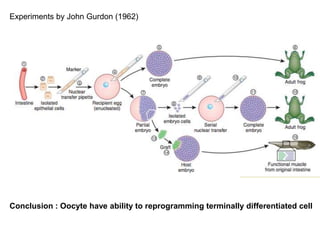
Experiments by John Gurdon (1962)

Conclusion : Oocyte have ability to reprogramming terminally differentiated cell
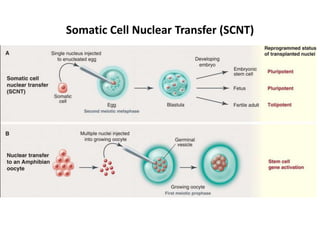
Somatic Cell Nuclear Transfer (SCNT)
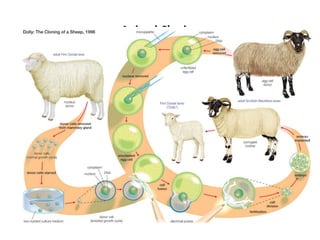
Animal Cloning
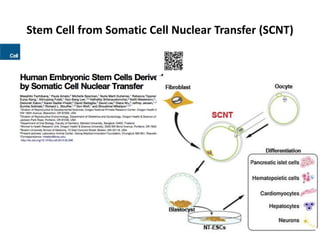
Stem Cell from Somatic Cell Nuclear Transfer (SCNT)
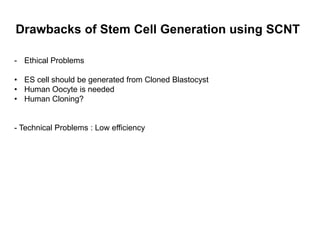
Drawbacks of Stem Cell Generation using SCNT
- Ethical Problems
• ES cell should be generated from Cloned Blastocyst
• Human Oocyte is needed
• Human Cloning?

- Technical Problems : Low efficiency
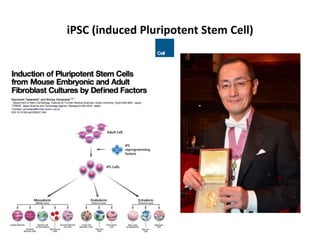
iPSC (induced Pluripotent Stem Cell)
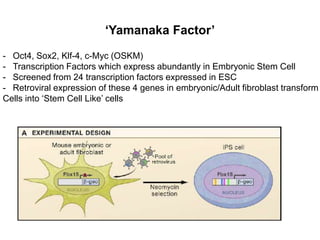
‘Yamanaka Factor’
- Oct4, Sox2, Klf-4, c-Myc (OSKM)
- Transcription Factors which express abundantly in Embryonic Stem Cell
- Screened from 24 transcription factors expressed in ESC
- Retroviral expression of these 4 genes in embryonic/Adult fibroblast transform
Cells into ‘Stem Cell Like’ cells
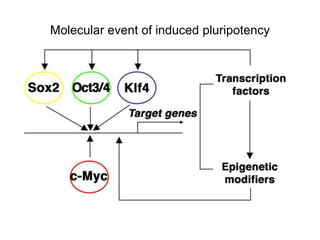
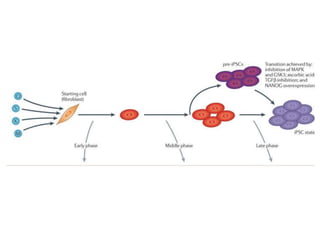
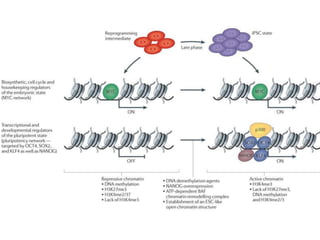
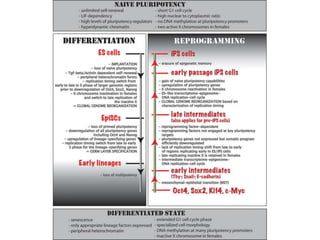
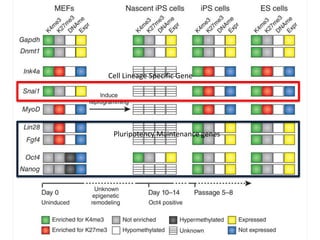
Molecular event of induced pluripotency
Cell Lineage Specific Gene

Pluripotency Maintenance genes
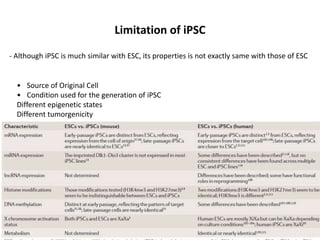
Limitation of iPSC
- Although iPSC is much similar with ESC, its properties is not exactly same with those of ESC

• Source of Original Cell
• Condition used for the generation of iPSC
Different epigenetic states
Different tumorgenicity
…

- Potential Tumorgencity of iPSC
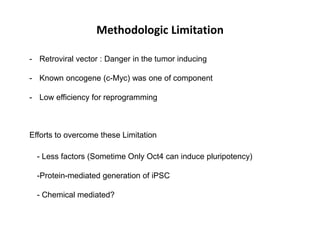
Methodologic Limitation
- Retroviral vector : Danger in the tumor inducing
- Known oncogene (c-Myc) was one of component

- Low efficiency for reprogramming

Efforts to overcome these Limitation
- Less factors (Sometime Only Oct4 can induce pluripotency)
-Protein-mediated generation of iPSC
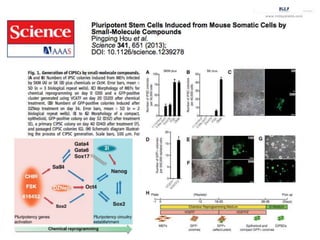
- Chemical mediated?
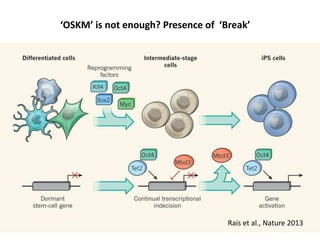
‘OSKM’ is not enough? Presence of ‘Break’

Rais et al., Nature 2013
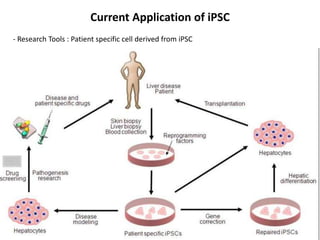
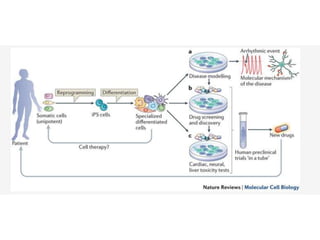
Current Application of iPSC
- Research Tools : Patient specific cell derived from iPSC
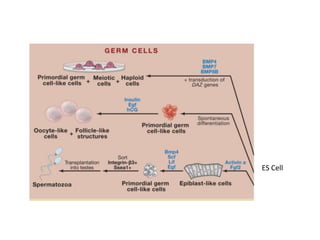
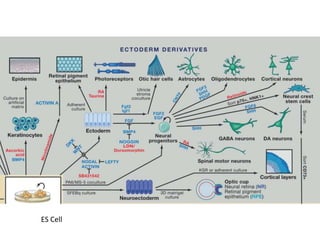
ES Cell
ES Cell
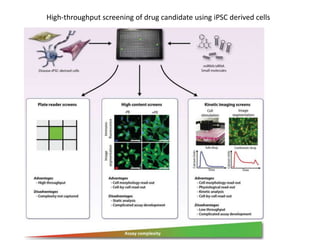
High-throughput screening of drug candidate using iPSC derived cells

Cell culture 06

  • 1.
    6th Lecture Advanced AminalCell Culture 2013 2nd Semester Department of Animal Science Chungbuk National University
  • 2.
    Syllabus Date Topics September 5, 2013 Introduction: What is Cell Culture? September 12, 2013 Cell Culture As Model System For Research September 26, 2013 Cell Culture For Antibody / Protein Production October 17, 2013 Protein Production/Purification October 31, 2013 Stem Cell I November 14, 2013 Stem Cell II November 28, 2013 TG/KO Animals December 5, 2013 Genome Engineering/NGS December 12, 2013 Final Exam
  • 3.
    Date September 26, 2013 CellCulture For Antibody / Protein Production 조유미, Madhusumida October 17, 2013 Protein Production/Purification 이미진, 정용호 이영, 윤준호 October 31, 2013 November 14, 2013 Stem Cell I Jia Jia Lin, 염동현 November 28, 2013 Stem Cell II Zhao MingHui,권정우 December 5, 2013 Transgenic Animals Lin Zili, 이상배 December 12, 2013 Genome Engineering/NGS 조유진, 김상욱
  • 4.
    Stem Cell II Today’stopic : Reprogramming
  • 5.
    Differentiated Cell vsStem Cell Cell Differentation The process by which cells or parts of an organism become different from one and other and also from their previous state. The process by which cells or tissues of an organism acquire the ability to perform their special functions.
  • 6.
    Mechnism of CellDifferentitation How is this accomplished? Selective gene transcription In any given cell, only the genes necessary for basic metabolism and that cell’s special functions are active. * muscle cells - actin, myosin * pancreatic acinar cells - digestive enzymes * neurons – neurotransmitters How selective gene transcription could be achieved?
  • 7.
    Changes in epigeneticmarks during Development Messiner, Nature Biotechnol. 2010
  • 9.
    Bock et al.,Mol.Cell 2012
  • 10.
  • 11.
    How to returnback to pluripotent state? Things to do : - Reset all of epigenetic marks which repress pluripotent factors maintenance genes (Activation) - Reset all of epigenetic marks which activate lineage specific gene expression (Repression)
  • 13.
    Natural Reprogramming :Sperm & Oocyte Sperm is highly differentated Cell. After fertillization, DNA derived from sperm is demethylated rapidly Smith et al., Nature 2012
  • 14.
    Experiments by JohnGurdon (1962) Conclusion : Oocyte have ability to reprogramming terminally differentiated cell
  • 15.
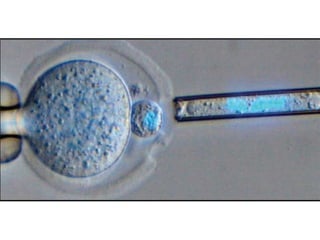
    Somatic Cell NuclearTransfer (SCNT)
  • 17.
  • 19.
    Stem Cell fromSomatic Cell Nuclear Transfer (SCNT)
  • 20.
    Drawbacks of StemCell Generation using SCNT - Ethical Problems • ES cell should be generated from Cloned Blastocyst • Human Oocyte is needed • Human Cloning? - Technical Problems : Low efficiency
  • 21.
  • 22.
    ‘Yamanaka Factor’ - Oct4,Sox2, Klf-4, c-Myc (OSKM) - Transcription Factors which express abundantly in Embryonic Stem Cell - Screened from 24 transcription factors expressed in ESC - Retroviral expression of these 4 genes in embryonic/Adult fibroblast transform Cells into ‘Stem Cell Like’ cells
  • 23.
    Molecular event ofinduced pluripotency
  • 27.
    Cell Lineage SpecificGene Pluripotency Maintenance genes
  • 28.
    Limitation of iPSC -Although iPSC is much similar with ESC, its properties is not exactly same with those of ESC • Source of Original Cell • Condition used for the generation of iPSC Different epigenetic states Different tumorgenicity … - Potential Tumorgencity of iPSC
  • 29.
    Methodologic Limitation - Retroviralvector : Danger in the tumor inducing - Known oncogene (c-Myc) was one of component - Low efficiency for reprogramming Efforts to overcome these Limitation - Less factors (Sometime Only Oct4 can induce pluripotency) -Protein-mediated generation of iPSC - Chemical mediated?
  • 31.
    ‘OSKM’ is notenough? Presence of ‘Break’ Rais et al., Nature 2013
  • 32.
    Current Application ofiPSC - Research Tools : Patient specific cell derived from iPSC
  • 33.
  • 34.
  • 38.
    High-throughput screening ofdrug candidate using iPSC derived cells

Editor's Notes

  • #16 At the beginning of embryonic development, stem cells undergo symmetric cell division. They divide symmetrically, where one cell splits and gives rise to two identical cells that have the same potential. This is why we said the stem cells in the early embryo remain the same and are identical. Interestingly, this is also how fully mature cells in your body divide. What’s the technical term for this that you guys probably learned in biology? (wait) MITOSIS!
  • #22 At the beginning of embryonic development, stem cells undergo symmetric cell division. They divide symmetrically, where one cell splits and gives rise to two identical cells that have the same potential. This is why we said the stem cells in the early embryo remain the same and are identical. Interestingly, this is also how fully mature cells in your body divide. What’s the technical term for this that you guys probably learned in biology? (wait) MITOSIS!