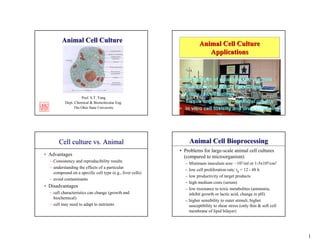
Animal Cell Culture                                           Animal Cell Culture
                                                                          Applications


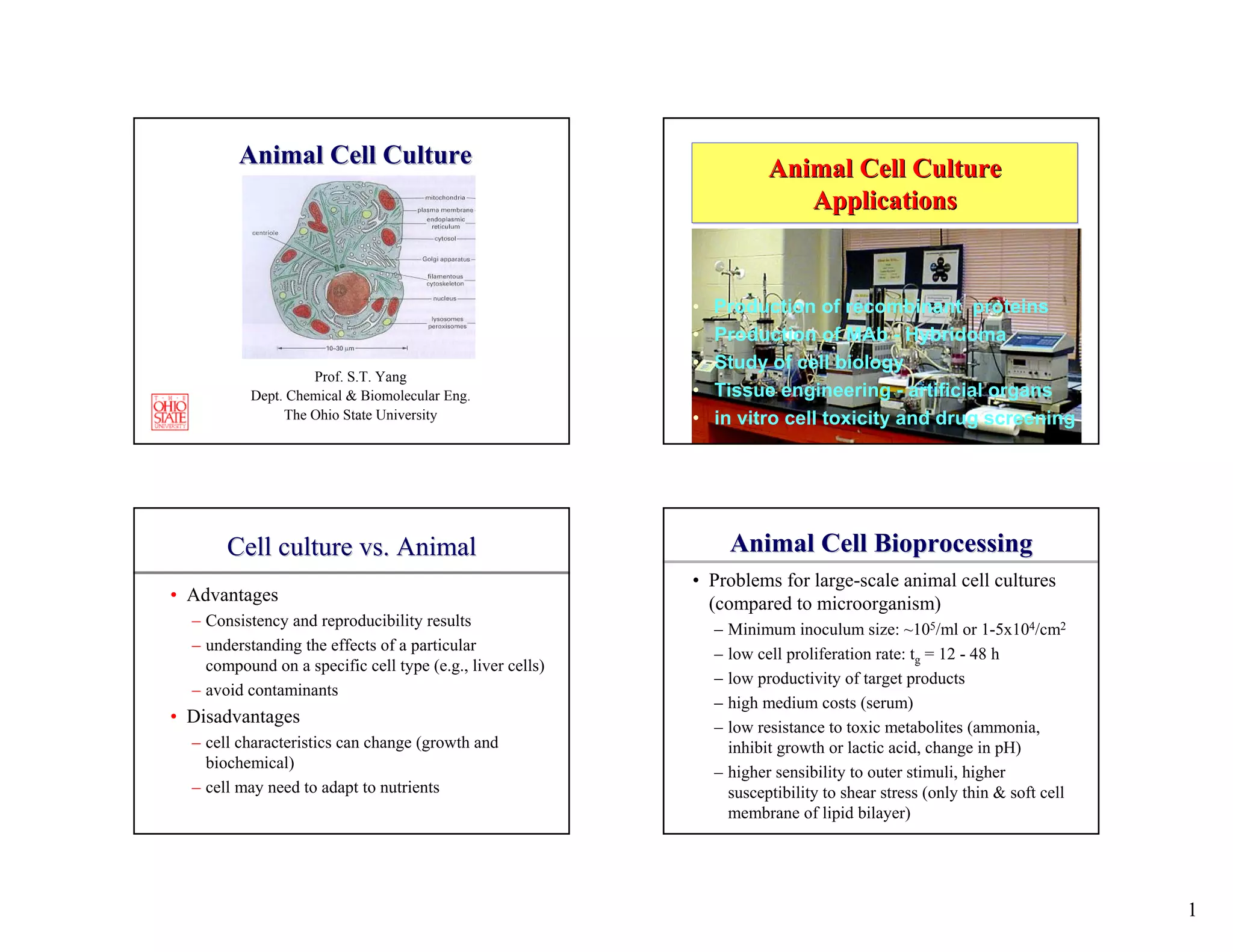
                                                           •   Production of recombinant proteins
                                                           •   Production of MAb - Hybridoma
                                                           •   Study of cell biology
                   Prof. S.T. Yang
          Dept. Chemical & Biomolecular Eng.               •   Tissue engineering - artificial organs
               The Ohio State University                   •   in vitro cell toxicity and drug screening


       Cell culture vs. Animal                                     Animal Cell Bioprocessing
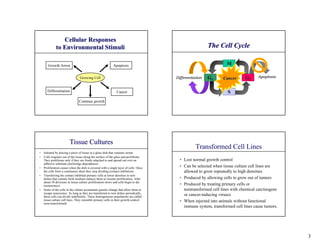
                                                           • Problems for large-scale animal cell cultures
• Advantages                                                 (compared to microorganism)
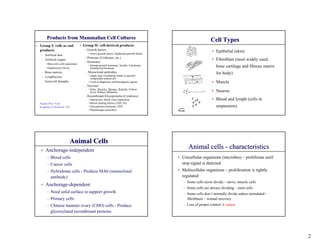
  – Consistency and reproducibility results
                                                               – Minimum inoculum size: ~105/ml or 1-5x10⁴/cm2
  – understanding the effects of a particular
                                                               – low cell proliferation rate: tg = 12 - 48 h
    compound on a specific cell type (e.g., liver cells)
                                                               – low productivity of target products
  – avoid contaminants
                                                               – high medium costs (serum)
• Disadvantages
                                                               – low resistance to toxic metabolites (ammonia,
  – cell characteristics can change (growth and                  inhibit growth or lactic acid, change in pH)
    biochemical)
                                                               – higher sensibility to outer stimuli, higher
  – cell may need to adapt to nutrients                          susceptibility to shear stress (only thin & soft cell
                                                                 membrane of lipid bilayer)


                                                                                                                         1
Products from Mammalian Cell Cultures                                                                      Cell Types
• Group I: cells as end                • Group II: cell-derived products
                                          – Growth factors
  products
                                            • Nerve growth factor, Epidermal growth factor
                                                                                                                   • Epithelial (skin)
   – Artificial skin
                                          – Proteases (Urokinase, etc.)
   – Artificial organs
                                          – Hormones
                                                                                                                   • Fibroblast (most widely used,
       • Beta-islet cells (pancreas)
       • Hepatocytes (liver)
                                            • Human growth hormone, Insulin, Calcitonin,
                                              Parathyroid hormone
                                                                                                                      bone cartilage and fibrous matrix
   – Bone marrow                          – Monoclonal antibodies                                                     for body)
   – Lymphocytes                            • single type of antibody binds to specific
                                              compounds selectively.
   – Gene/cell theraphy                     • Used in diagnostic and therapeutic agents                            • Muscle
                                          – Vaccines
                                            • Polio, Measles, Mumps, Rubella, Yellow
                                              fever, Rabies, Influenza                                             • Neuron
                                          – Recombinant Glycoproteins (Cytokines)
                                            • Interferons, block virus replication                                 • Blood and lymph (cells in
  Annals New York                           • Blood clotting factors (VIII, IX)
  Academy of Sciences, 356                  • Glycoprotein hormone, EPO                                               suspension)
                                            • Plasminogen activators                         20 μm


                             Animal Cells
   • Anchorage-independent
                                                                                                     Animal cells - characteristics
       – Blood cells                                                                         • Unicellular organisms (microbes) – proliferate until
       – Cancer cells                                                                          stop signal is detected
       – Hybridoma cells - Produce MAb (monoclonal                                           • Multicellular organisms – proliferation is tightly
         antibody)                                                                             regulated
                                                                                                 – Some cells never divide – nerve, muscle cells
   • Anchorage-dependent
                                                                                                 – Some cells are always dividing – stem cells
       – Need solid surface to support growth                                                    – Some cells don’t normally divide unless stimulated –
       – Primary cells                                                                             fibroblasts – wound recovery
       – Chinese hamster ovary (CHO) cells - Produce                                             – Loss of proper control   cancer
         glycosylated recombinant proteins


                                                                                                                                                          2
Cellular Responses
             to Environmental Stimuli                                                                    The Cell Cycle

       Growth Arrest                                        Apoptosis                                             M

                                 Growing Cell                                          Differentiation   G1     Cancer      G2     Apoptosis


       Differentiation                                         Cancer                                              S
                                Continue growth


                        Tissue Cultures
                                                                                                  Transformed Cell Lines
•   Initiated by placing a piece of tissue in a glass dish that contains serum
•   Cells migrates out of the tissue along the surface of the glass and proliferate.
    They proliferate only if they are firmly attached to and spread out over an          • Lost normal growth control
    adhesive substrate (anchorage dependence)
•   Proliferation ceases when the dish is covered with a single layer of cells. Once     • Can be selected when tissue culture cell lines are
    the cells form a continuous sheet they stop dividing (contact inhibition)              allowed to grow repeatedly to high densities
•   Transferring the contact inhibited primary cells at lower densities to new
    dishes that contain fresh medium induces them to resume proliferation. After         • Produced by allowing cells to grow out of tumors
    about 50 divisions in tissue culture proliferation slows and cells begin to die
    (senescence)                                                                         • Produced by treating primary cells or
•   Some of the cells in the culture accumulate genetic change that allow them to          nontransformed cell lines with chemical carcinogens
    escape senescence. As long as they are transferred to new dishes periodically,
    these cells can divide indefinitely. These homogeneous populations are called
                                                                                           or cancer-inducing viruses
    tissue culture cell lines. They resemble primary cells in their growth control.      • When injected into animals without functional
    (non-transformed)
                                                                                           immune system, transformed cell lines cause tumors.


                                                                                                                                                 3
Requirements for cells used in cell culture
                                Commonly used cell lines                                                                              Property                                 Examples
                                                                                                                                      Efficient expression of foreign genes    Transcription and post -transcriptional process;
Cell Line                          Cell Type    Application                 Comment
                                                                                                                                                                               Protein synthesis; Secretion
BHK (baby hamster kidney)         Fibroblast    Vaccine production          Anchorage dependent, can be induced to suspension
COS (African green monkey kidney) Fibroblast    Transient expression of     Contain a mutant of SV40 virus                            Post-translational modifications         e.g. protein folding; glycosylation, phosphorylation
                                                recombinant genes                                                                     Stability of transgene expression        Genotypic (chromosomal stability)
L (Mouse connective tissue)       Fibroblast                                Tumour cell line
                                                                                                                                                                               Phenotypic (CpG methylation, chromosome structure alterations)
3T3 (Mouse connective tissue)      Fibroblast   Develop culture technique   Vigorous growth in suspension;
WI-38 (human embryonic lung)       Fibroblast   Human vaccine               Finite life-span, “normal” cells
                                                                                                                                      Absence of adventitious agents           Viruses; Mycoplasms
Vero                              Fibroblast    Human vaccine               Established cell line capable of continuous growth but    Cultivation requirements                 Serum Growth factors, stabilizing proteins
                                                                            with normal diploid charact.
                                                                                                                                      Fermentation properties                  Growth to high cell densities
                                                                                                                                                                               Resistance to shear forces
CHO (chinese hamster ovary)        Epithelial   Genetic engineering         Attach to surface if available, will grow in suspension
HeLa (Human cervical carcinoma)   Epithelial                                Fast growing human cancer cell isolated in the 1950's                                              Aeration processes
                                                                                                                                                                               Production of toxic compounds (e.g. lactic acid)
MPC-11 (Mouse myeloma)            Lymphoblast   immunoglobulin              Derived from mouse tumor
                                                                                                                                      Production under fermentation            High production at high cell density
Namalwa (human lymphoma)          Lymphoblast   a-interferon                Derived from burkitt's lymphoma patient
                                                                                                                                      conditions                               Reduced cell growth
NB41A3 (Mouse Neuroblastoma)      Neuronal                                  Tumour cells have nerve cell characteristics including                                             Protein requirements in medium
                                                                            response to nerve growth factor
                                                                                                                                      Cell Growth                              Fast growth at low cell density
BW5147 (Murine thymus)
                                                                                                                                                                               Reduced growth at high cell density
                                                                                                                                                                              Mammalian Cell Biotechnology in Protein Production, H. Hauser, 1996


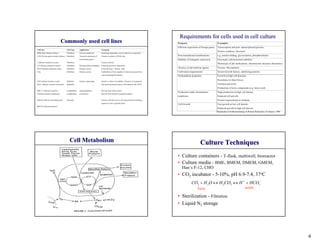
                                      Cell Metabolism                                                                                                       Culture Techniques
                                                                                                                                      • Culture containers - T-flask, multiwell, bioreactor
                                                                                                                                      • Culture media - BME, BMEM, DMEM, GMEM,
                                                                                                                                          Han’s F-12, CHO
                                                                                                                                      • CO2 incubator - 5-10%, pH 6.9-7.4, 37oC
                                                                                                                                                                                                                            −
                                                                                                                                                    CO2 + H 2O ↔ H 2CO3 ↔ H + + HCO3
                                                                                                                                                          basic                                             acidic

                                                                                                                                      • Sterilization - Filtration
                                                                                                                                      • Liquid N2 storage


                                                                                                                                                                                                                                                    4
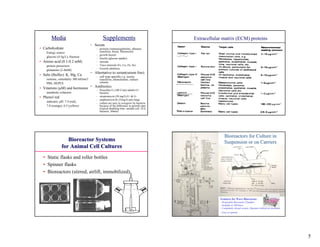
Media                                  Supplements                               Extracellular matrix (ECM) proteins
                                      • Serum
• Carbohydrate                           – proteins (immunoglobulins, albumin,
    Energy source                          transferin, fetuin, fibronectin)
                                         – growth factors
    glucose (4-5g/L), fructose           – Insulin (glucose uptake)
• Amino acid (0.1-0.2 mM)                – steroids
    protein precursors                   – Trace minerals (Fe, Cu, Zn, Se)
                                         – Growth inhibitors
    glutamine (2-4mM)
                                      • Alternative to serum(serum free)
• Salts (Buffer): K, Mg, Ca              – cell type specific e.g. insulin,
    isotonic, osmolarity 300 mOsm/l         transferrin, ethanolamine, sodium
    PBS, HEPES                              selenite

• Vitamins (μM) and hormones • AntibioticsG (100 U/ml) inhibit G+
                                – Penicillin
    metabolic cofactors                    bacteria
• Phenol red                             – streptomycin (50 mg/l) G+ & G-
                                         – amphotericin B (25mg/l) anti-fungi
    indicator, pH: 7.4 (red),            – culture are easy to overgrow by bacteria
    7.0 (orange), 6.5 (yellow)             because of the difference in growth rates
                                           (typical doubling time: animal cell: 24 h,
                                           bacteria: 30min)


                                                                                                       Bioreactors for Culture in
                  Bioreactor Systems                                                                   Suspension or on Carriers
               for Animal Cell Cultures
  • Static flasks and roller bottles
  • Spinner flasks
  • Bioreactors (stirred, airlift, immobilized)


                                                                                                    Features for Wave Bioreactor:
                                                                                                    - Disposable Bioreactor Chamber.
                                                                                                    - Scalable to 500 liters.
                                                                                                    - Completely closed system. Operates without an incubator.
                                                                                                    - Easy to operate.


                                                                                                                                                                 5
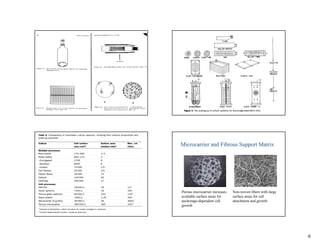
Microcarrier and Fibrous Support Matrix


Porous microcarrier increases   Non-woven fibers with large
available surface areas for     surface areas for cell
anchorage-dependent cell        attachment and growth
growth


                                                              6
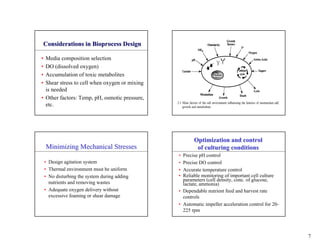
Considerations in Bioprocess Design

• Media composition selection
• DO (dissolved oxygen)
• Accumulation of toxic metabolites
• Shear stress to cell when oxygen or mixing
  is needed
• Other factors: Temp, pH, osmotic pressure,
  etc.


                                                      Optimization and control
    Minimizing Mechanical Stresses                     of culturing conditions
                                               • Precise pH control
    • Design agitation system                  • Precise DO control
    • Thermal environment must be uniform      • Accurate temperature control
    • No disturbing the system during adding   • Reliable monitoring of important cell culture
                                                 parameters (cell density, conc. of glucose,
      nutrients and removing wastes              lactate, ammonia)
    • Adequate oxygen delivery without         • Dependable nutrient feed and harvest rate
      excessive foaming or shear damage          controls
                                               • Automatic impeller acceleration control for 20-
                                                 225 rpm


                                                                                                   7
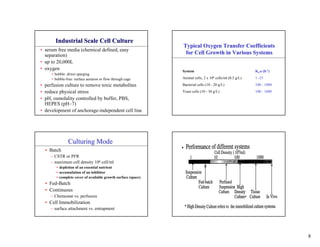
Industrial Scale Cell Culture
                                                               Typical Oxygen Transfer Coefficients
• serum free media (chemical defined, easy
  separation)                                                   for Cell Growth in Various Systems
• up to 20,000L
• oxygen                                                       System                                     KLa (h-1)
     • bubble: direct sparging
     • bubble-free: surface aeration or flow through cage      Animal cells, 2 x 10⁶ cells/ml (0.5 g/L)   1 -25
• perfusion culture to remove toxic metabolites                Bacterial cells (10 - 20 g/L)              100 - 1000
• reduce physical stress                                       Yeast cells (10 - 30 g/L)                  100 - 1000
• pH, osmolality controlled by buffer, PBS,
  HEPES (pH~7)
• development of anchorage-independent cell line


               Culturing Mode
  • Batch
    – CSTR or PFR
    – maximum cell density 106 cell/ml
        • depletion of an essential nutrient
        • accumulation of an inhibitor
        • complete cover of available growth surface (space)
  • Fed-Batch
  • Continuous
    – Chemostat vs. perfusion
  • Cell Immobilization
    – surface attachment vs. entrapment


                                                                                                                       8
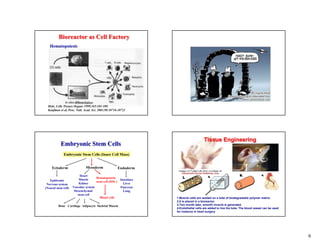
Bioreactor as Cell Factory
   Hematopoiesis


  Hole, Cells Tissues Organs 1999;165:181-189.
  Kaufman et al, Proc. Natl. Acad. Sci. 2001;98:10716-10721


                                                                                      Tissue Engineering
           Embryonic Stem Cells
              Embryonic Stem Cells (Inner Cell Mass)


     Ectoderm                 Mesoderm               Endoderm
                          Heart
                                     Hematopoietic
   Epidermis             Muscle                      Intestines
                                     stem cell (HSC)
 Nervous system          Kidney                        Liver
(Neural stem cell)   Vascular system                 Pancreas
                      Mesenchymal                      Lung
                        stem cell
                                        Blood cells               1.Muscle cells are seeded on a tube of biodegradable polymer matrix.
                                                                  2.It is placed in a bioreactor.
          Bone Cartilage Adipocyte Skeletal Muscle                3.Two month later, smooth muscle is generated.
                                                                  4.Endothelial cells are added to line the tube. The blood vessel can be used
                                                                  for instance in heart surgery


                                                                                                                                                 9
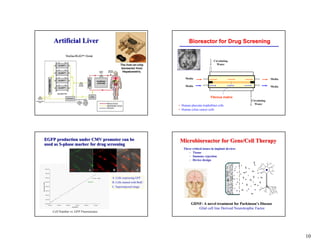
Artificial Liver                                                                                                              Bioreactor for Drug Screening
                                                                                                                                                           Chorionic villous
                                                                                                                                            Intervillous
                                                                                                                                            space


                                                                                                                                                                                          Circulating
                                                                                                                     The liver-on-chip                                                      Water
                                                                                                                                                                   Capillary
                                                                                                                      bioreactor from                              Syncytiotrophoblast

                                                                                                                       Hepatometrix.

                                                                                                                                                            Media                                                       Media

                                                                                                                                                            Media                                                       Media


                                                                                                                                                                                         Fibrous matrix
                                                                                                                                                                                                          Circulating
                                                                                                                                                                                                            Water
                                                                                                                                            • Human placenta trophoblast cells
                                                                                                                                            • Human colon cancer cells


       EGFP production under CMV promoter can be                                                                                               Microbioreactor for Gene/Cell Therapy
       used as S-phase marker for drug screening
               S-
               S-phase
                                                                                                                                                      Three critical issues in implant devices
                                                                                                                                                         – Tissue
                                                                                                                                                         – Immune rejection
                                                                                                                                                         – Device design
                                                           GFP vs Cells

                     8.0E+05
                                                                                      A                        B                   C
                     7.0E+05


                     6.0E+05
                                                                                          y = 0.657x + 22068   A. Cells expressing GFP
                     5.0E+05                                                      CHO GFP
                                                                                                               B. Cells stained with BrdU
Fluorescence (CPS)


                     4.0E+05
                                                                                                               C. Superimposed image
                     3.0E+05


                     2.0E+05


                     1.0E+05


                     0.0E+00
                          0.0E+00      2.0E+05   4.0E+05          6.0E+05   8.0E+05          1.0E+06
                                                                                                                                                                     GDNF: A novel treatment for Parkinson’s Disease
                                                                                                                                                                                                   Parkinson’
                                                            Cell Num ber
                                                                                                                                                                        Glial cell line Derived Neurotrophic Factor
                                    Cell Number vs. GFP Fluorescence


                                                                                                                                                                                                                                10
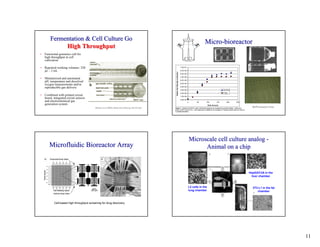
Fermentation & Cell Culture Go
                                                                                                             Micro-bioreactor
             High Throughput
•   Functional genomics call for
    high throughput in cell
    cultivation

•   Reported working volumes: 250
    μL - 2 mL

•   Miniaturized and automated
    pH, temperature and dissolved
    oxygen measurements and/or
    reproducible gas delivery

•   Combined with printed circuit
    board, integrated circuit sensors
    and electrochemical gas
    generation system
                                           Michel et al (2004), Biotechnol Bioeng, 85,376-381                                BioProcessors Corp.


                                                                                                Microscale cell culture analog -
       Microfluidic Bioreactor Array                                                                  Animal on a chip


                                                                                                                           HepG2/C3A in the
                                                                                                                            liver chamber


                                                                                                L2 cells in the                 3T3-L1 in the fat
                                                                                                lung chamber                       chamber


           Cell-based high throughput screening for drug discovery


                                                                                                                                                    11

Lecture 2 animal cell culture

  • 1.
    Animal Cell Culture Animal Cell Culture Applications • Production of recombinant proteins • Production of MAb - Hybridoma • Study of cell biology Prof. S.T. Yang Dept. Chemical & Biomolecular Eng. • Tissue engineering - artificial organs The Ohio State University • in vitro cell toxicity and drug screening Cell culture vs. Animal Animal Cell Bioprocessing • Problems for large-scale animal cell cultures • Advantages (compared to microorganism) – Consistency and reproducibility results – Minimum inoculum size: ~105/ml or 1-5x10⁴/cm2 – understanding the effects of a particular – low cell proliferation rate: tg = 12 - 48 h compound on a specific cell type (e.g., liver cells) – low productivity of target products – avoid contaminants – high medium costs (serum) • Disadvantages – low resistance to toxic metabolites (ammonia, – cell characteristics can change (growth and inhibit growth or lactic acid, change in pH) biochemical) – higher sensibility to outer stimuli, higher – cell may need to adapt to nutrients susceptibility to shear stress (only thin & soft cell membrane of lipid bilayer) 1
  • 2.
    Products from MammalianCell Cultures Cell Types • Group I: cells as end • Group II: cell-derived products – Growth factors products • Nerve growth factor, Epidermal growth factor • Epithelial (skin) – Artificial skin – Proteases (Urokinase, etc.) – Artificial organs – Hormones • Fibroblast (most widely used, • Beta-islet cells (pancreas) • Hepatocytes (liver) • Human growth hormone, Insulin, Calcitonin, Parathyroid hormone bone cartilage and fibrous matrix – Bone marrow – Monoclonal antibodies for body) – Lymphocytes • single type of antibody binds to specific compounds selectively. – Gene/cell theraphy • Used in diagnostic and therapeutic agents • Muscle – Vaccines • Polio, Measles, Mumps, Rubella, Yellow fever, Rabies, Influenza • Neuron – Recombinant Glycoproteins (Cytokines) • Interferons, block virus replication • Blood and lymph (cells in Annals New York • Blood clotting factors (VIII, IX) Academy of Sciences, 356 • Glycoprotein hormone, EPO suspension) • Plasminogen activators 20 μm Animal Cells • Anchorage-independent Animal cells - characteristics – Blood cells • Unicellular organisms (microbes) – proliferate until – Cancer cells stop signal is detected – Hybridoma cells - Produce MAb (monoclonal • Multicellular organisms – proliferation is tightly antibody) regulated – Some cells never divide – nerve, muscle cells • Anchorage-dependent – Some cells are always dividing – stem cells – Need solid surface to support growth – Some cells don’t normally divide unless stimulated – – Primary cells fibroblasts – wound recovery – Chinese hamster ovary (CHO) cells - Produce – Loss of proper control cancer glycosylated recombinant proteins 2
  • 3.
    Cellular Responses to Environmental Stimuli The Cell Cycle Growth Arrest Apoptosis M Growing Cell Differentiation G1 Cancer G2 Apoptosis Differentiation Cancer S Continue growth Tissue Cultures Transformed Cell Lines • Initiated by placing a piece of tissue in a glass dish that contains serum • Cells migrates out of the tissue along the surface of the glass and proliferate. They proliferate only if they are firmly attached to and spread out over an • Lost normal growth control adhesive substrate (anchorage dependence) • Proliferation ceases when the dish is covered with a single layer of cells. Once • Can be selected when tissue culture cell lines are the cells form a continuous sheet they stop dividing (contact inhibition) allowed to grow repeatedly to high densities • Transferring the contact inhibited primary cells at lower densities to new dishes that contain fresh medium induces them to resume proliferation. After • Produced by allowing cells to grow out of tumors about 50 divisions in tissue culture proliferation slows and cells begin to die (senescence) • Produced by treating primary cells or • Some of the cells in the culture accumulate genetic change that allow them to nontransformed cell lines with chemical carcinogens escape senescence. As long as they are transferred to new dishes periodically, these cells can divide indefinitely. These homogeneous populations are called or cancer-inducing viruses tissue culture cell lines. They resemble primary cells in their growth control. • When injected into animals without functional (non-transformed) immune system, transformed cell lines cause tumors. 3
  • 4.
    Requirements for cellsused in cell culture Commonly used cell lines Property Examples Efficient expression of foreign genes Transcription and post -transcriptional process; Cell Line Cell Type Application Comment Protein synthesis; Secretion BHK (baby hamster kidney) Fibroblast Vaccine production Anchorage dependent, can be induced to suspension COS (African green monkey kidney) Fibroblast Transient expression of Contain a mutant of SV40 virus Post-translational modifications e.g. protein folding; glycosylation, phosphorylation recombinant genes Stability of transgene expression Genotypic (chromosomal stability) L (Mouse connective tissue) Fibroblast Tumour cell line Phenotypic (CpG methylation, chromosome structure alterations) 3T3 (Mouse connective tissue) Fibroblast Develop culture technique Vigorous growth in suspension; WI-38 (human embryonic lung) Fibroblast Human vaccine Finite life-span, “normal” cells Absence of adventitious agents Viruses; Mycoplasms Vero Fibroblast Human vaccine Established cell line capable of continuous growth but Cultivation requirements Serum Growth factors, stabilizing proteins with normal diploid charact. Fermentation properties Growth to high cell densities Resistance to shear forces CHO (chinese hamster ovary) Epithelial Genetic engineering Attach to surface if available, will grow in suspension HeLa (Human cervical carcinoma) Epithelial Fast growing human cancer cell isolated in the 1950's Aeration processes Production of toxic compounds (e.g. lactic acid) MPC-11 (Mouse myeloma) Lymphoblast immunoglobulin Derived from mouse tumor Production under fermentation High production at high cell density Namalwa (human lymphoma) Lymphoblast a-interferon Derived from burkitt's lymphoma patient conditions Reduced cell growth NB41A3 (Mouse Neuroblastoma) Neuronal Tumour cells have nerve cell characteristics including Protein requirements in medium response to nerve growth factor Cell Growth Fast growth at low cell density BW5147 (Murine thymus) Reduced growth at high cell density Mammalian Cell Biotechnology in Protein Production, H. Hauser, 1996 Cell Metabolism Culture Techniques • Culture containers - T-flask, multiwell, bioreactor • Culture media - BME, BMEM, DMEM, GMEM, Han’s F-12, CHO • CO2 incubator - 5-10%, pH 6.9-7.4, 37oC − CO2 + H 2O ↔ H 2CO3 ↔ H + + HCO3 basic acidic • Sterilization - Filtration • Liquid N2 storage 4
  • 5.
    Media Supplements Extracellular matrix (ECM) proteins • Serum • Carbohydrate – proteins (immunoglobulins, albumin, Energy source transferin, fetuin, fibronectin) – growth factors glucose (4-5g/L), fructose – Insulin (glucose uptake) • Amino acid (0.1-0.2 mM) – steroids protein precursors – Trace minerals (Fe, Cu, Zn, Se) – Growth inhibitors glutamine (2-4mM) • Alternative to serum(serum free) • Salts (Buffer): K, Mg, Ca – cell type specific e.g. insulin, isotonic, osmolarity 300 mOsm/l transferrin, ethanolamine, sodium PBS, HEPES selenite • Vitamins (μM) and hormones • AntibioticsG (100 U/ml) inhibit G+ – Penicillin metabolic cofactors bacteria • Phenol red – streptomycin (50 mg/l) G+ & G- – amphotericin B (25mg/l) anti-fungi indicator, pH: 7.4 (red), – culture are easy to overgrow by bacteria 7.0 (orange), 6.5 (yellow) because of the difference in growth rates (typical doubling time: animal cell: 24 h, bacteria: 30min) Bioreactors for Culture in Bioreactor Systems Suspension or on Carriers for Animal Cell Cultures • Static flasks and roller bottles • Spinner flasks • Bioreactors (stirred, airlift, immobilized) Features for Wave Bioreactor: - Disposable Bioreactor Chamber. - Scalable to 500 liters. - Completely closed system. Operates without an incubator. - Easy to operate. 5
  • 6.
    Microcarrier and FibrousSupport Matrix Porous microcarrier increases Non-woven fibers with large available surface areas for surface areas for cell anchorage-dependent cell attachment and growth growth 6
  • 7.
    Considerations in BioprocessDesign • Media composition selection • DO (dissolved oxygen) • Accumulation of toxic metabolites • Shear stress to cell when oxygen or mixing is needed • Other factors: Temp, pH, osmotic pressure, etc. Optimization and control Minimizing Mechanical Stresses of culturing conditions • Precise pH control • Design agitation system • Precise DO control • Thermal environment must be uniform • Accurate temperature control • No disturbing the system during adding • Reliable monitoring of important cell culture parameters (cell density, conc. of glucose, nutrients and removing wastes lactate, ammonia) • Adequate oxygen delivery without • Dependable nutrient feed and harvest rate excessive foaming or shear damage controls • Automatic impeller acceleration control for 20- 225 rpm 7
  • 8.
    Industrial Scale CellCulture Typical Oxygen Transfer Coefficients • serum free media (chemical defined, easy separation) for Cell Growth in Various Systems • up to 20,000L • oxygen System KLa (h-1) • bubble: direct sparging • bubble-free: surface aeration or flow through cage Animal cells, 2 x 10⁶ cells/ml (0.5 g/L) 1 -25 • perfusion culture to remove toxic metabolites Bacterial cells (10 - 20 g/L) 100 - 1000 • reduce physical stress Yeast cells (10 - 30 g/L) 100 - 1000 • pH, osmolality controlled by buffer, PBS, HEPES (pH~7) • development of anchorage-independent cell line Culturing Mode • Batch – CSTR or PFR – maximum cell density 106 cell/ml • depletion of an essential nutrient • accumulation of an inhibitor • complete cover of available growth surface (space) • Fed-Batch • Continuous – Chemostat vs. perfusion • Cell Immobilization – surface attachment vs. entrapment 8
  • 9.
    Bioreactor as CellFactory Hematopoiesis Hole, Cells Tissues Organs 1999;165:181-189. Kaufman et al, Proc. Natl. Acad. Sci. 2001;98:10716-10721 Tissue Engineering Embryonic Stem Cells Embryonic Stem Cells (Inner Cell Mass) Ectoderm Mesoderm Endoderm Heart Hematopoietic Epidermis Muscle Intestines stem cell (HSC) Nervous system Kidney Liver (Neural stem cell) Vascular system Pancreas Mesenchymal Lung stem cell Blood cells 1.Muscle cells are seeded on a tube of biodegradable polymer matrix. 2.It is placed in a bioreactor. Bone Cartilage Adipocyte Skeletal Muscle 3.Two month later, smooth muscle is generated. 4.Endothelial cells are added to line the tube. The blood vessel can be used for instance in heart surgery 9
  • 10.
    Artificial Liver Bioreactor for Drug Screening Chorionic villous Intervillous space Circulating The liver-on-chip Water Capillary bioreactor from Syncytiotrophoblast Hepatometrix. Media Media Media Media Fibrous matrix Circulating Water • Human placenta trophoblast cells • Human colon cancer cells EGFP production under CMV promoter can be Microbioreactor for Gene/Cell Therapy used as S-phase marker for drug screening S- S-phase Three critical issues in implant devices – Tissue – Immune rejection – Device design GFP vs Cells 8.0E+05 A B C 7.0E+05 6.0E+05 y = 0.657x + 22068 A. Cells expressing GFP 5.0E+05 CHO GFP B. Cells stained with BrdU Fluorescence (CPS) 4.0E+05 C. Superimposed image 3.0E+05 2.0E+05 1.0E+05 0.0E+00 0.0E+00 2.0E+05 4.0E+05 6.0E+05 8.0E+05 1.0E+06 GDNF: A novel treatment for Parkinson’s Disease Parkinson’ Cell Num ber Glial cell line Derived Neurotrophic Factor Cell Number vs. GFP Fluorescence 10
  • 11.
    Fermentation & CellCulture Go Micro-bioreactor High Throughput • Functional genomics call for high throughput in cell cultivation • Reported working volumes: 250 μL - 2 mL • Miniaturized and automated pH, temperature and dissolved oxygen measurements and/or reproducible gas delivery • Combined with printed circuit board, integrated circuit sensors and electrochemical gas generation system Michel et al (2004), Biotechnol Bioeng, 85,376-381 BioProcessors Corp. Microscale cell culture analog - Microfluidic Bioreactor Array Animal on a chip HepG2/C3A in the liver chamber L2 cells in the 3T3-L1 in the fat lung chamber chamber Cell-based high throughput screening for drug discovery 11