TYPES CELL CULTURE
PRESENTED By: Nadia
TYPES OF CELL CULTURE
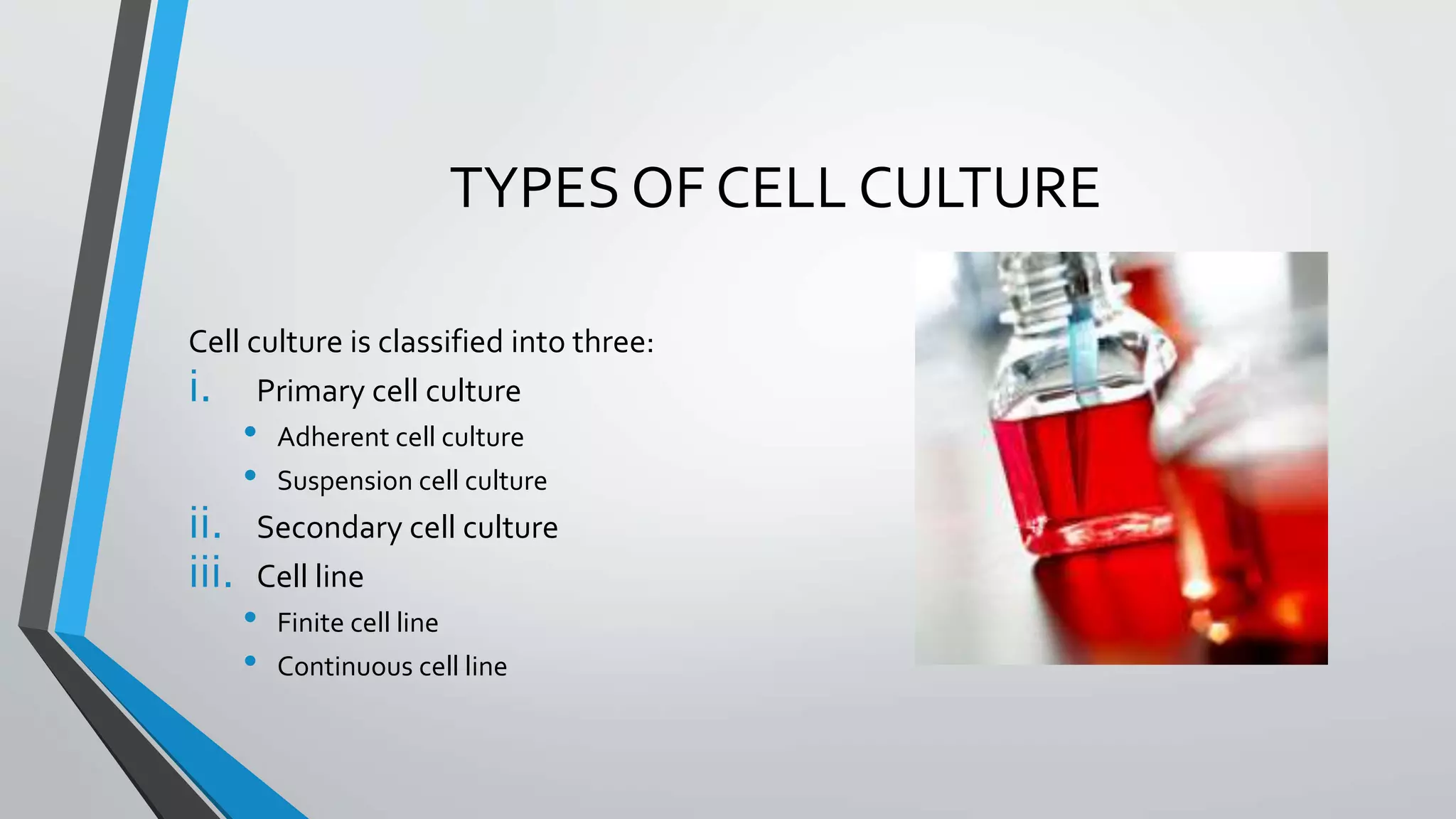
Cell culture is classified into three:
i. Primary cell culture
• Adherent cell culture
• Suspension cell culture
ii. Secondary cell culture
iii. Cell line
• Finite cell line
• Continuous cell line
TYPES OF CELL CULTURE
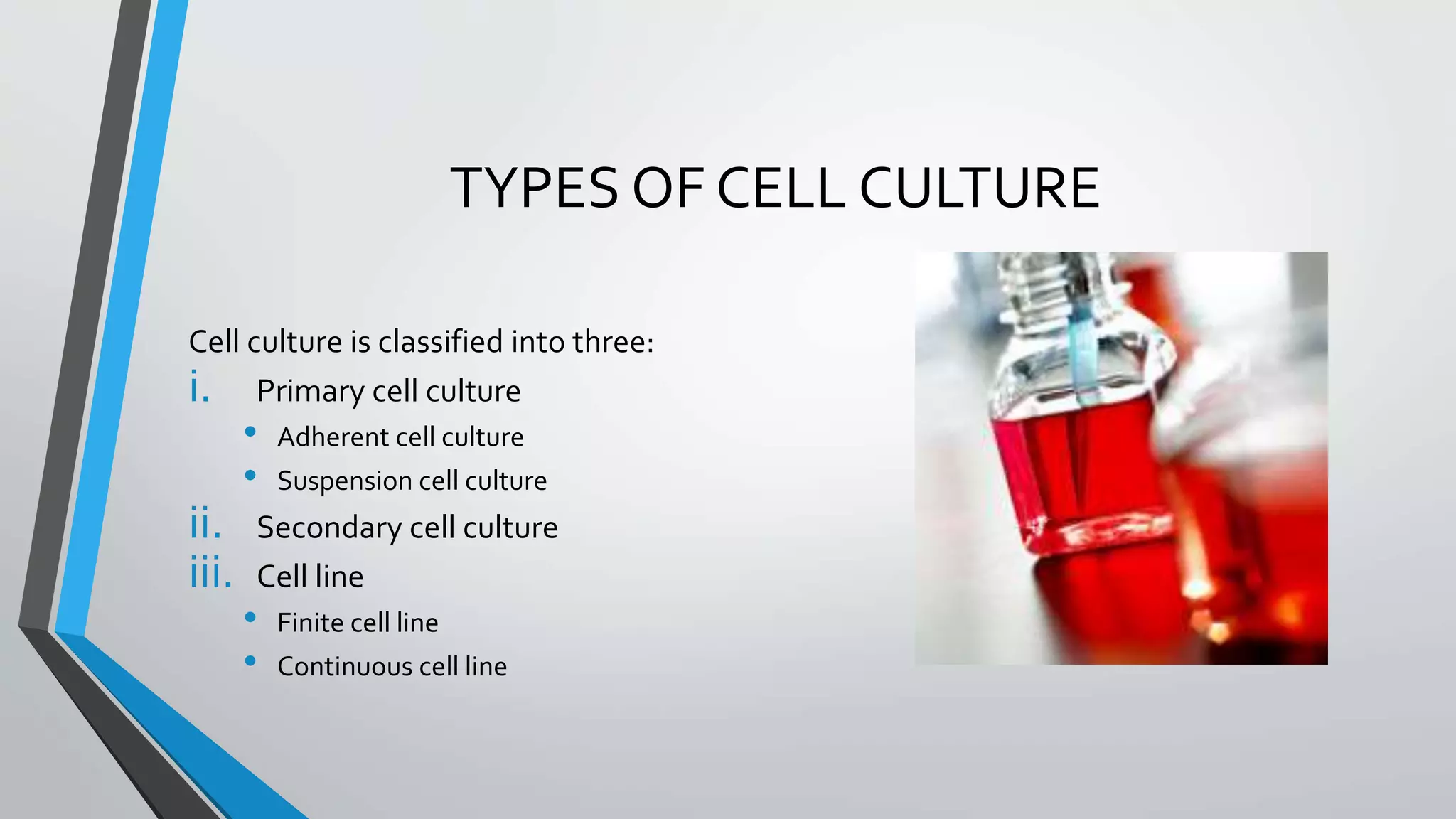
Cell culture is classified into three:
i. Primary cell culture
• Adherent cell culture
• Suspension cell culture
ii. Secondary cell culture
iii. Cell line
• Finite cell line
• Continuous cell line
PRIMARY CELL CULTURE
Separate cell directly from the parent tissue ( kidney, liver, heart etc.)
Separated by enzymatic or mechanical method.
Maintaining the growth of the cell in a culture medium using glass or plastic
container.
Culture medium
o Liquid or gel designed to maintain the growth of the cell.
o It varies from different type of cell.
PRIMARY CELL CULTURE
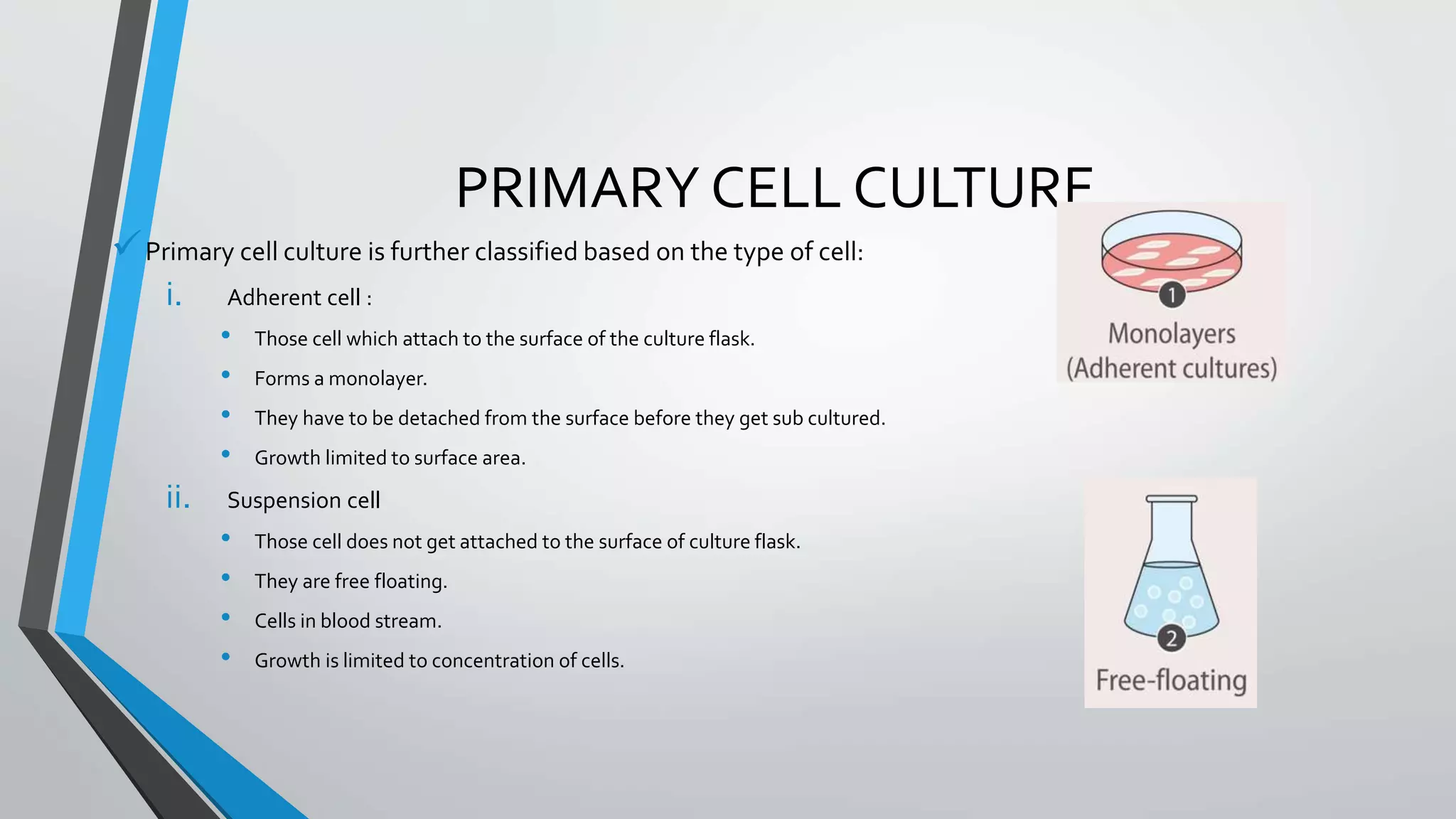
Primary cell culture is further classified based on the type of cell:
i. Adherent cell :
• Those cell which attach to the surface of the culture flask.
• Forms a monolayer.
• They have to be detached from the surface before they get sub cultured.
• Growth limited to surface area.
ii. Suspension cell
• Those cell does not get attached to the surface of culture flask.
• They are free floating.
• Cells in blood stream.
• Growth is limited to concentration of cells.
SECONDARY CELL CULTURE
When primary cell is sub cultured then it is secondary cell.
Sub culture;
 Transfer of cell from one culture vessel to another.
 Method:
o Remove growth medium.
o Detach adherent cells (enzymatic method)
 Why required:
o To provide fresh nutrients.
o To provide more space.
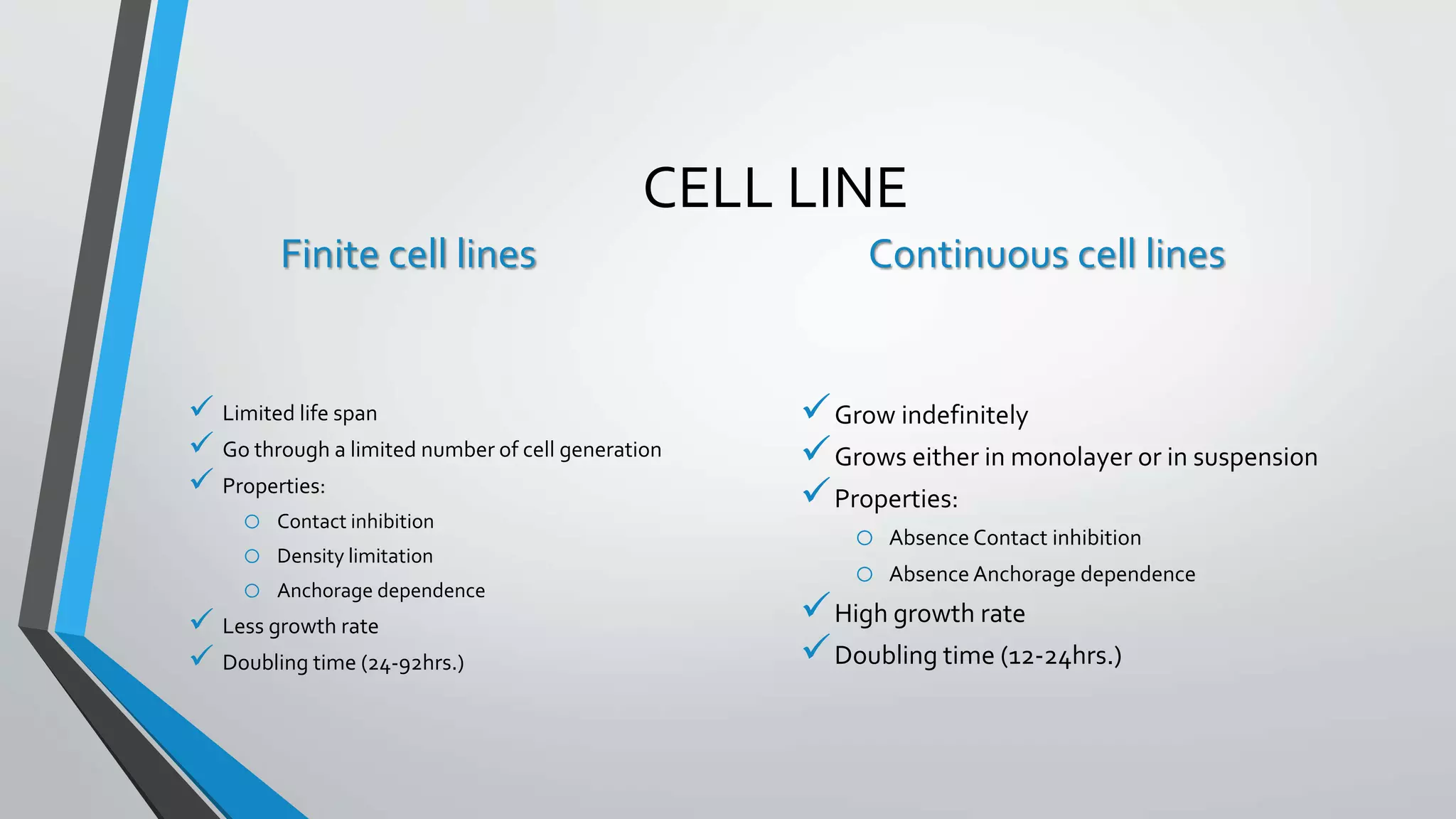
CELL LINE
Finite cell lines
 Limited life span
 Go through a limited number of cell generation
 Properties:
o Contact inhibition
o Density limitation
o Anchorage dependence
 Less growth rate
 Doubling time (24-92hrs.)
Continuous cell lines
Grow indefinitely
Grows either in monolayer or in suspension
Properties:
o Absence Contact inhibition
o Absence Anchorage dependence
High growth rate
Doubling time (12-24hrs.)

Types of cell culture

  • 1.
  • 2.
    TYPES OF CELLCULTURE Cell culture is classified into three: i. Primary cell culture • Adherent cell culture • Suspension cell culture ii. Secondary cell culture iii. Cell line • Finite cell line • Continuous cell line
  • 3.
    TYPES OF CELLCULTURE Cell culture is classified into three: i. Primary cell culture • Adherent cell culture • Suspension cell culture ii. Secondary cell culture iii. Cell line • Finite cell line • Continuous cell line
  • 4.
    PRIMARY CELL CULTURE Separatecell directly from the parent tissue ( kidney, liver, heart etc.) Separated by enzymatic or mechanical method. Maintaining the growth of the cell in a culture medium using glass or plastic container. Culture medium o Liquid or gel designed to maintain the growth of the cell. o It varies from different type of cell.
  • 5.
    PRIMARY CELL CULTURE Primarycell culture is further classified based on the type of cell: i. Adherent cell : • Those cell which attach to the surface of the culture flask. • Forms a monolayer. • They have to be detached from the surface before they get sub cultured. • Growth limited to surface area. ii. Suspension cell • Those cell does not get attached to the surface of culture flask. • They are free floating. • Cells in blood stream. • Growth is limited to concentration of cells.
  • 6.
    SECONDARY CELL CULTURE Whenprimary cell is sub cultured then it is secondary cell. Sub culture;  Transfer of cell from one culture vessel to another.  Method: o Remove growth medium. o Detach adherent cells (enzymatic method)  Why required: o To provide fresh nutrients. o To provide more space.
  • 7.
    CELL LINE Finite celllines  Limited life span  Go through a limited number of cell generation  Properties: o Contact inhibition o Density limitation o Anchorage dependence  Less growth rate  Doubling time (24-92hrs.) Continuous cell lines Grow indefinitely Grows either in monolayer or in suspension Properties: o Absence Contact inhibition o Absence Anchorage dependence High growth rate Doubling time (12-24hrs.)