Advanced Aminal Cell Culture
2013 2nd Semester
Department of Animal Science
Chungbuk National University
2st Lecture
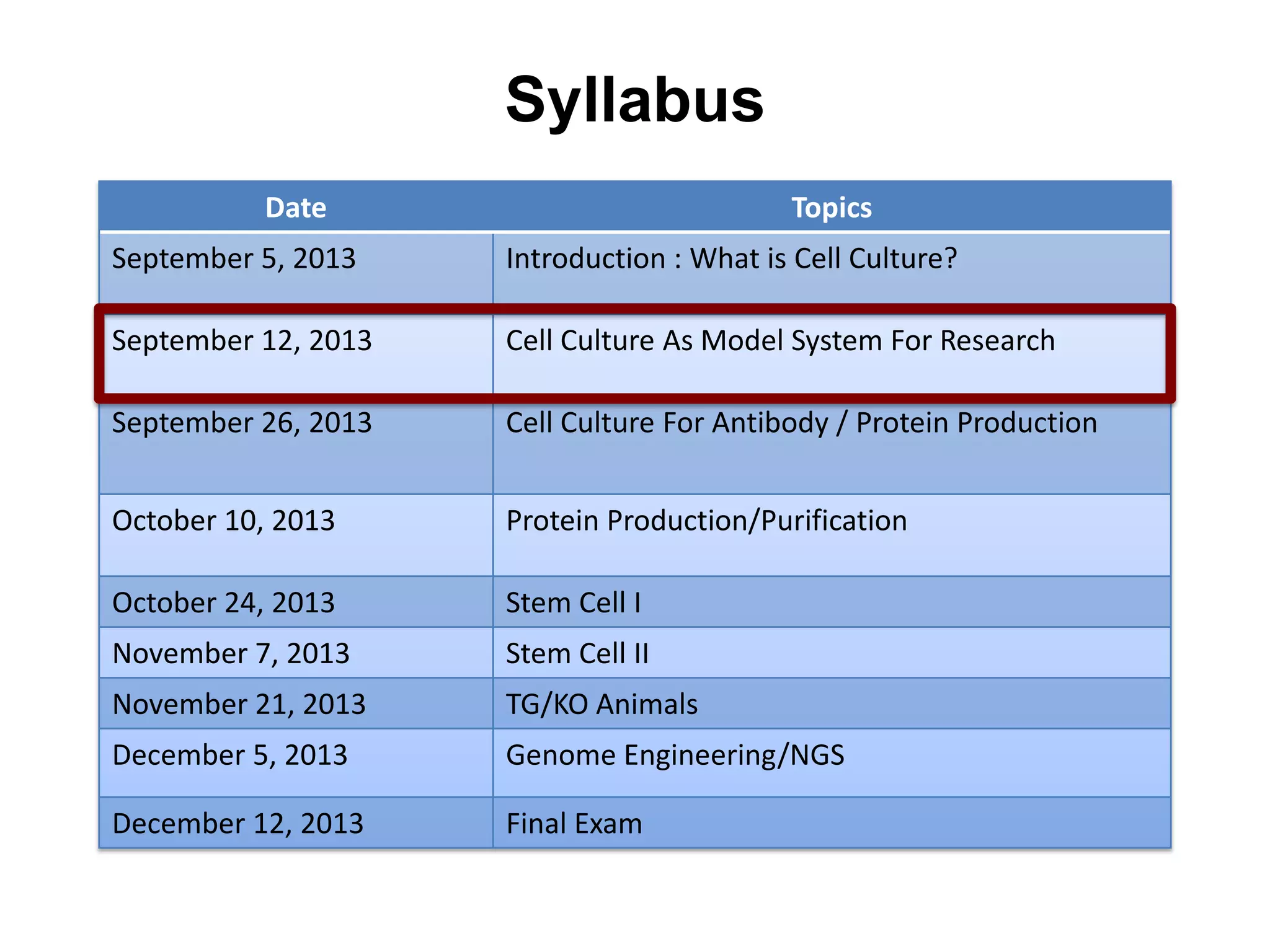
Syllabus
Date Topics
September 5, 2013 Introduction : What is Cell Culture?
September 12, 2013 Cell Culture As Model System For Research
September 26, 2013 Cell Culture For Antibody / Protein Production
October 10, 2013 Protein Production/Purification
October 24, 2013 Stem Cell I
November 7, 2013 Stem Cell II
November 21, 2013 TG/KO Animals
December 5, 2013 Genome Engineering/NGS
December 12, 2013 Final Exam
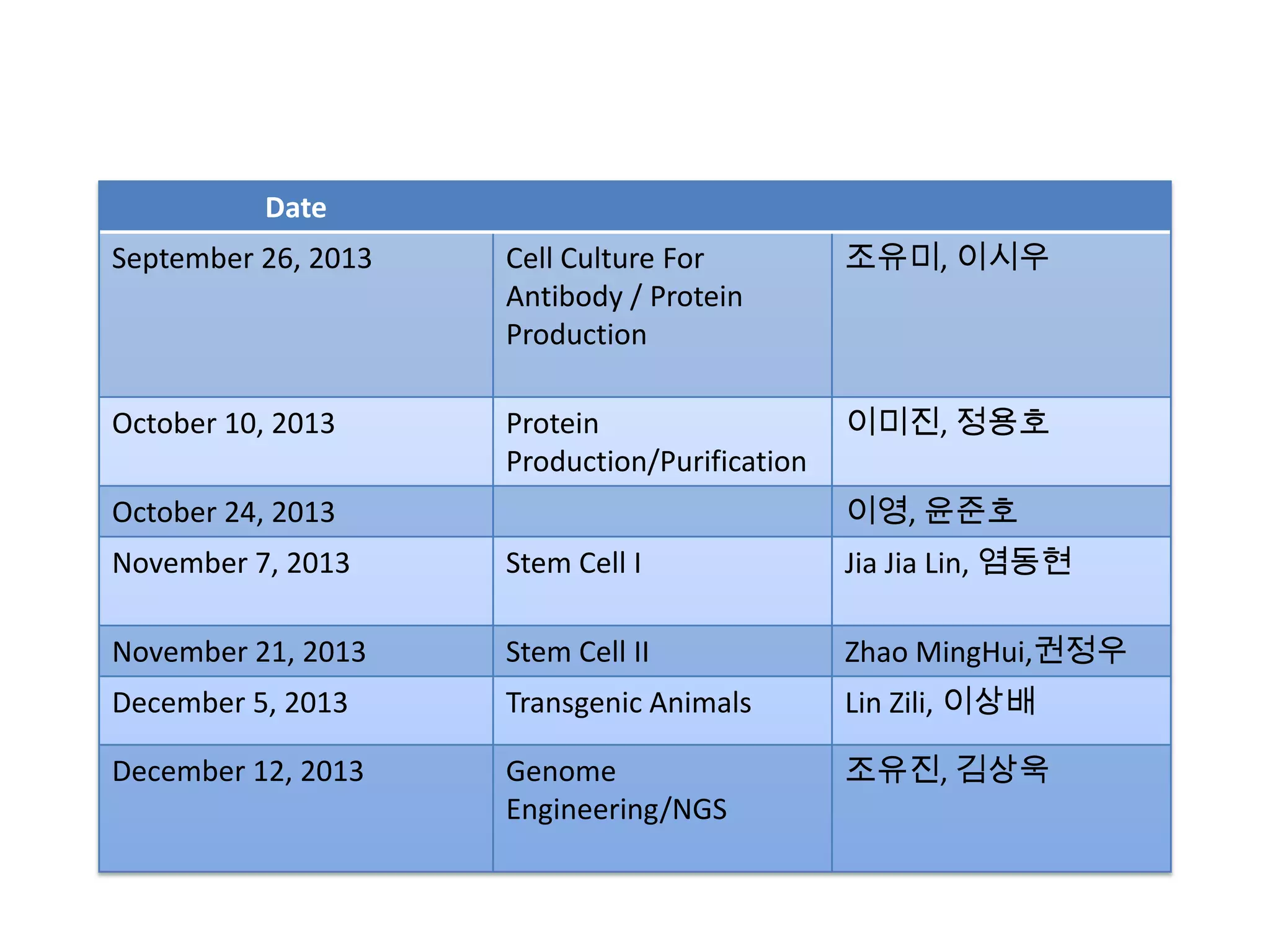
Date
September 26, 2013 Cell Culture For
Antibody / Protein
Production
조유미, 이시우
October 10, 2013 Protein
Production/Purification
이미진, 정용호
October 24, 2013 이영, 윤준호
November 7, 2013 Stem Cell I Jia Jia Lin, 염동현
November 21, 2013 Stem Cell II Zhao MingHui,권정우
December 5, 2013 Transgenic Animals Lin Zili, 이상배
December 12, 2013 Genome
Engineering/NGS
조유진, 김상욱
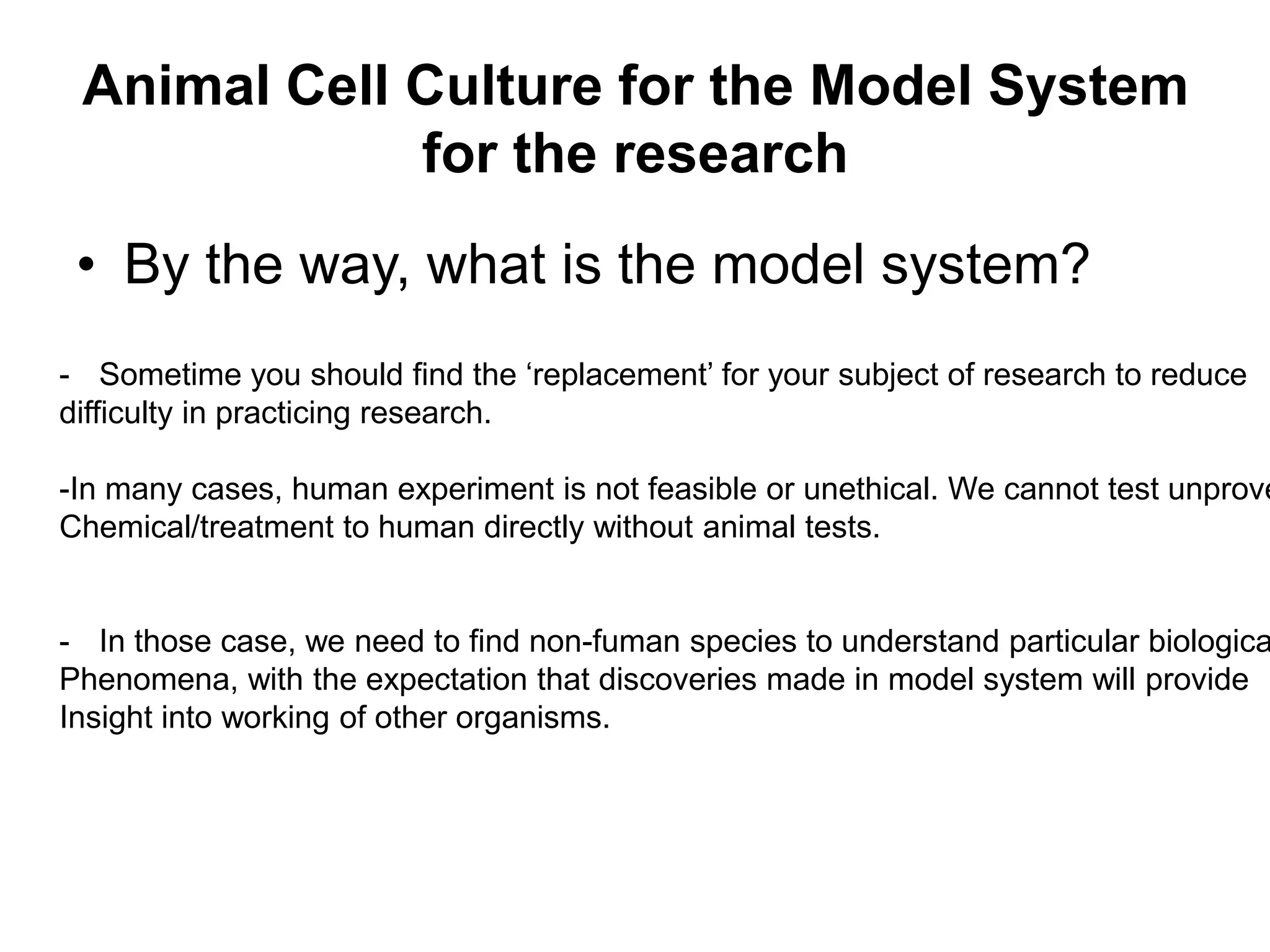
Animal Cell Culture for the Model System
for the research
• By the way, what is the model system?
- Sometime you should find the ‘replacement’ for your subject of research to reduce
difficulty in practicing research.
-In many cases, human experiment is not feasible or unethical. We cannot test unprove
Chemical/treatment to human directly without animal tests.
- In those case, we need to find non-fuman species to understand particular biologica
Phenomena, with the expectation that discoveries made in model system will provide
Insight into working of other organisms.
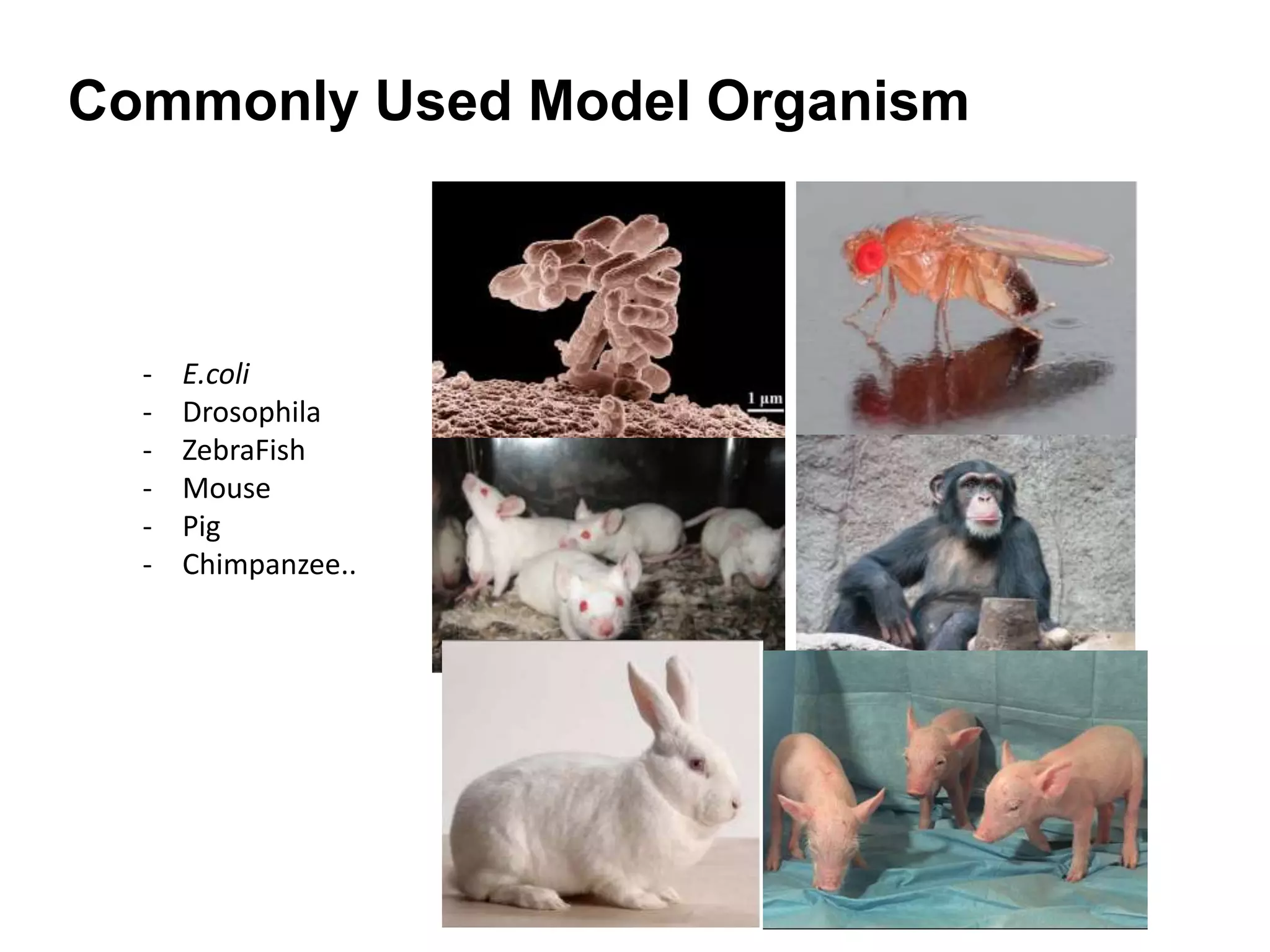
Commonly Used Model Organism
- E.coli
- Drosophila
- ZebraFish
- Mouse
- Pig
- Chimpanzee..
Cultured Cell as Model System For Research
- You can avoid the interferences from other kinds of cell, tissue,
organ and can focus on the specific kind of cell you want to study
- You can observe and monitor during the treatment in vitro
conditions
- Much easier for the study using microscopic/biochemical/Molecular
Biologic methodology..
- Cheaper and Faster than most animal experiments
- Ethical Consideration : Reduce laboratory animal sacrification..
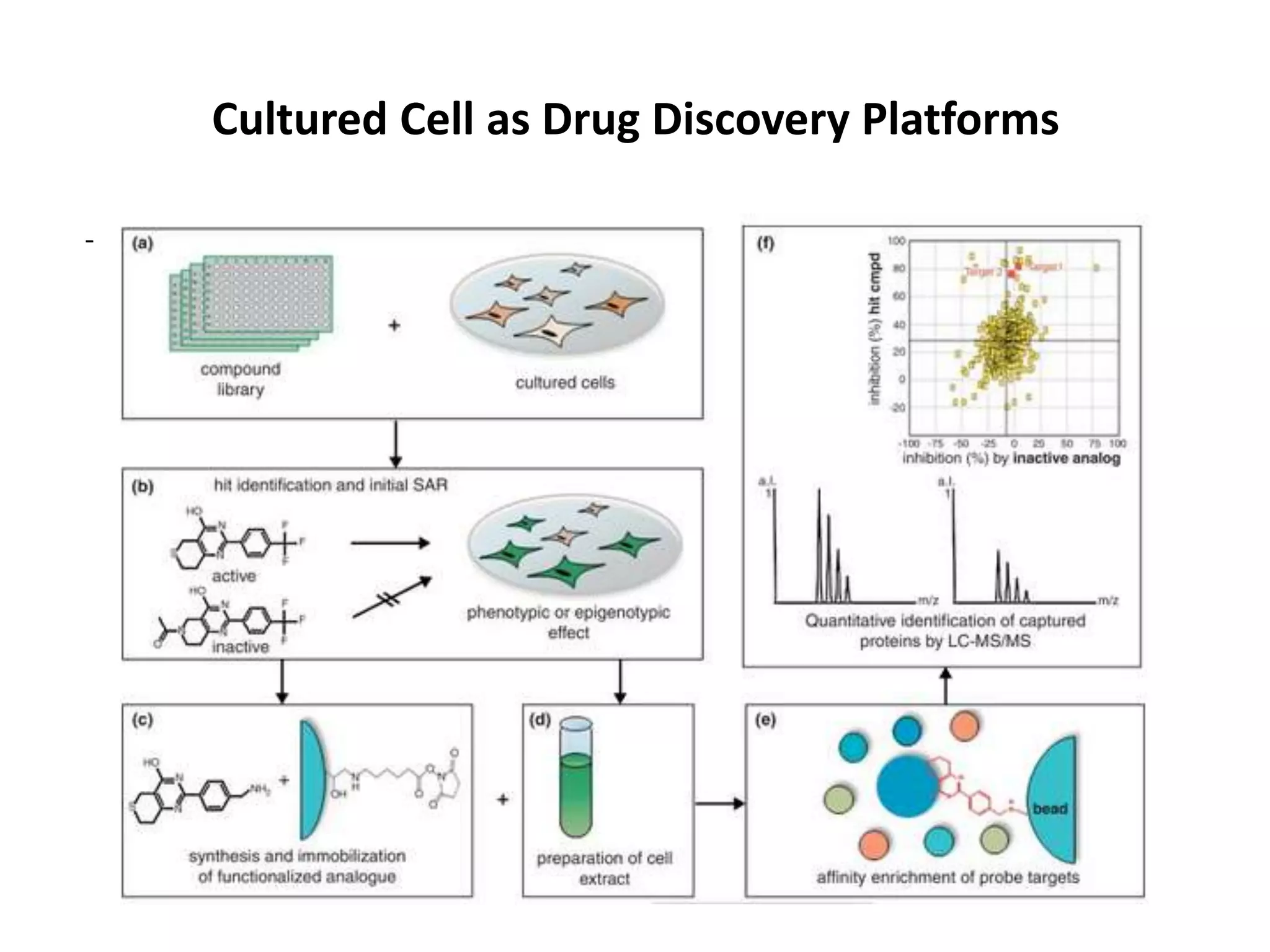
Cultured Cell as Drug Discovery Platforms
- Screening of chemical Library
Choice of Cell
- Primary Cell or Cell Line?
- Source of Organism?
- Source of Tissues
Many Cell Line Derived from various tissues can be used as model system for studies
HUVEC (Human umbilical vein endothelial Cells) : model system for endothelial cells
RAW264.7 (Murine Macrophage)
Generally cell line is chacterized better than primary cell and easy to culture
Limited life spanning of primary culture limits experiment
In some cases (Neuron for example), Primary cell is the only source for cultured Cell
Primary Cell is thought to be much closer than Cell Line
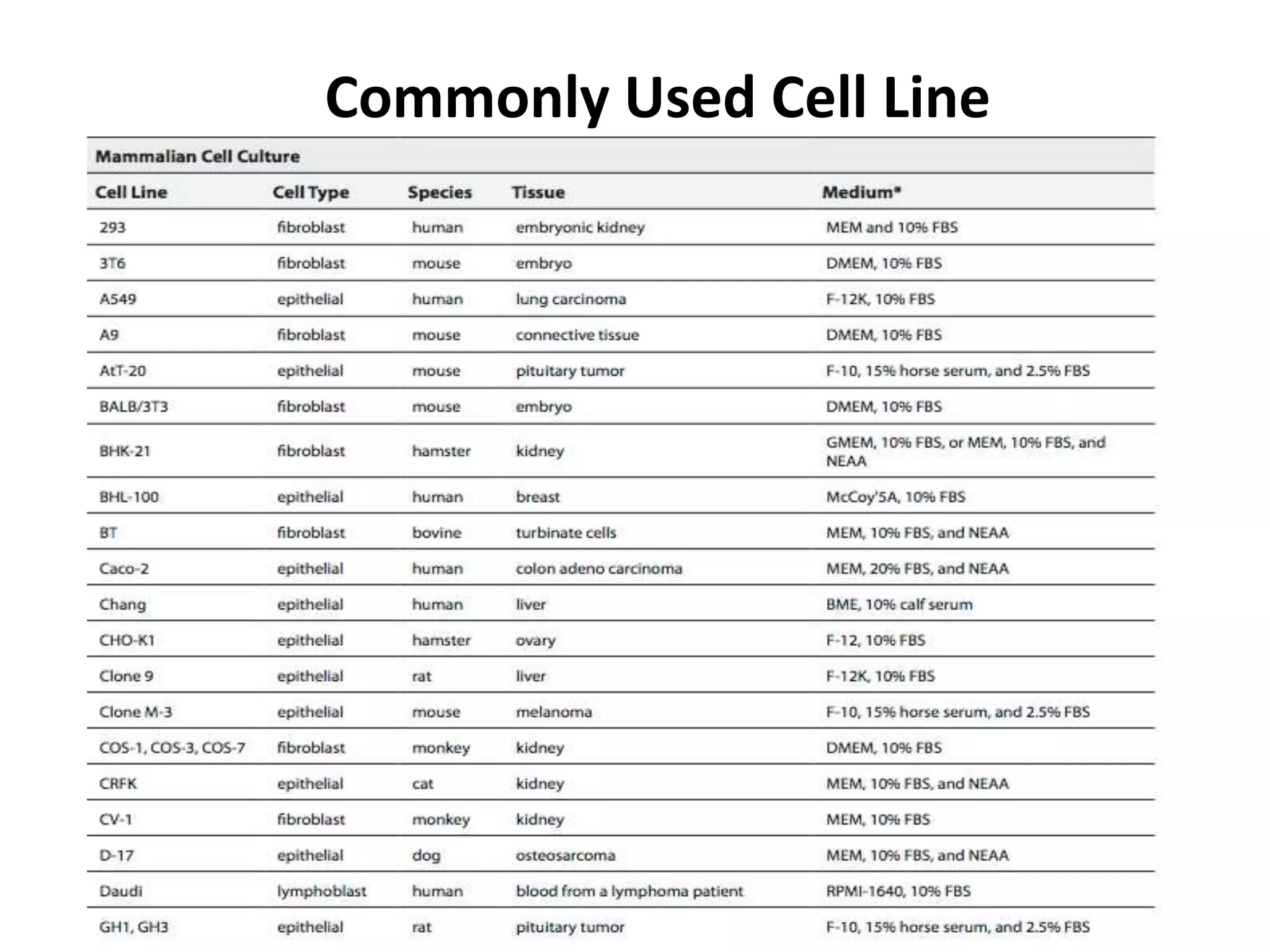
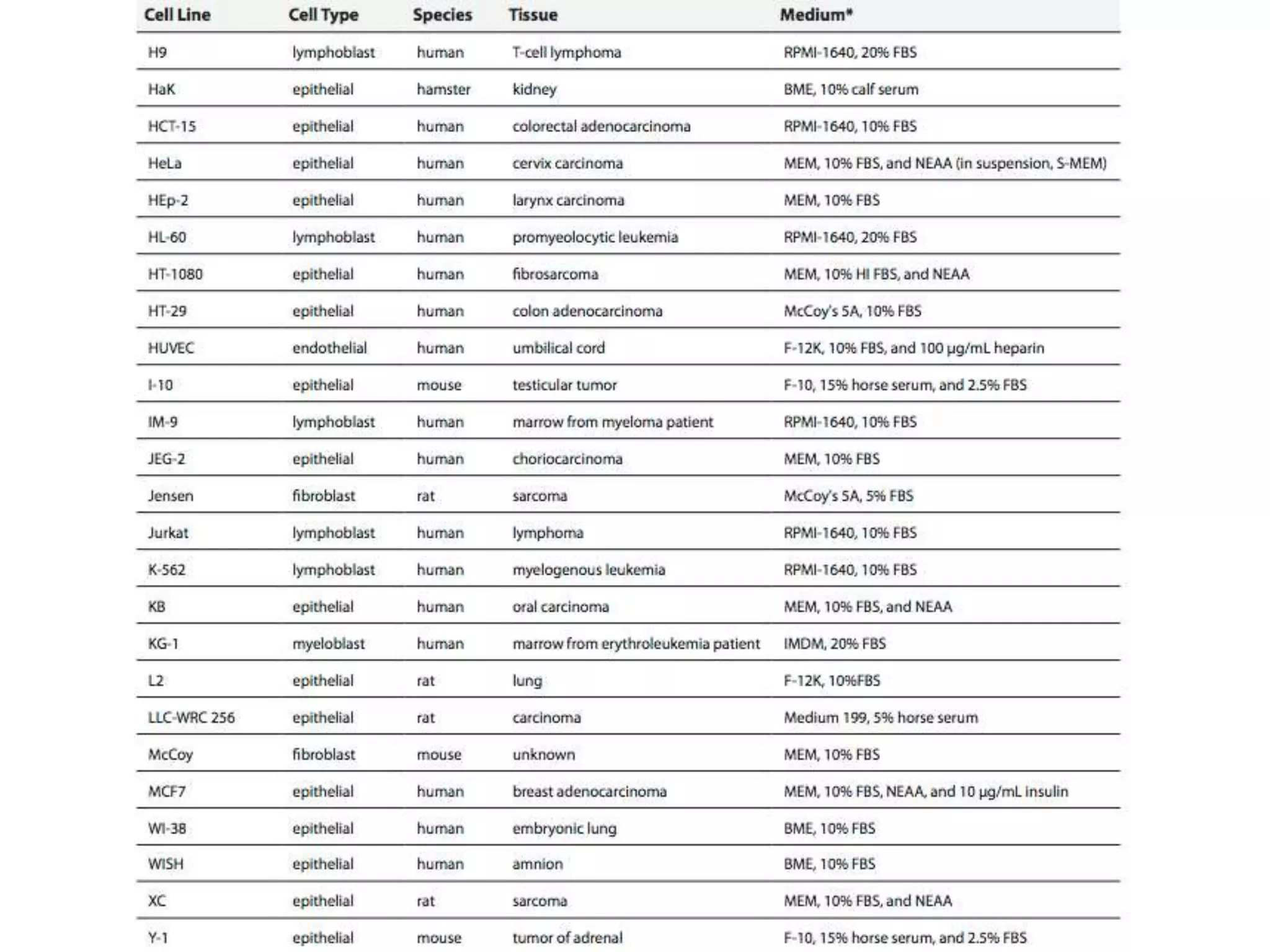
Commonly Used Cell Line
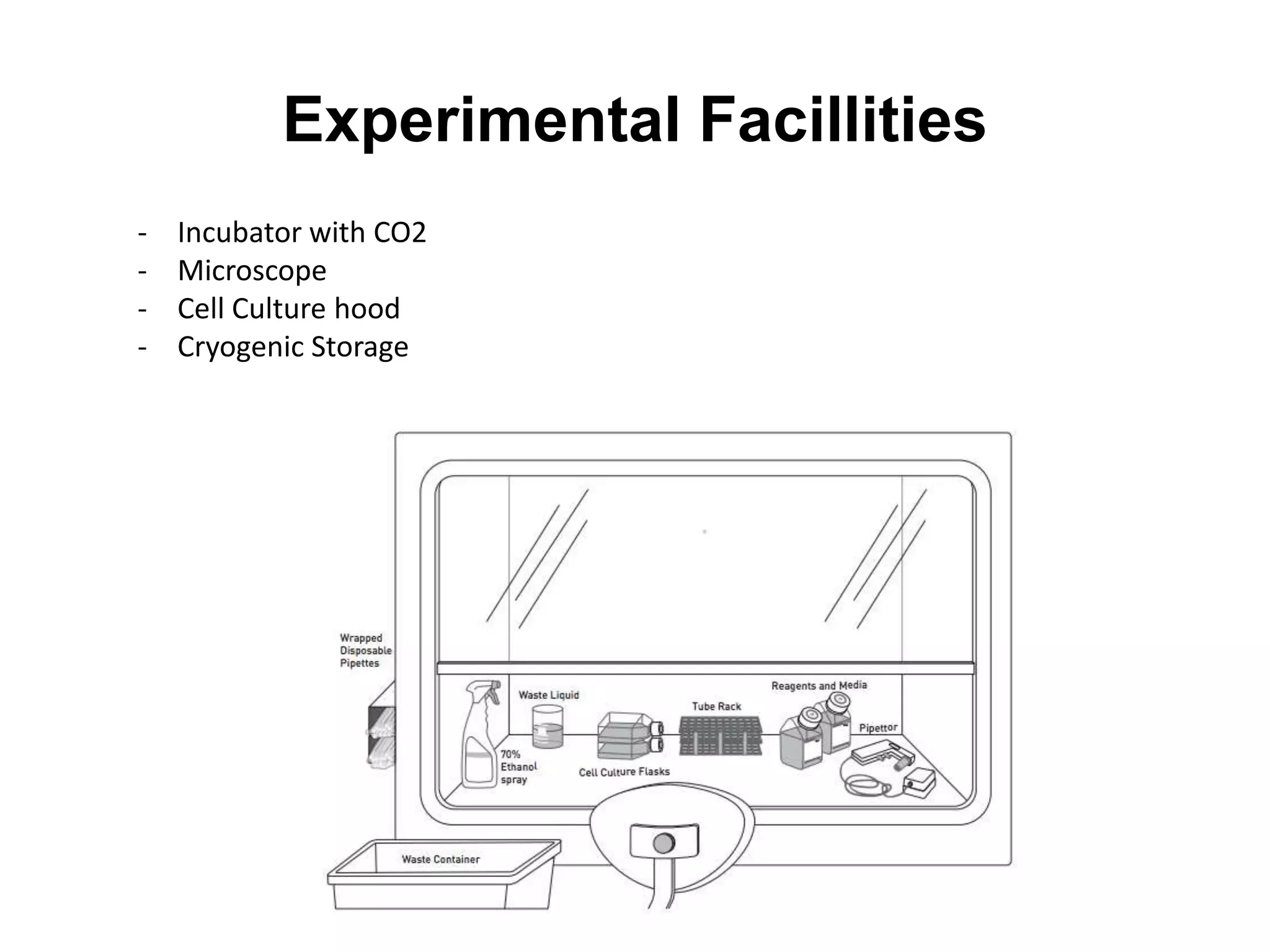
Experimental Facillities
- Incubator with CO2
- Microscope
- Cell Culture hood
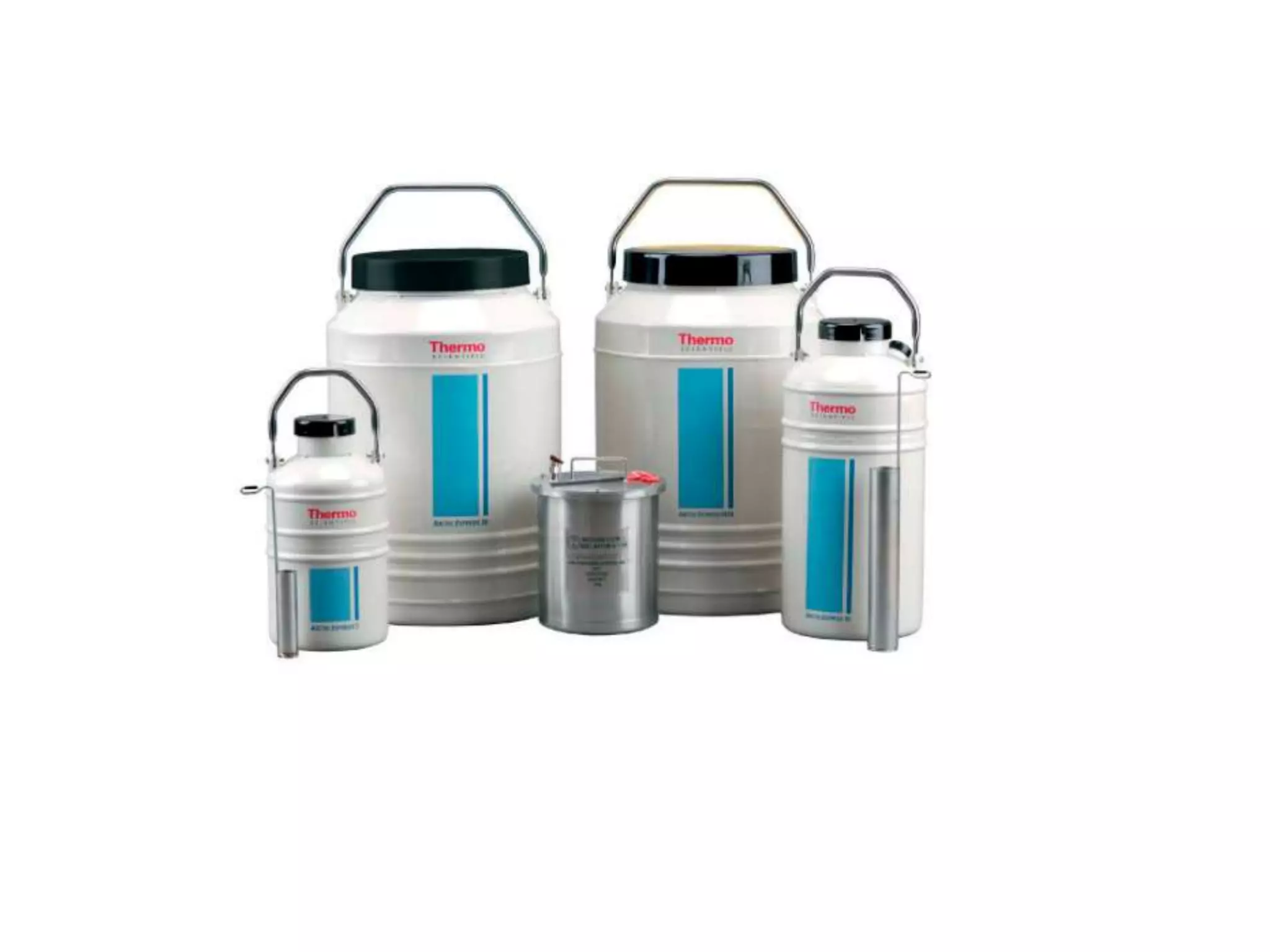
- Cryogenic Storage
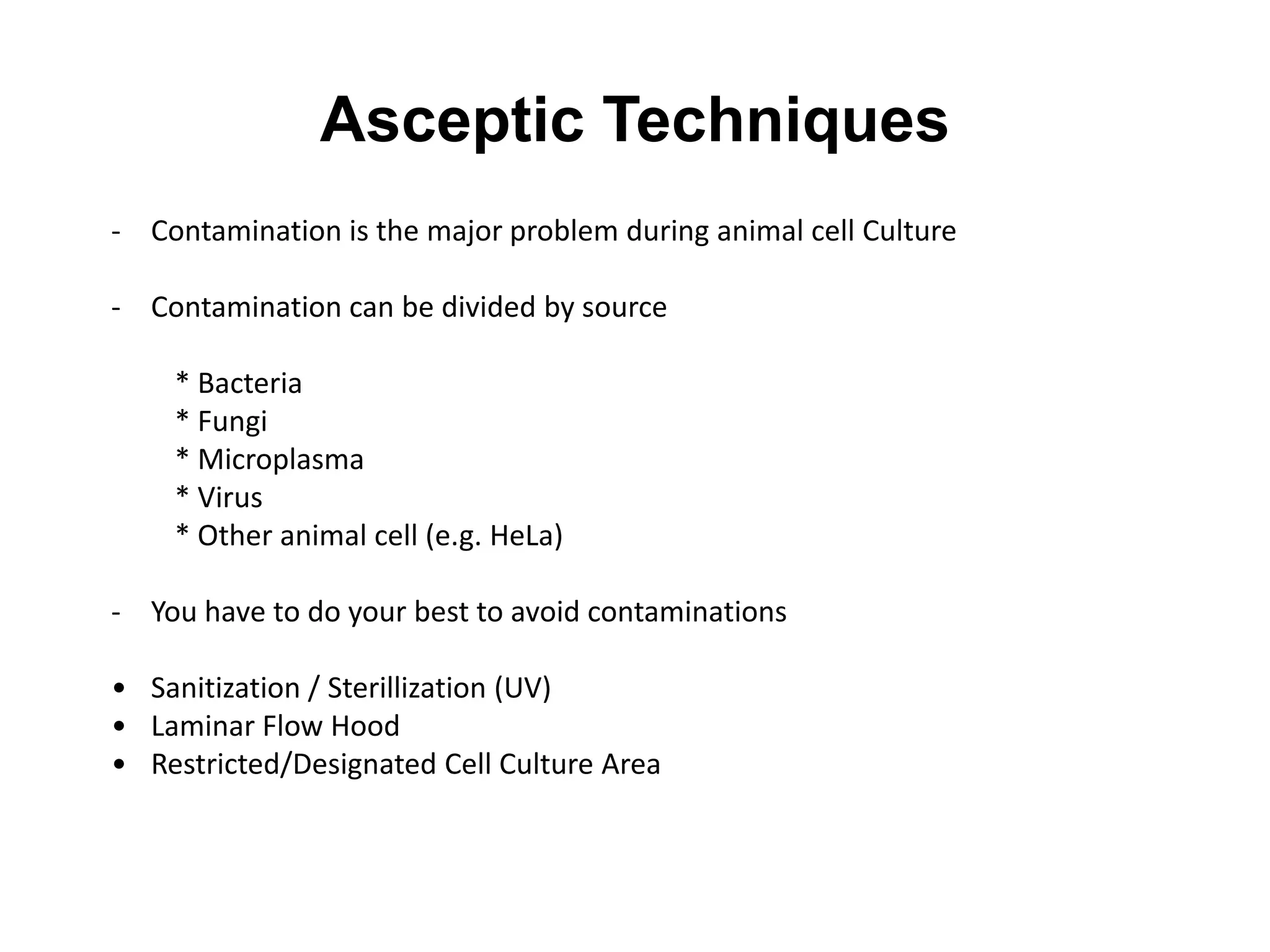
Asceptic Techniques
- Contamination is the major problem during animal cell Culture
- Contamination can be divided by source
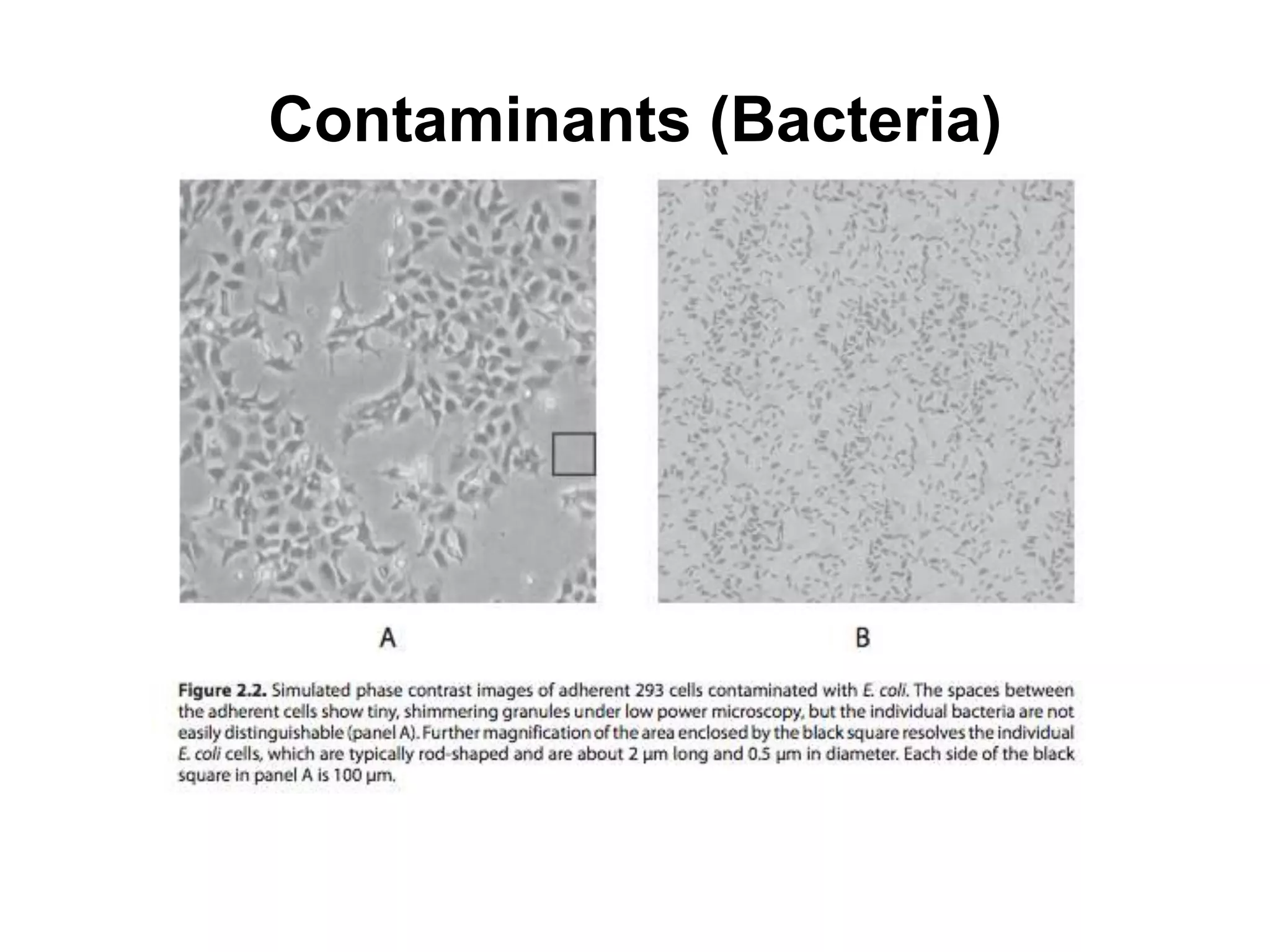
* Bacteria
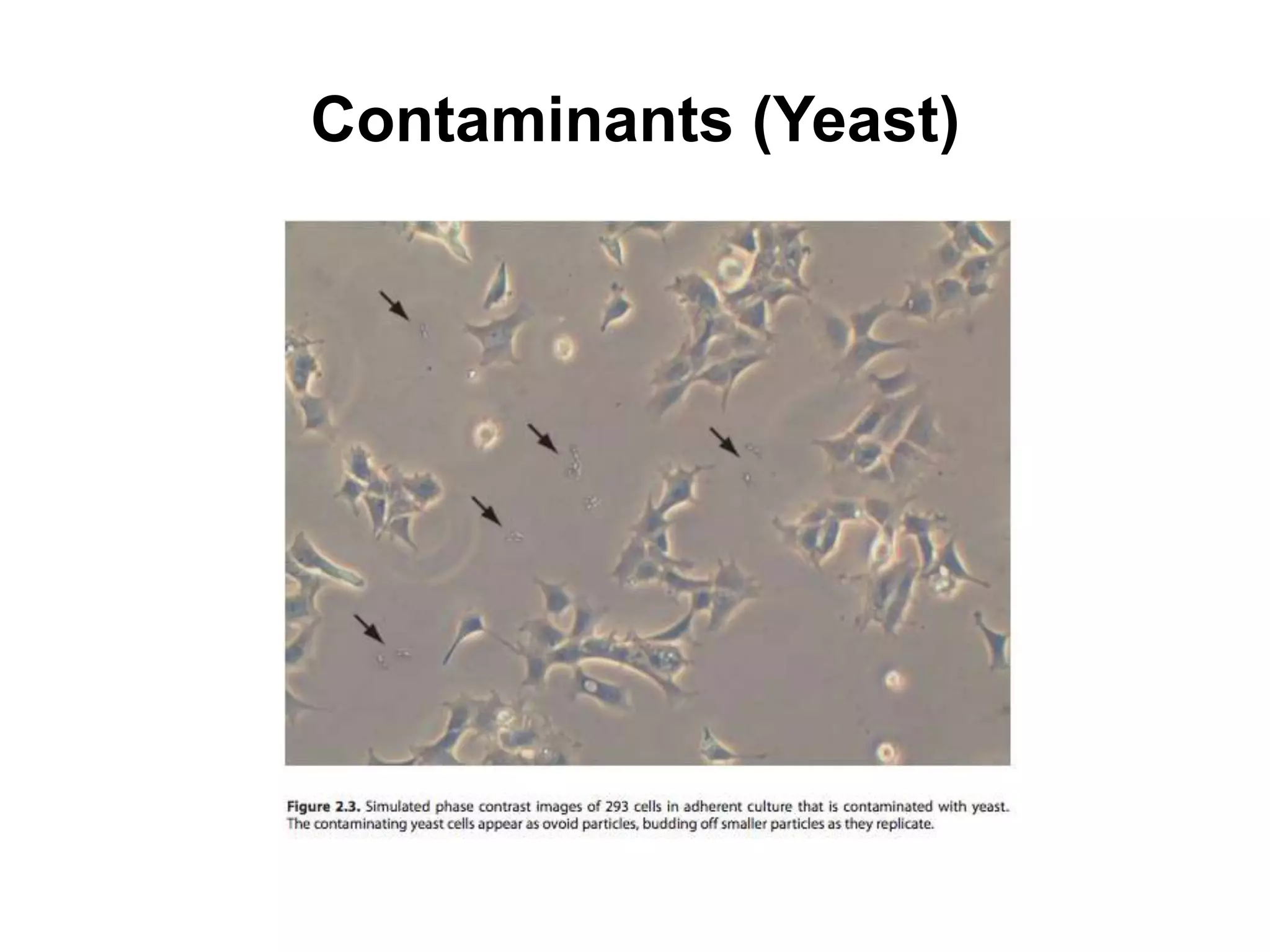
* Fungi
* Microplasma
* Virus
* Other animal cell (e.g. HeLa)
- You have to do your best to avoid contaminations
• Sanitization / Sterillization (UV)
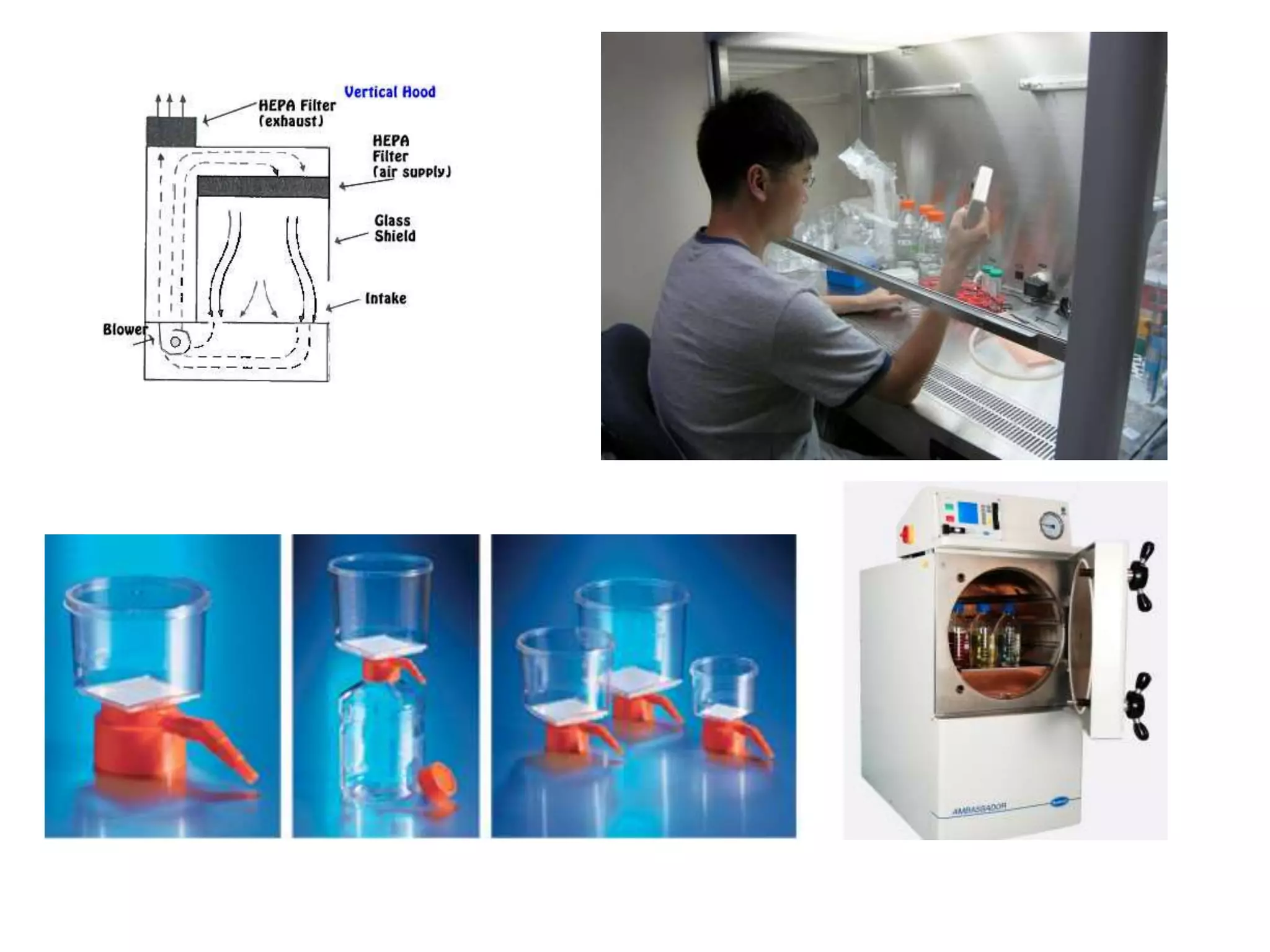
• Laminar Flow Hood
• Restricted/Designated Cell Culture Area
Contaminants (Bacteria)
Contaminants (Yeast)
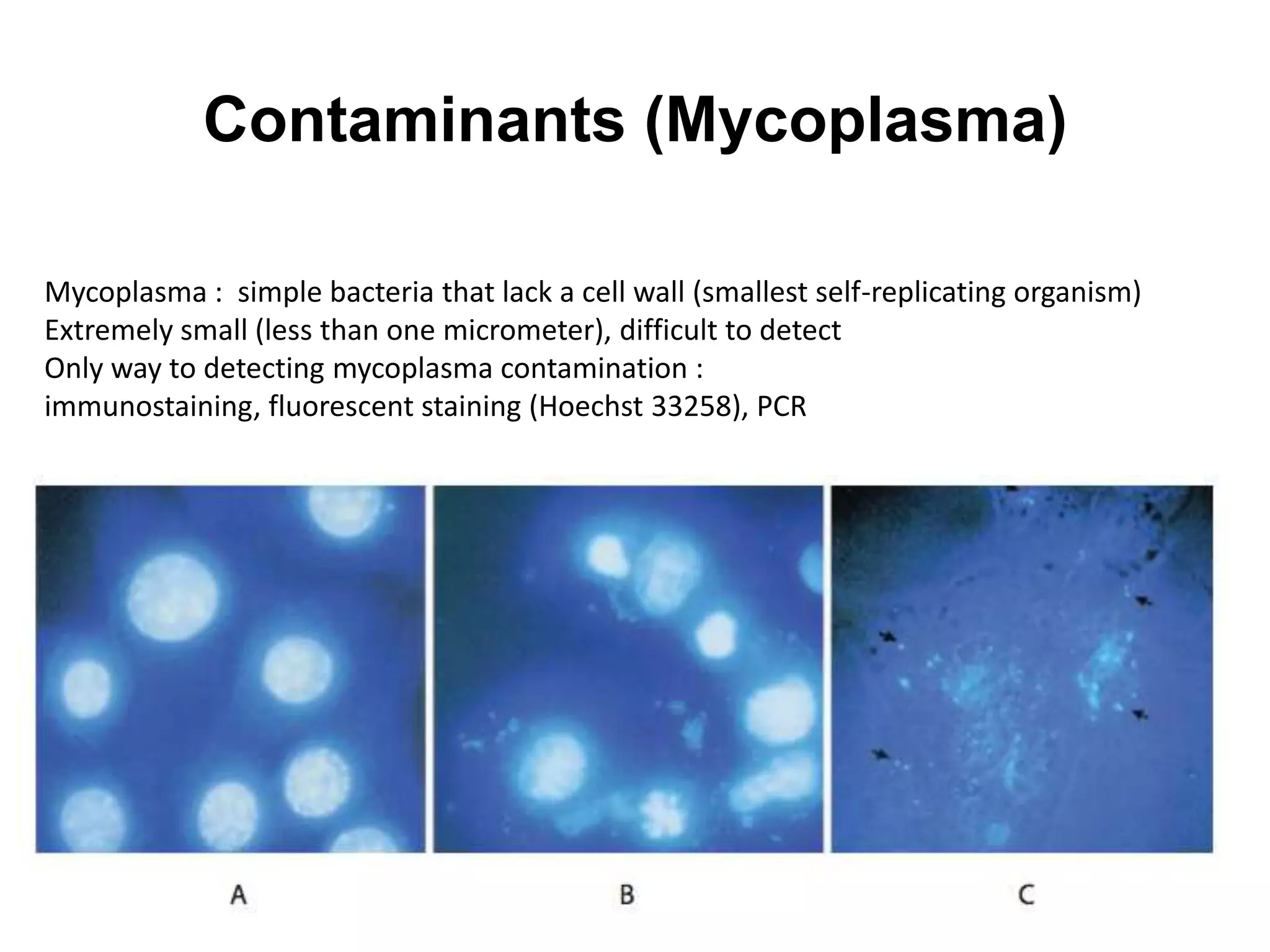
Mycoplasma : simple bacteria that lack a cell wall (smallest self-replicating organism)
Extremely small (less than one micrometer), difficult to detect
Only way to detecting mycoplasma contamination :
immunostaining, fluorescent staining (Hoechst 33258), PCR
Contaminants (Mycoplasma)
Subculture
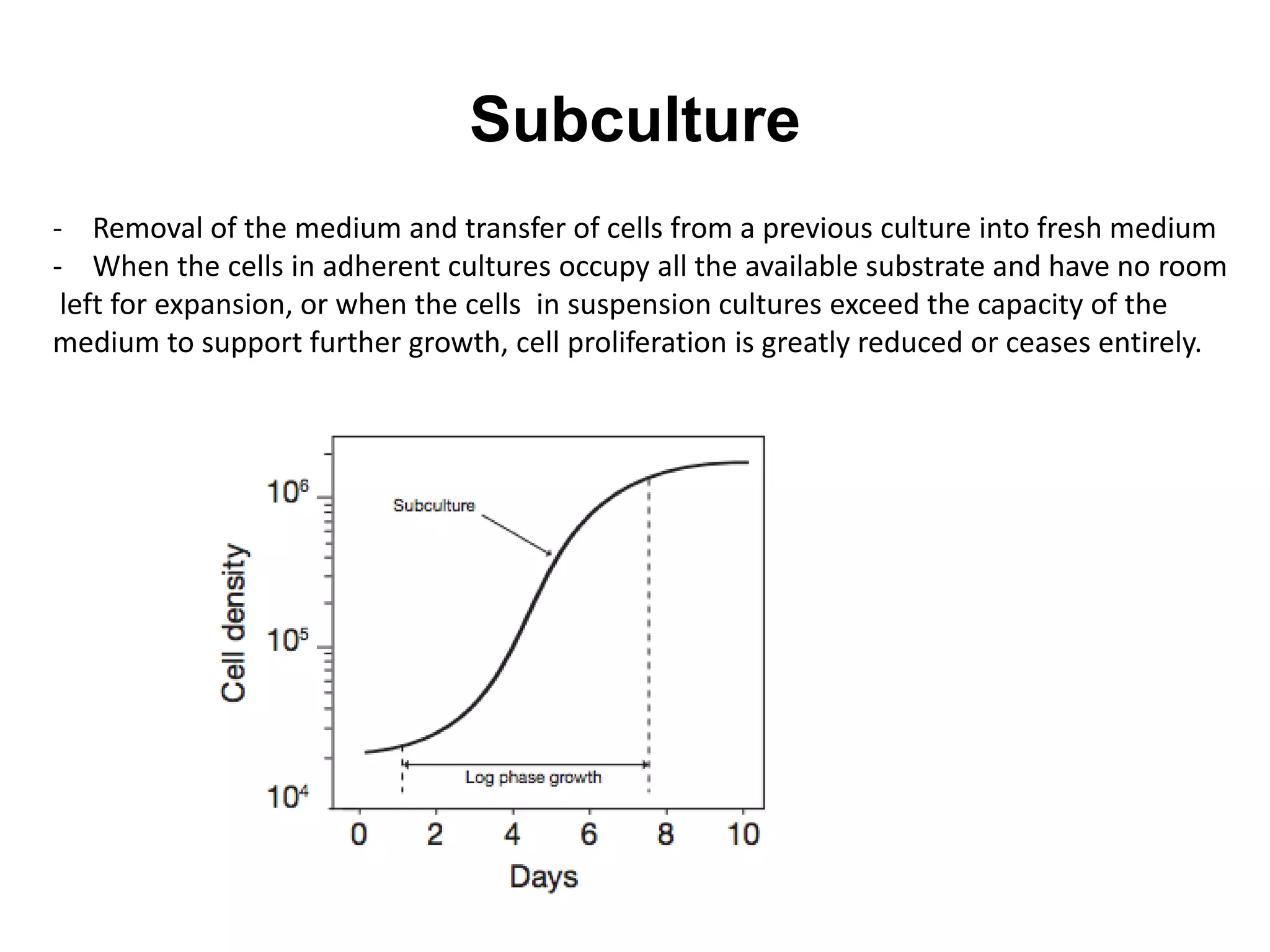
- Removal of the medium and transfer of cells from a previous culture into fresh medium
- When the cells in adherent cultures occupy all the available substrate and have no room
left for expansion, or when the cells in suspension cultures exceed the capacity of the
medium to support further growth, cell proliferation is greatly reduced or ceases entirely.
Cell Density
- In adherent cell, cell will not grow when they cover the surface of culture dish
(Contact inhibitions)
Exhaustion of Medium
- Exhaustion of Medium
- pH change
- Accumulation of toxic compounds (secreted from the cell)
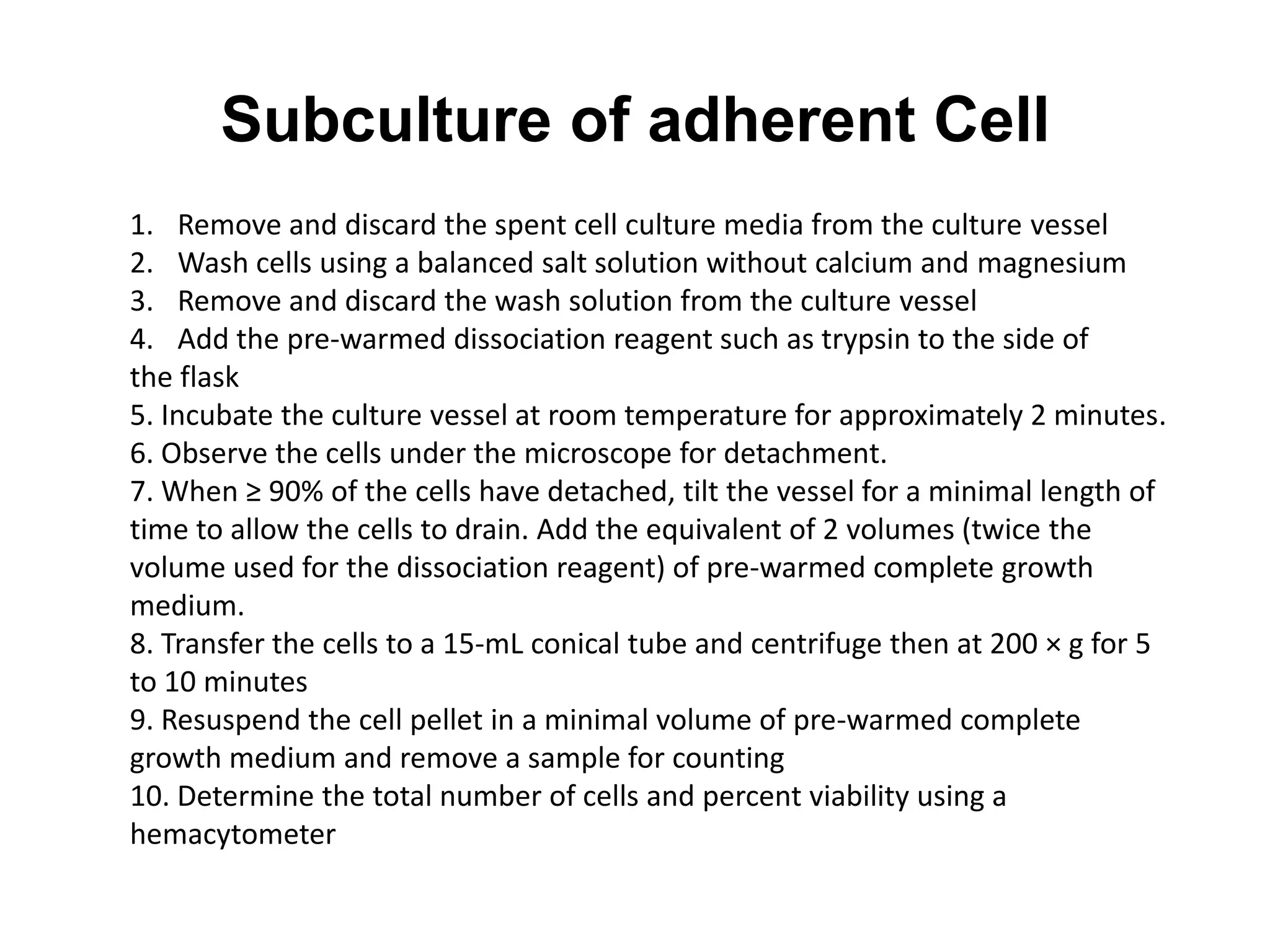
Subculture of adherent Cell
1. Remove and discard the spent cell culture media from the culture vessel
2. Wash cells using a balanced salt solution without calcium and magnesium
3. Remove and discard the wash solution from the culture vessel
4. Add the pre-warmed dissociation reagent such as trypsin to the side of
the flask
5. Incubate the culture vessel at room temperature for approximately 2 minutes.
6. Observe the cells under the microscope for detachment.
7. When ≥ 90% of the cells have detached, tilt the vessel for a minimal length of
time to allow the cells to drain. Add the equivalent of 2 volumes (twice the
volume used for the dissociation reagent) of pre-warmed complete growth
medium.
8. Transfer the cells to a 15-mL conical tube and centrifuge then at 200 × g for 5
to 10 minutes
9. Resuspend the cell pellet in a minimal volume of pre-warmed complete
growth medium and remove a sample for counting
10. Determine the total number of cells and percent viability using a
hemacytometer
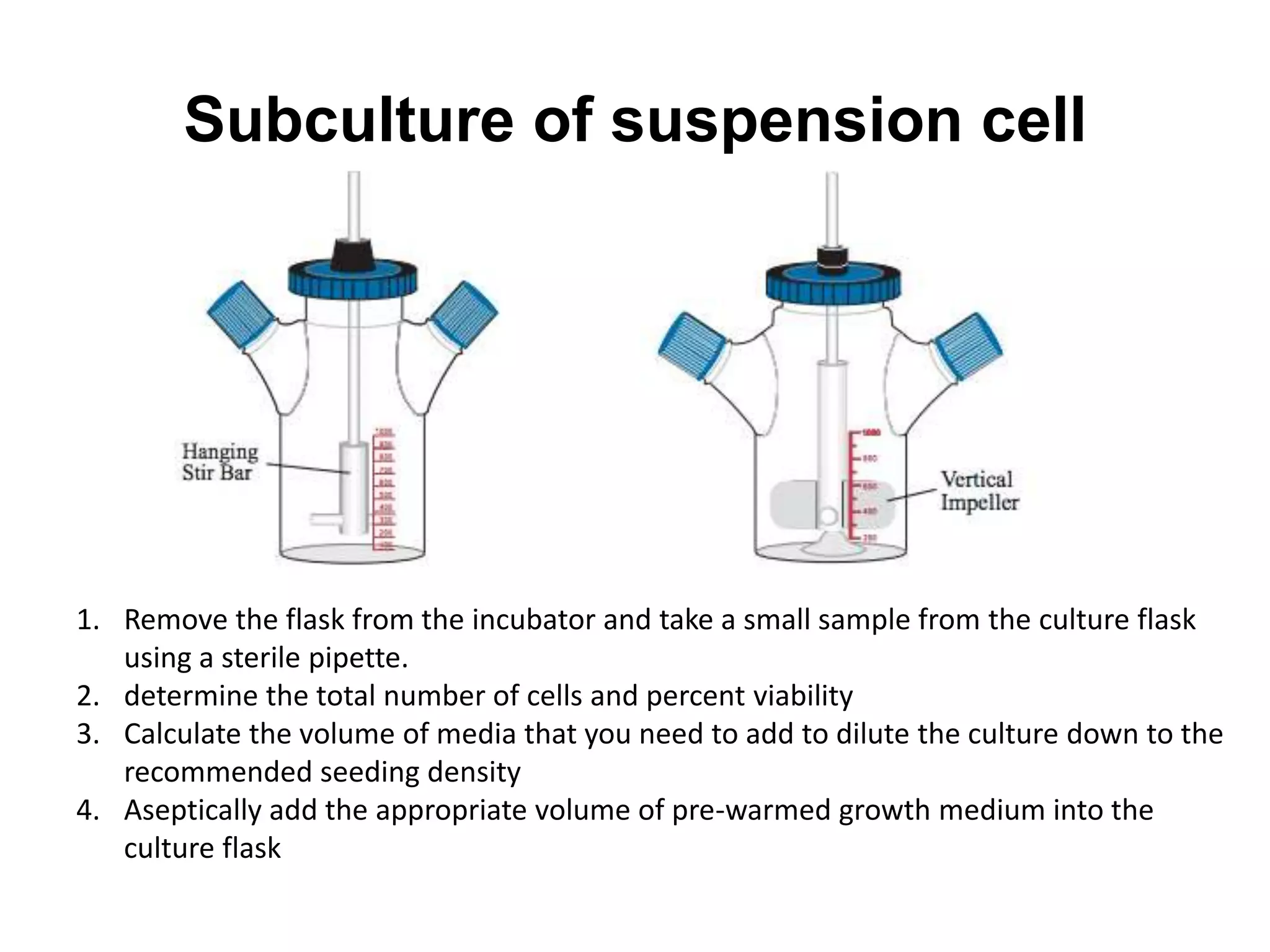
Subculture of suspension cell
1. Remove the flask from the incubator and take a small sample from the culture flask
using a sterile pipette.
2. determine the total number of cells and percent viability
3. Calculate the volume of media that you need to add to dilute the culture down to the
recommended seeding density
4. Aseptically add the appropriate volume of pre-warmed growth medium into the
culture flask
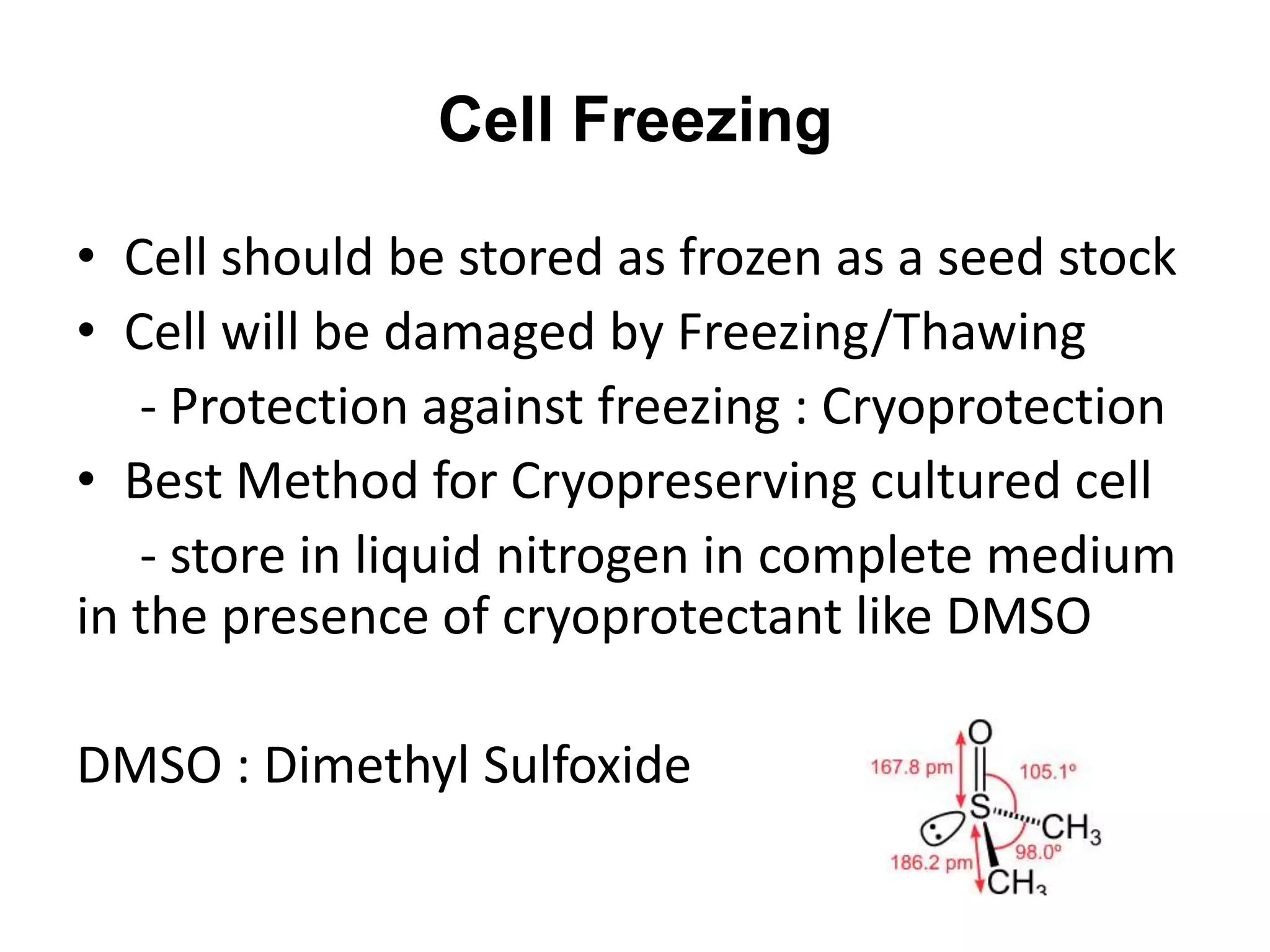
• Cell should be stored as frozen as a seed stock
• Cell will be damaged by Freezing/Thawing
- Protection against freezing : Cryoprotection
• Best Method for Cryopreserving cultured cell
- store in liquid nitrogen in complete medium
in the presence of cryoprotectant like DMSO
DMSO : Dimethyl Sulfoxide
Cell Freezing
• Serum Based or Serum Free?
• Serum : Fetal Bovine Serum(FBS)
Media
Research Methods using
cultured Cell
• Microscopic
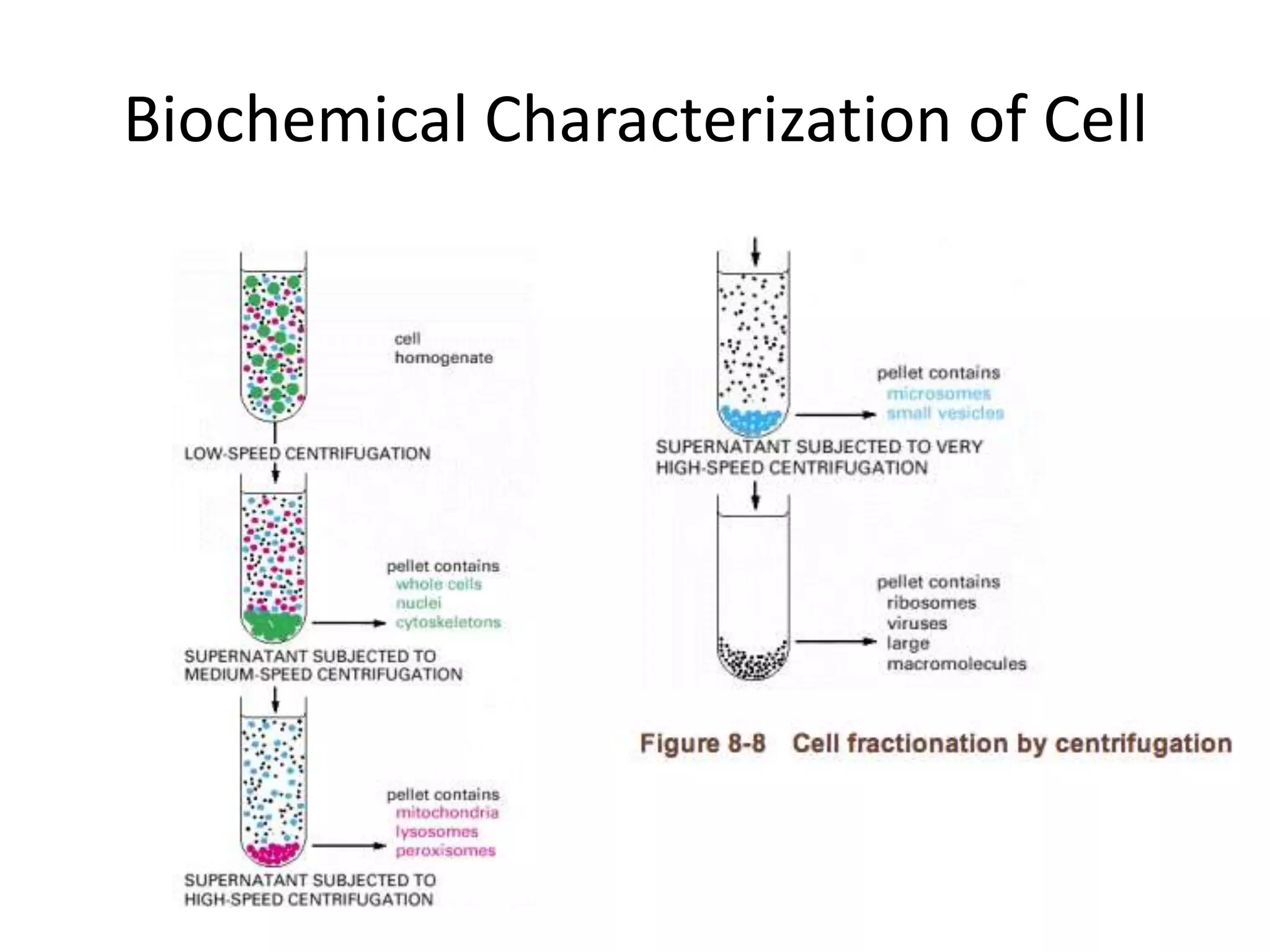
• Biochemical
• Molecular Biology
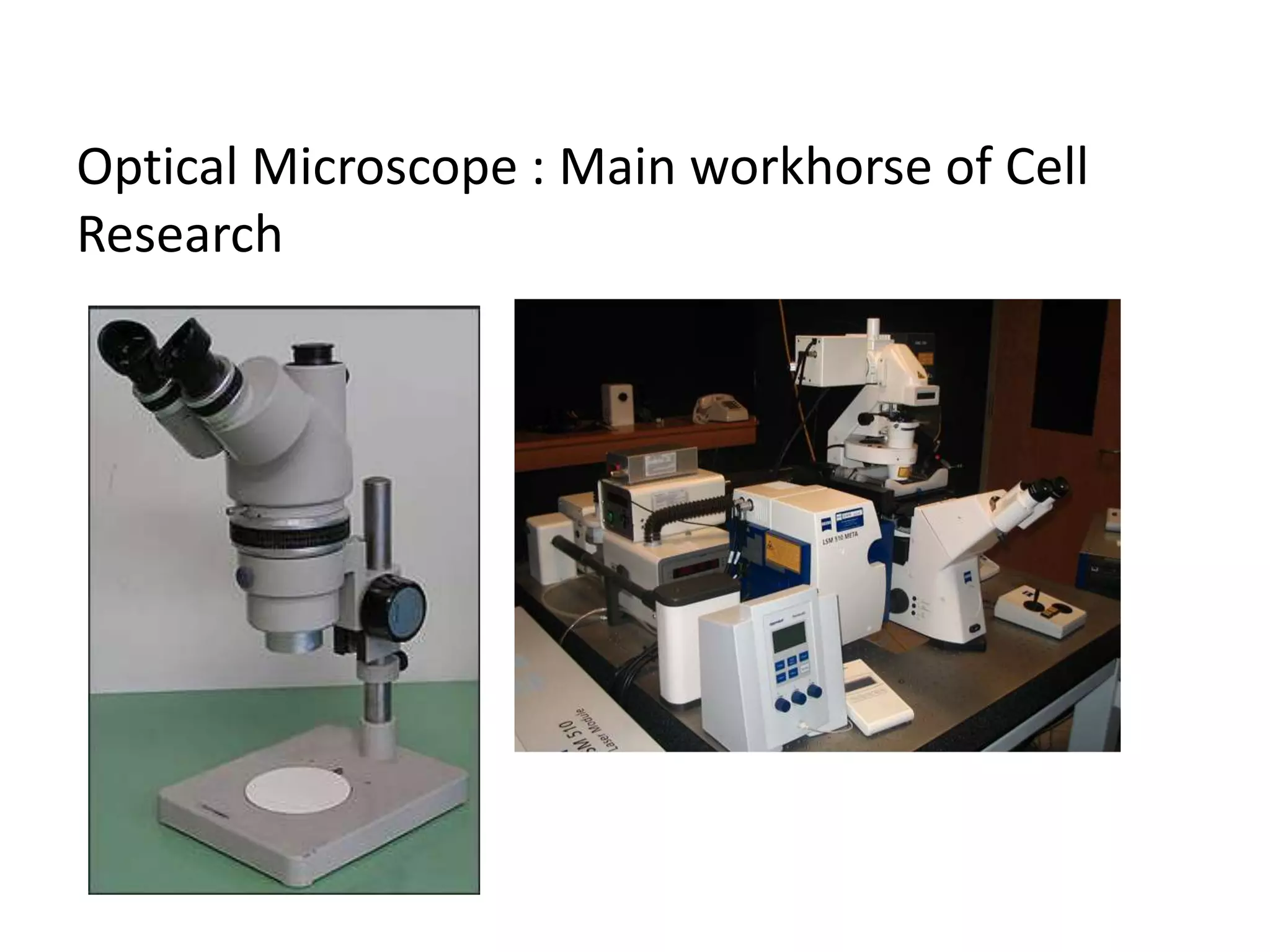
Optical Microscope : Main workhorse of Cell
Research
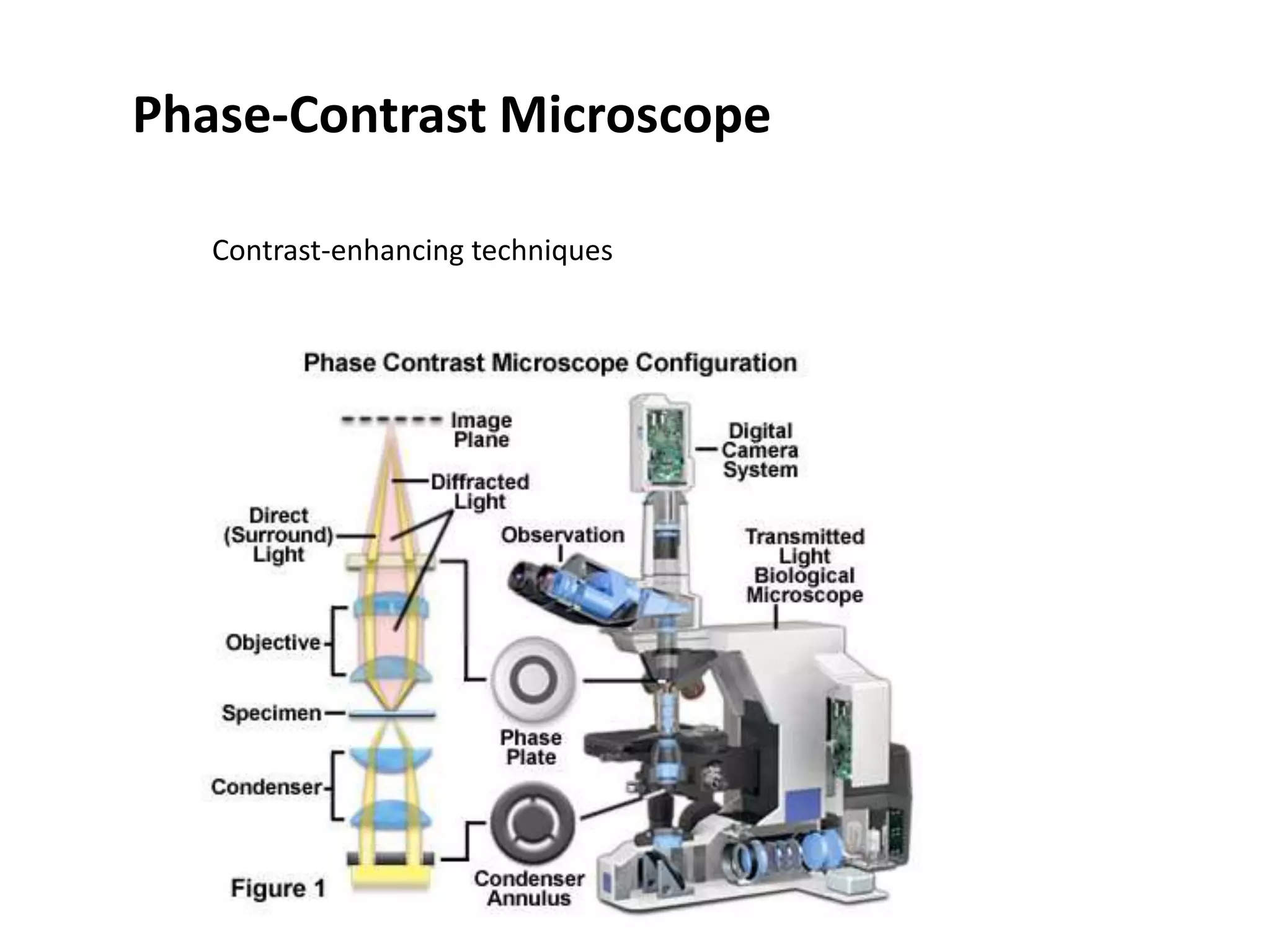
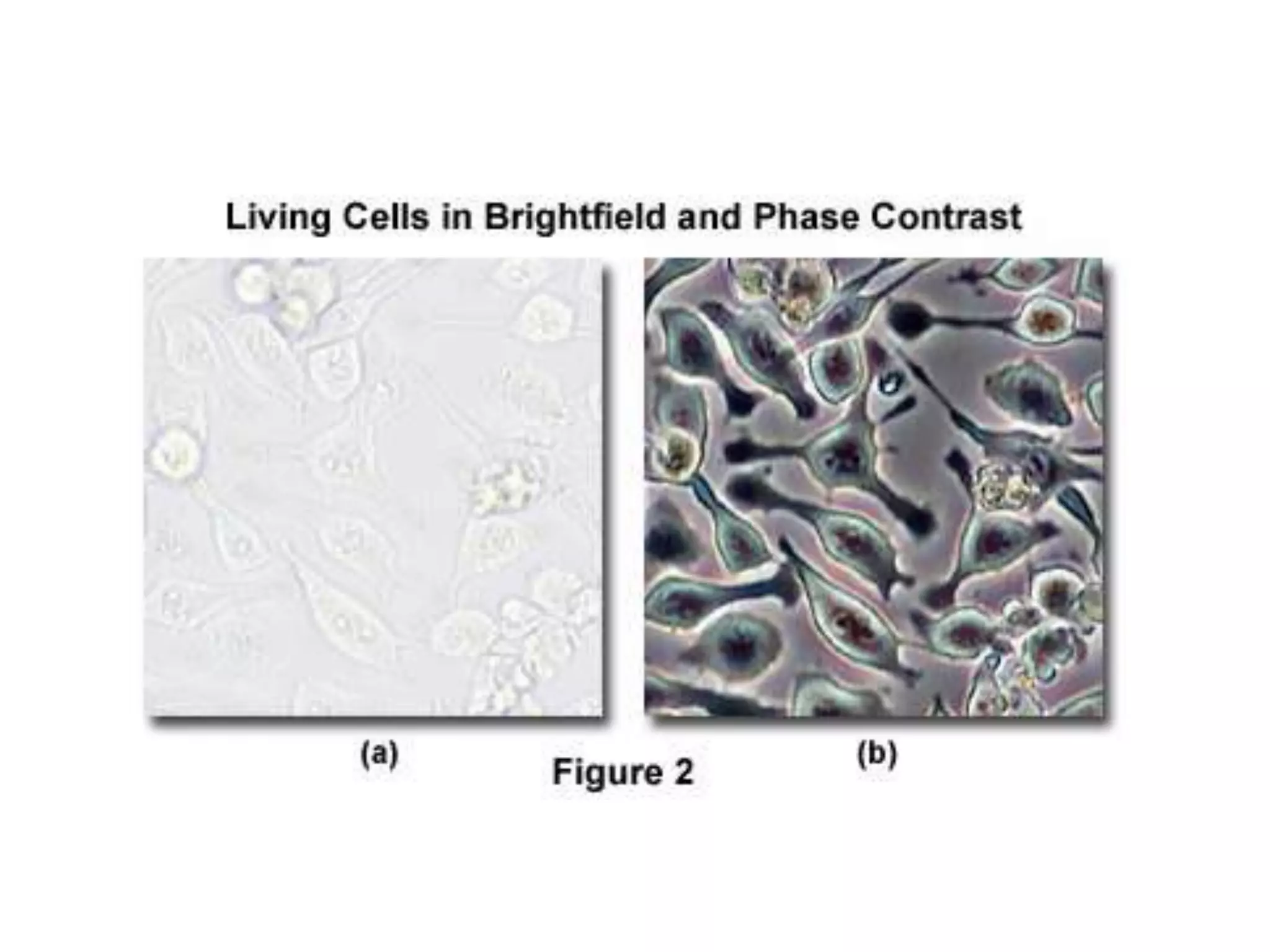
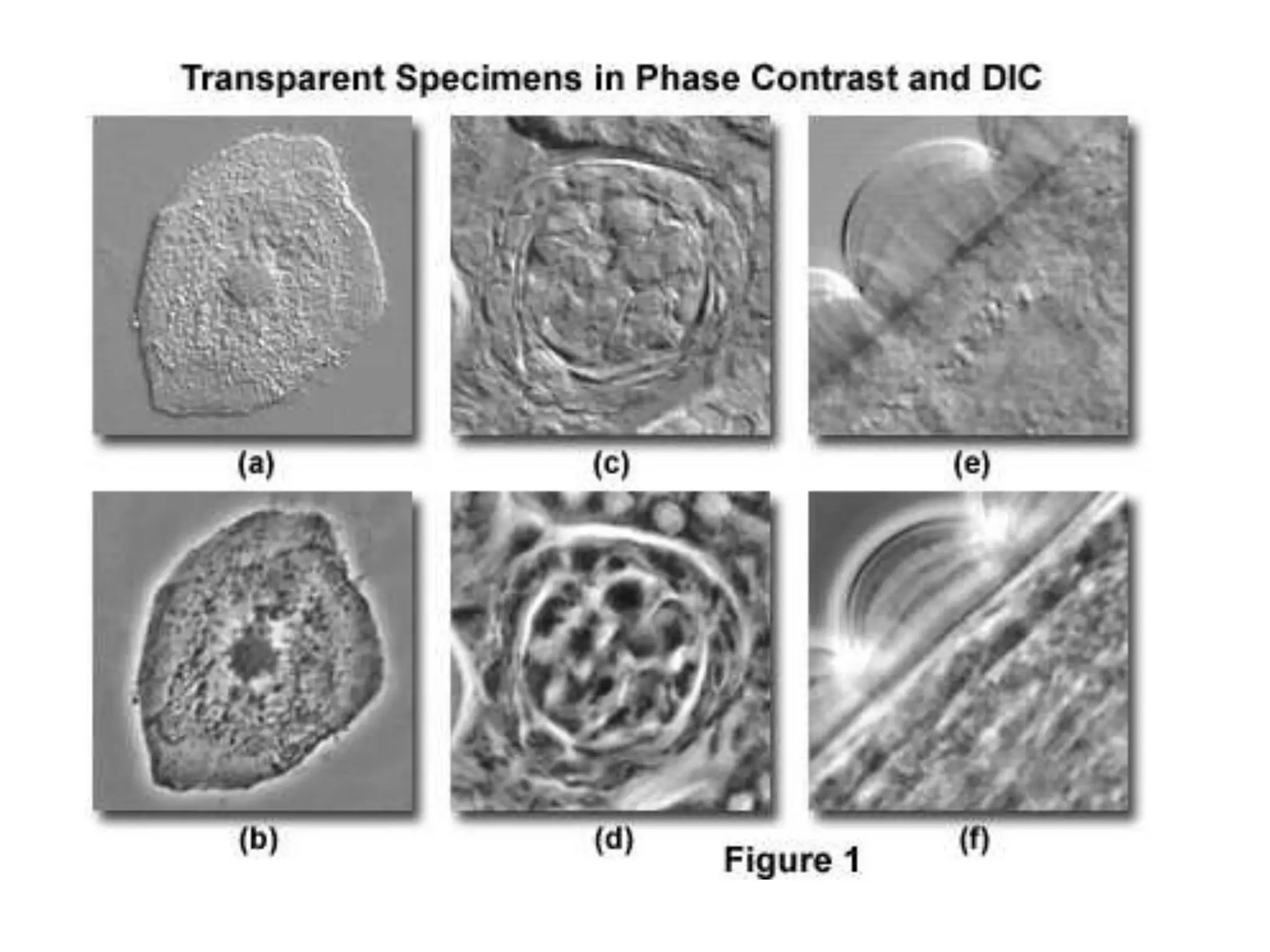
Phase-Contrast Microscope
Contrast-enhancing techniques
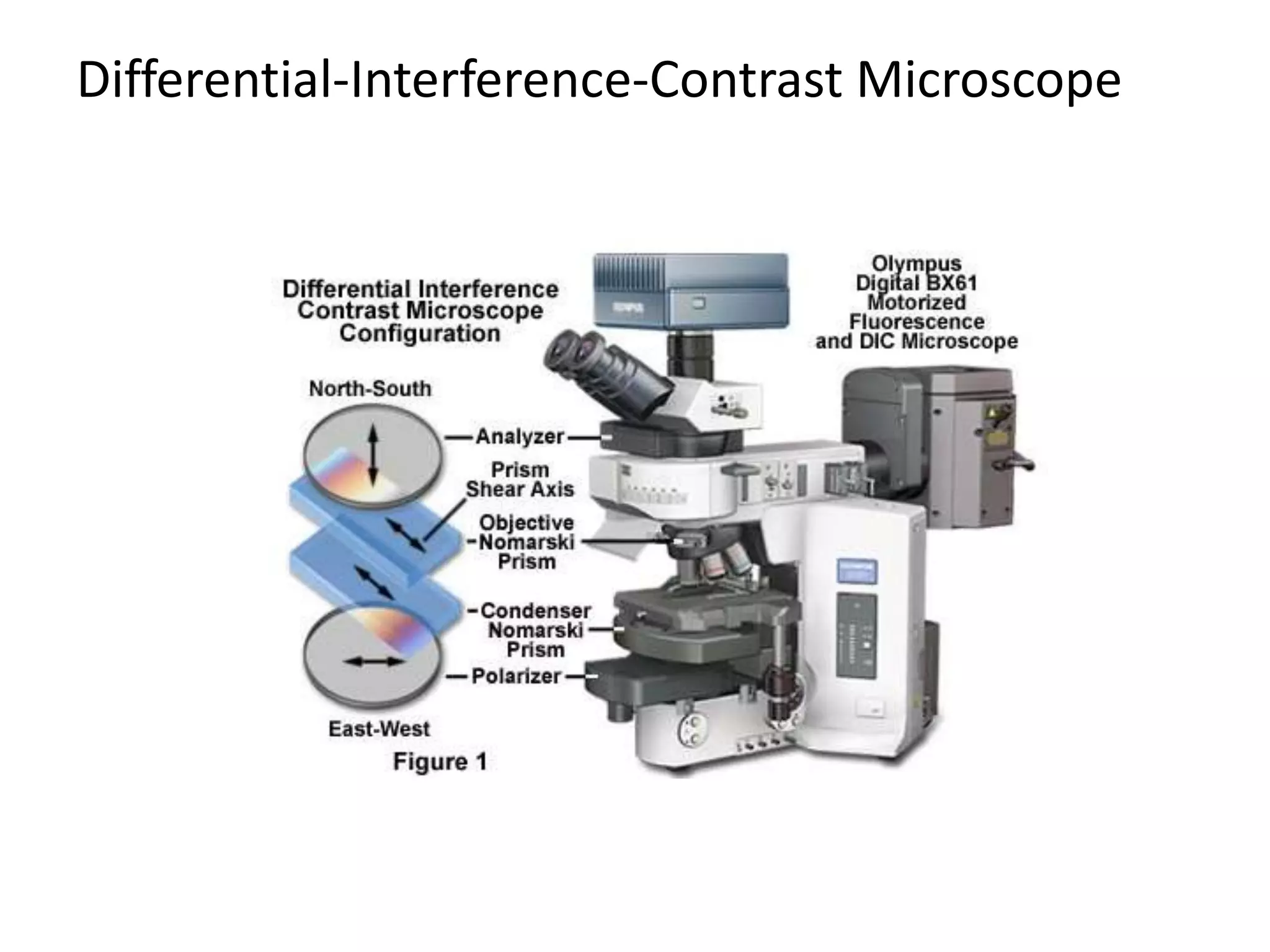
Differential-Interference-Contrast Microscope
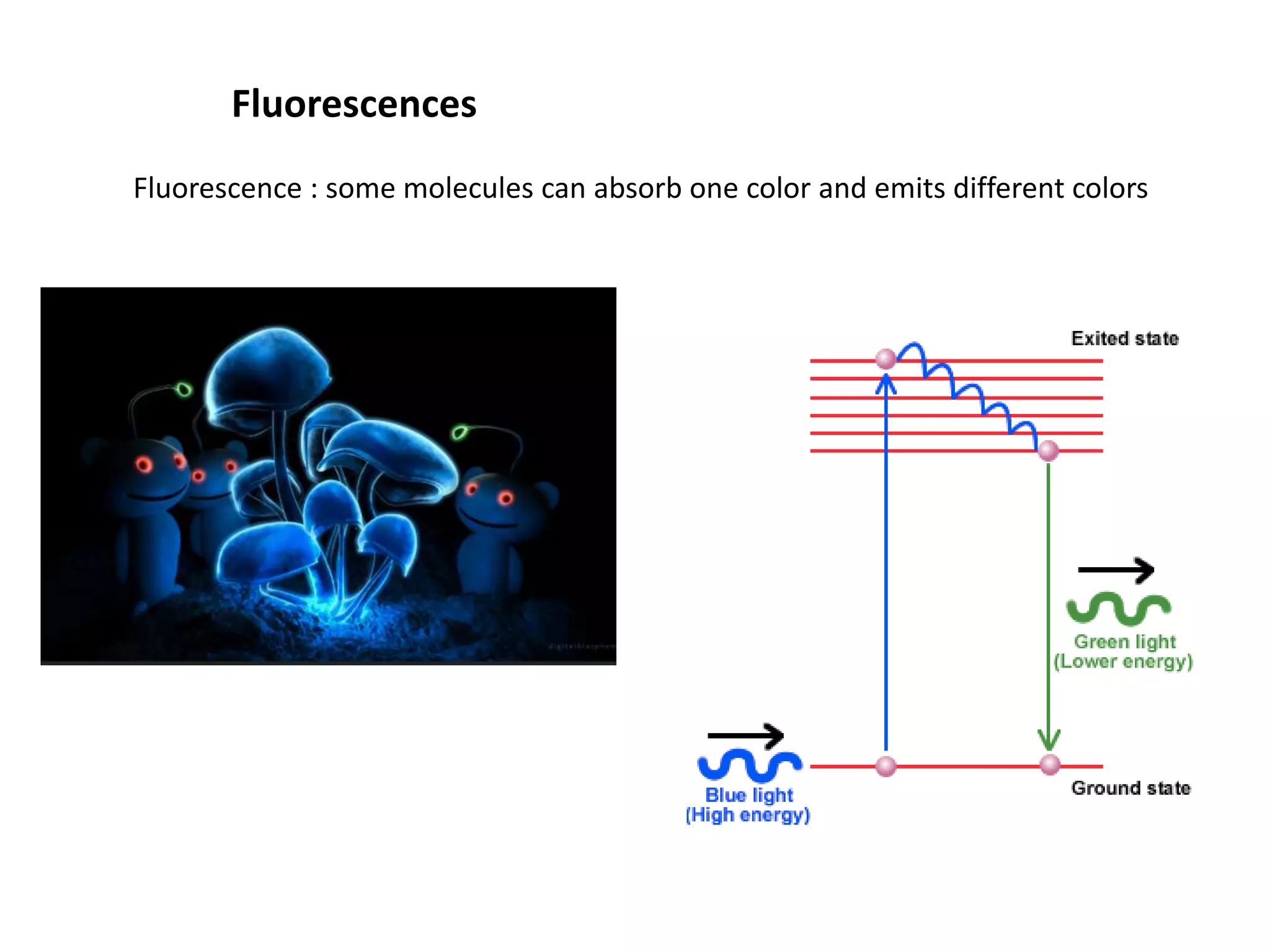
Fluorescences
Fluorescence : some molecules can absorb one color and emits different colors
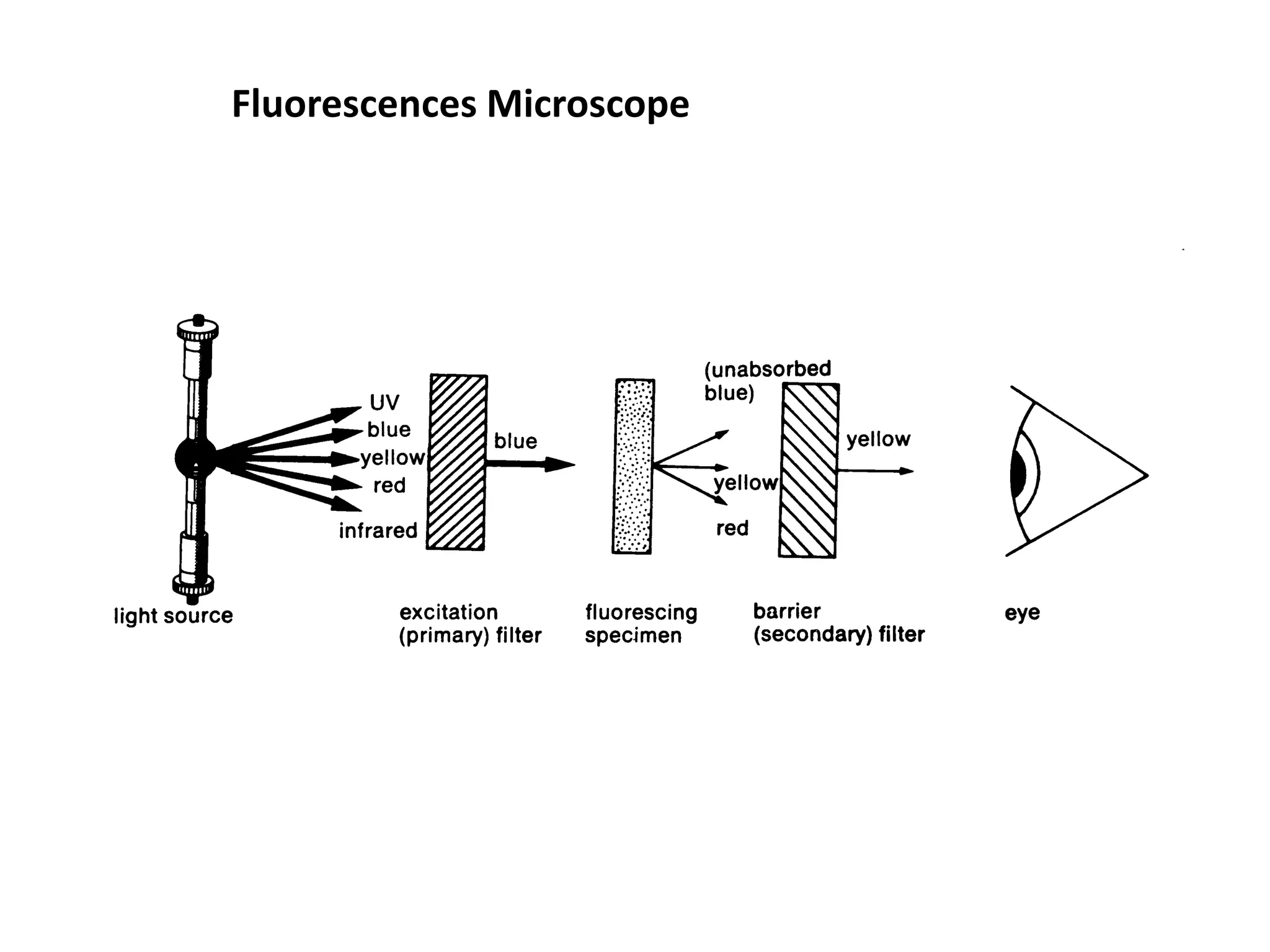
Fluorescences Microscope
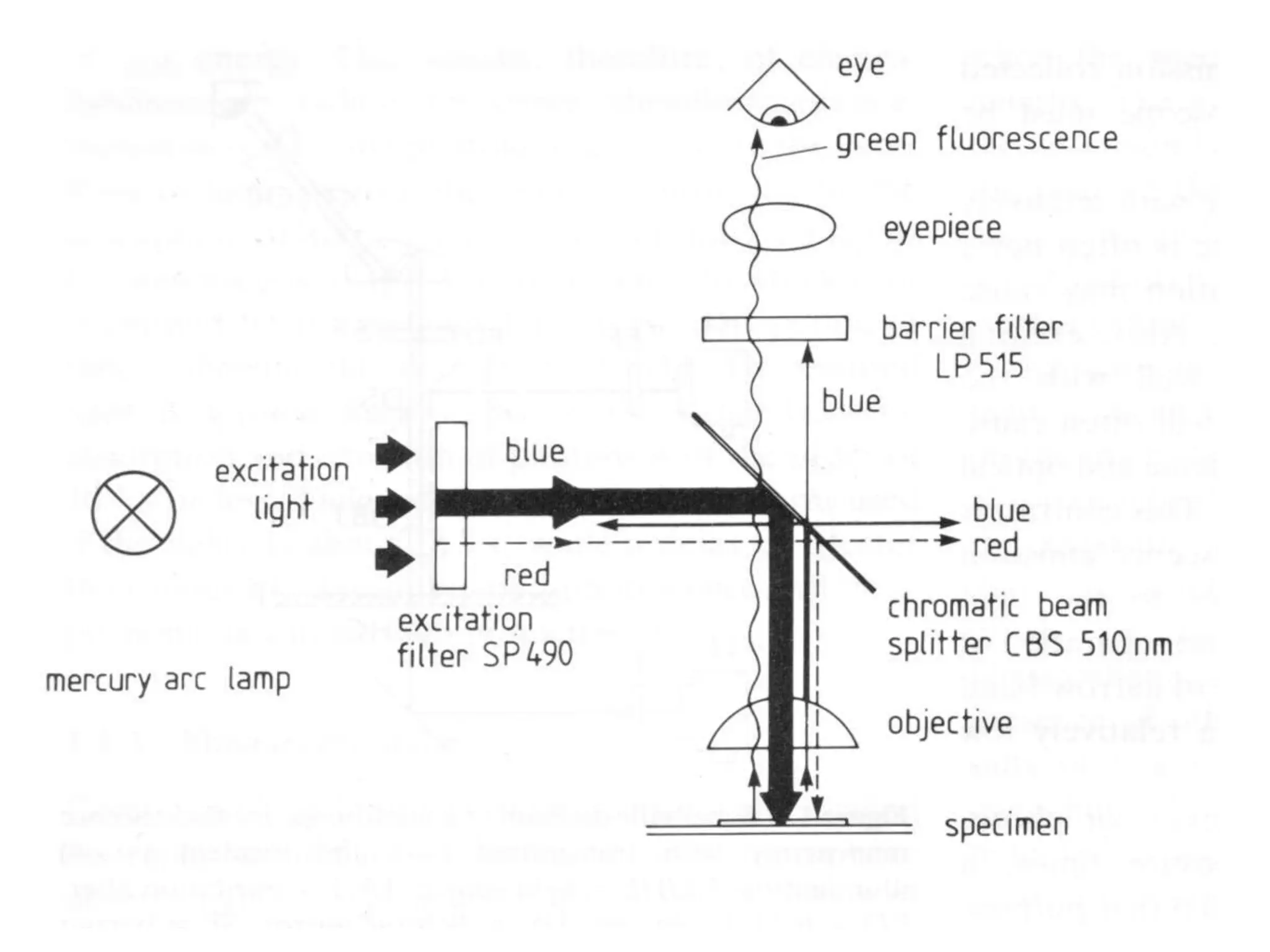
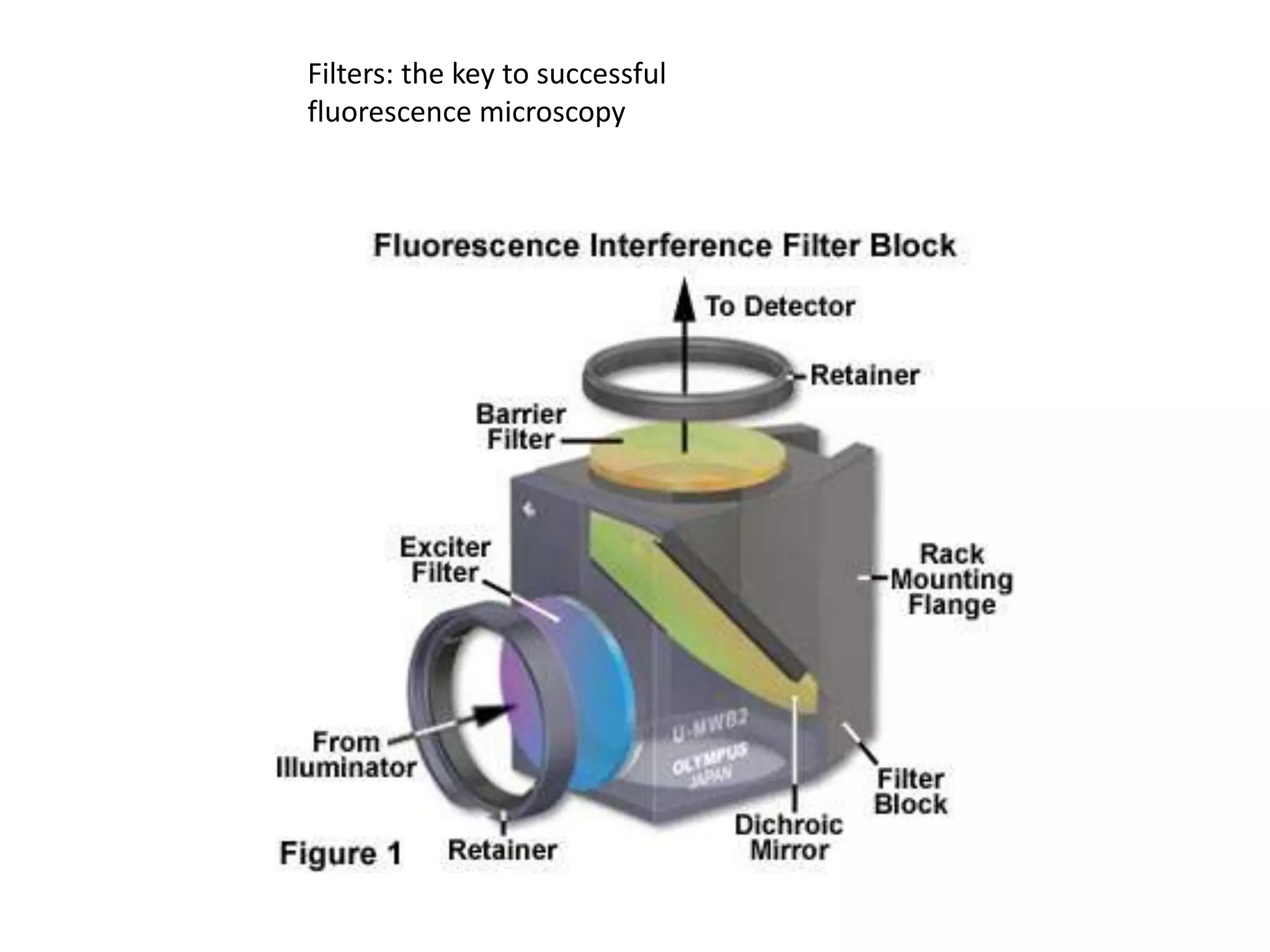
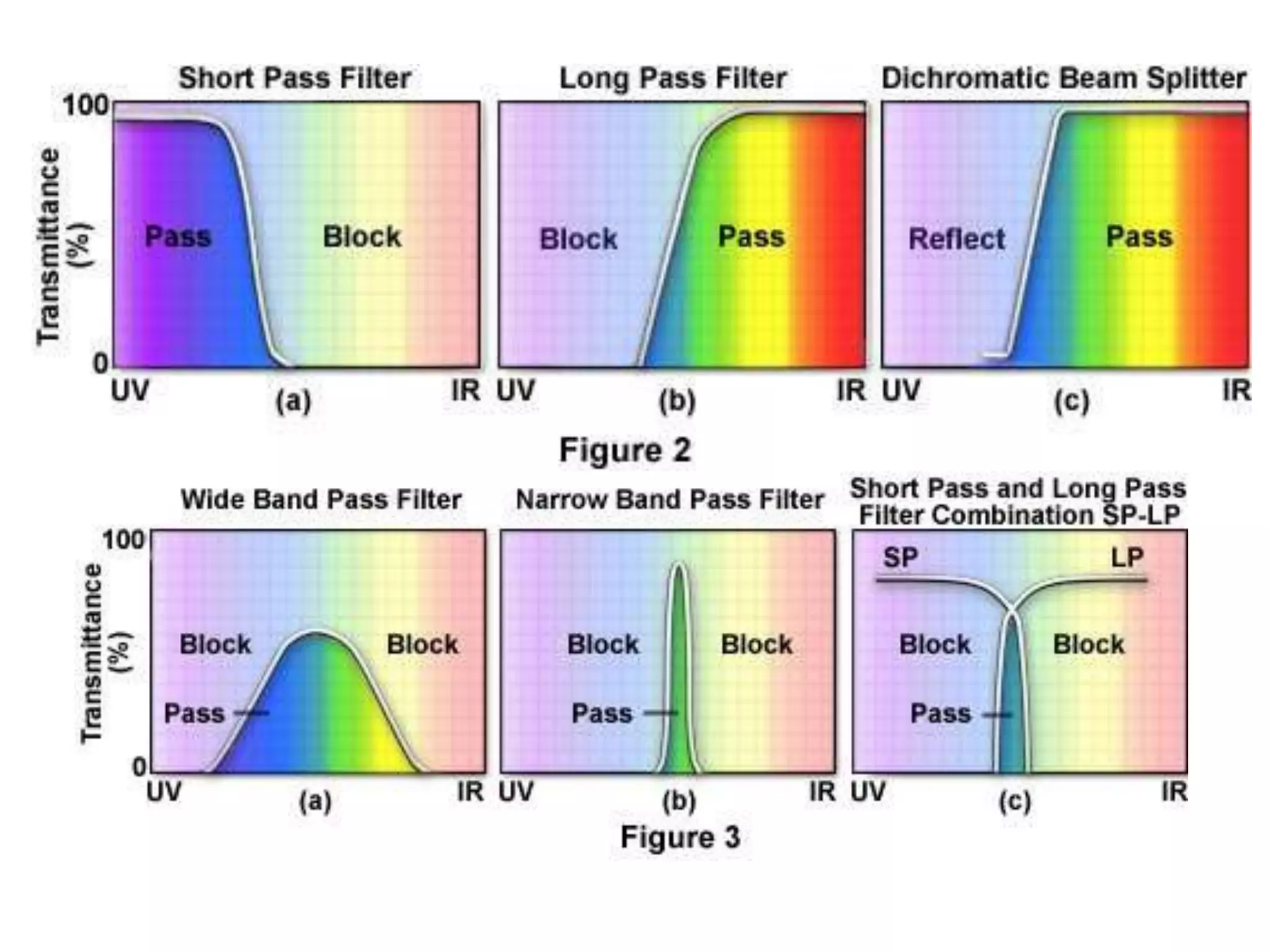
Filters: the key to successful
fluorescence microscopy
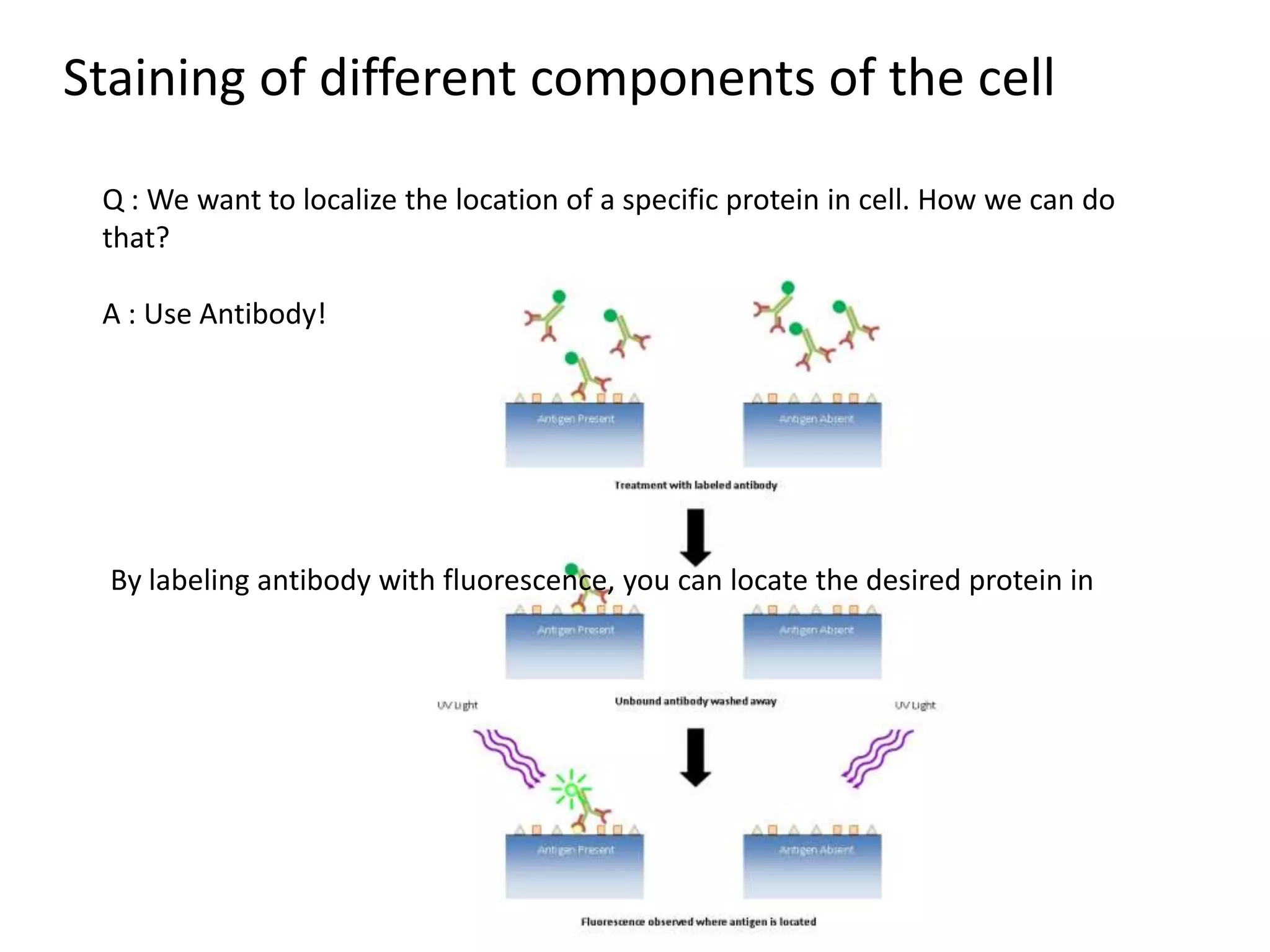
Staining of different components of the cell
Q : We want to localize the location of a specific protein in cell. How we can do
that?
A : Use Antibody!
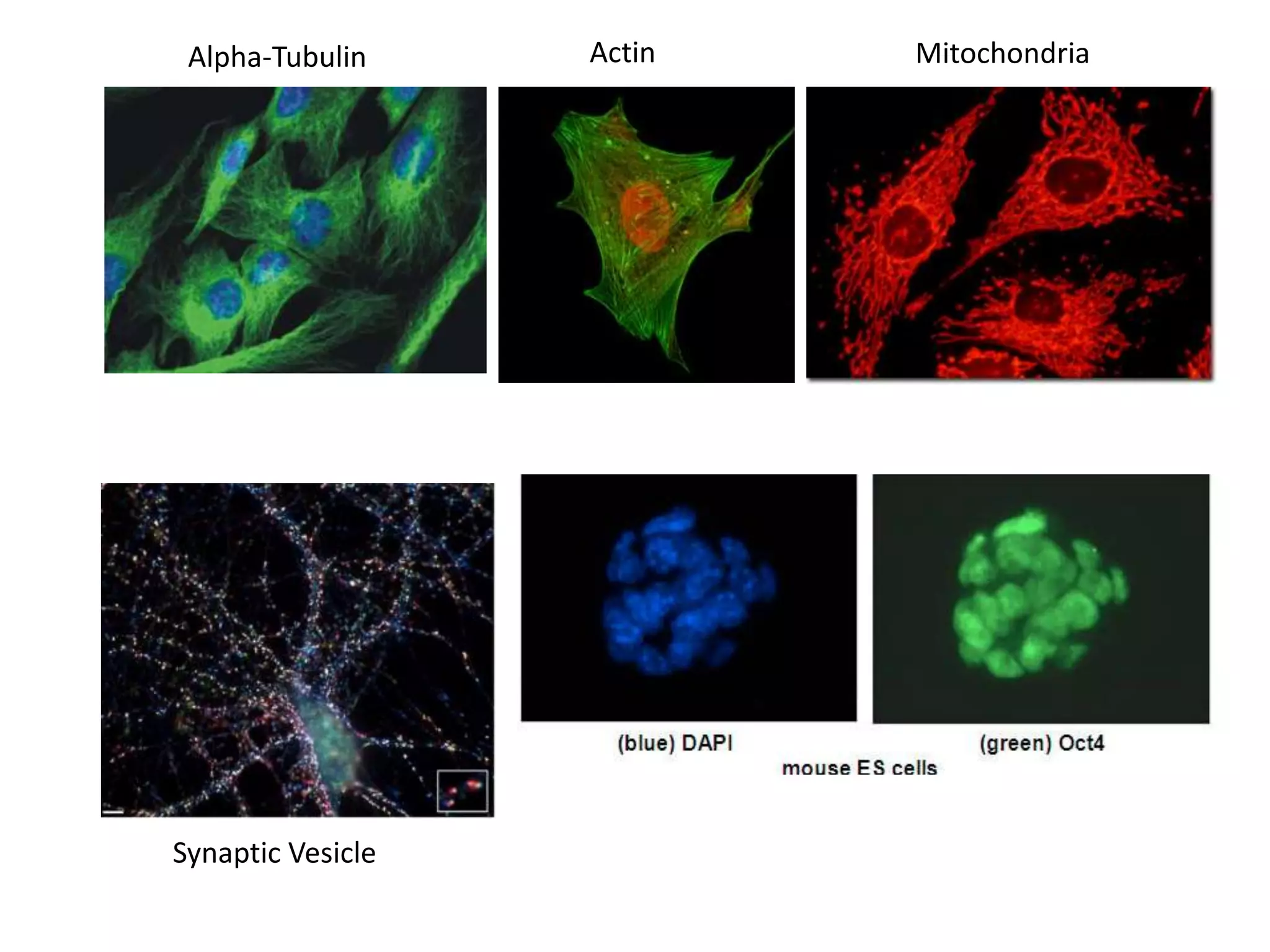
By labeling antibody with fluorescence, you can locate the desired protein in
Alpha-Tubulin Actin Mitochondria
Synaptic Vesicle
Immunofluorescence
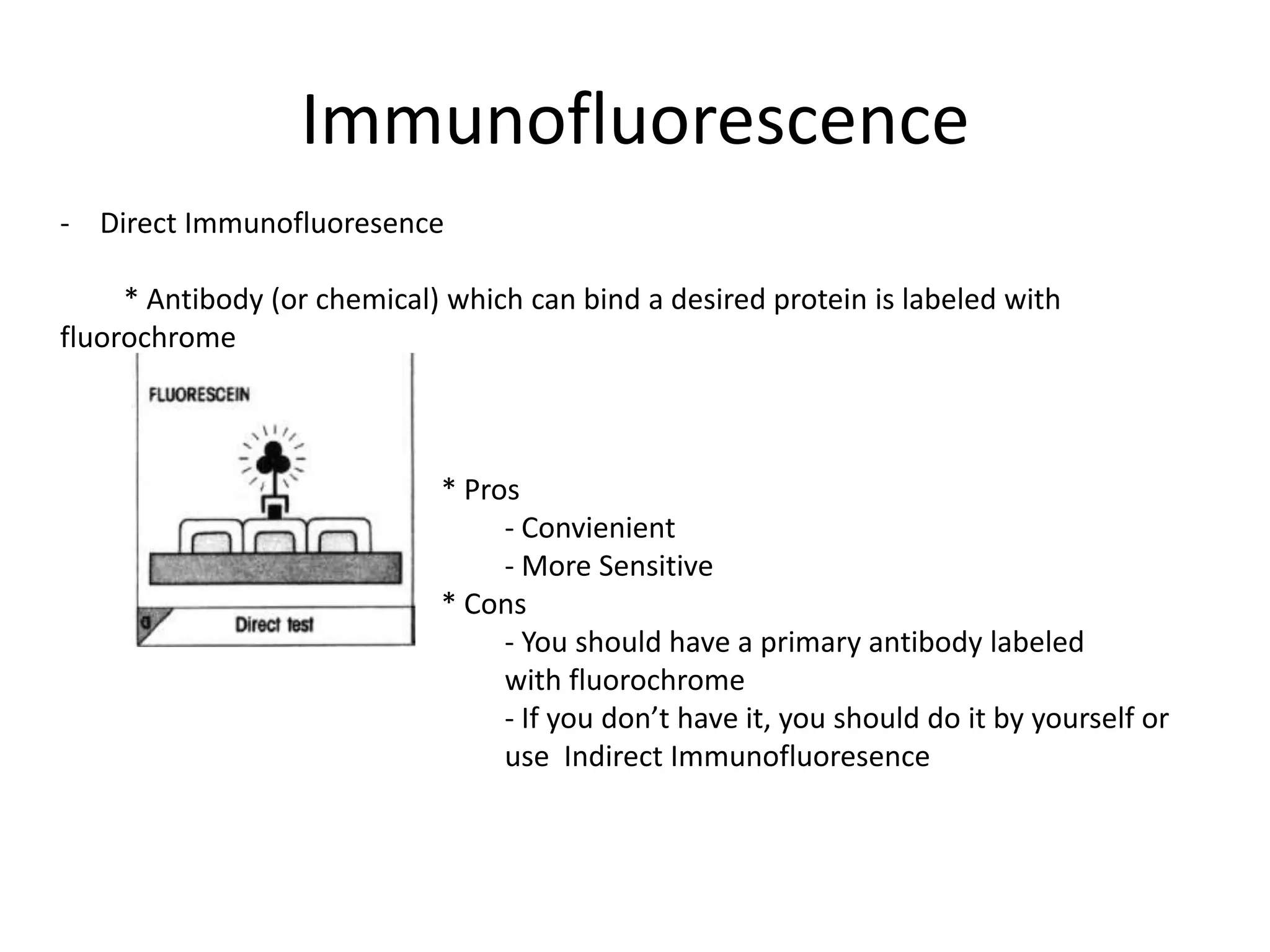
- Direct Immunofluoresence
* Antibody (or chemical) which can bind a desired protein is labeled with
fluorochrome
* Pros
- Convienient
- More Sensitive
* Cons
- You should have a primary antibody labeled
with fluorochrome
- If you don’t have it, you should do it by yourself or
use Indirect Immunofluoresence
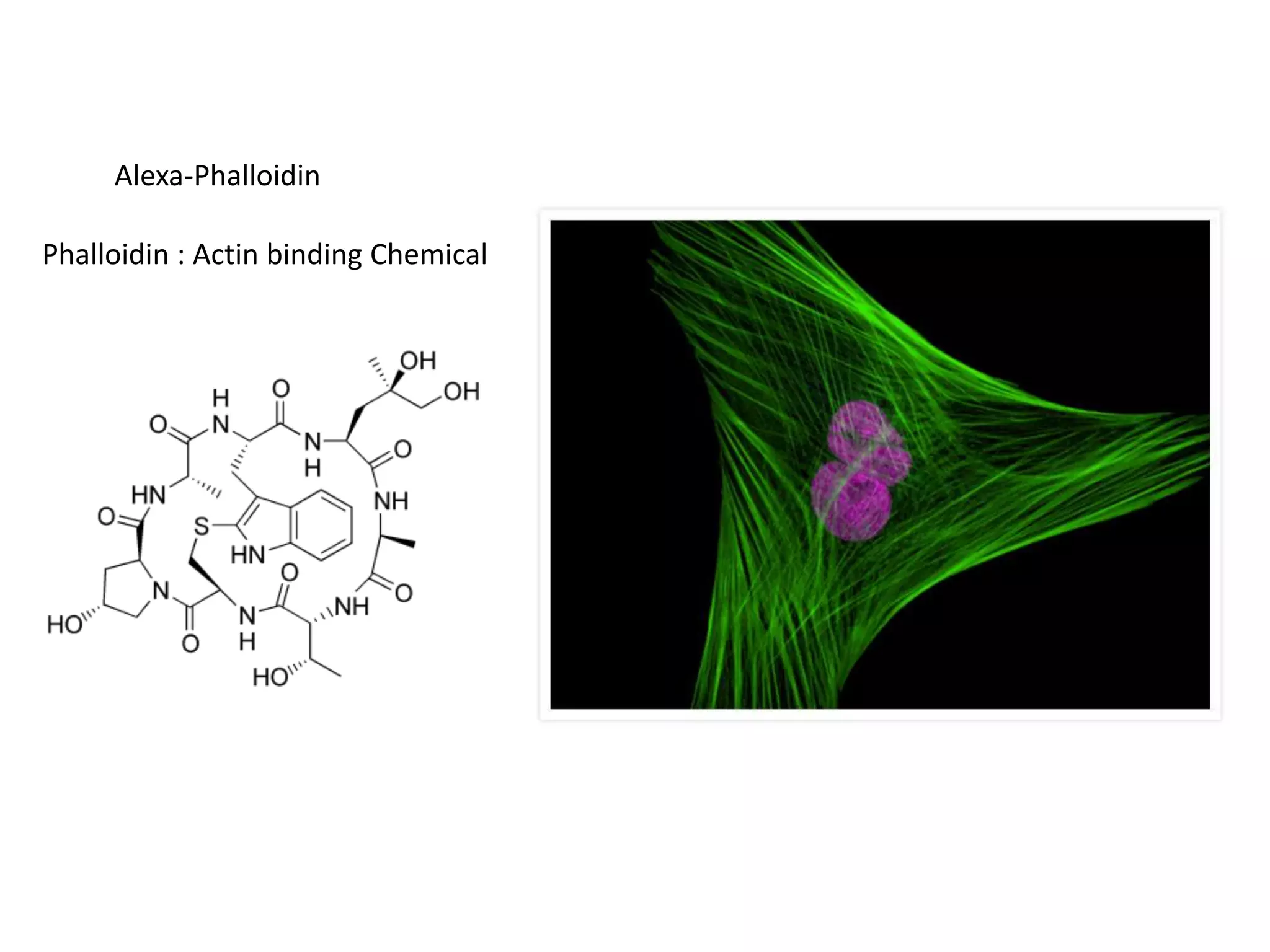
Alexa-Phalloidin
Phalloidin : Actin binding Chemical
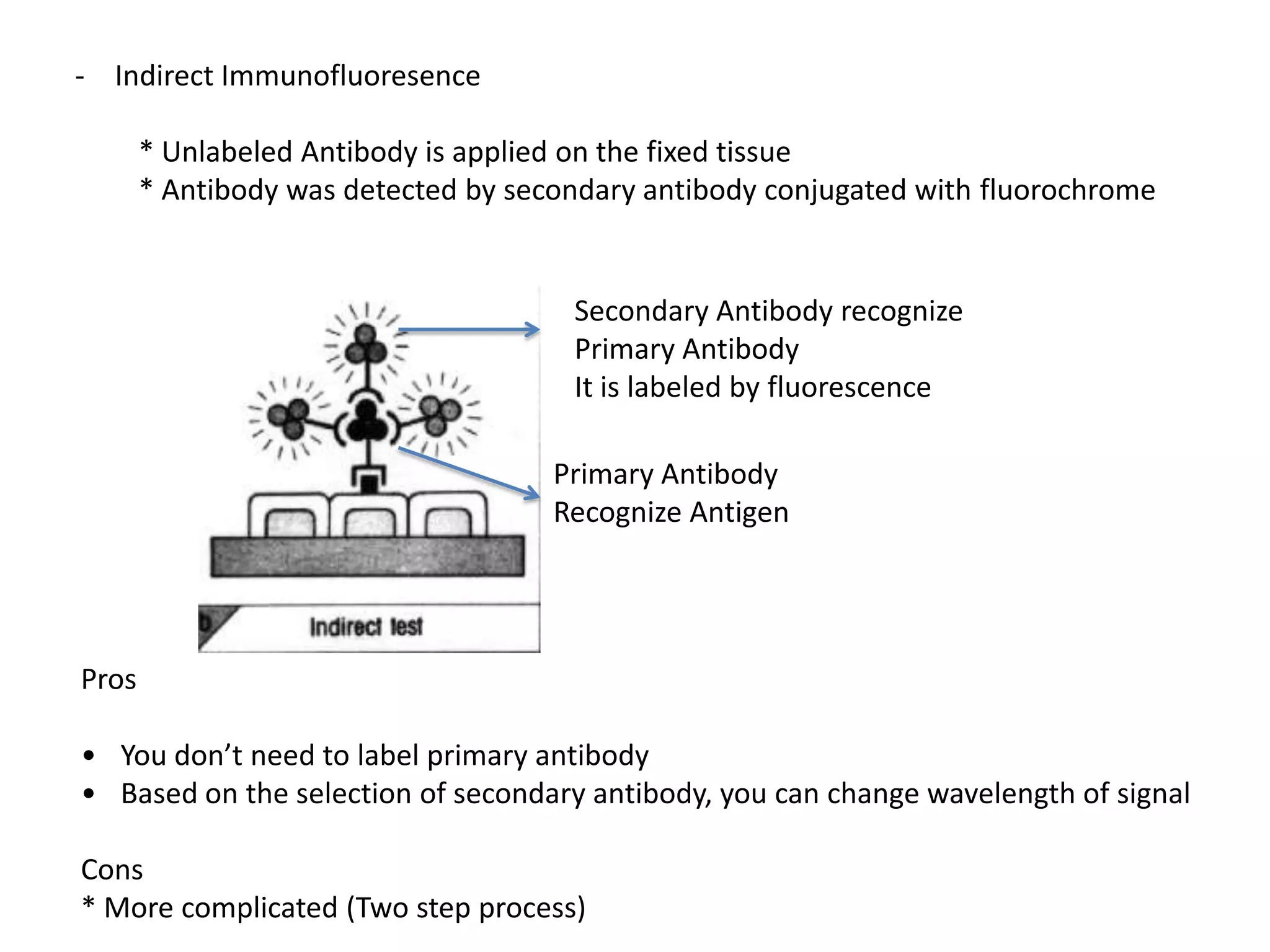
- Indirect Immunofluoresence
* Unlabeled Antibody is applied on the fixed tissue
* Antibody was detected by secondary antibody conjugated with fluorochrome
Primary Antibody
Recognize Antigen
Secondary Antibody recognize
Primary Antibody
It is labeled by fluorescence
Pros
• You don’t need to label primary antibody
• Based on the selection of secondary antibody, you can change wavelength of signal
Cons
* More complicated (Two step process)
Fixation and Section
We need to stop the cellular process and preserve the component inside in
cell.
Crosslinking Fixation
Commonly used for luoresence microscopy
Generate covalent cross-links between intracellular components
Most commonly used agent : aldehyde
Formation of bond between amine grouop
Glutaraldehyde
formaldehyde
- Precipitating Fixatives :
Disctrupt hydrophobic interaction Denature proteins
Methanol, Ethanol, Acetic Acid
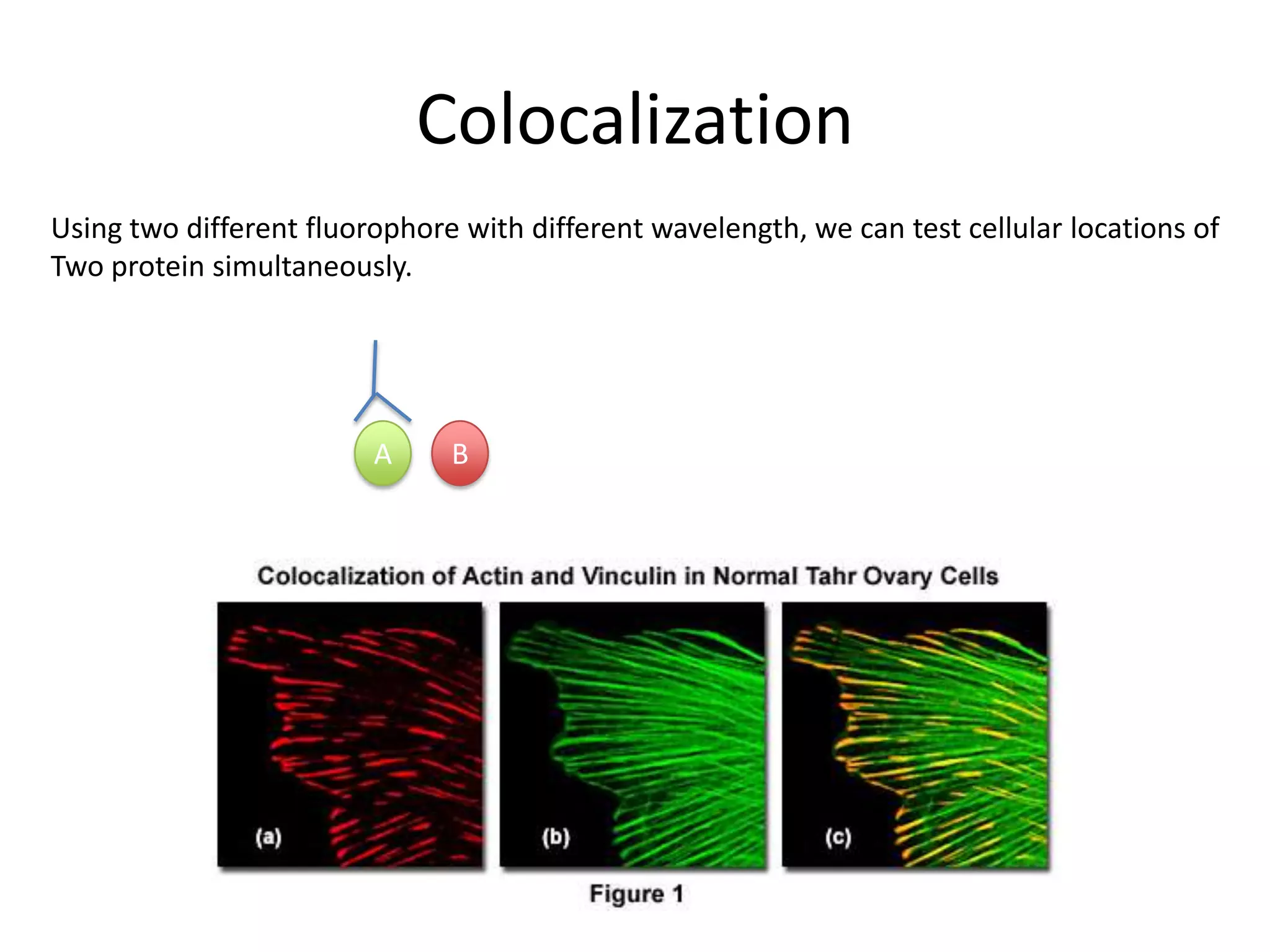
Colocalization
Using two different fluorophore with different wavelength, we can test cellular locations of
Two protein simultaneously.
A B
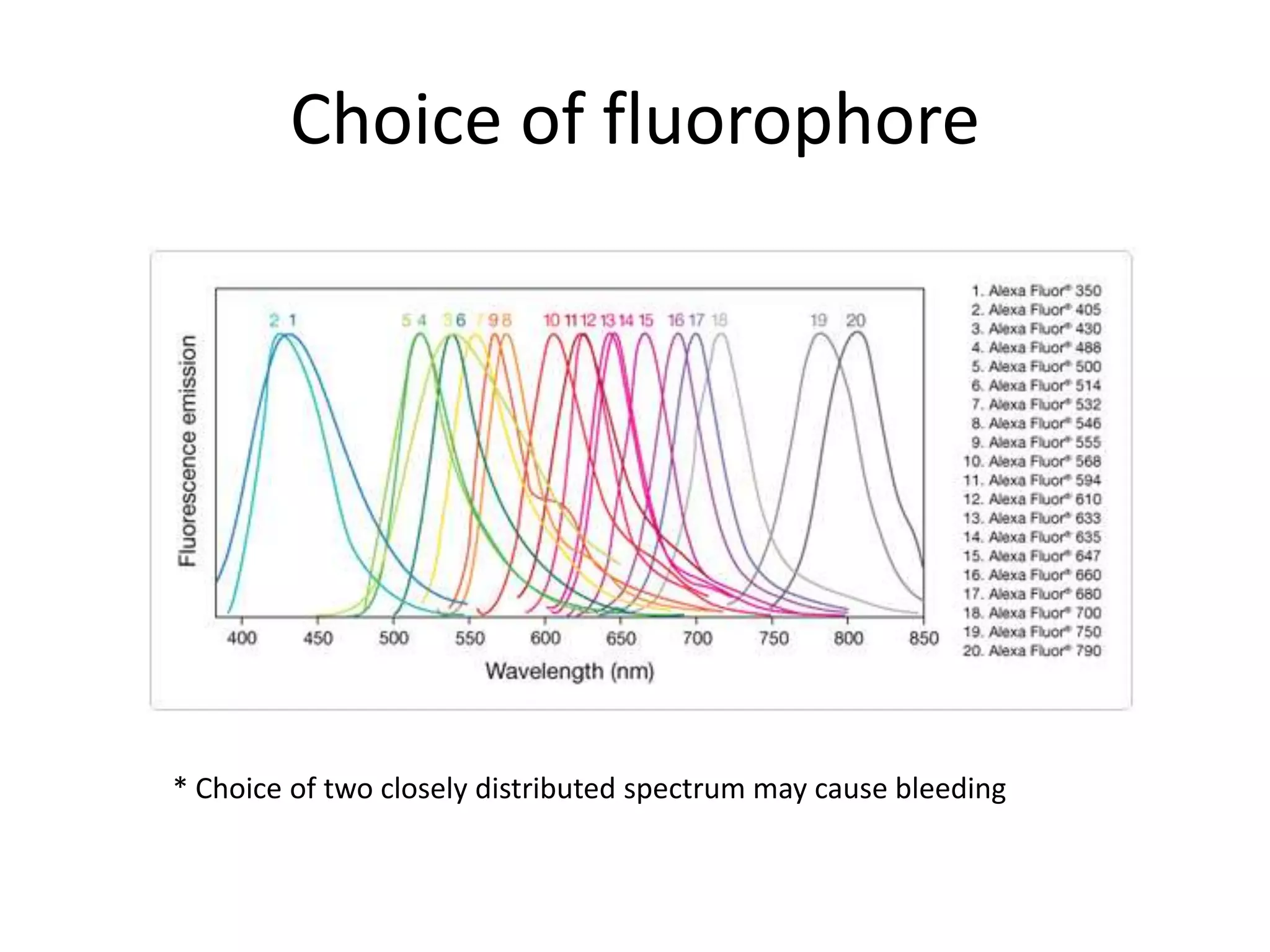
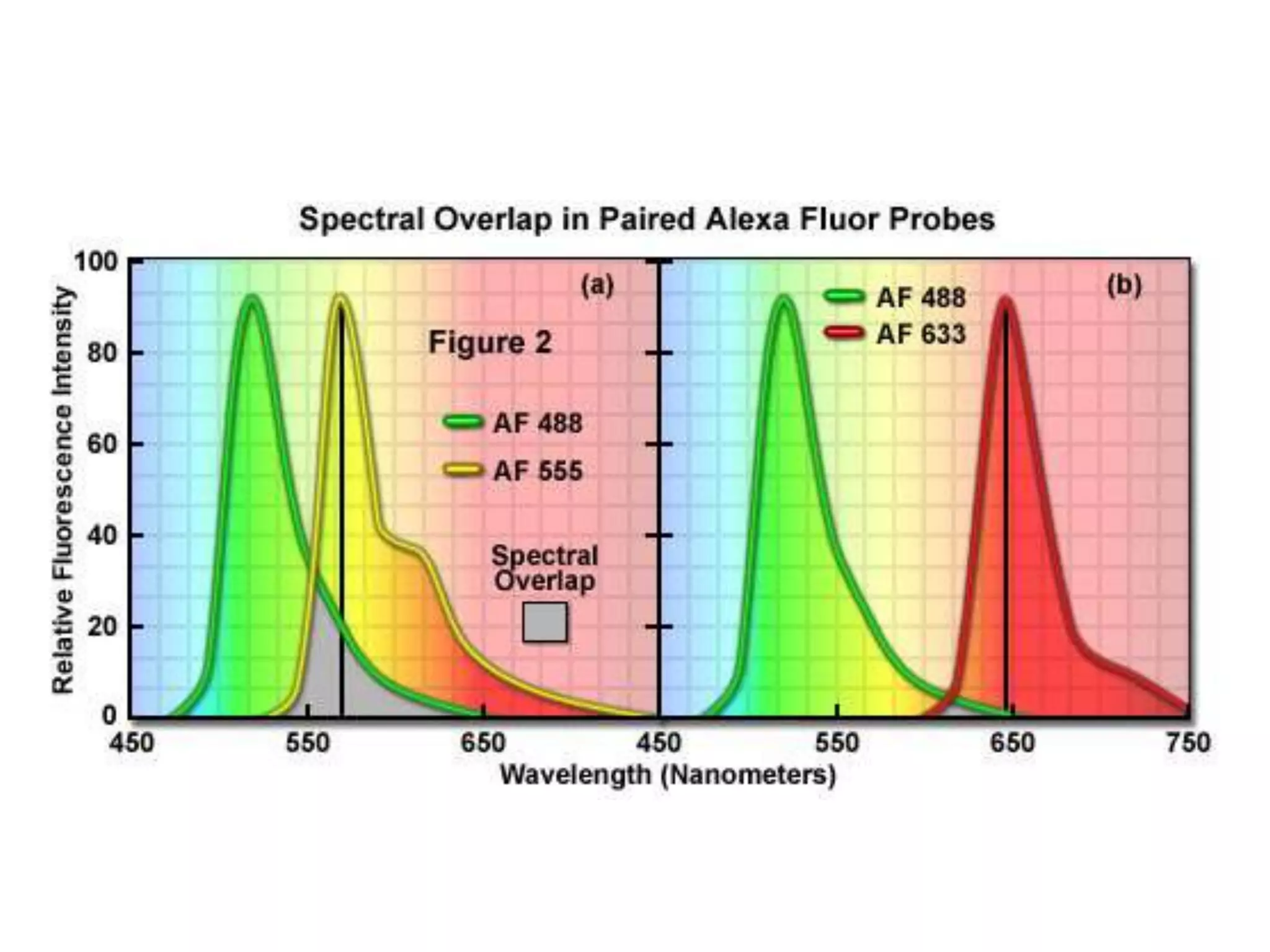
Choice of fluorophore
* Choice of two closely distributed spectrum may cause bleeding
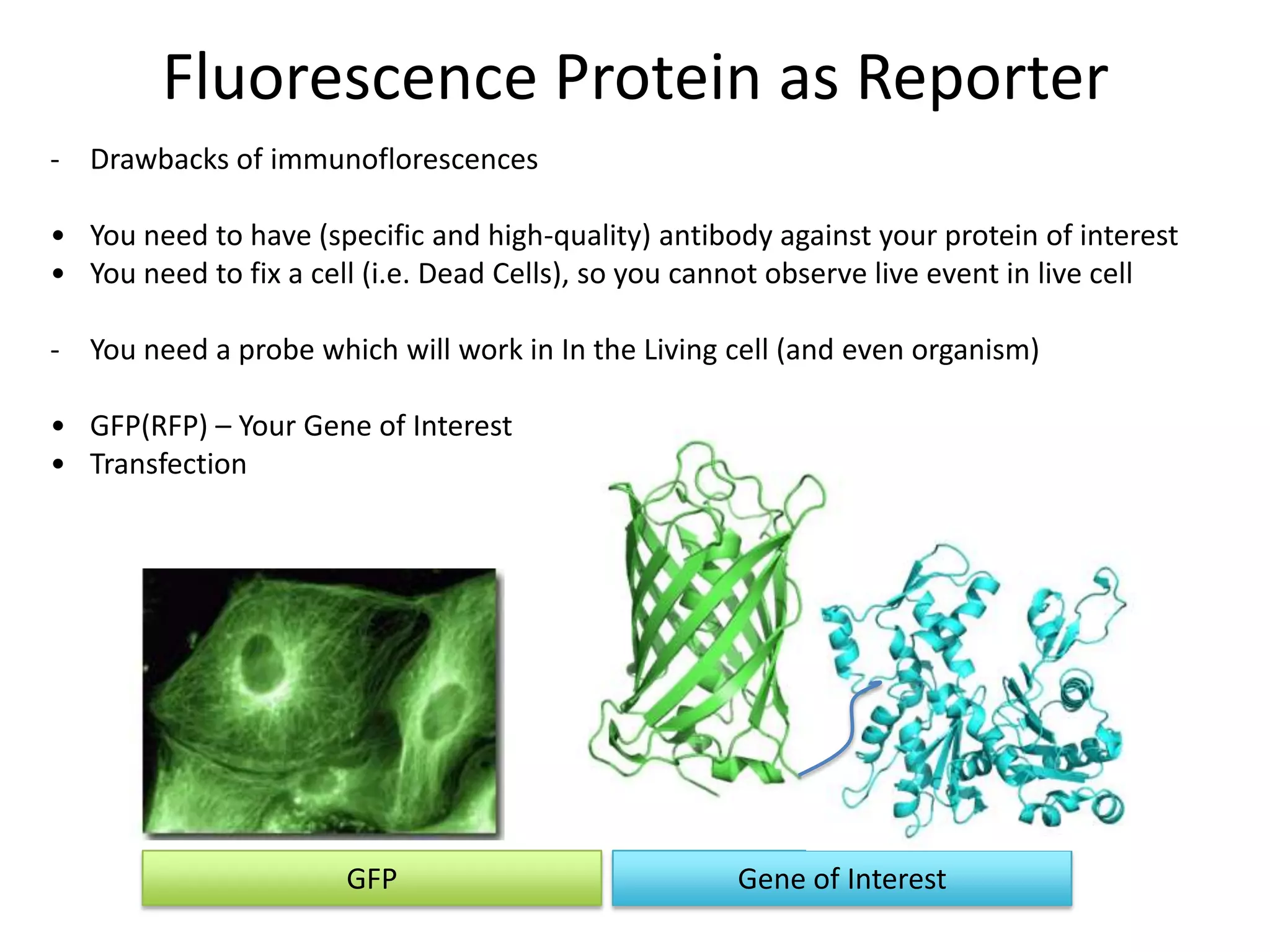
Fluorescence Protein as Reporter
GFP Gene of Interest
- Drawbacks of immunoflorescences
• You need to have (specific and high-quality) antibody against your protein of interest
• You need to fix a cell (i.e. Dead Cells), so you cannot observe live event in live cell
- You need a probe which will work in In the Living cell (and even organism)
• GFP(RFP) – Your Gene of Interest
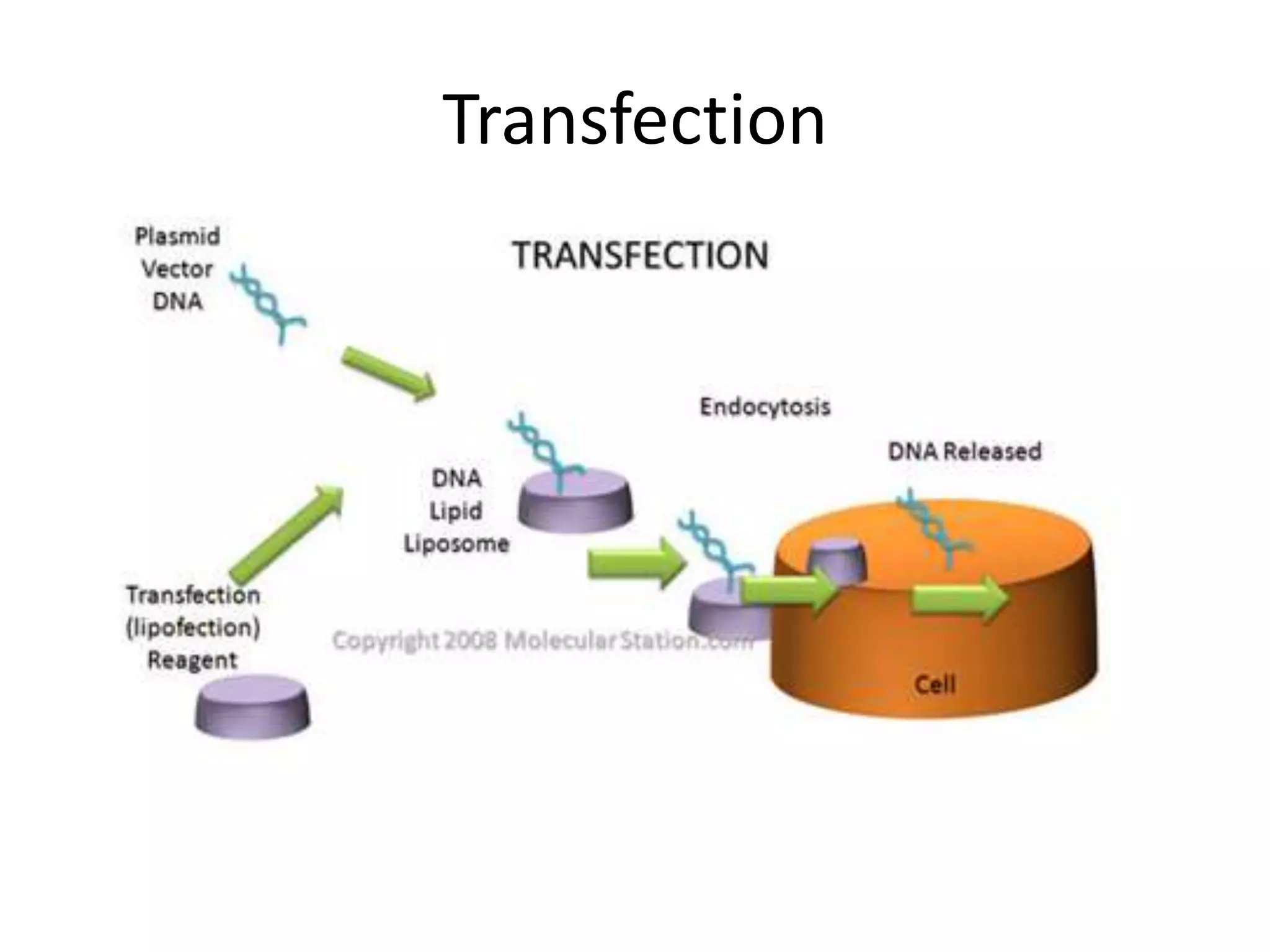
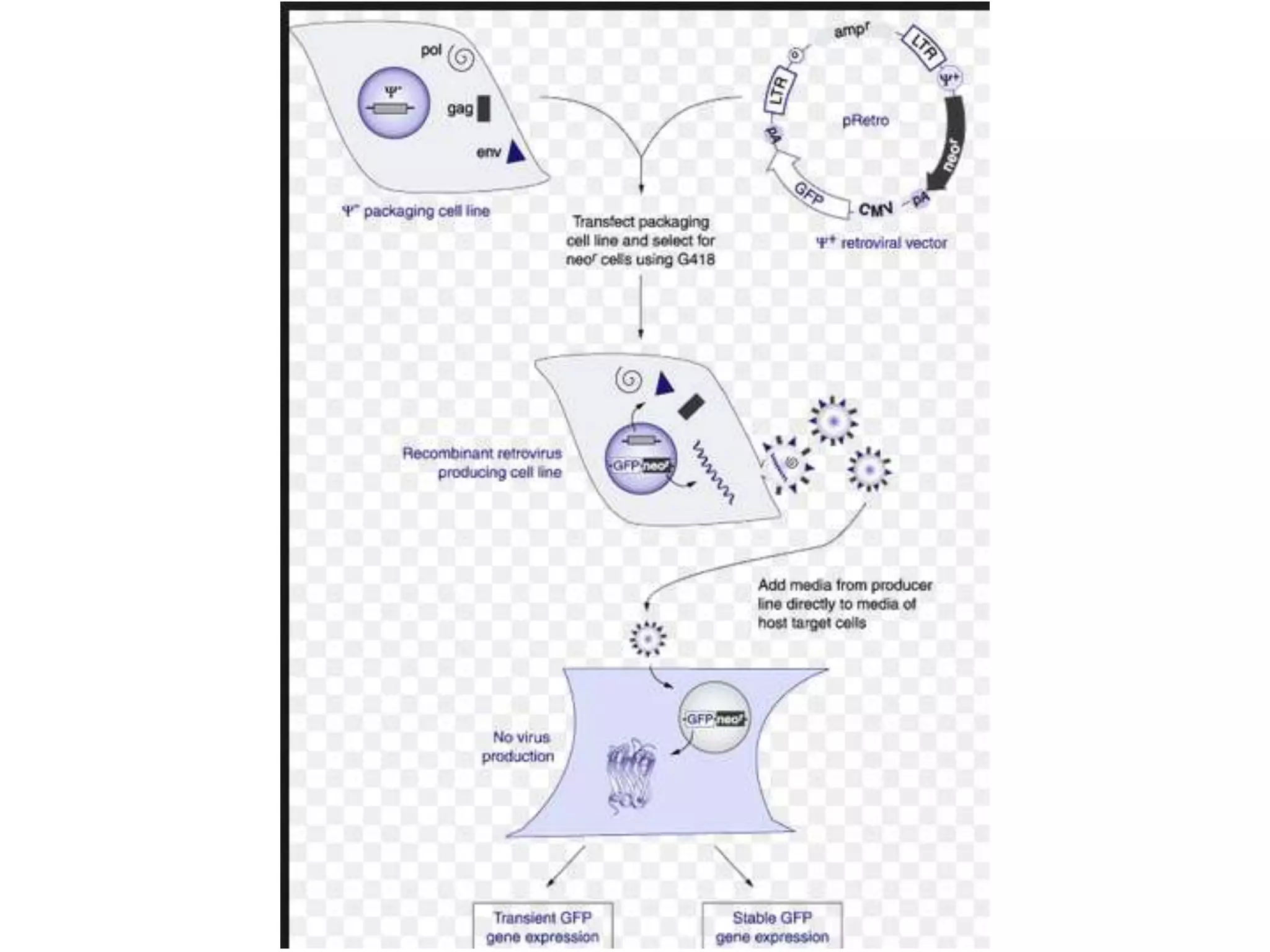
• Transfection
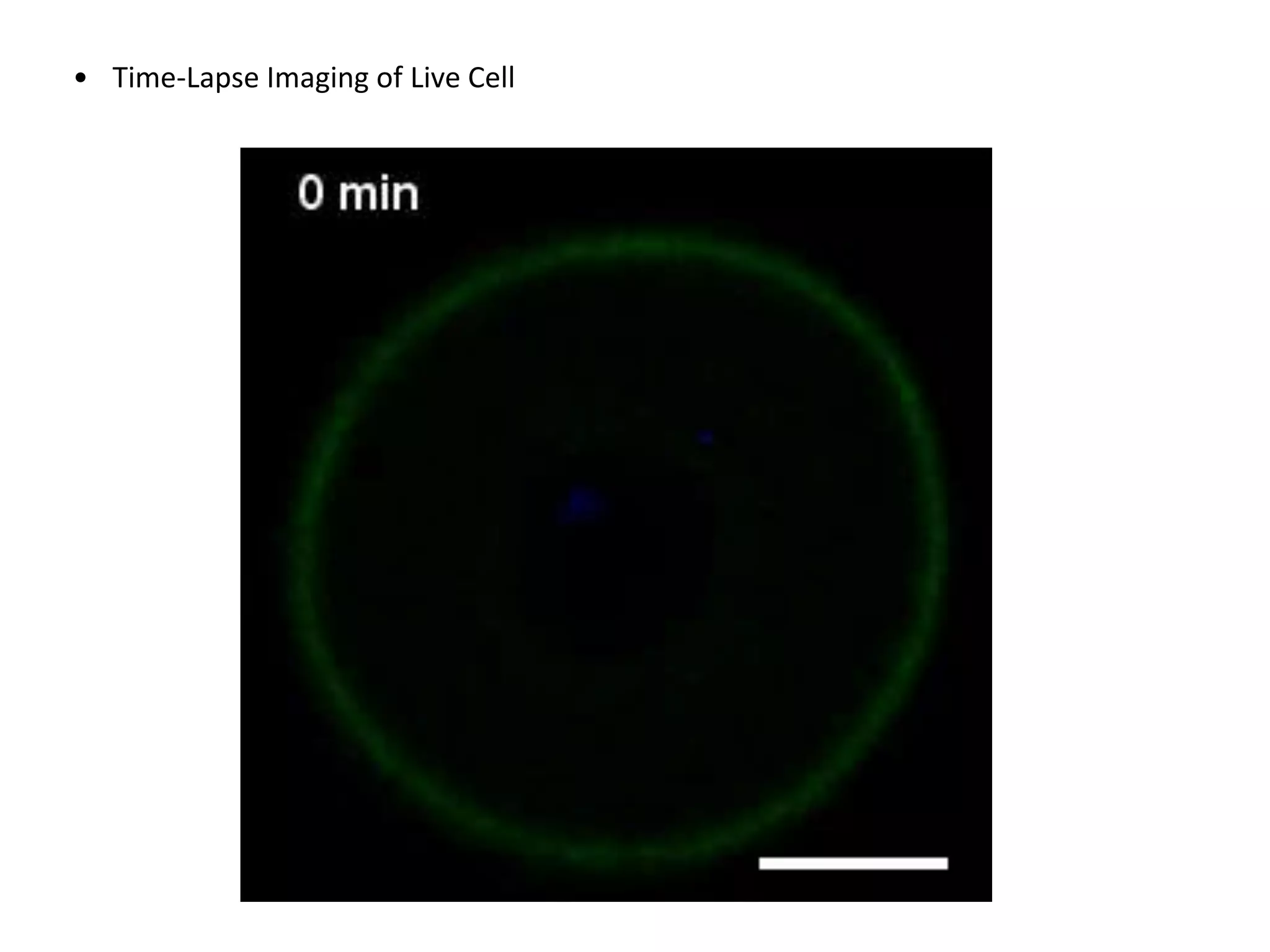
• Time-Lapse Imaging of Live Cell
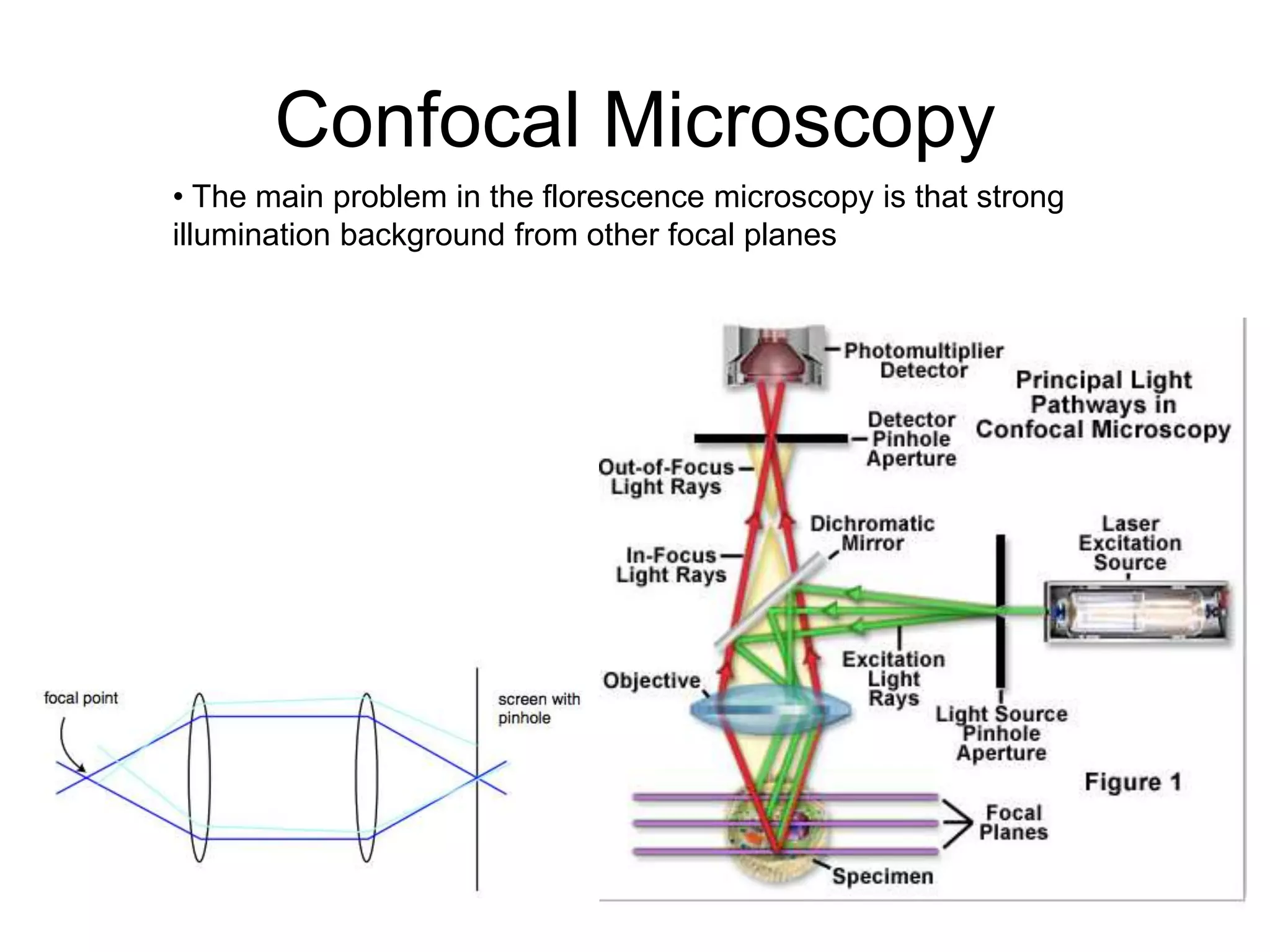
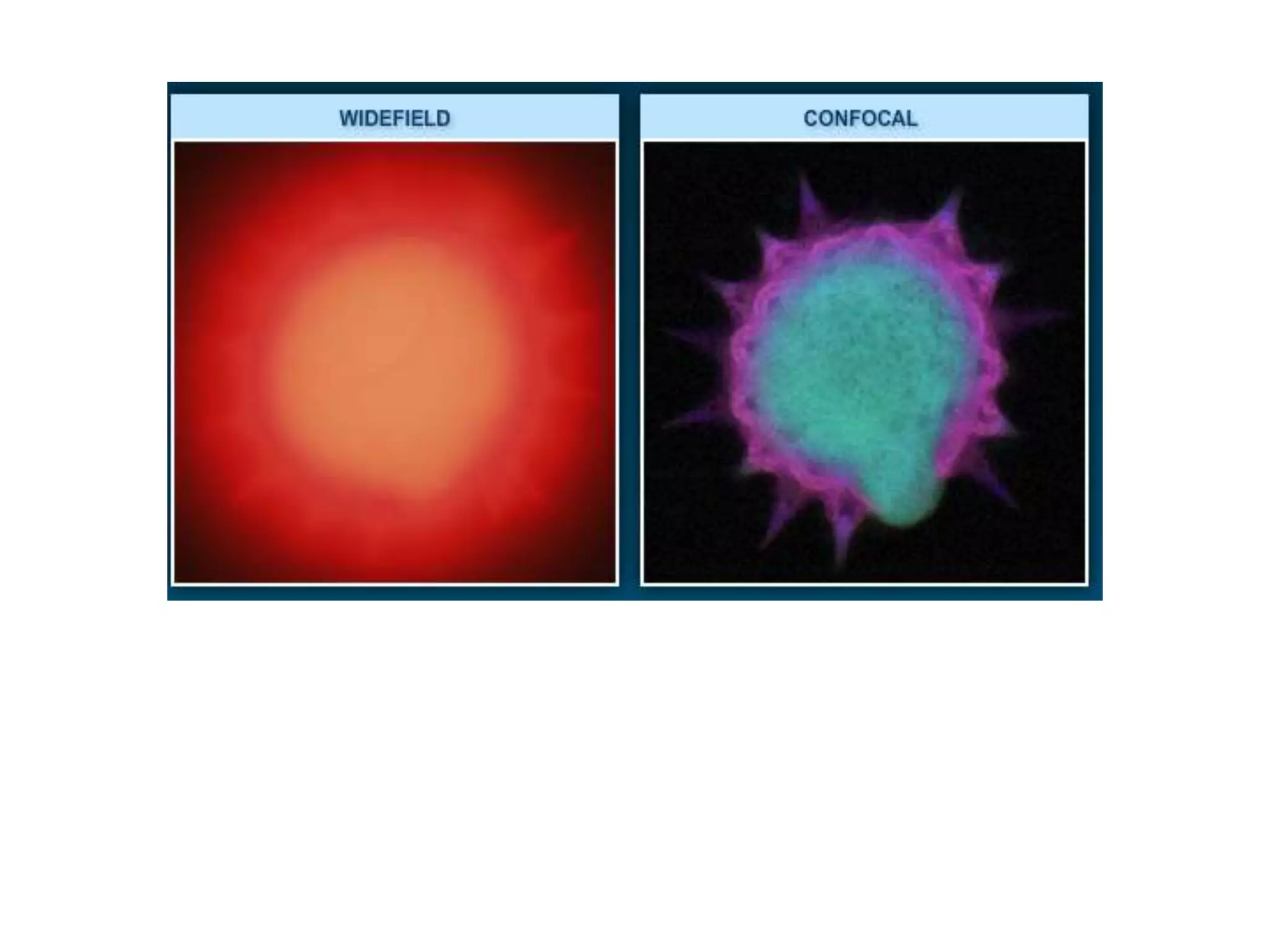
Confocal Microscopy
• The main problem in the florescence microscopy is that strong
illumination background from other focal planes
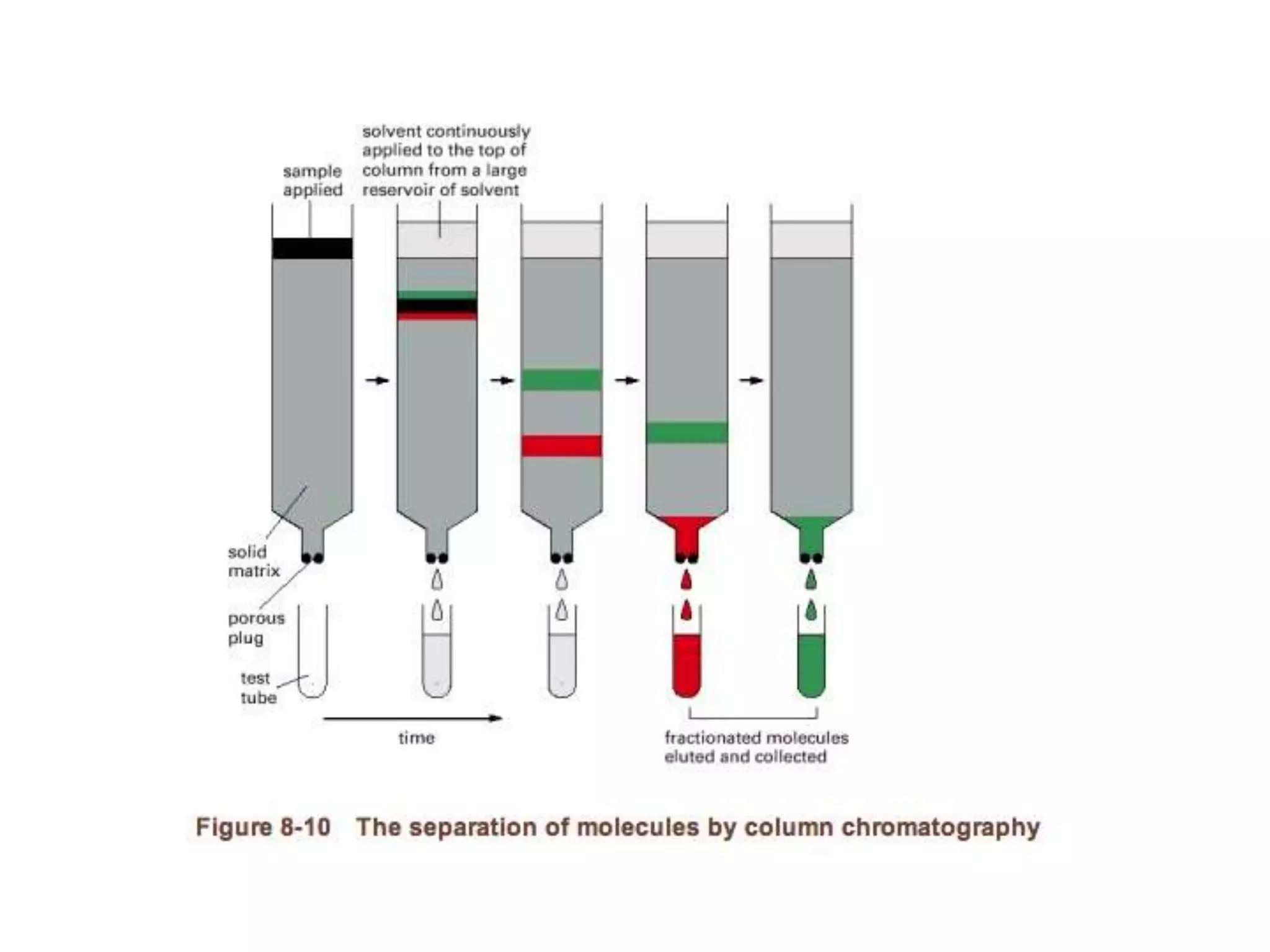
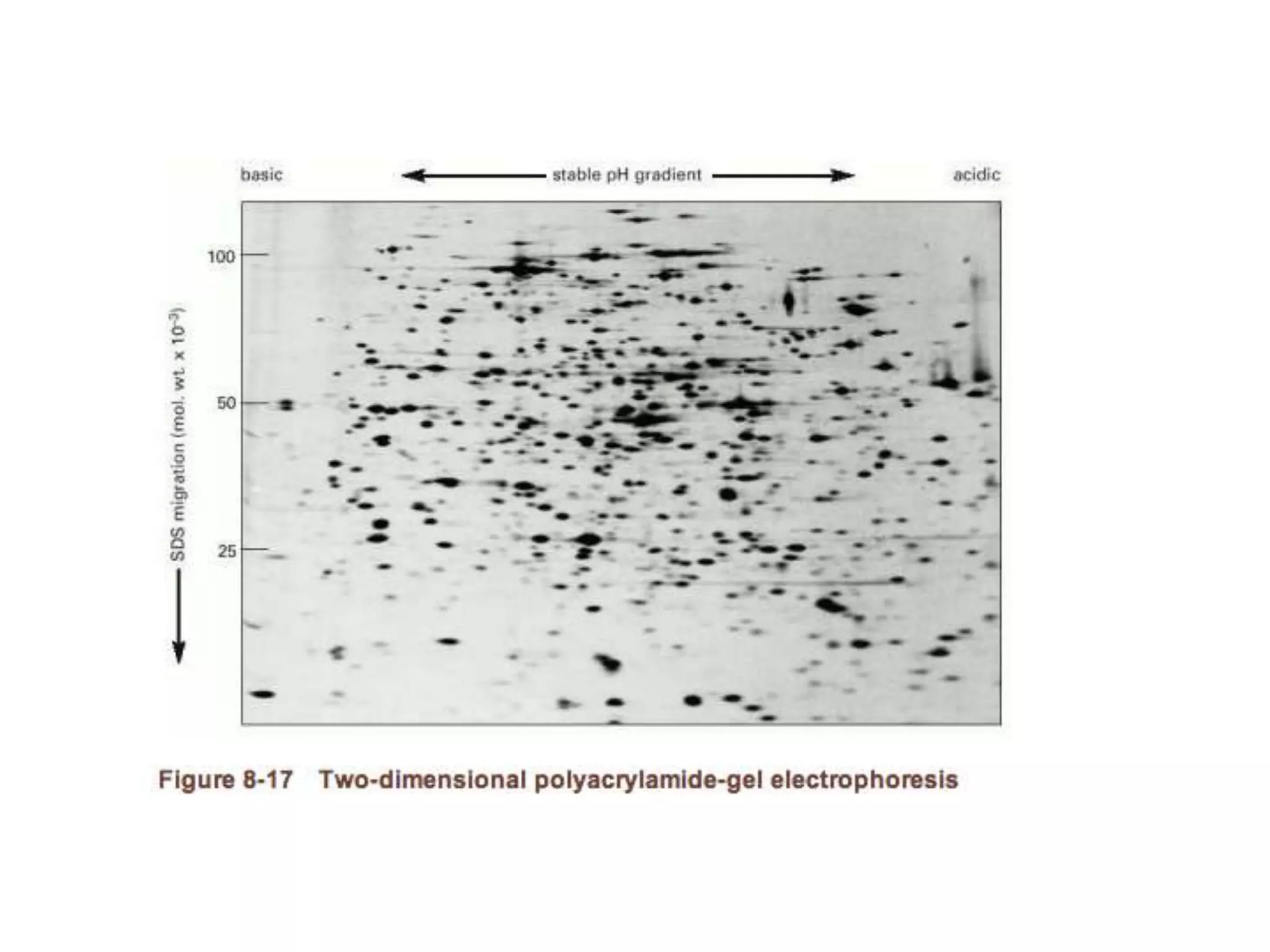
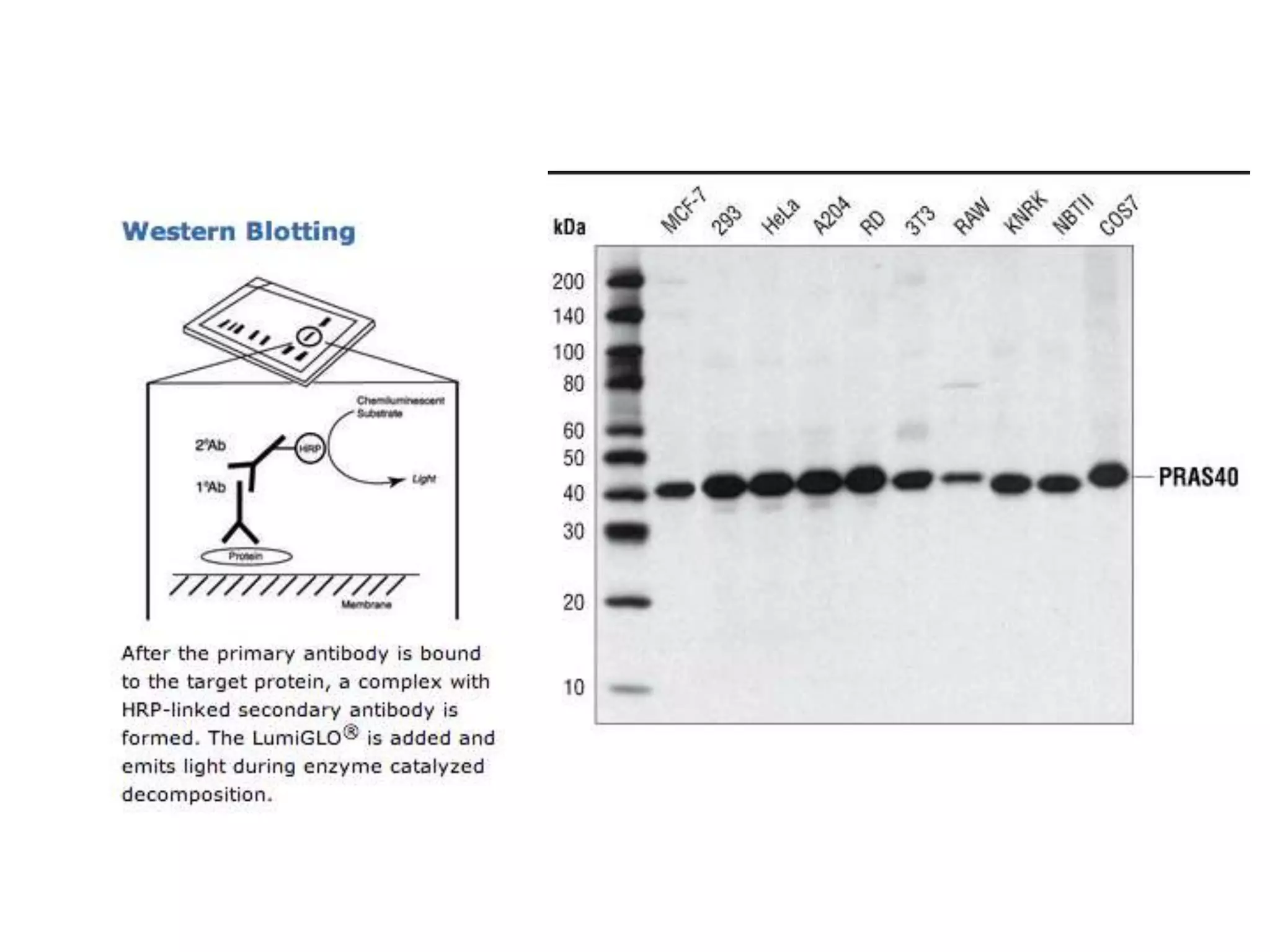
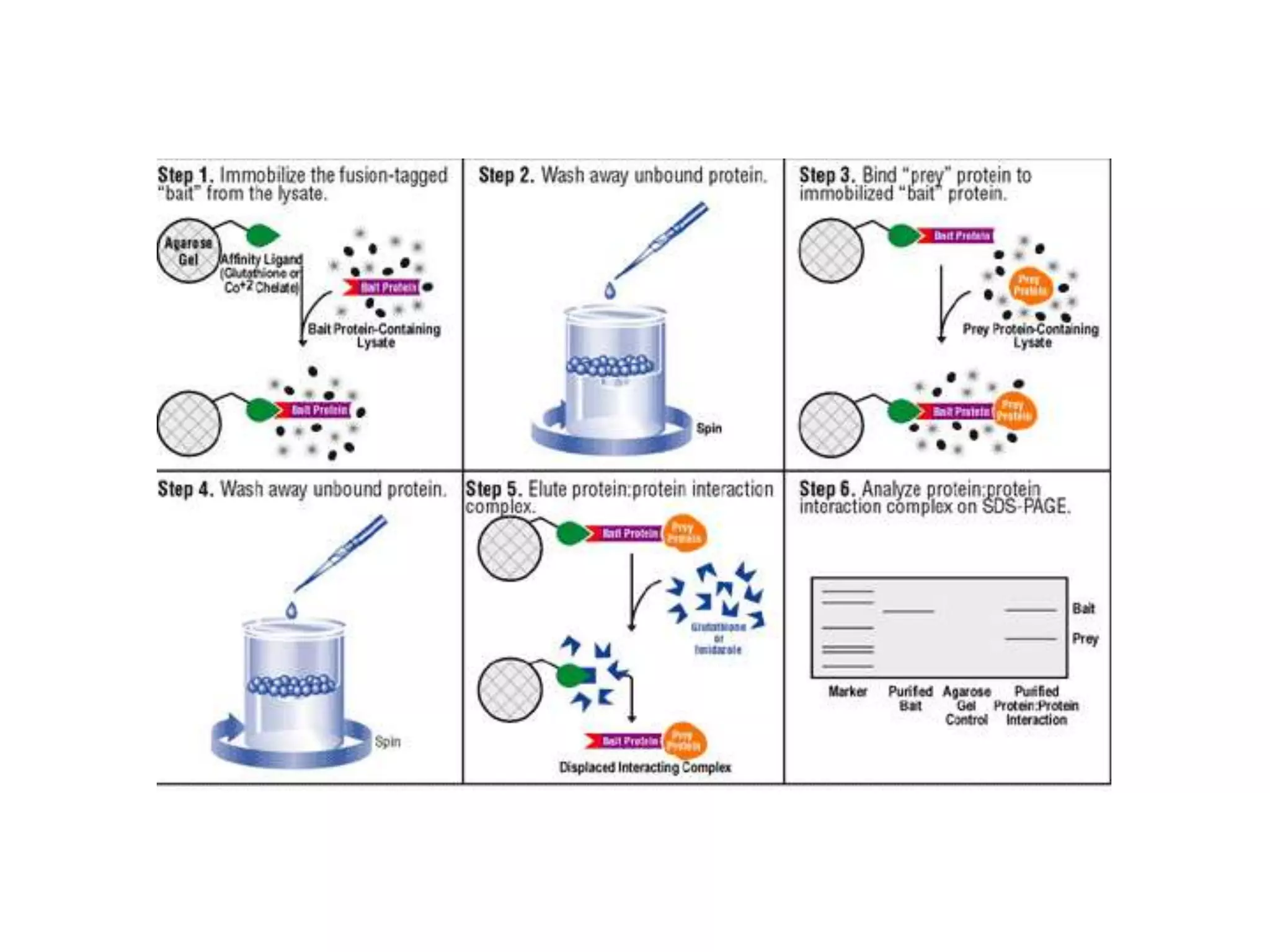
Biochemical Characterization of Cell
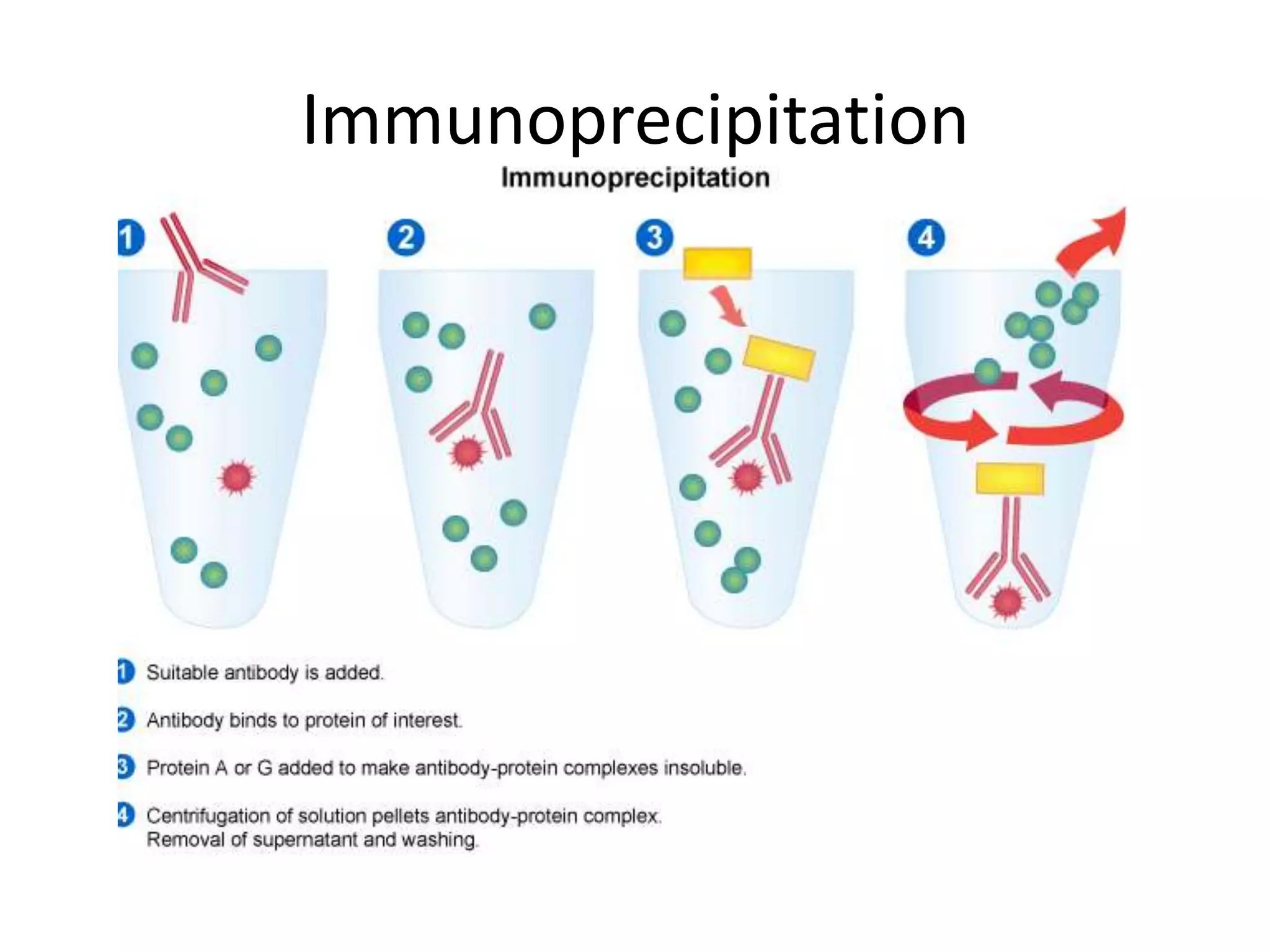
Immunoprecipitation
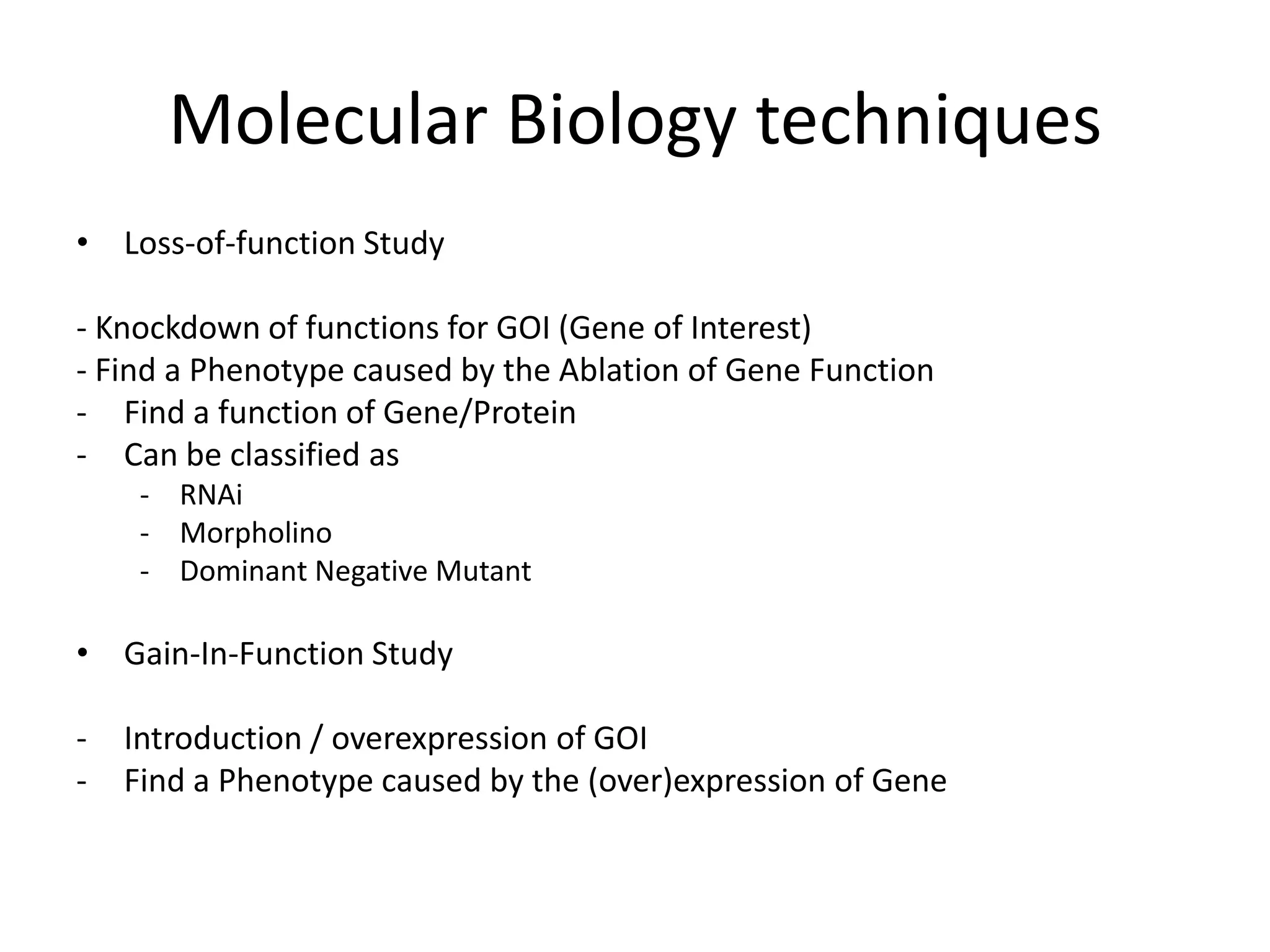
Molecular Biology techniques
• Loss-of-function Study
- Knockdown of functions for GOI (Gene of Interest)
- Find a Phenotype caused by the Ablation of Gene Function
- Find a function of Gene/Protein
- Can be classified as
- RNAi
- Morpholino
- Dominant Negative Mutant
• Gain-In-Function Study
- Introduction / overexpression of GOI
- Find a Phenotype caused by the (over)expression of Gene
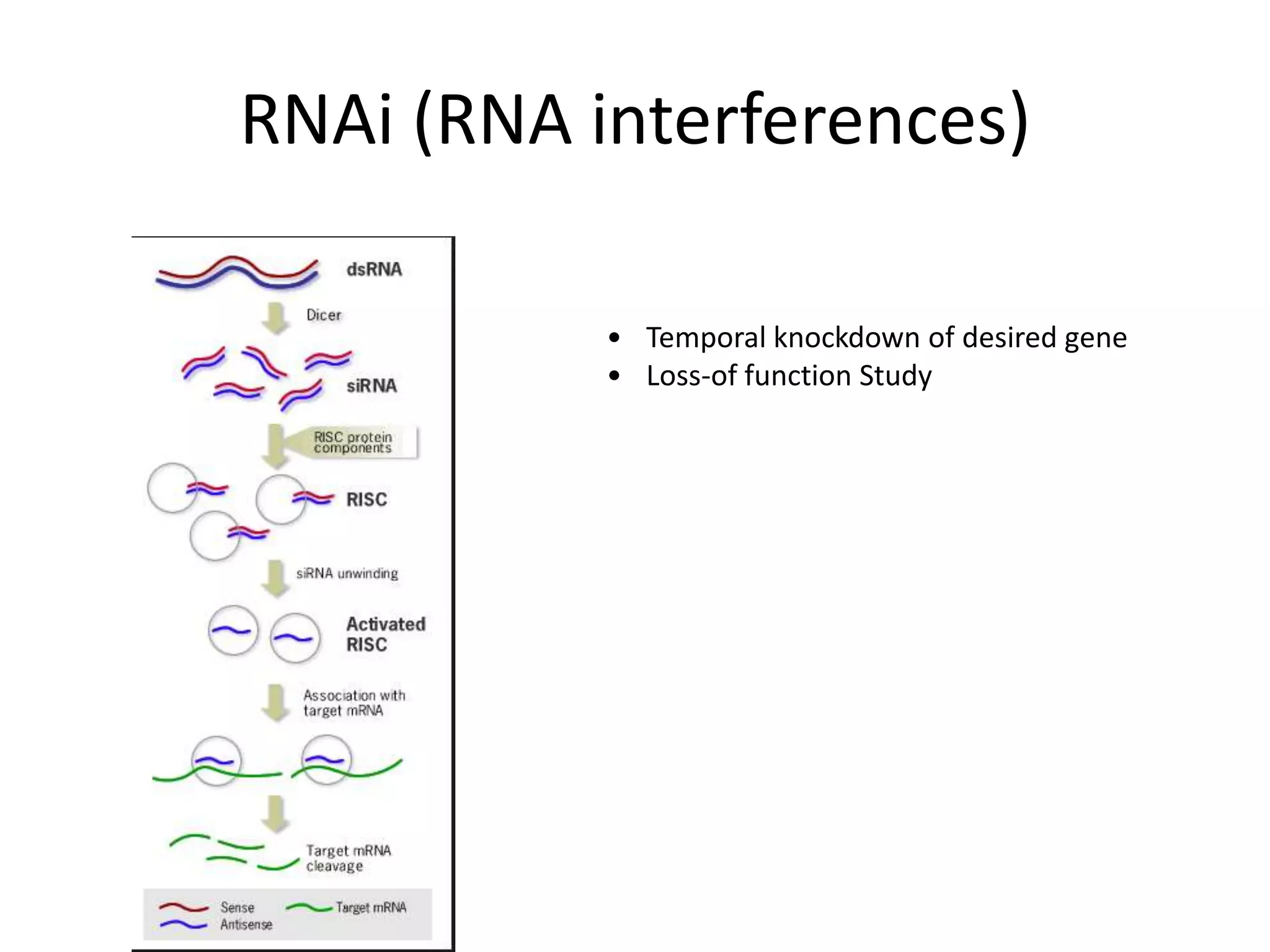
RNAi (RNA interferences)
• Temporal knockdown of desired gene
• Loss-of function Study
Transfection
Advanced Cell Culture Lecture 2 - CBNU

Advanced Cell Culture Lecture 2 - CBNU

  • 1.
    Advanced Aminal CellCulture 2013 2nd Semester Department of Animal Science Chungbuk National University 2st Lecture
  • 2.
    Syllabus Date Topics September 5,2013 Introduction : What is Cell Culture? September 12, 2013 Cell Culture As Model System For Research September 26, 2013 Cell Culture For Antibody / Protein Production October 10, 2013 Protein Production/Purification October 24, 2013 Stem Cell I November 7, 2013 Stem Cell II November 21, 2013 TG/KO Animals December 5, 2013 Genome Engineering/NGS December 12, 2013 Final Exam
  • 3.
    Date September 26, 2013Cell Culture For Antibody / Protein Production 조유미, 이시우 October 10, 2013 Protein Production/Purification 이미진, 정용호 October 24, 2013 이영, 윤준호 November 7, 2013 Stem Cell I Jia Jia Lin, 염동현 November 21, 2013 Stem Cell II Zhao MingHui,권정우 December 5, 2013 Transgenic Animals Lin Zili, 이상배 December 12, 2013 Genome Engineering/NGS 조유진, 김상욱
  • 4.
    Animal Cell Culturefor the Model System for the research • By the way, what is the model system? - Sometime you should find the ‘replacement’ for your subject of research to reduce difficulty in practicing research. -In many cases, human experiment is not feasible or unethical. We cannot test unprove Chemical/treatment to human directly without animal tests. - In those case, we need to find non-fuman species to understand particular biologica Phenomena, with the expectation that discoveries made in model system will provide Insight into working of other organisms.
  • 5.
    Commonly Used ModelOrganism - E.coli - Drosophila - ZebraFish - Mouse - Pig - Chimpanzee..
  • 6.
    Cultured Cell asModel System For Research - You can avoid the interferences from other kinds of cell, tissue, organ and can focus on the specific kind of cell you want to study - You can observe and monitor during the treatment in vitro conditions - Much easier for the study using microscopic/biochemical/Molecular Biologic methodology.. - Cheaper and Faster than most animal experiments - Ethical Consideration : Reduce laboratory animal sacrification..
  • 7.
    Cultured Cell asDrug Discovery Platforms - Screening of chemical Library
  • 8.
    Choice of Cell -Primary Cell or Cell Line? - Source of Organism? - Source of Tissues Many Cell Line Derived from various tissues can be used as model system for studies HUVEC (Human umbilical vein endothelial Cells) : model system for endothelial cells RAW264.7 (Murine Macrophage) Generally cell line is chacterized better than primary cell and easy to culture Limited life spanning of primary culture limits experiment In some cases (Neuron for example), Primary cell is the only source for cultured Cell Primary Cell is thought to be much closer than Cell Line
  • 9.
  • 11.
    Experimental Facillities - Incubatorwith CO2 - Microscope - Cell Culture hood - Cryogenic Storage
  • 12.
    Asceptic Techniques - Contaminationis the major problem during animal cell Culture - Contamination can be divided by source * Bacteria * Fungi * Microplasma * Virus * Other animal cell (e.g. HeLa) - You have to do your best to avoid contaminations • Sanitization / Sterillization (UV) • Laminar Flow Hood • Restricted/Designated Cell Culture Area
  • 14.
  • 15.
  • 16.
    Mycoplasma : simplebacteria that lack a cell wall (smallest self-replicating organism) Extremely small (less than one micrometer), difficult to detect Only way to detecting mycoplasma contamination : immunostaining, fluorescent staining (Hoechst 33258), PCR Contaminants (Mycoplasma)
  • 17.
    Subculture - Removal ofthe medium and transfer of cells from a previous culture into fresh medium - When the cells in adherent cultures occupy all the available substrate and have no room left for expansion, or when the cells in suspension cultures exceed the capacity of the medium to support further growth, cell proliferation is greatly reduced or ceases entirely.
  • 18.
    Cell Density - Inadherent cell, cell will not grow when they cover the surface of culture dish (Contact inhibitions) Exhaustion of Medium - Exhaustion of Medium - pH change - Accumulation of toxic compounds (secreted from the cell)
  • 19.
    Subculture of adherentCell 1. Remove and discard the spent cell culture media from the culture vessel 2. Wash cells using a balanced salt solution without calcium and magnesium 3. Remove and discard the wash solution from the culture vessel 4. Add the pre-warmed dissociation reagent such as trypsin to the side of the flask 5. Incubate the culture vessel at room temperature for approximately 2 minutes. 6. Observe the cells under the microscope for detachment. 7. When ≥ 90% of the cells have detached, tilt the vessel for a minimal length of time to allow the cells to drain. Add the equivalent of 2 volumes (twice the volume used for the dissociation reagent) of pre-warmed complete growth medium. 8. Transfer the cells to a 15-mL conical tube and centrifuge then at 200 × g for 5 to 10 minutes 9. Resuspend the cell pellet in a minimal volume of pre-warmed complete growth medium and remove a sample for counting 10. Determine the total number of cells and percent viability using a hemacytometer
  • 20.
    Subculture of suspensioncell 1. Remove the flask from the incubator and take a small sample from the culture flask using a sterile pipette. 2. determine the total number of cells and percent viability 3. Calculate the volume of media that you need to add to dilute the culture down to the recommended seeding density 4. Aseptically add the appropriate volume of pre-warmed growth medium into the culture flask
  • 21.
    • Cell shouldbe stored as frozen as a seed stock • Cell will be damaged by Freezing/Thawing - Protection against freezing : Cryoprotection • Best Method for Cryopreserving cultured cell - store in liquid nitrogen in complete medium in the presence of cryoprotectant like DMSO DMSO : Dimethyl Sulfoxide Cell Freezing
  • 23.
    • Serum Basedor Serum Free? • Serum : Fetal Bovine Serum(FBS) Media
  • 24.
    Research Methods using culturedCell • Microscopic • Biochemical • Molecular Biology
  • 25.
    Optical Microscope :Main workhorse of Cell Research
  • 26.
  • 28.
  • 30.
    Fluorescences Fluorescence : somemolecules can absorb one color and emits different colors
  • 31.
  • 33.
    Filters: the keyto successful fluorescence microscopy
  • 36.
    Staining of differentcomponents of the cell Q : We want to localize the location of a specific protein in cell. How we can do that? A : Use Antibody! By labeling antibody with fluorescence, you can locate the desired protein in
  • 37.
  • 38.
    Immunofluorescence - Direct Immunofluoresence *Antibody (or chemical) which can bind a desired protein is labeled with fluorochrome * Pros - Convienient - More Sensitive * Cons - You should have a primary antibody labeled with fluorochrome - If you don’t have it, you should do it by yourself or use Indirect Immunofluoresence
  • 39.
  • 40.
    - Indirect Immunofluoresence *Unlabeled Antibody is applied on the fixed tissue * Antibody was detected by secondary antibody conjugated with fluorochrome Primary Antibody Recognize Antigen Secondary Antibody recognize Primary Antibody It is labeled by fluorescence Pros • You don’t need to label primary antibody • Based on the selection of secondary antibody, you can change wavelength of signal Cons * More complicated (Two step process)
  • 41.
    Fixation and Section Weneed to stop the cellular process and preserve the component inside in cell. Crosslinking Fixation Commonly used for luoresence microscopy Generate covalent cross-links between intracellular components Most commonly used agent : aldehyde Formation of bond between amine grouop Glutaraldehyde formaldehyde - Precipitating Fixatives : Disctrupt hydrophobic interaction Denature proteins Methanol, Ethanol, Acetic Acid
  • 42.
    Colocalization Using two differentfluorophore with different wavelength, we can test cellular locations of Two protein simultaneously. A B
  • 43.
    Choice of fluorophore *Choice of two closely distributed spectrum may cause bleeding
  • 45.
    Fluorescence Protein asReporter GFP Gene of Interest - Drawbacks of immunoflorescences • You need to have (specific and high-quality) antibody against your protein of interest • You need to fix a cell (i.e. Dead Cells), so you cannot observe live event in live cell - You need a probe which will work in In the Living cell (and even organism) • GFP(RFP) – Your Gene of Interest • Transfection
  • 46.
  • 47.
    Confocal Microscopy • Themain problem in the florescence microscopy is that strong illumination background from other focal planes
  • 49.
  • 53.
  • 55.
    Molecular Biology techniques •Loss-of-function Study - Knockdown of functions for GOI (Gene of Interest) - Find a Phenotype caused by the Ablation of Gene Function - Find a function of Gene/Protein - Can be classified as - RNAi - Morpholino - Dominant Negative Mutant • Gain-In-Function Study - Introduction / overexpression of GOI - Find a Phenotype caused by the (over)expression of Gene
  • 56.
    RNAi (RNA interferences) •Temporal knockdown of desired gene • Loss-of function Study
  • 57.