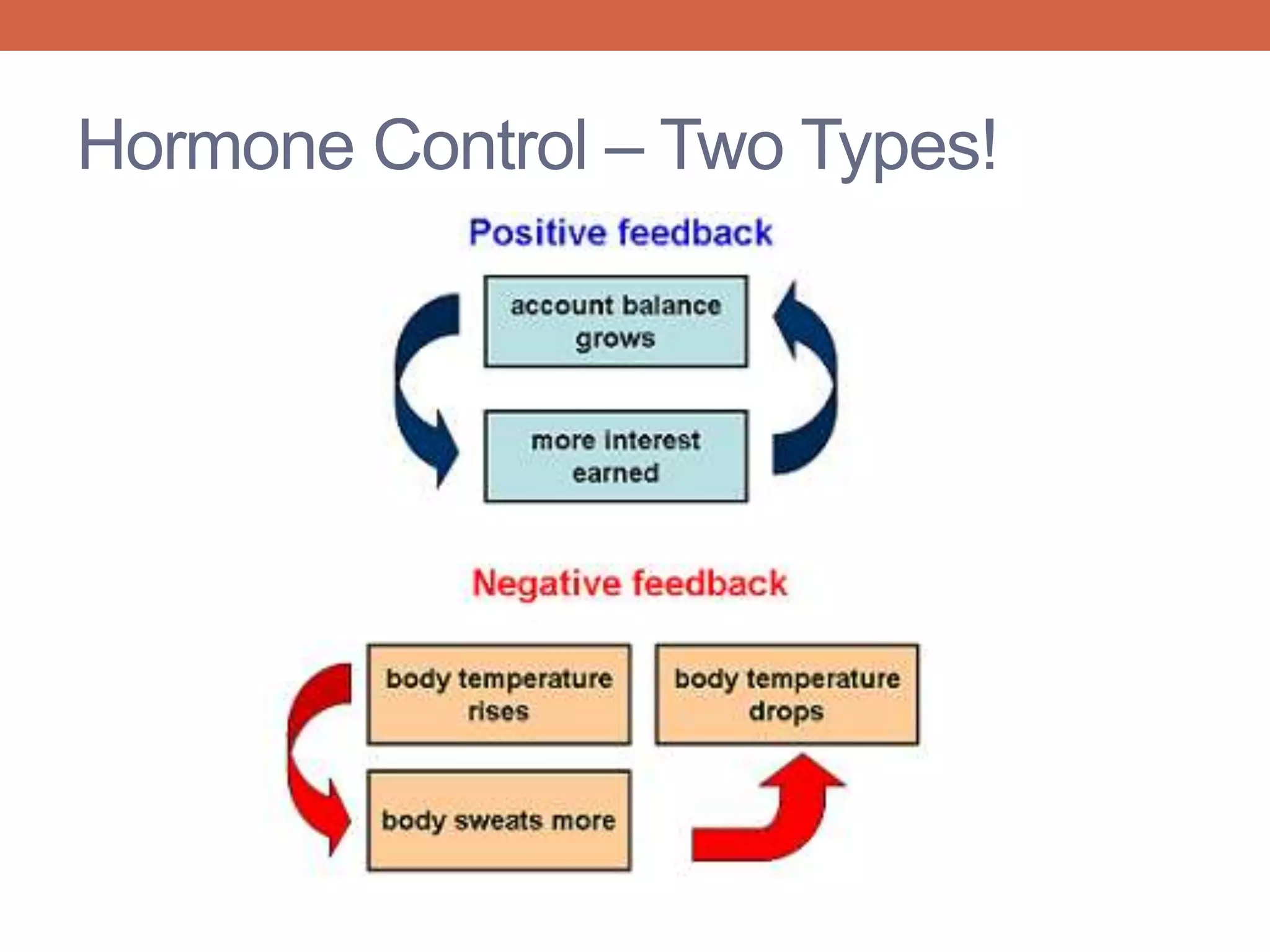
Hormone Control – Two Types!
THE MENSTRUAL 
CYCLE
The Importance of the Menstrual Cycle 
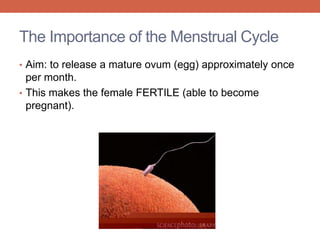
• Aim: to release a mature ovum (egg) approximately once 
per month. 
• This makes the female FERTILE (able to become 
pregnant).
Facts & Tidbits 
• Under the control of the endocrine system 
• It is necessary for reproduction 
• Average length: 28 days, but typically varies, with shorter 
and longer cycles 
• Menarche: a woman's first menstruation 
• typically occurs around age 12 
• occurrence depends on overall health and diet 
• Menopause: end of a woman's reproductive 
phase, commonly occurs between ages 45 and 
55 
• age of menopause is largely the result of genetics
• Physiological changes during menstrual cycle can be 
observed at three different levels: 
• Neuro-endocrine level 
• ovaries 
• uterus 
• Menstrual cycle can be divided into 3 phases: 
• menstrual phase 
• proliferative / follicular (estrogen) phase 
• secretory / luteal phase (progesterone) phase
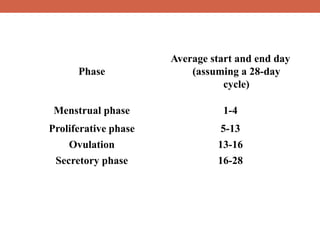
Phase 
Average start and end day 
(assuming a 28-day 
cycle) 
Menstrual phase 1-4 
Proliferative phase 5-13 
Ovulation 13-16 
Secretory phase 16-28
Hormones 
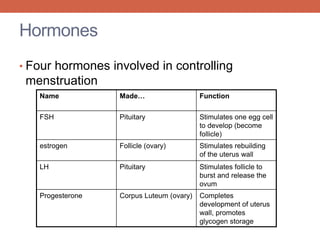
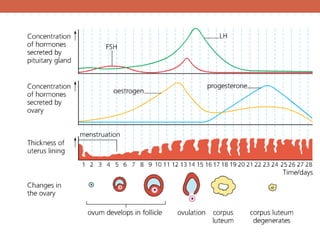
• Four hormones involved in controlling 
menstruation 
Name Made… Function 
FSH Pituitary Stimulates one egg cell 
to develop (become 
follicle) 
estrogen Follicle (ovary) Stimulates rebuilding 
of the uterus wall 
LH Pituitary Stimulates follicle to 
burst and release the 
ovum 
Progesterone Corpus Luteum (ovary) Completes 
development of uterus 
wall, promotes 
glycogen storage
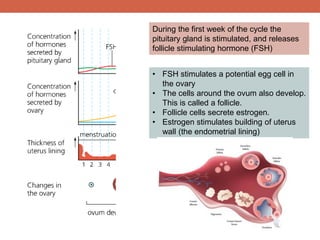
During the first week of the cycle the 
pituitary gland is stimulated, and releases 
follicle stimulating hormone (FSH) 
• FSH stimulates a potential egg cell in 
the ovary 
• The cells around the ovum also develop. 
This is called a follicle. 
• Follicle cells secrete estrogen. 
• Estrogen stimulates building of uterus 
wall (the endometrial lining)
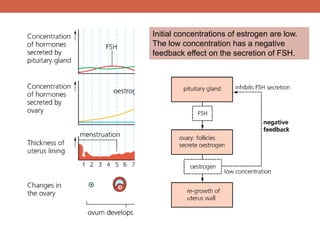
Initial concentrations of estrogen are low. 
The low concentration has a negative 
feedback effect on the secretion of FSH.
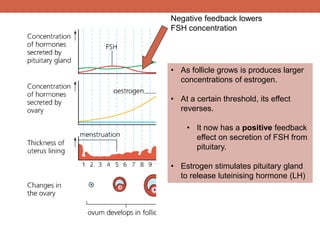
Negative feedback lowers 
FSH concentration 
• As follicle grows is produces larger 
concentrations of estrogen. 
• At a certain threshold, its effect 
reverses. 
• It now has a positive feedback 
effect on secretion of FSH from 
pituitary. 
• Estrogen stimulates pituitary gland 
to release luteinising hormone (LH)
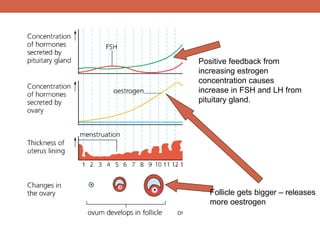
Positive feedback from 
increasing estrogen 
concentration causes 
increase in FSH and LH from 
pituitary gland. 
Follicle gets bigger – releases 
more oestrogen
Ovulation 
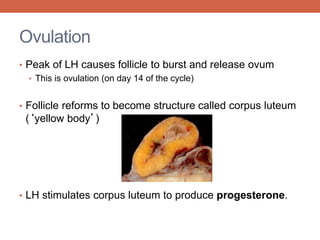
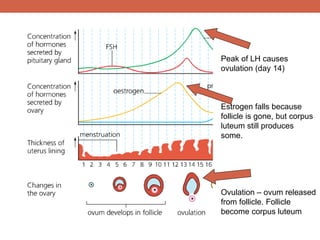
• Peak of LH causes follicle to burst and release ovum 
• This is ovulation (on day 14 of the cycle) 
• Follicle reforms to become structure called corpus luteum 
(‘yellow body’) 
• LH stimulates corpus luteum to produce progesterone.
Ovulation Video
Peak of LH causes 
ovulation (day 14) 
Estrogen falls because 
follicle is gone, but corpus 
luteum still produces 
some. 
Ovulation – ovum released 
from follicle. Follicle 
become corpus luteum
Progesterone 
• Progesterone completes uterus wall. 
• Promotes increases blood supply and glycogen storage. 
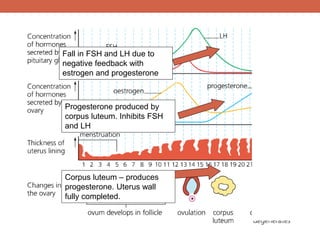
• Rising concentrations of progesterone and estrogen have 
negative feedback effect on FSH and LH. 
• This prevents new follicles forming.
Fall in FSH and LH due to 
negative feedback with 
estrogen and progesterone 
Progesterone produced by 
corpus luteum. Inhibits FSH 
and LH 
Corpus luteum – produces 
progesterone. Uterus wall 
fully completed.
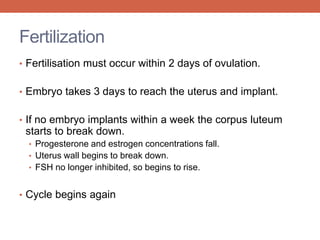
Fertilization 
• Fertilisation must occur within 2 days of ovulation. 
• Embryo takes 3 days to reach the uterus and implant. 
• If no embryo implants within a week the corpus luteum 
starts to break down. 
• Progesterone and estrogen concentrations fall. 
• Uterus wall begins to break down. 
• FSH no longer inhibited, so begins to rise. 
• Cycle begins again
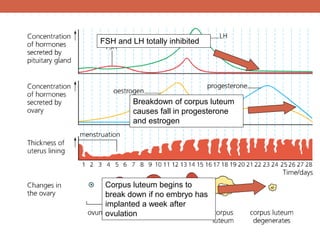
FSH and LH totally inhibited 
Breakdown of corpus luteum 
causes fall in progesterone 
and estrogen 
Corpus luteum begins to 
break down if no embryo has 
implanted a week after 
ovulation
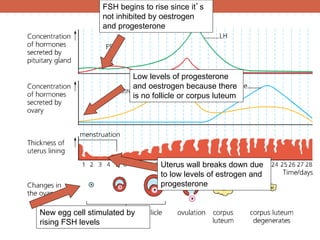
FSH begins to rise since it’s 
not inhibited by oestrogen 
and progesterone 
Low levels of progesterone 
and oestrogen because there 
is no follicle or corpus luteum 
Uterus wall breaks down due 
to low levels of estrogen and 
progesterone 
New egg cell stimulated by 
rising FSH levels
Questions 
• 1. What is the overall aim of the menstrual cycle? 
• 2. Which hormone triggers ovulation? 
• 3. Which hormone is responsible for building the uterus lining? 
• 4. Which hormone is responsible for maintaining the uterus lining? 
• 5. Where is progesterone produced immediately after ovulation? 
• 6. Why does menstruation occur? 
• 8. Where is estrogen produced? 
• 9. Why does the ovum need to ‘mature’ in the follicle before ovulation can 
occur? 
• 10. Why does the level of estrogen drop after ovulation?

C.1 menstrual cycle

  • 1.
  • 2.
  • 4.
    The Importance ofthe Menstrual Cycle • Aim: to release a mature ovum (egg) approximately once per month. • This makes the female FERTILE (able to become pregnant).
  • 5.
    Facts & Tidbits • Under the control of the endocrine system • It is necessary for reproduction • Average length: 28 days, but typically varies, with shorter and longer cycles • Menarche: a woman's first menstruation • typically occurs around age 12 • occurrence depends on overall health and diet • Menopause: end of a woman's reproductive phase, commonly occurs between ages 45 and 55 • age of menopause is largely the result of genetics
  • 6.
    • Physiological changesduring menstrual cycle can be observed at three different levels: • Neuro-endocrine level • ovaries • uterus • Menstrual cycle can be divided into 3 phases: • menstrual phase • proliferative / follicular (estrogen) phase • secretory / luteal phase (progesterone) phase
  • 7.
    Phase Average startand end day (assuming a 28-day cycle) Menstrual phase 1-4 Proliferative phase 5-13 Ovulation 13-16 Secretory phase 16-28
  • 8.
    Hormones • Fourhormones involved in controlling menstruation Name Made… Function FSH Pituitary Stimulates one egg cell to develop (become follicle) estrogen Follicle (ovary) Stimulates rebuilding of the uterus wall LH Pituitary Stimulates follicle to burst and release the ovum Progesterone Corpus Luteum (ovary) Completes development of uterus wall, promotes glycogen storage
  • 9.
    During the firstweek of the cycle the pituitary gland is stimulated, and releases follicle stimulating hormone (FSH) • FSH stimulates a potential egg cell in the ovary • The cells around the ovum also develop. This is called a follicle. • Follicle cells secrete estrogen. • Estrogen stimulates building of uterus wall (the endometrial lining)
  • 10.
    Initial concentrations ofestrogen are low. The low concentration has a negative feedback effect on the secretion of FSH.
  • 11.
    Negative feedback lowers FSH concentration • As follicle grows is produces larger concentrations of estrogen. • At a certain threshold, its effect reverses. • It now has a positive feedback effect on secretion of FSH from pituitary. • Estrogen stimulates pituitary gland to release luteinising hormone (LH)
  • 12.
    Positive feedback from increasing estrogen concentration causes increase in FSH and LH from pituitary gland. Follicle gets bigger – releases more oestrogen
  • 13.
    Ovulation • Peakof LH causes follicle to burst and release ovum • This is ovulation (on day 14 of the cycle) • Follicle reforms to become structure called corpus luteum (‘yellow body’) • LH stimulates corpus luteum to produce progesterone.
  • 14.
  • 15.
    Peak of LHcauses ovulation (day 14) Estrogen falls because follicle is gone, but corpus luteum still produces some. Ovulation – ovum released from follicle. Follicle become corpus luteum
  • 16.
    Progesterone • Progesteronecompletes uterus wall. • Promotes increases blood supply and glycogen storage. • Rising concentrations of progesterone and estrogen have negative feedback effect on FSH and LH. • This prevents new follicles forming.
  • 17.
    Fall in FSHand LH due to negative feedback with estrogen and progesterone Progesterone produced by corpus luteum. Inhibits FSH and LH Corpus luteum – produces progesterone. Uterus wall fully completed.
  • 18.
    Fertilization • Fertilisationmust occur within 2 days of ovulation. • Embryo takes 3 days to reach the uterus and implant. • If no embryo implants within a week the corpus luteum starts to break down. • Progesterone and estrogen concentrations fall. • Uterus wall begins to break down. • FSH no longer inhibited, so begins to rise. • Cycle begins again
  • 19.
    FSH and LHtotally inhibited Breakdown of corpus luteum causes fall in progesterone and estrogen Corpus luteum begins to break down if no embryo has implanted a week after ovulation
  • 20.
    FSH begins torise since it’s not inhibited by oestrogen and progesterone Low levels of progesterone and oestrogen because there is no follicle or corpus luteum Uterus wall breaks down due to low levels of estrogen and progesterone New egg cell stimulated by rising FSH levels
  • 23.
    Questions • 1.What is the overall aim of the menstrual cycle? • 2. Which hormone triggers ovulation? • 3. Which hormone is responsible for building the uterus lining? • 4. Which hormone is responsible for maintaining the uterus lining? • 5. Where is progesterone produced immediately after ovulation? • 6. Why does menstruation occur? • 8. Where is estrogen produced? • 9. Why does the ovum need to ‘mature’ in the follicle before ovulation can occur? • 10. Why does the level of estrogen drop after ovulation?