ENDOCRINE SYSTEM
Objective 
• A. describe the principles of hormonal coordination and 
control by the endocrine system 
Guiding Question 
• What is the overall function of the endocrine system? 
• With what other systems does the endocrine system 
interact?
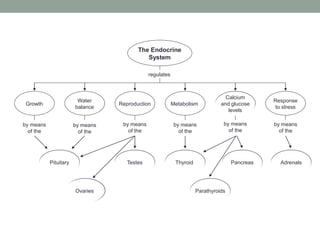
regulates 
by means 
of the 
by means 
of the 
by means 
of the 
by means 
of the 
by means 
of the 
by means 
of the 
Growth 
Water 
balance 
Reproduction Metabolism 
Calcium 
and glucose 
levels 
Response 
to stress 
The Endocrine 
System 
Pituitary 
Ovaries 
Testes Thyroid Pancreas Adrenals 
Parathyroids
Parts of the Endocrine System 
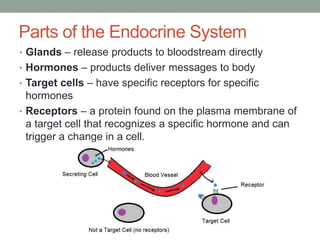
• Glands – release products to bloodstream directly 
• Hormones – products deliver messages to body 
• Target cells – have specific receptors for specific 
hormones 
• Receptors – a protein found on the plasma membrane of 
a target cell that recognizes a specific hormone and can 
trigger a change in a cell.
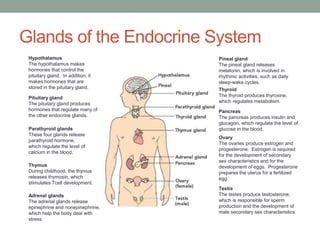
Glands of the Endocrine System 
Hypothalamus 
The hypothalamus makes 
hormones that control the 
pituitary gland. In addition, it 
makes hormones that are 
stored in the pituitary gland. 
Pituitary gland 
The pituitary gland produces 
hormones that regulate many of 
the other endocrine glands. 
Parathyroid glands 
These four glands release 
parathyroid hormone, 
which regulate the level of 
calcium in the blood. 
Thymus 
During childhood, the thymus 
releases thymosin, which 
stimulates Tcell development. 
Adrenal glands 
The adrenal glands release 
epinephrine and nonepinephrine, 
which help the body deal with 
stress. 
Pineal gland 
The pineal gland releases 
melatonin, which is involved in 
rhythmic activities, such as daily 
sleep-wake cycles. 
Thyroid 
The thyroid produces thyroxine, 
which regulates metabolism. 
Pancreas 
The pancreas produces insulin and 
glucagon, which regulate the level of 
glucose in the blood. 
Ovary 
The ovaries produce estrogen and 
progesterone. Estrogen is required 
for the development of secondary 
sex characteristics and for the 
development of eggs. Progesterone 
prepares the uterus for a fertilized 
egg. 
Testis 
The testes produce testosterone, 
which is responsible for sperm 
production and the development of 
male secondary sex characteristics
YOU BE A DOCTOR!
• In this activity, you will take on the role of a doctor. 
• Read the patient files and the information packet on 
edmodo. 
• Diagnose the patient with the condition you think they 
have based on their symptoms and fill in the patient 
medical chart.
GLANDS PEER TEACHING 
ACTIVITY
• In this activity, you will work in small groups of 2-3 people and 
work on an assigned gland 
• The best way to understand glands, is to look at: 
1) What happens if glands don’t work properly, or 
2) How they are involved for a specific body function. 
• Research the gland, hormones, target cells and receptors that 
are involved. 
• Discuss hormonal diseases/conditions that are related to your 
assigned gland and how that impacts the body system. 
• Produce a diagram of your gland and a small information 
packet for the body diagram.

A.3 endocrine system & glands

  • 1.
  • 2.
    Objective • A.describe the principles of hormonal coordination and control by the endocrine system Guiding Question • What is the overall function of the endocrine system? • With what other systems does the endocrine system interact?
  • 3.
    regulates by means of the by means of the by means of the by means of the by means of the by means of the Growth Water balance Reproduction Metabolism Calcium and glucose levels Response to stress The Endocrine System Pituitary Ovaries Testes Thyroid Pancreas Adrenals Parathyroids
  • 4.
    Parts of theEndocrine System • Glands – release products to bloodstream directly • Hormones – products deliver messages to body • Target cells – have specific receptors for specific hormones • Receptors – a protein found on the plasma membrane of a target cell that recognizes a specific hormone and can trigger a change in a cell.
  • 5.
    Glands of theEndocrine System Hypothalamus The hypothalamus makes hormones that control the pituitary gland. In addition, it makes hormones that are stored in the pituitary gland. Pituitary gland The pituitary gland produces hormones that regulate many of the other endocrine glands. Parathyroid glands These four glands release parathyroid hormone, which regulate the level of calcium in the blood. Thymus During childhood, the thymus releases thymosin, which stimulates Tcell development. Adrenal glands The adrenal glands release epinephrine and nonepinephrine, which help the body deal with stress. Pineal gland The pineal gland releases melatonin, which is involved in rhythmic activities, such as daily sleep-wake cycles. Thyroid The thyroid produces thyroxine, which regulates metabolism. Pancreas The pancreas produces insulin and glucagon, which regulate the level of glucose in the blood. Ovary The ovaries produce estrogen and progesterone. Estrogen is required for the development of secondary sex characteristics and for the development of eggs. Progesterone prepares the uterus for a fertilized egg. Testis The testes produce testosterone, which is responsible for sperm production and the development of male secondary sex characteristics
  • 6.
    YOU BE ADOCTOR!
  • 7.
    • In thisactivity, you will take on the role of a doctor. • Read the patient files and the information packet on edmodo. • Diagnose the patient with the condition you think they have based on their symptoms and fill in the patient medical chart.
  • 8.
  • 9.
    • In thisactivity, you will work in small groups of 2-3 people and work on an assigned gland • The best way to understand glands, is to look at: 1) What happens if glands don’t work properly, or 2) How they are involved for a specific body function. • Research the gland, hormones, target cells and receptors that are involved. • Discuss hormonal diseases/conditions that are related to your assigned gland and how that impacts the body system. • Produce a diagram of your gland and a small information packet for the body diagram.