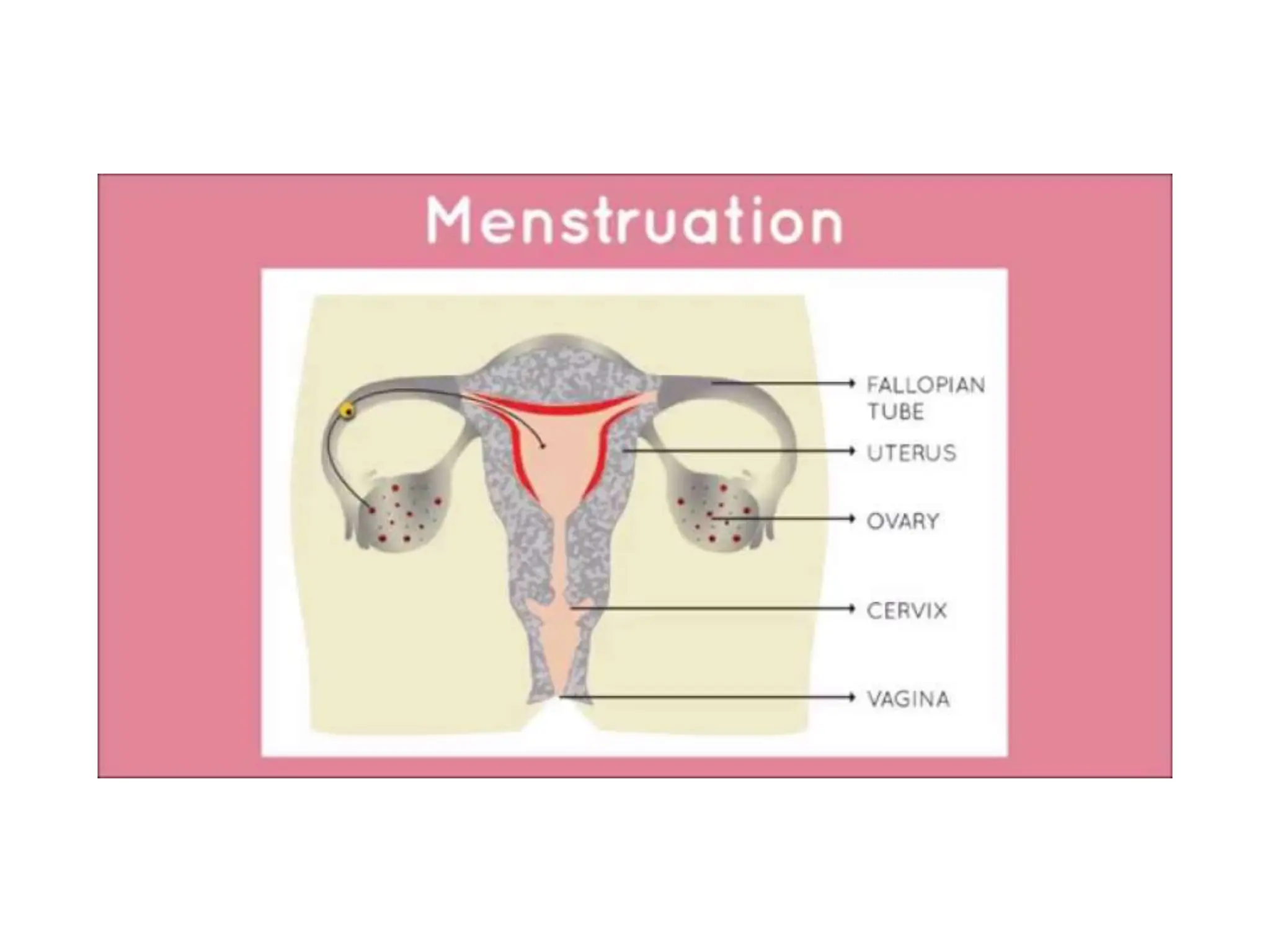
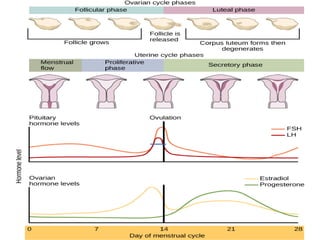
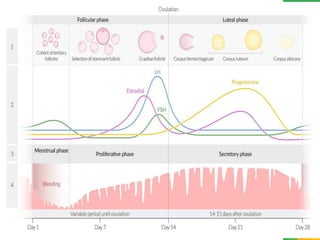
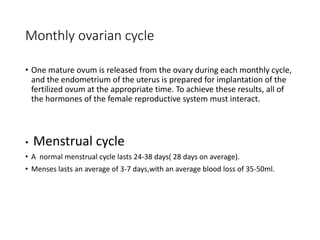
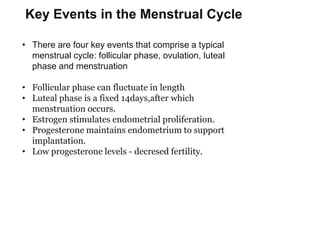
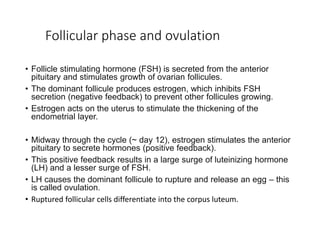
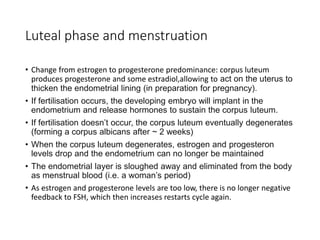
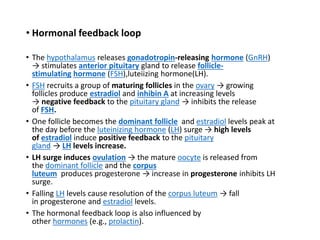
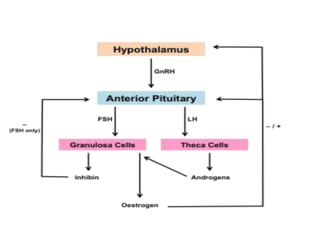
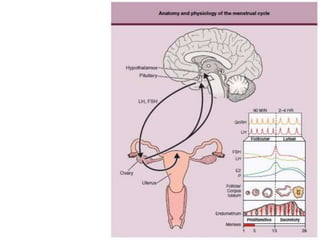
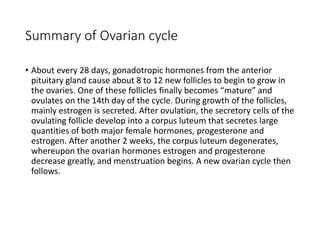
The female reproductive hormonal system regulates functions through interactions of hormones from the hypothalamus, anterior pituitary, and ovaries, with key hormones including gonadotropin-releasing hormone (GnRH), luteinizing hormone (LH), and follicle-stimulating hormone (FSH). The menstrual cycle, averaging 28 days, consists of the follicular phase, ovulation, luteal phase, and menstruation, during which hormones like estrogen and progesterone play critical roles in follicle development and endometrial preparation for potential implantation. If fertilization does not occur, hormonal levels drop, leading to menstruation, and the cycle restarts as FSH levels increase due to the lack of negative feedback.




![4[1].2 FORM 5](https://cdn.slidesharecdn.com/ss_thumbnails/41-2-menstrualcycle-120603003033-phpapp01-thumbnail.jpg?width=640&height=640&fit=bounds)

![physiology_of_menstral_cycle[gauri].pptx](https://cdn.slidesharecdn.com/ss_thumbnails/physiologyofmenstralcyclegauri-251107081125-fc49af27-thumbnail.jpg?width=640&height=640&fit=bounds)


