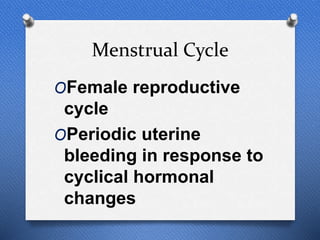
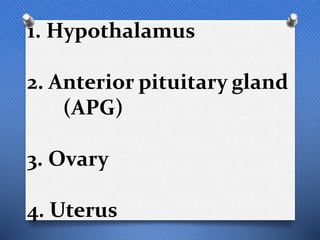
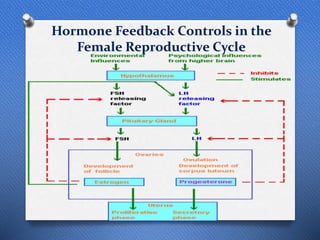
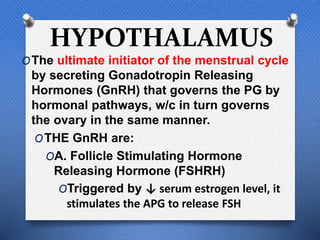
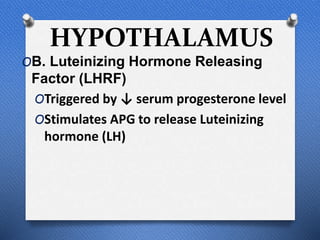
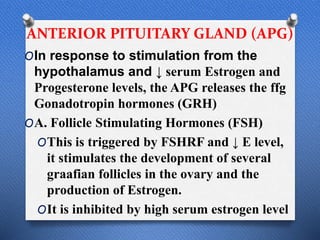
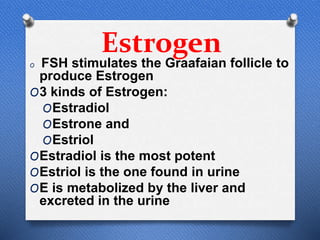
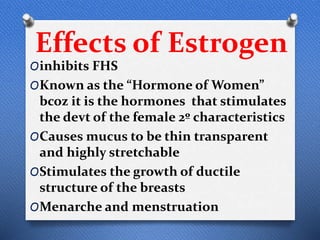
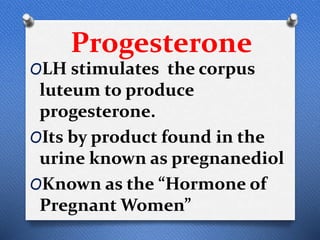
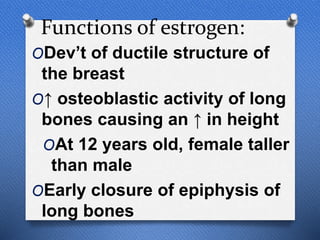
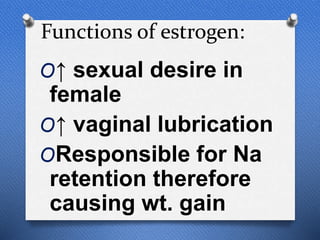
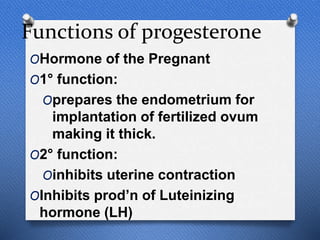
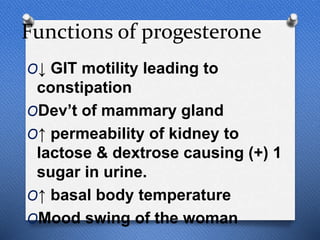
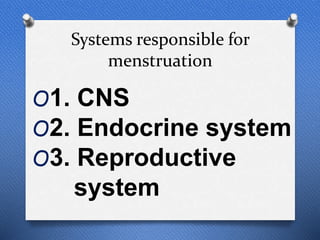
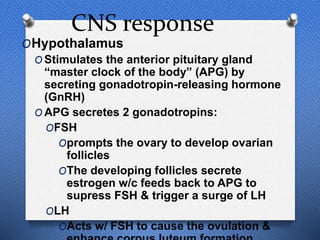
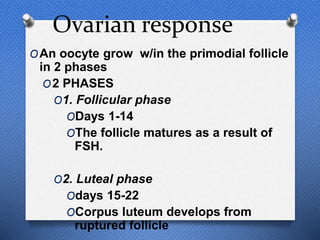
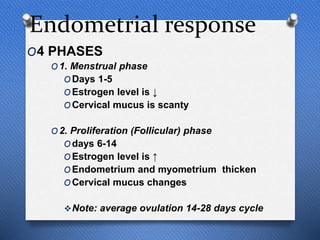
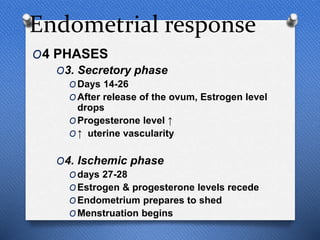
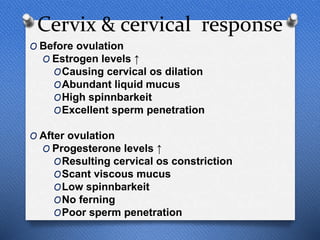
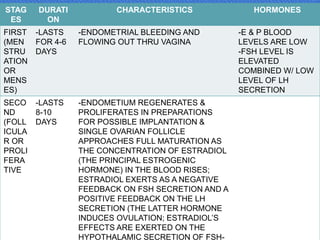
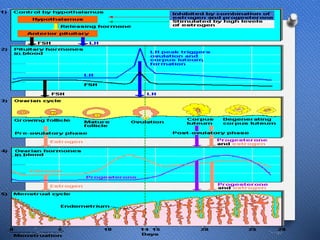
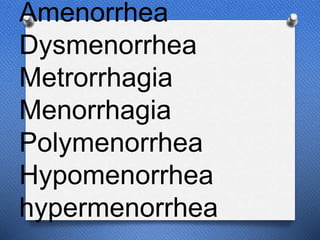
The menstrual cycle involves cyclical hormonal changes coordinated by the hypothalamus, pituitary gland, and ovaries. During the follicular phase, follicle stimulating hormone (FSH) causes follicle development in the ovaries. Near mid-cycle, luteinizing hormone (LH) triggers ovulation. After ovulation, the corpus luteum forms and secretes progesterone to thicken the uterine lining. If implantation does not occur, progesterone levels drop and menstruation begins. Estrogen and progesterone levels fluctuate monthly to regulate the development and shedding of the uterine lining, resulting in periodic menstrual bleeding.








![4[1].2 FORM 5](https://cdn.slidesharecdn.com/ss_thumbnails/41-2-menstrualcycle-120603003033-phpapp01-thumbnail.jpg?width=640&height=640&fit=bounds)


![CASE_PRESENTATION_ON_subdural_hematoma(SDH)[1 FINAL PPT]-1.pptx](https://cdn.slidesharecdn.com/ss_thumbnails/casepresentationonsubduralhematomasdh1finalppt-1-260129172522-d405d375-thumbnail.jpg?width=640&height=640&fit=bounds)


