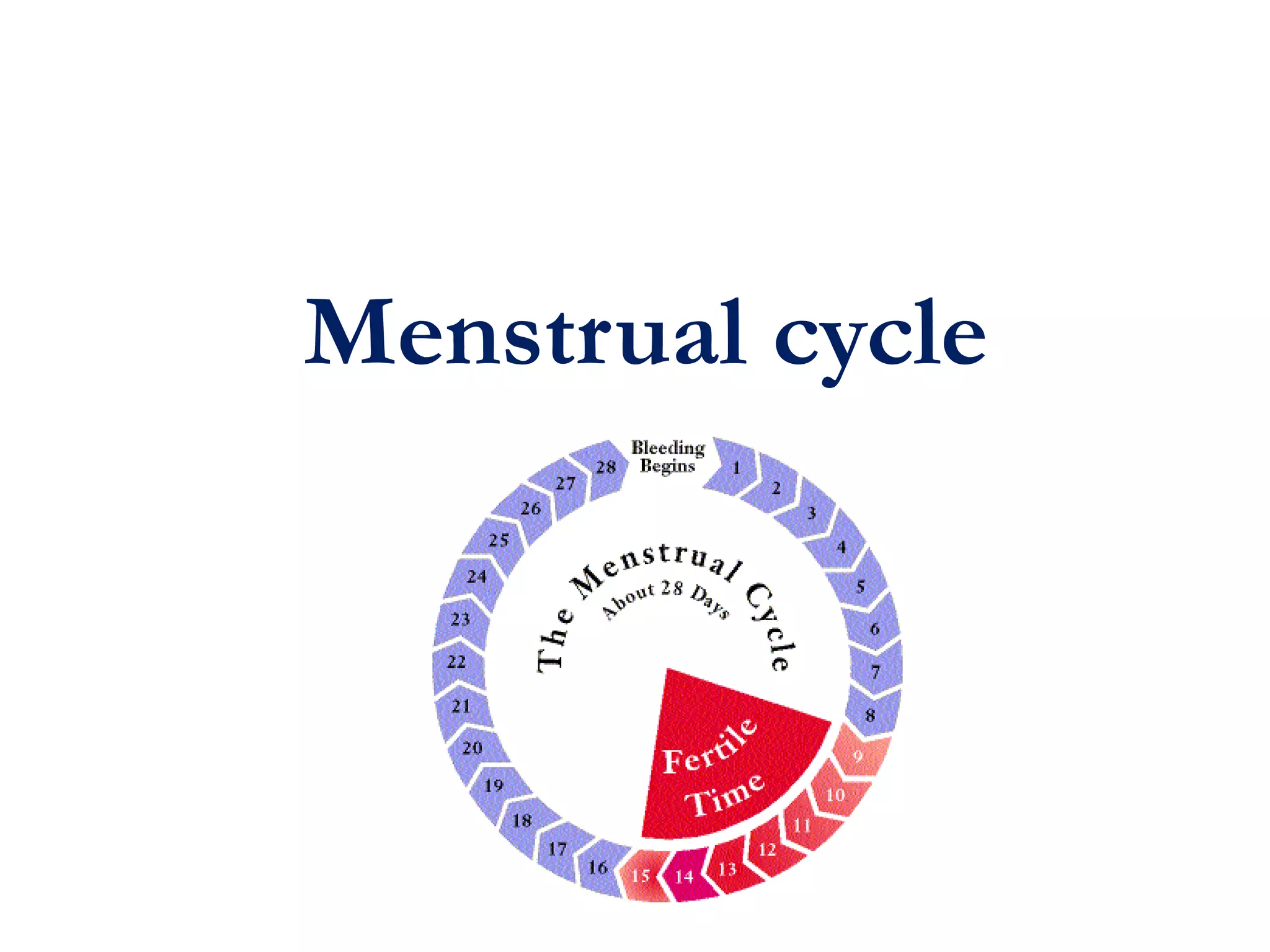
Menstrual cycle
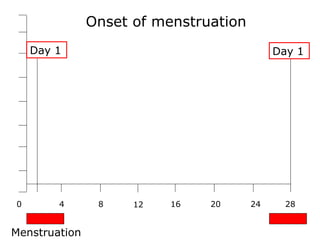
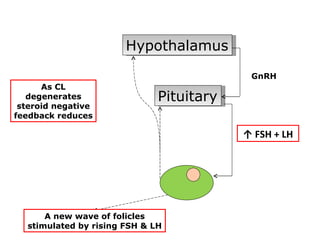
Onset of menstruation
    Day 1                                   Day 1


0       4       8    12   16   20      24     28


Menstruation
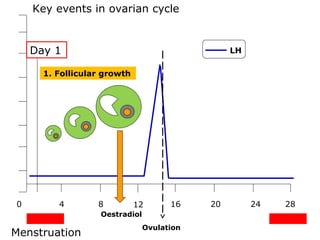
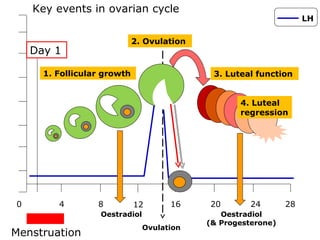
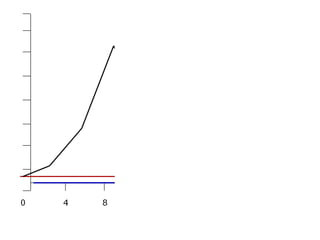
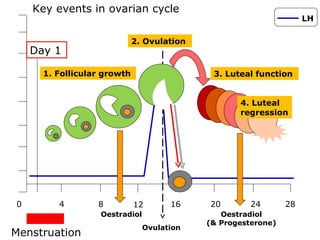
Key events in ovarian cycle


    Day 1                                        LH

      1. Follicular growth


0        4        8          12       16    20        24   28
                   Oestradiol
                                Ovulation
Menstruation
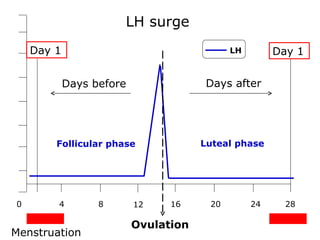
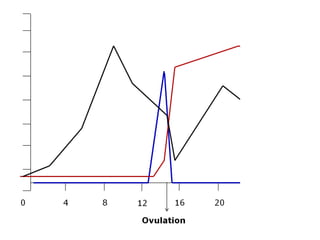
LH surge
    Day 1                                   LH        Day 1


            Days before                Days after


        Follicular phase              Luteal phase


0       4         8       12    16     20        24     28

                          Ovulation
Menstruation
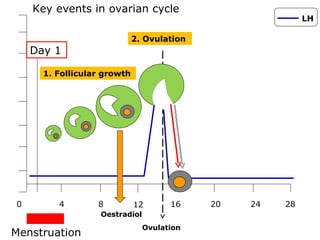
Key events in ovarian cycle
                                                           LH

                             2. Ovulation
    Day 1

      1. Follicular growth


0        4        8          12       16    20   24   28
                   Oestradiol
                                Ovulation
Menstruation
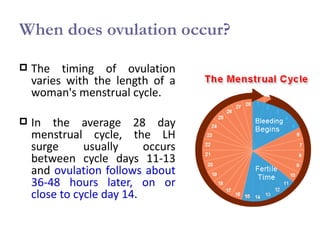
When does ovulation occur?
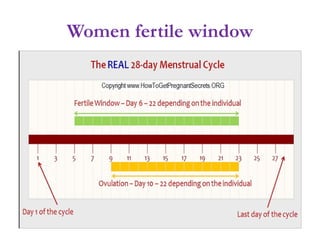
   The timing of ovulation
    varies with the length of a
    woman's menstrual cycle.

   In the average 28 day
    menstrual cycle, the LH
    surge      usually     occurs
    between cycle days 11-13
    and ovulation follows about
    36-48 hours later, on or
    close to cycle day 14.
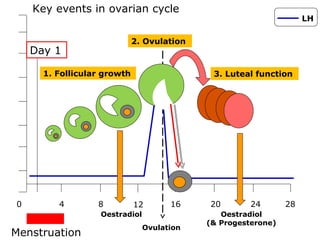
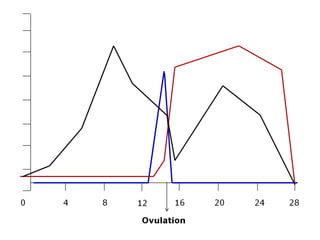
Key events in ovarian cycle
                                                                    LH

                             2. Ovulation
    Day 1

      1. Follicular growth                   3. Luteal function


0        4        8          12       16    20        24       28
                   Oestradiol                  Oestradiol
                                            (& Progesterone)
                                Ovulation
Menstruation
Key events in ovarian cycle
                                                                    LH

                             2. Ovulation
    Day 1

      1. Follicular growth                   3. Luteal function


                                                   4. Luteal
                                                   regression


0        4        8          12       16    20        24       28
                   Oestradiol                  Oestradiol
                                            (& Progesterone)
                                Ovulation
Menstruation
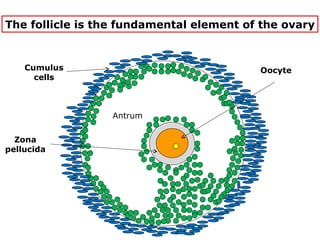
The follicle is the fundamental element of the ovary


    Cumulus                               Oocyte
      cells


                  Antrum


  Zona
pellucida
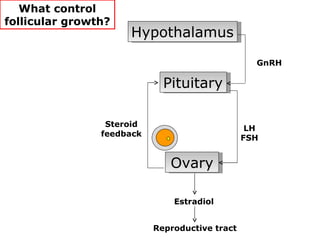
What control
follicular growth?
                     Hypothalamus

                                                  GnRH

                             Pituitary

                 Steroid
                                                 LH
                feedback
                                                FSH


                              Ovary

                               Estradiol


                           Reproductive tract
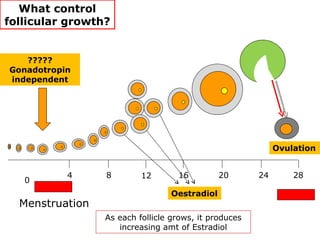
What control
follicular growth?


   ?????
Gonadotropin
independent


                                                            Ovulation


           4     8        12       16         20       24       28
   0
                                 Oestradiol
  Menstruation
                 As each follicle grows, it produces
                    increasing amt of Estradiol
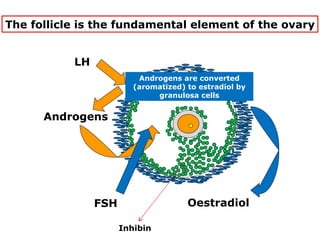
The follicle is the fundamental element of the ovary


           LH
                          Androgens are converted
                         (aromatized) to estradiol by
                              granulosa cells


      Androgens


                FSH                   Oestradiol

                      Inhibin
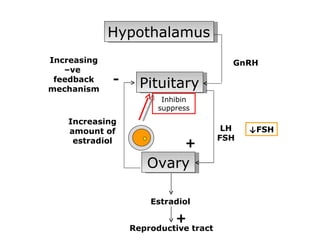
Hypothalamus
Increasing                              GnRH
   –ve
 feedback    -     Pituitary
mechanism
                        Inhibin
                       suppress
   Increasing
   amount of                           LH   ↓FSH
                                      FSH
    estradiol                +
                    Ovary

                     Estradiol

                           +
                 Reproductive tract
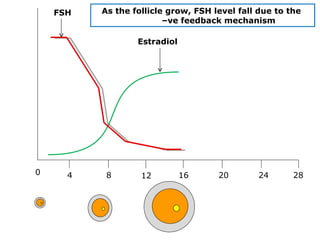
FSH   As the follicle grow, FSH level fall due to the
                         –ve feedback mechanism

                  Estradiol


0     4    8       12         16     20        24      28
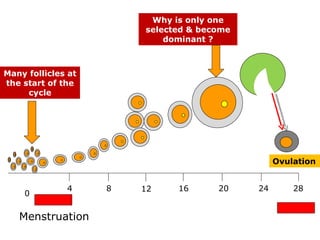
Why is only one
                        selected & become
                            dominant ?


Many follicles at
the start of the
     cycle


                                                 Ovulation


              4     8   12    16      20    24       28
    0


   Menstruation
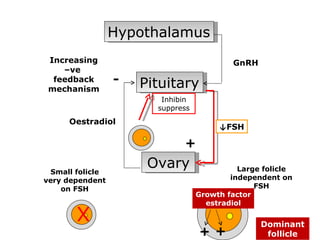
Hypothalamus
 Increasing                               GnRH
    –ve
  feedback       -   Pituitary
 mechanism
                        Inhibin
                       suppress
     Oestradiol
                                       ↓FSH
                                       FSH

                             +

 Small folicle
                      Ovary                 Large folicle
very dependent                            independent on
    on FSH                                      FSH
                                  Growth factor
                                    estradiol

       X                                         Dominant
                                  + +             follicle
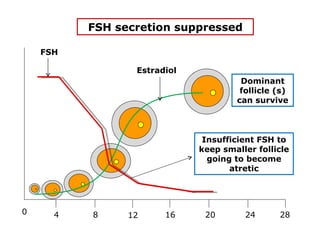
FSH secretion suppressed

    FSH

                 Estradiol
                                      Dominant
                                      follicle (s)
                                     can survive


                              Insufficient FSH to
                             keep smaller follicle
                               going to become
                                    atretic


0     4   8     12     16     20       24      28
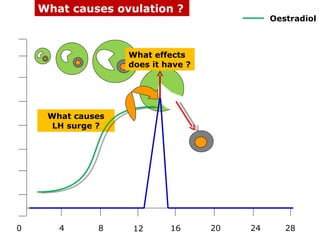
What causes ovulation ?
                                              Oestradiol


                   What effects
                   does it have ?


     What causes
      LH surge ?


0      4      8     12      16      20   24      28
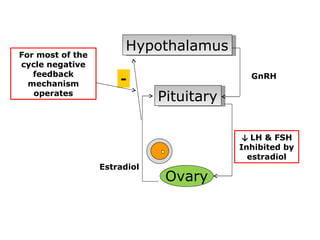
Hypothalamus
For most of the
cycle negative
   feedback                                  GnRH
  mechanism           -
   operates
                              Pituitary

                                            ↓ LH & FSH
                                           LH
                                           Inhibited by
                                          FSH
                                             estradiol
                  Estradiol
                               Ovary
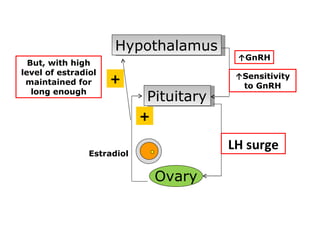
Hypothalamus
                                         ↑GnRH
  But, with high
level of estradiol                        GnRH
 maintained for      +                   ↑Sensitivity
                                           to GnRH
   long enough
                            Pituitary
                            +

                                        LH surge
                Estradiol


                                Ovary
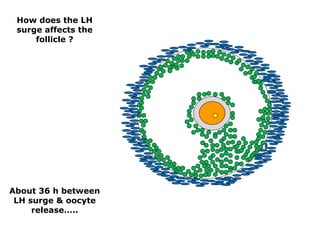
How does the LH
 surge affects the
     follicle ?


About 36 h between
 LH surge & oocyte
     release…..
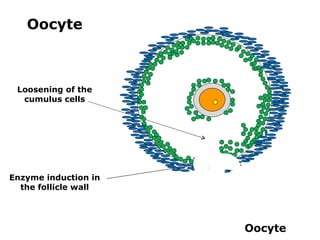
Oocyte


 Loosening of the
  cumulus cells


Enzyme induction in
  the follicle wall


                      Oocyte
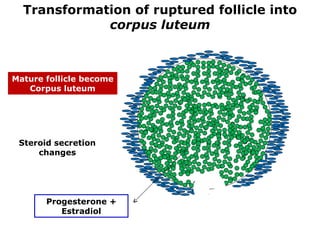
Transformation of ruptured follicle into
             corpus luteum


Mature follicle become
   Corpus luteum


 Steroid secretion
     changes


       Progesterone +
          Estradiol
What maintains
   the CL ?
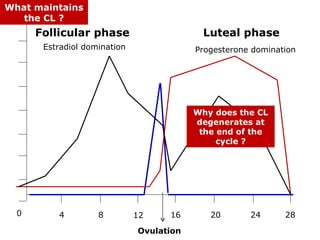
      Follicular phase                     Luteal phase
       Estradiol domination               Progesterone domination


                                          Why does the CL
                                          degenerates at
                                           the end of the
                                               cycle ?


  0       4         8         12    16       20       24      28

                              Ovulation
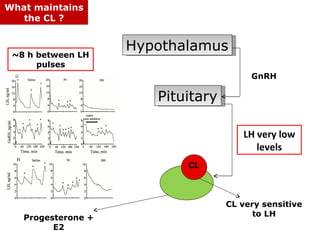
What maintains
   the CL ?


                    Hypothalamus
 ~8 h between LH
      pulses
                                        GnRH

                       Pituitary

                                      LH very low
                                         levels
                           CL


                                   CL very sensitive
   Progesterone +                        to LH
         E2
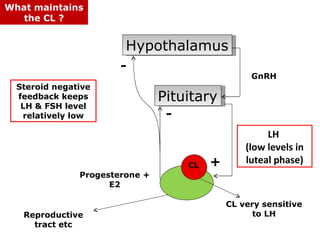
What maintains
   the CL ?


                        Hypothalamus
                       -
                                                   GnRH
  Steroid negative
  feedback keeps                Pituitary
   LH & FSH level
   relatively low                -
                                                       LH
                                                  (low levels in
                                     CL   +       luteal phase)
               Progesterone +
                     E2

                                              CL very sensitive
   Reproductive                                     to LH
     tract etc
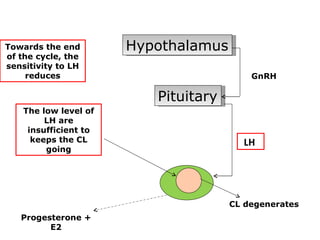
Towards the end        Hypothalamus
of the cycle, the
sensitivity to LH
     reduces                              GnRH

                          Pituitary
    The low level of
         LH are
     insufficient to
      keeps the CL                      LH
         going


                                      CL degenerates
   Progesterone +
         E2
Hypothalamus
                                           GnRH
      As CL
   degenerates                Pituitary
 steroid negative
feedback reduces

                                          ↑ FSH + LH


   Progesterone +of folicles
      A new wave
  stimulated by rising FSH & LH
         E2
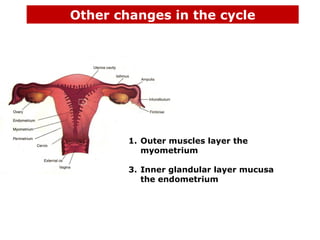
Other changes in the cycle


        1. Outer muscles layer the
           myometrium

        3. Inner glandular layer mucusa
           the endometrium
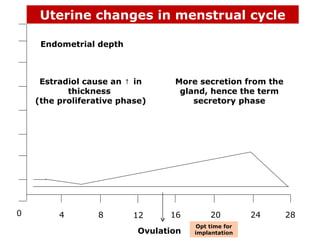
Uterine changes in menstrual cycle

     Endometrial depth


     Estradiol cause an ↑ in      More secretion from the
           thickness               gland, hence the term
    (the proliferative phase)         secretory phase


0        4        8       12     16        20         24    28
                                       Opt time for
                           Ovulation   implantation
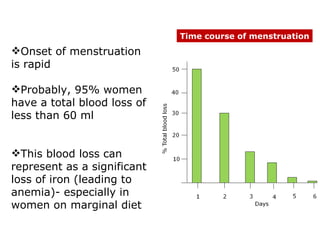
Time course of menstruation
Onset of menstruation
is rapid

Probably, 95% women
have a total blood loss of
less than 60 ml


This blood loss can
represent as a significant
loss of iron (leading to
anemia)- especially in
women on marginal diet
Menstruation….Why ?


In preparation of pregnancy, the human uterine
stromal cells go through complex changes and the
stromal cells terminal differentiate

If implantation and pregnancy do not occur, this
tissue is lost and the uterus prepares itself again for
another possible pregnancy
Key events in ovarian cycle
                                                                    LH

                             2. Ovulation
    Day 1

      1. Follicular growth                   3. Luteal function


                                                   4. Luteal
                                                   regression


0        4        8          12       16    20        24       28
                   Oestradiol                  Oestradiol
                                            (& Progesterone)
                                Ovulation
Menstruation
Women fertile window
Menstrual cycle

Menstrual cycle

  • 1.
  • 2.
    Onset of menstruation Day 1 Day 1 0 4 8 12 16 20 24 28 Menstruation
  • 3.
    Key events inovarian cycle Day 1 LH 1. Follicular growth 0 4 8 12 16 20 24 28 Oestradiol Ovulation Menstruation
  • 4.
    LH surge Day 1 LH Day 1 Days before Days after Follicular phase Luteal phase 0 4 8 12 16 20 24 28 Ovulation Menstruation
  • 5.
    Key events inovarian cycle LH 2. Ovulation Day 1 1. Follicular growth 0 4 8 12 16 20 24 28 Oestradiol Ovulation Menstruation
  • 6.
    When does ovulationoccur?  The timing of ovulation varies with the length of a woman's menstrual cycle.  In the average 28 day menstrual cycle, the LH surge usually occurs between cycle days 11-13 and ovulation follows about 36-48 hours later, on or close to cycle day 14.
  • 7.
    Key events inovarian cycle LH 2. Ovulation Day 1 1. Follicular growth 3. Luteal function 0 4 8 12 16 20 24 28 Oestradiol Oestradiol (& Progesterone) Ovulation Menstruation
  • 8.
    Key events inovarian cycle LH 2. Ovulation Day 1 1. Follicular growth 3. Luteal function 4. Luteal regression 0 4 8 12 16 20 24 28 Oestradiol Oestradiol (& Progesterone) Ovulation Menstruation
  • 9.
    The follicle isthe fundamental element of the ovary Cumulus Oocyte cells Antrum Zona pellucida
  • 10.
    What control follicular growth? Hypothalamus GnRH Pituitary Steroid LH feedback FSH Ovary Estradiol Reproductive tract
  • 11.
    What control follicular growth? ????? Gonadotropin independent Ovulation 4 8 12 16 20 24 28 0 Oestradiol Menstruation As each follicle grows, it produces increasing amt of Estradiol
  • 12.
    The follicle isthe fundamental element of the ovary LH Androgens are converted (aromatized) to estradiol by granulosa cells Androgens FSH Oestradiol Inhibin
  • 13.
    Hypothalamus Increasing GnRH –ve feedback - Pituitary mechanism Inhibin suppress Increasing amount of LH ↓FSH FSH estradiol + Ovary Estradiol + Reproductive tract
  • 14.
    FSH As the follicle grow, FSH level fall due to the –ve feedback mechanism Estradiol 0 4 8 12 16 20 24 28
  • 15.
    Why is onlyone selected & become dominant ? Many follicles at the start of the cycle Ovulation 4 8 12 16 20 24 28 0 Menstruation
  • 16.
    Hypothalamus Increasing GnRH –ve feedback - Pituitary mechanism Inhibin suppress Oestradiol ↓FSH FSH + Small folicle Ovary Large folicle very dependent independent on on FSH FSH Growth factor estradiol X Dominant + + follicle
  • 17.
    FSH secretion suppressed FSH Estradiol Dominant follicle (s) can survive Insufficient FSH to keep smaller follicle going to become atretic 0 4 8 12 16 20 24 28
  • 18.
    What causes ovulation? Oestradiol What effects does it have ? What causes LH surge ? 0 4 8 12 16 20 24 28
  • 19.
    Hypothalamus For most ofthe cycle negative feedback GnRH mechanism - operates Pituitary ↓ LH & FSH LH Inhibited by FSH estradiol Estradiol Ovary
  • 20.
    Hypothalamus ↑GnRH But, with high level of estradiol GnRH maintained for + ↑Sensitivity to GnRH long enough Pituitary + LH surge Estradiol Ovary
  • 21.
    How does theLH surge affects the follicle ? About 36 h between LH surge & oocyte release…..
  • 22.
    Oocyte Loosening ofthe cumulus cells Enzyme induction in the follicle wall Oocyte
  • 23.
    Transformation of rupturedfollicle into corpus luteum Mature follicle become Corpus luteum Steroid secretion changes Progesterone + Estradiol
  • 24.
    What maintains the CL ? Follicular phase Luteal phase Estradiol domination Progesterone domination Why does the CL degenerates at the end of the cycle ? 0 4 8 12 16 20 24 28 Ovulation
  • 25.
    What maintains the CL ? Hypothalamus ~8 h between LH pulses GnRH Pituitary LH very low levels CL CL very sensitive Progesterone + to LH E2
  • 26.
    What maintains the CL ? Hypothalamus - GnRH Steroid negative feedback keeps Pituitary LH & FSH level relatively low - LH (low levels in CL + luteal phase) Progesterone + E2 CL very sensitive Reproductive to LH tract etc
  • 27.
    Towards the end Hypothalamus of the cycle, the sensitivity to LH reduces GnRH Pituitary The low level of LH are insufficient to keeps the CL LH going CL degenerates Progesterone + E2
  • 28.
    Hypothalamus GnRH As CL degenerates Pituitary steroid negative feedback reduces ↑ FSH + LH Progesterone +of folicles A new wave stimulated by rising FSH & LH E2
  • 32.
    Other changes inthe cycle 1. Outer muscles layer the myometrium 3. Inner glandular layer mucusa the endometrium
  • 33.
    Uterine changes inmenstrual cycle Endometrial depth Estradiol cause an ↑ in More secretion from the thickness gland, hence the term (the proliferative phase) secretory phase 0 4 8 12 16 20 24 28 Opt time for Ovulation implantation
  • 34.
    Time course ofmenstruation Onset of menstruation is rapid Probably, 95% women have a total blood loss of less than 60 ml This blood loss can represent as a significant loss of iron (leading to anemia)- especially in women on marginal diet
  • 35.
    Menstruation….Why ? In preparationof pregnancy, the human uterine stromal cells go through complex changes and the stromal cells terminal differentiate If implantation and pregnancy do not occur, this tissue is lost and the uterus prepares itself again for another possible pregnancy
  • 36.
    Key events inovarian cycle LH 2. Ovulation Day 1 1. Follicular growth 3. Luteal function 4. Luteal regression 0 4 8 12 16 20 24 28 Oestradiol Oestradiol (& Progesterone) Ovulation Menstruation
  • 37.

Editor's Notes

  • #7 (It is the mid-cycle surge of the hormone LH that causes the dominant follicle to rupture and release the mature egg.)