DR. DAVIS KURIAN
Bronciectasis (Greek word)
Bronkos ---- Wind pipe
Ektesis ---- Stretching
 Irreversible airway dilation that involves the lung in
focal/ diffuse manner.
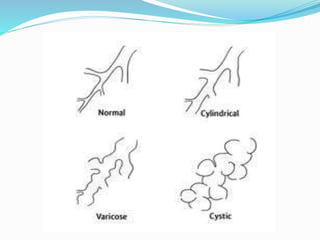
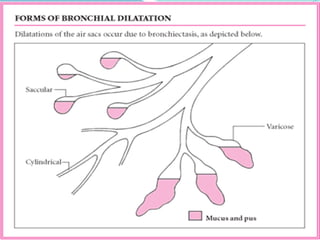
 4 types of airway dialation - (Reid’s classification)
 Cylindrical
 Tubular (most common)
 Varicose
 Cystic
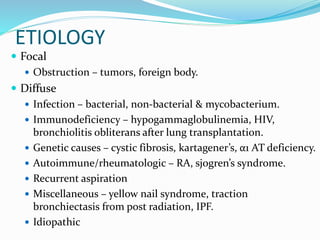
ETIOLOGY
 Focal
 Obstruction – tumors, foreign body.
 Diffuse
 Infection – bacterial, non-bacterial & mycobacterium.
 Immunodeficiency – hypogammaglobulinemia, HIV,
bronchiolitis obliterans after lung transplantation.
 Genetic causes – cystic fibrosis, kartagener’s, α1 AT deficiency.
 Autoimmune/rheumatologic – RA, sjogren’s syndrome.
 Recurrent aspiration
 Miscellaneous – yellow nail syndrome, traction
bronchiectasis from post radiation, IPF.
 Idiopathic
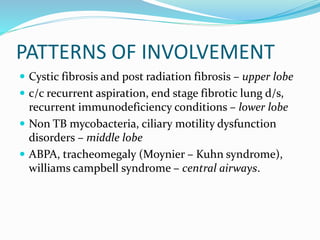
PATTERNS OF INVOLVEMENT
 Cystic fibrosis and post radiation fibrosis – upper lobe
 c/c recurrent aspiration, end stage fibrotic lung d/s,
recurrent immunodeficiency conditions – lower lobe
 Non TB mycobacteria, ciliary motility dysfunction
disorders – middle lobe
 ABPA, tracheomegaly (Moynier – Kuhn syndrome),
williams campbell syndrome – central airways.
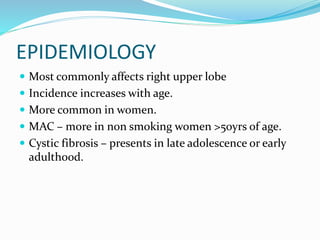
EPIDEMIOLOGY
 Most commonly affects right upper lobe
 Incidence increases with age.
 More common in women.
 MAC – more in non smoking women >50yrs of age.
 Cystic fibrosis – presents in late adolescence or early
adulthood.
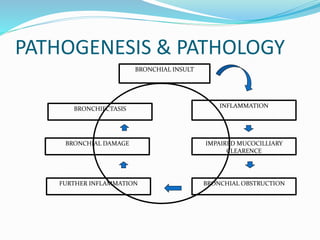
BRONCHIAL INSULT
INFLAMMATION
IMPAIRED MUCOCILLIARY
CLEARENCE
BRONCHIAL OBSTRUCTION
BRONCHIAL DAMAGE
FURTHER INFLAMMATION
BRONCHIECTASIS
PATHOGENESIS & PATHOLOGY
 Vicious cycle hypothesis
 Microbes -> c/c inflammation -> damage to airway
and impaired mucociliary clearance –> more infection.
 Ongoing inflammation – reactive oxygen species,
proinflammatory cytokines – damage to lung tissues –
obstruction to airflow.
 Non infective conditions – immune mediated damage
to airways and lungs
CLINICAL FEATURES
 M.C symptom – persistent productive cough with
ongoing production of thick tenaceous sputum.
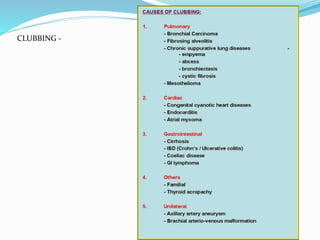
 Signs – clubbing, crackles and wheeze on auscultation.
 PFT – shows mild to moderate airway obstruction
 Acute exacerbations – characterized by change in
nature of sputum production and increase in volume
and purulence.
DIAGNOSIS
 Clinical history + radiographic features.
 Lab testing – CBC – TC,DC , Sputum culture
 X Ray chest
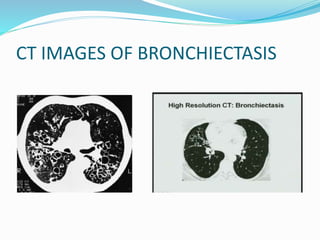
 HRCT thorax – imaging modality of choice – findings
include –
 Airway dilation – tram track, signet ring
 Lack of bronchial tapering
 Bronchial wall thickening in dilated airways
 Inspissated secretion – tree in bud
 FOB to r/o foreign body or underlying mass
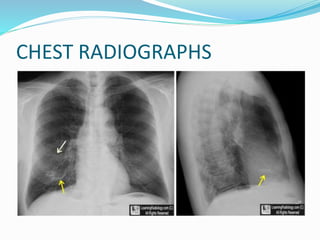
CHEST RADIOGRAPHS
CT IMAGES OF BRONCHIECTASIS
PULMONARY FUNCTION TESTS
• Reveal an obstructive pattern with reduced FEV1 and
reduced FVC.
• Other bedside tests include :
• Sabrasez breath holding test
• Schneider’s match blowing test
• Cough test – ability, strength and effectiveness
OTHER DIAGNOSTIC TESTS
• bronchial biopsy (ciliary ultrastructure)
• bronchoscopy – obstructing lesion?
• aspergillus precipitins / antibodies
• serum IgE
• alpha 1 – antitrypsin (concentracion / phenotype)
• RA factor
SPUTUM ANALYSIS
Amount of sputum
 24 hr Sputum Production
 Mild < 10 ml/day
 Moderate <150 ml/day
 Severe >150 ml/day
 Visual Impression – colour, consistency
 Microbiology
 Sputum AFB -3 sputum samples on 3 consecutive days
MANAGEMENT
 Anti microbial therapy to decrease the microbial load.
 Maintenance of hygeine and clearance of secretions by
postural drainage and mucolytics.
 Anti inflammatory therapy and bronchodialation with
corticosteroids and bronchodilators.
 Refractory cases – resection of the affected lung.
COMPLICATIONS
 Life threatening hemoptysis – erosion into a blood
vessel.
 Recurrent pneumonia
 Empyema
 Pneumothorax
 Lung abscess
 Brain abscess
 Cor pulmonale
 Anti microbial resistance due to repeated infections
and repeated use of antibiotics
PRE OP EVALUATION
 Adequate history – to r/o other coexisting diseases,
frequency of exacerbations, onset and duration,
sputum – amount, colour, dyspnea, stridor.
 Examination of vitals, chest examination and CVS
examinaion to r/o RVH and signs of PAH, airway
assessment.
 Optimisation of pulmonary status – antibiotics,
bronchodilators, postural drainage to clear off
secretions.
 Pulmonary function tests and baseline ABG
 Cough - indirectly increases airway irritability.
 Blood-stained sputum or episodes of gross hemoptysis
should raise the possibility of a tumor invading the
respiratory tract (e.g., the main stem bronchus), which
might interfere with endobronchial intubation.
 Smoking increases the airway reactivity and increases
the incidence of post operative complications.
 Presence of central cyanosis –suggestive of poor
cardiopulmonary reserve
 Acute phase – airway hyper reactivity will take 6wks or
more to subside – increased secretions can increase
incidence of broncho/laryngospasms.
 Tracheal mucociliary flow and pulmonary bactericidal
activity can be reduced by GA.
 Positive pressure ventilation can cause increase
spreading of infections from upper to lower respiratory
tract.
PRE OP PFT
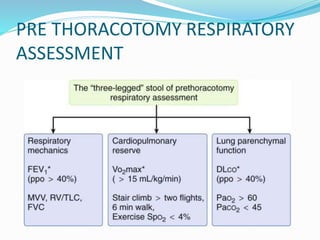
 PFT with special reference to VC, FEV1, PEFR.
 Criteria which indicates increased mortality & morbidity
after lung resection:
 FVC <50% of predicted value
 FEV1 <50% of FVC
 Maximum breathing capacity <50% of predicted value
 PaCO2 > 45mmHg
 Gas transfer <50% of predicted value
 Mean Pulmonary artery pressure >30mm Hg during unilateral
occlusion of pulmonary artery.
RESPIRATORY MECHANICS
 Rather than absolute values, % values are more
important in predicting the post operative outcomes.
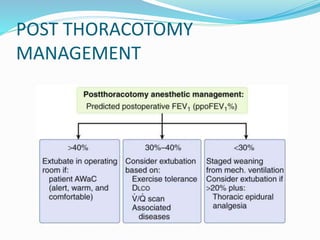
 Single most important – predicted postoperative FEV1:
= preoperative FEV1% x (1-%lung tissue removed/100)
Patients with >40% of ppoFEV1 – less chance of post
thoracotomy complications
PRE THORACOTOMY RESPIRATORY
ASSESSMENT
POST THORACOTOMY
MANAGEMENT
SPLIT LUNG FUNCTION TESTS
 Regional lung function studies - predict the function of the lung tissue
that would remain after lung resection.
 Regional Perfusion Test - Intravenous injection of insoluble radioactive
xenon (133Xe). The peak radioactivity of each lung is proportional to the
degree of perfusion of each lung.
 Regional Ventilation Test - Using an inhaled, insoluble radioactive gas,
the peak radioactivity over each lung is proportional to the degree of
ventilation.
 Combining radiospirometry with whole-lung testing (FEV1, FVC,
maximal breathing capacity) has resulted in a fair degree of correlation
between predicted volumes and pulmonary function tests measured
after pneumonectomy.
CLUBBING -
BREATH SOUNDS
 Wet sounds (crackles) are usually caused by excessive
fluid in the airways and indicate sputum retention or
edema.
 Dry sounds (wheezes) are produced by high-velocity
gas flow through bronchi and are a sign of airway
obstruction.
POSITION OF TRACHEA
 The trachea should be in the midline.
 Displacement of the trachea may be secondary to a
number of causes, including mediastinal mass, and
should raise the possibility of difficult intubation of
the trachea or airway obstruction at induction of
anesthesia.
ABG
 Important to know the baseline blood pH status and
blood gas status.
 Patients with underlying COPD – especially blue
bloaters – have high levels of blood CO2 – have a
hypoxic drive to breath – supplementing high oxygen –
abolish the respiratory drive.
 Pink puffers – usually have a near normal ABG
EVALUATION OF CVS
 Pulmonary circulation - normally a low-pressure, high-
compliance system
 In COPD- decreased compliance - increase in
pulmonary vascular resistance - pulmonary
hypertension
 Acidosis, sepsis, hypoxia, and application of positive
end-expiratory pressure (PEEP), all further increase the
pulmonary vascular resistance and increase the chance
of right ventricular failure.
EVALUATION OF CVS
 In patients with ischemic or valvular heart disease, the
function of the left side of the heart should also be carefully
evaluated.
 Electrocardiogram - features of right atrial and ventricular
hypertrophy and strain - low-voltage QRS complex due to
lung hyperinflation and poor R-wave progression across
the precordial leads.
 Enlarged P wave (“P pulmonale”) in standard lead II is
diagnostic of right atrial hypertrophy. The
electrocardiographic changes of right ventricular
hypertrophy are an R/S ratio of greater than 1.0 in lead V1
CHEST RADIOGRAPHY
 Hyperinflation and increased vascular markings -
COPD.
 Prominent lung markings -bronchitis, but decreased
in emphysema, particularly at the bases.
 A mediastinal mass may indicate difficulty with
ventilation, a difficult and bloody dissection, difficulty
in placing a double-lumen tube (DLT; because of
deviation of the main stem bronchus), or a collapsed
lobe owing to bronchial obstruction.
 Presence of pneumothorax should be ruled out
 CT & PET-Patients normally undergo CT scanning.
The CT scan can delineate the size of the tumor. It
can also reveal if there is airway or cardiovascular
compression. PET scan can detect tumor based on
the metabolic activity.
 DLCO –denotes the ability of the lung to perform
gas exchange – impaired in interstitial lung disease,.
A predicted postoperative diffusing capacity for
carbon monoxide <40% is associated with increased
risk.
SIGNIFICANCE OF
BRONCHODILATOR THERAPY
 Pulmonary function tests - before and after
bronchodilator therapy - to assess the reversibility of
airway obstruction.
 A 15% improvement in pulmonary function tests may
be considered a positive response to bronchodilator
therapy and indicates that this therapy should be
initiated before surgery.
CARDIOPULMONARY RISK INDEX
(CPRI) FOR LUNG RESECTION
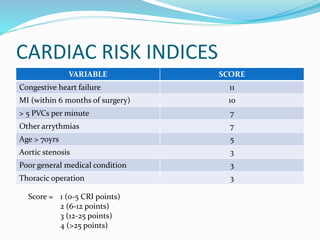
 Cardiac and pulmonary risk indices
 CPRI score of 4 or higher is associated with 22 fold
increase in post thoracotomy complications than in
patients with score less than 4
CARDIAC RISK INDICES
VARIABLE SCORE
Congestive heart failure 11
MI (within 6 months of surgery) 10
> 5 PVCs per minute 7
Other arrythmias 7
Age > 70yrs 5
Aortic stenosis 3
Poor general medical condition 3
Thoracic operation 3
Score = 1 (0-5 CRI points)
2 (6-12 points)
3 (12-25 points)
4 (>25 points)
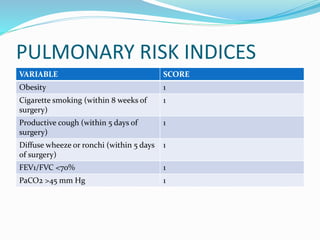
PULMONARY RISK INDICES
VARIABLE SCORE
Obesity 1
Cigarette smoking (within 8 weeks of
surgery)
1
Productive cough (within 5 days of
surgery)
1
Diffuse wheeze or ronchi (within 5 days
of surgery)
1
FEV1/FVC <70% 1
PaCO2 >45 mm Hg 1
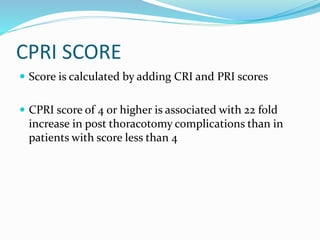
CPRI SCORE
 Score is calculated by adding CRI and PRI scores
 CPRI score of 4 or higher is associated with 22 fold
increase in post thoracotomy complications than in
patients with score less than 4
PRE OPERATIVE PREPARATIONS
 Infection, dehydration, electrolyte imbalance,
wheezing, obesity, cigarette smoking, cor
pulmonale, and malnutrition, show particular
correlations with postoperative complications.
SMOKING
 cessation of smoking for a period of longer than 4
to 6 weeks before surgery - reduced postoperative
complications.
 Most of the beneficial effects of cessation of
smoking, such as improvement in ciliary function,
improvement in closing volume, increase in FEF25–
75%, and reduction in sputum production, usually
occur 2 to 3 months after smoking has ceased.
INFECTION
 Appropriate antibiotic therapy based on culture and
sensitivity
Hydration and Removal of
Bronchial Secretions
 Correction of hypovolemia and electrolyte imbalance should
be accomplished before surgery - adequate hydration
decreases the viscosity of bronchial secretions and facilitates
their removal from the bronchial tree.
 Humidification of inspired gas is extremely useful.
 Mucolytic drugs, such as acetylcysteine, or oral expectorants
(potassium iodide) can be beneficial to patients with viscous
secretions.
 Commonly used methods for removing secretions from the
bronchial tree include postural drainage, vigorous coughing,
chest percussion, deep breathing, and the use of an incentive
spirometer.
Wheezing and Bronchodilation
 In the presence of acute wheezing elective surgery
should be postponed until effective treatment has
been instituted.
 Chronic wheezing is often seen in patients with
COPD and is attributable to the presence of gas
flow obstruction secondary to smooth muscle
contraction, accumulation of secretions, and
mucosal edema.
Sympathomimetic Drugs –
 increase the formation of 3′5′-cyclic adenosine
monophosphate (cAMP).
 cAMP - produces bronchodilation, and cGMP produces
bronchoconstriction, determines the state of contraction
of the bronchial smooth muscle.
 The β1 (cardiac effects) of these drugs are often
undesirable in patients with COPD. Selective β2
sympathomimetic drugs, such as albuterol, terbutaline,
and metaproterenol, given as inhaled aerosols, are the
preferred drugs for the treatment of bronchospasm,
particularly in patients with cardiac disease.
Phosphodiesterase Inhibitors –
inhibit the breakdown of cAMP by cytoplasmic
phosphodiesterase - increase the level of cAMP,
resulting in bronchodilation.
Aminophylline improves diaphragmatic contractility
and increases the patient's resistance to fatigue.
Therapeutic blood levels of aminophylline are 5 to 20
µg/mL and can be achieved by infusing a loading dose
of 5 to 7 mg/kg over 20 minutes, followed by a
continuous intravenous infusion of 0.5 to 0.7 mg/kg/hr.
Aminophylline may cause ventricular dysrhythmias,
and this side effect should be borne in mind when
treating patients who have myocardial ischemia.
Steroids –
 traditionally considered to decrease mucosal edema and may
prevent the release of bronchoconstricting substances.
Cromolyn Sodium –
o stabilizes mast cells and inhibits degranulation and histamine
release. It is useful in the prevention of bronchospastic attacks.
Parasympatholytic Drugs –
o include atropine and ipratropium. In the past, atropine has been
avoided in patients with COPD and bronchitis because of
concern regarding increases in the viscosity of mucus produced
by this agent. However, atropine blocks the formation of cyclic
guanosine monophosphate and therefore has a bronchodilator
effect.
Pulmonary Rehabilitation –
o included education in a variety of areas such as breathing,
exercise, and nutrition. It has reduced the incidence of
complications following surgeries and have shown to accelerate
the healing process and improvement of lung functions.
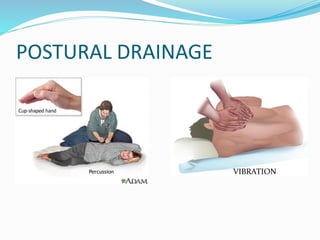
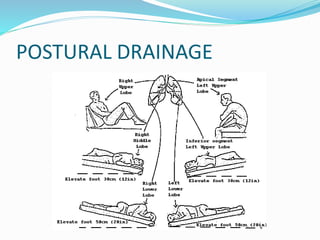
POSTURAL DRAINAGE
 Method of drainage of secretions from bronchial
airways.
 Aided by gravity and the secretions easily coughed out.
 Chest percussion and vibration.
 Best done before meals or one and half to two hours
after meals to decrease the chance of vomiting.
POSTURAL DRAINAGE
VIBRATION
POSTURAL DRAINAGE
POSTURAL DRAINAGE
 All the positions are contraindicated in:
 Increased ICP
 Active hemoptysis
 Unstable head and neck injury
 Bronchopleural fistula
 Empyema
 Hemodynamically unstable patient
 Rib fracture without flail chest
 Pulmonary embolism
 Large pleural effusions
INTRA OPERATIVE MANAGEMENT
 Lung isolation techniques – single lumen tube, double
lumen tube, bronchial blockers.
 Ventilation – problems include the VQ mismatch –
increase in the shunt – arterial hypoxemia –
minimised by
 Optimal ventilatory pattern
 Early clamping of pulmonary vessels
 Insufflation of oxygen to upper lung and cessation of
two lung ventilation as late as possible
INTRA OPERATIVE MANAGEMENT
 Optimal ventilatory pattern – small tidal volume
(7ml/kg) delivered at an increased respiratory rate (20
per min), short inspiratory duration (I:E approx 1:2),
reduced PEEP – all these prevents excess rise in intra
alveolar pressure – hence reduces the blood diversion
from alveoli - maintain PaCO2 (36-40 mmHg)
 Early clamping of pulmonary vessels – eliminate most
of the venous admixture during OLV, but not always
possible
INTRA OPERATIVE MANAGEMENT
 Insufflation of oxygen to the upper lung – improves
oxygenation if carried out at a positive pressure of
10cm H2O – particularly applicable in oesophageal
surgeries.
 Cessation of ventilation to the upper lung – both lungs
to be ventilated as long as possible – decreasing the
period and extent of hypoxia.
MAINTENANCE OF ANAESTHESIA
 Light GA with muscular relaxation and controlled
ventilation is the ideal combination.
 Opioids – increase the quality of analgesia.
 Low concentration of inhaled anaesthetics can
increase the depth of anaesthesia, prevent the excess
rise in blood pressure and decreases the patient
awareness – iso, sevo or desflurane is preferred.
 Volatile agents themselves can act as bronchodilators –
like halothane, enflurane, desflurane, isoflurane and
sevoflurane
 Drugs with histamine release property are preferably
avoided – can cause bronchospasm (TPS, ms relaxants
like atracurium, mivacurium and curare).
 Ketamine – bronchodilatory properties, maintain
hypoxic pulmonary vasoconstriction response –
minimises VQ mismatch
MONITORING
 Blood pressure – NIBP/arterial.
 Arterial line – advantage of drawing arterial samples
for ABG analysis
 IJV cannulation – preferably on the same side of
surgery – for CVP monitoring, fluid and blood
transfusions during the procedure – also a wide bore
peripheral cannula.
 Heat loss – minimised by using a warming blanket,
warm fluids and warming of inspired gases.
CHEST CLOSURE AND DRAINAGE
 Aim at the end of thoracotomy – to achieve full
expansion of all remaining lung tissue with the
mediastinum approximately central.
 Wide bore tubing – usually two – anterior and
posterior – to allow the escape of air (tube at apex) and
clots/fluids (tube at base).
 Underwater seal – to prevent air from entering during
inspiration back to the tube.
 Drains are closed when there is no appreciable blood
loss and air leak.
IMMEDIATE POST OPERATIVE
PERIOD
 Muscle relaxation reversed – lungs suctioned –
remaining lung tissue reinflated with chest drains
open before ET tube is removed once satisfactory
pattern of respiration has been established.
 Mechanical ventilation is usually avoided post surgery
– due to the complications of infection, air leaks.
 If controlled ventilation needed – inflation pressures
kept to the minimum.
IMMEDIATE POST OPERATIVE
PERIOD
 Post extubation – humidified oxygen delivered by face
mask & patient made to sit up as soon as possible – to
avoid abdominal contents interfering with
diaphragmatic movements.
 Post operative analgesia – by NSAIDs, narcotics IM/IV
– continuous/intermittent, intercostal blocks
intraoperatively, paravertebral and thoracic epidural,
interpleural instillation of drugs (A/E – increased
systemic absorption and loss through drains).
Cryoanalgesia – by freezing of intercostal nerves
POST OP COMPLICATIONS
 Atelectasis
 Airway trauma
 Penumothorax
 Caridac herniation
 Haemorrage
 Post pneumonectomy pulmonary edema.
 Dysrhytmias
 Right heart failure
Bronchiectasis.

Bronchiectasis.

  • 1.
  • 2.
    Bronciectasis (Greek word) Bronkos---- Wind pipe Ektesis ---- Stretching
  • 3.
     Irreversible airwaydilation that involves the lung in focal/ diffuse manner.  4 types of airway dialation - (Reid’s classification)  Cylindrical  Tubular (most common)  Varicose  Cystic
  • 6.
    ETIOLOGY  Focal  Obstruction– tumors, foreign body.  Diffuse  Infection – bacterial, non-bacterial & mycobacterium.  Immunodeficiency – hypogammaglobulinemia, HIV, bronchiolitis obliterans after lung transplantation.  Genetic causes – cystic fibrosis, kartagener’s, α1 AT deficiency.  Autoimmune/rheumatologic – RA, sjogren’s syndrome.  Recurrent aspiration  Miscellaneous – yellow nail syndrome, traction bronchiectasis from post radiation, IPF.  Idiopathic
  • 7.
    PATTERNS OF INVOLVEMENT Cystic fibrosis and post radiation fibrosis – upper lobe  c/c recurrent aspiration, end stage fibrotic lung d/s, recurrent immunodeficiency conditions – lower lobe  Non TB mycobacteria, ciliary motility dysfunction disorders – middle lobe  ABPA, tracheomegaly (Moynier – Kuhn syndrome), williams campbell syndrome – central airways.
  • 8.
    EPIDEMIOLOGY  Most commonlyaffects right upper lobe  Incidence increases with age.  More common in women.  MAC – more in non smoking women >50yrs of age.  Cystic fibrosis – presents in late adolescence or early adulthood.
  • 9.
    BRONCHIAL INSULT INFLAMMATION IMPAIRED MUCOCILLIARY CLEARENCE BRONCHIALOBSTRUCTION BRONCHIAL DAMAGE FURTHER INFLAMMATION BRONCHIECTASIS PATHOGENESIS & PATHOLOGY
  • 10.
    PATHOGENESIS & PATHOLOGY Vicious cycle hypothesis  Microbes -> c/c inflammation -> damage to airway and impaired mucociliary clearance –> more infection.  Ongoing inflammation – reactive oxygen species, proinflammatory cytokines – damage to lung tissues – obstruction to airflow.  Non infective conditions – immune mediated damage to airways and lungs
  • 11.
    CLINICAL FEATURES  M.Csymptom – persistent productive cough with ongoing production of thick tenaceous sputum.  Signs – clubbing, crackles and wheeze on auscultation.  PFT – shows mild to moderate airway obstruction  Acute exacerbations – characterized by change in nature of sputum production and increase in volume and purulence.
  • 12.
    DIAGNOSIS  Clinical history+ radiographic features.  Lab testing – CBC – TC,DC , Sputum culture  X Ray chest  HRCT thorax – imaging modality of choice – findings include –  Airway dilation – tram track, signet ring  Lack of bronchial tapering  Bronchial wall thickening in dilated airways  Inspissated secretion – tree in bud  FOB to r/o foreign body or underlying mass
  • 13.
  • 14.
    CT IMAGES OFBRONCHIECTASIS
  • 15.
    PULMONARY FUNCTION TESTS •Reveal an obstructive pattern with reduced FEV1 and reduced FVC. • Other bedside tests include : • Sabrasez breath holding test • Schneider’s match blowing test • Cough test – ability, strength and effectiveness
  • 16.
    OTHER DIAGNOSTIC TESTS •bronchial biopsy (ciliary ultrastructure) • bronchoscopy – obstructing lesion? • aspergillus precipitins / antibodies • serum IgE • alpha 1 – antitrypsin (concentracion / phenotype) • RA factor
  • 17.
    SPUTUM ANALYSIS Amount ofsputum  24 hr Sputum Production  Mild < 10 ml/day  Moderate <150 ml/day  Severe >150 ml/day  Visual Impression – colour, consistency  Microbiology  Sputum AFB -3 sputum samples on 3 consecutive days
  • 18.
    MANAGEMENT  Anti microbialtherapy to decrease the microbial load.  Maintenance of hygeine and clearance of secretions by postural drainage and mucolytics.  Anti inflammatory therapy and bronchodialation with corticosteroids and bronchodilators.  Refractory cases – resection of the affected lung.
  • 19.
    COMPLICATIONS  Life threateninghemoptysis – erosion into a blood vessel.  Recurrent pneumonia  Empyema  Pneumothorax  Lung abscess  Brain abscess  Cor pulmonale  Anti microbial resistance due to repeated infections and repeated use of antibiotics
  • 20.
    PRE OP EVALUATION Adequate history – to r/o other coexisting diseases, frequency of exacerbations, onset and duration, sputum – amount, colour, dyspnea, stridor.  Examination of vitals, chest examination and CVS examinaion to r/o RVH and signs of PAH, airway assessment.  Optimisation of pulmonary status – antibiotics, bronchodilators, postural drainage to clear off secretions.  Pulmonary function tests and baseline ABG
  • 21.
     Cough -indirectly increases airway irritability.  Blood-stained sputum or episodes of gross hemoptysis should raise the possibility of a tumor invading the respiratory tract (e.g., the main stem bronchus), which might interfere with endobronchial intubation.  Smoking increases the airway reactivity and increases the incidence of post operative complications.  Presence of central cyanosis –suggestive of poor cardiopulmonary reserve
  • 22.
     Acute phase– airway hyper reactivity will take 6wks or more to subside – increased secretions can increase incidence of broncho/laryngospasms.  Tracheal mucociliary flow and pulmonary bactericidal activity can be reduced by GA.  Positive pressure ventilation can cause increase spreading of infections from upper to lower respiratory tract.
  • 23.
    PRE OP PFT PFT with special reference to VC, FEV1, PEFR.  Criteria which indicates increased mortality & morbidity after lung resection:  FVC <50% of predicted value  FEV1 <50% of FVC  Maximum breathing capacity <50% of predicted value  PaCO2 > 45mmHg  Gas transfer <50% of predicted value  Mean Pulmonary artery pressure >30mm Hg during unilateral occlusion of pulmonary artery.
  • 24.
    RESPIRATORY MECHANICS  Ratherthan absolute values, % values are more important in predicting the post operative outcomes.  Single most important – predicted postoperative FEV1: = preoperative FEV1% x (1-%lung tissue removed/100) Patients with >40% of ppoFEV1 – less chance of post thoracotomy complications
  • 25.
  • 26.
  • 27.
    SPLIT LUNG FUNCTIONTESTS  Regional lung function studies - predict the function of the lung tissue that would remain after lung resection.  Regional Perfusion Test - Intravenous injection of insoluble radioactive xenon (133Xe). The peak radioactivity of each lung is proportional to the degree of perfusion of each lung.  Regional Ventilation Test - Using an inhaled, insoluble radioactive gas, the peak radioactivity over each lung is proportional to the degree of ventilation.  Combining radiospirometry with whole-lung testing (FEV1, FVC, maximal breathing capacity) has resulted in a fair degree of correlation between predicted volumes and pulmonary function tests measured after pneumonectomy.
  • 28.
  • 29.
    BREATH SOUNDS  Wetsounds (crackles) are usually caused by excessive fluid in the airways and indicate sputum retention or edema.  Dry sounds (wheezes) are produced by high-velocity gas flow through bronchi and are a sign of airway obstruction.
  • 30.
    POSITION OF TRACHEA The trachea should be in the midline.  Displacement of the trachea may be secondary to a number of causes, including mediastinal mass, and should raise the possibility of difficult intubation of the trachea or airway obstruction at induction of anesthesia.
  • 31.
    ABG  Important toknow the baseline blood pH status and blood gas status.  Patients with underlying COPD – especially blue bloaters – have high levels of blood CO2 – have a hypoxic drive to breath – supplementing high oxygen – abolish the respiratory drive.  Pink puffers – usually have a near normal ABG
  • 32.
    EVALUATION OF CVS Pulmonary circulation - normally a low-pressure, high- compliance system  In COPD- decreased compliance - increase in pulmonary vascular resistance - pulmonary hypertension  Acidosis, sepsis, hypoxia, and application of positive end-expiratory pressure (PEEP), all further increase the pulmonary vascular resistance and increase the chance of right ventricular failure.
  • 33.
    EVALUATION OF CVS In patients with ischemic or valvular heart disease, the function of the left side of the heart should also be carefully evaluated.  Electrocardiogram - features of right atrial and ventricular hypertrophy and strain - low-voltage QRS complex due to lung hyperinflation and poor R-wave progression across the precordial leads.  Enlarged P wave (“P pulmonale”) in standard lead II is diagnostic of right atrial hypertrophy. The electrocardiographic changes of right ventricular hypertrophy are an R/S ratio of greater than 1.0 in lead V1
  • 34.
    CHEST RADIOGRAPHY  Hyperinflationand increased vascular markings - COPD.  Prominent lung markings -bronchitis, but decreased in emphysema, particularly at the bases.  A mediastinal mass may indicate difficulty with ventilation, a difficult and bloody dissection, difficulty in placing a double-lumen tube (DLT; because of deviation of the main stem bronchus), or a collapsed lobe owing to bronchial obstruction.  Presence of pneumothorax should be ruled out
  • 35.
     CT &PET-Patients normally undergo CT scanning. The CT scan can delineate the size of the tumor. It can also reveal if there is airway or cardiovascular compression. PET scan can detect tumor based on the metabolic activity.  DLCO –denotes the ability of the lung to perform gas exchange – impaired in interstitial lung disease,. A predicted postoperative diffusing capacity for carbon monoxide <40% is associated with increased risk.
  • 36.
    SIGNIFICANCE OF BRONCHODILATOR THERAPY Pulmonary function tests - before and after bronchodilator therapy - to assess the reversibility of airway obstruction.  A 15% improvement in pulmonary function tests may be considered a positive response to bronchodilator therapy and indicates that this therapy should be initiated before surgery.
  • 37.
    CARDIOPULMONARY RISK INDEX (CPRI)FOR LUNG RESECTION  Cardiac and pulmonary risk indices  CPRI score of 4 or higher is associated with 22 fold increase in post thoracotomy complications than in patients with score less than 4
  • 38.
    CARDIAC RISK INDICES VARIABLESCORE Congestive heart failure 11 MI (within 6 months of surgery) 10 > 5 PVCs per minute 7 Other arrythmias 7 Age > 70yrs 5 Aortic stenosis 3 Poor general medical condition 3 Thoracic operation 3 Score = 1 (0-5 CRI points) 2 (6-12 points) 3 (12-25 points) 4 (>25 points)
  • 39.
    PULMONARY RISK INDICES VARIABLESCORE Obesity 1 Cigarette smoking (within 8 weeks of surgery) 1 Productive cough (within 5 days of surgery) 1 Diffuse wheeze or ronchi (within 5 days of surgery) 1 FEV1/FVC <70% 1 PaCO2 >45 mm Hg 1
  • 40.
    CPRI SCORE  Scoreis calculated by adding CRI and PRI scores  CPRI score of 4 or higher is associated with 22 fold increase in post thoracotomy complications than in patients with score less than 4
  • 41.
    PRE OPERATIVE PREPARATIONS Infection, dehydration, electrolyte imbalance, wheezing, obesity, cigarette smoking, cor pulmonale, and malnutrition, show particular correlations with postoperative complications.
  • 42.
    SMOKING  cessation ofsmoking for a period of longer than 4 to 6 weeks before surgery - reduced postoperative complications.  Most of the beneficial effects of cessation of smoking, such as improvement in ciliary function, improvement in closing volume, increase in FEF25– 75%, and reduction in sputum production, usually occur 2 to 3 months after smoking has ceased.
  • 43.
    INFECTION  Appropriate antibiotictherapy based on culture and sensitivity
  • 44.
    Hydration and Removalof Bronchial Secretions  Correction of hypovolemia and electrolyte imbalance should be accomplished before surgery - adequate hydration decreases the viscosity of bronchial secretions and facilitates their removal from the bronchial tree.  Humidification of inspired gas is extremely useful.  Mucolytic drugs, such as acetylcysteine, or oral expectorants (potassium iodide) can be beneficial to patients with viscous secretions.  Commonly used methods for removing secretions from the bronchial tree include postural drainage, vigorous coughing, chest percussion, deep breathing, and the use of an incentive spirometer.
  • 45.
    Wheezing and Bronchodilation In the presence of acute wheezing elective surgery should be postponed until effective treatment has been instituted.  Chronic wheezing is often seen in patients with COPD and is attributable to the presence of gas flow obstruction secondary to smooth muscle contraction, accumulation of secretions, and mucosal edema.
  • 46.
    Sympathomimetic Drugs – increase the formation of 3′5′-cyclic adenosine monophosphate (cAMP).  cAMP - produces bronchodilation, and cGMP produces bronchoconstriction, determines the state of contraction of the bronchial smooth muscle.  The β1 (cardiac effects) of these drugs are often undesirable in patients with COPD. Selective β2 sympathomimetic drugs, such as albuterol, terbutaline, and metaproterenol, given as inhaled aerosols, are the preferred drugs for the treatment of bronchospasm, particularly in patients with cardiac disease.
  • 47.
    Phosphodiesterase Inhibitors – inhibitthe breakdown of cAMP by cytoplasmic phosphodiesterase - increase the level of cAMP, resulting in bronchodilation. Aminophylline improves diaphragmatic contractility and increases the patient's resistance to fatigue. Therapeutic blood levels of aminophylline are 5 to 20 µg/mL and can be achieved by infusing a loading dose of 5 to 7 mg/kg over 20 minutes, followed by a continuous intravenous infusion of 0.5 to 0.7 mg/kg/hr. Aminophylline may cause ventricular dysrhythmias, and this side effect should be borne in mind when treating patients who have myocardial ischemia.
  • 48.
    Steroids –  traditionallyconsidered to decrease mucosal edema and may prevent the release of bronchoconstricting substances. Cromolyn Sodium – o stabilizes mast cells and inhibits degranulation and histamine release. It is useful in the prevention of bronchospastic attacks. Parasympatholytic Drugs – o include atropine and ipratropium. In the past, atropine has been avoided in patients with COPD and bronchitis because of concern regarding increases in the viscosity of mucus produced by this agent. However, atropine blocks the formation of cyclic guanosine monophosphate and therefore has a bronchodilator effect. Pulmonary Rehabilitation – o included education in a variety of areas such as breathing, exercise, and nutrition. It has reduced the incidence of complications following surgeries and have shown to accelerate the healing process and improvement of lung functions.
  • 49.
    POSTURAL DRAINAGE  Methodof drainage of secretions from bronchial airways.  Aided by gravity and the secretions easily coughed out.  Chest percussion and vibration.  Best done before meals or one and half to two hours after meals to decrease the chance of vomiting.
  • 50.
  • 51.
  • 52.
    POSTURAL DRAINAGE  Allthe positions are contraindicated in:  Increased ICP  Active hemoptysis  Unstable head and neck injury  Bronchopleural fistula  Empyema  Hemodynamically unstable patient  Rib fracture without flail chest  Pulmonary embolism  Large pleural effusions
  • 53.
    INTRA OPERATIVE MANAGEMENT Lung isolation techniques – single lumen tube, double lumen tube, bronchial blockers.  Ventilation – problems include the VQ mismatch – increase in the shunt – arterial hypoxemia – minimised by  Optimal ventilatory pattern  Early clamping of pulmonary vessels  Insufflation of oxygen to upper lung and cessation of two lung ventilation as late as possible
  • 54.
    INTRA OPERATIVE MANAGEMENT Optimal ventilatory pattern – small tidal volume (7ml/kg) delivered at an increased respiratory rate (20 per min), short inspiratory duration (I:E approx 1:2), reduced PEEP – all these prevents excess rise in intra alveolar pressure – hence reduces the blood diversion from alveoli - maintain PaCO2 (36-40 mmHg)  Early clamping of pulmonary vessels – eliminate most of the venous admixture during OLV, but not always possible
  • 55.
    INTRA OPERATIVE MANAGEMENT Insufflation of oxygen to the upper lung – improves oxygenation if carried out at a positive pressure of 10cm H2O – particularly applicable in oesophageal surgeries.  Cessation of ventilation to the upper lung – both lungs to be ventilated as long as possible – decreasing the period and extent of hypoxia.
  • 56.
    MAINTENANCE OF ANAESTHESIA Light GA with muscular relaxation and controlled ventilation is the ideal combination.  Opioids – increase the quality of analgesia.  Low concentration of inhaled anaesthetics can increase the depth of anaesthesia, prevent the excess rise in blood pressure and decreases the patient awareness – iso, sevo or desflurane is preferred.  Volatile agents themselves can act as bronchodilators – like halothane, enflurane, desflurane, isoflurane and sevoflurane
  • 57.
     Drugs withhistamine release property are preferably avoided – can cause bronchospasm (TPS, ms relaxants like atracurium, mivacurium and curare).  Ketamine – bronchodilatory properties, maintain hypoxic pulmonary vasoconstriction response – minimises VQ mismatch
  • 58.
    MONITORING  Blood pressure– NIBP/arterial.  Arterial line – advantage of drawing arterial samples for ABG analysis  IJV cannulation – preferably on the same side of surgery – for CVP monitoring, fluid and blood transfusions during the procedure – also a wide bore peripheral cannula.  Heat loss – minimised by using a warming blanket, warm fluids and warming of inspired gases.
  • 59.
    CHEST CLOSURE ANDDRAINAGE  Aim at the end of thoracotomy – to achieve full expansion of all remaining lung tissue with the mediastinum approximately central.  Wide bore tubing – usually two – anterior and posterior – to allow the escape of air (tube at apex) and clots/fluids (tube at base).  Underwater seal – to prevent air from entering during inspiration back to the tube.  Drains are closed when there is no appreciable blood loss and air leak.
  • 60.
    IMMEDIATE POST OPERATIVE PERIOD Muscle relaxation reversed – lungs suctioned – remaining lung tissue reinflated with chest drains open before ET tube is removed once satisfactory pattern of respiration has been established.  Mechanical ventilation is usually avoided post surgery – due to the complications of infection, air leaks.  If controlled ventilation needed – inflation pressures kept to the minimum.
  • 61.
    IMMEDIATE POST OPERATIVE PERIOD Post extubation – humidified oxygen delivered by face mask & patient made to sit up as soon as possible – to avoid abdominal contents interfering with diaphragmatic movements.  Post operative analgesia – by NSAIDs, narcotics IM/IV – continuous/intermittent, intercostal blocks intraoperatively, paravertebral and thoracic epidural, interpleural instillation of drugs (A/E – increased systemic absorption and loss through drains). Cryoanalgesia – by freezing of intercostal nerves
  • 62.
    POST OP COMPLICATIONS Atelectasis  Airway trauma  Penumothorax  Caridac herniation  Haemorrage  Post pneumonectomy pulmonary edema.  Dysrhytmias  Right heart failure