Downloaded 3,568 times

![Complications
leg swelling(edema),
abdominal swelling(ascites),
Pleural effusion,
Congestion & swelling of liver,
acute heart attack (myocardial infarction [MI]),
cardiogenic shock,
arrhythmias,
electrolyte disturbances,
mesenteric insufficiency,
protein enteropathy,
respiratory arrest, and death.](https://image.slidesharecdn.com/pulmonaryedema-130507132047-phpapp02/75/Pulmonary-edema-33-2048.jpg)
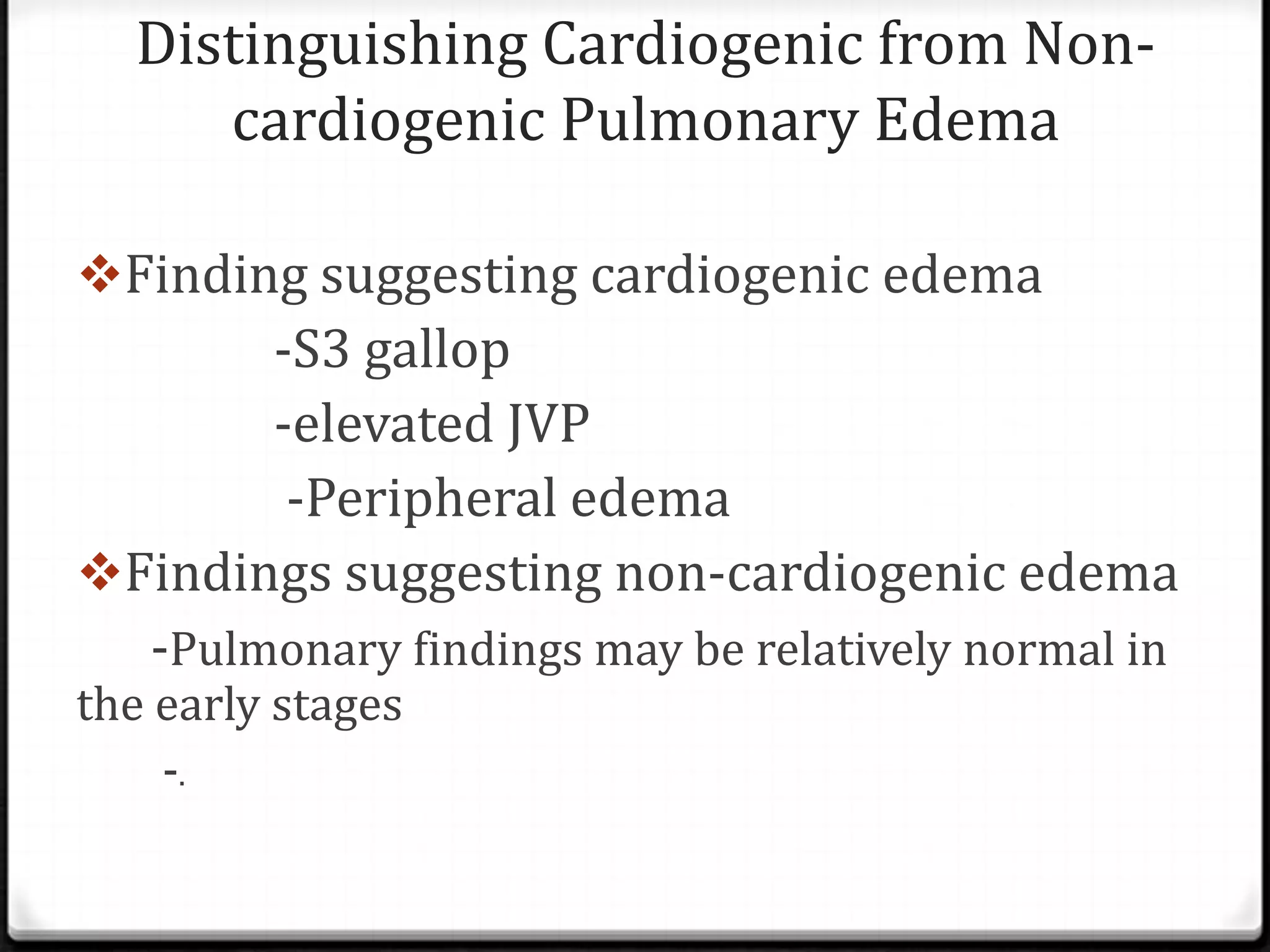
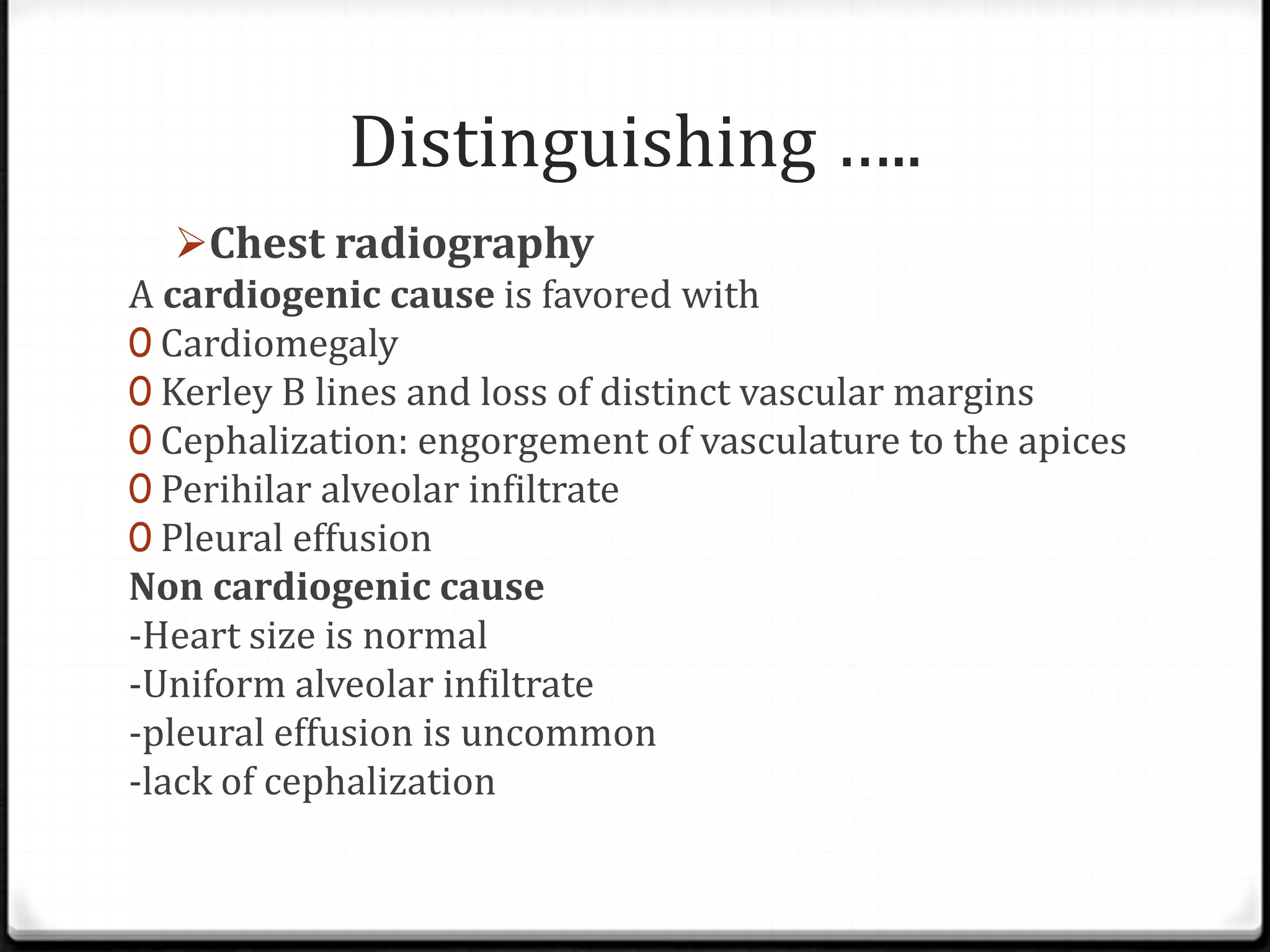
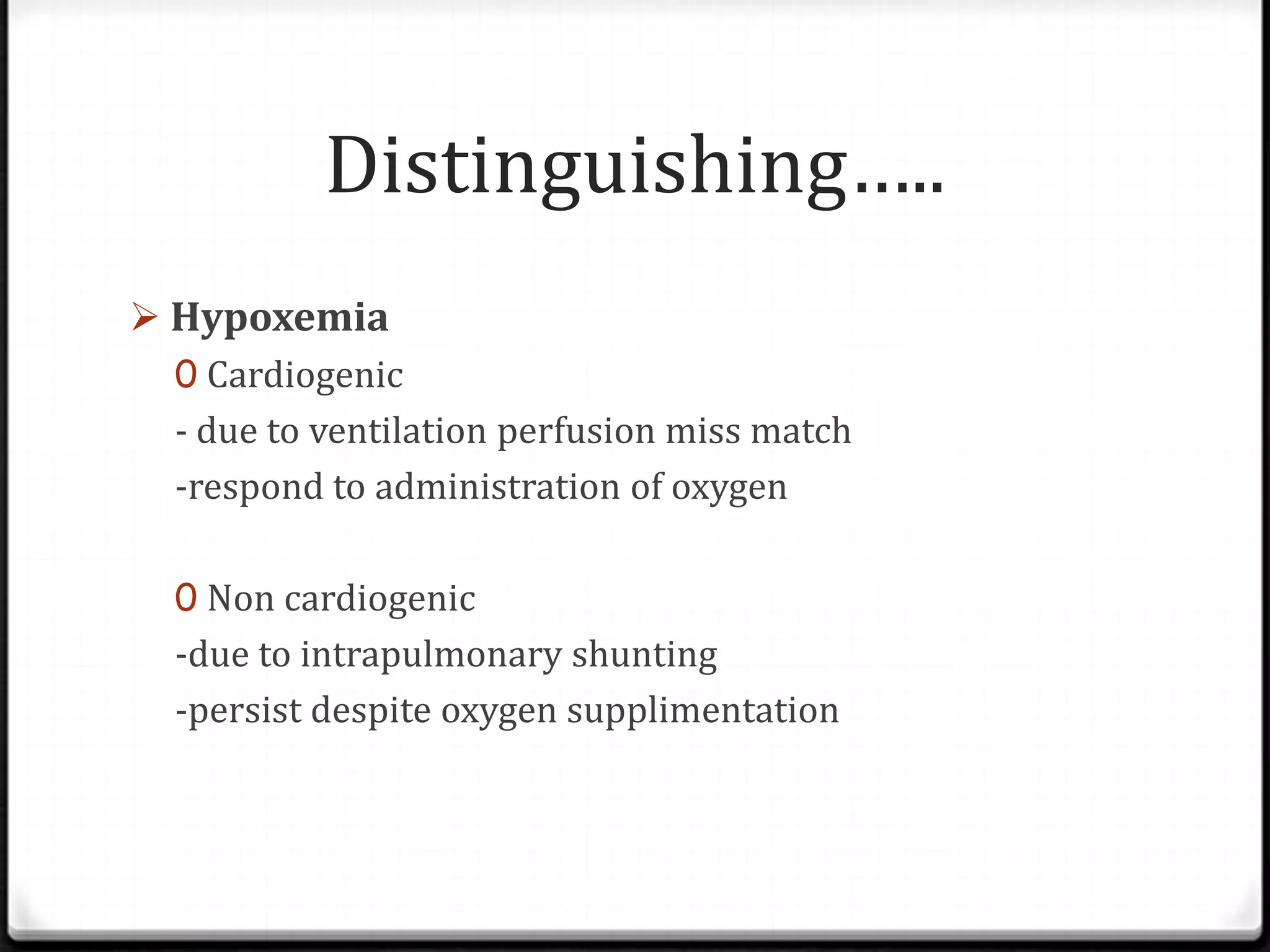
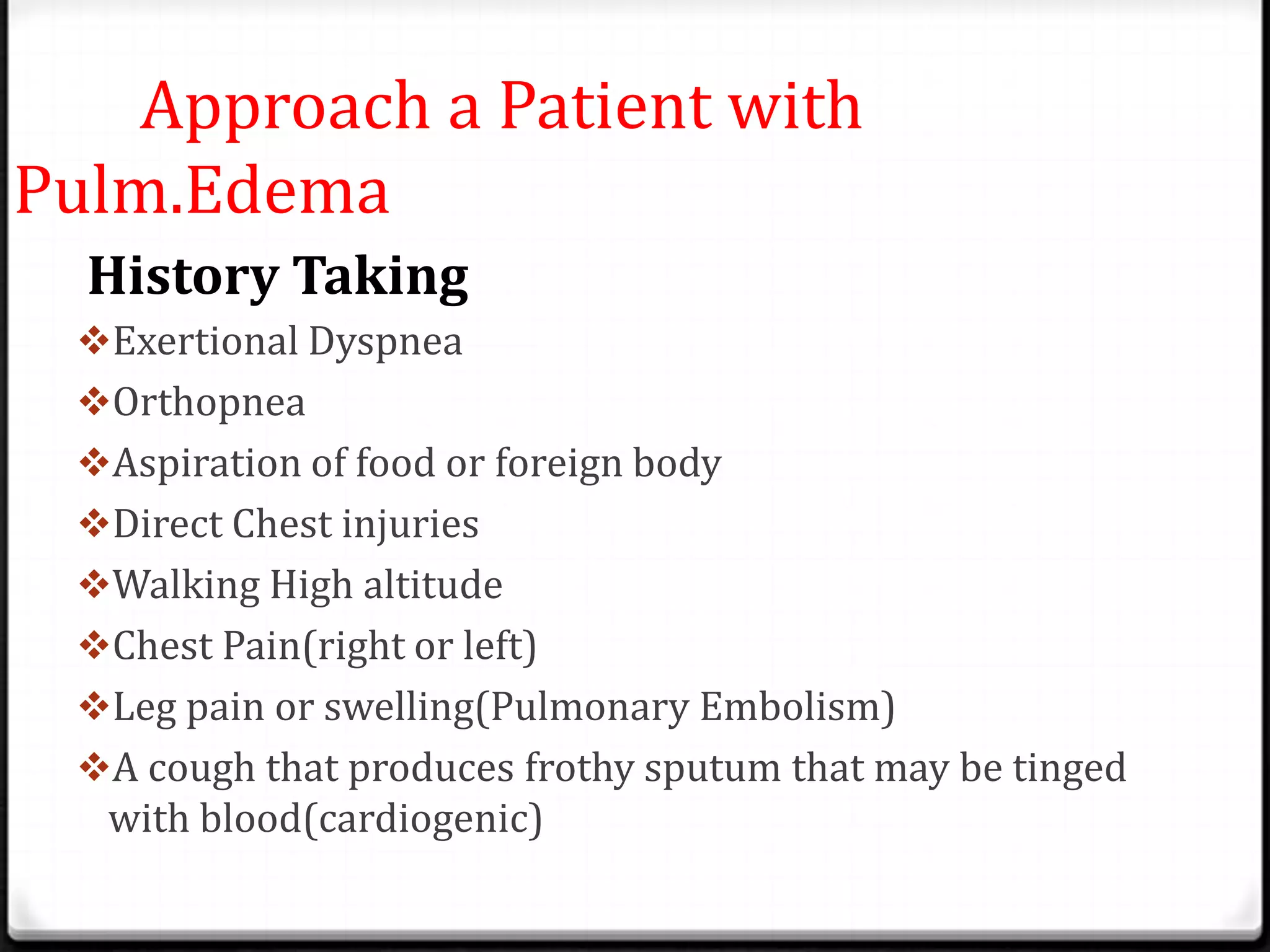
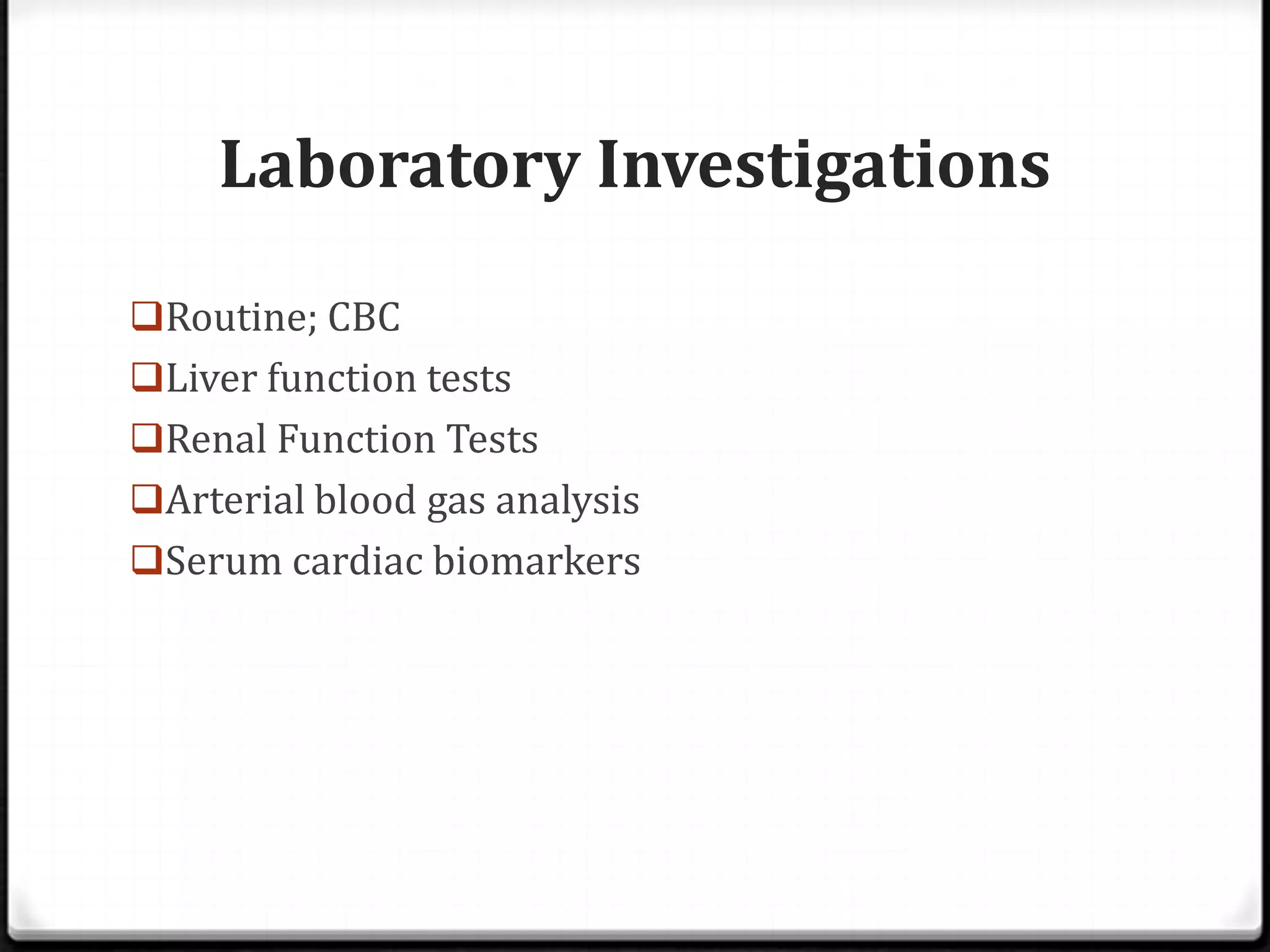
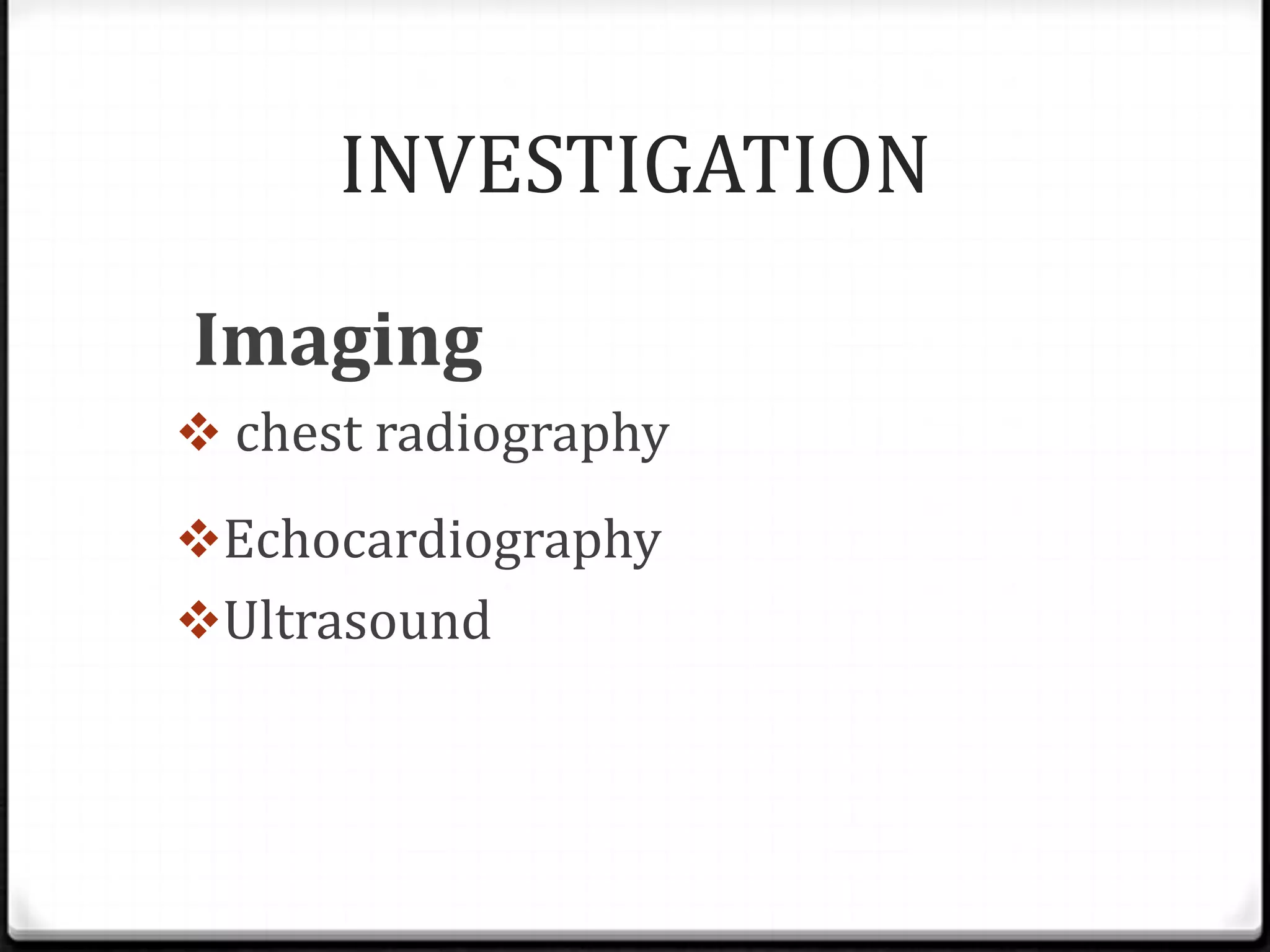
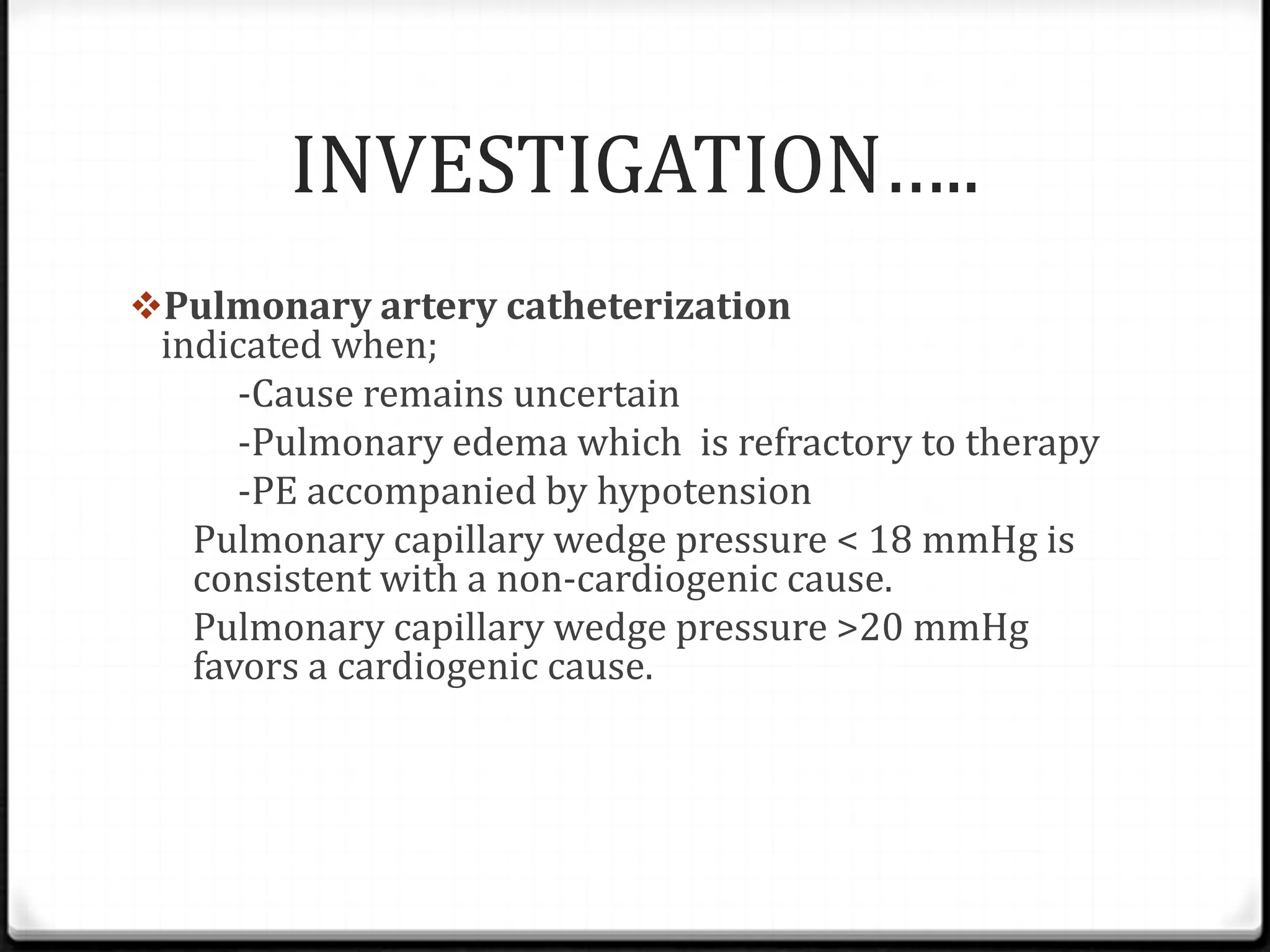
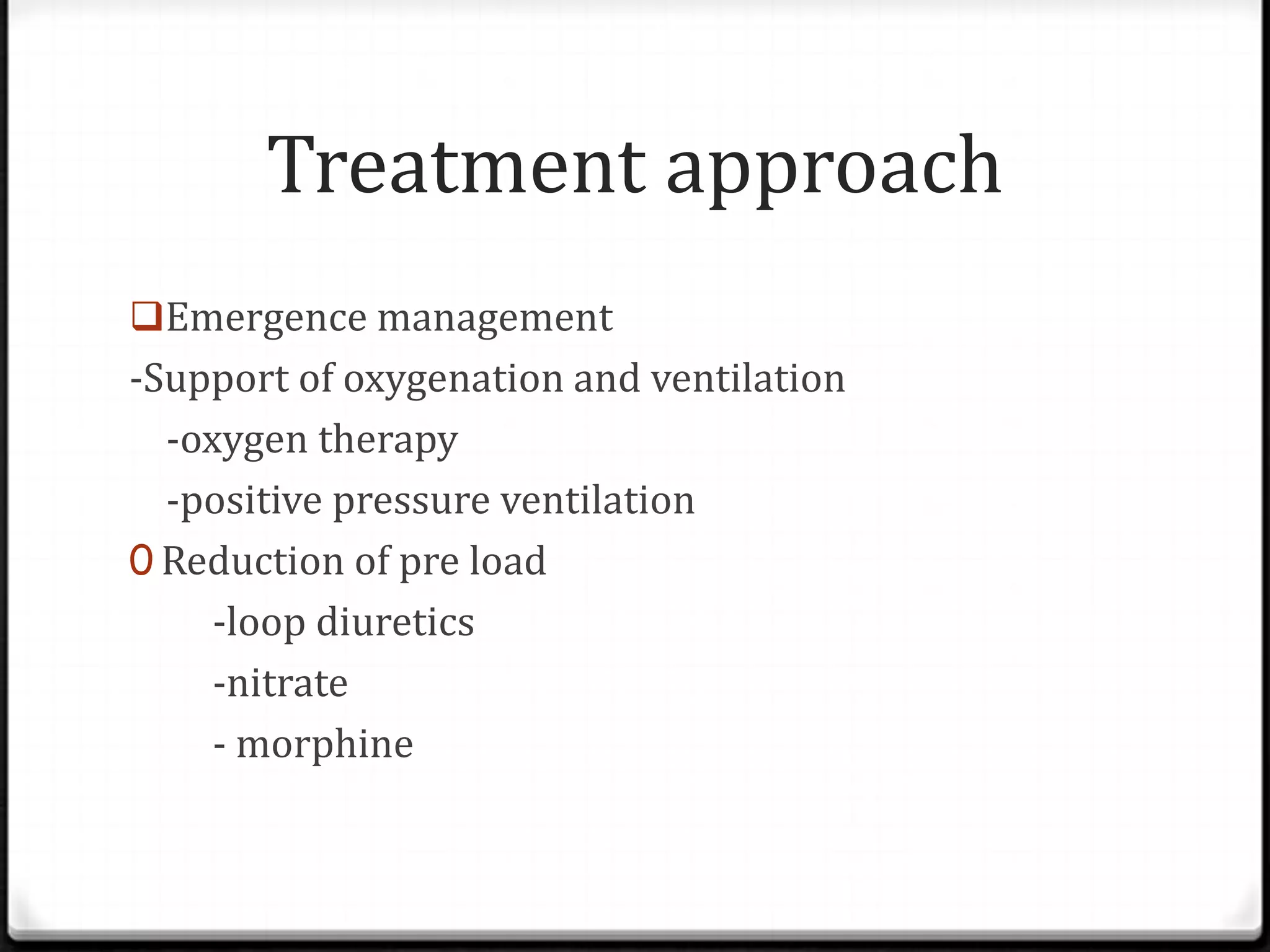
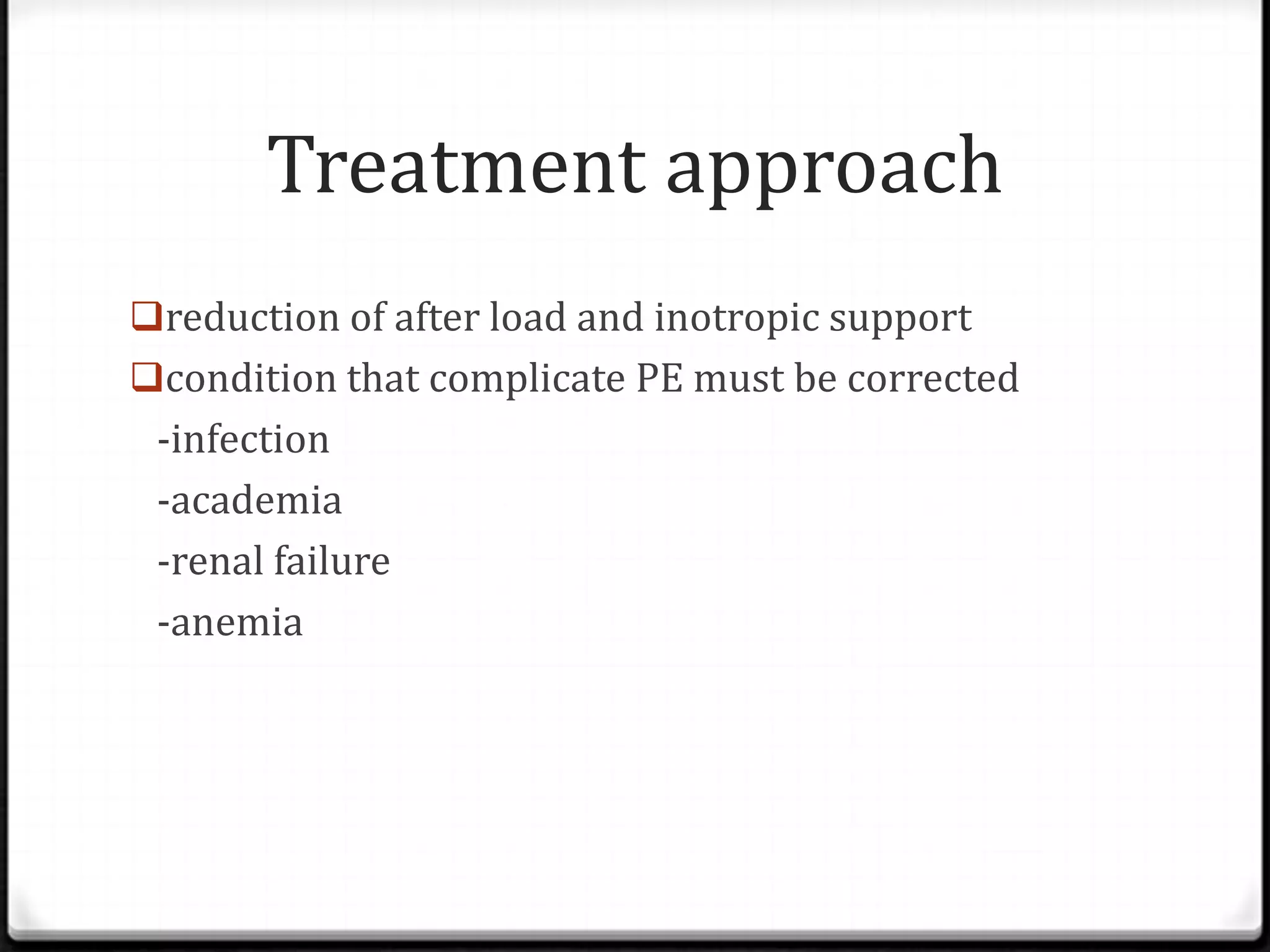

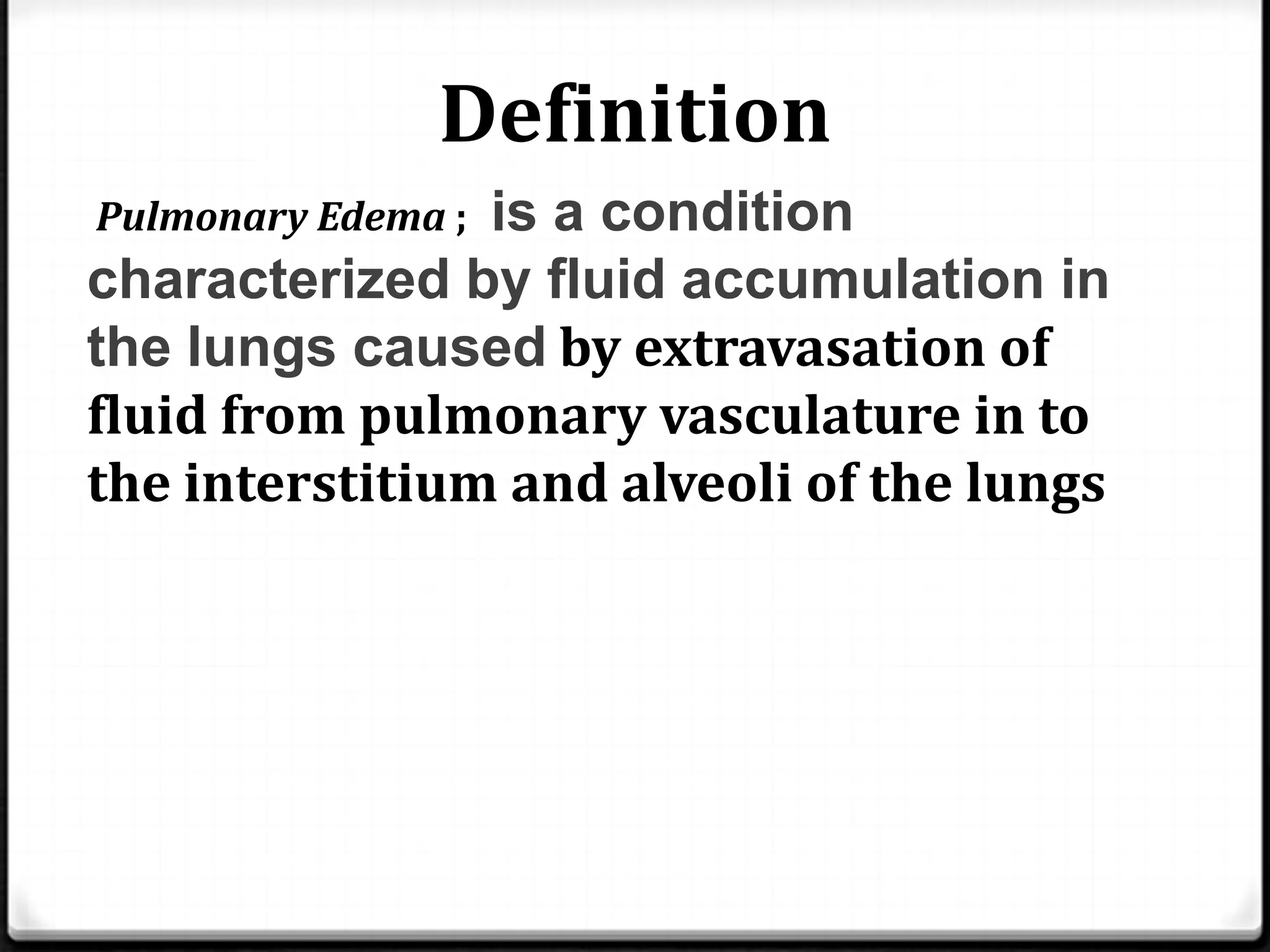
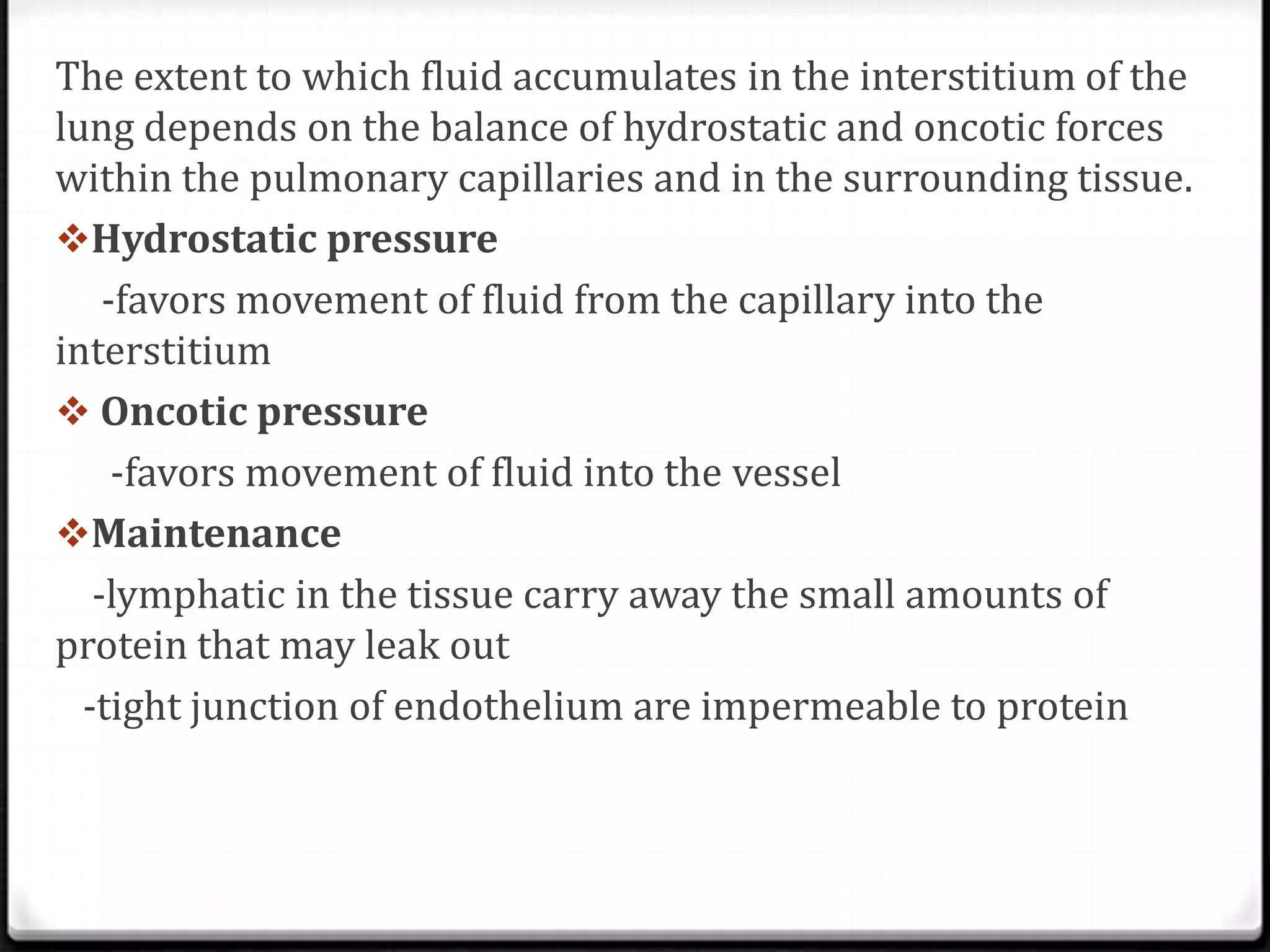
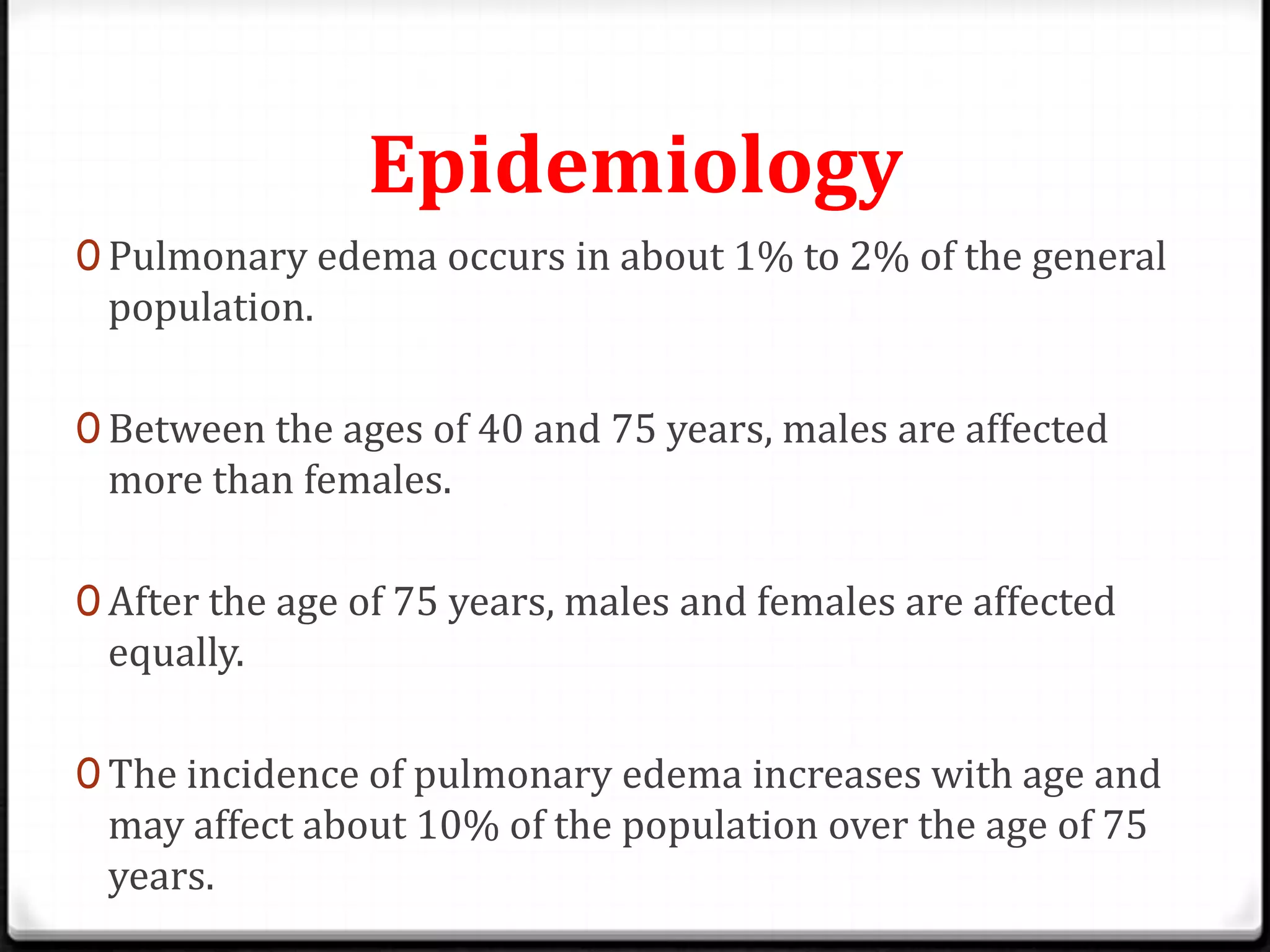
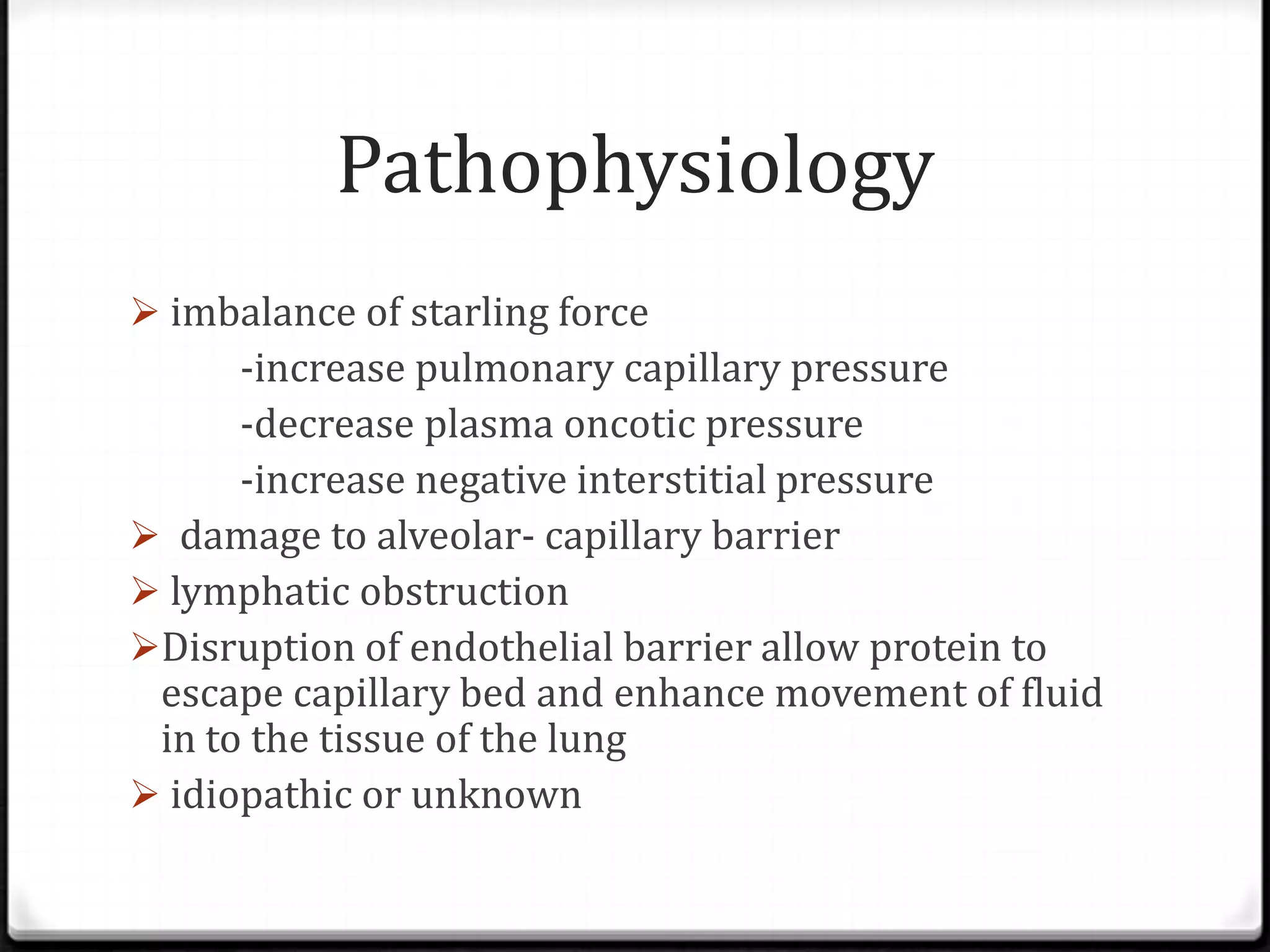
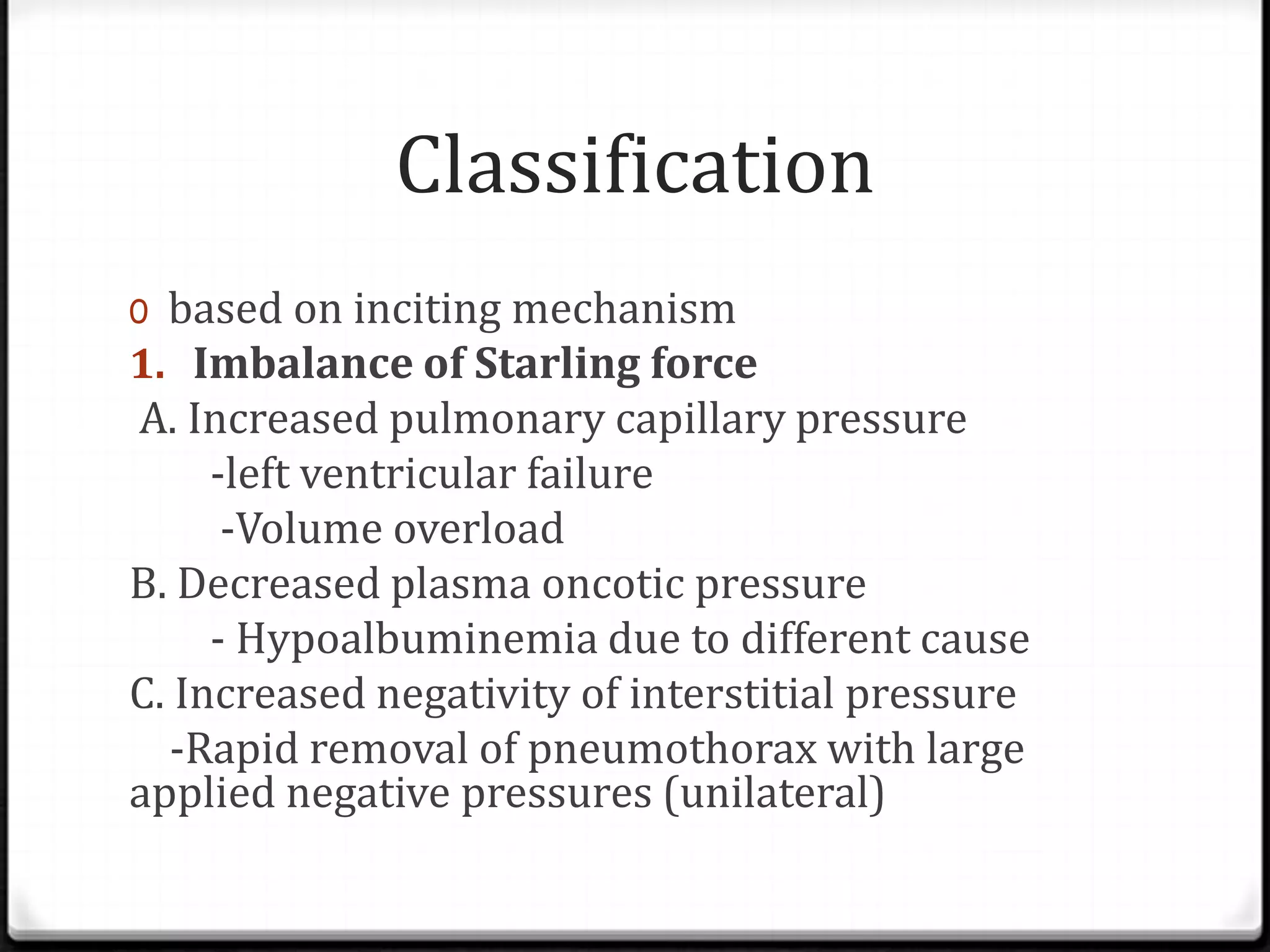
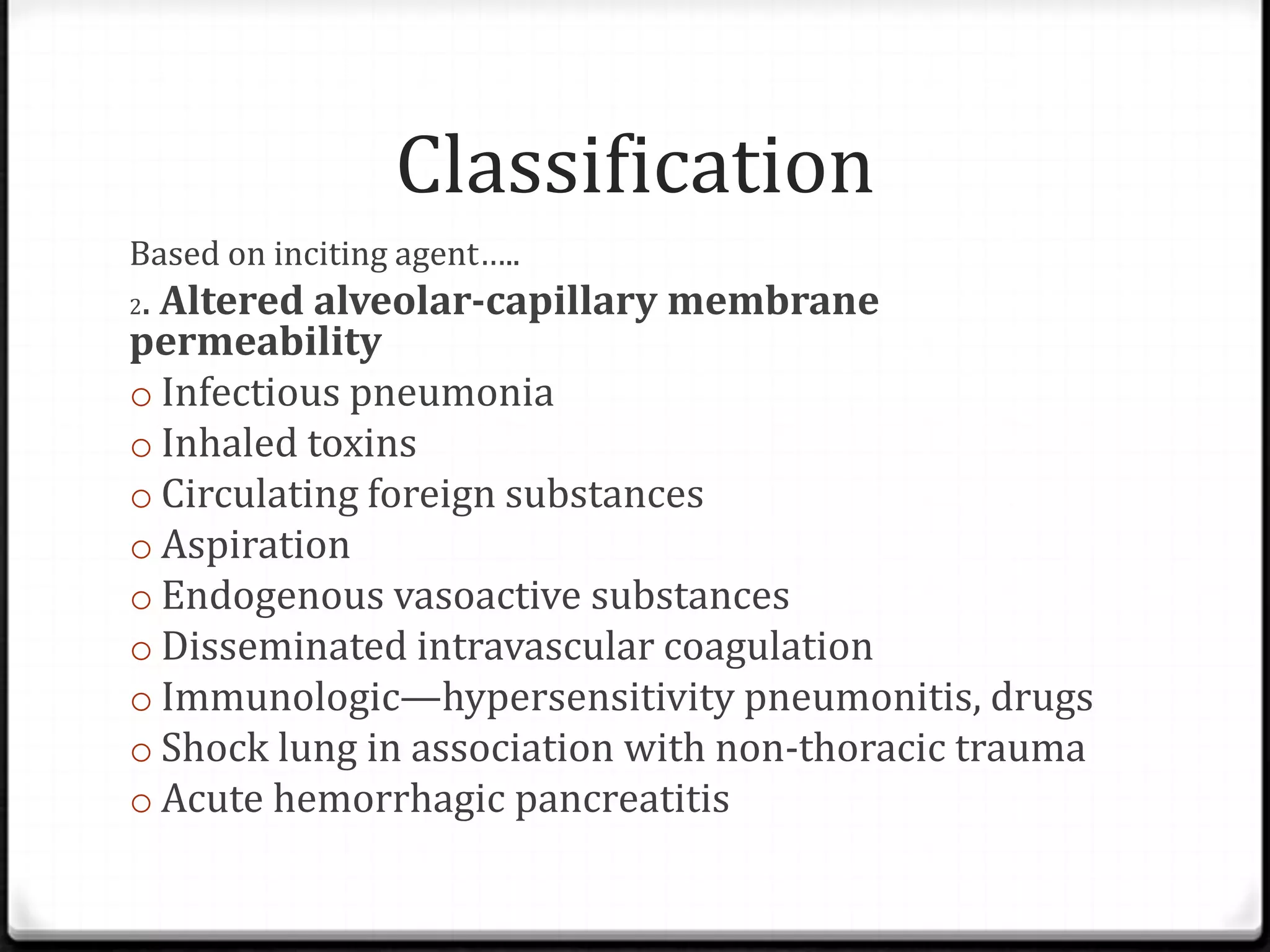
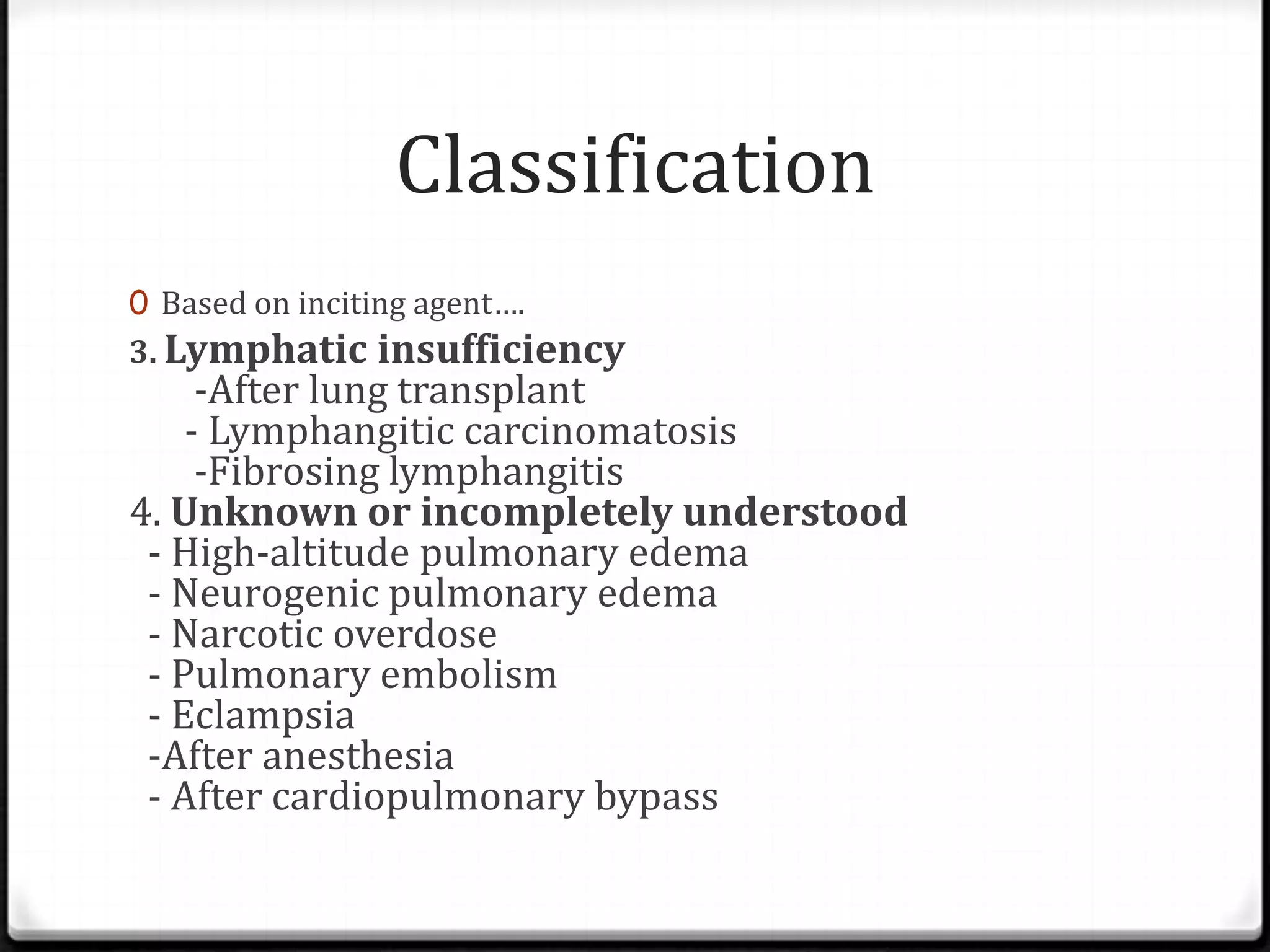
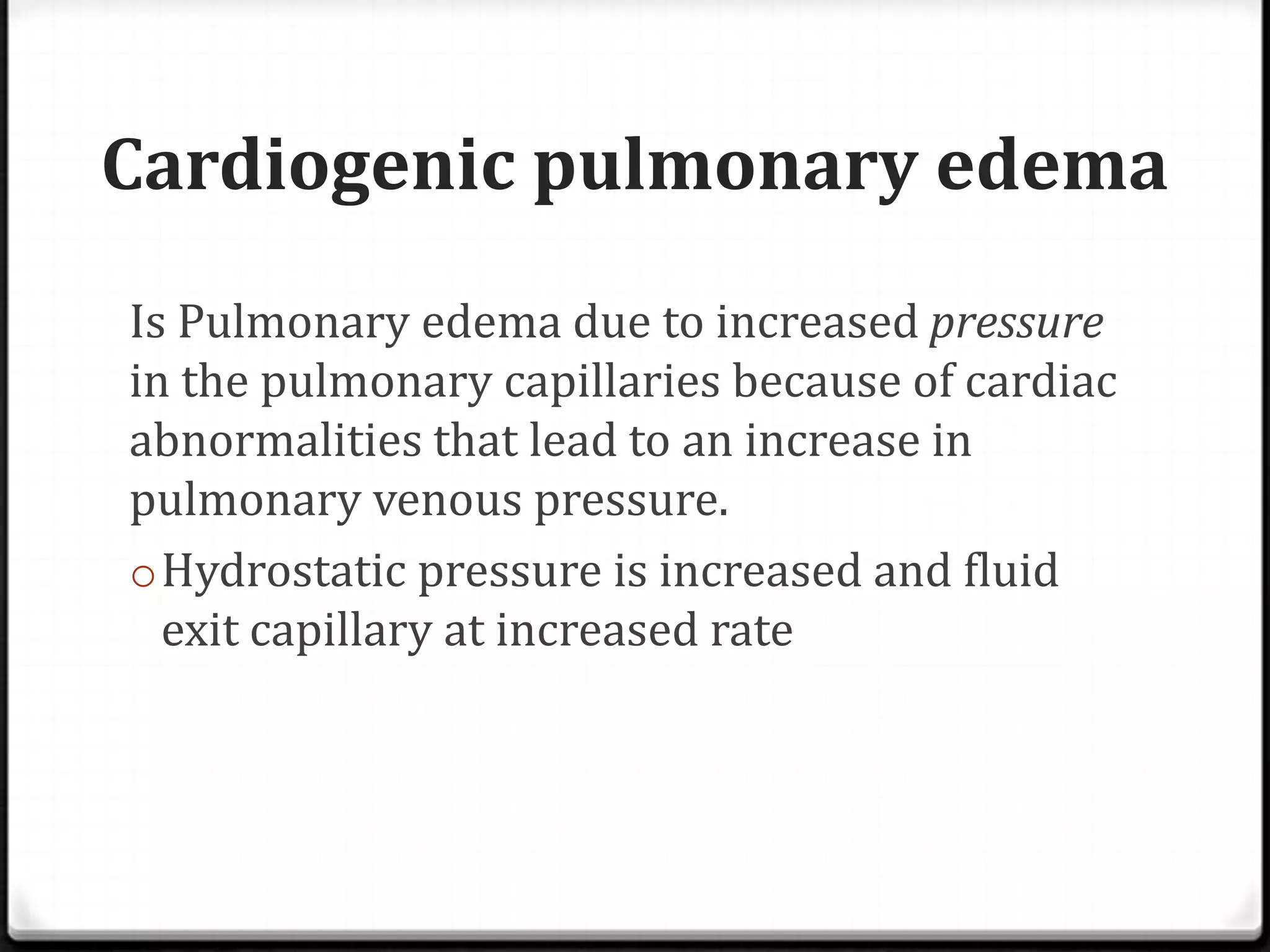
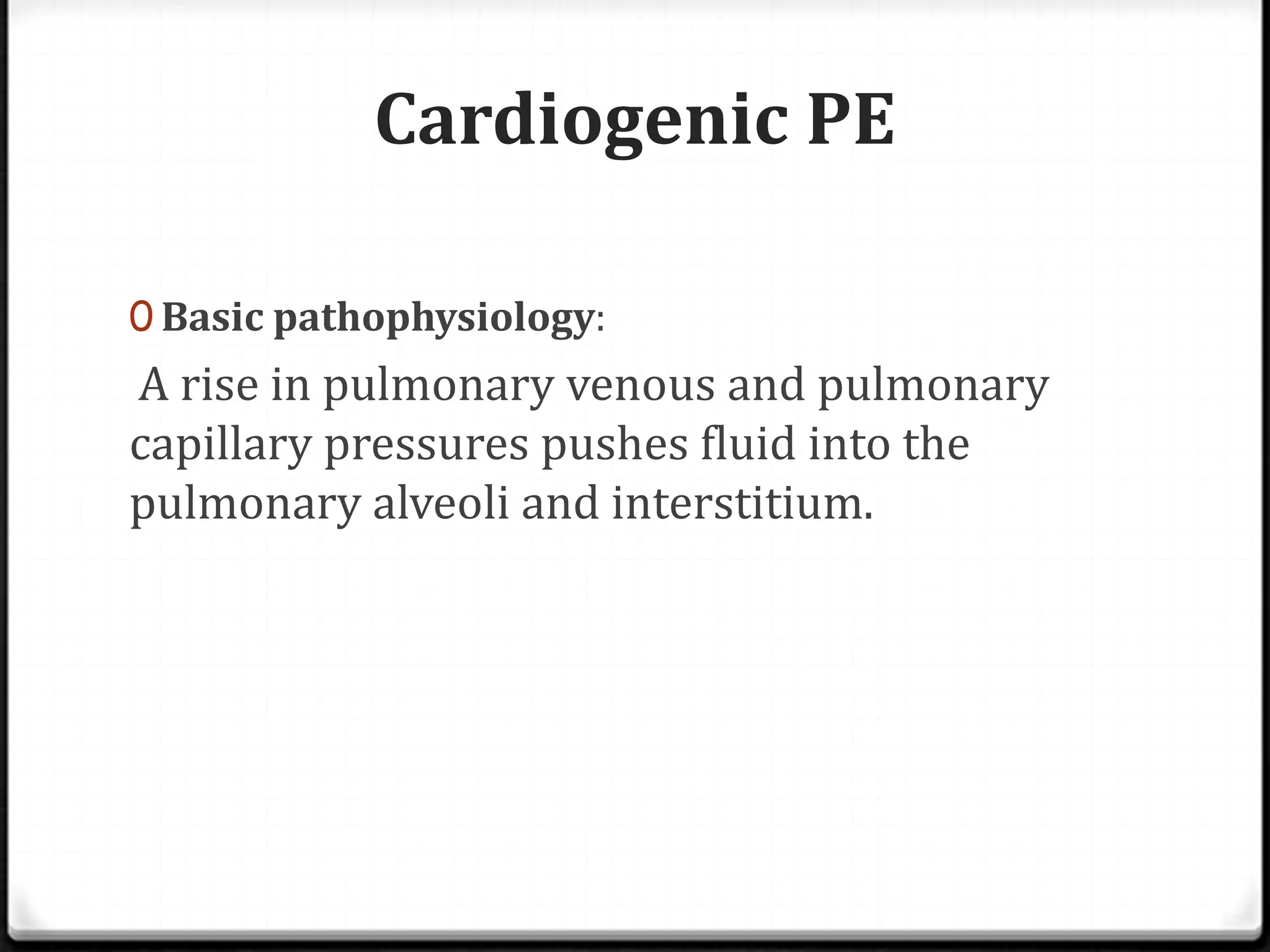
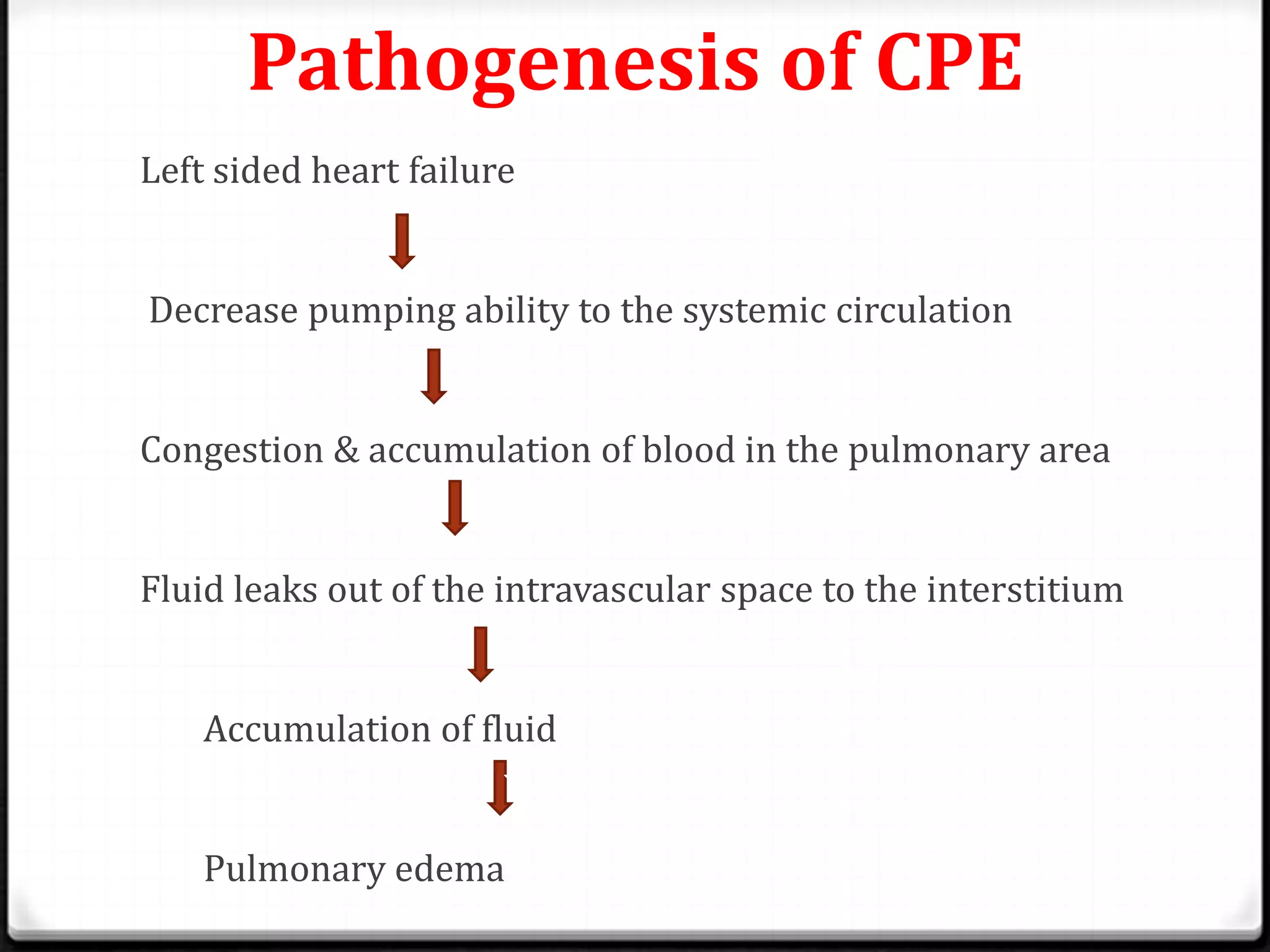
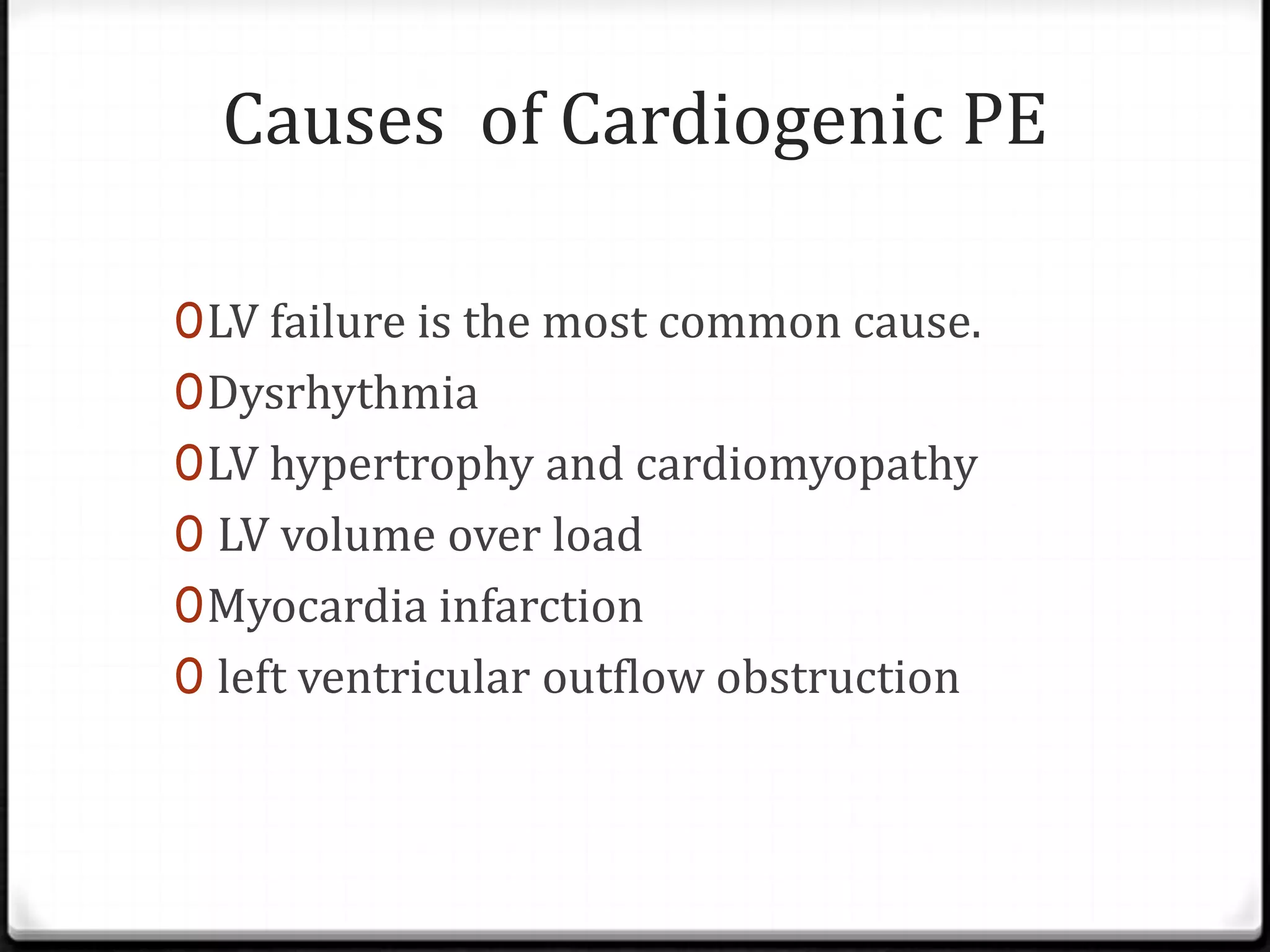
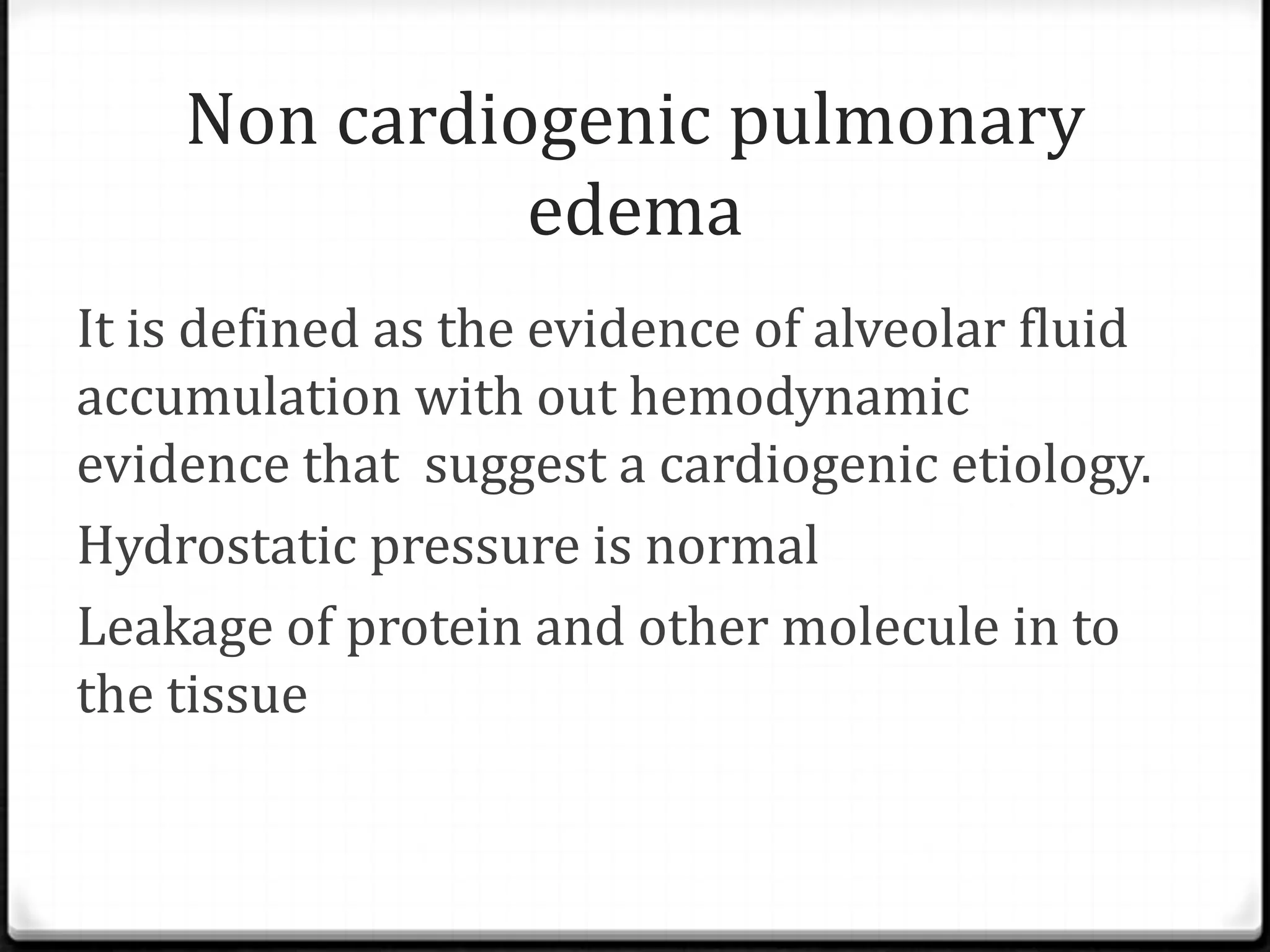
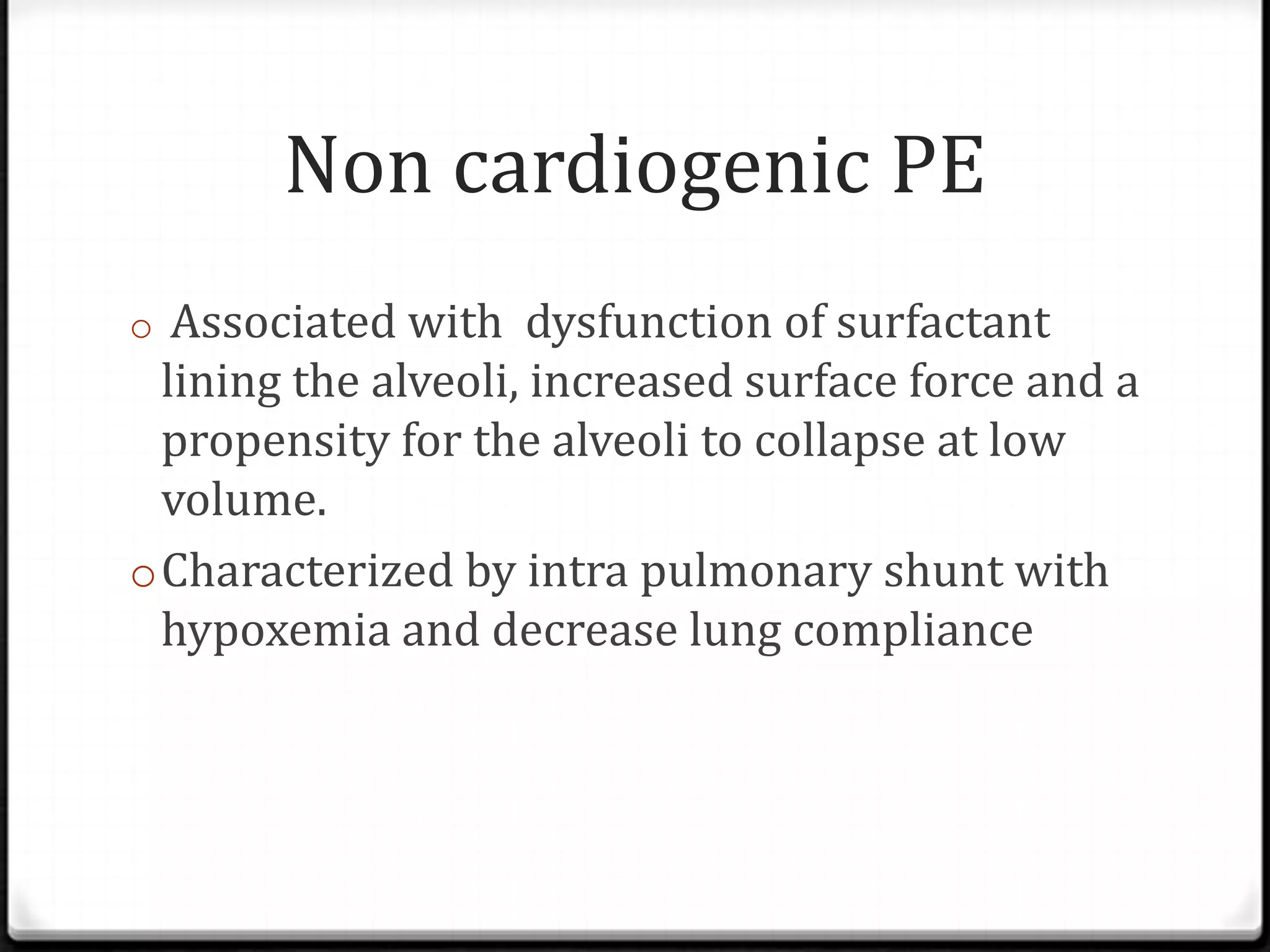
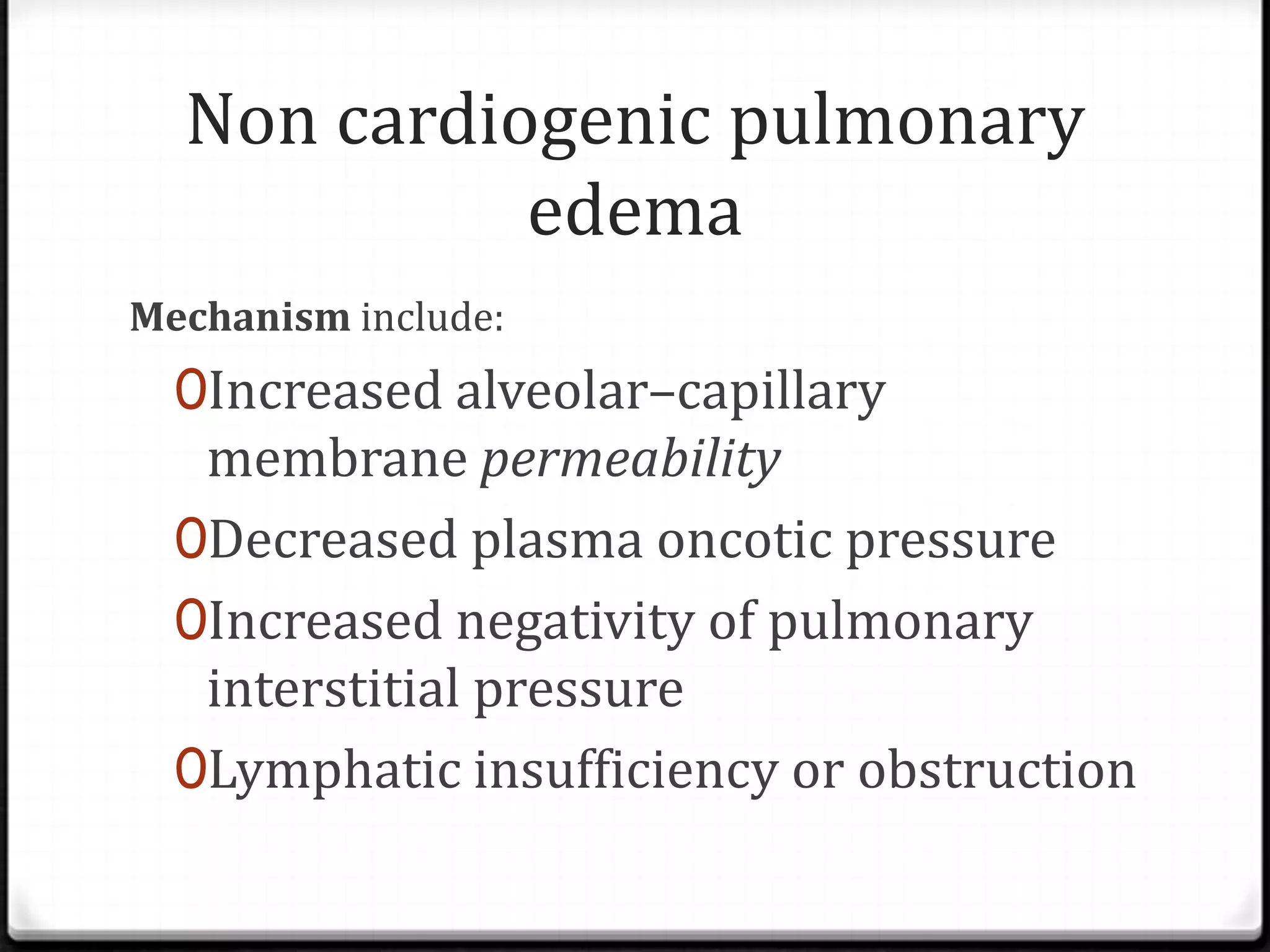
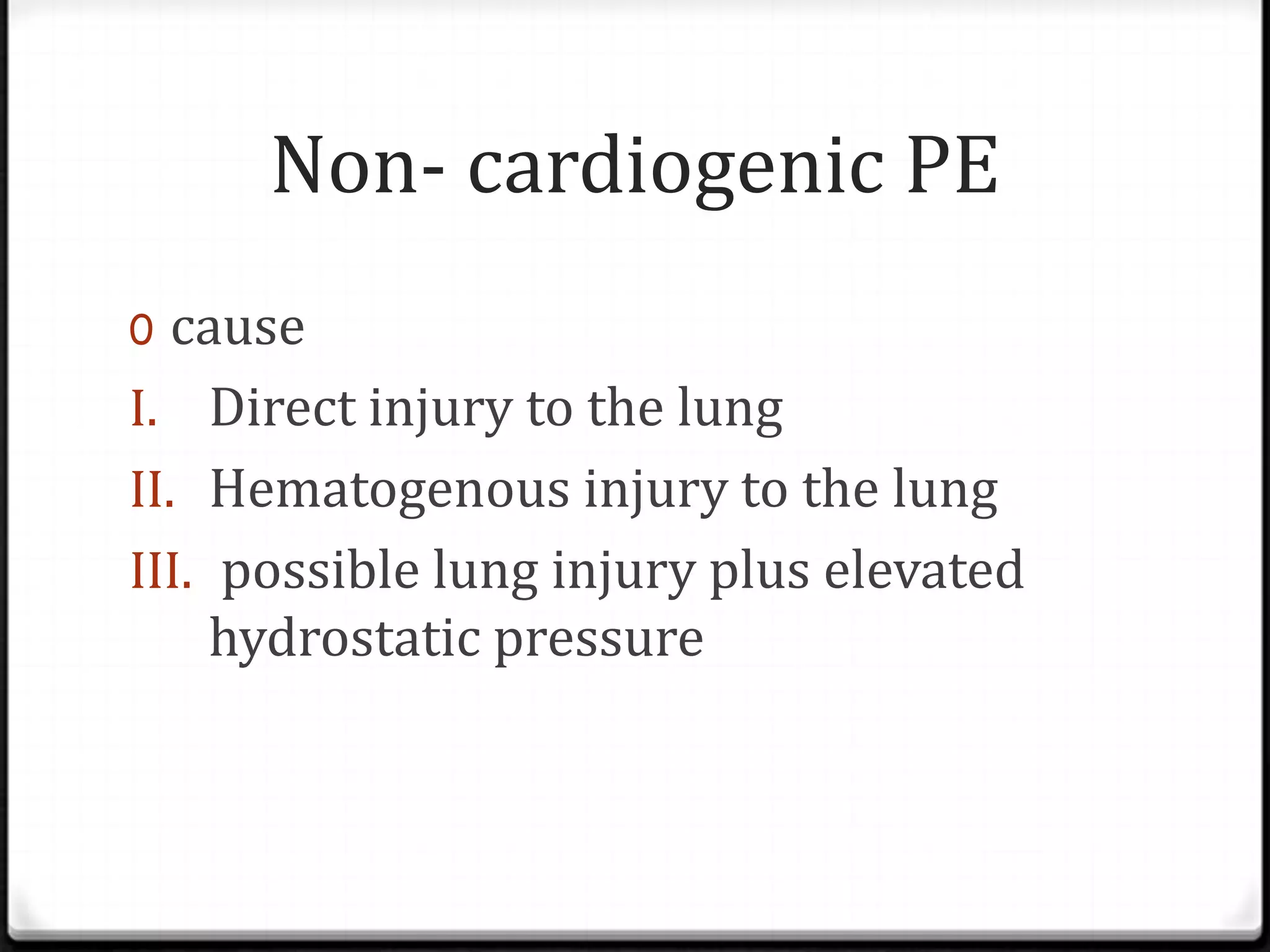
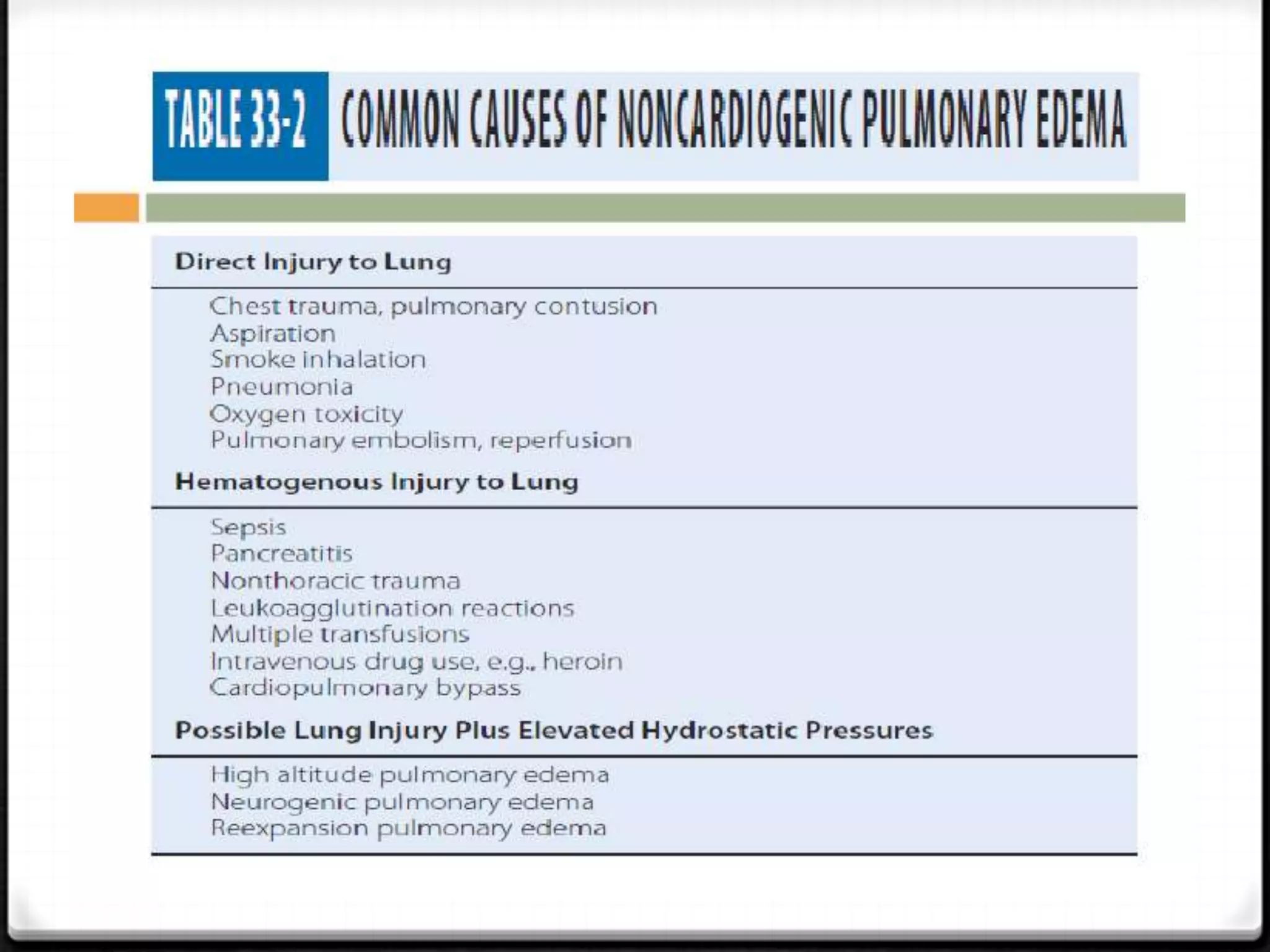
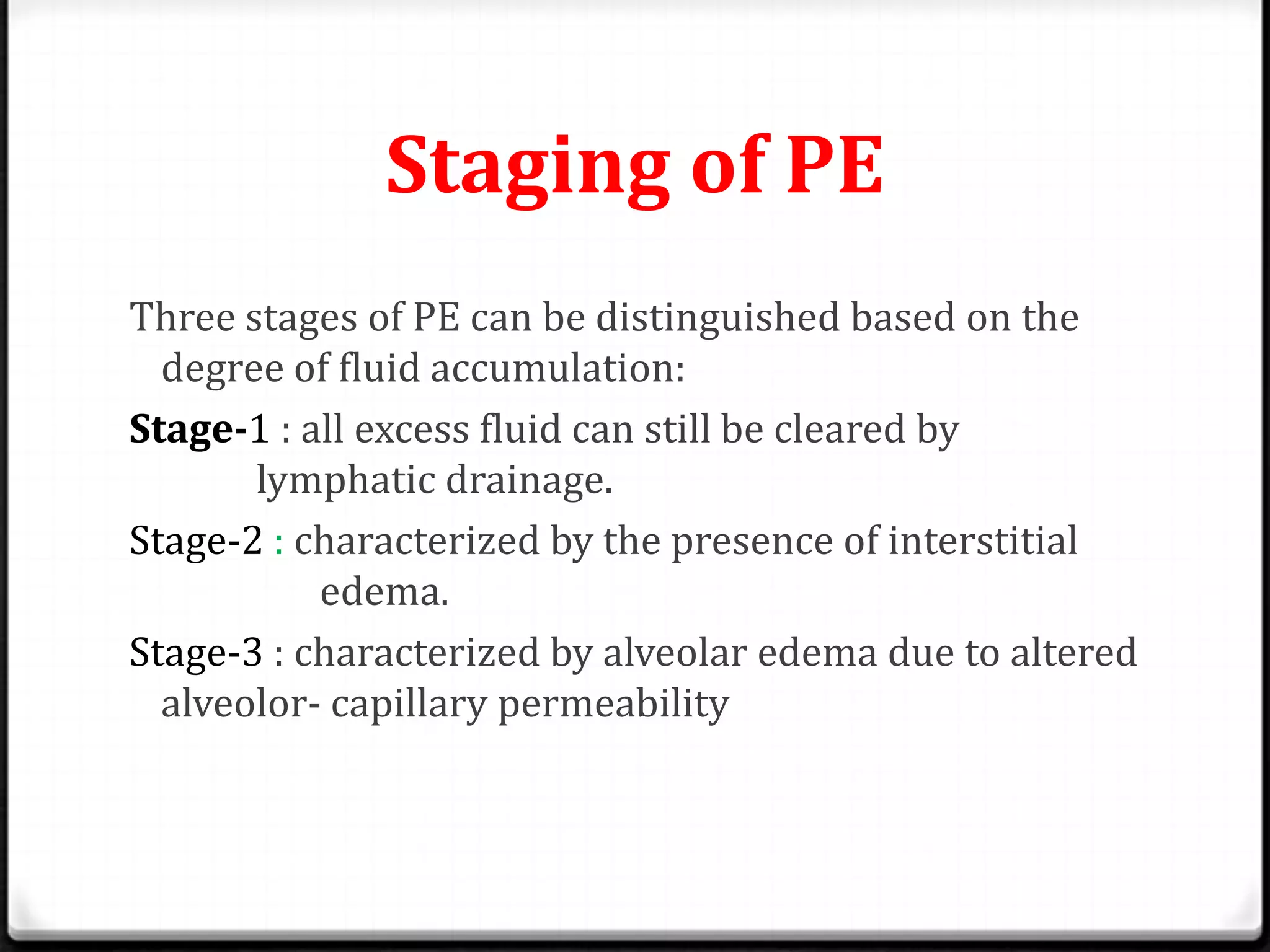
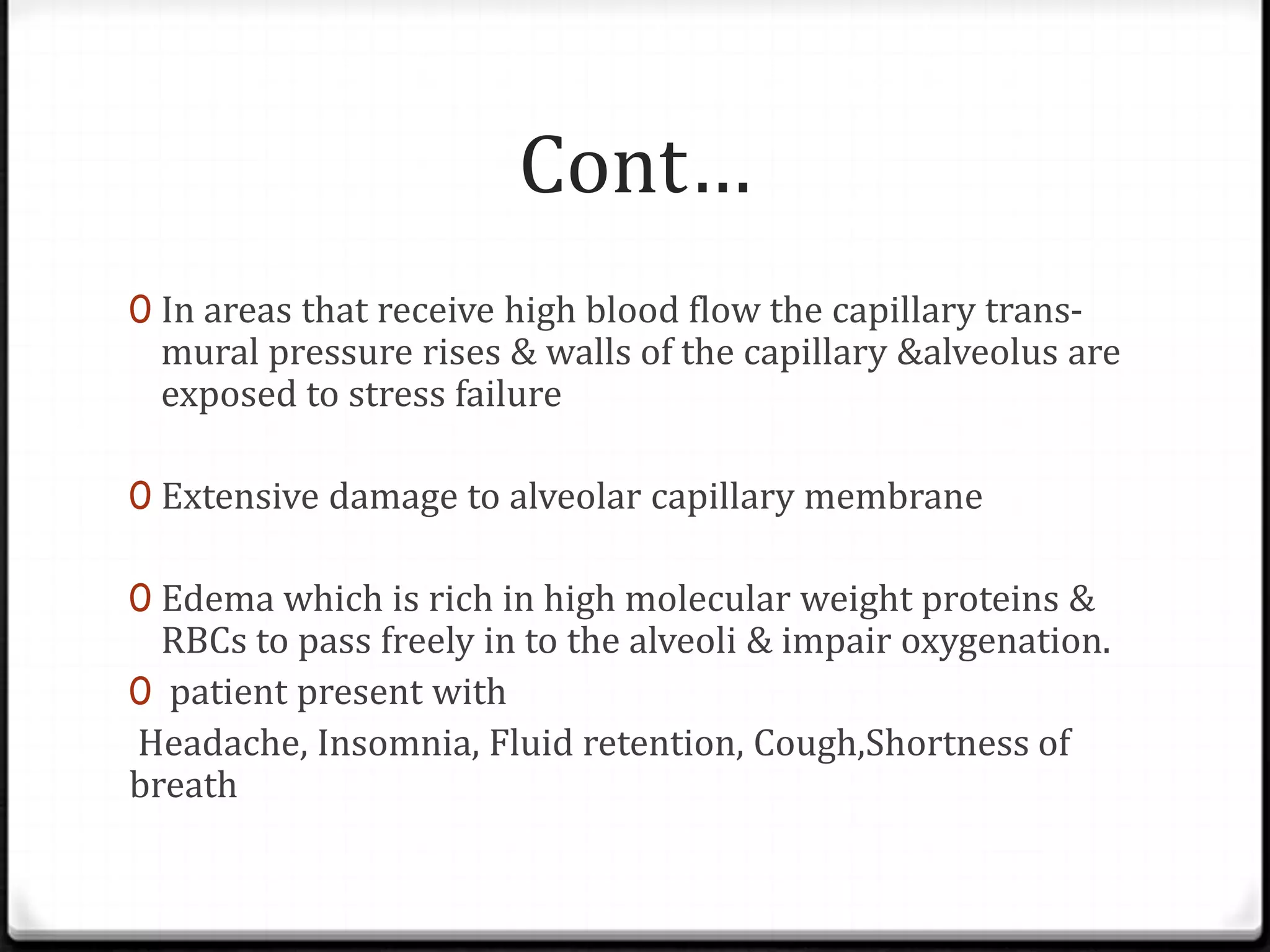
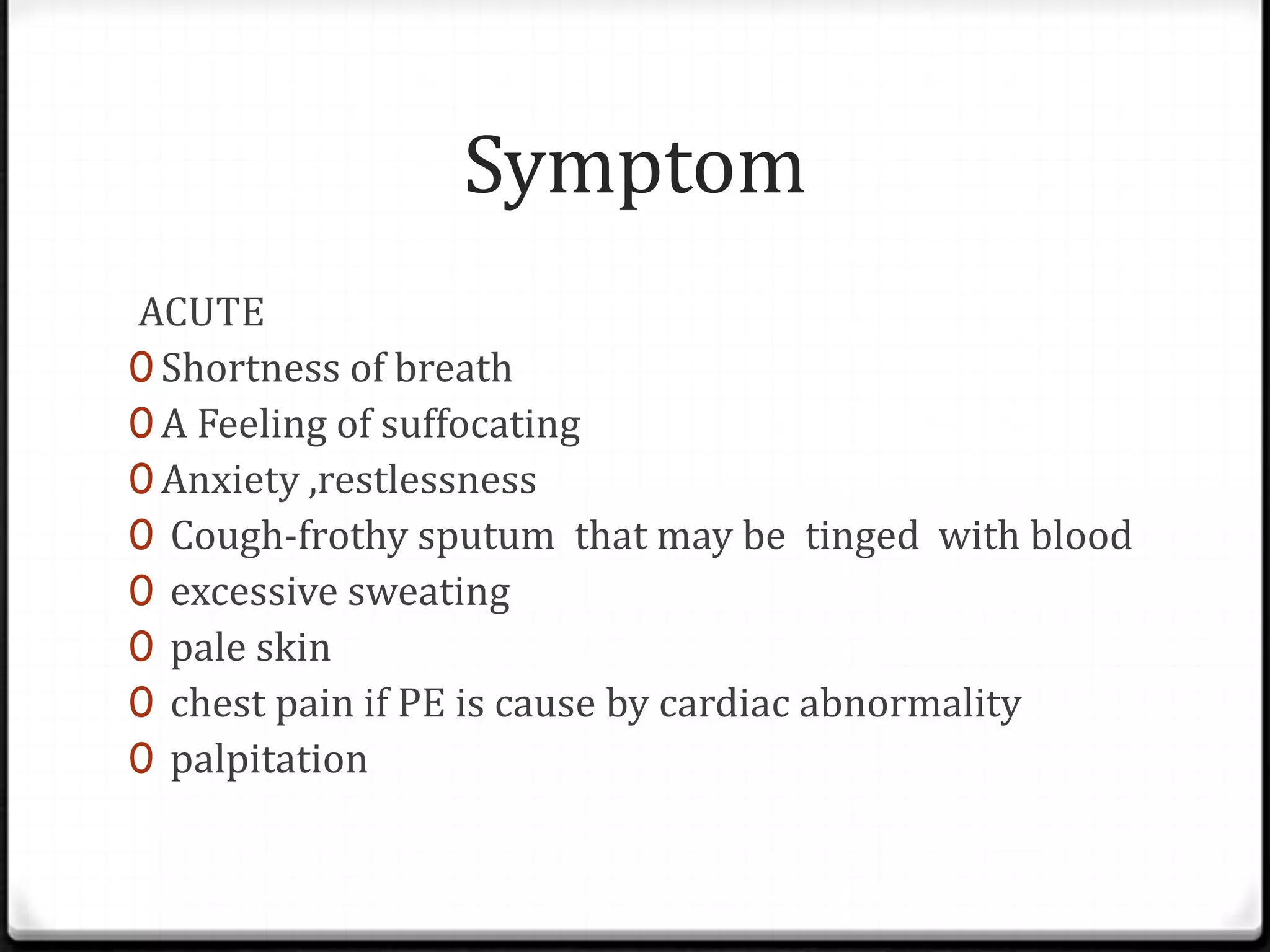
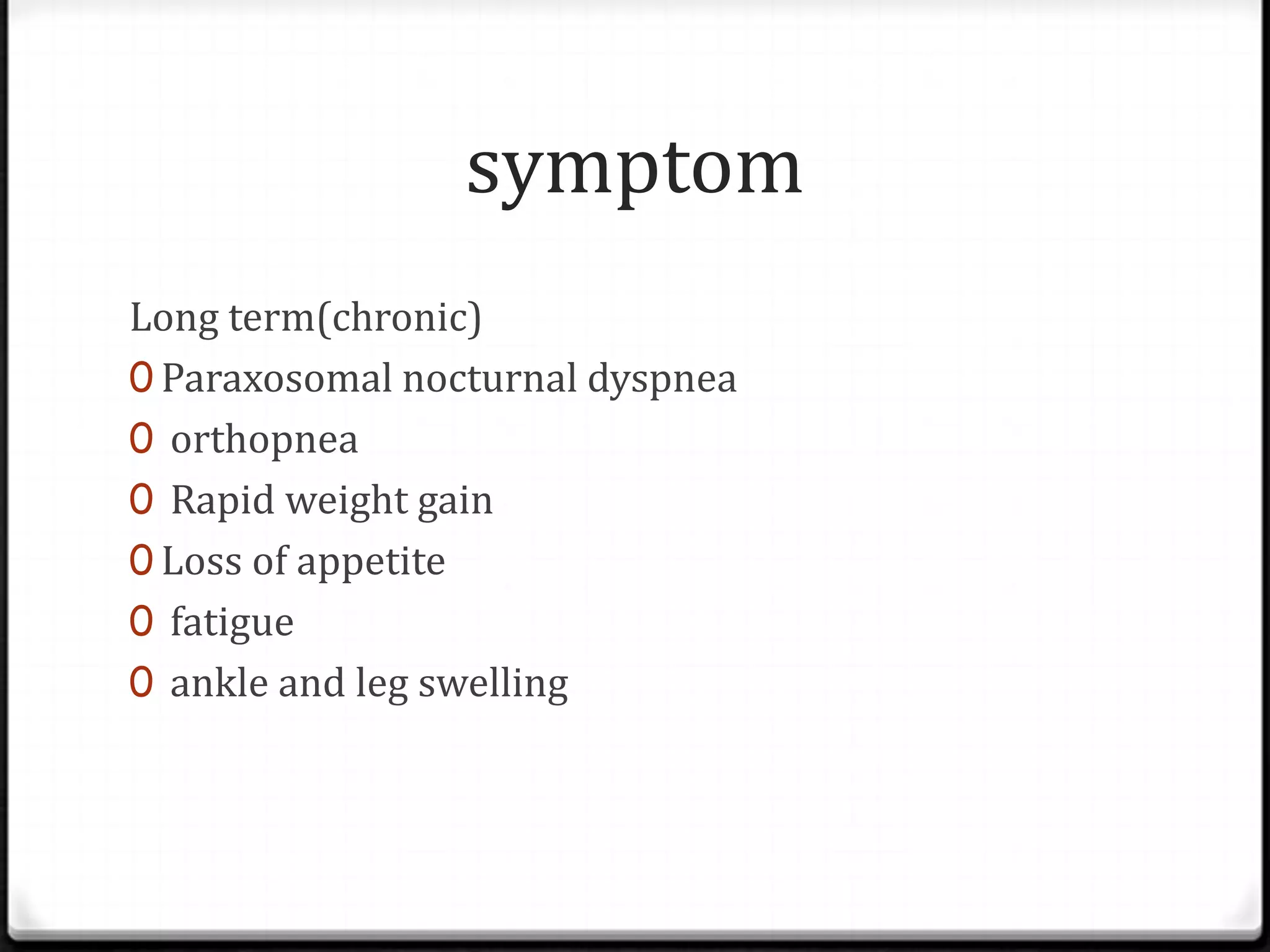
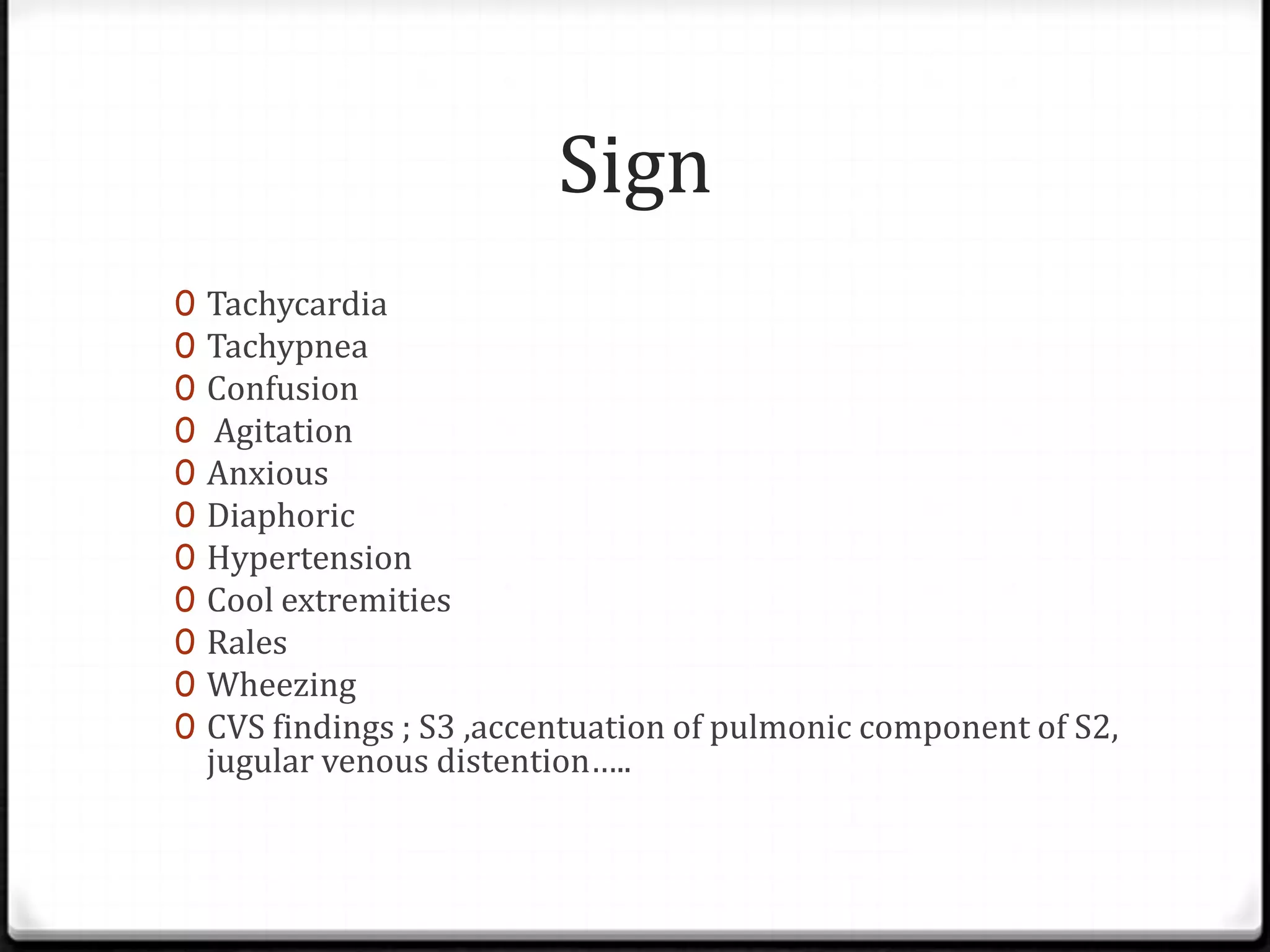
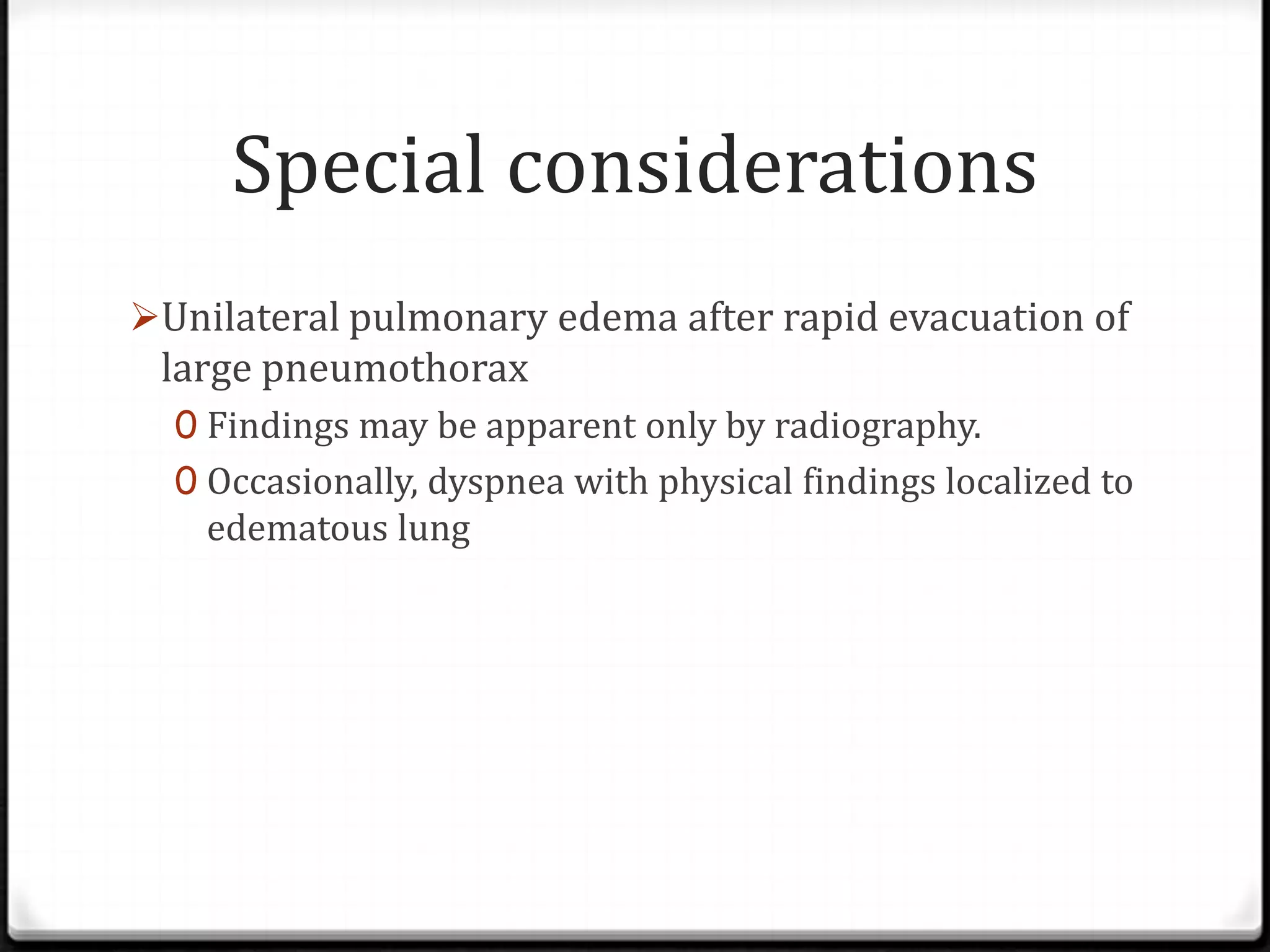
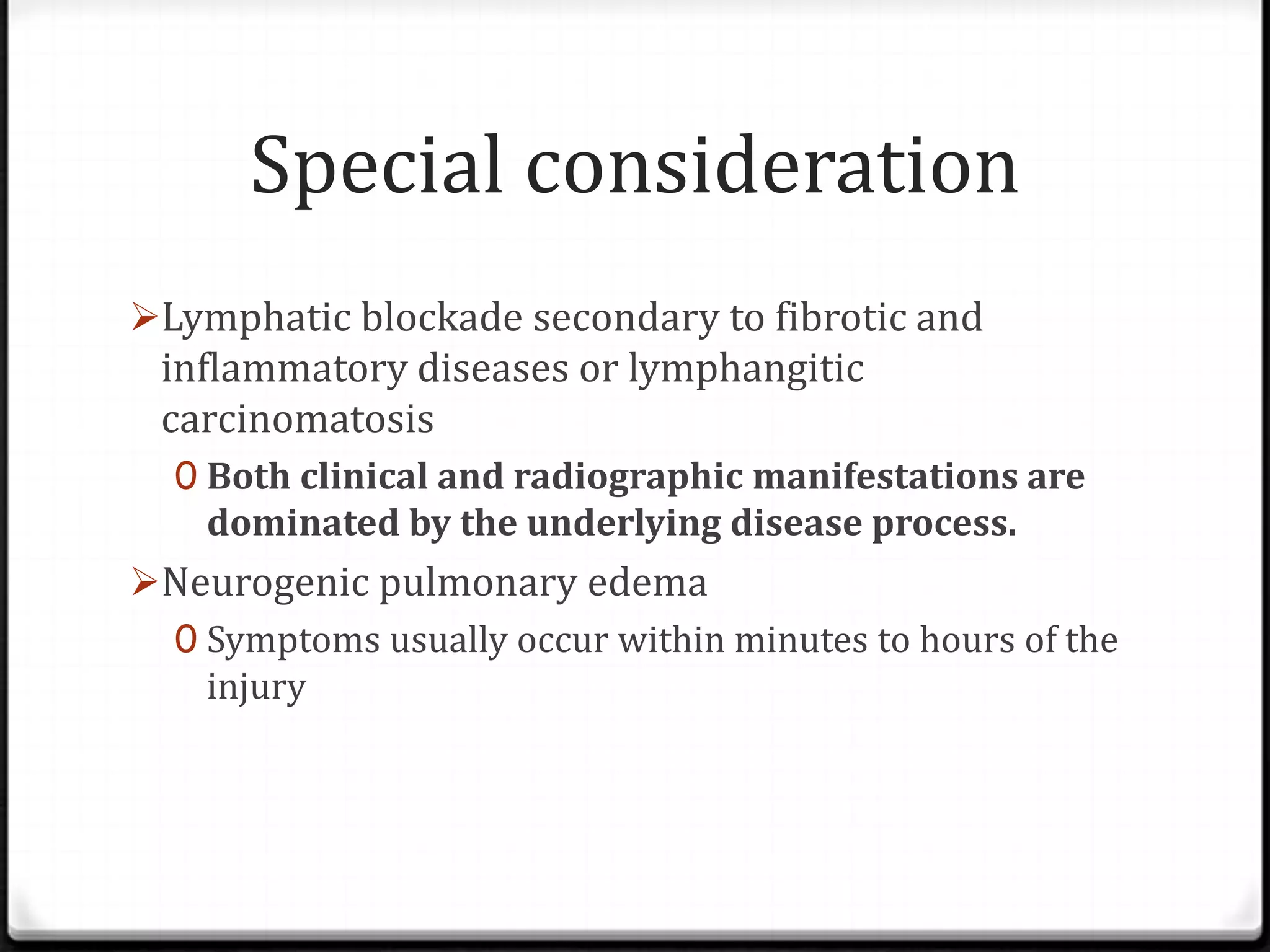
This document provides an overview of pulmonary edema, including its definition, epidemiology, pathophysiology, classifications, causes, clinical manifestations, diagnosis, and treatment. Pulmonary edema is fluid accumulation in the lungs caused by increased fluid filtration from pulmonary capillaries into lung tissue. It can be cardiogenic, caused by left ventricular failure which increases hydrostatic pressure, or non-cardiogenic, caused by altered capillary permeability independent of cardiac issues. Symptoms include shortness of breath, cough, and hypoxemia. Treatment focuses on supporting oxygenation, reducing preload and afterload on the heart, and addressing any underlying conditions.


![Apporach to lung biopsy [Auto-saved].pptx latest](https://cdn.slidesharecdn.com/ss_thumbnails/apporachtolungbiopsyauto-saved-251211225655-93258539-thumbnail.jpg?width=640&height=640&fit=bounds)


