ANESTHESIA AFTER
RENAL TRANSPLANT
DR. DAVIS KURIAN
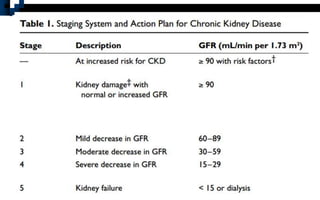
 Most patients classified as National Kidney
foundation – stage 2 or 3 CKD.
 GFR deteriorates by 1.4-2.4ml/min/yr in
recipients.
 Pre operative workup very important.
CONCERNS
 Renal physiology and renal function.
 Rejection – acute or chronic.
 Pharmacotherapy.
 Immunosupression.
PRE OP EVALUATION
The level of renal function - RFTs – despite
normal creatinine, GFR is decreased.
Records of transplant – sought and
examined for pre transplant functional
status and post transplant.
Rejection – must be ruled out.
PRE OP EVALUATION
 Anemia, dysfunctional platelets –
coagulation parameters assessed.
 Acid-base status – baseline ABG.
PRE OP EVALUATION
 Patients at increased risk of post
transplant malignancies, anemia,
osteodystrophy.
 Increased susceptibility to opportunistic
and community acquired infections – CMV
being the most common – if transfusion
needed – CMV negative blood must be
used in CMV negative pts
PRE OP EVALUATION
 Renal function impairment – can
predispose to electrolyte abnormalities,
altered drug metabolism.
 Dosage of all immunosuppressant
medications – noted – patient instructed to
continue in the peri-operative period.
PRE OP EVALUATION
 Assessment of complications of
immunosuppressant therapy -
hyperglycemia and adrenal suppression
(steroids)
hypertension, infection and renal insufficiency
(steroids, cyclosporine & tacrolimus),
myelosuppression – anemia,
thrombocytopenia, leukopenia (azathioprine,
sirolimus)
Cytokine release and fever (mistaken preop).
PRE OP EVALUATION
No need for increased
antibiotics.
Doppler study to assess blood flow to
the graft.
PRE OP EVALUATION
 Careful cardiac evaluation –
CVS also affected in CKD
Impact of underlying d/s – DM/HTN in the
pathogenesis of CKD
Potential for drug regimens, transplantation
and rejection episodes to worsen CVS status.
Metabolic syndrome – common in 1-6 yrs.
IHD, CVA, PVD – significantly affect survival.
REJECTION
 Hyperacute – rejection in minute to hrs –
destruction of vascularity (preformed
antibodies).
 Acute – after 1 wk – antibodies – if no
immunosuppressant therapy.
 Chronic – in months to years.
SIGNS & SYMPTOMS OF
REJECTION
 Increased temp.
 Dec in urine output.
 Pain, tenderness, swollen graft.
 Increased BP.
 Sudden increase in weight or ankle
swelling.
 Elevated creatinine.
PRE OP EVALUATION
 Other co-morbidities
 Airway and spine examination.
 Blood workup – Hb, TC, PLC,
S.electrolytes, RFT, Blood sugars, ABG
 CXR, ECG.
 Doppler study.
PRE OP EVALUATION
 Patient instructed to
Continue all medications in the peri-operative
period in the same dose.
Appropriate thromboprophylaxis in all
transplant pateints.
All nephrotoxic drugs to be avoided.
INTRA OPERATIVE
Regional, local, GA.
Sterile precautions to be followed.
All nephrotoxic drugs to be avoided – as
patients have a low GFR.
Serial monitoring of renal functions and
electrolytes with urine output whenever
possible.
Very high risk for cardiovascular complications
than general population.
INTRA OPERATIVE
 Renal transplant- adequate hydration -
BSS
 Difficult and edematous airway.
 Full stomach.
 Prolonged elimination half life of drugs
eliminated by kidneys
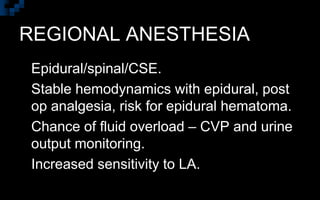
REGIONAL ANESTHESIA
 Epidural/spinal/CSE.
 Stable hemodynamics with epidural, post
op analgesia, risk for epidural hematoma.
 Chance of fluid overload – CVP and urine
output monitoring.
 Increased sensitivity to LA.
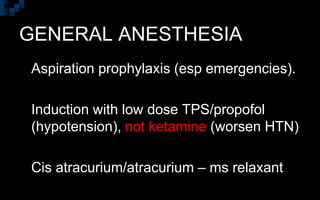
GENERAL ANESTHESIA
 Aspiration prophylaxis (esp emergencies).
 Induction with low dose TPS/propofol
(hypotension), not ketamine (worsen HTN)
 Cis atracurium/atracurium – ms relaxant
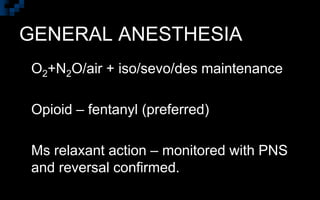
GENERAL ANESTHESIA
 O2+N2O/air + iso/sevo/des maintenance
 Opioid – fentanyl (preferred)
 Ms relaxant action – monitored with PNS
and reversal confirmed.
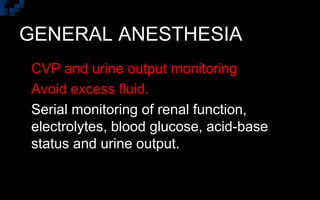
GENERAL ANESTHESIA
 CVP and urine output monitoring
 Avoid excess fluid.
 Serial monitoring of renal function,
electrolytes, blood glucose, acid-base
status and urine output.
POST OPERATIVE
 Monitor renal functions and serum
electrolytes.
 Avoid nephrotoxic drugs – like NSAIDs,
COX – 2 inhibitors.
 Adequate antibiotic coverage to prevent
infections.
 Analgesia – epidural / fentanyl infusions.
Anesthesia after renal transplant

Anesthesia after renal transplant

  • 1.
  • 3.
     Most patientsclassified as National Kidney foundation – stage 2 or 3 CKD.  GFR deteriorates by 1.4-2.4ml/min/yr in recipients.  Pre operative workup very important.
  • 4.
    CONCERNS  Renal physiologyand renal function.  Rejection – acute or chronic.  Pharmacotherapy.  Immunosupression.
  • 5.
    PRE OP EVALUATION Thelevel of renal function - RFTs – despite normal creatinine, GFR is decreased. Records of transplant – sought and examined for pre transplant functional status and post transplant. Rejection – must be ruled out.
  • 6.
    PRE OP EVALUATION Anemia, dysfunctional platelets – coagulation parameters assessed.  Acid-base status – baseline ABG.
  • 7.
    PRE OP EVALUATION Patients at increased risk of post transplant malignancies, anemia, osteodystrophy.  Increased susceptibility to opportunistic and community acquired infections – CMV being the most common – if transfusion needed – CMV negative blood must be used in CMV negative pts
  • 8.
    PRE OP EVALUATION Renal function impairment – can predispose to electrolyte abnormalities, altered drug metabolism.  Dosage of all immunosuppressant medications – noted – patient instructed to continue in the peri-operative period.
  • 9.
    PRE OP EVALUATION Assessment of complications of immunosuppressant therapy - hyperglycemia and adrenal suppression (steroids) hypertension, infection and renal insufficiency (steroids, cyclosporine & tacrolimus), myelosuppression – anemia, thrombocytopenia, leukopenia (azathioprine, sirolimus) Cytokine release and fever (mistaken preop).
  • 10.
    PRE OP EVALUATION Noneed for increased antibiotics. Doppler study to assess blood flow to the graft.
  • 11.
    PRE OP EVALUATION Careful cardiac evaluation – CVS also affected in CKD Impact of underlying d/s – DM/HTN in the pathogenesis of CKD Potential for drug regimens, transplantation and rejection episodes to worsen CVS status. Metabolic syndrome – common in 1-6 yrs. IHD, CVA, PVD – significantly affect survival.
  • 12.
    REJECTION  Hyperacute –rejection in minute to hrs – destruction of vascularity (preformed antibodies).  Acute – after 1 wk – antibodies – if no immunosuppressant therapy.  Chronic – in months to years.
  • 13.
    SIGNS & SYMPTOMSOF REJECTION  Increased temp.  Dec in urine output.  Pain, tenderness, swollen graft.  Increased BP.  Sudden increase in weight or ankle swelling.  Elevated creatinine.
  • 14.
    PRE OP EVALUATION Other co-morbidities  Airway and spine examination.  Blood workup – Hb, TC, PLC, S.electrolytes, RFT, Blood sugars, ABG  CXR, ECG.  Doppler study.
  • 15.
    PRE OP EVALUATION Patient instructed to Continue all medications in the peri-operative period in the same dose. Appropriate thromboprophylaxis in all transplant pateints. All nephrotoxic drugs to be avoided.
  • 16.
    INTRA OPERATIVE Regional, local,GA. Sterile precautions to be followed. All nephrotoxic drugs to be avoided – as patients have a low GFR. Serial monitoring of renal functions and electrolytes with urine output whenever possible. Very high risk for cardiovascular complications than general population.
  • 17.
    INTRA OPERATIVE  Renaltransplant- adequate hydration - BSS  Difficult and edematous airway.  Full stomach.  Prolonged elimination half life of drugs eliminated by kidneys
  • 18.
    REGIONAL ANESTHESIA  Epidural/spinal/CSE. Stable hemodynamics with epidural, post op analgesia, risk for epidural hematoma.  Chance of fluid overload – CVP and urine output monitoring.  Increased sensitivity to LA.
  • 19.
    GENERAL ANESTHESIA  Aspirationprophylaxis (esp emergencies).  Induction with low dose TPS/propofol (hypotension), not ketamine (worsen HTN)  Cis atracurium/atracurium – ms relaxant
  • 20.
    GENERAL ANESTHESIA  O2+N2O/air+ iso/sevo/des maintenance  Opioid – fentanyl (preferred)  Ms relaxant action – monitored with PNS and reversal confirmed.
  • 21.
    GENERAL ANESTHESIA  CVPand urine output monitoring  Avoid excess fluid.  Serial monitoring of renal function, electrolytes, blood glucose, acid-base status and urine output.
  • 22.
    POST OPERATIVE  Monitorrenal functions and serum electrolytes.  Avoid nephrotoxic drugs – like NSAIDs, COX – 2 inhibitors.  Adequate antibiotic coverage to prevent infections.  Analgesia – epidural / fentanyl infusions.