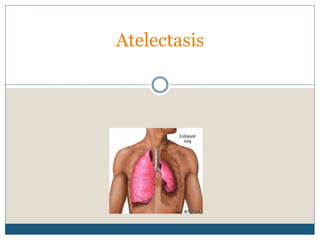
Atelectasis
Introduction
 Atelectasis is defined as the collapse or closure of the
lung resulting in reduced or absent gas exchange. It
may affect part or all of one lung
 Atelectasis is the collapse of alveoli or lung tissue.
 It develops when the alveoli becomes airless from
absorption of their air without replacement of the air
with breathing.
Contd…
 Atelectasis may be acute or chronic
 The most commonly described
atelectasis is acute atelectasis, which
occurs frequently in the postoperative
setting or in people who are
immobilized and have a shallow,
monotonous breathing pattern.
Etiology
 Obstruction of an airway
 Diminished distention of alveoli
Contd
 Airway foreign body
 Extrinsic compression on an airway (eg,
compression due to an enlarged or aberrant vessel)
 Enlarged lymph nodes that compress the airway
 Masses in the chest that compress the airway or
alveoli
 Cardiomegaly or enlarged pulmonary vessels that
compress adjacent airways
Etiology of atelectasis
 Altered breathing patterns
 Retained secretions
 Pain, alterations in small airway function
 Anesthesia or sedation
 Increased abdominal pressure
 Reduced lung volumes due to musculoskeletal
(Severe scoliosis) or neurologic disorders
 Pain from upper abdominal surgery
Contd…
 Restrictive defects, and specific surgical
procedures (eg, upper abdominal, thoracic, or
open heart surgery).
 Persistent low lung volumes
 Secretions or a mass obstructing or impeding
airflow and compression of lung tissue
 Bronchospasm, airway secretions and
airway inflammation in patients with
asthma
 Abnormal airway secretions in cystic fibrosis
Contd….
 Abnormal airway clearance, such as with ciliary
dyskinesia syndrome
 Airway foreign body
 Excessive pressure on the lung tissue (pleural
effusion, pneumothorax, hemothorax)
 Tumor growth within the thorax, or an elevated
diaphragm
Pathophysiology
 Reduced alveolar ventilation or any type of blockage
 Impedes the passage of air
 The trapped alveolar air becomes absorbed into the
bloodstream, but outside air cannot replace the absorbed
air because of the blockage
 Isolated portion of the lung becomes airless and the
alveoli collapse.
 Excessive pressure on the lung tissue
 Restricts normal lung expansion on inspiration
 Becomes airless for prolong period
 Alveolar colapse
Clinical Manifestations
 Cough, sputum production, and low-grade fever.
 Marked respiratory distress
 Dyspnea, tachycardia,
 Tachypnea, pleural pain, and central cyanosis
 Difficulty breathing in the supine position
 Anxious
Assessment and Diagnostic Findings
 Chest x-ray : patchy infiltrates or consolidated
areas.
 Pulse oximetry: (SpO2) (less than 90%) or a
(PaO2).
 Physical examination: Decreased breath sounds
and crackles are heard over the affected area.
Prevention
 Frequent turning, early mobilization,
Strategies to expand the lungs and to manage
secretions.
 Deep-breathing maneuvers (at least every 2 hours)
 The use of incentive spirometry or voluntary deep
breathing
 Directed cough, suctioning, aerosol nebulizer
treatments followed by chest physical therapy
 Postural Drainage and chest percussion, or
bronchoscopy
Contd..
 Change patient’s position frequently, especially
from supine to upright position, to promote
ventilation and prevent secretions from
accumulating.
 Encourage early mobilization from bed to chair
followed by early ambulation.
 Encourage appropriate deep breathing and
coughing to mobilize secretions and prevent
them from accumulating.
Contd…
 Administer prescribed Opioids and sedatives
judiciously to prevent respiratory depression.
 Perform postural drainage and chest percussion,
if indicated.
 Institute suctioning to remove tracheobronchial
secretions, if indicated.
Management
 The goal in treating the patient with atelectasis is to
improve ventilation and remove secretions
 In patients who do not respond to first-line measures or
who cannot perform deep-breathing exercises, other
treatments such as positive expiratory pressure (PEP
therapy )
 If the cause of atelectasis is bronchial obstruction
from secretions, the secretions must be removed by
coughing or suctioning to permit air to re-enter that
portion of the lung
 Chest physical therapy (chest percussion and
postural drainage)
 Nebulizer treatments with a bronchodilator
 Medication or sodium bicarbonate may be used
to assist the patient in the expectoration of
secretions.
 If respiratory care measures fail to remove the
obstruction, a bronchoscopy is performed.
 Endotracheal intubation and mechanical
ventilation may be necessary for respiratory failure
Contd…
 Thoracentesis, removal of the fluid by needle
aspiration, or insertion of a chest tube if cause is
compression
 Bronchoscopy
Nursing diagnosis
 Ineffective breathing pattern related to
collapse of lung tissue
 Activity intolerance
Thank You

Atelectasis

  • 1.
  • 2.
    Introduction  Atelectasis isdefined as the collapse or closure of the lung resulting in reduced or absent gas exchange. It may affect part or all of one lung  Atelectasis is the collapse of alveoli or lung tissue.  It develops when the alveoli becomes airless from absorption of their air without replacement of the air with breathing.
  • 4.
    Contd…  Atelectasis maybe acute or chronic  The most commonly described atelectasis is acute atelectasis, which occurs frequently in the postoperative setting or in people who are immobilized and have a shallow, monotonous breathing pattern.
  • 5.
    Etiology  Obstruction ofan airway  Diminished distention of alveoli
  • 6.
    Contd  Airway foreignbody  Extrinsic compression on an airway (eg, compression due to an enlarged or aberrant vessel)  Enlarged lymph nodes that compress the airway  Masses in the chest that compress the airway or alveoli  Cardiomegaly or enlarged pulmonary vessels that compress adjacent airways
  • 7.
    Etiology of atelectasis Altered breathing patterns  Retained secretions  Pain, alterations in small airway function  Anesthesia or sedation  Increased abdominal pressure  Reduced lung volumes due to musculoskeletal (Severe scoliosis) or neurologic disorders  Pain from upper abdominal surgery
  • 8.
    Contd…  Restrictive defects,and specific surgical procedures (eg, upper abdominal, thoracic, or open heart surgery).  Persistent low lung volumes  Secretions or a mass obstructing or impeding airflow and compression of lung tissue  Bronchospasm, airway secretions and airway inflammation in patients with asthma  Abnormal airway secretions in cystic fibrosis
  • 9.
    Contd….  Abnormal airwayclearance, such as with ciliary dyskinesia syndrome  Airway foreign body  Excessive pressure on the lung tissue (pleural effusion, pneumothorax, hemothorax)  Tumor growth within the thorax, or an elevated diaphragm
  • 10.
    Pathophysiology  Reduced alveolarventilation or any type of blockage  Impedes the passage of air  The trapped alveolar air becomes absorbed into the bloodstream, but outside air cannot replace the absorbed air because of the blockage  Isolated portion of the lung becomes airless and the alveoli collapse.
  • 11.
     Excessive pressureon the lung tissue  Restricts normal lung expansion on inspiration  Becomes airless for prolong period  Alveolar colapse
  • 12.
    Clinical Manifestations  Cough,sputum production, and low-grade fever.  Marked respiratory distress  Dyspnea, tachycardia,  Tachypnea, pleural pain, and central cyanosis  Difficulty breathing in the supine position  Anxious
  • 13.
    Assessment and DiagnosticFindings  Chest x-ray : patchy infiltrates or consolidated areas.  Pulse oximetry: (SpO2) (less than 90%) or a (PaO2).  Physical examination: Decreased breath sounds and crackles are heard over the affected area.
  • 15.
    Prevention  Frequent turning,early mobilization, Strategies to expand the lungs and to manage secretions.  Deep-breathing maneuvers (at least every 2 hours)  The use of incentive spirometry or voluntary deep breathing  Directed cough, suctioning, aerosol nebulizer treatments followed by chest physical therapy  Postural Drainage and chest percussion, or bronchoscopy
  • 16.
    Contd..  Change patient’sposition frequently, especially from supine to upright position, to promote ventilation and prevent secretions from accumulating.  Encourage early mobilization from bed to chair followed by early ambulation.  Encourage appropriate deep breathing and coughing to mobilize secretions and prevent them from accumulating.
  • 17.
    Contd…  Administer prescribedOpioids and sedatives judiciously to prevent respiratory depression.  Perform postural drainage and chest percussion, if indicated.  Institute suctioning to remove tracheobronchial secretions, if indicated.
  • 18.
    Management  The goalin treating the patient with atelectasis is to improve ventilation and remove secretions  In patients who do not respond to first-line measures or who cannot perform deep-breathing exercises, other treatments such as positive expiratory pressure (PEP therapy )  If the cause of atelectasis is bronchial obstruction from secretions, the secretions must be removed by coughing or suctioning to permit air to re-enter that portion of the lung
  • 19.
     Chest physicaltherapy (chest percussion and postural drainage)  Nebulizer treatments with a bronchodilator  Medication or sodium bicarbonate may be used to assist the patient in the expectoration of secretions.  If respiratory care measures fail to remove the obstruction, a bronchoscopy is performed.  Endotracheal intubation and mechanical ventilation may be necessary for respiratory failure
  • 20.
    Contd…  Thoracentesis, removalof the fluid by needle aspiration, or insertion of a chest tube if cause is compression  Bronchoscopy
  • 21.
    Nursing diagnosis  Ineffectivebreathing pattern related to collapse of lung tissue  Activity intolerance
  • 22.