Download as PDF, PPTX
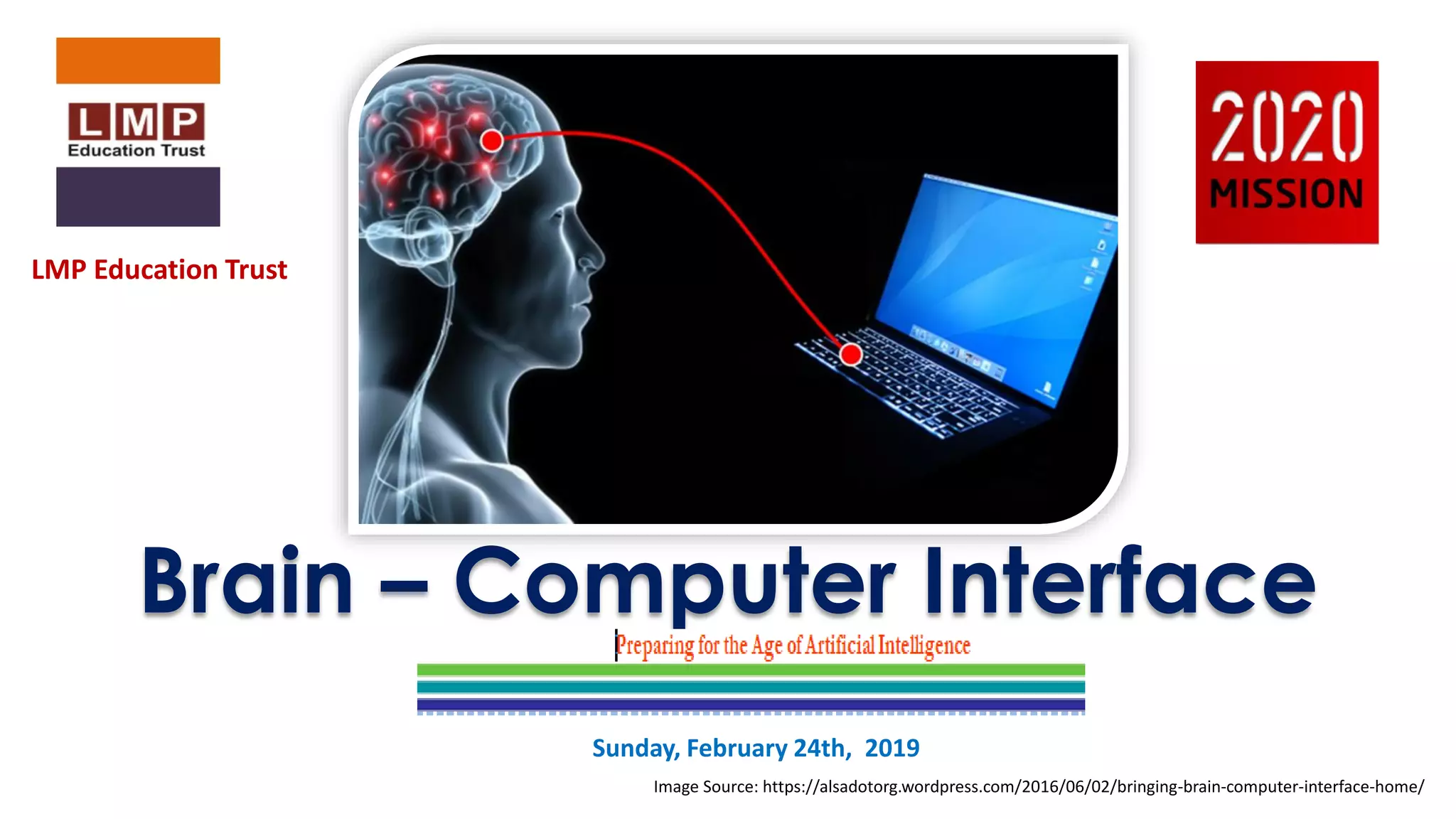




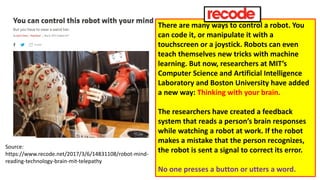
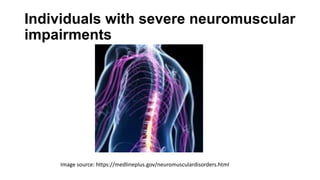
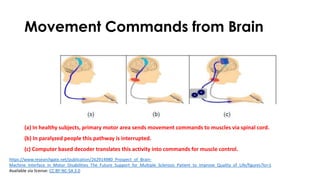
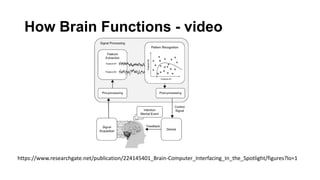
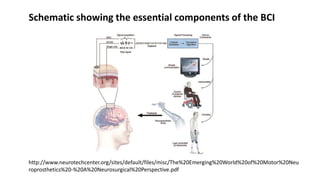
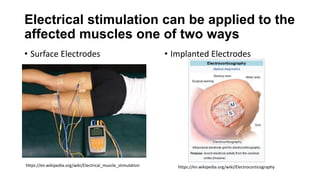
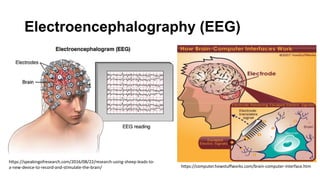

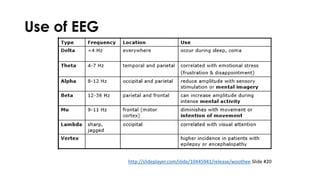

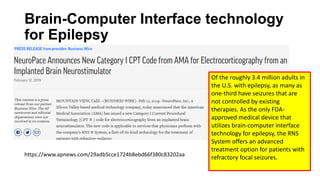
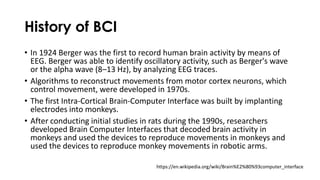



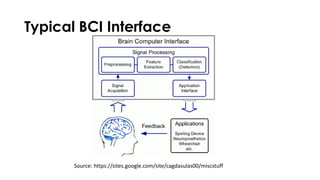
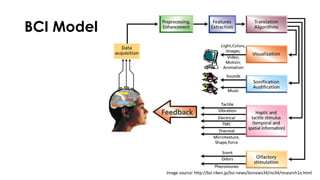
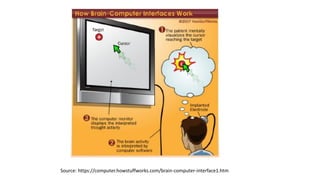
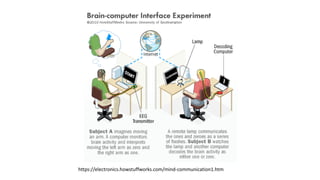
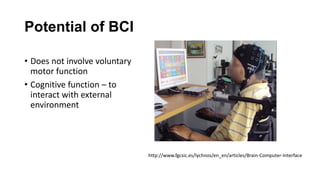
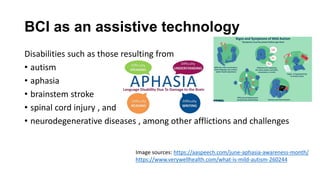



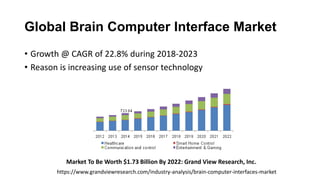
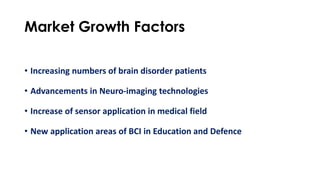

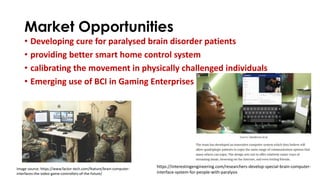

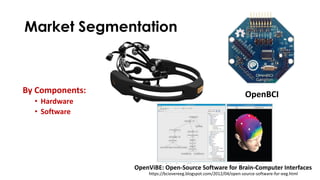
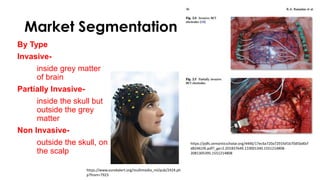
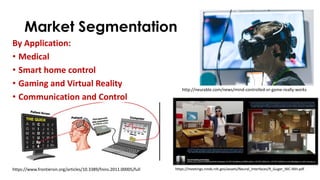
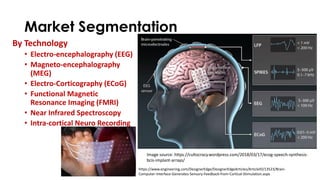
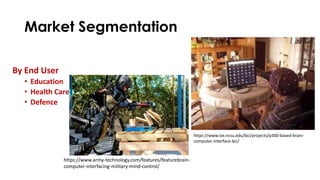
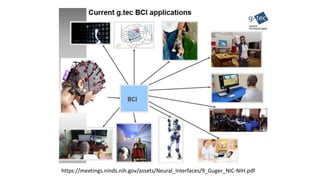
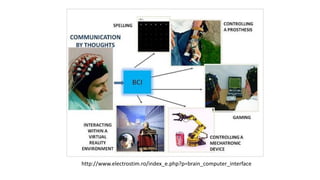

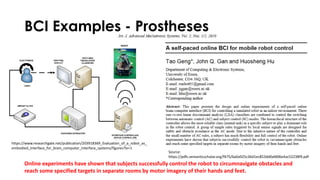
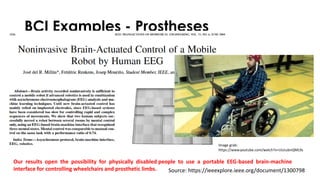


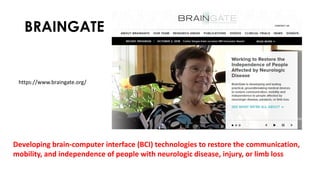

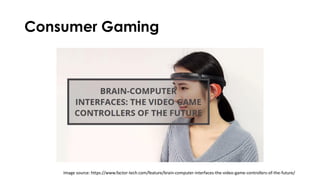

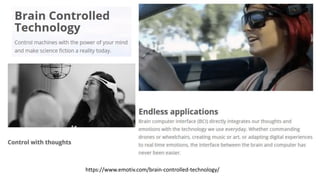



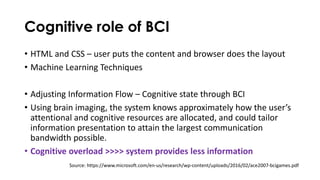
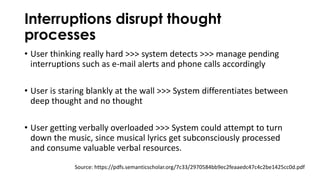


This document provides an overview of brain-computer interface (BCI) technology. It begins by discussing how BCIs can help individuals with severe neuromuscular impairments by translating brain signals into commands to control devices. The document then covers various components of a BCI system including electroencephalography to record brain activity, signal processing to interpret commands, and electrical stimulation of muscles. Examples of potential BCI applications discussed include assisting those with epilepsy, paralysis, and other conditions. The document concludes by noting the growing market for BCIs and their potential to improve lives without relying on normal motor function.


![Getting Started with Apache Spark: Big Data Made Simple [Free Meetup]](https://cdn.slidesharecdn.com/ss_thumbnails/apachesparkgettingstarted-260203175547-8361bcc3-thumbnail.jpg?width=640&height=640&fit=bounds)


